Scroll to explore every form of Aglaonema Cultivars & Forms
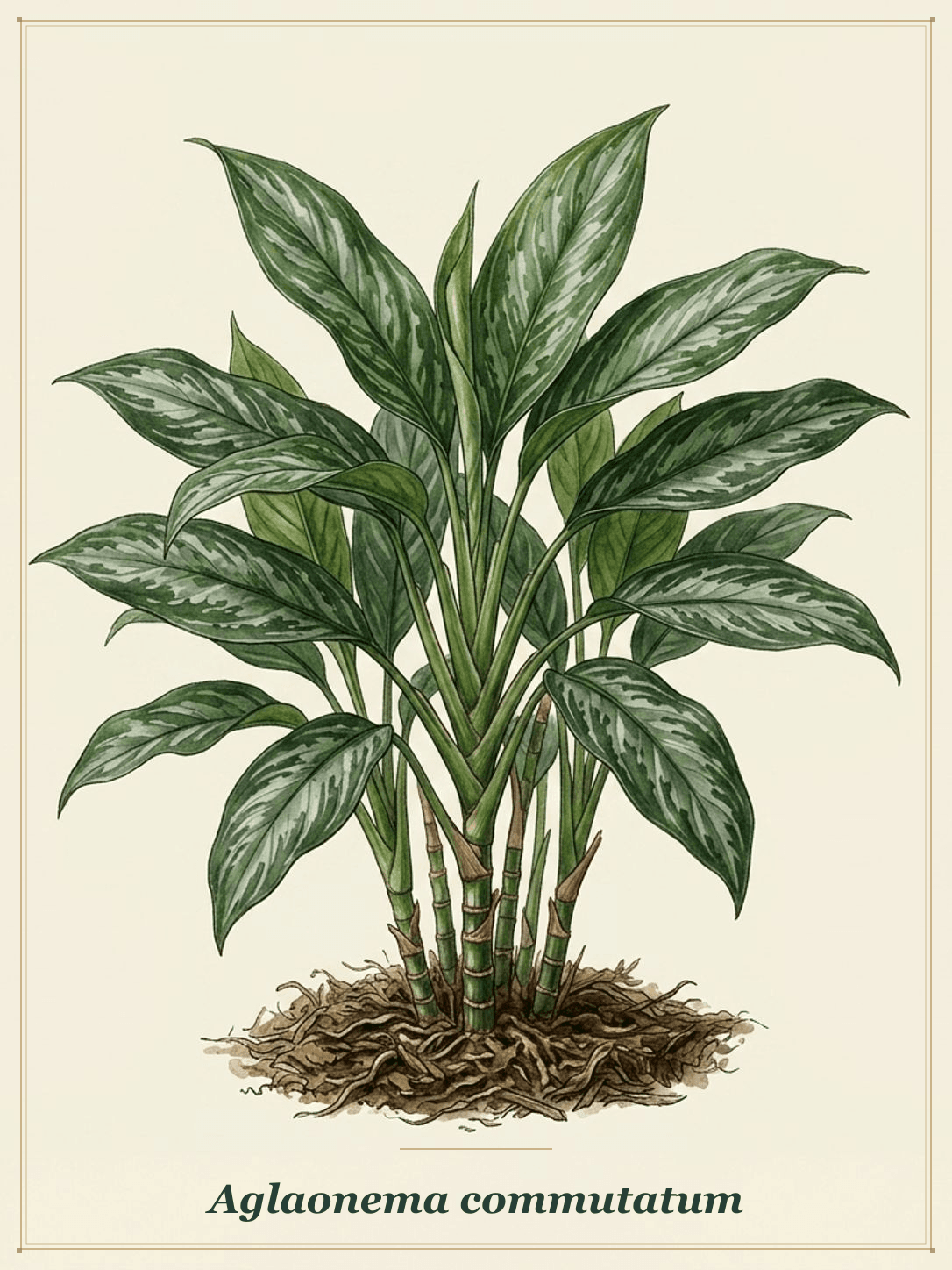
Aglaonema commutatum
Base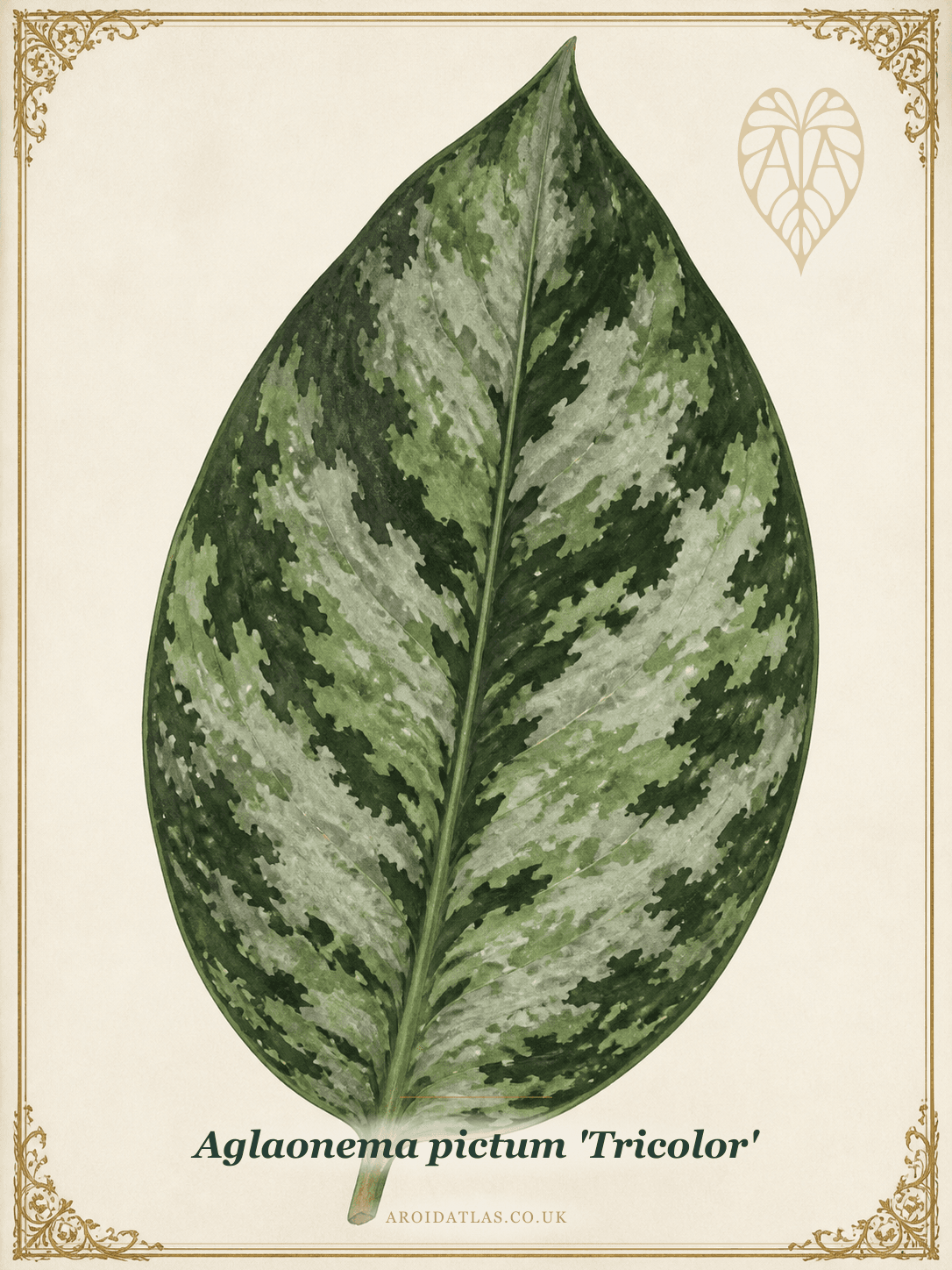 Current
Aglaonema pictum 'Tricolor'
Tricolour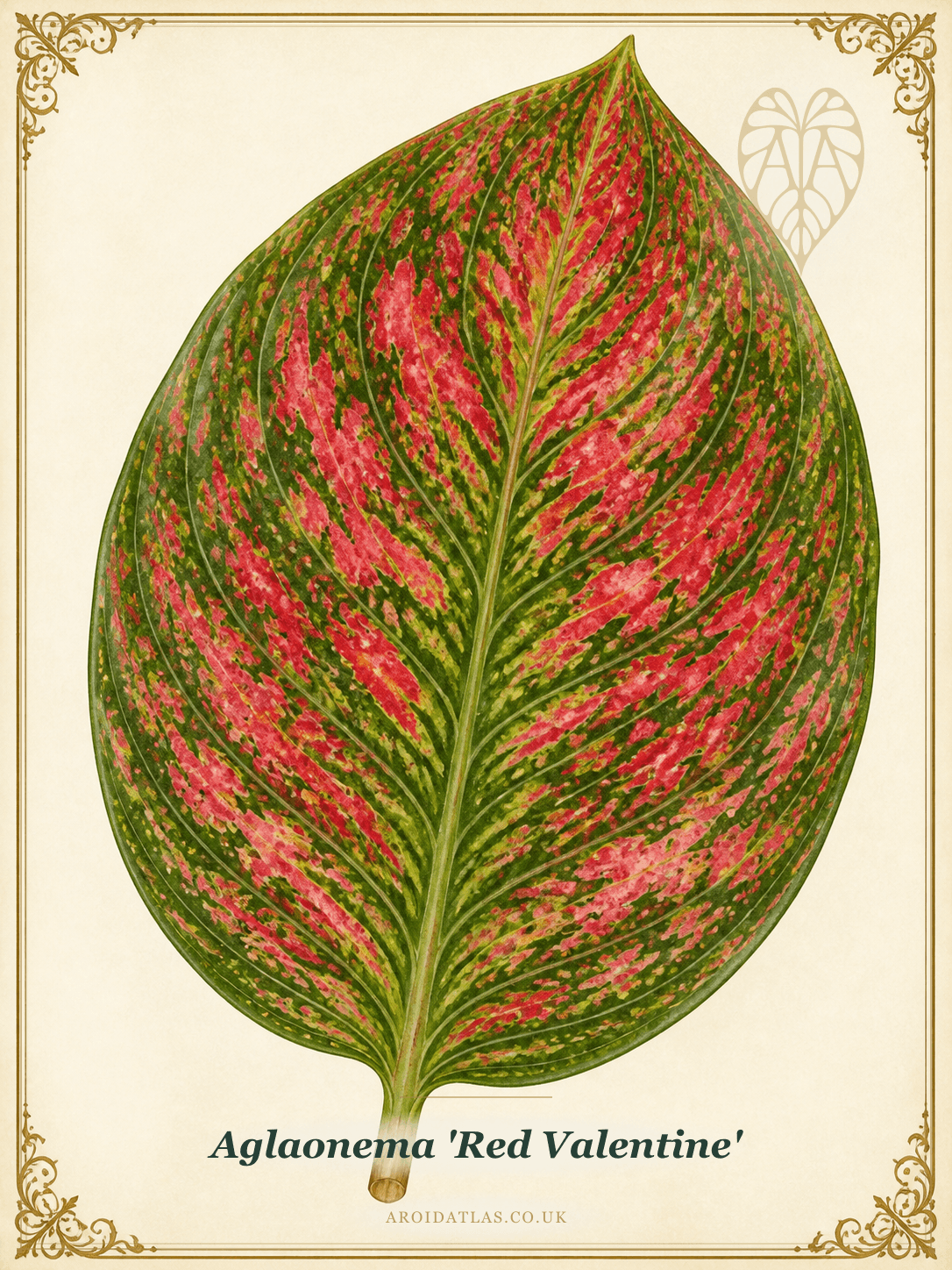
Aglaonema 'Red Valentine'
Base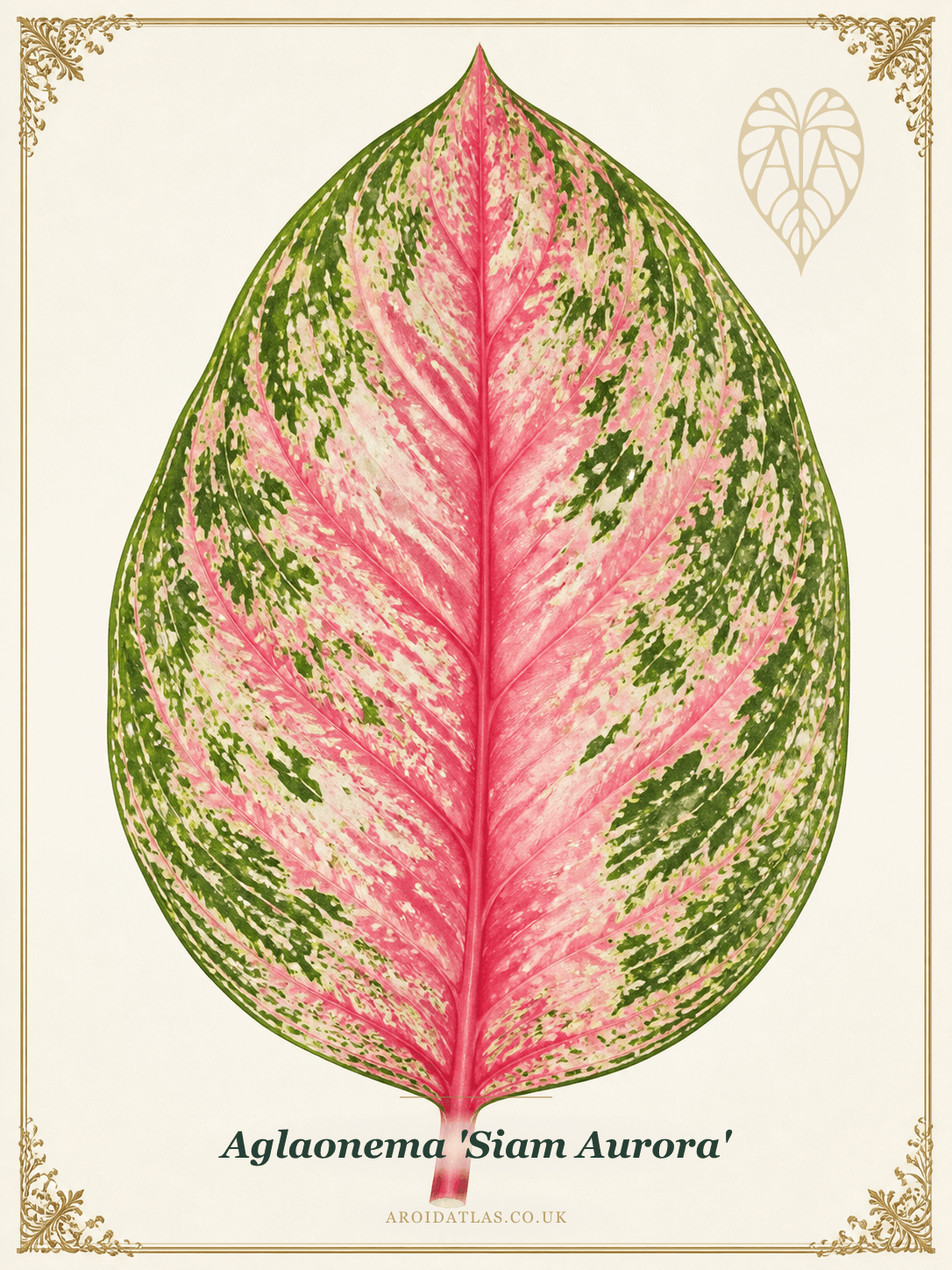
Aglaonema 'Siam Aurora'
Base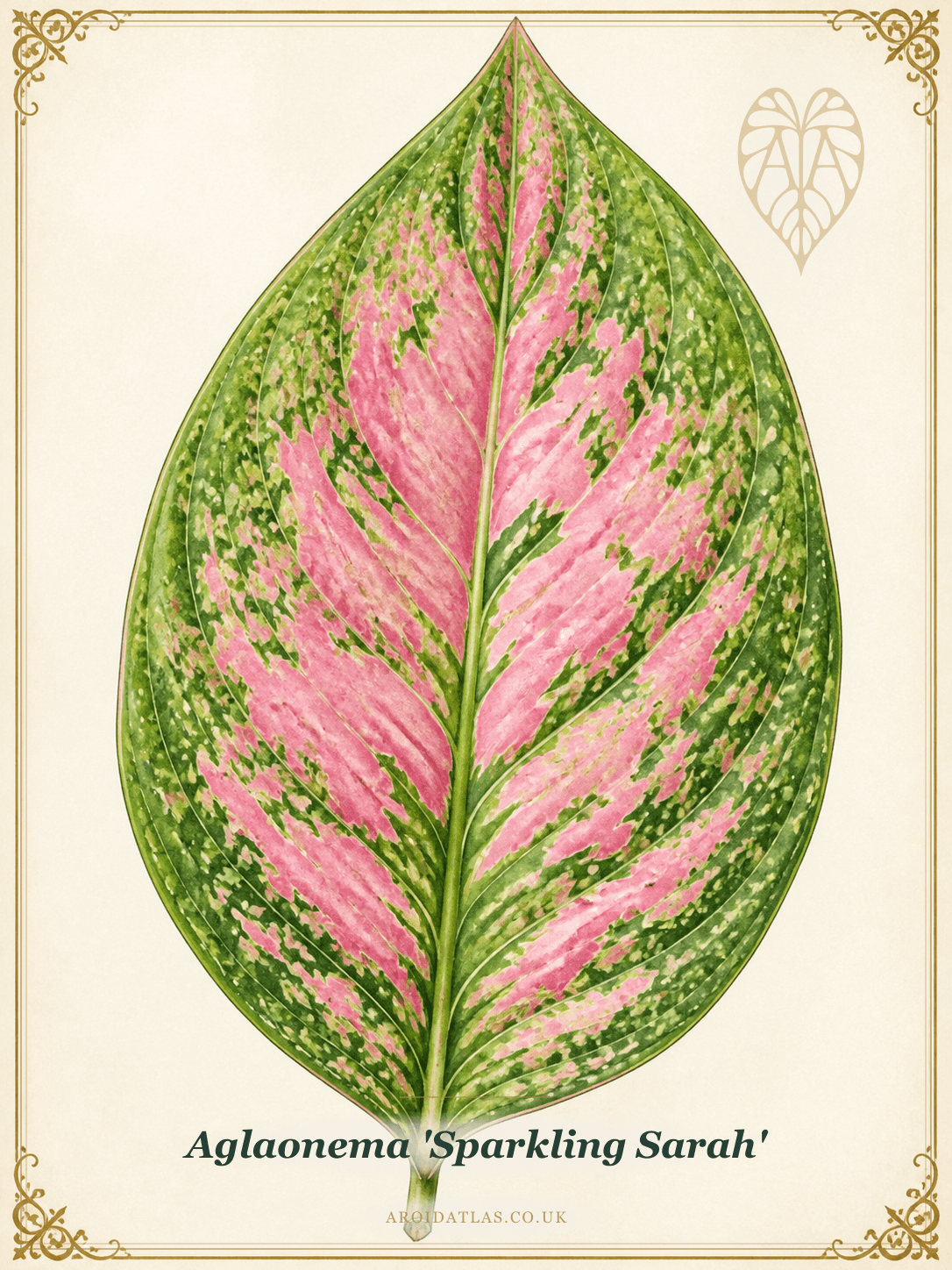
Aglaonema 'Sparkling Sarah'
Base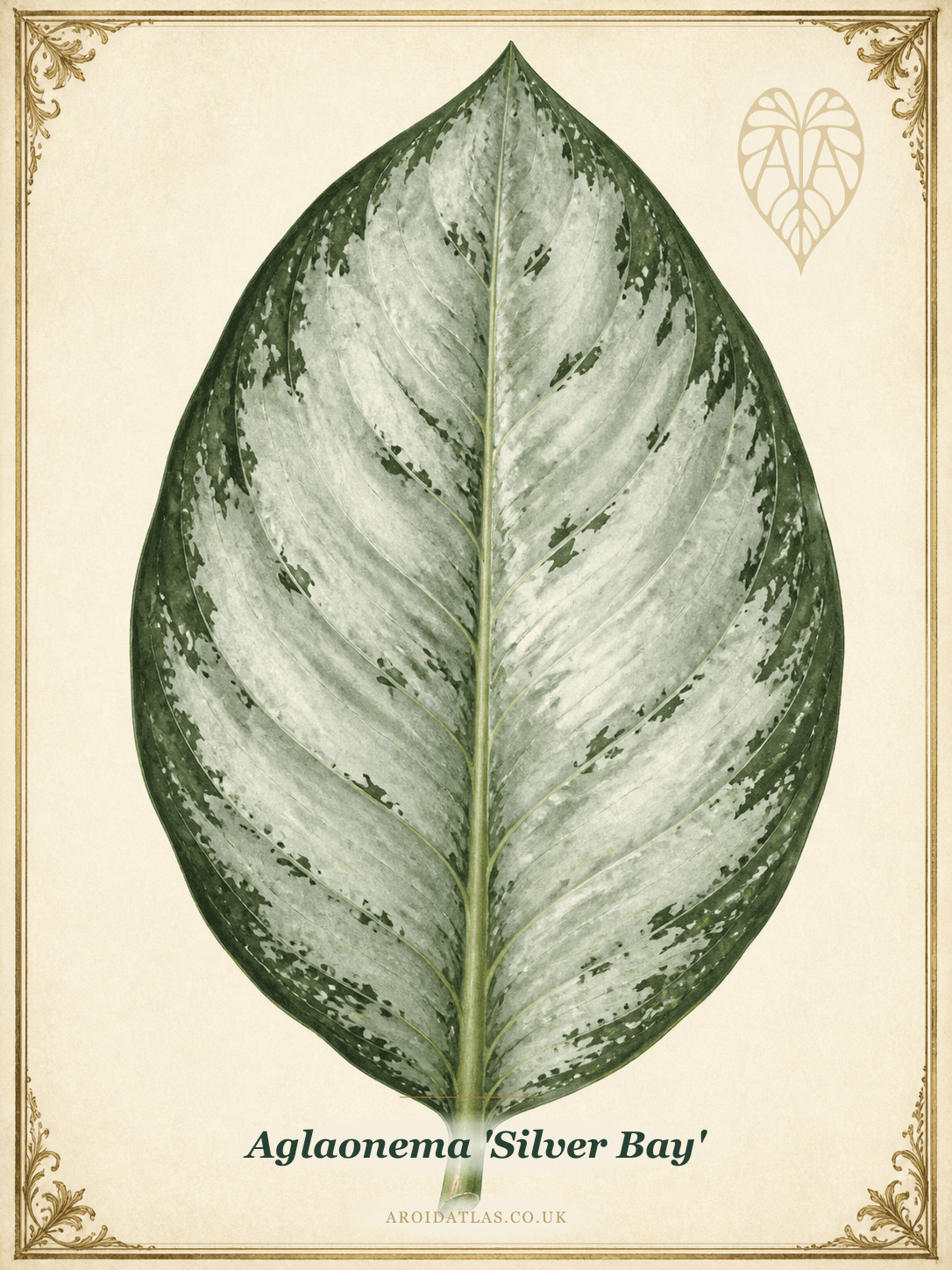
Aglaonema 'Silver Bay'
Base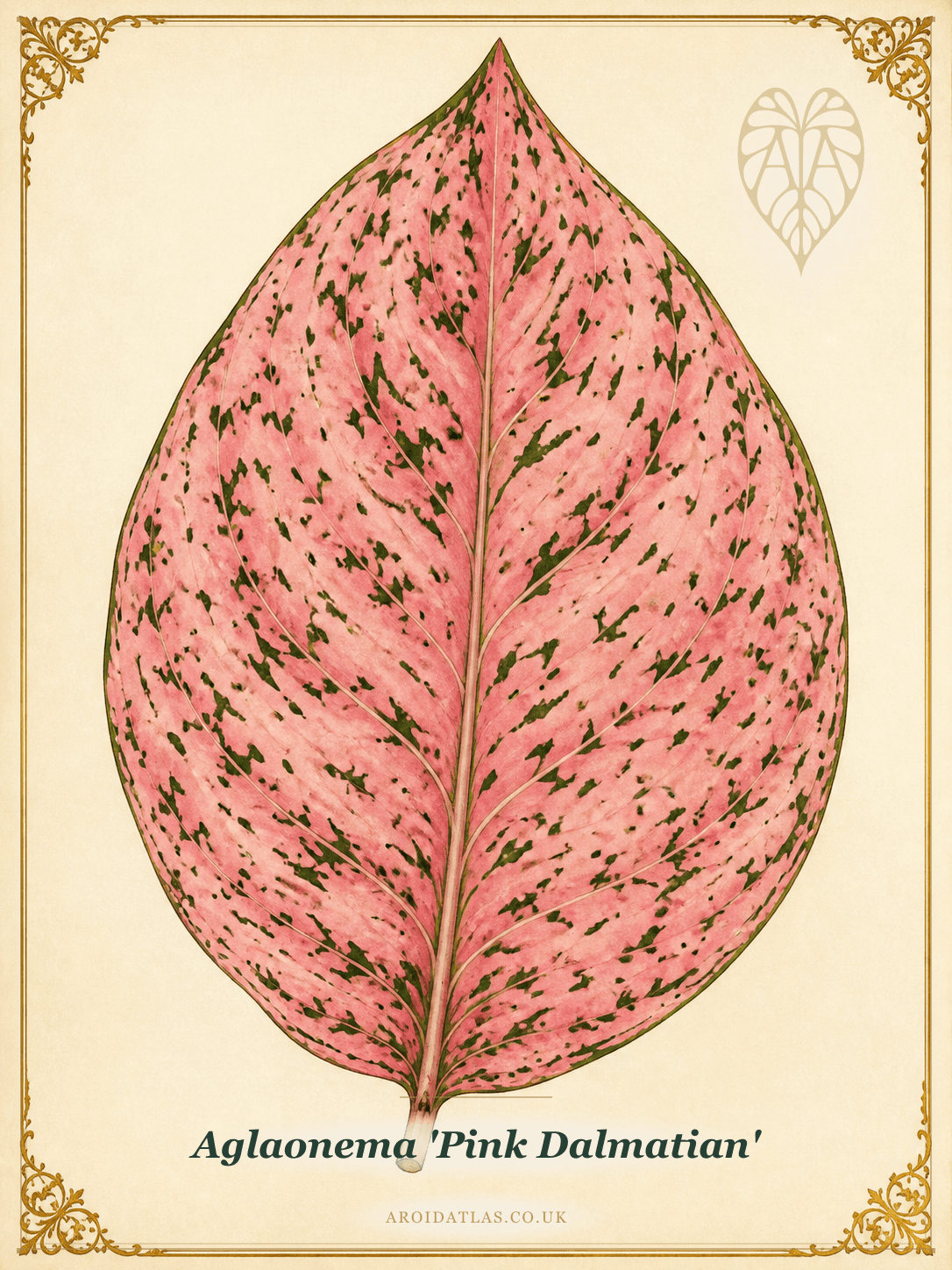
Aglaonema 'Pink Dalmatian'
Pink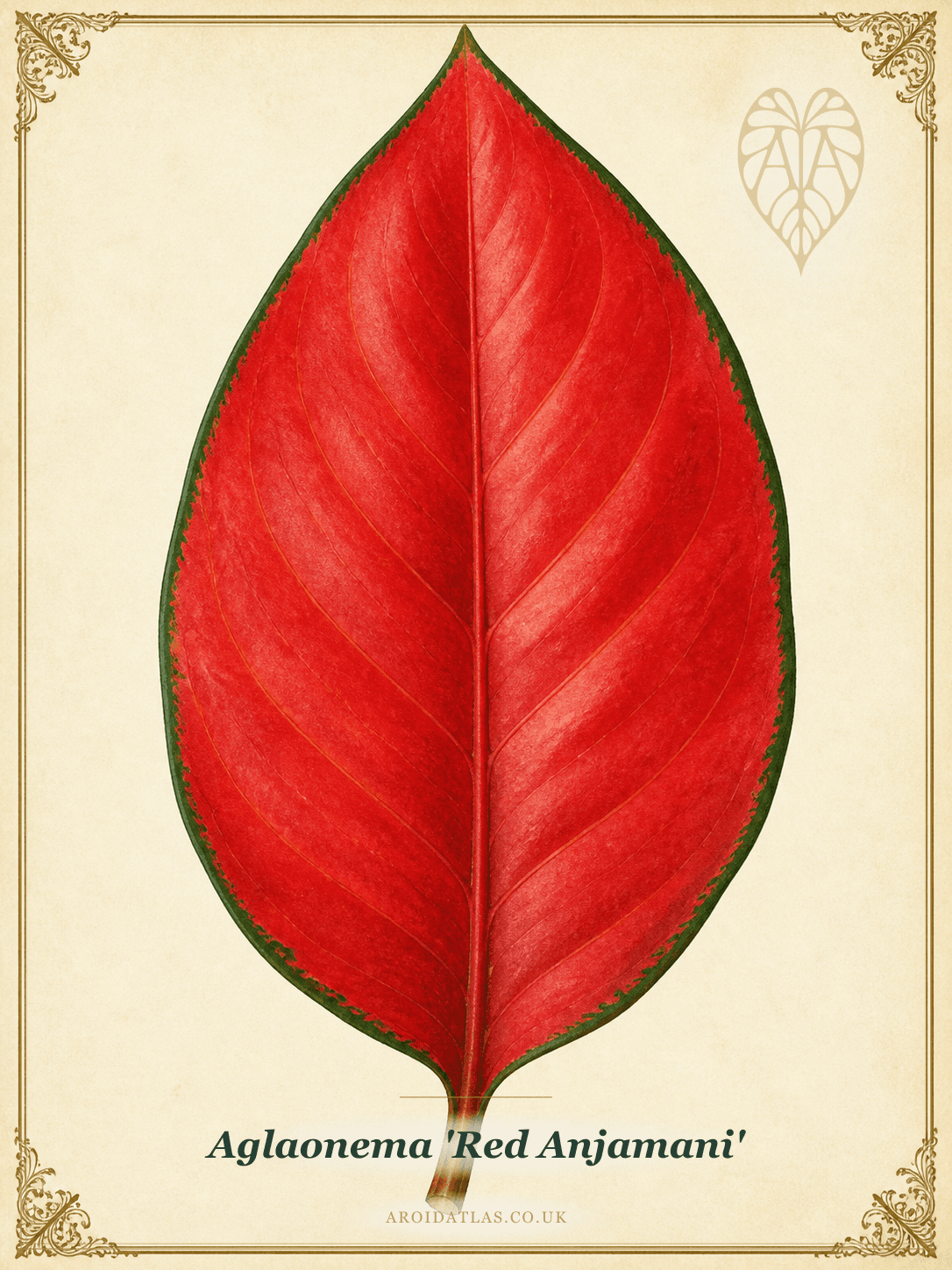
Aglaonema 'Red Anjamani'
Base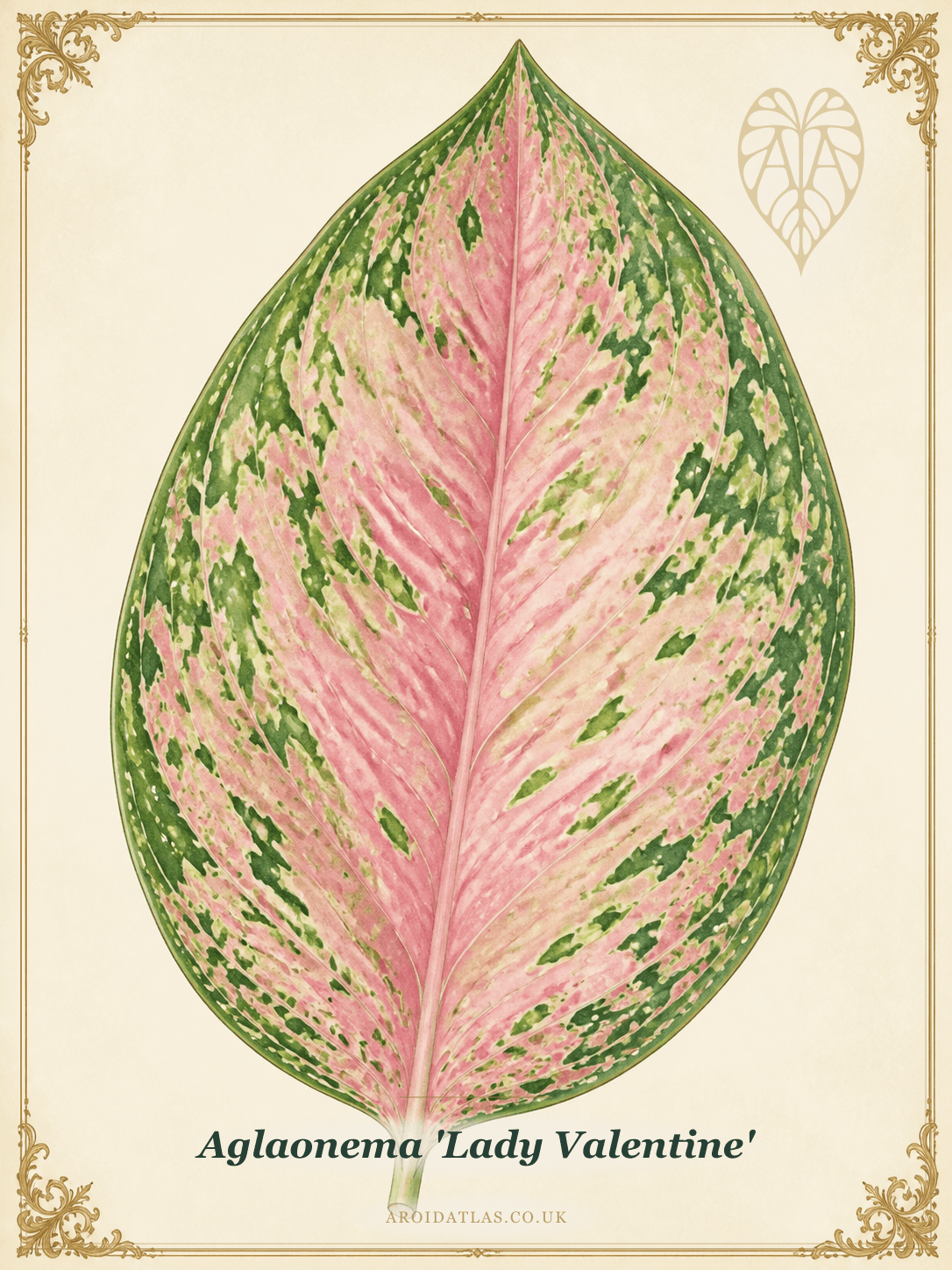
Aglaonema 'Lady Valentine'
Base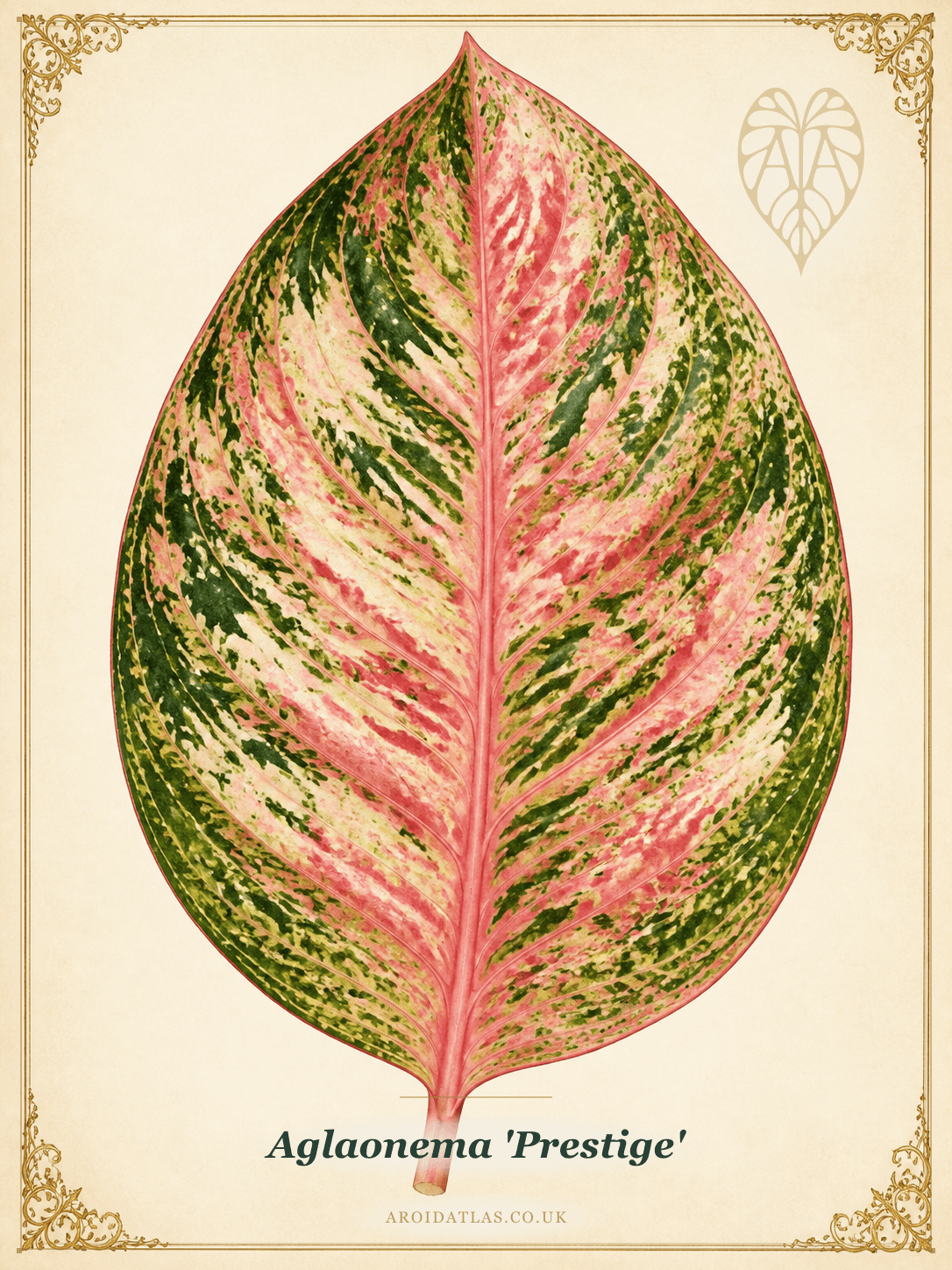
Aglaonema 'Prestige'
Base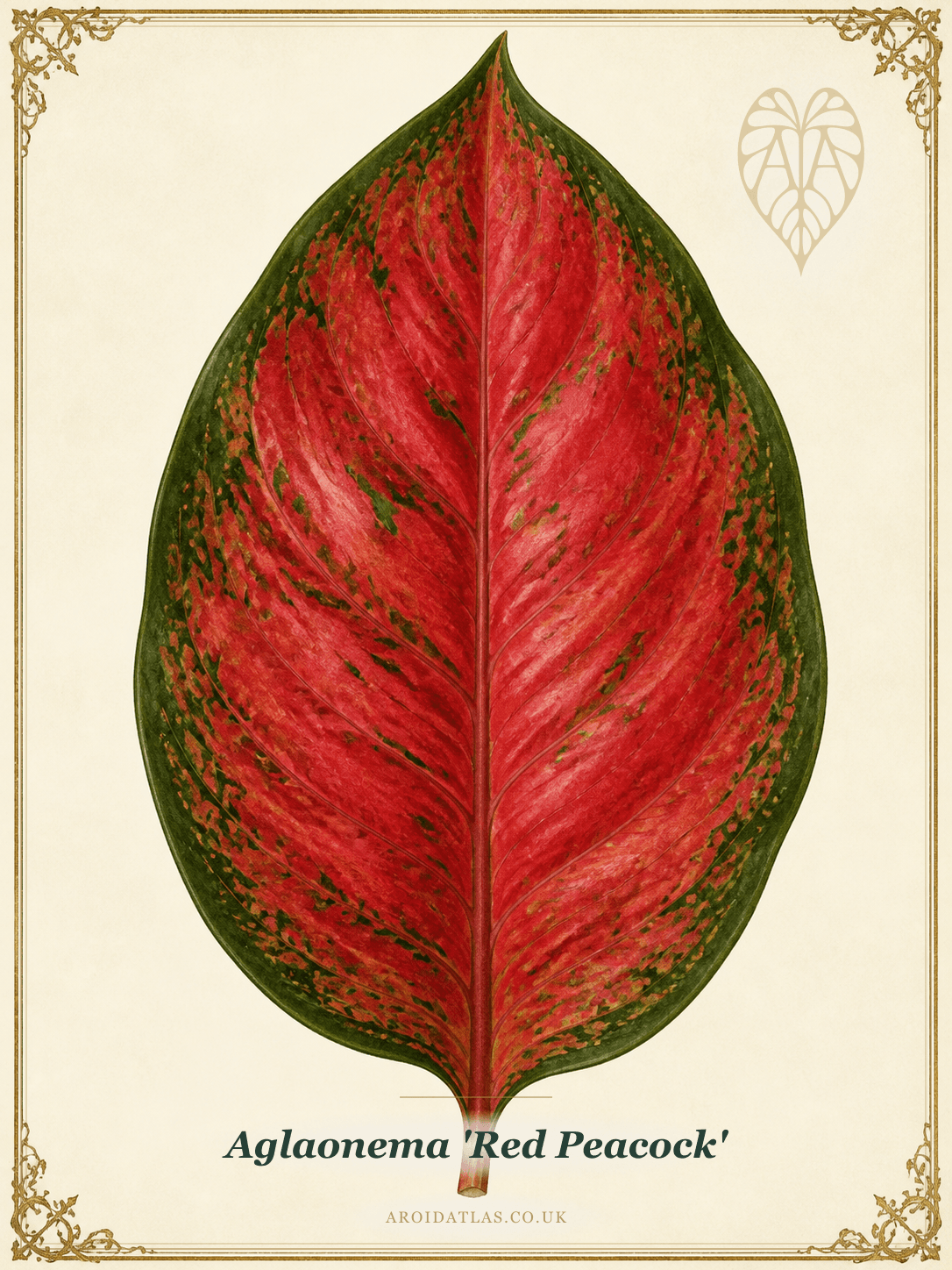
Aglaonema 'Red Peacock'
Base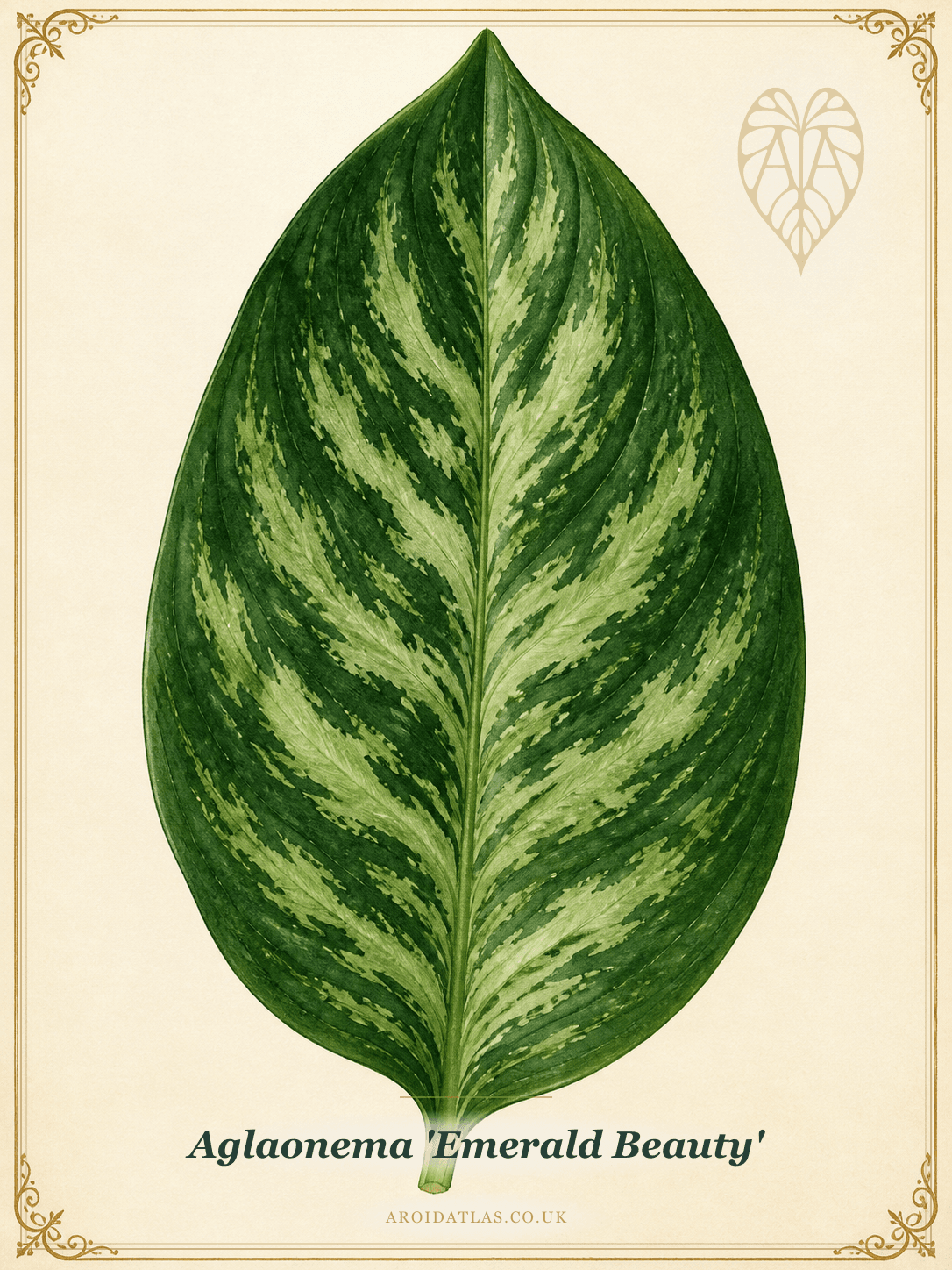
Aglaonema 'Emerald Beauty'
BaseLeaf Detail Portrait
Aglaonema pictum 'Tricolor'
Camo Aglaonema
Aroid Atlas Price Guide
Select Plant Size
Pricing Data Key
Other colour-form prices
Aglaonema pictum 'Tricolor' Morphology
About Aglaonema pictum 'Tricolor'
Aglaonema pictum 'Tricolor' is the plant that anchors serious Aglaonema collections, with a matte-textured leaf broken into an irregular, camouflage-like patchwork of dark green, mint green, and grey-silver. Unlike the chimeric variegation seen on many other aroids, pictum's patterning is a naturally occurring trait of the species itself in parts of its Sulawesi range, which is part of why demand has stayed high even as tissue culture has slowly improved availability. Growth is slow and it dislikes being disturbed, so a settled specimen is worth more, both financially and horticulturally, than a fresh division.
Native Range
Sulawesi, Indonesia
Market Analysis
Aglaonema pictum 'Tricolor' Price Guide & Auction Value
Historical eBay auction metrics and live retailer listings updated weekly.
No eBay auction history available yet. Data is collected automatically as sales appear on eBay UK.
Before You Buy
Species-specific things to check when evaluating a listing
- This is the priciest, most sought-after plant in its peerFamily group; ask for close-up photos of the actual specimen's patchwork pattern, not stock images
- Because the patterning is a naturally occurring species trait rather than chimeric variegation, there's no risk of the plant reverting to plain green, but confirm growth looks settled rather than a stressed, recently divided piece
- This species dislikes root disturbance; a recently divided or freshly imported specimen carries more risk than an established, settled plant
- Given the low sample size behind current pricing, treat published price figures as indicative rather than a firm benchmark
Patterning You Can't Lose
What separates pictum 'Tricolor' from most variegated aroid collectibles is that the camouflage patchwork isn't chimeric at all. It's a naturally occurring trait of the species in parts of its Sulawesi range, so there's no unstable node to protect and no risk of a specimen reverting to solid green under the wrong light. What you're actually paying for is patience: growth is slow, the plant resents being disturbed, and a settled specimen holds its value far better than a fresh division still adjusting to a new pot. Availability has improved with tissue culture, but demand hasn't really slowed to match it.


