Scroll to explore every form of Aglaonema Cultivars & Forms
 Current
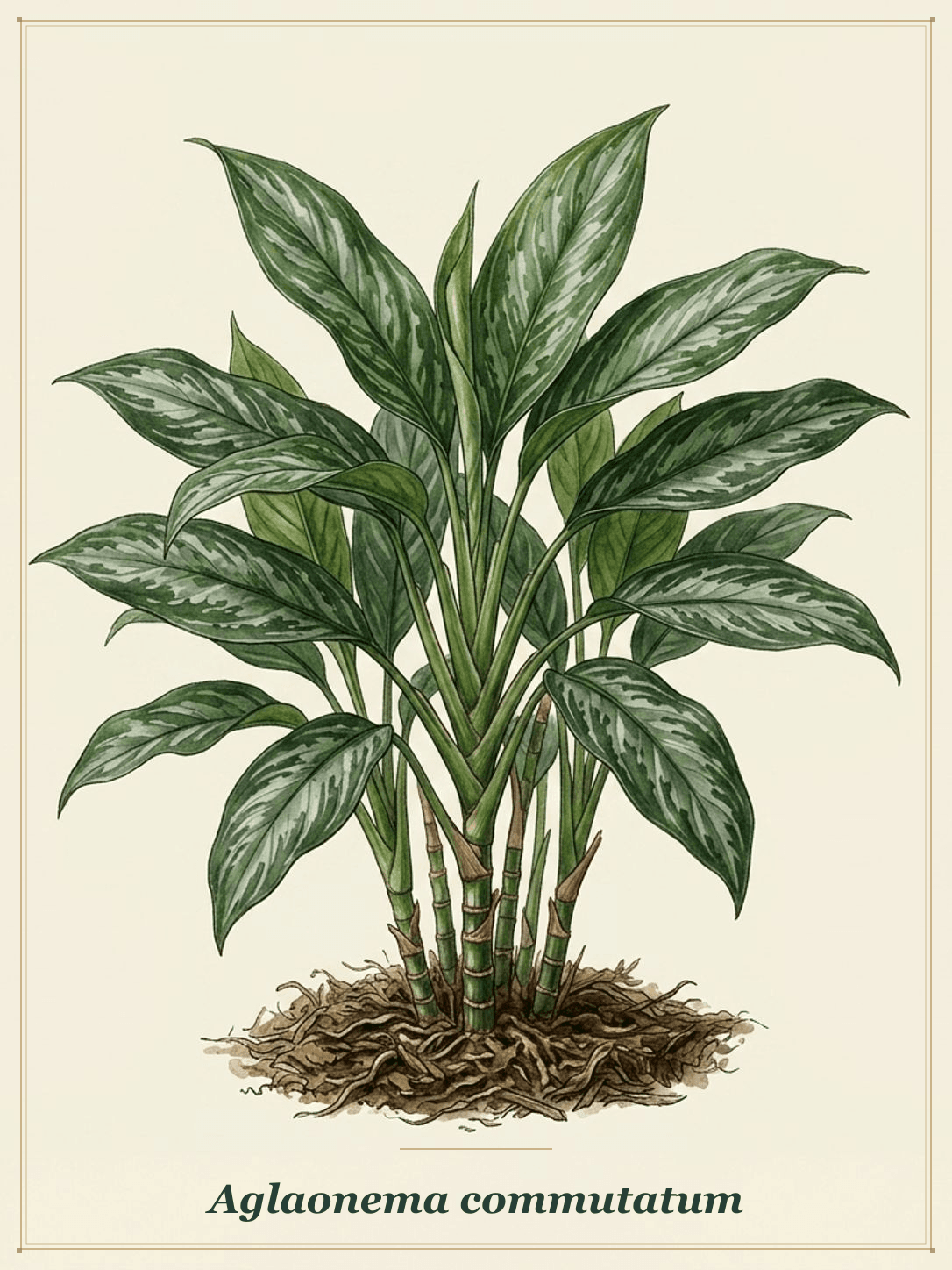
Aglaonema commutatum
Base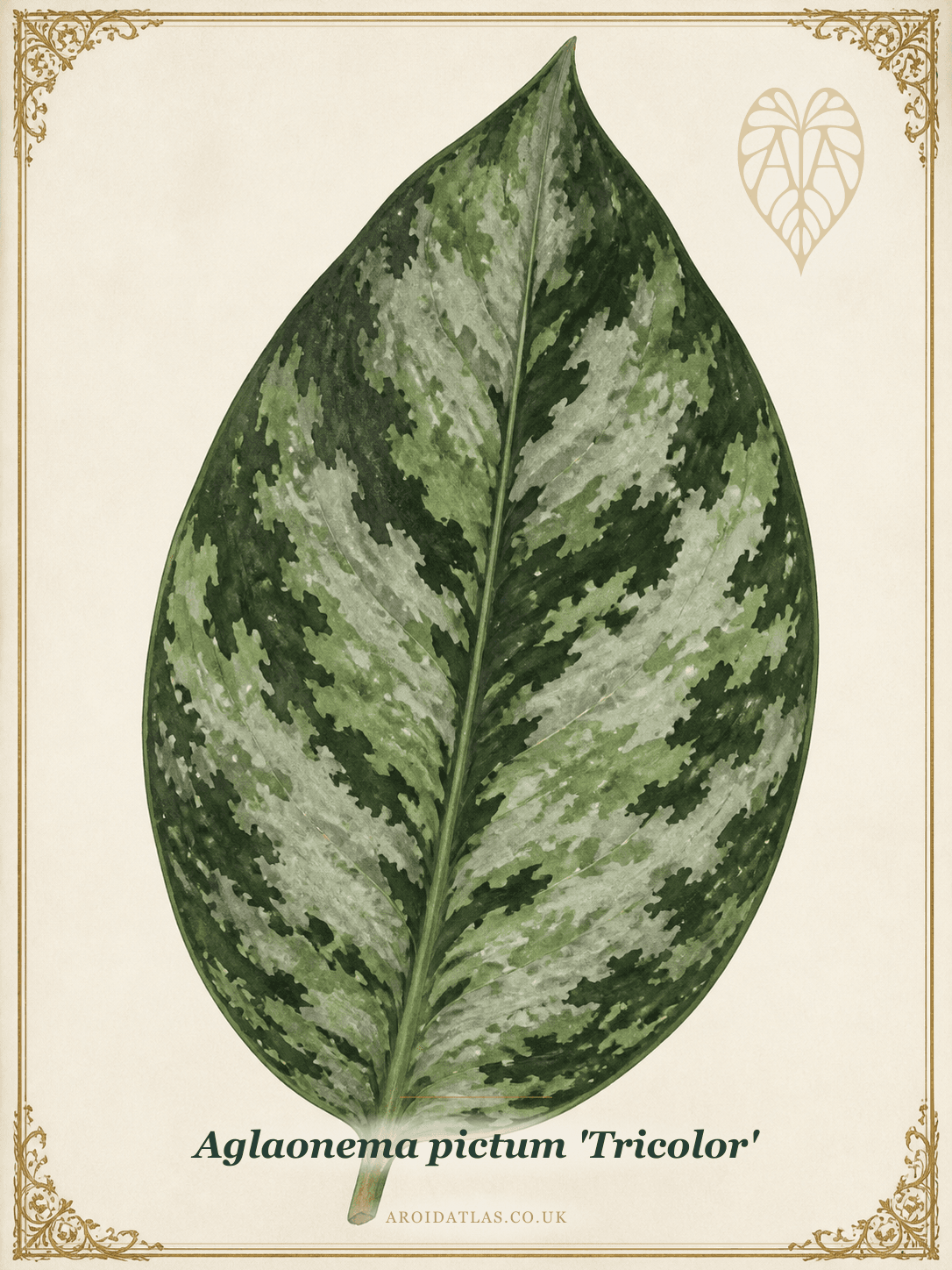
Aglaonema pictum 'Tricolor'
Tricolour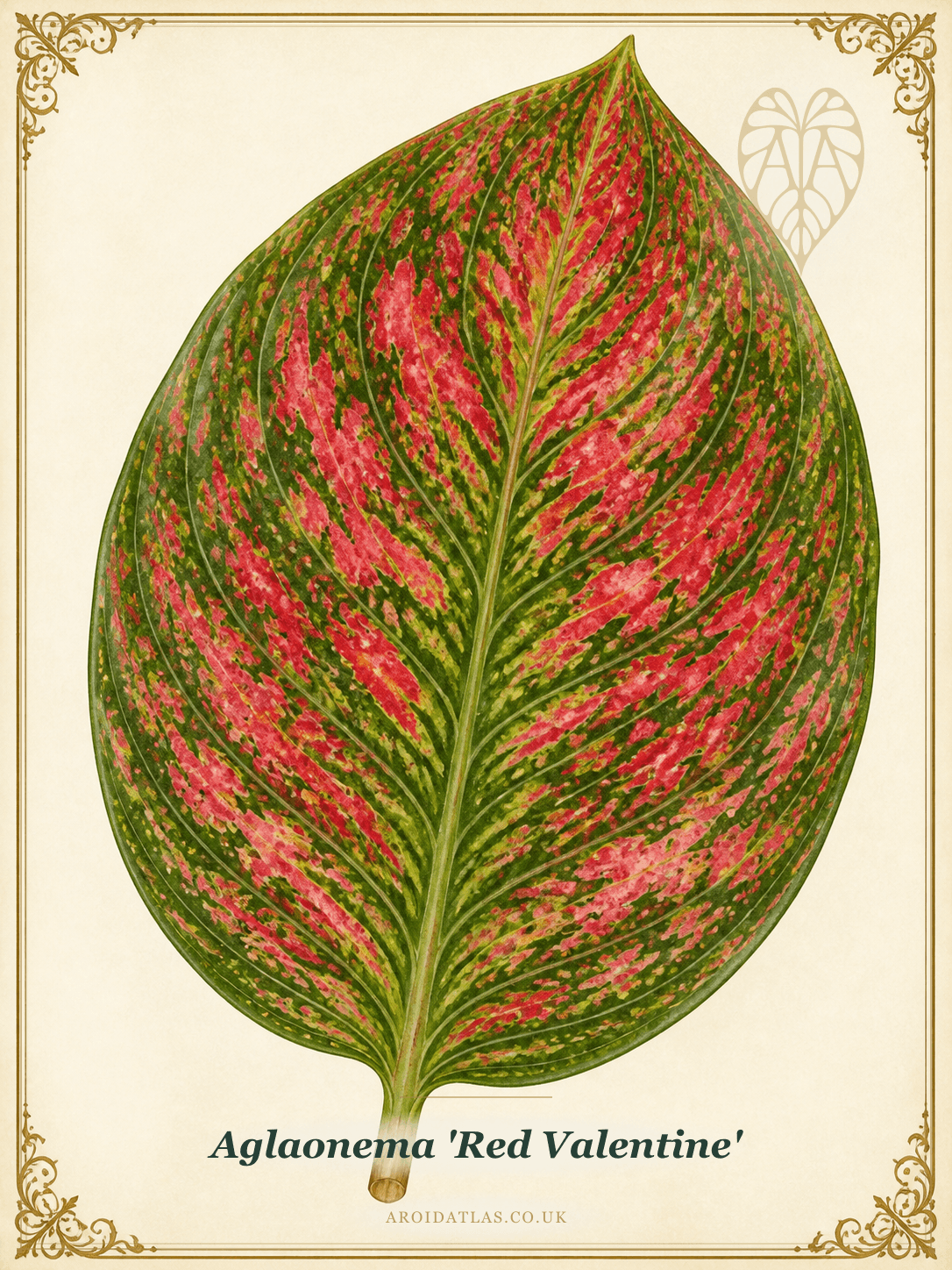
Aglaonema 'Red Valentine'
Base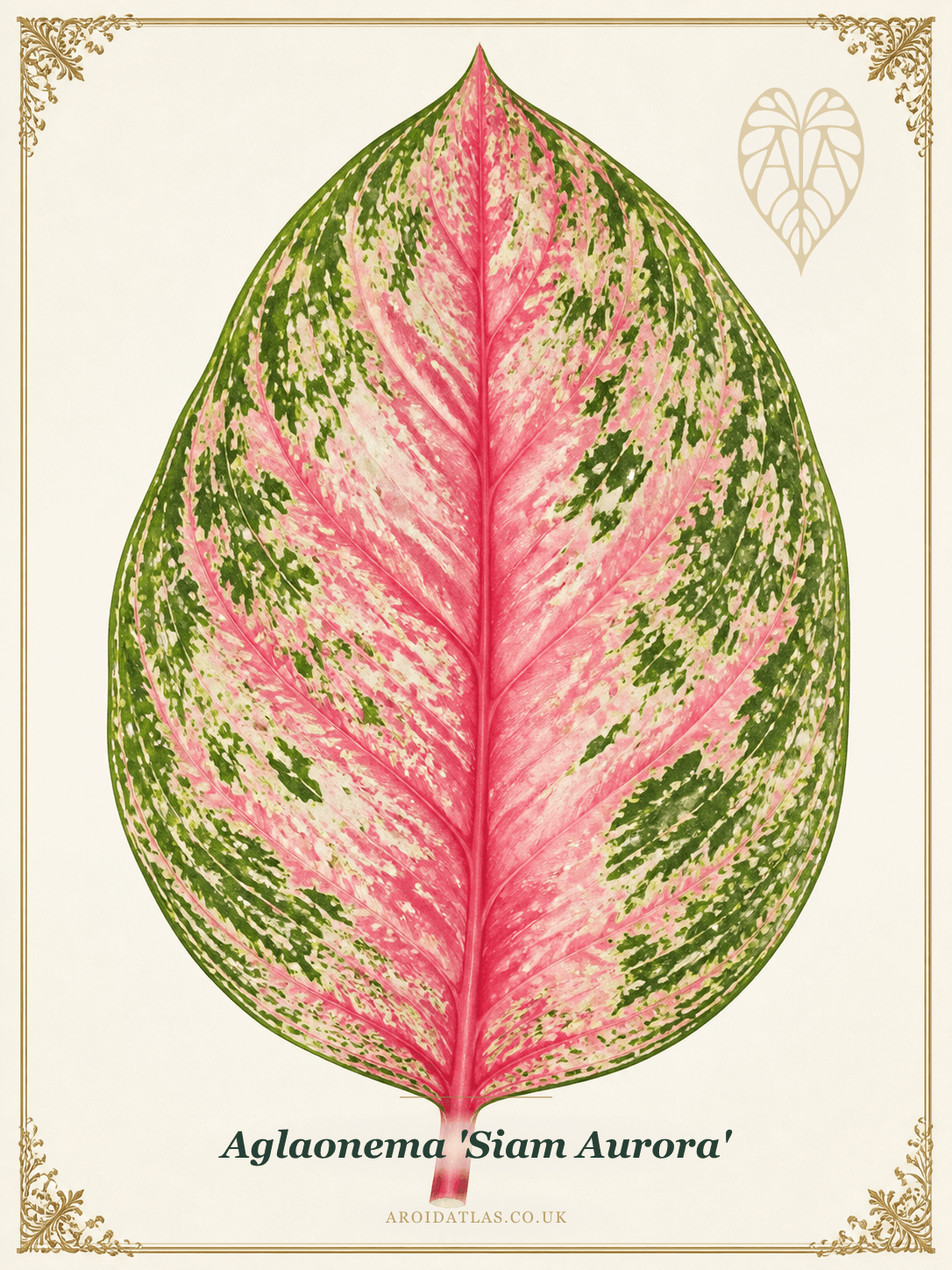
Aglaonema 'Siam Aurora'
Base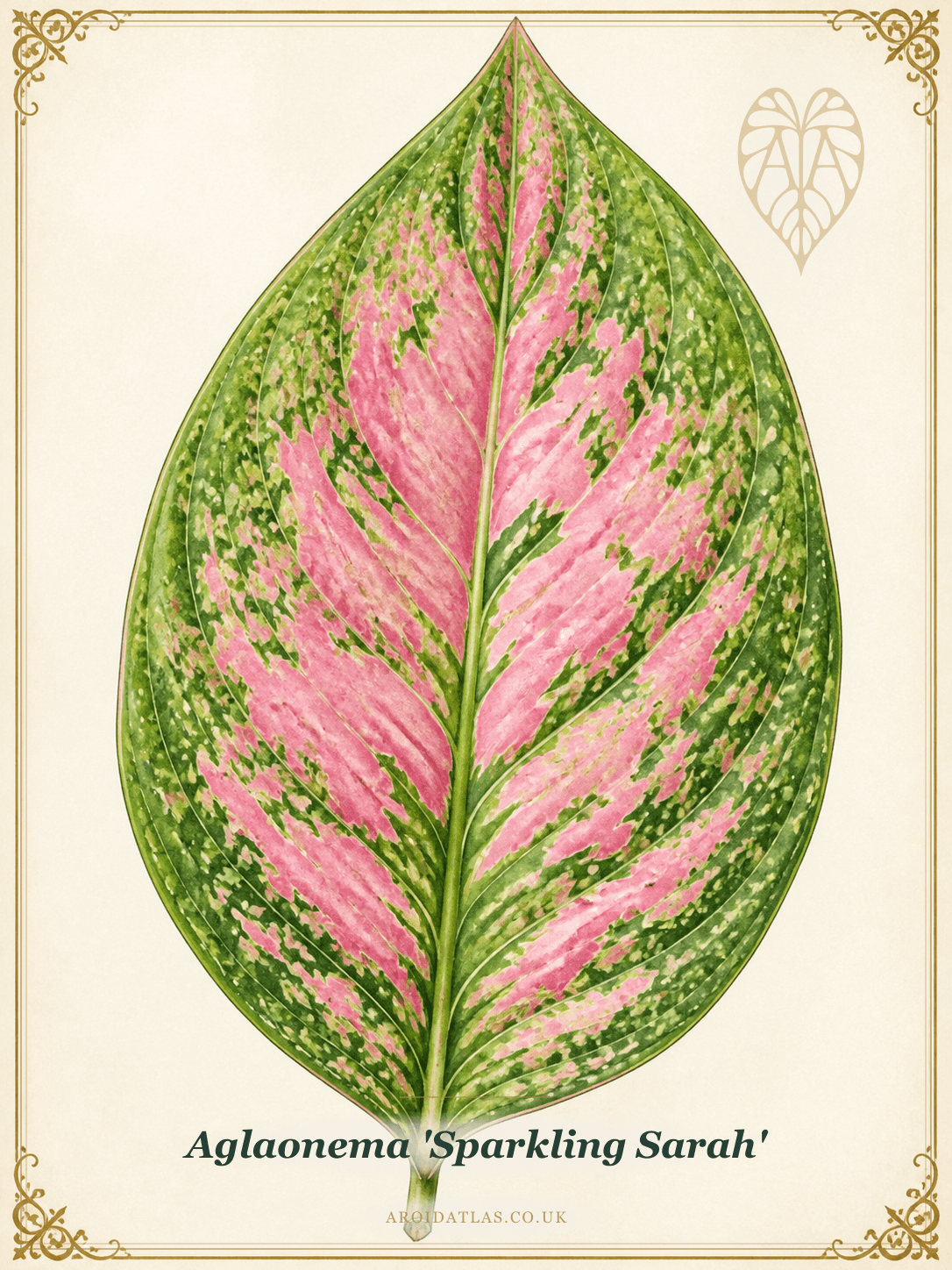
Aglaonema 'Sparkling Sarah'
Base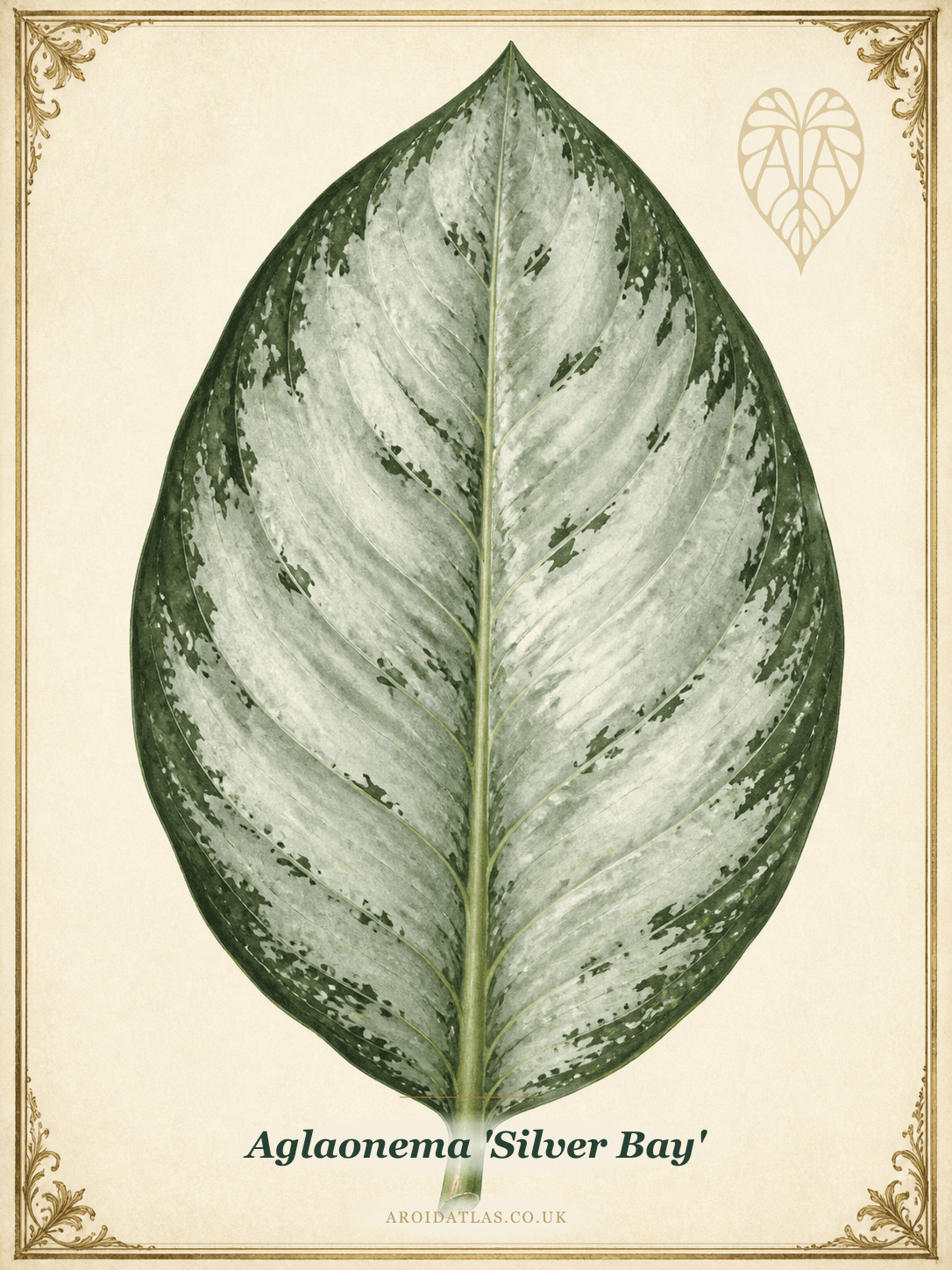
Aglaonema 'Silver Bay'
Base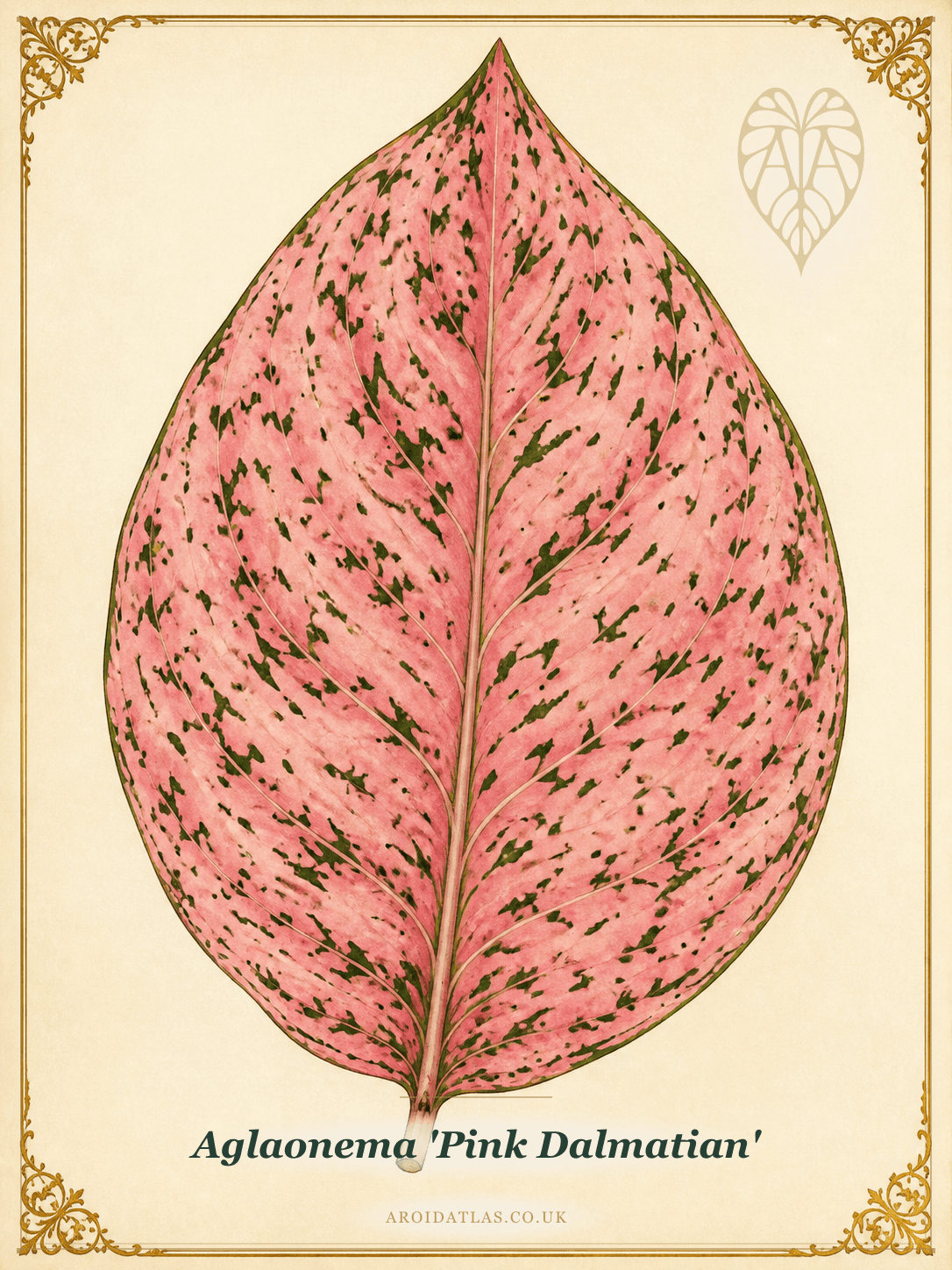
Aglaonema 'Pink Dalmatian'
Pink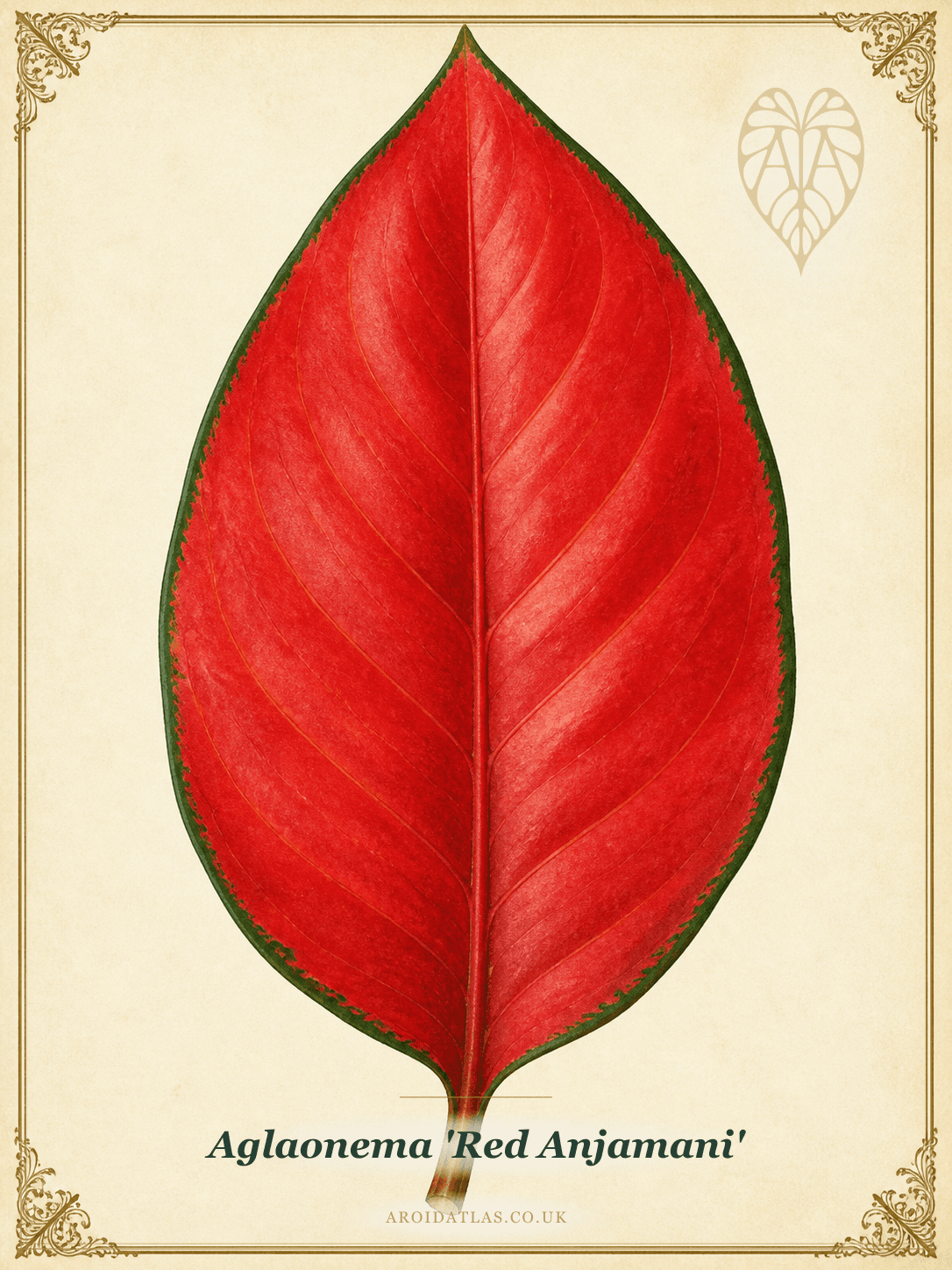
Aglaonema 'Red Anjamani'
Base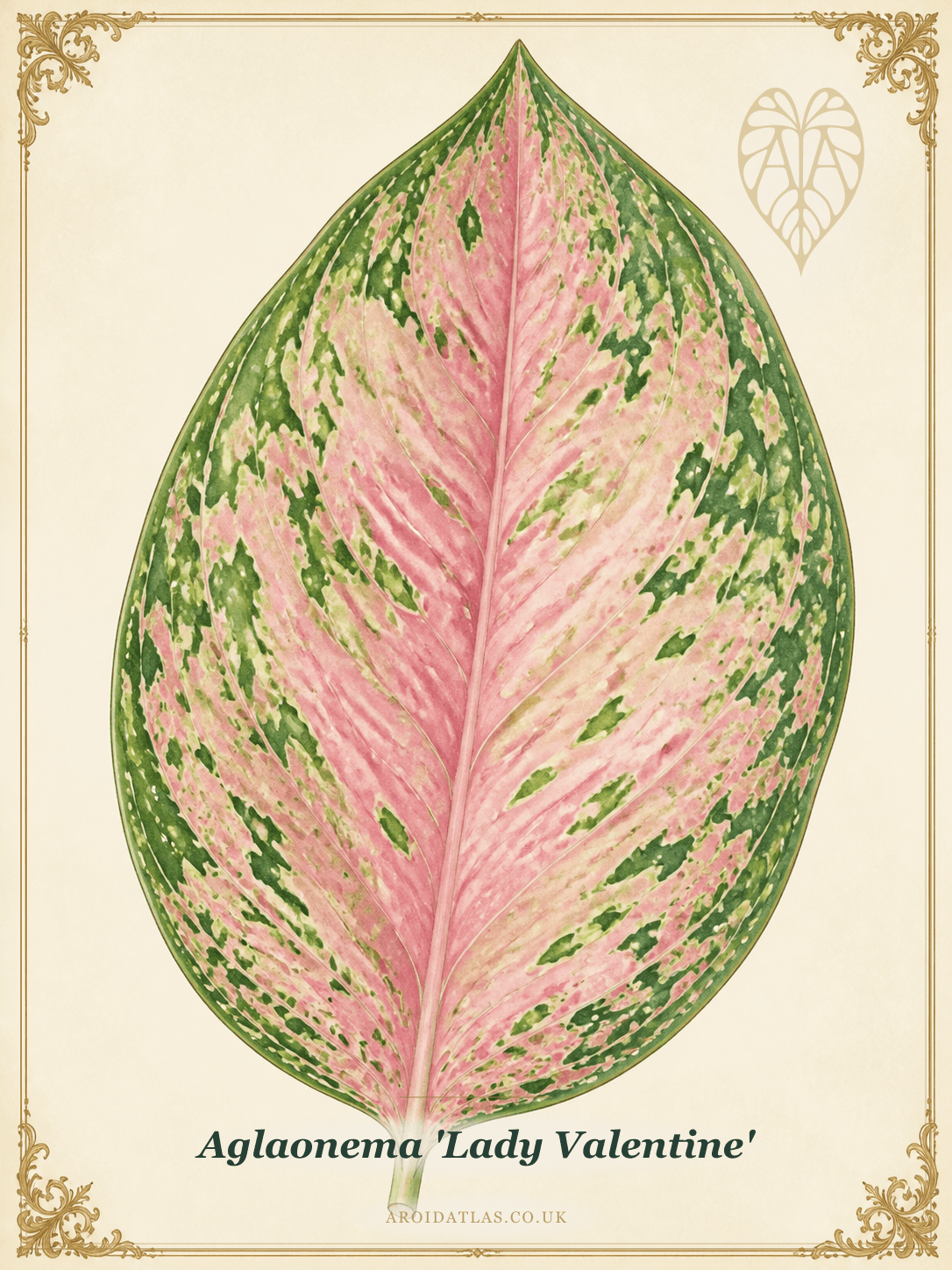
Aglaonema 'Lady Valentine'
Base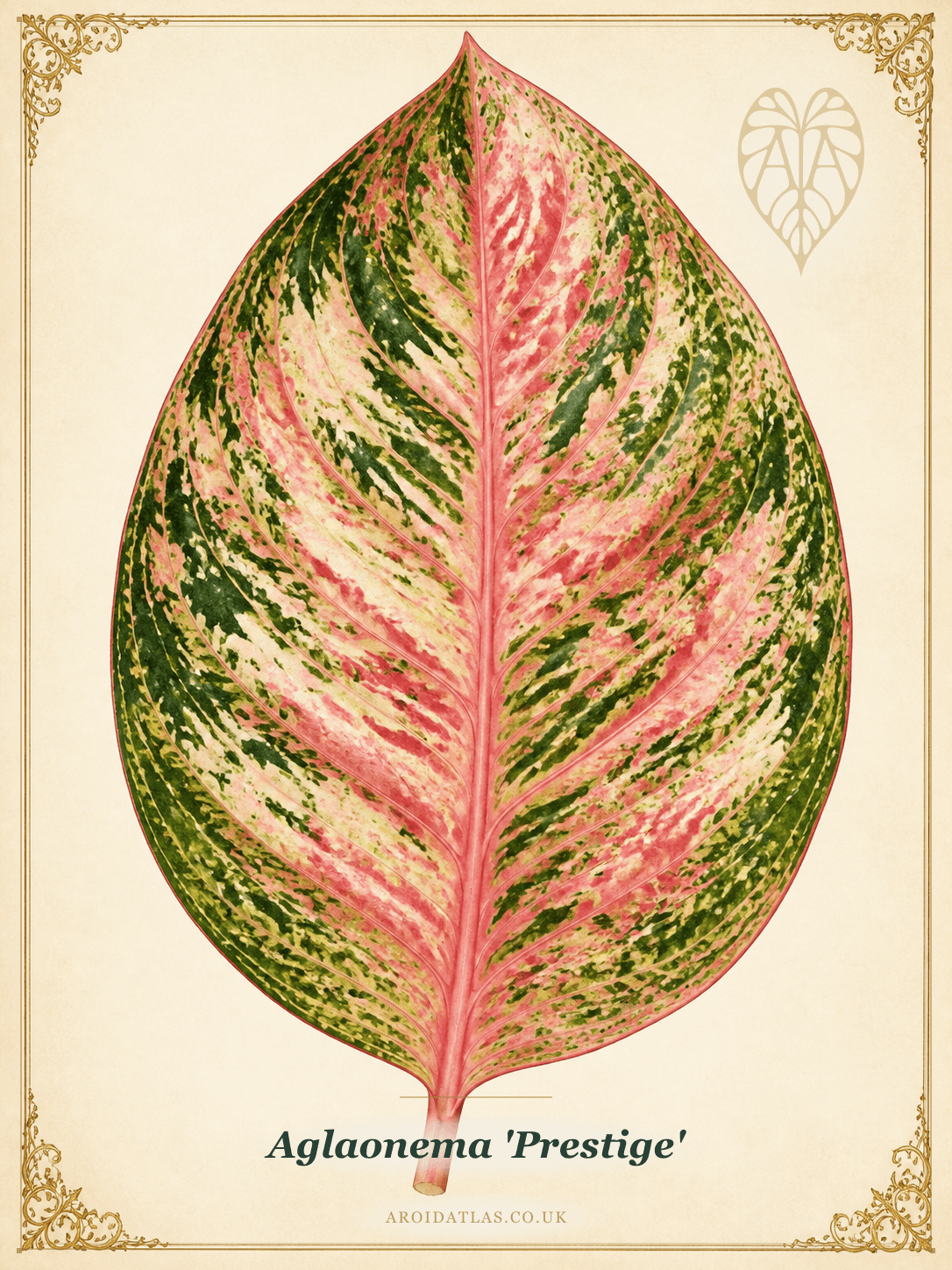
Aglaonema 'Prestige'
Base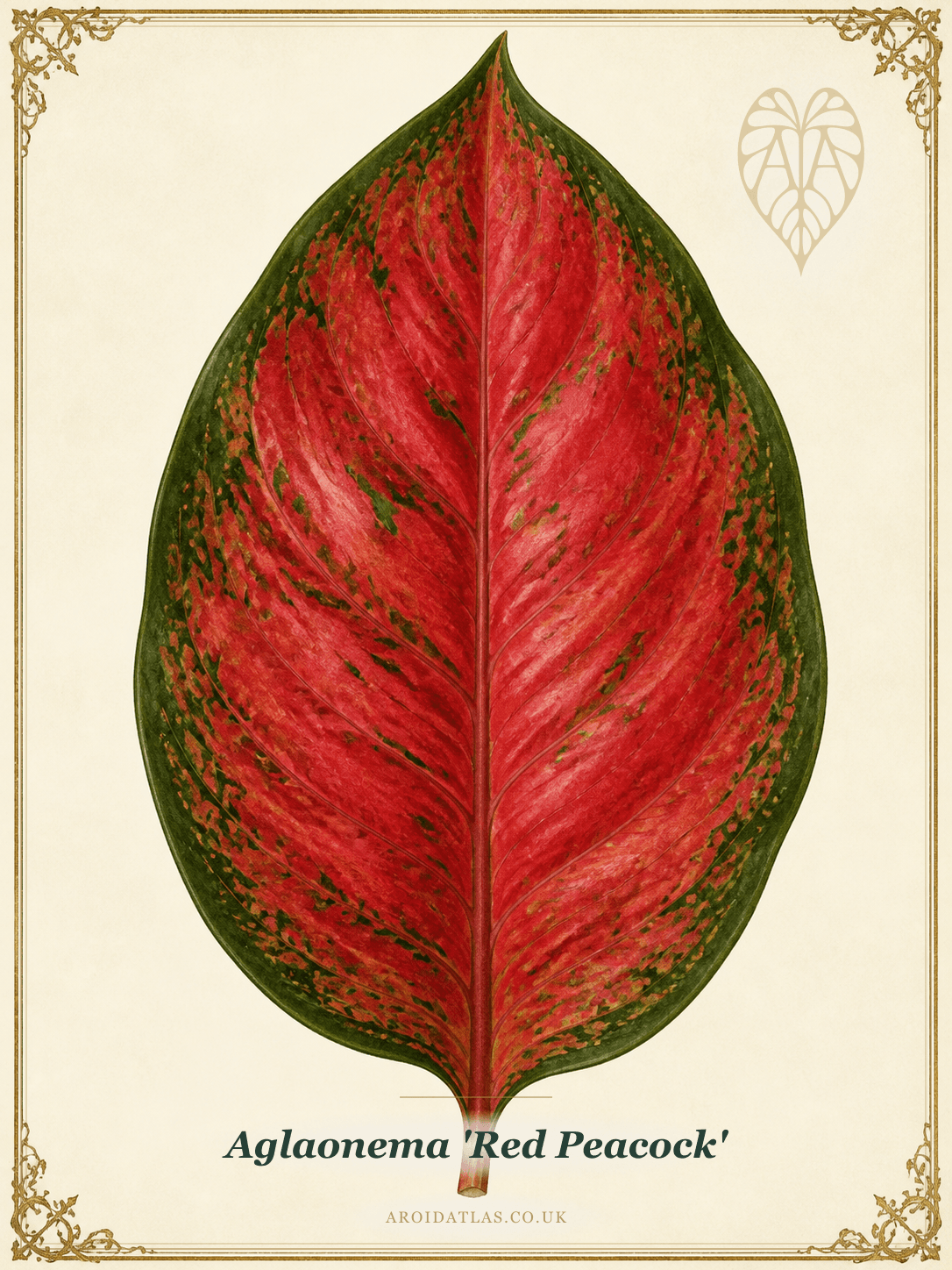
Aglaonema 'Red Peacock'
Base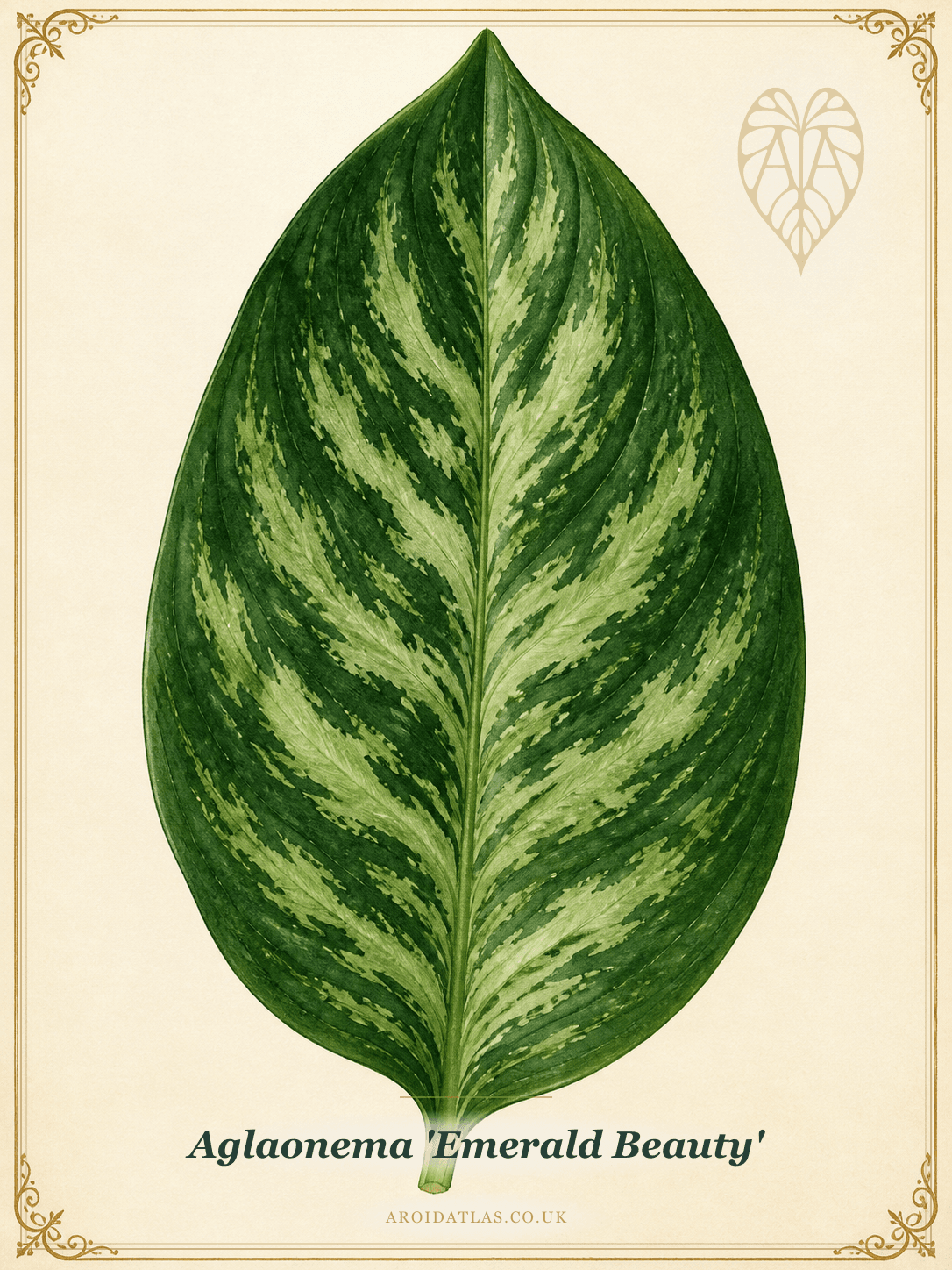
Aglaonema 'Emerald Beauty'
BaseFull Specimen Plate
Aglaonema commutatum
Chinese Evergreen
Aroid Atlas Price Guide
Select Plant Size
Pricing Data Key
Other colour-form prices
Aglaonema commutatum Morphology
About Aglaonema commutatum
Chinese Evergreen has long been a fixture of offices and shopping centres thanks to its unmatched tolerance for low light, dry air, and inconsistent care. Its lance-shaped leaves carry silvery-grey mottling along the veins, giving even the plain species a decorative, hand-marbled look without any variegation instability to manage. In its native Southeast Asian understorey it grows beneath a dense forest canopy, which is exactly the low-light logic that makes it thrive metres away from a window indoors. It grows slowly into a dense clump of upright cane-like stems and, unlike many aroids, rarely needs staking or support.
Native Range
Philippines
Market Analysis
Aglaonema commutatum Price Guide & Auction Value
Historical eBay auction metrics and live retailer listings updated weekly.
No eBay auction history available yet. Data is collected automatically as sales appear on eBay UK.
Before You Buy
Species-specific things to check when evaluating a listing
- Inexpensive and common; be wary of pricing implying rarity for the plain species
- This peerFamily group includes a dozen similarly-shaped Aglaonema cultivars; confirm the listing shows plain silvery-grey vein mottling, not a colour cultivar mislabelled as commutatum
- Check leaf undersides for mealybugs, which favour Aglaonema's dense cane growth
- Look for multiple upright canes rather than a single stem for a fuller specimen
Understorey Logic, Indoors
Commutatum's silvery-grey mottling isn't variegation in the unstable, chimeric sense. It's a fixed vein trait of the species, which is why it never reverts or needs bright light to hold its pattern. That fixedness also explains its tolerance for shade: in its native Philippine and Sulawesi understorey it grows under a closed canopy, metres from any direct sun, so the low-light conditions that would stress most houseplants are simply home for this one. It's the plainest-looking plant in its own peerFamily group of a dozen Aglaonema cultivars, but also the most forgiving.