Care Guides & Propagation Resources
Cultivating rare tropical aroids is both an art and a science. Each guide below covers one aspect of cultivation or propagation in full depth, illustrated with a step-by-step botanical plate series, plus a comprehensive glossary of terminology used by collectors.
Aroid Soil & Propagation Calculator
Select any collectible aroid genus to calculate optimal component volumes (Orchid Bark, Pumice, Coco Husk, Worm Castings) for your pots, and estimate propagation rooting schedules.
Propagation Guides
Where to cut, which tools to use, and what to do afterwards — grouped by genus and shared technique rather than one generic method.
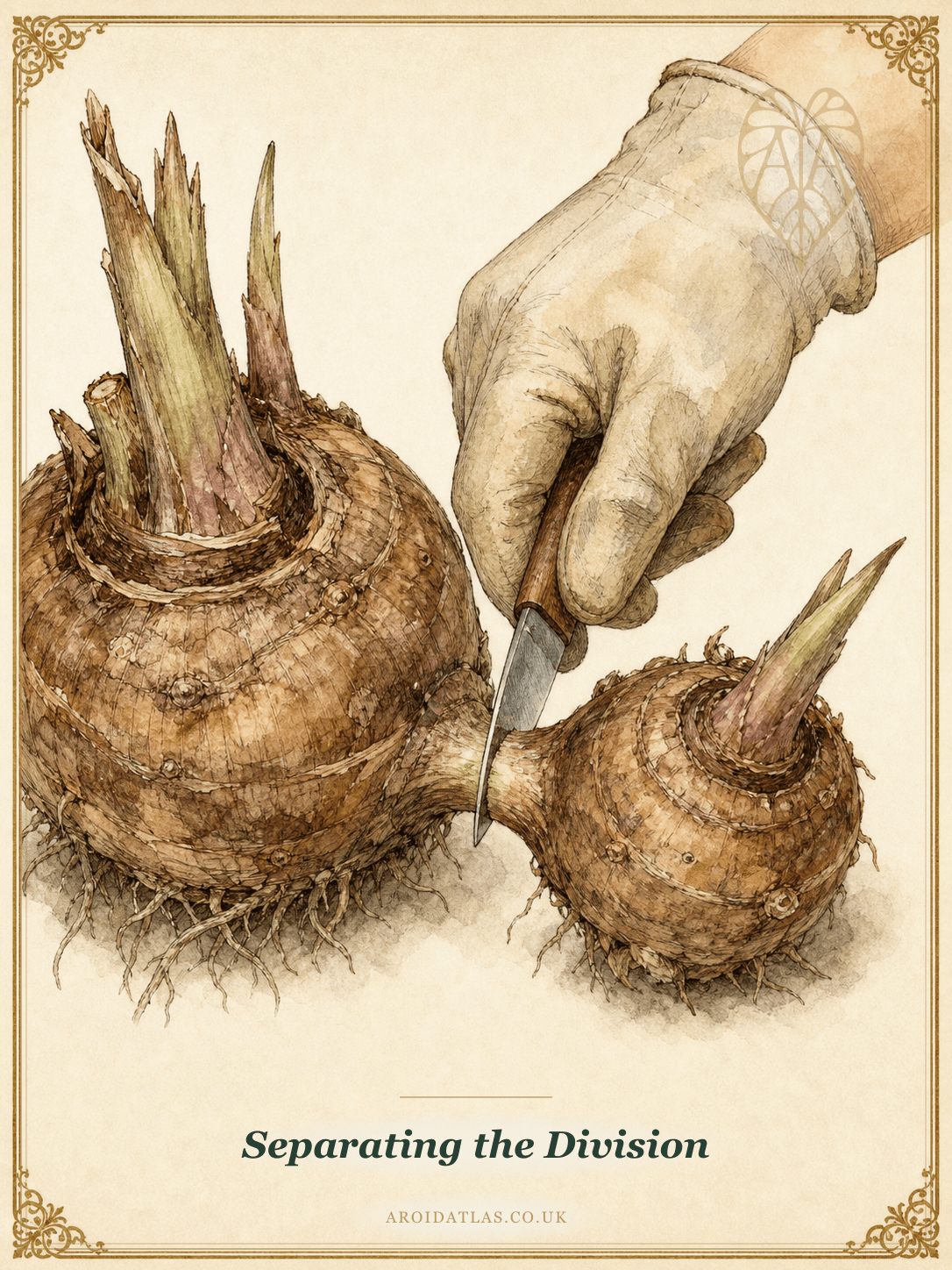
Propagating Alocasia, Colocasia & Caladium
No cutting, no node — these genera grow from an underground storage organ, and propagation means dividing a daughter offset away from the mother corm, cleanly and with patience.
Read guide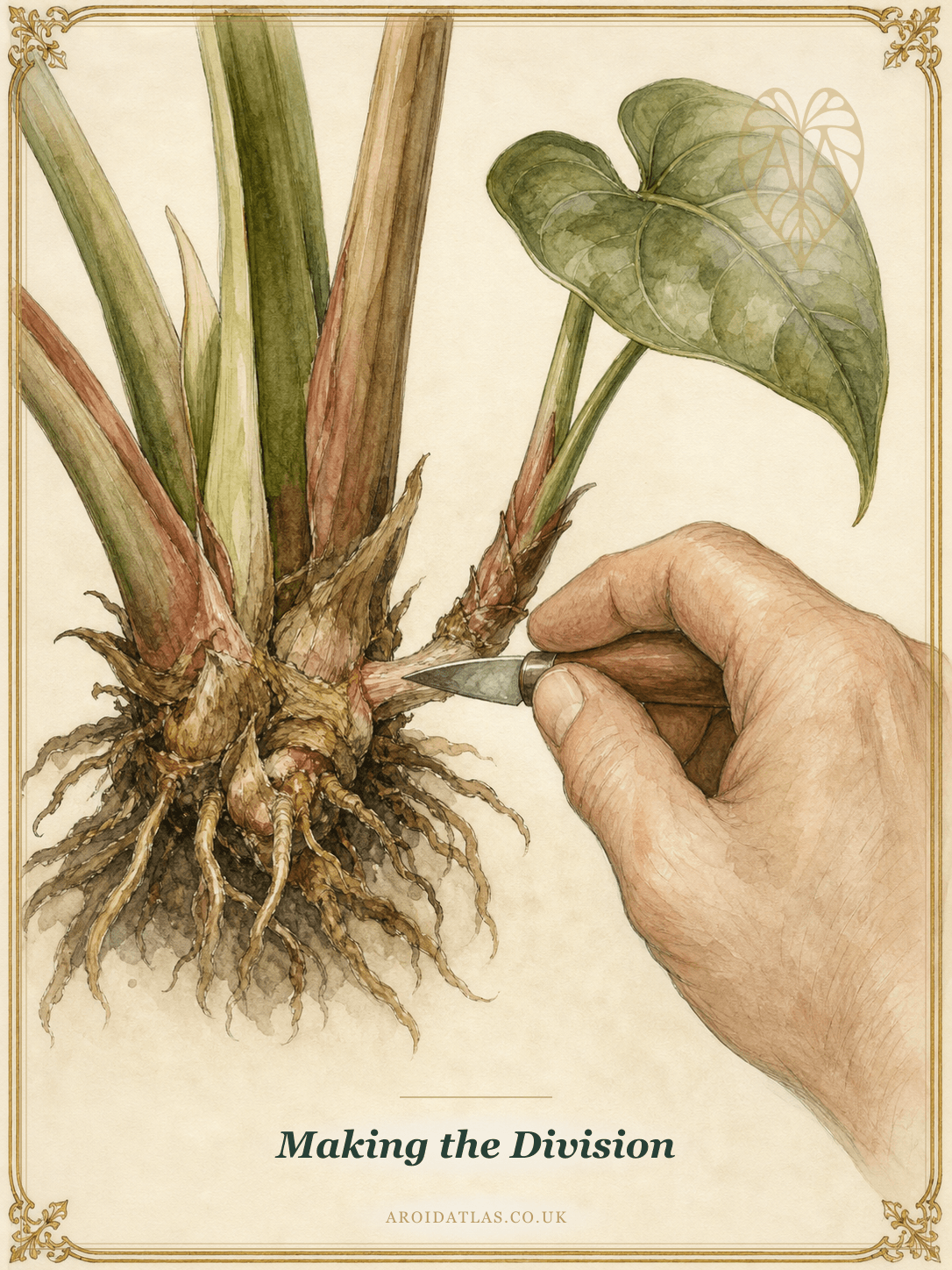
Propagating Anthurium
Anthurium's fine, velamen-coated roots don't behave like a vining aroid's — division is the reliable method, and the aftercare has to respect roots that hate sitting wet.
Read guide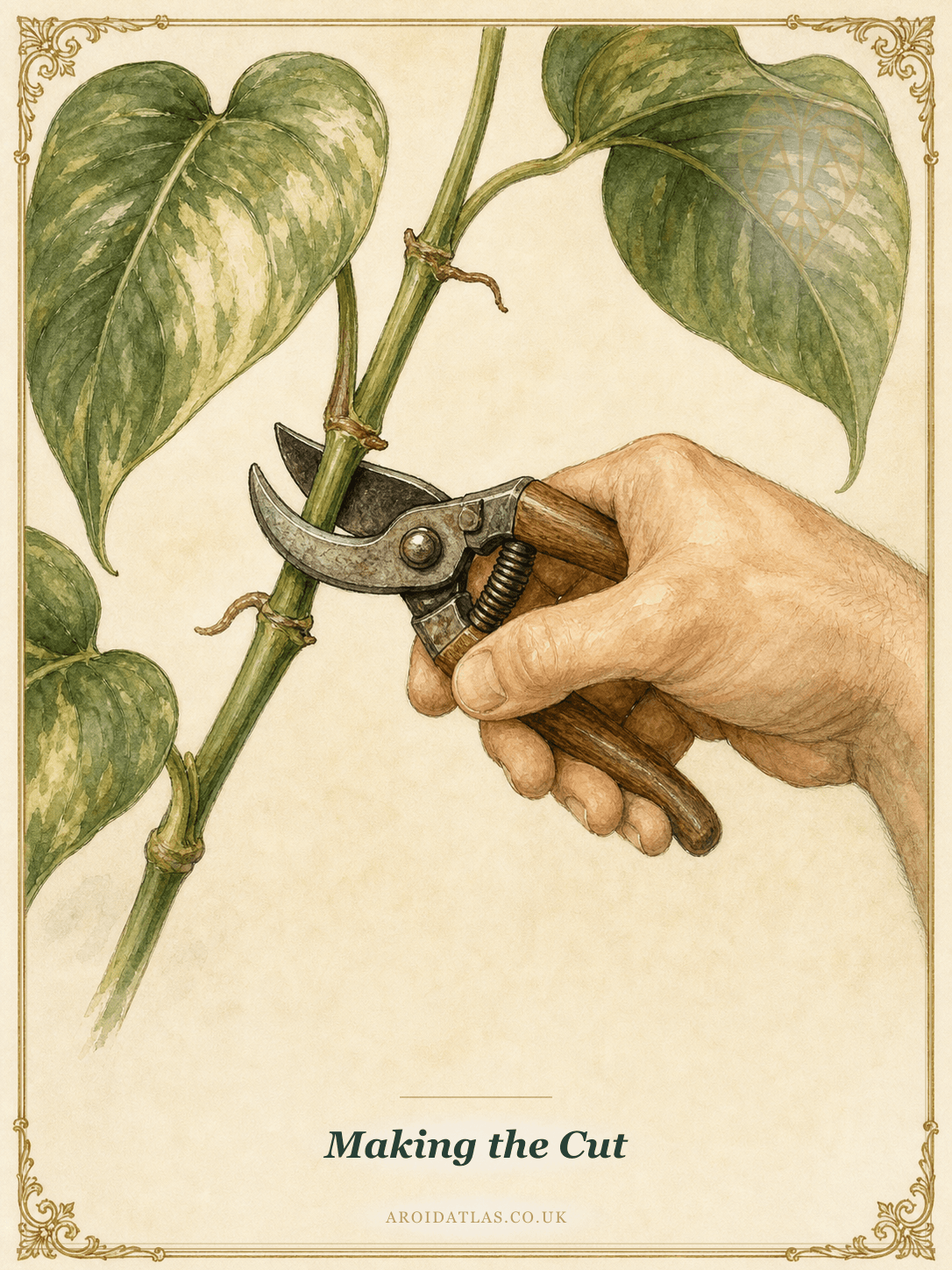
Propagating Climbing Aroids
Monstera, Philodendron, Epipremnum, Syngonium, Scindapsus and Rhaphidophora all root from the same structure — a node. Get the cut right and the rest is patience.
Read guideCare Guides
Climate, substrate, and watering fundamentals for keeping collectible aroids thriving long-term.

Bright Indirect Light Demystified
Forest canopy climbers receive dappled shade in the wild. Direct sun burns delicate leaves, while low light leads to leggy growth and loss of variegation.
Read guide
Humidity vs. Air Circulation
High humidity keeps growth points moist and helps aerial roots attach. However, stagnant air invites fungal pathogens. Active ventilation is key.
Read guide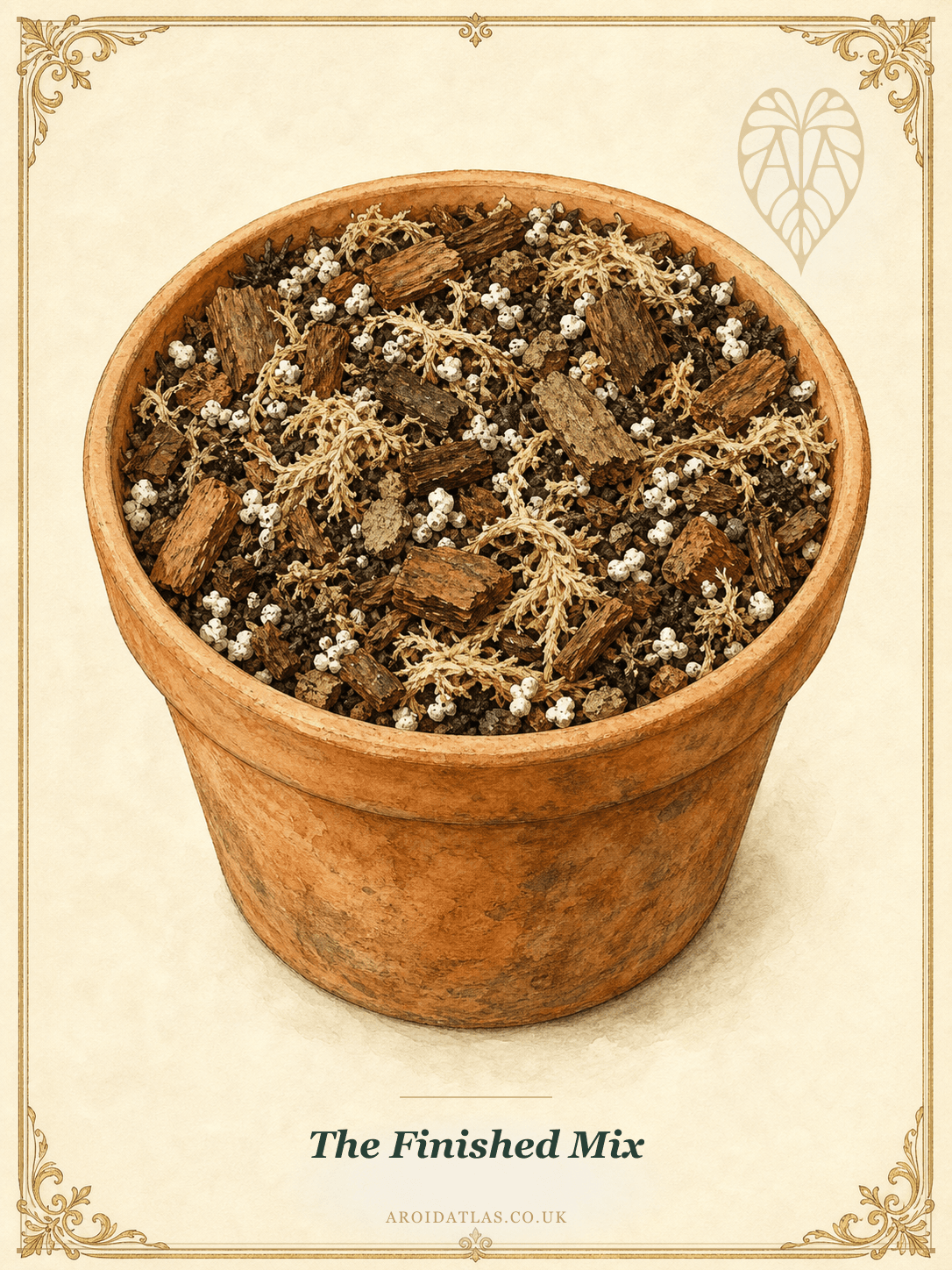
The Ultimate Chunky Aroid Mix
Rare tropical aroids are mostly epiphytic or hemiepiphytic. They need highly aerated, chunky substrates to prevent root rot while retaining moisture.
Read guide
Watering & Mineral Nutrition
Overwatering is the number one killer of rare collectibles. Water when the top 50% of the pot dries, and fertilize weakly with every watering.
Read guideBotanical Glossary
Understand the specific scientific terms and terminology used across species profiles and care documentation.
Fenestration
Naturally occurring holes or splits in a leaf blade, characteristic of mature Monstera species, adapted to allow wind and rain to pass through without tearing the leaf.
Epiphyte
A plant that grows harmlessly upon another plant (such as a tree canopy host) and derives its moisture and nutrients from the air, rain, and debris surrounding it.
Variegation
The appearance of differently coloured zones (usually white, cream, or yellow) in leaves or stems due to genetic mutation or chimera, leading to zones lacking chlorophyll.
Node
The critical structural point on a stem where leaves, buds, and aerial roots originate. A cutting must contain at least one node to be propagated successfully.
Petiolar Sheath
A wing-like structure or sheath flanking the leaf stem (petiole) that protects emerging new leaves before they unfurl.
Bullate
A leaf texture described as puckered, blistered, or heavily wrinkled, usually an adaptation to increase surface area for light absorption in low-light rain forest floors.