The Ultimate Chunky Aroid Mix
Rare tropical aroids are mostly epiphytic or hemiepiphytic. They need highly aerated, chunky substrates to prevent root rot while retaining moisture.
Why aroids reject ordinary potting soil
In the wild, most collectible aroids never touch open ground. Philodendrons and Monsteras climb host trees as hemiepiphytes, their aerial roots gripping bark and gathering moisture from leaf litter and rain rather than soil. Anthuriums and many Alocasia grow as true epiphytes or in loose volcanic humus, their root systems evolved to breathe. A dense, water-retentive compost smothers that root system almost immediately. Oxygen can't reach it, anaerobic bacteria move in, and rot follows within weeks.
A chunky substrate solves this by leaving large air pockets between particles even when saturated. Water drains through quickly, but enough clings to the surface of bark and moss fibres to keep humidity high around the root zone between waterings. The goal is not to retain water; it's to retain air while briefly holding moisture.
Step by Step
Follow the trail below, one component at a time — each illustrated in the same antique botanical plate style used across our species archive.
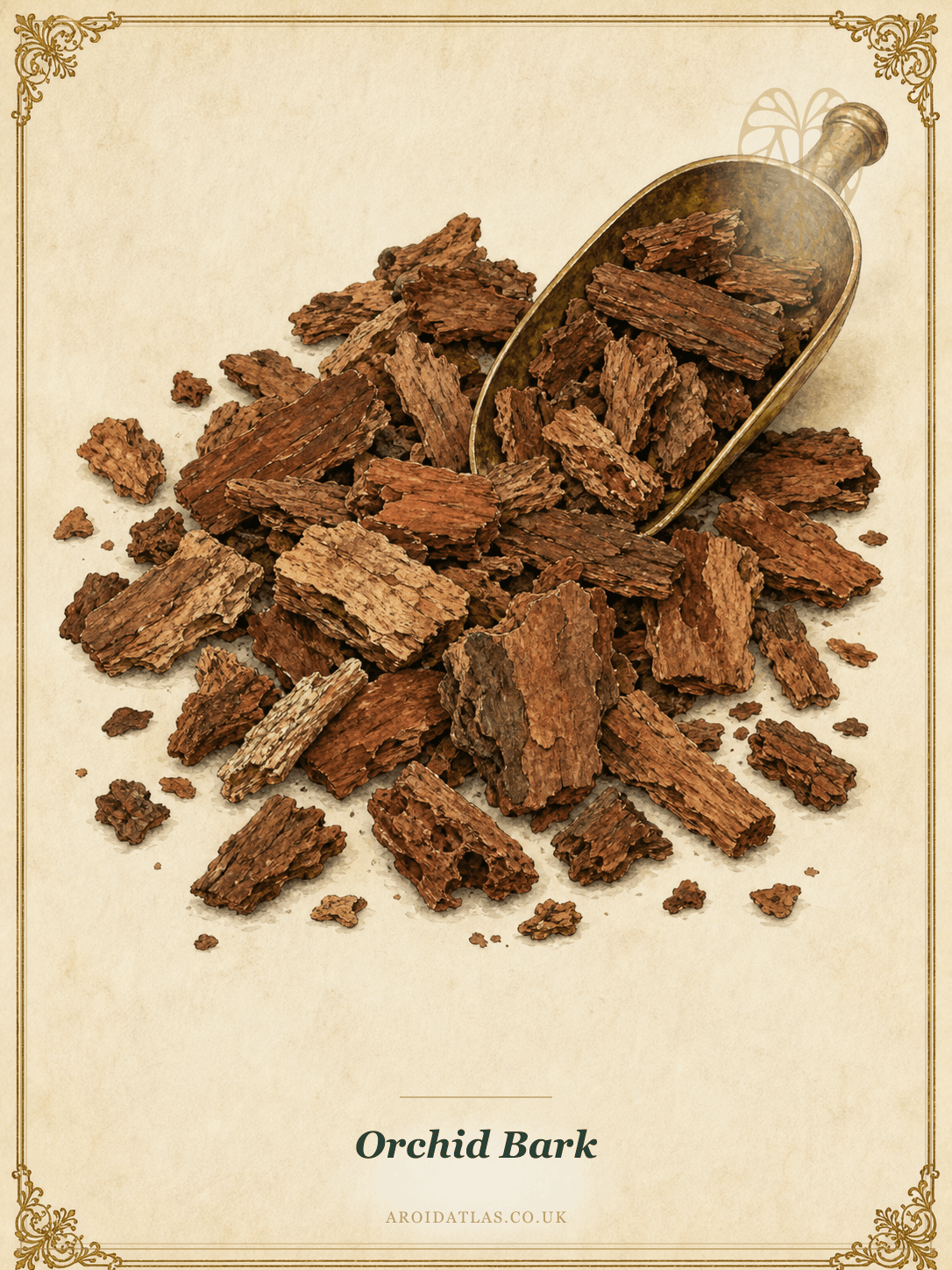
Orchid Bark
Medium-grade fir bark chunks, irregular and rough-edged, form the structural backbone of the mix and resist compaction, keeping air moving through the root zone for a year or more before breaking down.
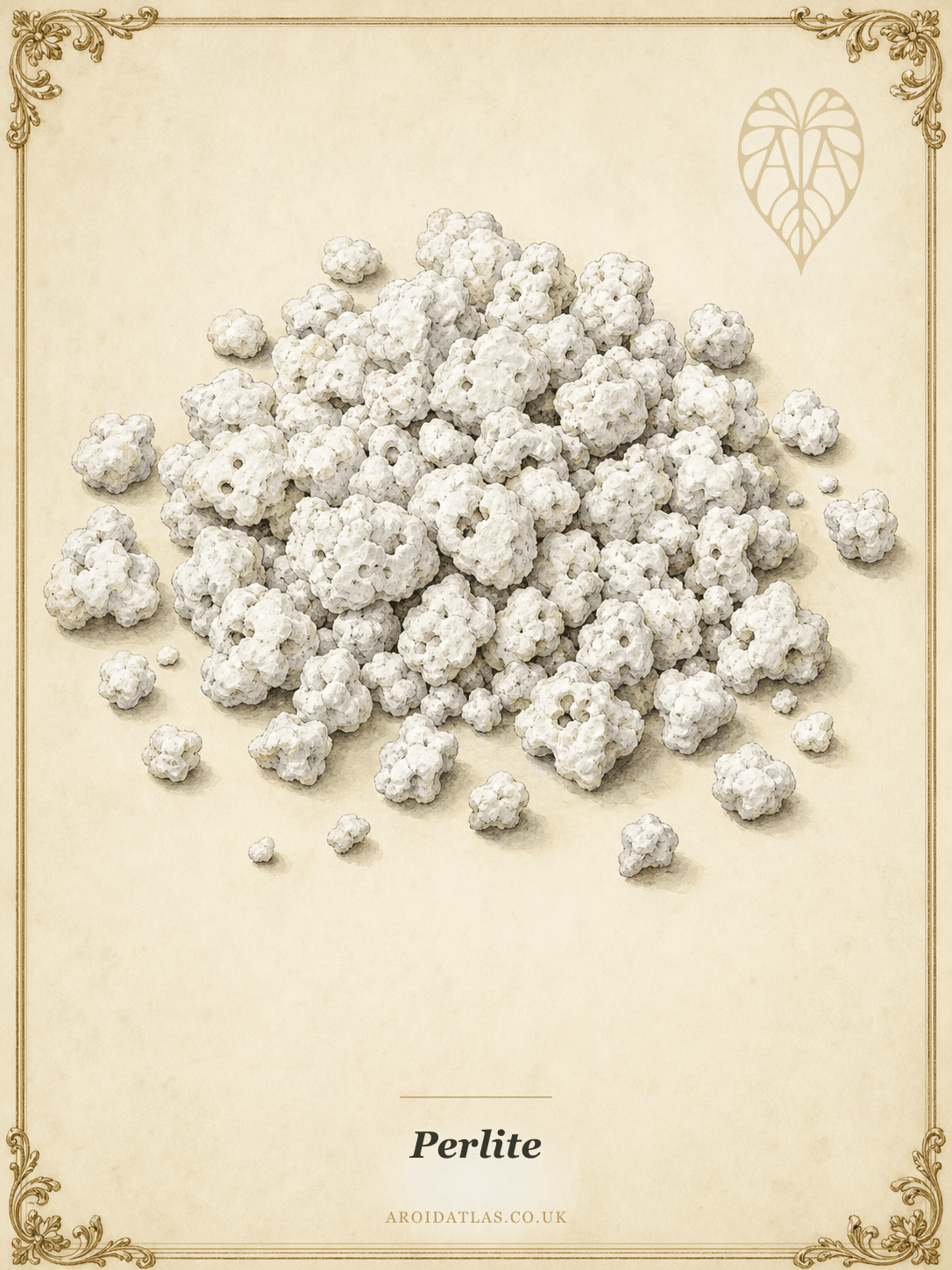
Perlite
Expanded volcanic perlite adds permanent drainage channels that bark alone can't provide. It never decomposes, so it keeps aerating the mix long after the organic components have started to soften.
Perlite floats. If you see white flecks pushed to the surface after a heavy watering, that's normal; press the pot gently back down rather than topping up with more.
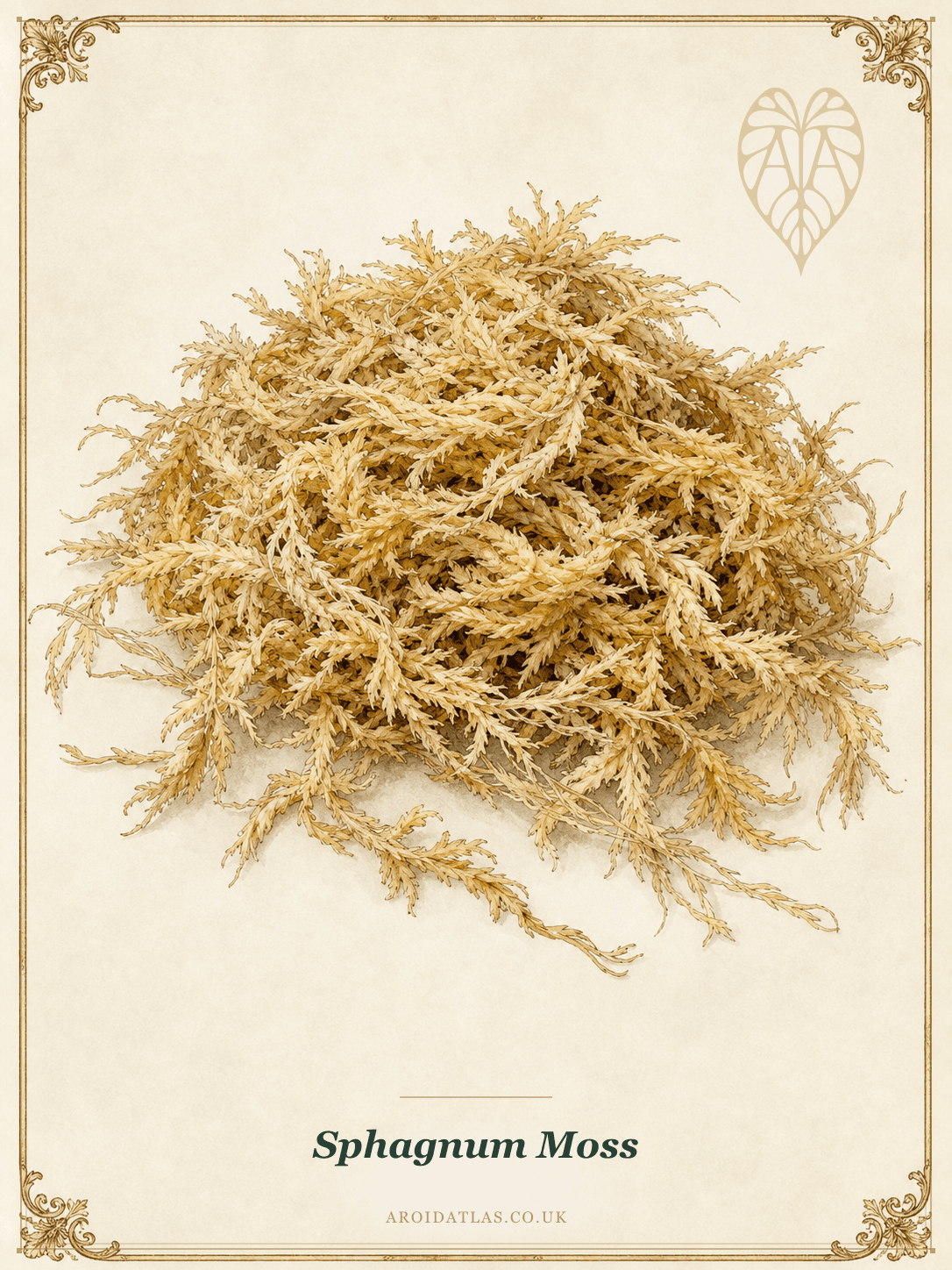
Sphagnum Moss
Dried sphagnum strands hold several times their weight in water and release it slowly, buffering the swings between a freshly watered pot and a dry one, the difference between a plant that sulks weekly and one that thrives.
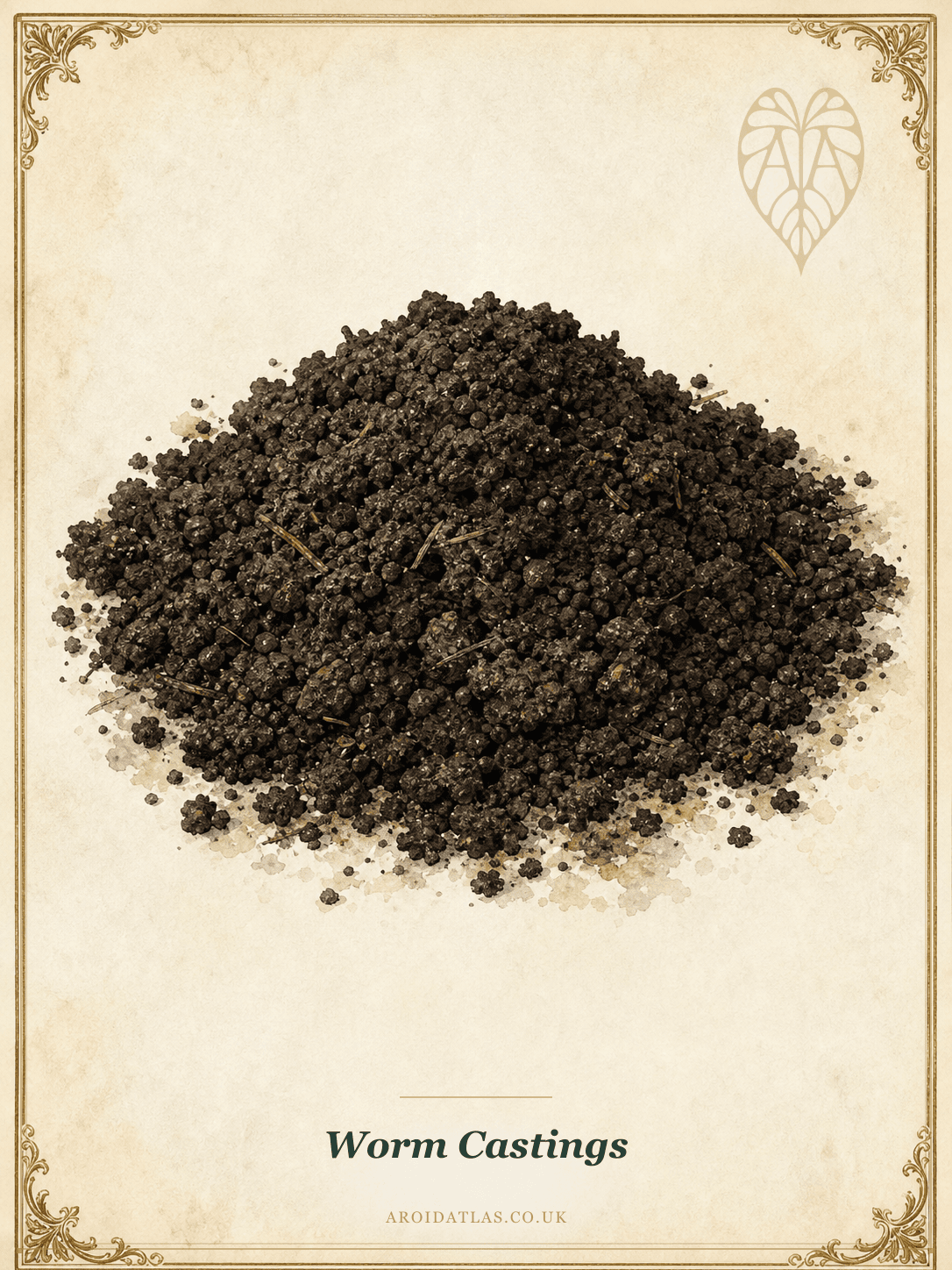
Worm Castings
A small proportion of worm castings introduces a slow-release nutrient base and beneficial microbial activity, feeding the plant gently between fertigation rather than in the sharp spikes a liquid feed alone produces.
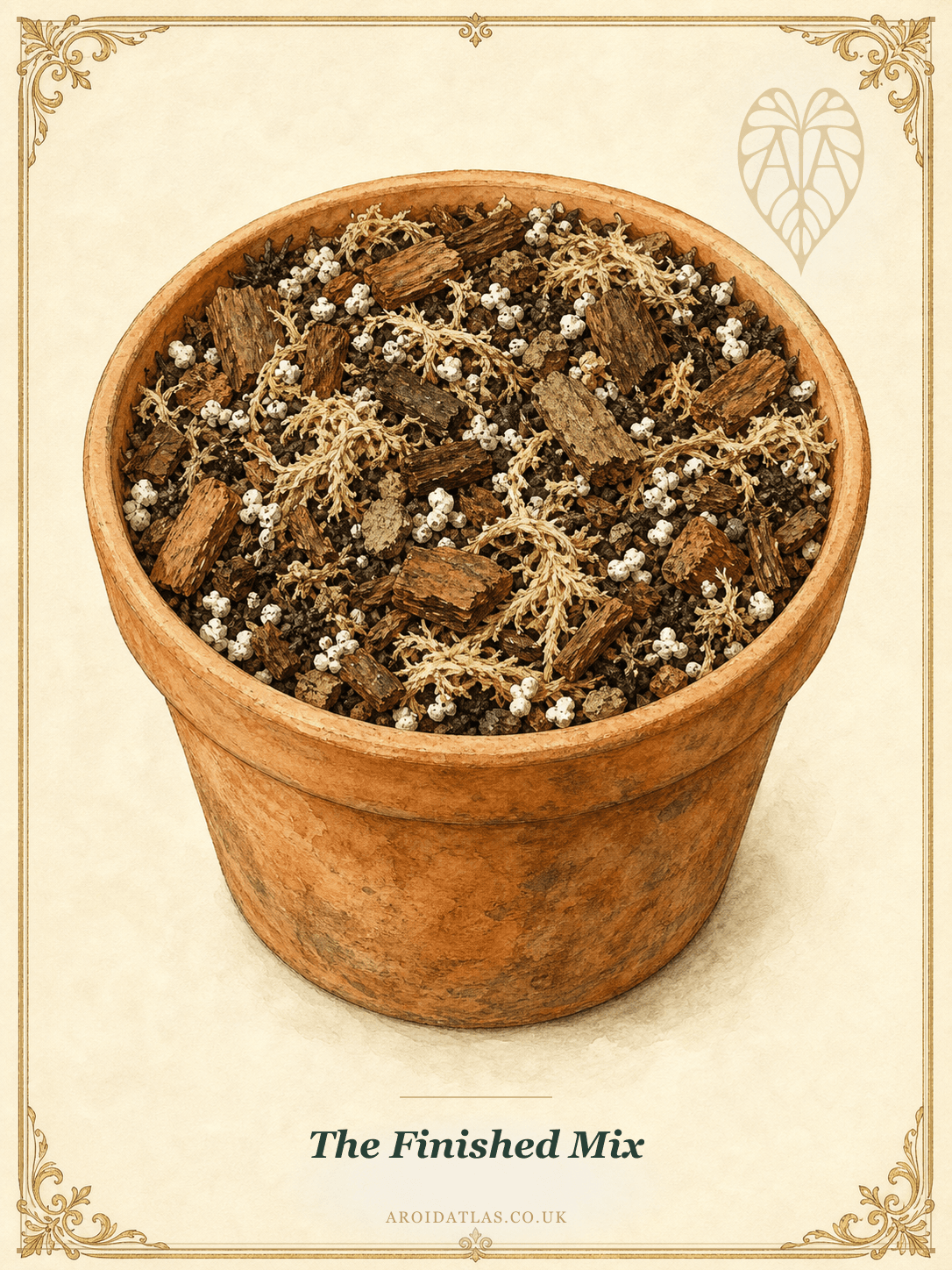
The Finished Mix
Combined in roughly a 4:3:2:1 ratio and turned through by hand until evenly distributed, the finished mix should feel light and loose, hold its shape loosely when squeezed, and fall apart again the moment you let go.
Mix more than you need. A sealed tub of spare substrate ages far better than a half-used bag, and you'll thank yourself at the next repot.
Building your ratio
A dependable starting ratio for most climbing and rosette aroids is 40% structural bark or coconut husk chips, 30% perlite or pumice for drainage, 20% sphagnum moss or coco coir for moisture retention, and 10% worm castings with a small amount of activated charcoal to buffer acidity and purify the mix.
Adjust from that baseline by genus and leaf texture. Thin-leaved, moisture-hungry species like Anthurium veitchii or Philodendron gloriosum benefit from a slightly higher sphagnum ratio (up to 30%) to avoid crisping between waterings. Thick, waxy-leaved or heavily variegated plants that are prone to rot (many Philodendron and Monstera variegates) do better pushed the other way, toward 50% bark and reduced moss, since variegated tissue photosynthesises less efficiently and takes up water more slowly.
Pot size matters as much as ratio. A mix that performs perfectly in a 12cm nursery pot can stay wet for a week too long in a 25cm ceramic planter, simply because there's more volume holding moisture around a proportionally smaller root mass. Size the pot to the root ball, not the desired final look of the plant.
Signs of a bad mix
A substrate that's too dense announces itself quickly: the surface stays damp for more than four or five days after watering, water pools rather than draining within seconds of pouring, and new roots that do emerge are dark, mushy, or absent altogether. A substrate that's too coarse shows the opposite problem: leaves wilt or curl within a day or two of watering even though the pot feels heavy, because water is draining past the root zone before it can be absorbed.
When repotting a plant that's struggling, it's worth washing the old mix off the roots entirely rather than potting up on top of it. Compacted, decomposed bark from a mix that's been sitting for 18 months or more loses its structure and starts to behave like ordinary soil, regardless of what it started as.
Buffer your coco coir first
Coco coir arrives from the processor with its exchange sites already loaded with sodium and potassium, not calcium and magnesium. Skip a pre-soak in a CalMag or calcium nitrate solution and those two elements can end up chemically locked out of the mix for months, even though your feeding schedule looks correct on paper. A 24-hour soak in a dilute CalMag solution before use fixes it.
The charcoal debate
Activated charcoal shows up in almost every chunky-mix recipe online, supposedly to 'sweeten' the substrate and mop up impurities. Plenty of experienced growers will tell you that in a mix this fast-draining, water moves through too quickly for meaningful adsorption to happen. It stays in most recipes out of habit as much as proven benefit, though it does no harm at the small ratio used here.
Trust the squeeze, not the ruler
Ratios are a starting point, not a rulebook. Grab a handful of the finished mix and squeeze it: it should hold its shape for a second, then crumble apart the moment you let go. Balls up like wet sand and stays that way? Add more bark. Won't hold together at all? Add a touch more moss.
When soil keeps losing, some collectors switch to LECA
If you've killed the same species twice from overwatering, moving it into semi-hydroponics (LECA clay balls plus a nutrient reservoir) removes the guesswork entirely, since there's no organic matter left to rot, just a water level to check. It's a different skill set to learn, not a shortcut, but it solves an 'I can't stop overwatering' problem at the root.
Related Species
This guide applies directly to the following genera in our archive: