Scroll to explore forms of Caladium bicolor
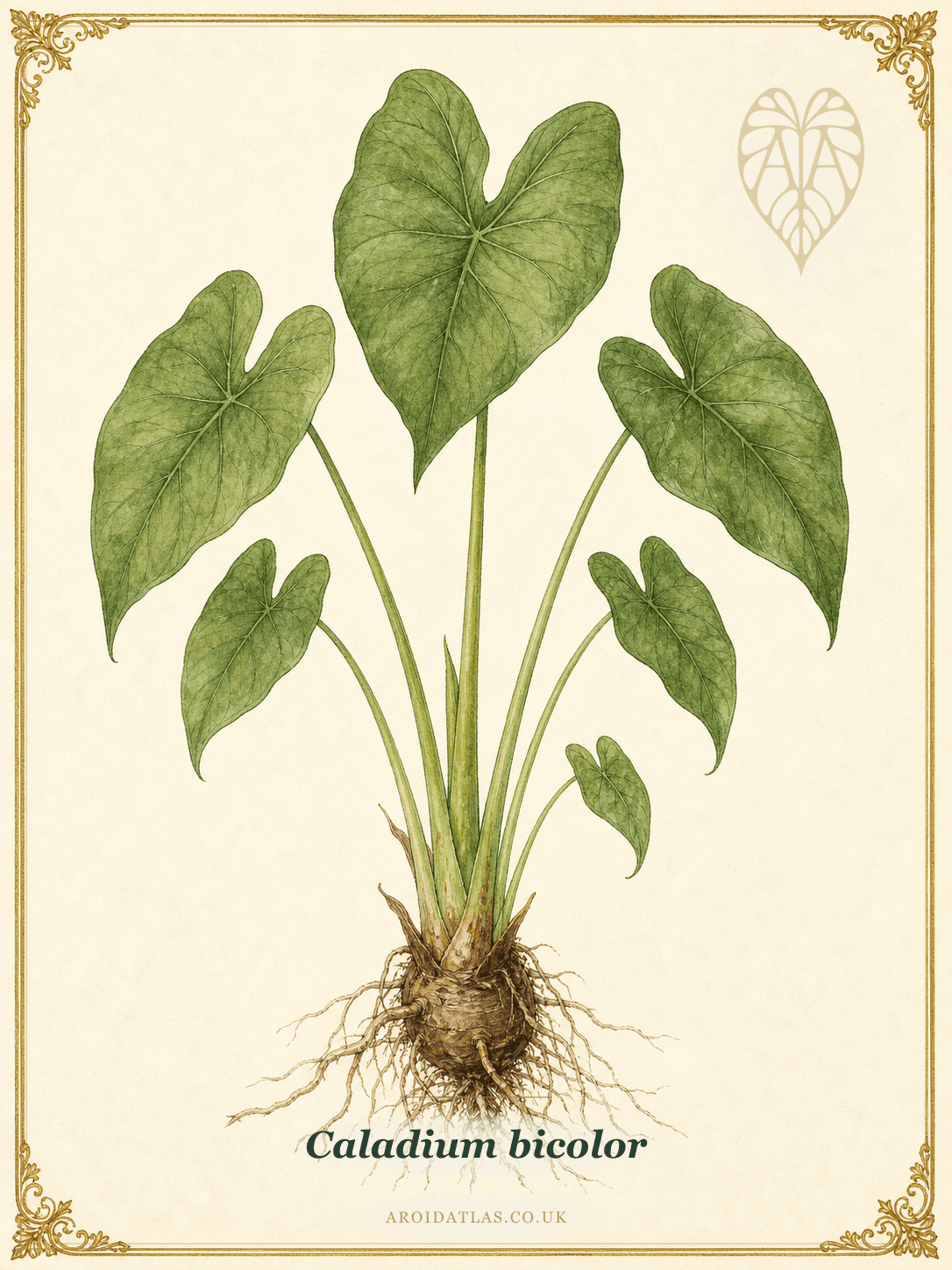
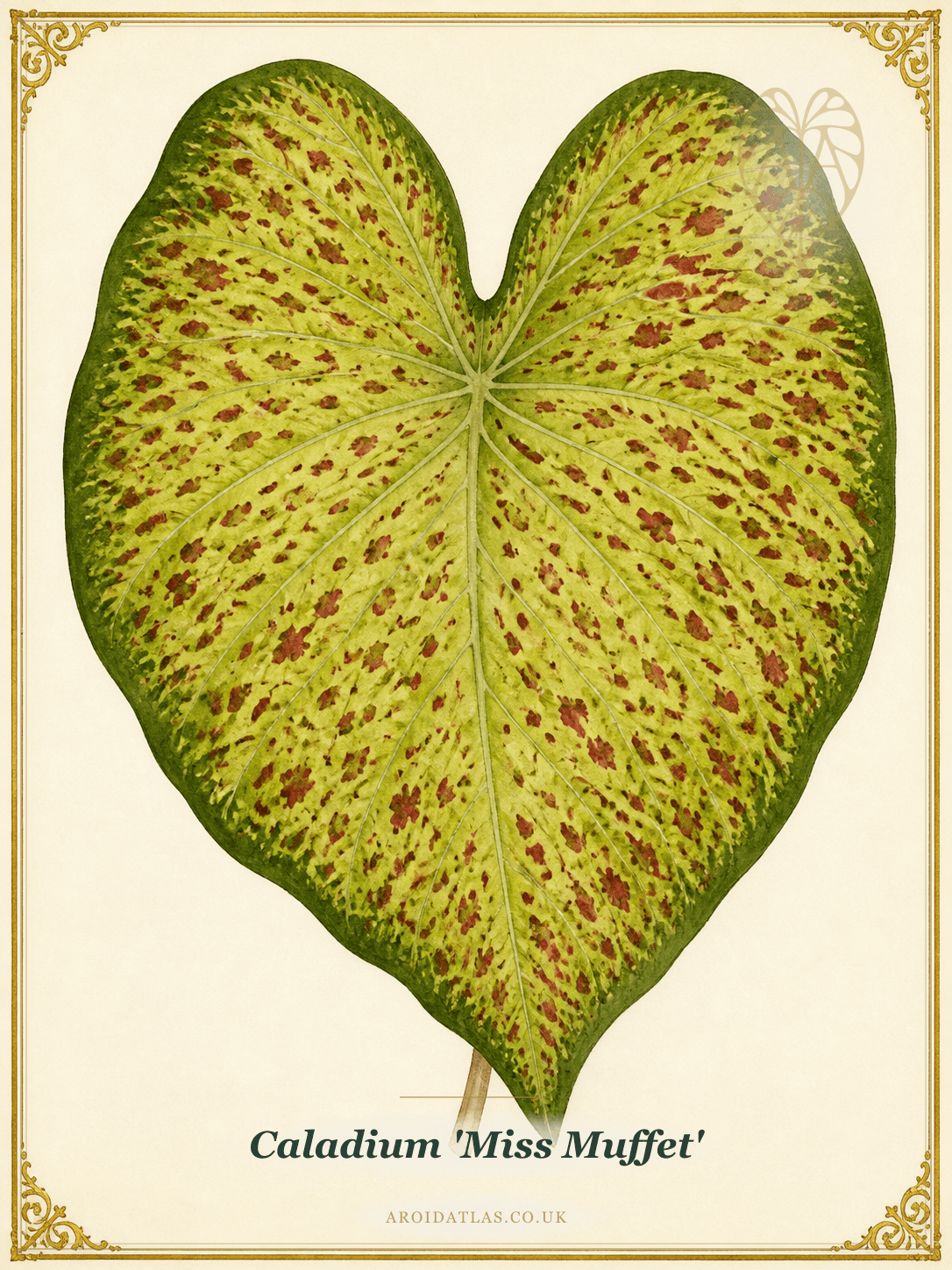
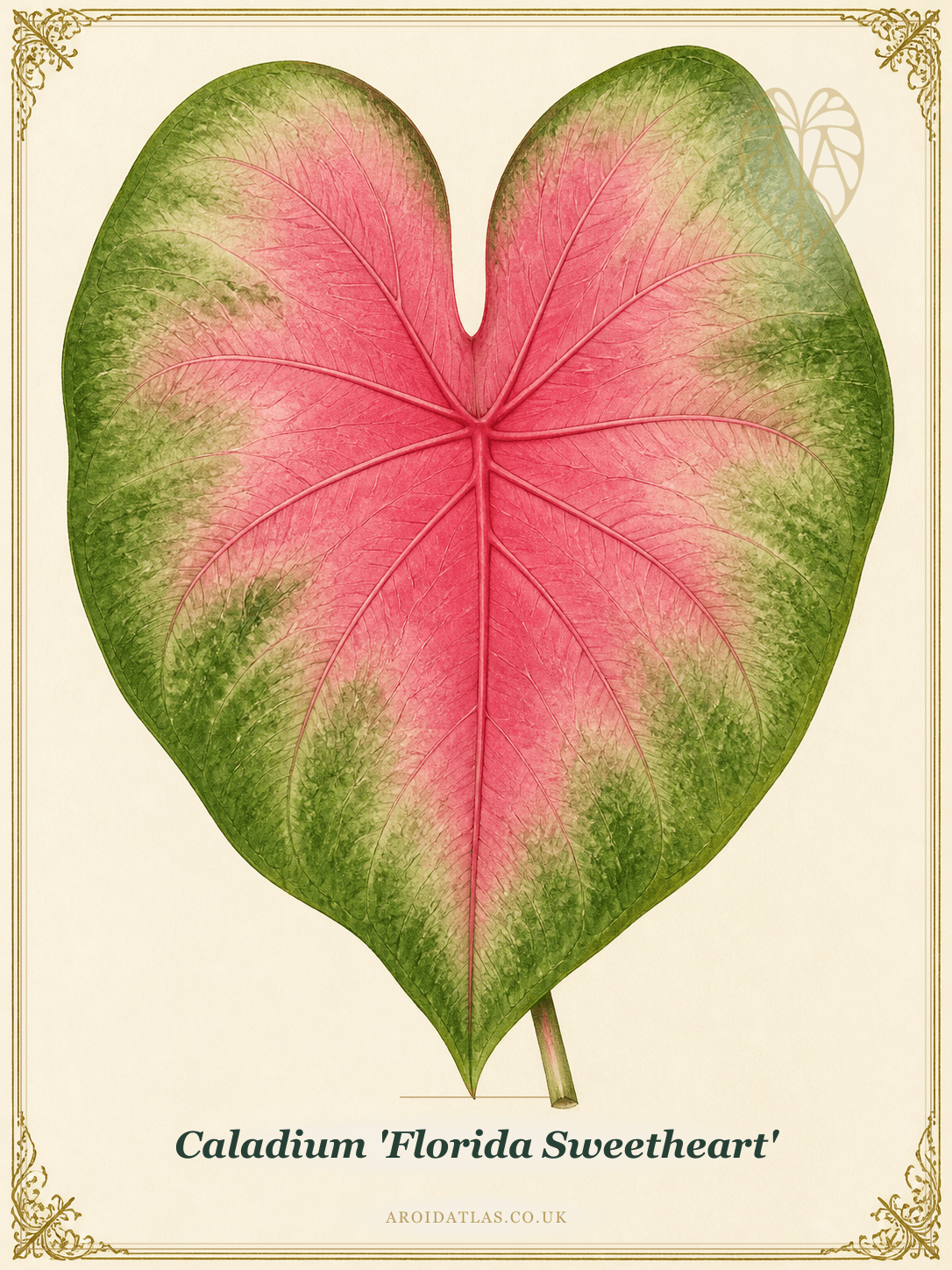
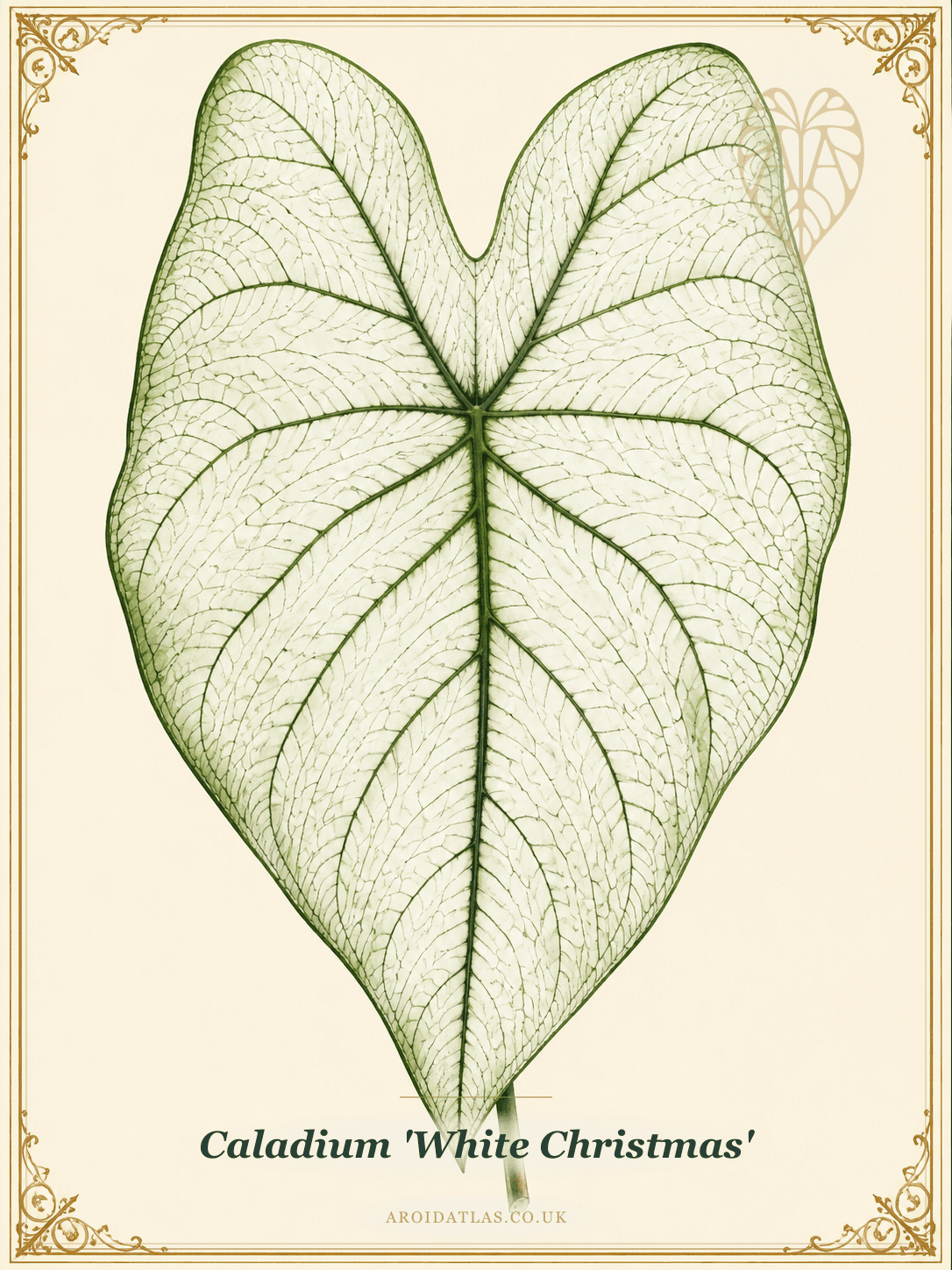
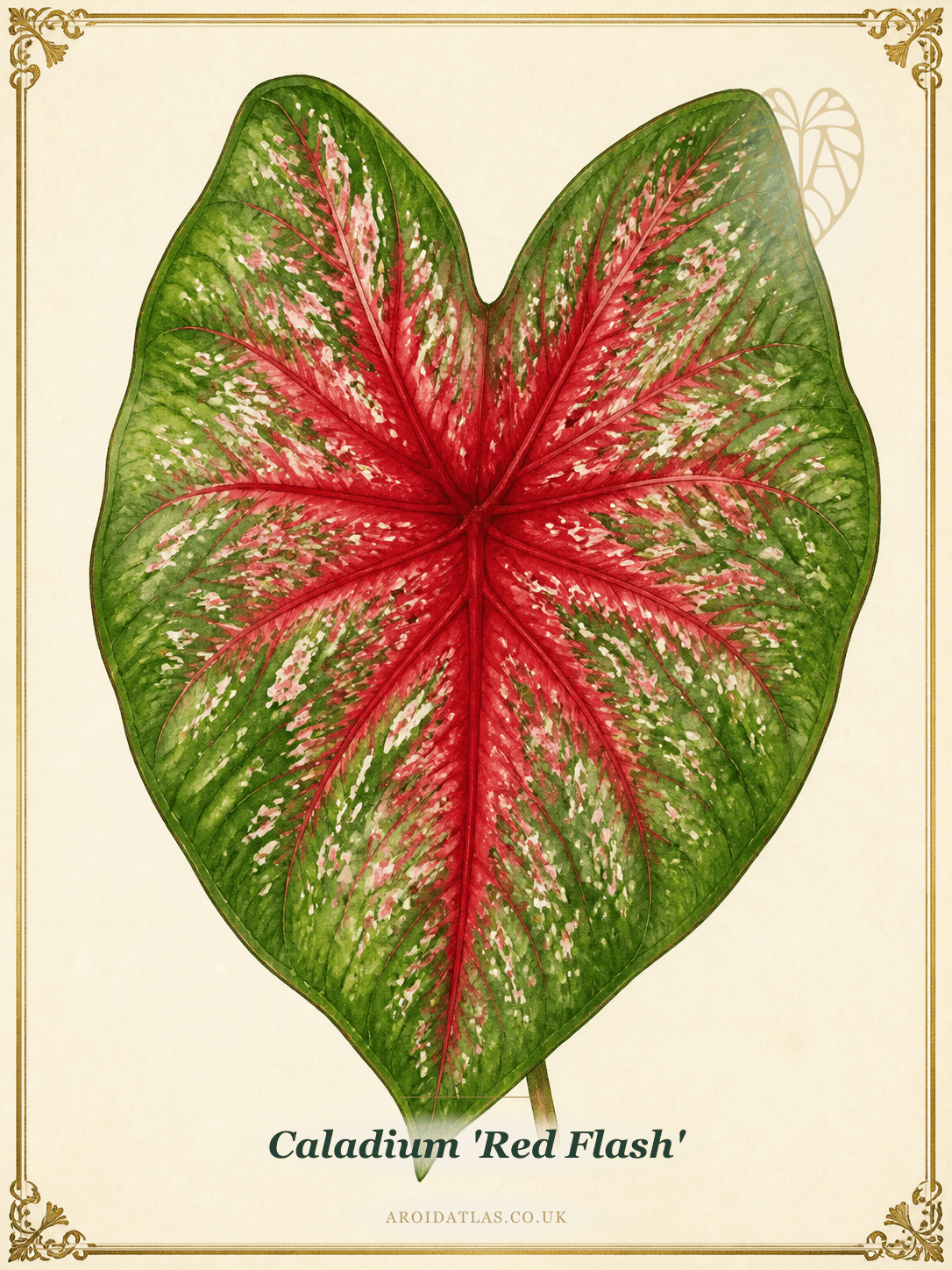
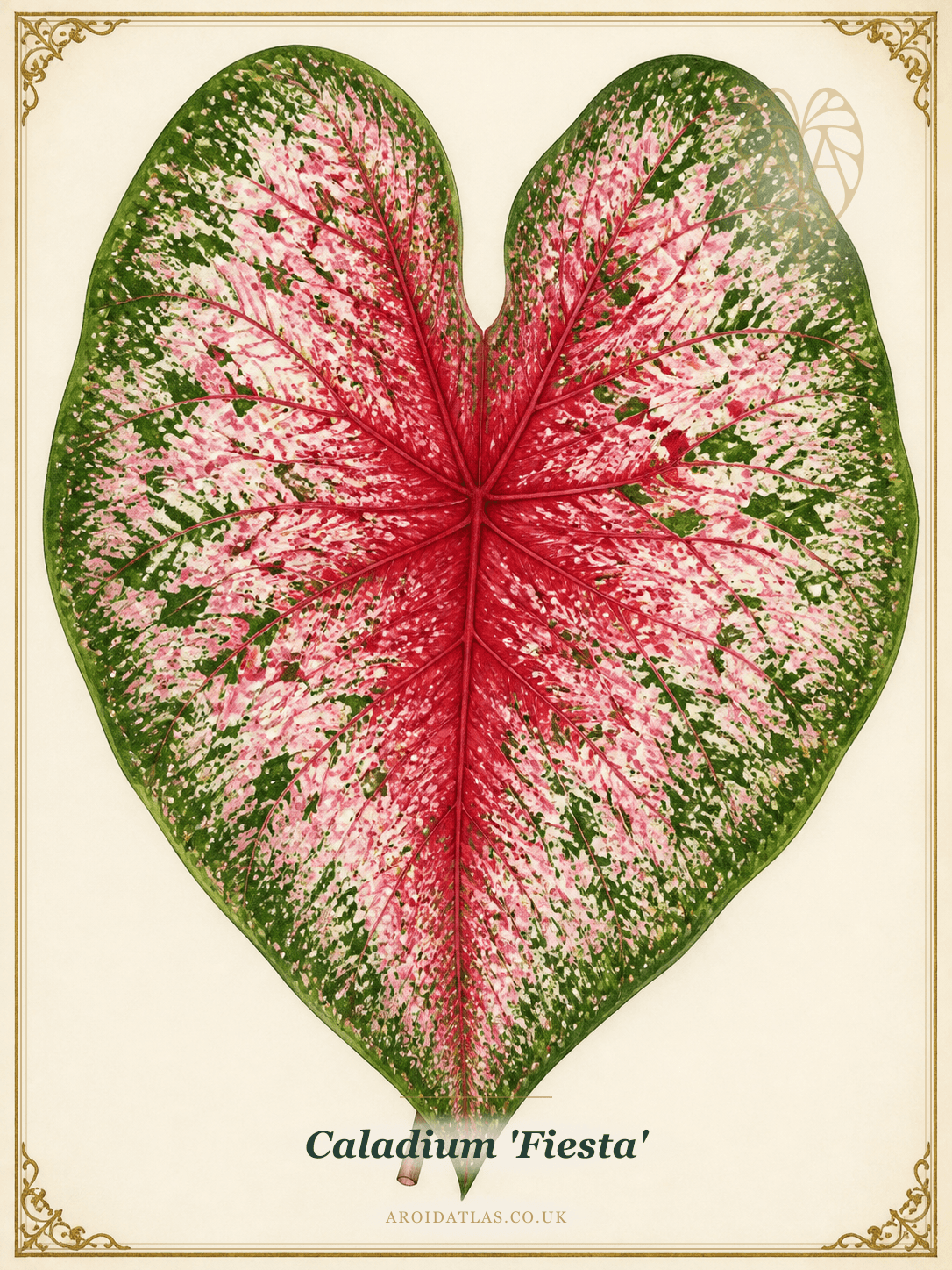
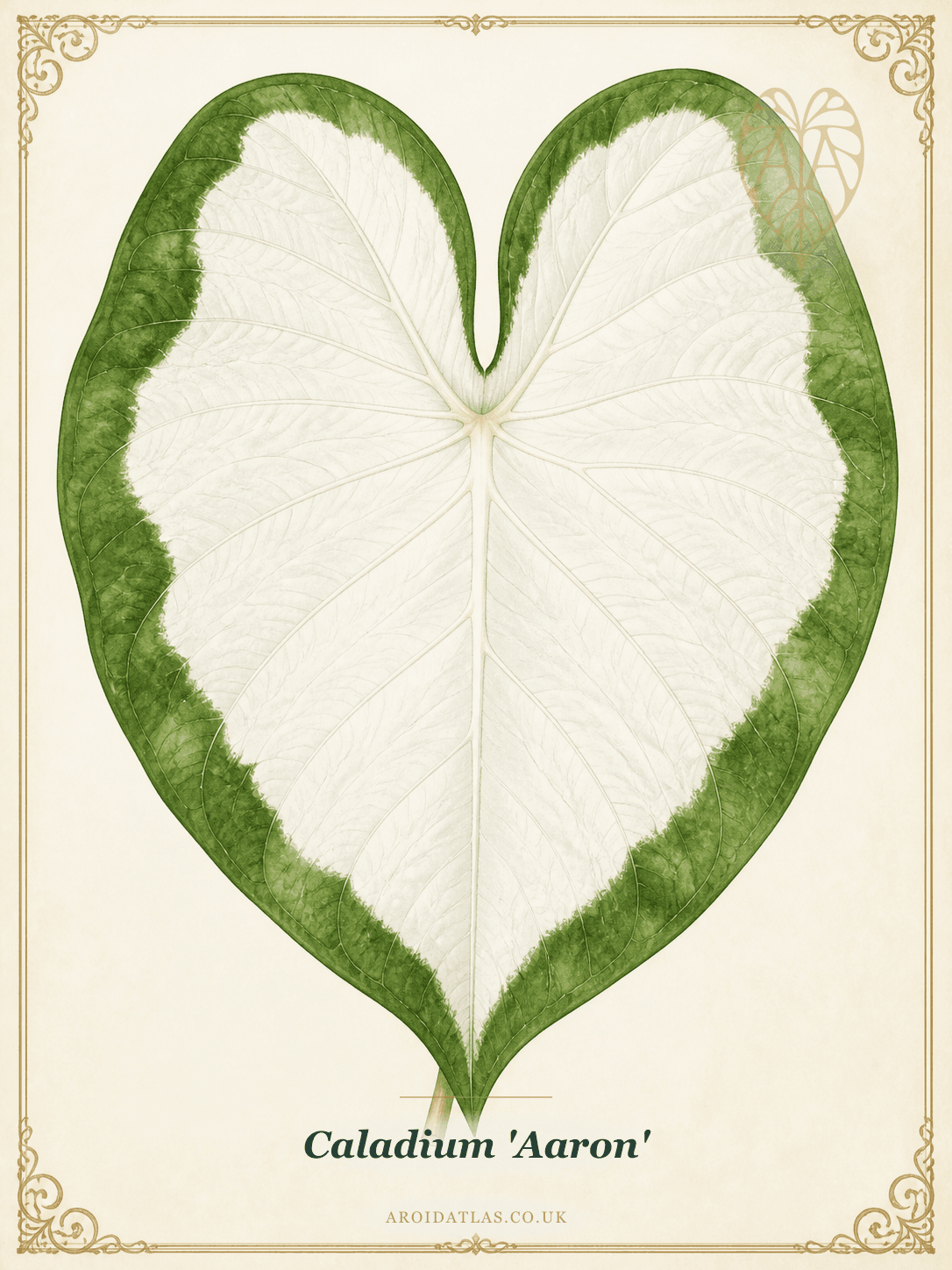
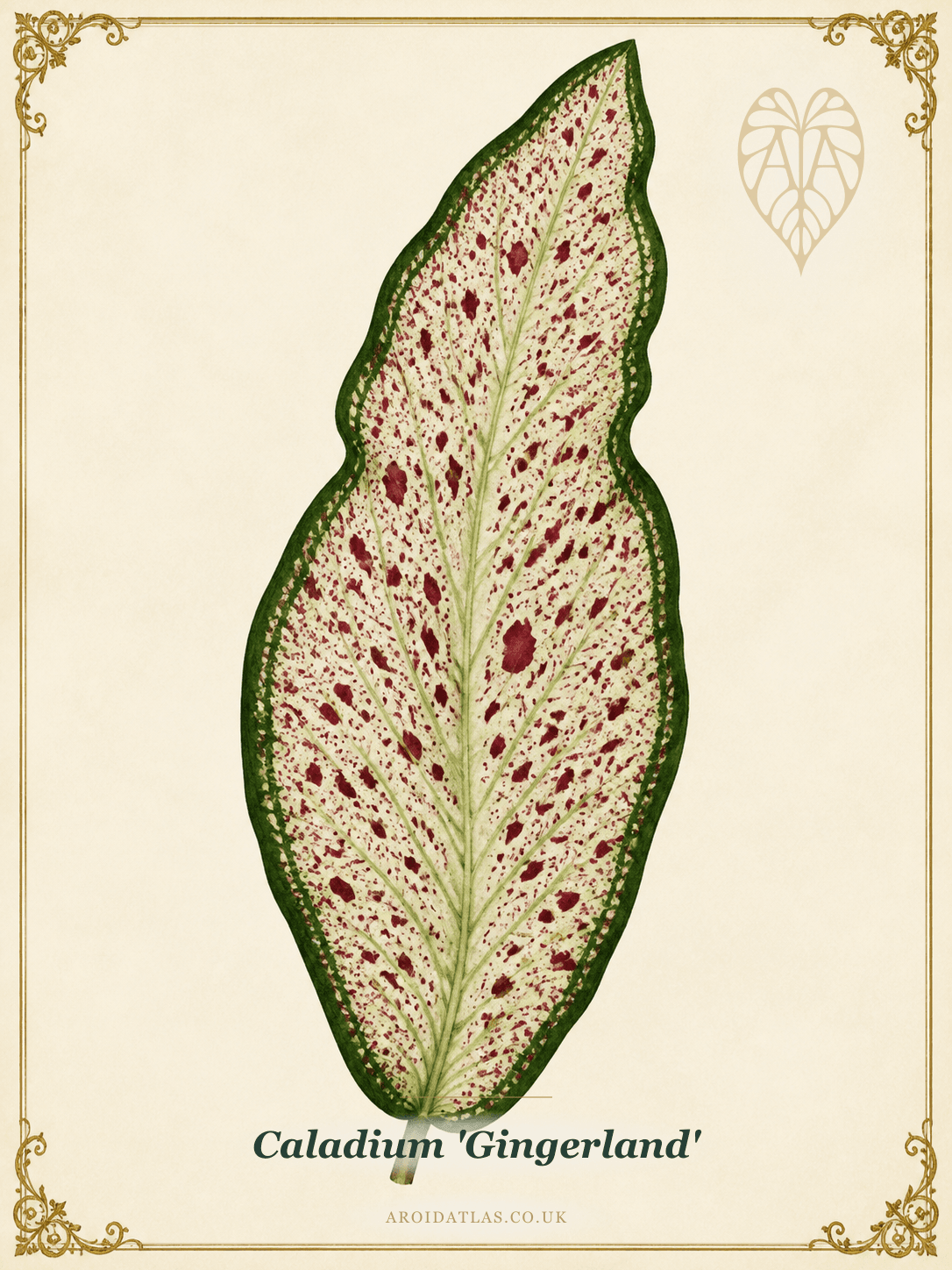
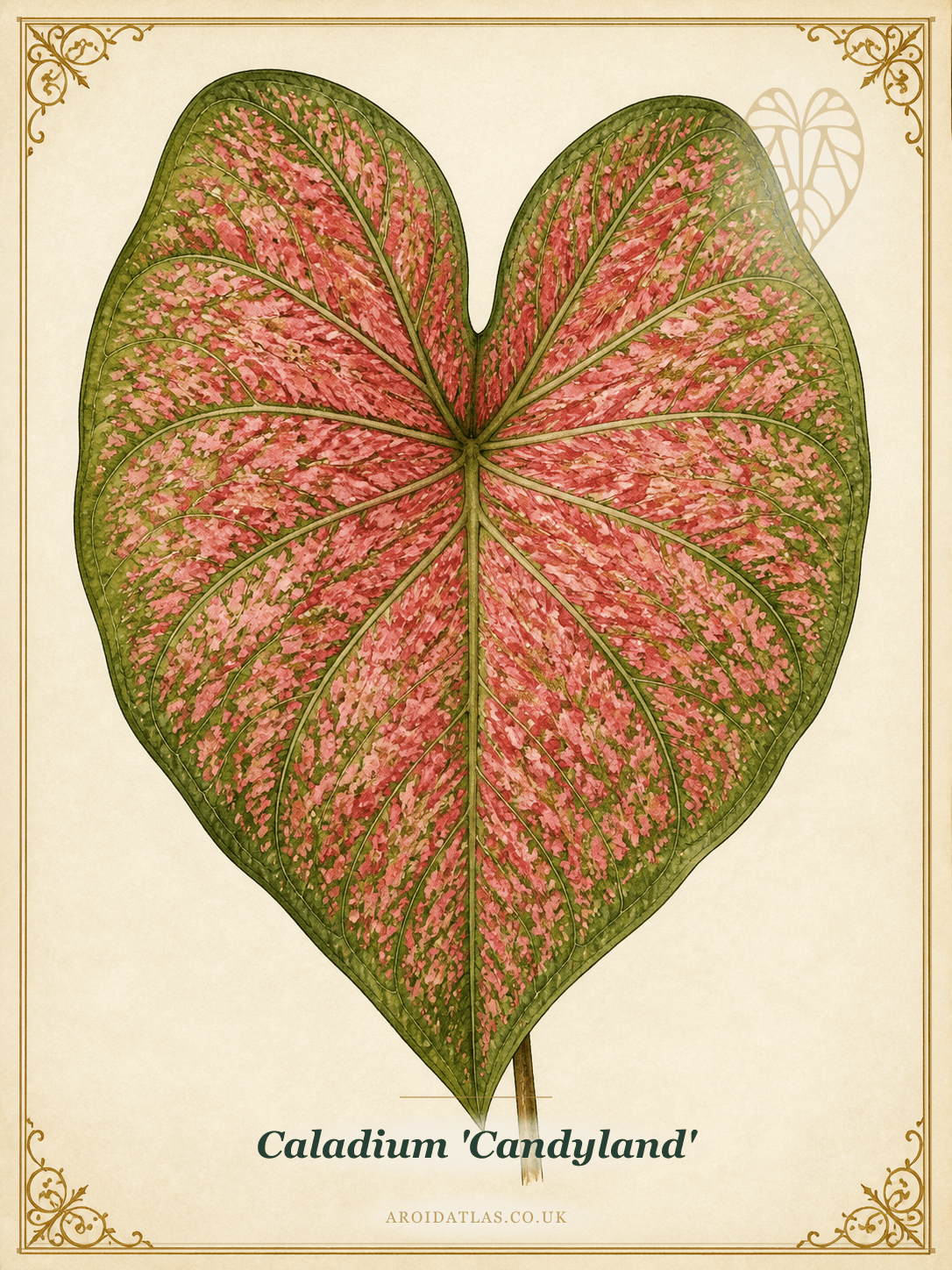
Full Specimen Plate
Caladium bicolor
Heart of Jesus
Aroid Atlas Price Guide
Select Plant Size
Pricing Data Key
Based on online retail prices, adjusted for private sales
Caladium bicolor Morphology
About Caladium bicolor
Caladium bicolor is the tuberous South American species behind the huge modern range of named Caladium cultivars sold every spring across UK garden centres: thin, papery, heart-shaped leaves in almost any combination of green, white, pink and red, held on tall slender petioles above the soil. Unlike most other aroids on this site, Caladium grows from a true tuber and is genuinely deciduous: it dies back to the tuber each autumn/winter and must be kept dry and dormant until it resprouts in spring, making its care cycle closer to a dahlia or begonia than to an evergreen houseplant aroid. It is an enormous seasonal market in its own right, prized for bedding, patio containers, and summer houseplant displays.
Native Range
Brazil
Market Analysis
Caladium bicolor Price Guide & Auction Value
Historical eBay auction metrics and live retailer listings updated weekly.
No eBay auction history available yet. Data is collected automatically as sales appear on eBay UK.
Before You Buy
Species-specific things to check when evaluating a listing
- If buying a dormant tuber, check it is firm and plump, not soft, shrivelled or mouldy
- Confirm whether you are buying a live growing plant (in leaf) or a dormant out-of-season tuber
- Established leafy plants should show firm, unblemished foliage without scorch marks
Propagation Guide
How to Propagate Caladium bicolor
6-10 weeks from tuber to full leaf
Cultivar character is preserved through vegetative cuttings
Divide dormant tubers so each section retains at least one visible growth eye, then pot up as growth resumes in spring.
Care Guide
Caladium bicolor Care Guide & Growing Conditions
Light, free-draining mix: 50% potting compost, 30% perlite, 20% coco coir.
Keep evenly moist throughout active growth; stop watering almost entirely once the foliage dies back for dormancy.
55-75% preferred during active growth for the largest leaves.
Balanced liquid fertiliser at half strength every 2-3 weeks during active growth; none during dormancy.
Repot the dormant tuber into fresh substrate each spring when new growth begins.
Common Problems
Tuber rot over winter
Substrate kept too wet during dormancy
Keep the dormant tuber nearly dry and store in a cool, frost-free spot until spring
No regrowth in spring
Tuber temperature too low, or tuber was damaged/rotted
Ensure the tuber is kept above roughly 18°C once you want it to resprout, and check it is still firm before replanting
Scorched or bleached leaves
Direct hot sun
Move to bright indirect light or light shade; most Caladium foliage scorches in direct summer sun
An Aroid That Actually Goes Dormant
Caladium is worth flagging as a genuine outlier on this site: almost everything else here is an evergreen tropical climber or rosette that just wants consistent warmth and humidity year-round. Caladium bicolor and its huge range of named cultivars actually die back to a dormant tuber every year, closer in habit to a dahlia than to a Monstera, and treating it like an evergreen houseplant in winter is the single most common way to lose one.


