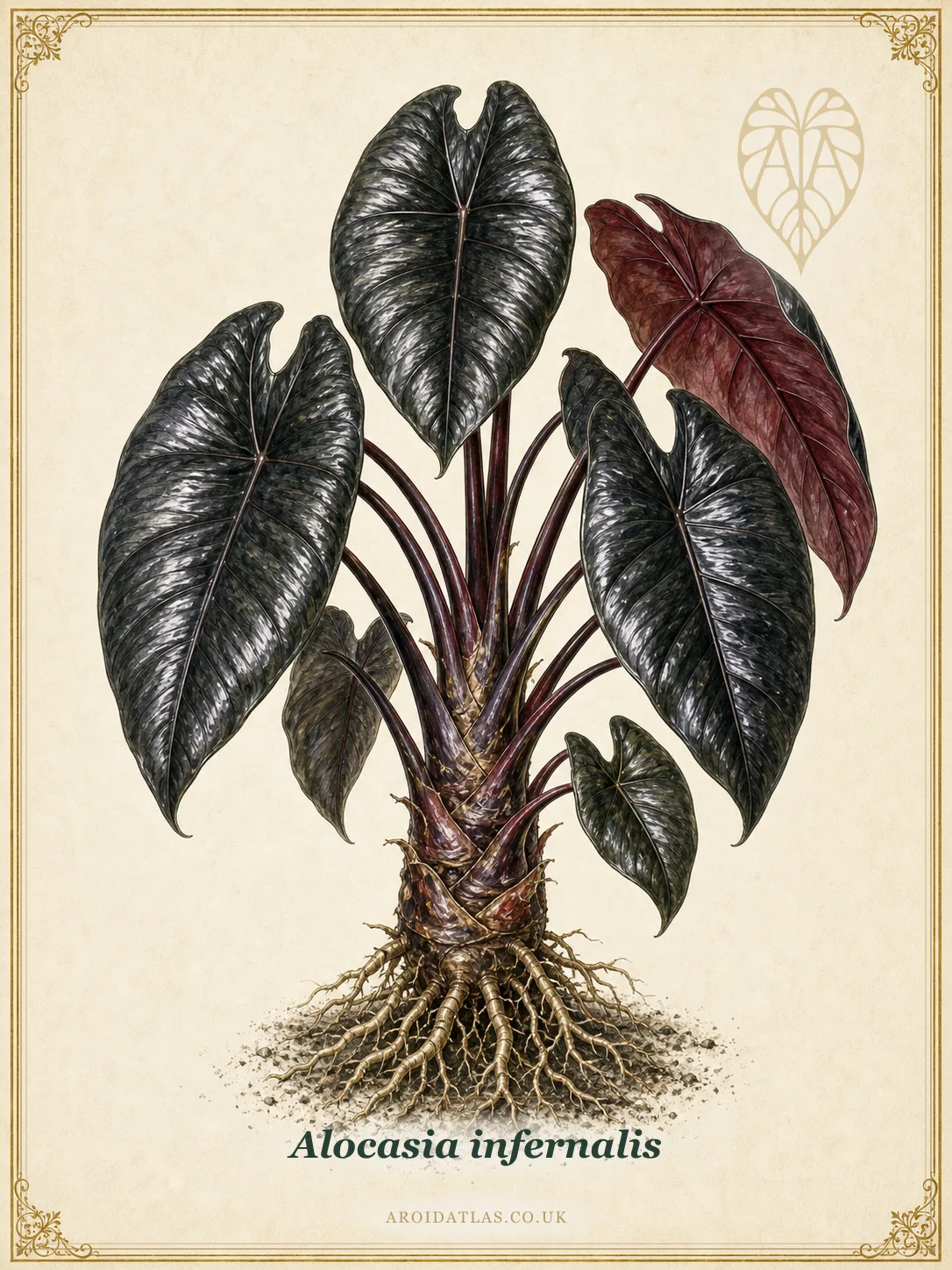
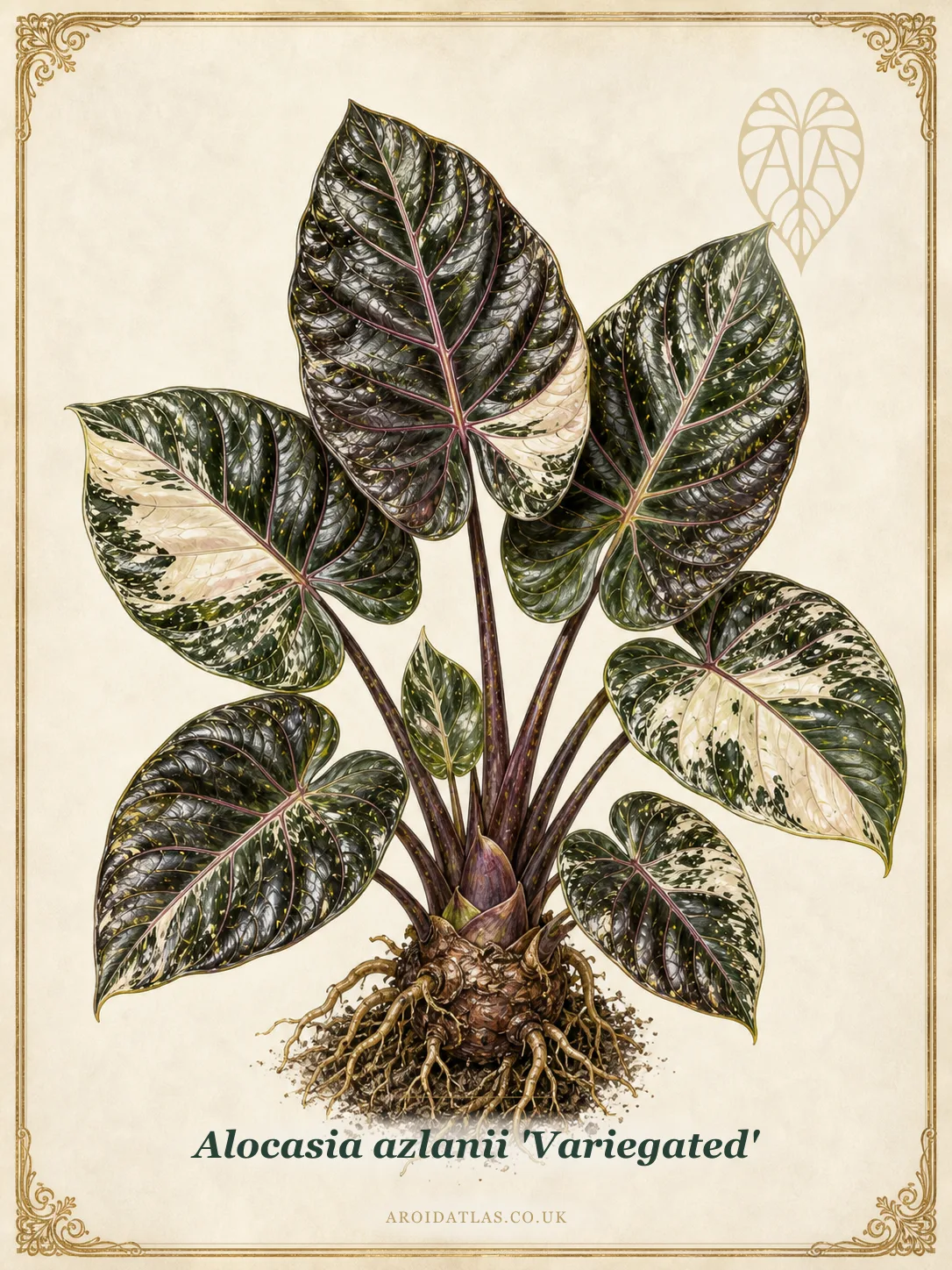
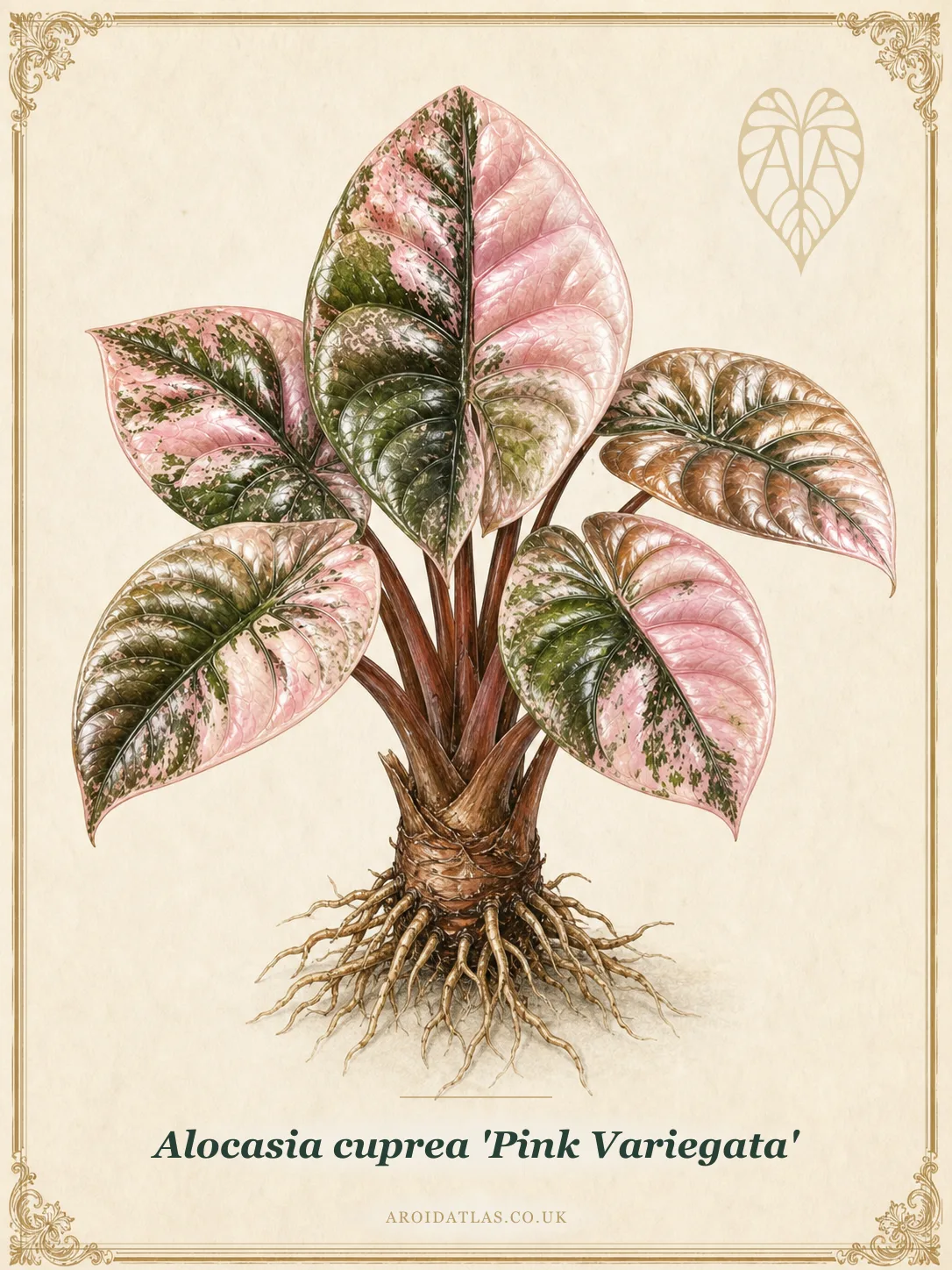
Full Specimen Plate
Alocasia reginula 'Black Velvet' Pink Albo Variegata
Alocasia Black Velvet Pink Albo Variegata
- Flowers of Sulphur, 99.99% PurityDusted onto a fresh corm or rhizome cut to guard against rot before repotting.
- Precision Bonsai Pruning Scissors, 200mmFine-bladed snips for clean node cuts when taking a cutting.
- Digital Hygrometer & ThermometerLCD humidity and temperature gauge for checking a grow spot against a plant's target range.
Amazon links — we may earn commission on qualifying purchases.
7cm Target Price
£47.00
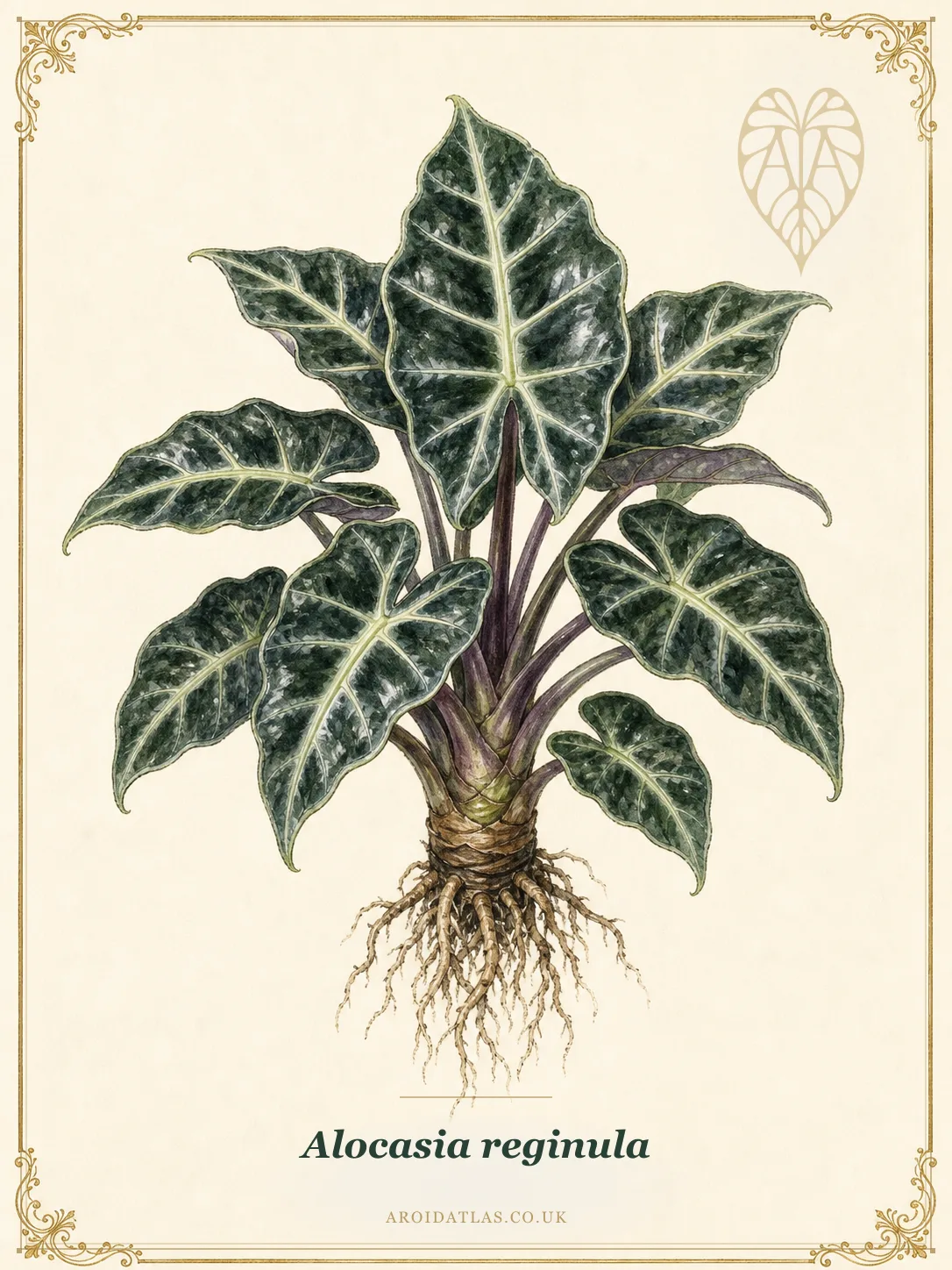
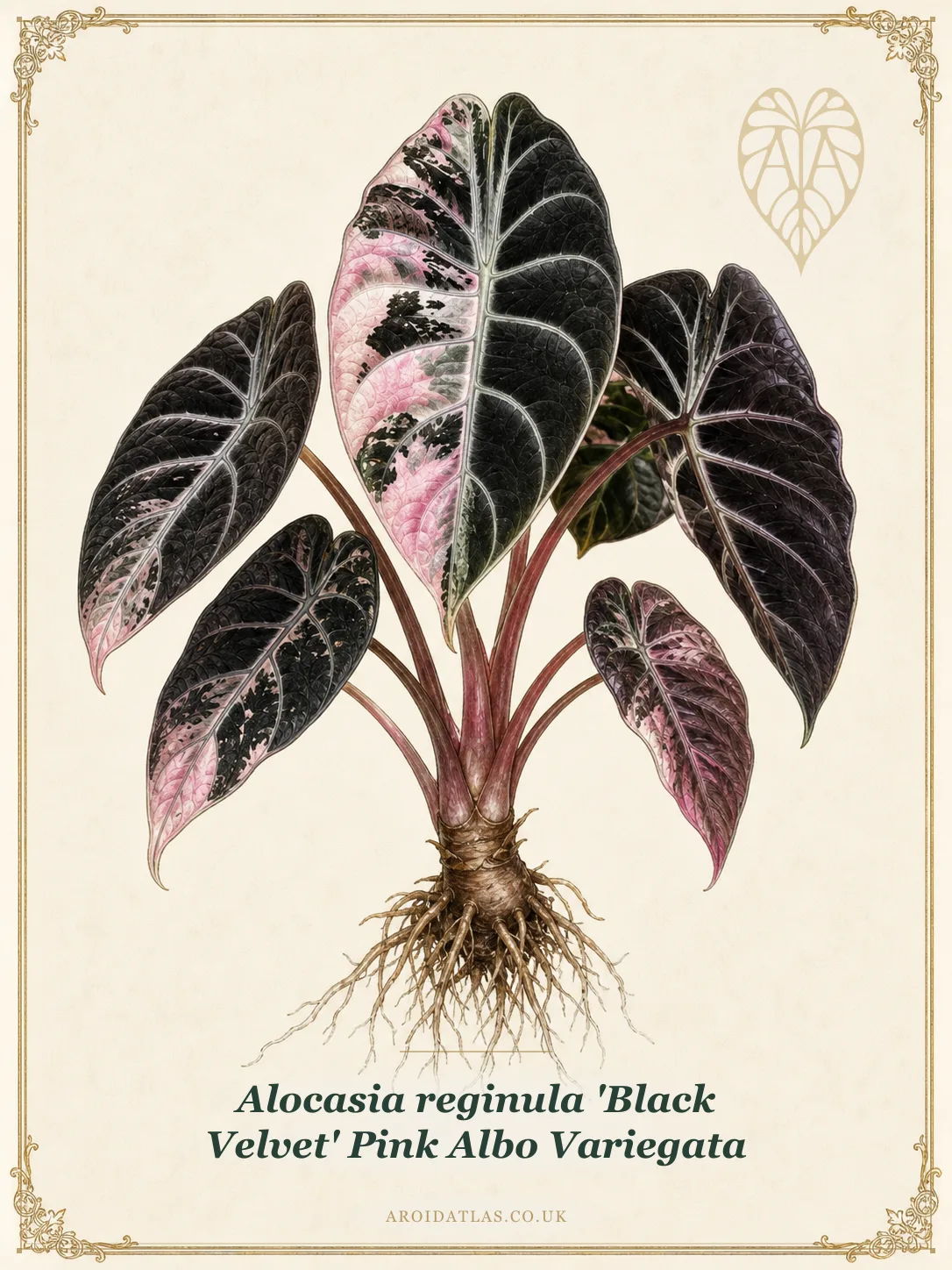
Alocasia reginula 'Black Velvet' Morphology
About Alocasia reginula 'Black Velvet'
Alocasia reginula 'Black Velvet' Pink Albo Variegata is a sought-after aroid cultivar, originating from Borneo where the species grows as a humid tropical understory plant. This variegated form is a collector's selection. The plant has thick, velvety, almost black sagittate to heart-shaped leaves, with blush pink, white, and dark green marbling or sectoral variegation. It keeps a compact, upright, self-heading growth habit, supported by relatively short, reddish petioles and silver venation.
Native Range
Borneo
Market Hub
Alocasia reginula 'Black Velvet' Sold Prices & Live Market
What the Target Price above is based on: eBay sold prices by plant size, live listings, and retailer stock.
No eBay sales recorded yet. Sold listings are collected as they appear on eBay.
Before You Buy
Species-specific things to check when evaluating a listing
- Inspect the corm and any visible roots; both should be firm and healthy, since variegated alocasias are not more robust than their green counterparts
- Check that variegation is present on at least one fully developed leaf; photos of emerging growth only are not sufficient proof
- Spider mites are the primary pest concern: inspect leaf undersides for stippling or fine webbing before introducing to your collection
- Pups of variegated alocasias should show variegation from an early stage. A pup that is entirely green may not carry the variegation
Propagation Guide
How to Propagate Alocasia reginula 'Black Velvet'
Propagation Guide
How to Propagate Alocasia reginula 'Black Velvet'
3-6 months
Cultivar character is preserved through vegetative cuttings
Wait for the mother plant to produce corms or pups before dividing. Larger, well-established plants produce offsets most readily. Alocasias do not propagate reliably from stem cuttings.
Care Guide
Alocasia reginula 'Black Velvet' Care Guide & Growing Conditions
Care Guide
Alocasia reginula 'Black Velvet' Care Guide & Growing Conditions
Well-draining loamy mix: 40% potting compost, 30% perlite, 20% orchid bark, 10% worm castings. Alocasias need moisture retention unlike most aroids but still require good drainage.
Keep evenly moist during the growing season: never waterlogged, never bone dry. Check soil every 3–4 days in summer. Reduce significantly in winter when growth slows.
60–80%. Lower humidity causes brown leaf edges; very low humidity combined with dry compost will trigger dormancy.
Balanced fertiliser at half strength every 2 weeks during spring and summer. Stop feeding in winter.
Every 12–18 months in spring. Alocasias like being slightly snug in their pots, so don't overpot.
Common Problems
Leaves yellowing and dropping
Overwatering, cold temperatures, or natural dormancy
Reduce watering; ensure temperatures stay above 16°C; dormancy is normal in winter
Brown leaf edges
Low humidity or irregular watering
Increase humidity and maintain consistent watering routine
Spider mites
Most common pest; thrive in hot, dry conditions
Mist regularly; treat with neem oil or insecticidal soap; increase humidity
Field Reference
In the Wild
Field Reference
In the Wild
Field Notes
Pink Velvet Over Black Ground
Alocasia reginula, the classic 'Black Velvet', is known for its deep, light-absorbing leaves and pristine white veins. This pink albo variegated form adds a further layer of complexity. First appearing in Southeast Asian collections around 2022, the variegation spans from pure white to soft pink, highlighting the thick, velvety texture of the foliage. The scientific community has long studied reginula's velvet texture, specifically how the micro-papillate epidermal cells trap light to maximize photosynthesis in shaded understories. The variegated sections disrupt this system, creating a strong visual contrast.
Also in: Variegated Corm Breakouts
Sported variegated lines that arose spontaneously from tissue-cultured plain-leaf stock, propagated separately from the parent species.