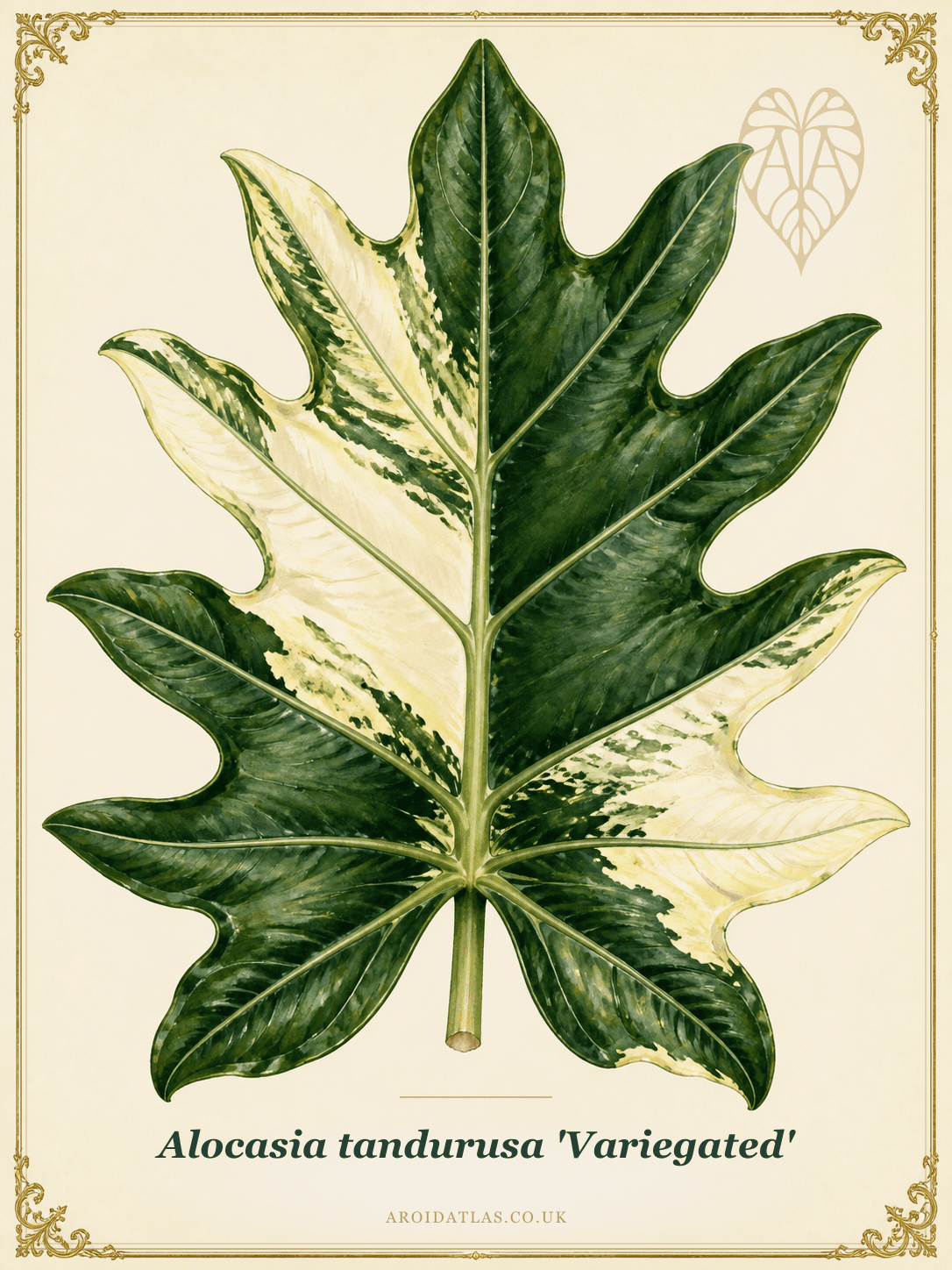
Scroll to explore forms of Alocasia macrorrhizos
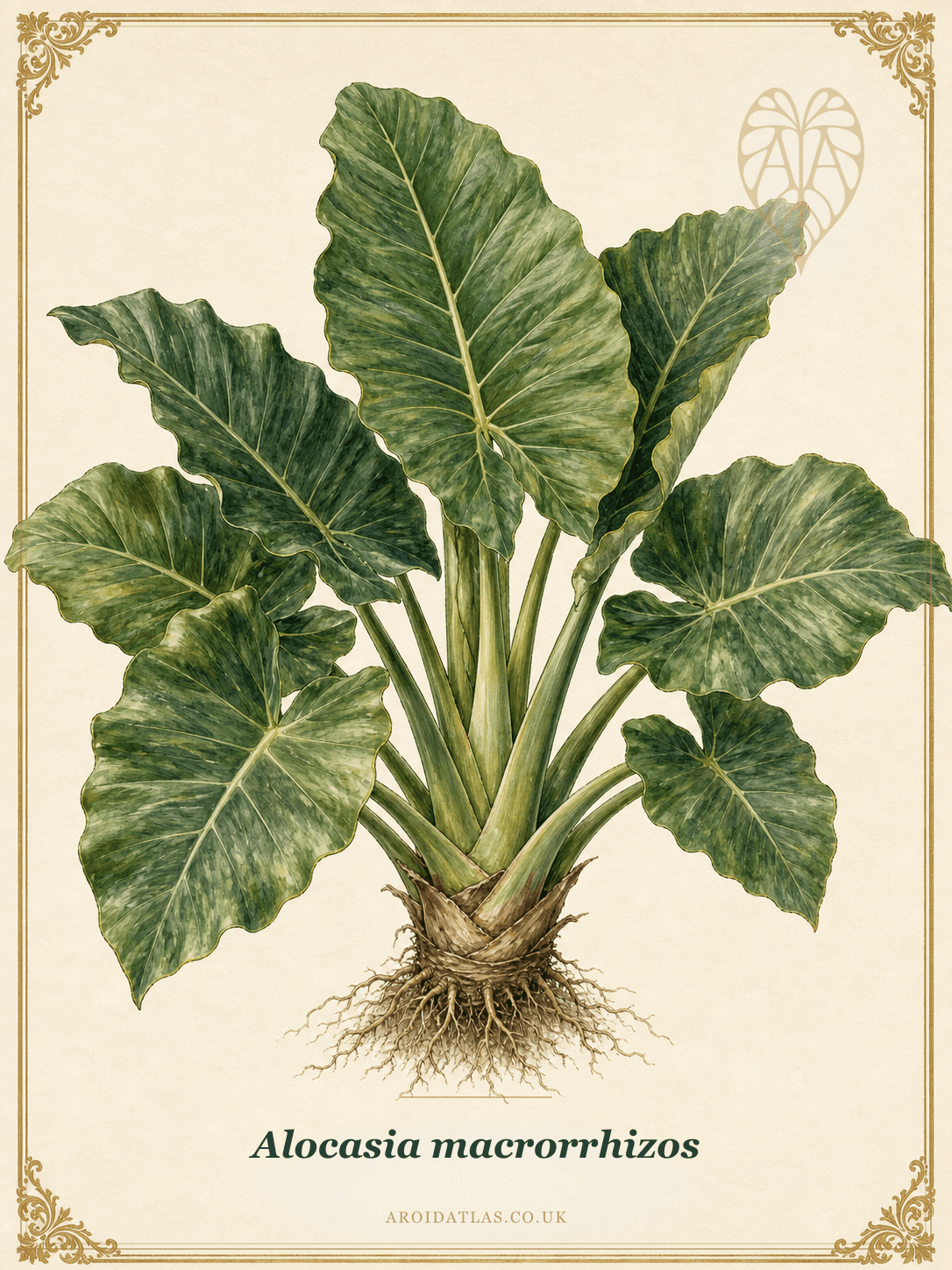
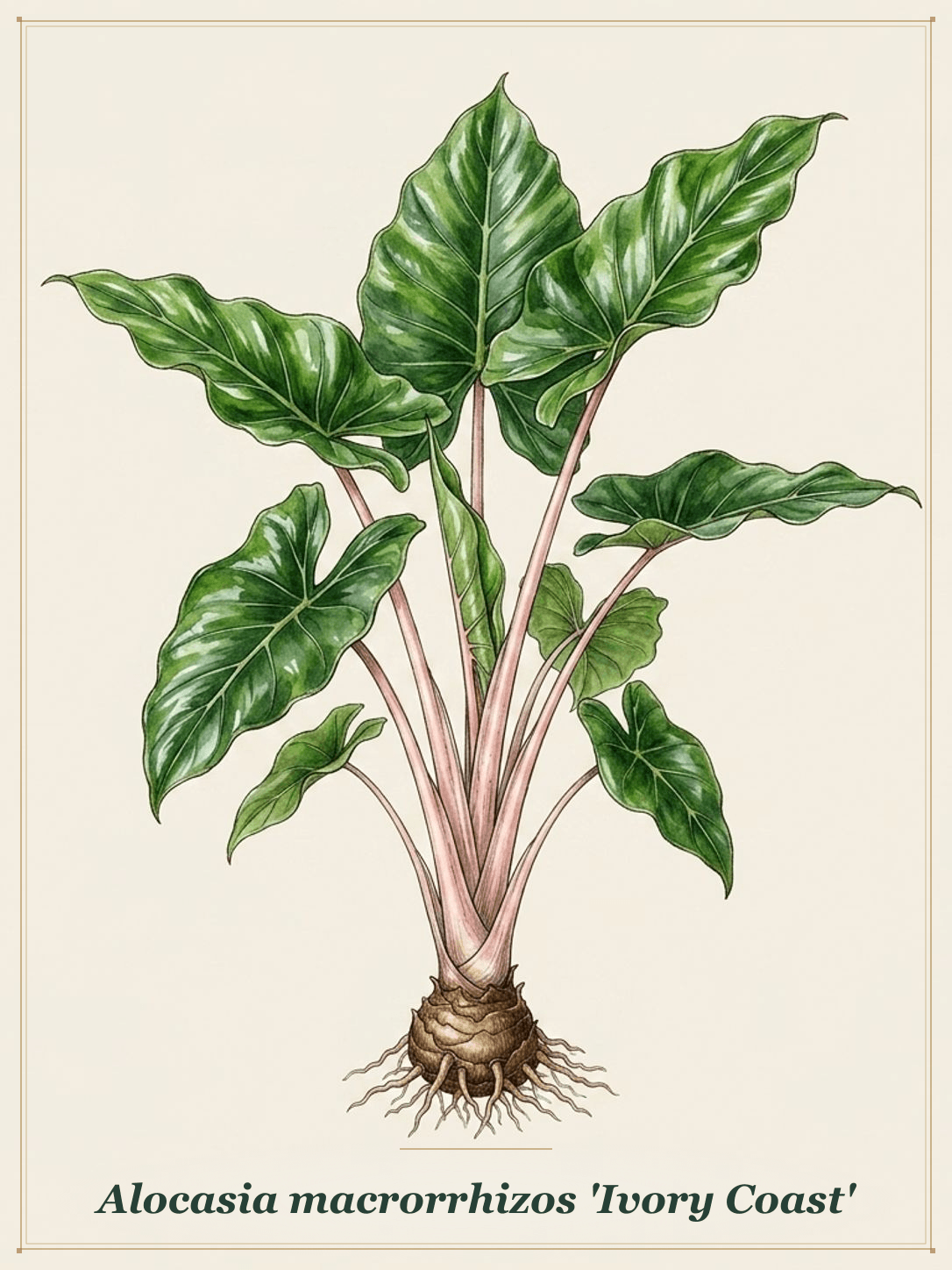
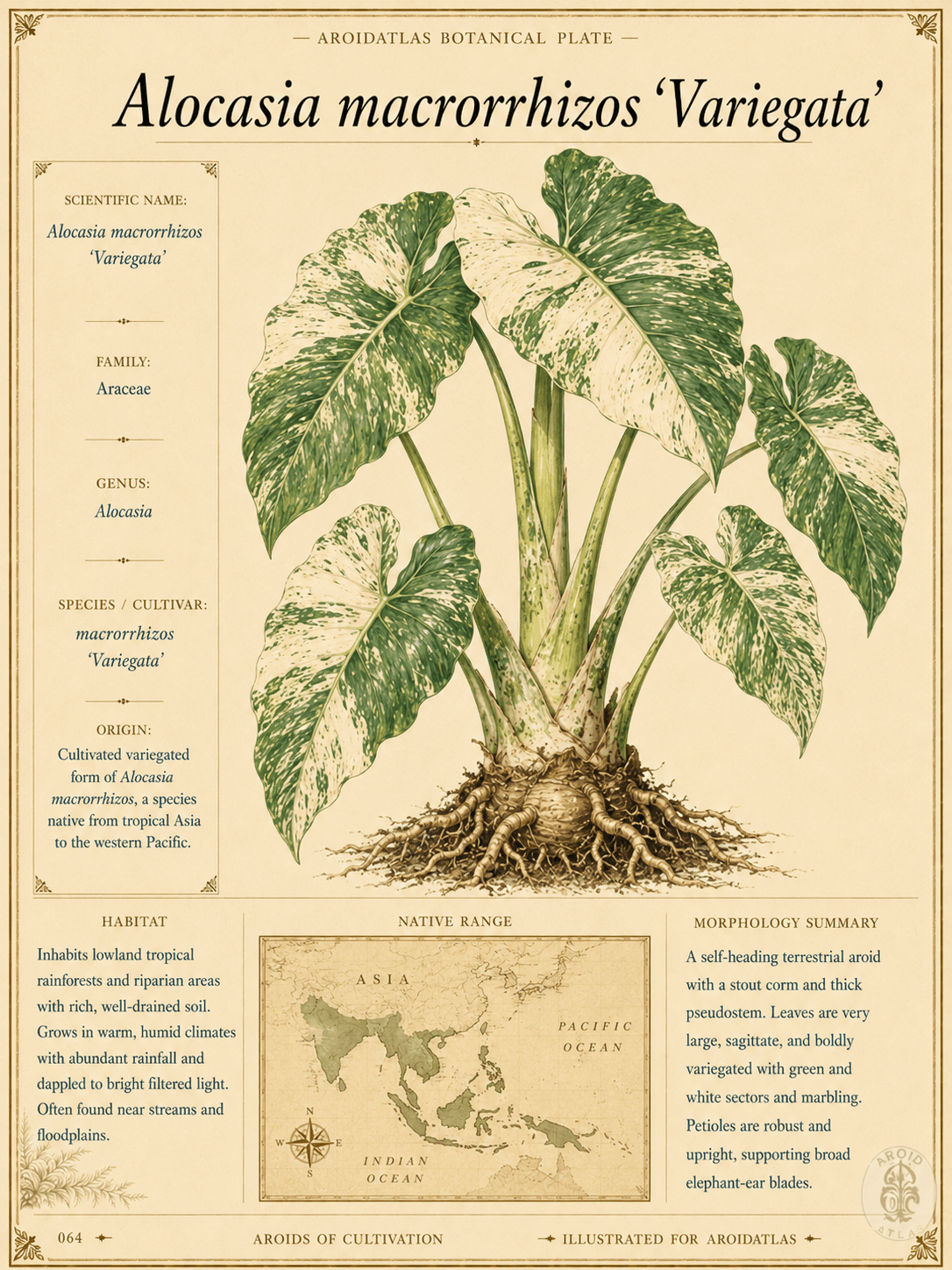
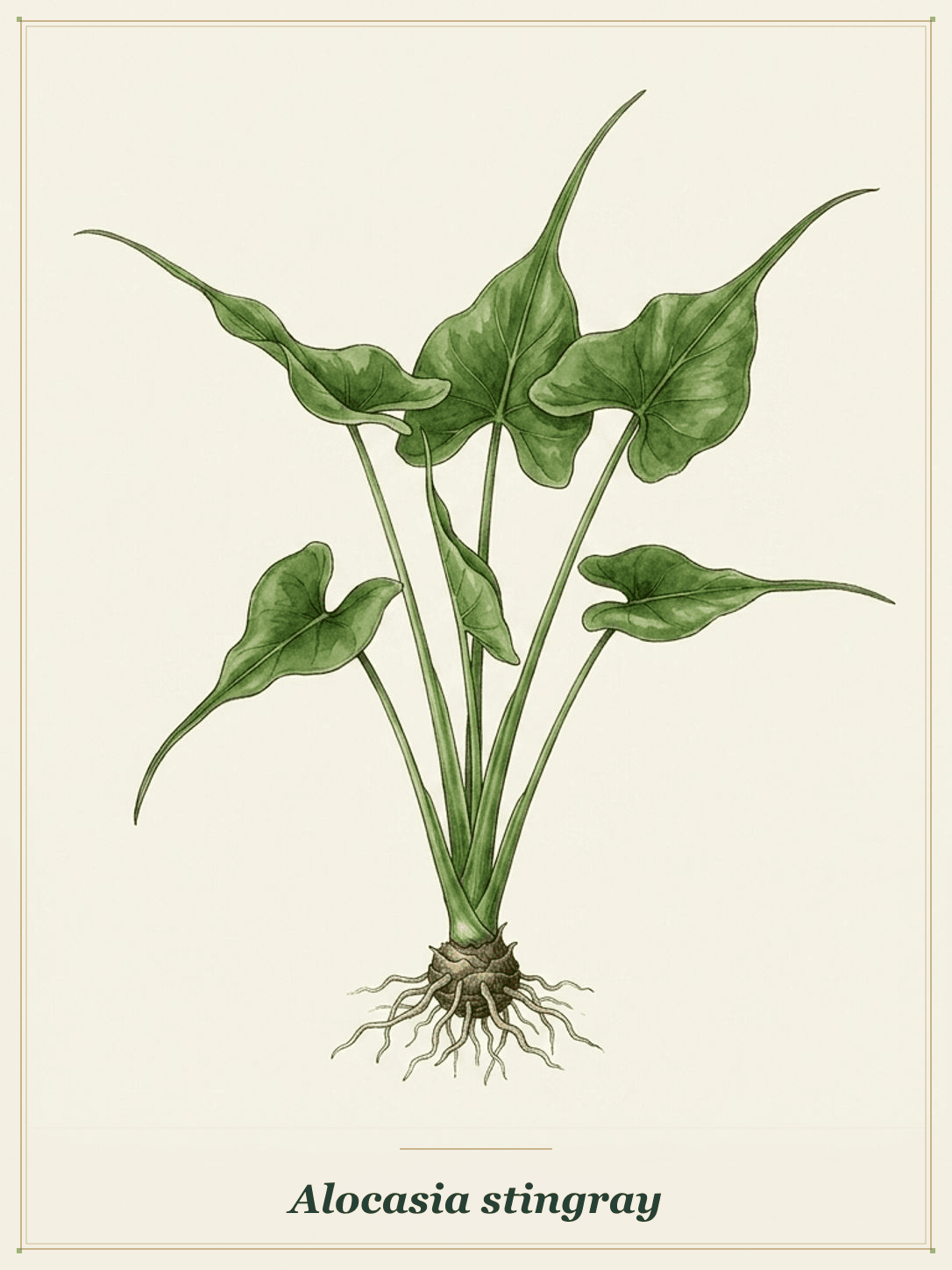
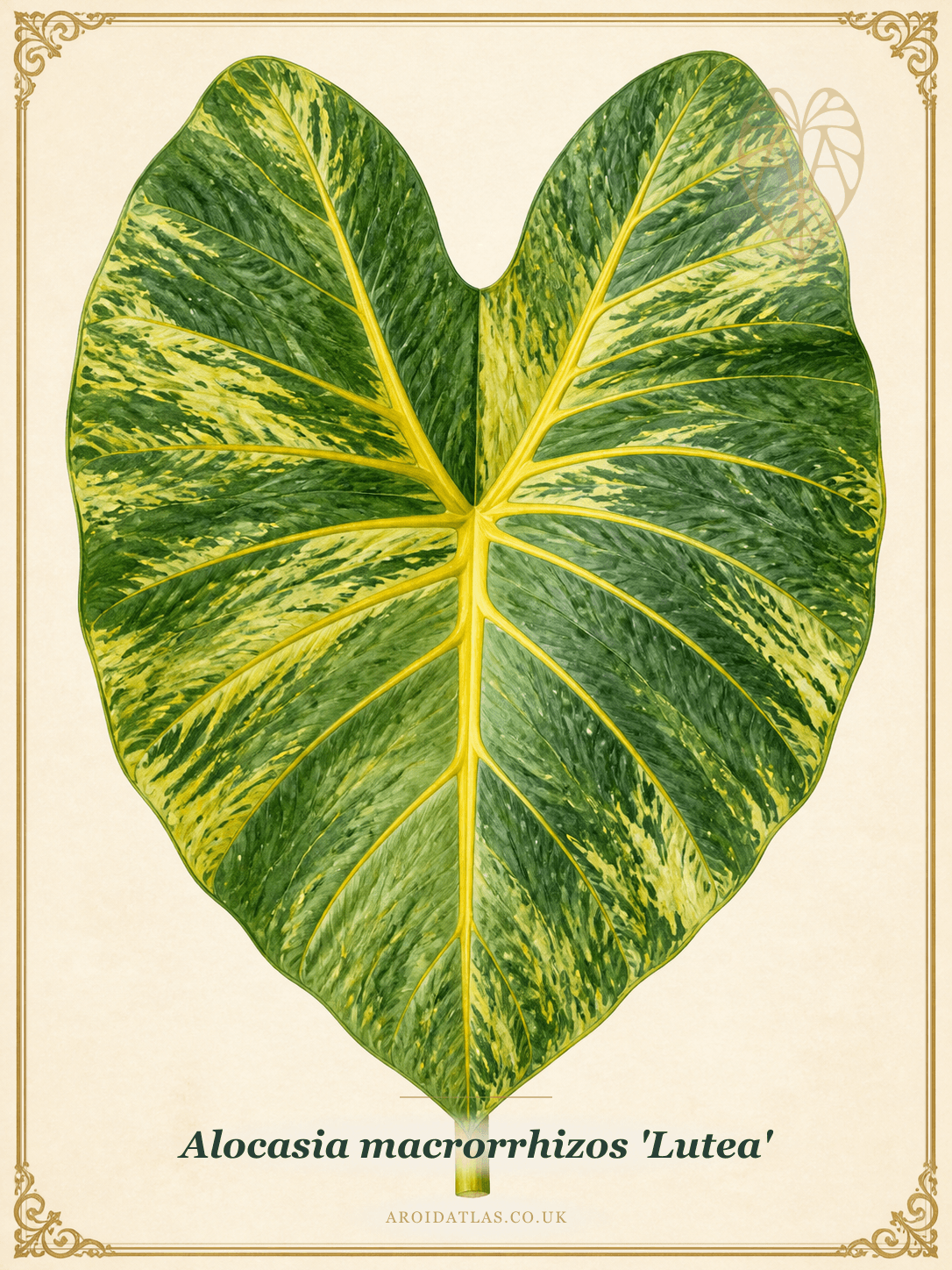
Full Specimen Plate
Alocasia macrorrhizos 'Variegated'
Variegated Giant Taro
Alocasia macrorrhizos 'Variegated' Morphology
About Alocasia macrorrhizos 'Variegated'
Alocasia macrorrhizos 'Variegated' is a large-scale cultivar derived from the wild giant taro. This aroid has massive, sagittate leaves marked with sectors and marbling of white against deep green foliage. The species occurs naturally in the tropical rainforests and riparian zones of Asia, and this plant needs warm, humid conditions to thrive. It is sought by collectors for its large architectural structure and the high-contrast variegation pattern on each leaf.
Market Analysis
Alocasia macrorrhizos 'Variegated' Price Guide & Auction Value
Historical eBay auction metrics and live retailer listings updated weekly.
No eBay auction history available yet. Data is collected automatically as sales appear on eBay UK.
Before You Buy
Shared checklist for Alocasia macrorrhizos and its cultivated forms
- The plain green species is inexpensive and widely available — be wary of inflated prices for unnamed 'giant Alocasia' listings
- For 'Ivory Coast' or 'Variegated' forms, confirm the variegation pattern in photos matches the named form, as labelling is inconsistent in this group
- Check the corm/root ball is firm — this species is generally rot-resistant but still vulnerable in waterlogged substrate
- Factor in eventual size — this is one of the largest commonly available Alocasia species and will outgrow a small pot within a year or two
Propagation Guide
How to Propagate Alocasia macrorrhizos 'Variegated'
Shared across every form of Alocasia macrorrhizos — see this form's own Morphology for variegation-specific propagation notes.
2-3 months
Cultivar character is preserved through vegetative cuttings
Mature plants readily produce basal offsets that can be divided once independently rooted. The plain species propagates vigorously and reliably; the variegated and Ivory Coast forms are markedly slower and more prone to reverting or stalling if divided too early.
Care Guide
Alocasia macrorrhizos 'Variegated' Care Guide & Growing Conditions
General care shared across all forms of Alocasia macrorrhizos — cultivated forms may need brighter light or higher humidity than the plain species; check this form's Quick Facts above.
Rich, well-draining mix: 40% potting compost, 30% orchid bark, 20% perlite, 10% horticultural charcoal. Tolerant of denser mixes than most Alocasia given its vigour.
Water thoroughly when the top few centimetres of substrate dry out. This species is thirstier and more forgiving of consistent moisture than most jewel Alocasias — avoid letting it dry out completely for long.
50-70% for lush growth, though it tolerates average household humidity better than most Alocasia species.
Balanced liquid fertiliser at full strength every 2-3 weeks during the growing season — this is a hungry, fast-growing plant.
Annually while young, given its rapid growth rate; every 2 years once mature and sized to its final container.
Common Problems
Yellowing lower leaves
Natural leaf turnover as the plant grows — older leaves are shed as new ones emerge
Remove spent leaves at the base; only investigate further if multiple leaves yellow at once
Reversion to green on variegated forms
Insufficient light causing the plant to favour chlorophyll-rich green tissue
Increase light levels and prune reverted all-green growth points to encourage variegated growth to dominate
Spider mites
Dry indoor air, especially over winter
Increase humidity and treat with insecticidal soap or neem oil at first sign of stippling
Also in: Variegated Corm Breakouts
Sported variegated lines that arose spontaneously from tissue-cultured plain-leaf stock, propagated separately from the parent species.