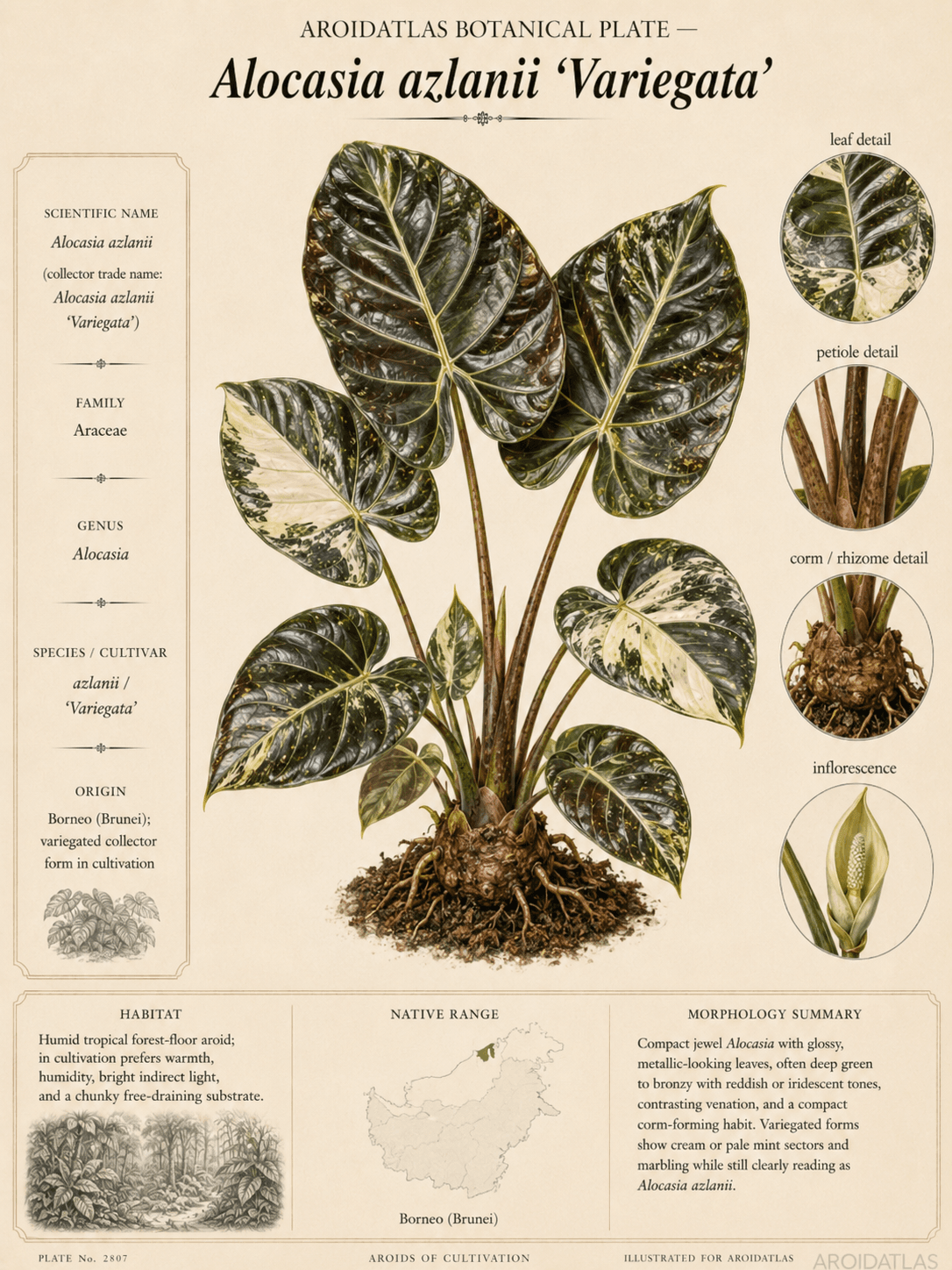
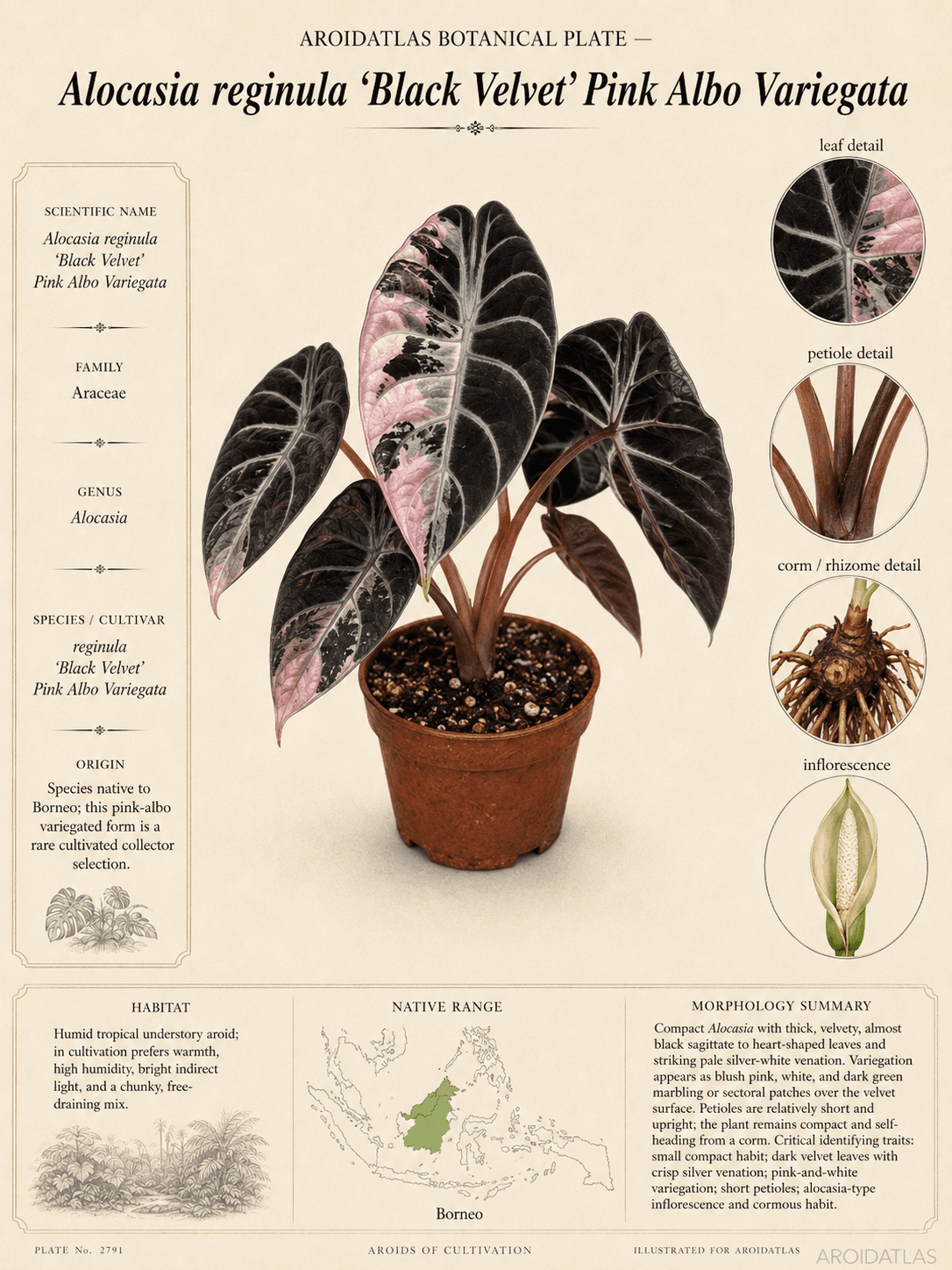
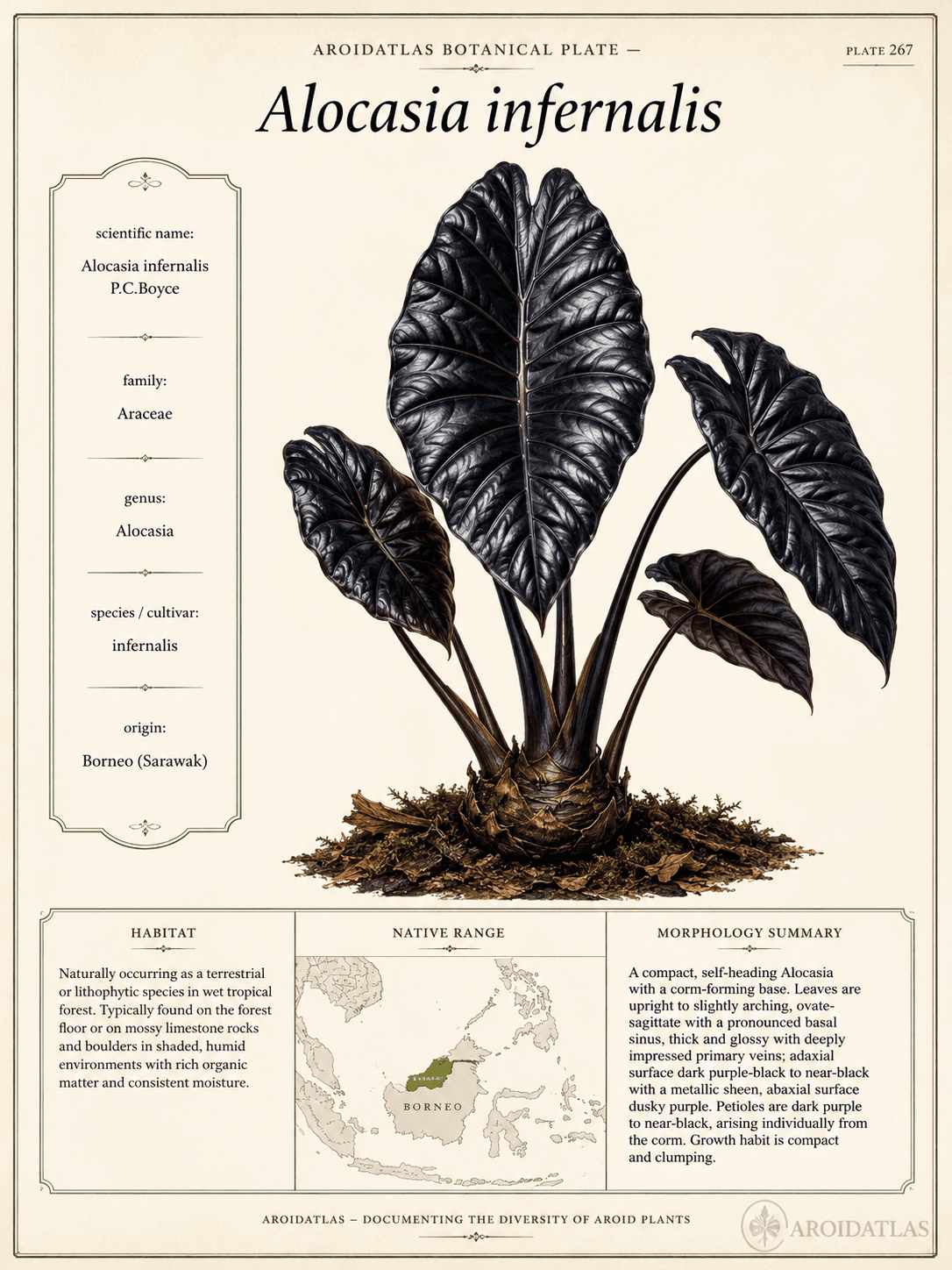
Scroll to explore forms of Alocasia cuprea K.Koch
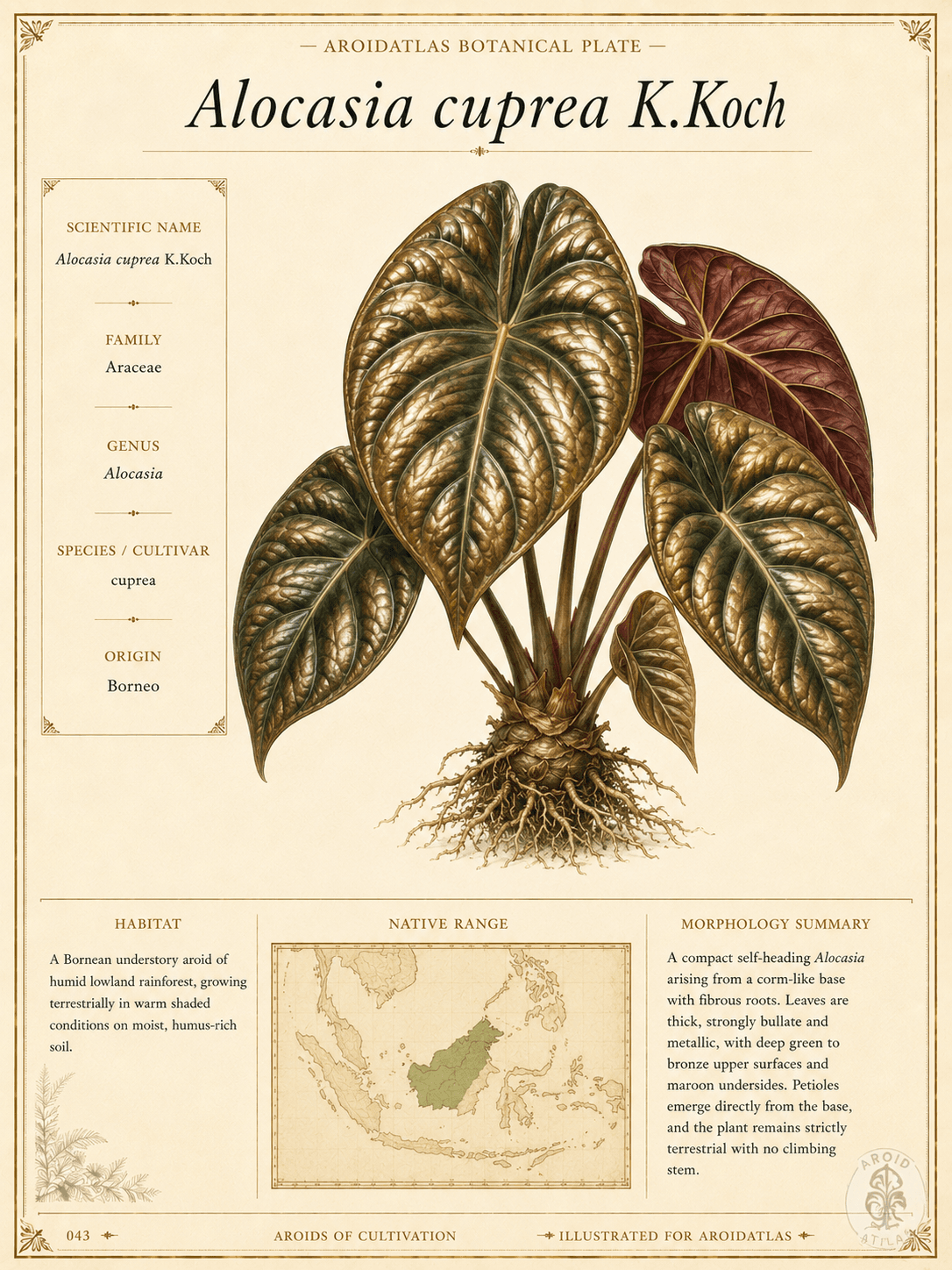
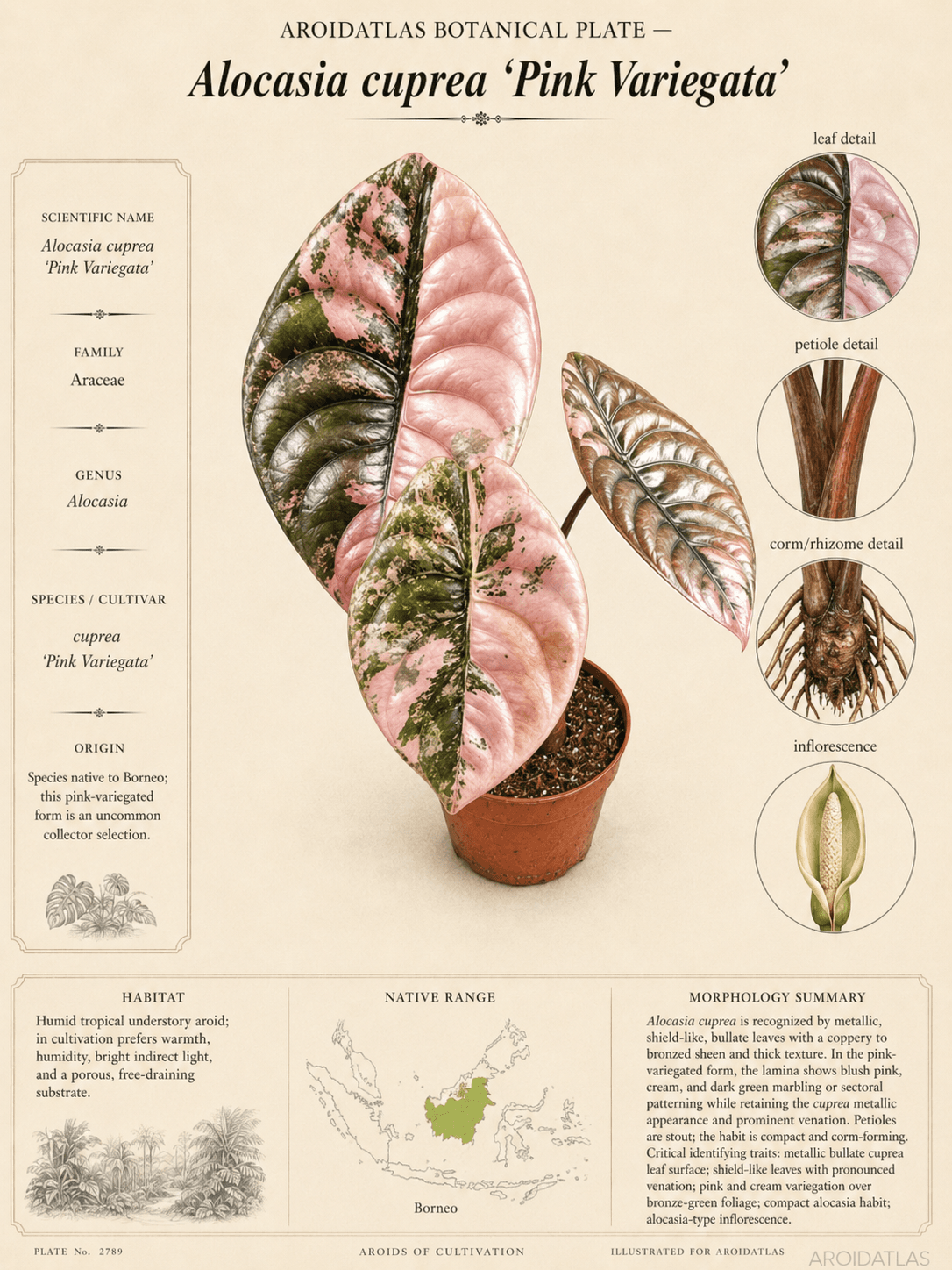
Full Specimen Plate
Alocasia cuprea 'Pink Variegata'
Pink Variegata Alocasia Cuprea
Aroid Atlas Price Guide
Select Plant Size
Pricing Data Key
Community price estimate based on limited sales history
Other colour-form prices
Alocasia cuprea 'Pink Variegata' Morphology
About Alocasia cuprea 'Pink Variegata'
Alocasia cuprea 'Pink Variegata' is a cultivar of the species native to Borneo, an uncommon collector's selection valued for its coloration. The leaves are metallic, shield-like, and bullate, with a coppery sheen and thick texture. The variegated form shows pink, cream, and dark green marbling or sectoral patterning, while keeping the metallic appearance typical of Alocasia cuprea. As a humid tropical understory aroid, it needs warmth, high humidity, and bright, indirect light in a porous, free-draining substrate.
Native Range
Borneo
Market Analysis
Alocasia cuprea 'Pink Variegata' Price Guide & Auction Value
Historical eBay auction metrics and live retailer listings updated weekly.
No eBay auction history available yet. Data is collected automatically as sales appear on eBay UK.
Before You Buy
Species-specific things to check when evaluating a listing
- Inspect the corm and any visible roots — both should be firm and healthy; variegated alocasias are not more robust than their green counterparts
- Check that variegation is present on at least one fully developed leaf — photos of emerging growth only are not sufficient proof
- Spider mites are the primary pest concern: inspect leaf undersides for stippling or fine webbing before introducing to your collection
- Pups of variegated alocasias should show variegation from an early stage — a pup that is entirely green may not carry the variegation
Propagation Guide
How to Propagate Alocasia cuprea 'Pink Variegata'
3-6 months
Cultivar character is preserved through vegetative cuttings
Wait for the mother plant to produce corms or pups before dividing. Larger, well-established plants produce offsets most readily. Alocasias do not propagate reliably from stem cuttings.
Care Guide
Alocasia cuprea 'Pink Variegata' Care Guide & Growing Conditions
Well-draining loamy mix: 40% potting compost, 30% perlite, 20% orchid bark, 10% worm castings. Alocasias need moisture retention unlike most aroids but still require good drainage.
Keep evenly moist during the growing season — never waterlogged, never bone dry. Check soil every 3–4 days in summer. Reduce significantly in winter when growth slows.
60–80%. Lower humidity causes brown leaf edges; very low humidity combined with dry compost will trigger dormancy.
Balanced fertiliser at half strength every 2 weeks during spring and summer. Stop feeding in winter.
Every 12–18 months in spring. Alocasias like being slightly snug in their pots — don't overpot.
Common Problems
Leaves yellowing and dropping
Overwatering, cold temperatures, or natural dormancy
Reduce watering; ensure temperatures stay above 16°C; dormancy is normal in winter
Brown leaf edges
Low humidity or irregular watering
Increase humidity and maintain consistent watering routine
Spider mites
Most common pest; thrive in hot, dry conditions
Mist regularly; treat with neem oil or insecticidal soap; increase humidity
Bornean Blush: A Rather Stiff Anomaly
One often contemplates the sheer audacity of nature, but the Alocasia cuprea 'Pink Variegata' takes the biscuit. Hailing from the understory of Borneo, the species itself was formally introduced by Karl Koch in 1861. This particular cultivar, however, is a much more recent—and frankly, expensive—marvel. Its shield-like, bullate leaves possess that characteristic metallic, coppery sheen, thick to the touch, with prominently recessed venation. Yet, the pink, cream, and dark green marbling is what captivates. Replicating its humid, bright, indirect light preferences in a British glasshouse requires no small feat of engineering (and a rather substantial heating bill). Still, one cannot deny its enduring charm, even if it does demand constant pampering. Perhaps a nice cup of tea will help me overlook the fuss.