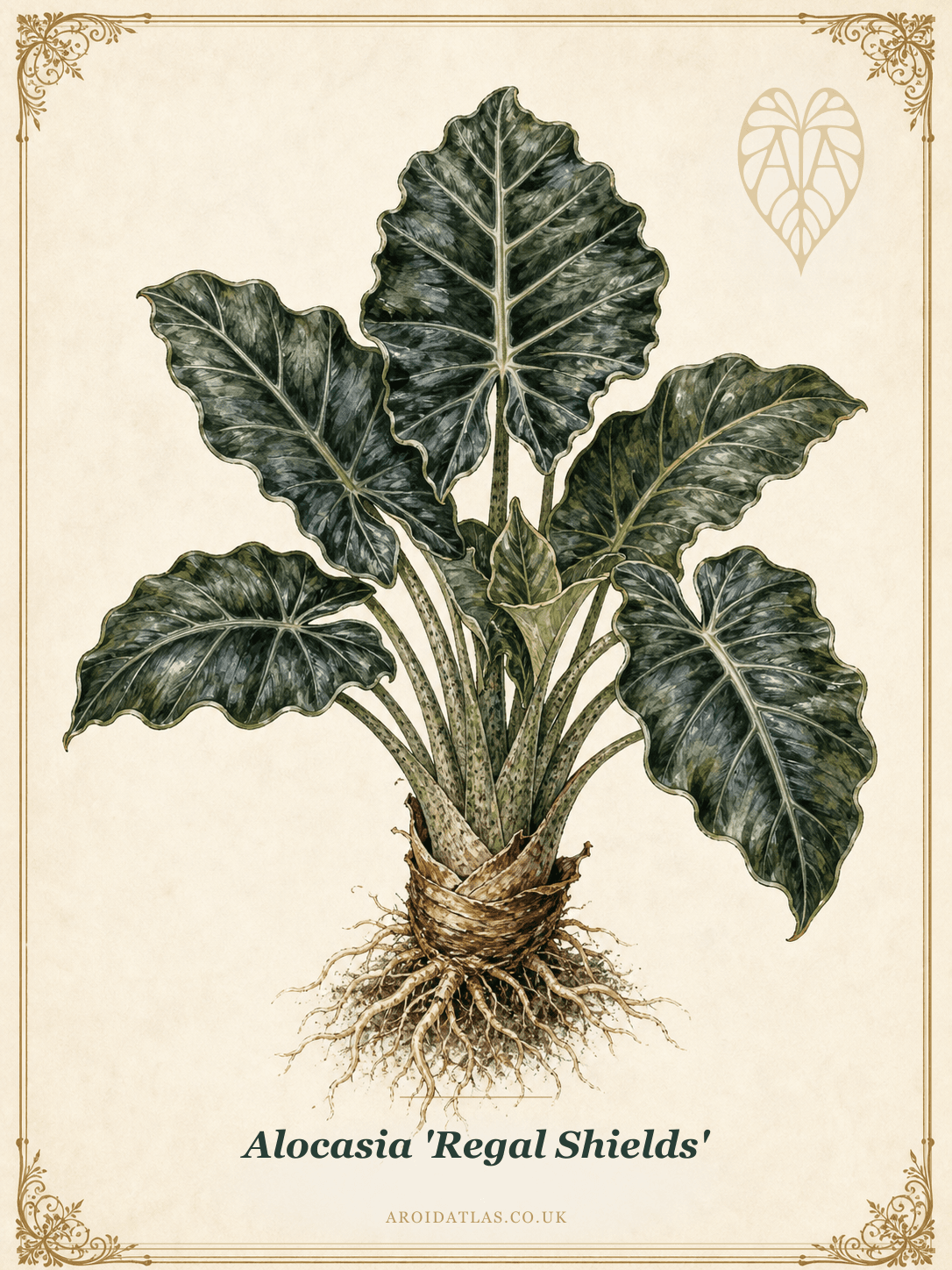
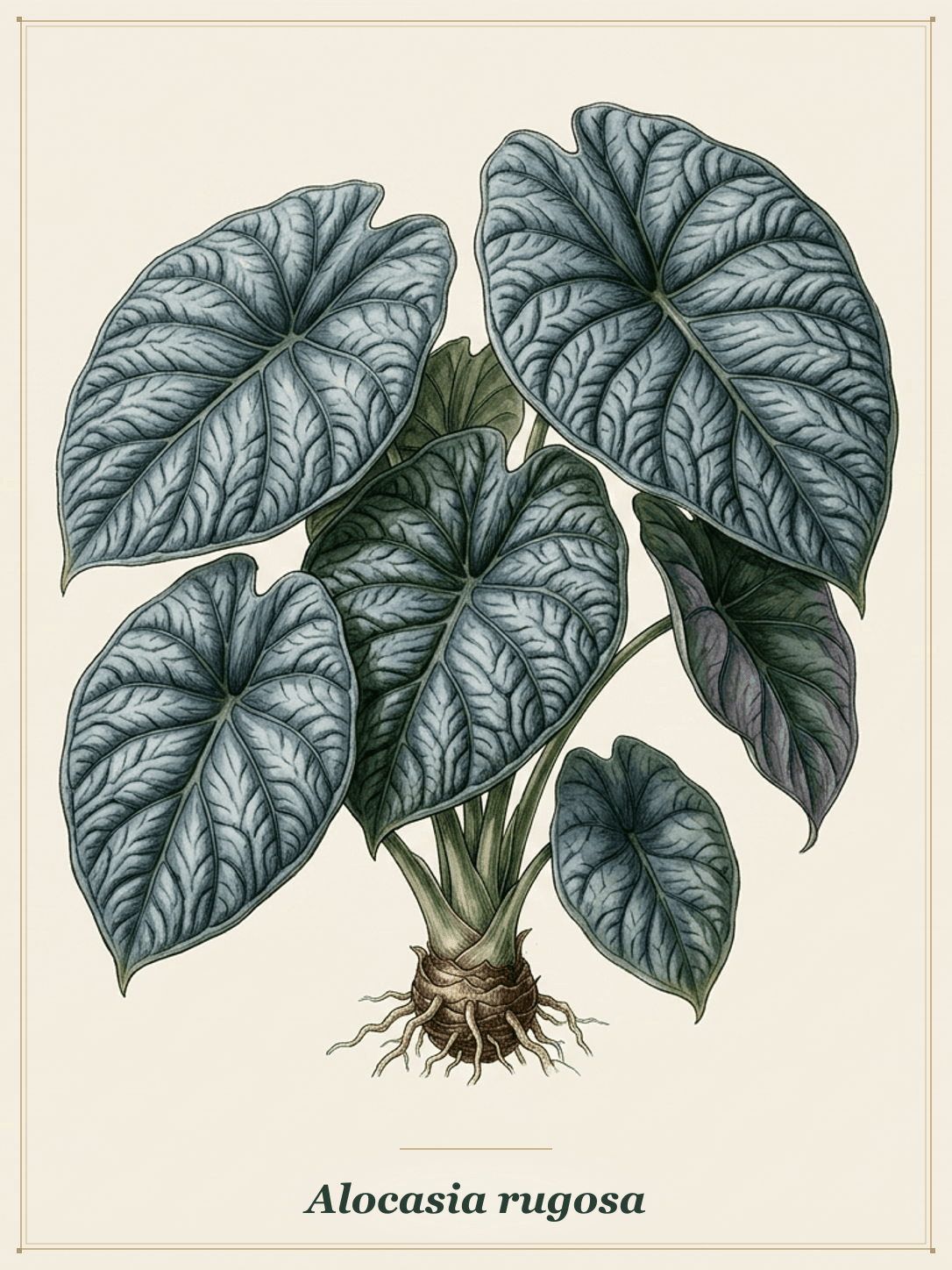
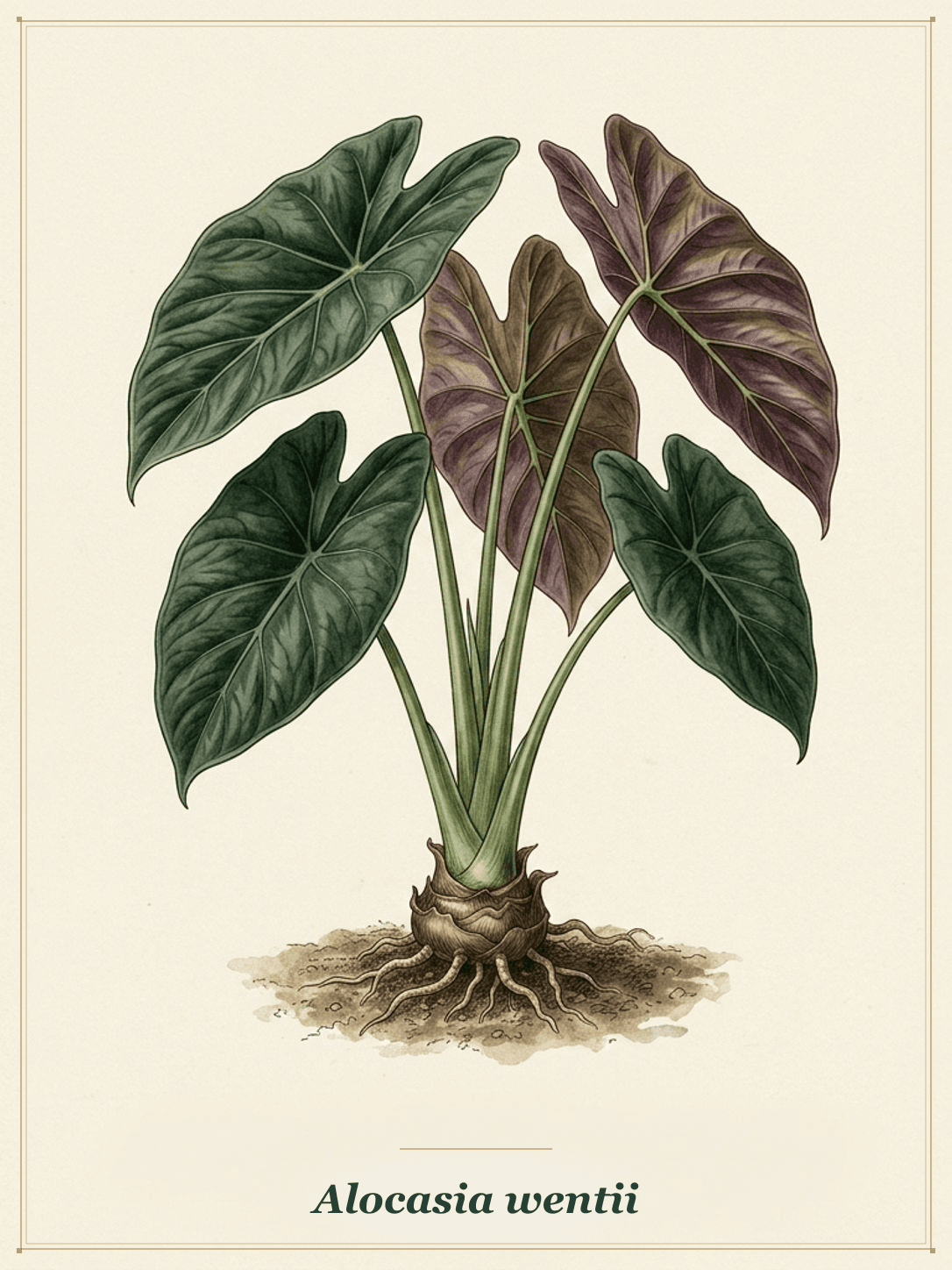
Scroll to explore forms of Alocasia baginda
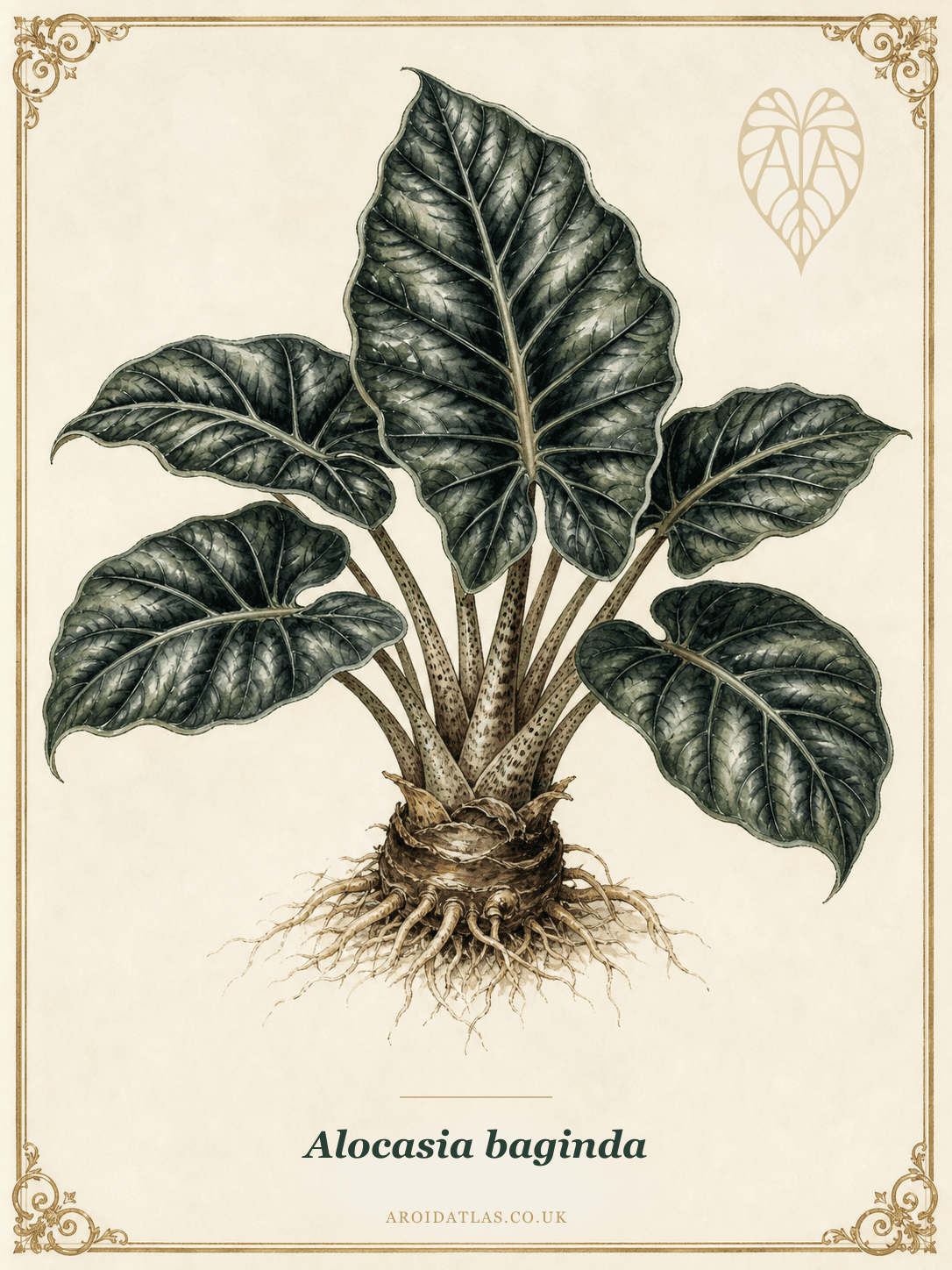
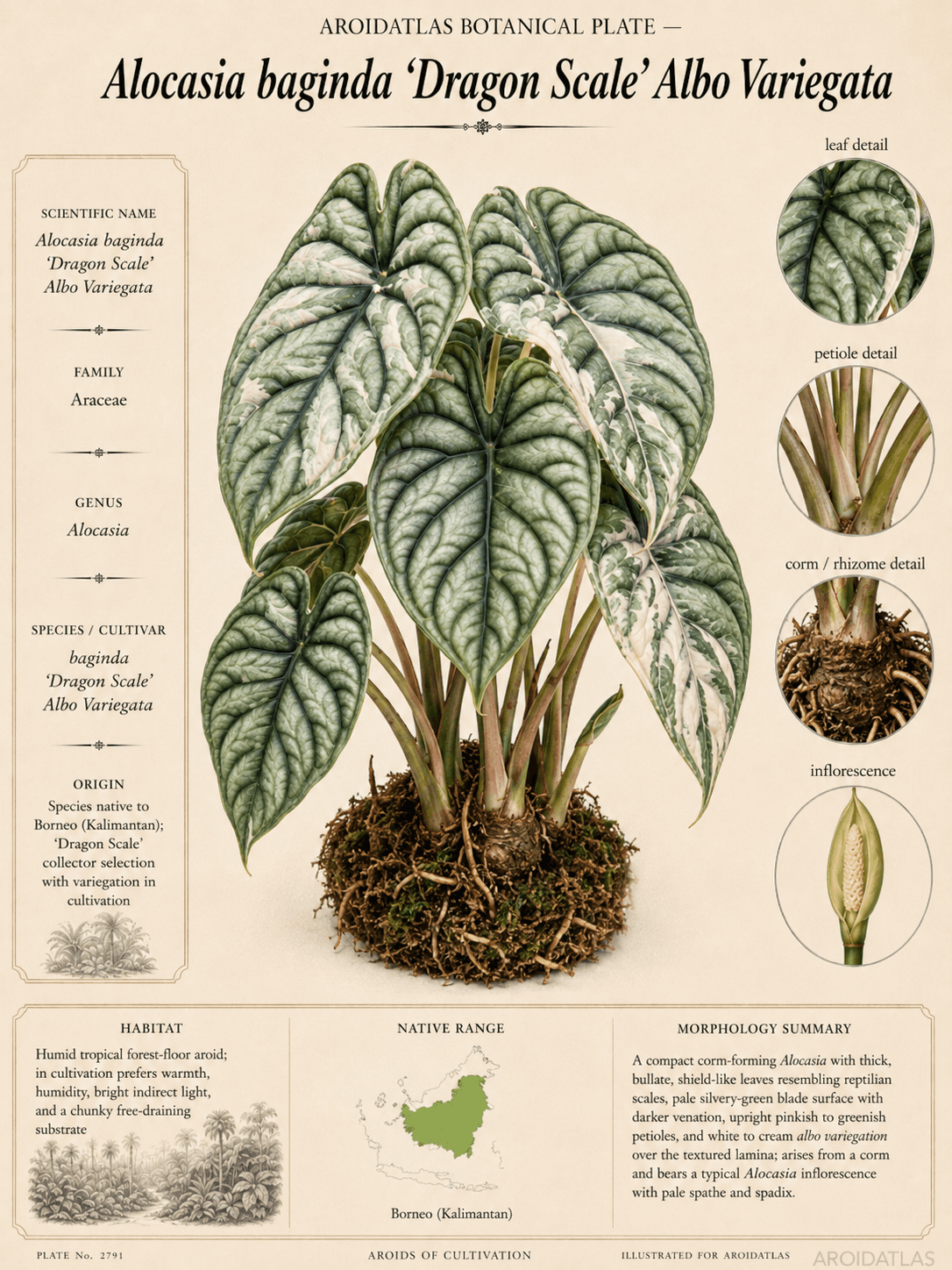
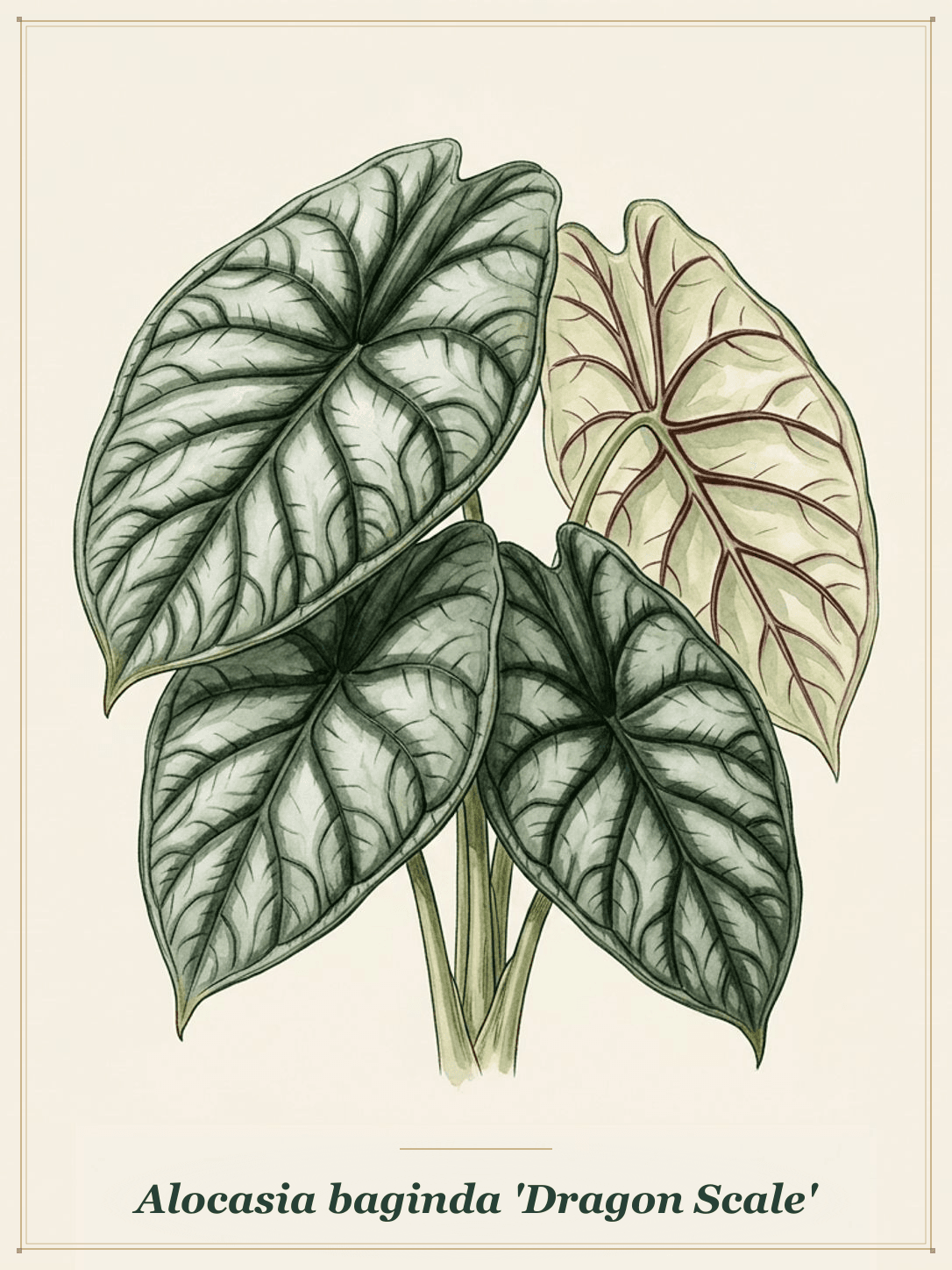
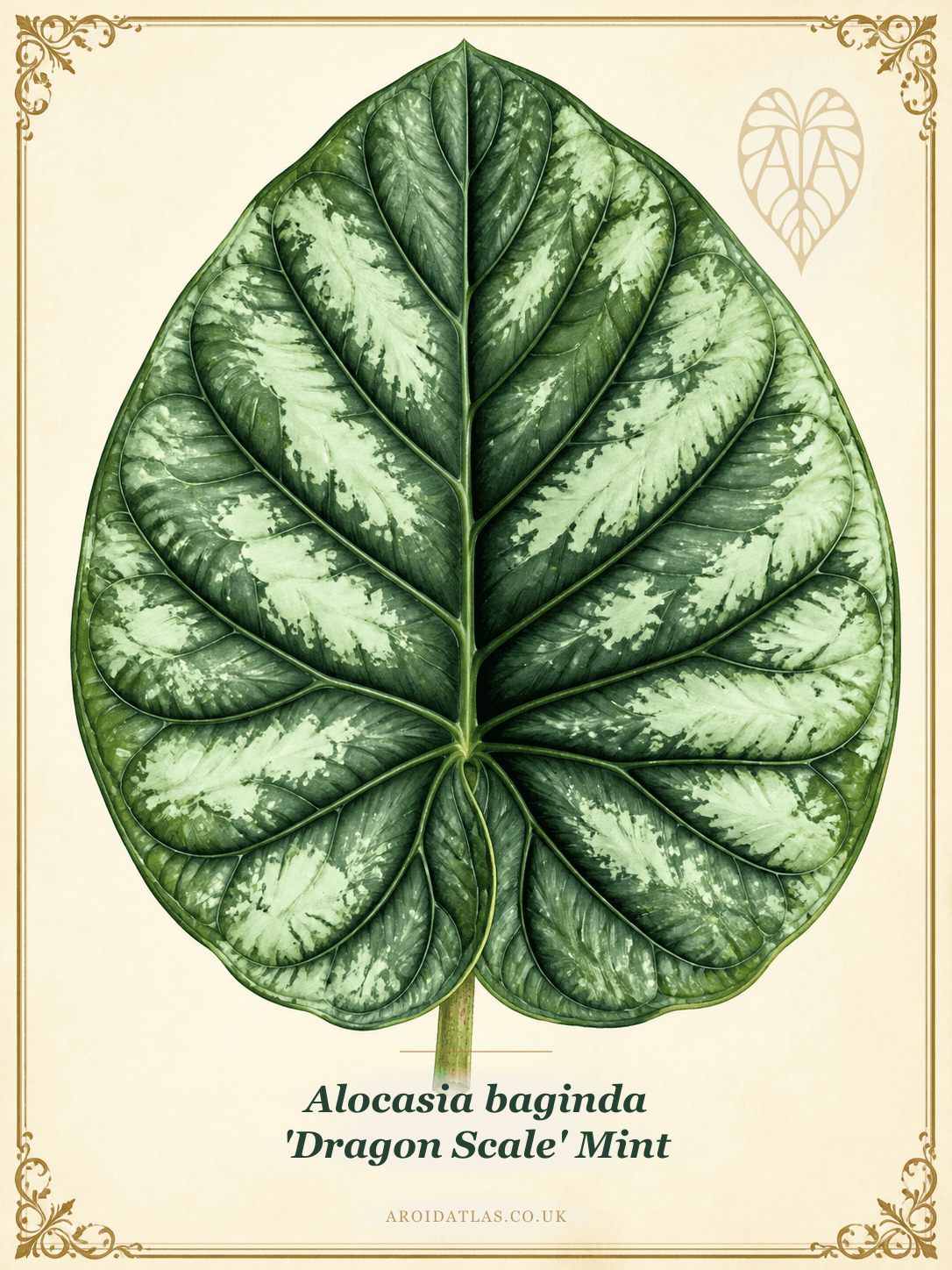
Full Specimen Plate
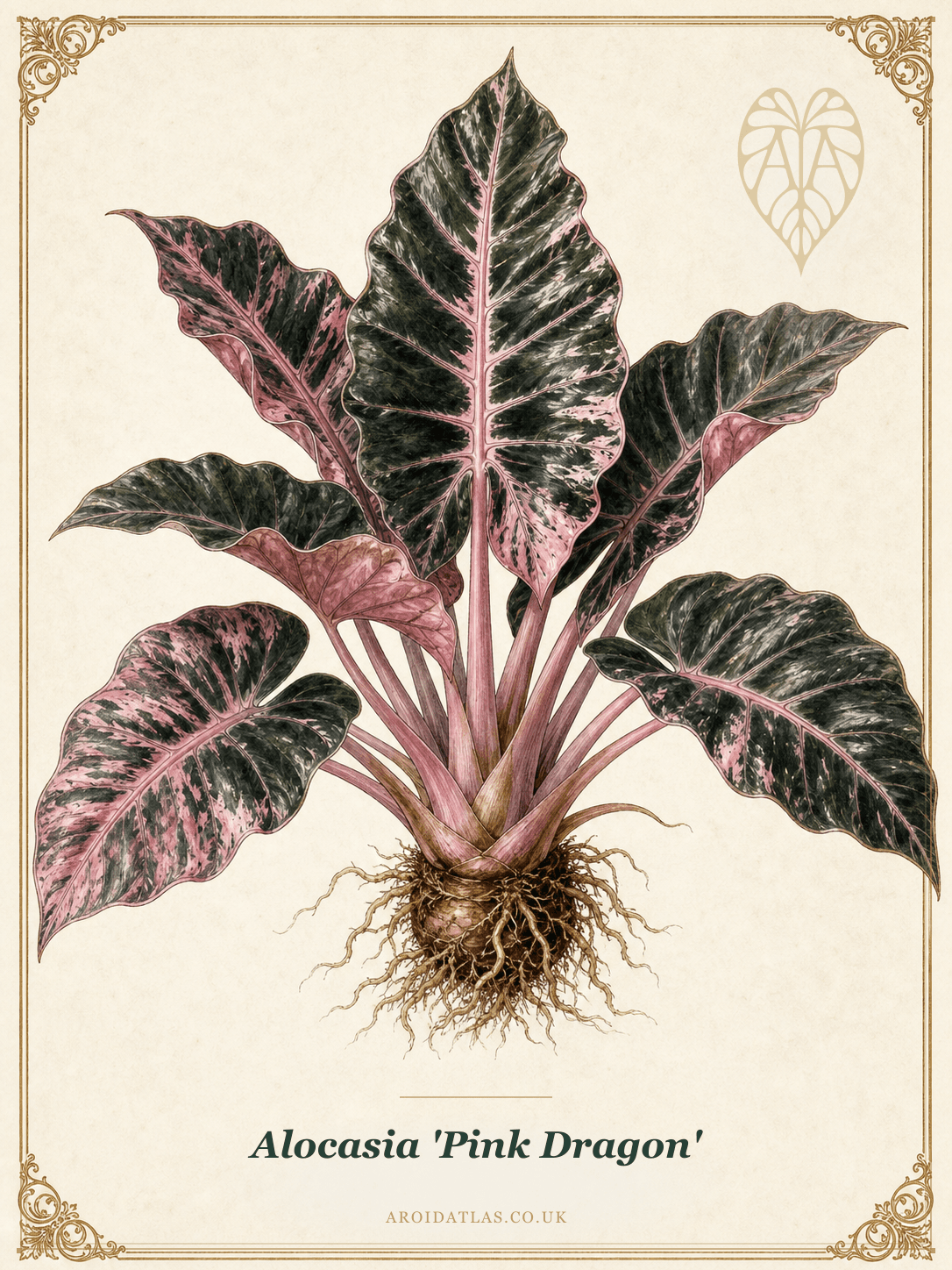
Alocasia baginda 'Pink Dragon'
Pink Dragon Alocasia
Aroid Atlas Price Guide
Select Plant Size
Pricing Data Key
Alocasia baginda 'Pink Dragon' Morphology
About Alocasia baginda 'Pink Dragon'
Alocasia baginda 'Pink Dragon' is a colour-form selection of the Dragon Scale Alocasia, distinguished by the flush of dusky pink that runs along its petioles and the reverse of its leaves. The thick, deeply corrugated upper blade shares the same silvery-green ground colour and recessed near-black veining as the standard Dragon Scale, with the pink pigmentation as the distinguishing trait among jewel Alocasia collectors. Like its parent form it stays compact and clumping, making it a manageable size for a shelf or terrarium setup.
Native Range
Kalimantan, Indonesian Borneo
Market Analysis
Alocasia baginda 'Pink Dragon' Price Guide & Auction Value
Historical eBay auction metrics and live retailer listings updated weekly.
No eBay auction history available yet. Data is collected automatically as sales appear on eBay UK.
Before You Buy
Shared checklist for Alocasia baginda and its cultivated forms
- Check the corm/base is firm, not soft or foul-smelling; Alocasia rot starts underground and spreads upward
- Expect some seasonal leaf loss to be normal on jewel Alocasias. A bare corm with visible new growth point is not necessarily a dead plant
- For named colour forms (Dragon Scale, Silver Dragon, Pink Dragon), confirm the leaf colouration and vein depth match the named form, since inconsistent labelling is common in this group
- Inspect the undersides of leaves and leaf axils for spider mite webbing or stippling before buying
Propagation Guide
How to Propagate Alocasia baginda 'Pink Dragon'
Shared across every form of Alocasia baginda — see this form's own Morphology for variegation-specific propagation notes.
2-4 months
Cultivar character is preserved through vegetative cuttings
Jewel Alocasias produce basal offsets/pups once mature, which can be separated with a clean cut through the connecting rhizome once they have their own root system. Named colour forms (Dragon Scale, Silver Dragon, Pink Dragon) breed true from division since they are stable selections, not chimeric sports.
Care Guide
Alocasia baginda 'Pink Dragon' Care Guide & Growing Conditions
General care shared across all forms of Alocasia baginda — cultivated forms may need brighter light or higher humidity than the plain species; check this form's Quick Facts above.
Chunky, fast-draining aroid mix: 40% orchid bark, 30% perlite, 20% potting compost, 10% horticultural charcoal. Jewel Alocasias are highly prone to rot in dense, wet substrate.
Allow the top 2-3cm of substrate to dry between waterings. Reduce significantly in winter dormancy, when the plant may lose leaves and rest; this is normal, not a sign of failing health.
60-80%. Below 50% humidity commonly causes crispy leaf edges and stalled growth; a humidity tent or cabinet is strongly recommended for consistent results.
Balanced liquid fertiliser at quarter to half strength every 3-4 weeks during active growth. Stop feeding once the plant shows signs of seasonal dormancy.
Every 12-18 months, or when offsets crowd the pot. Use a shallow, wide container that suits the dwarf clumping habit rather than a deep one.
Common Problems
Sudden leaf loss / dormancy
Natural seasonal response to shorter days or cooler temperatures, normal for jewel Alocasias
Reduce watering significantly, keep the corm dry-ish but not bone dry, and wait for new growth in spring
Root/corm rot
Overwatering combined with dense, slow-draining substrate
Unpot, trim all soft/mushy tissue back to firm white flesh, dust with cinnamon, and repot into fresh dry chunky mix
Spider mites
Low humidity and still air, especially in centrally-heated UK homes over winter
Increase humidity, improve air circulation, and treat with insecticidal soap at the first sign of stippled leaves