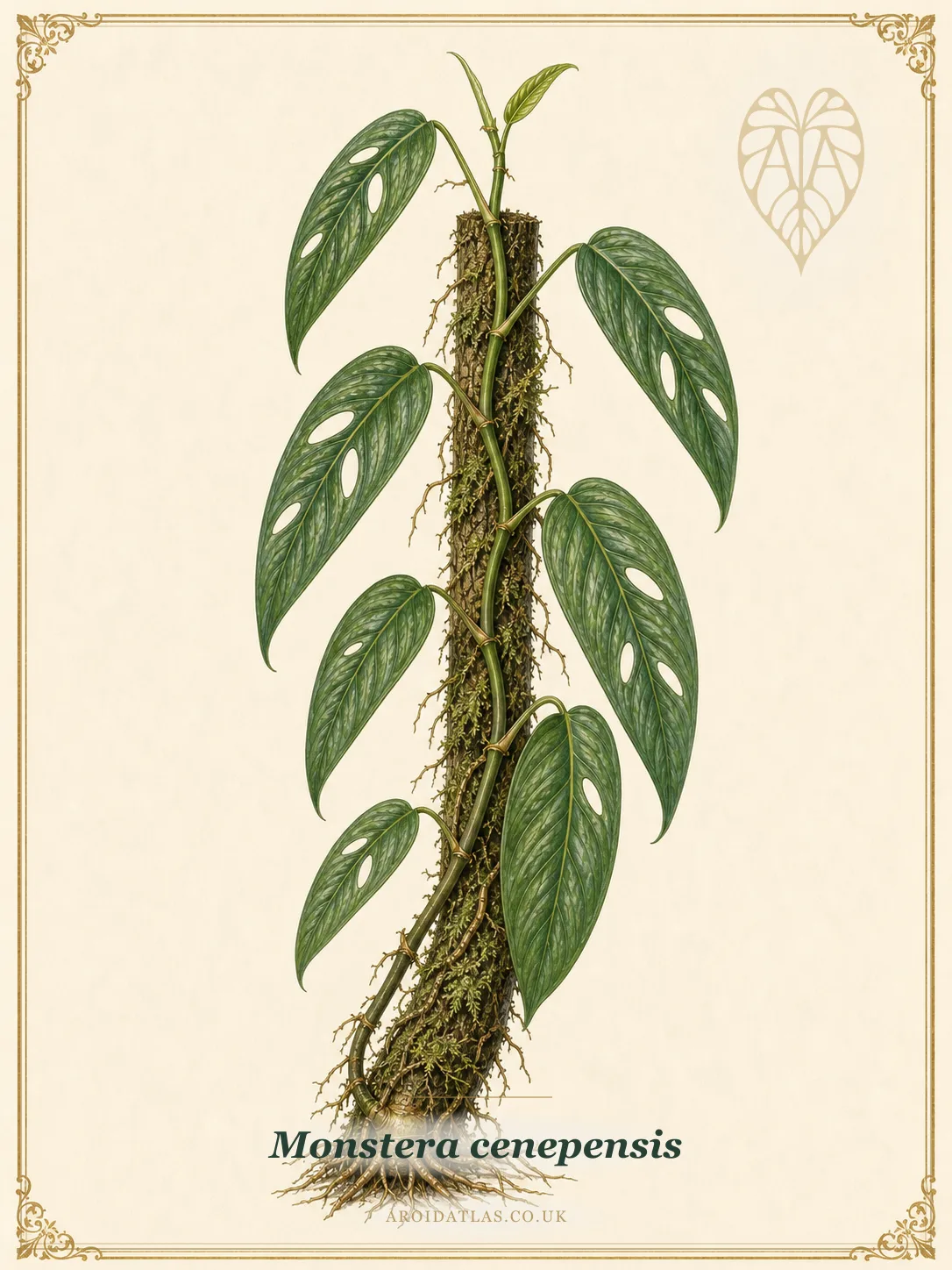
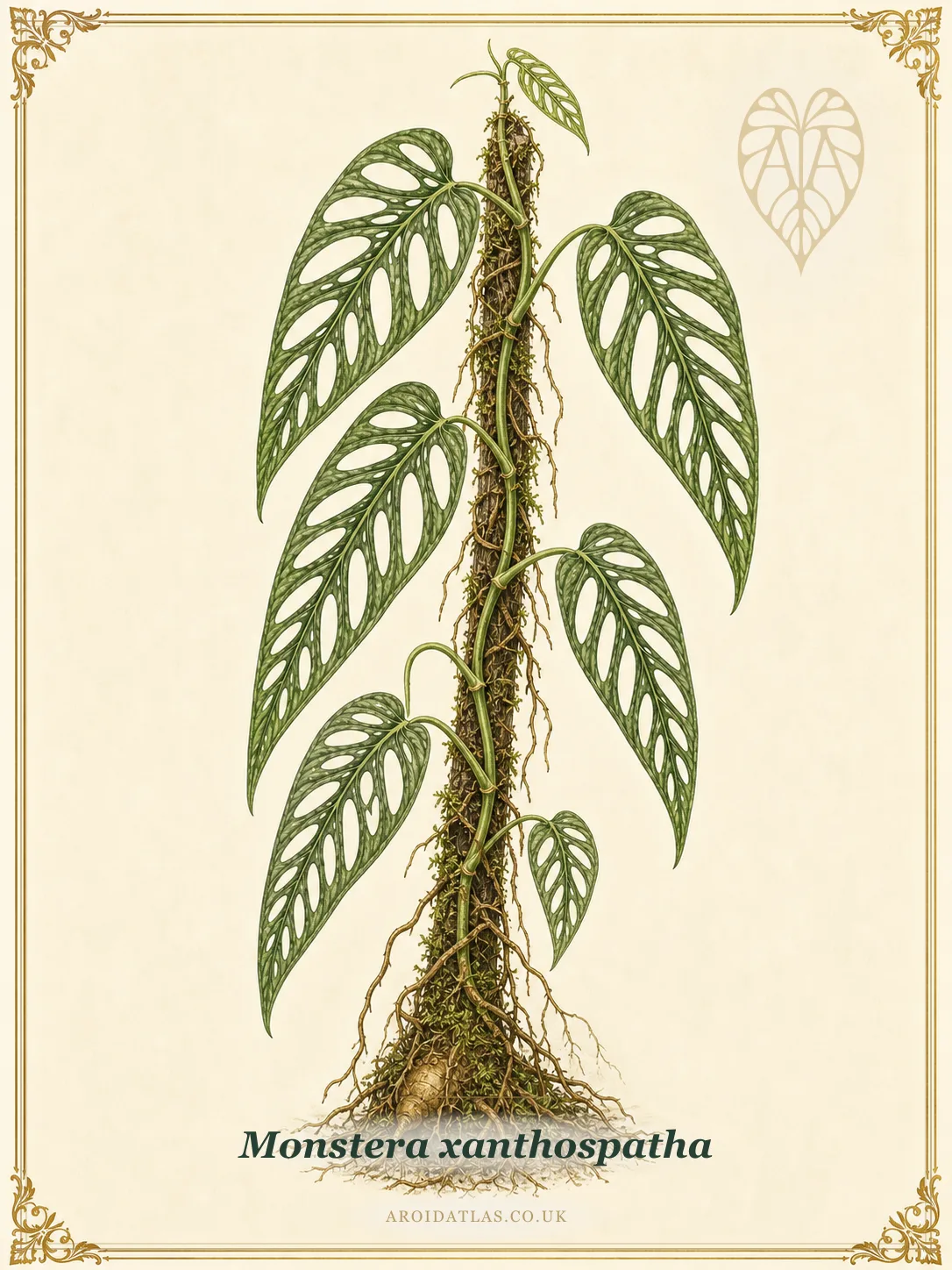
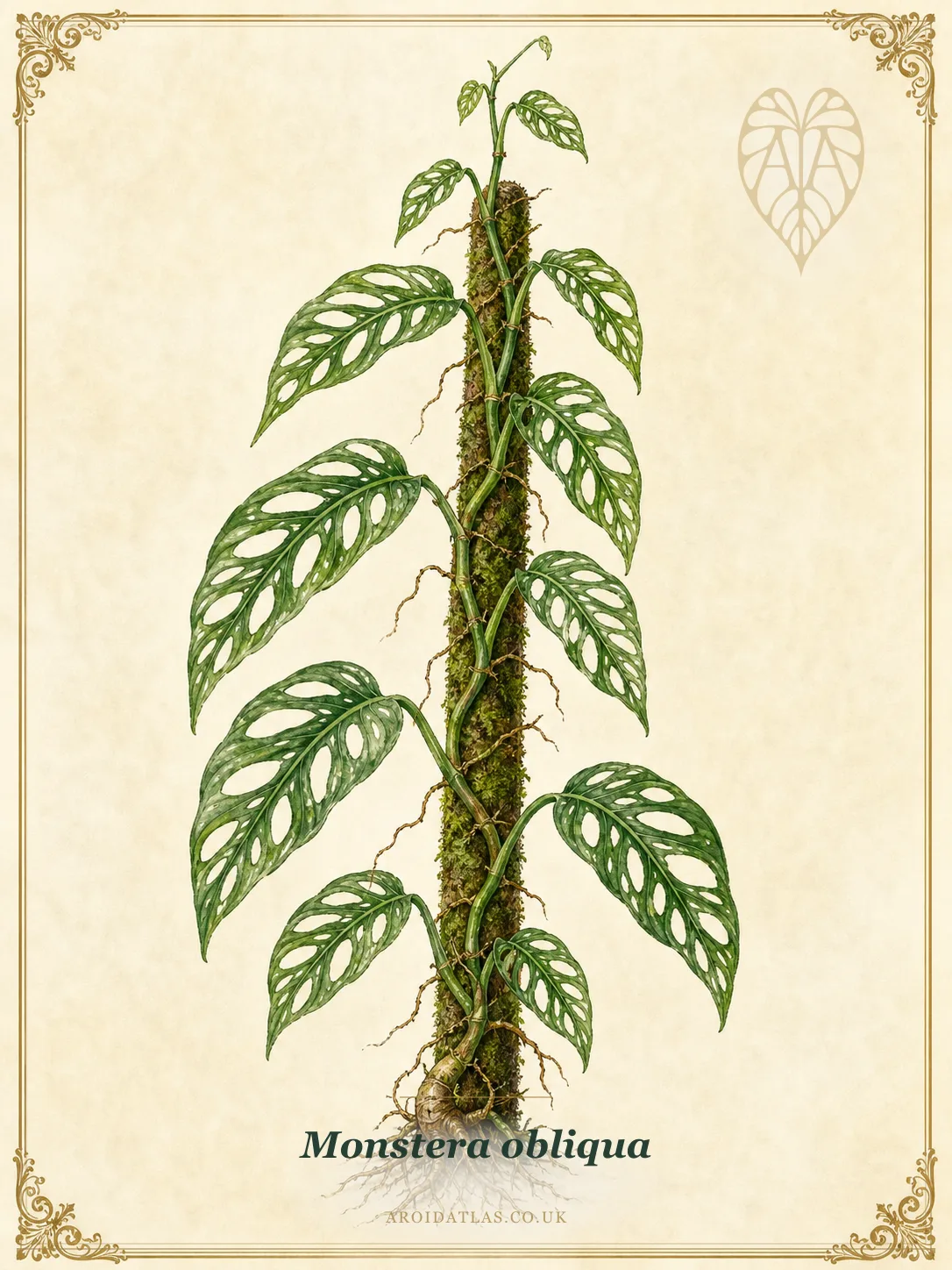
Full Specimen Plate
Monstera obliqua - Costa Rica Locality Form
Monstera Obliqua Costa Rica Locality Form
- Coir Moss Pole, 120cm (4-Pack)Coco coir totem for climbing aroids to root into as they grow upward.
- Natural Rooting Powder, 3 x 75gRooting hormone powder for stem and leaf cuttings.
- Precision Bonsai Pruning Scissors, 200mmFine-bladed snips for clean node cuts when taking a cutting.
- Full-Spectrum LED Grow Light Panel144-LED panel with IR and UV for supplementing light in low-light rooms.
Amazon links — we may earn commission on qualifying purchases.
7cm Target Price
£40.00
 Base
BaseMonstera obliqua
Base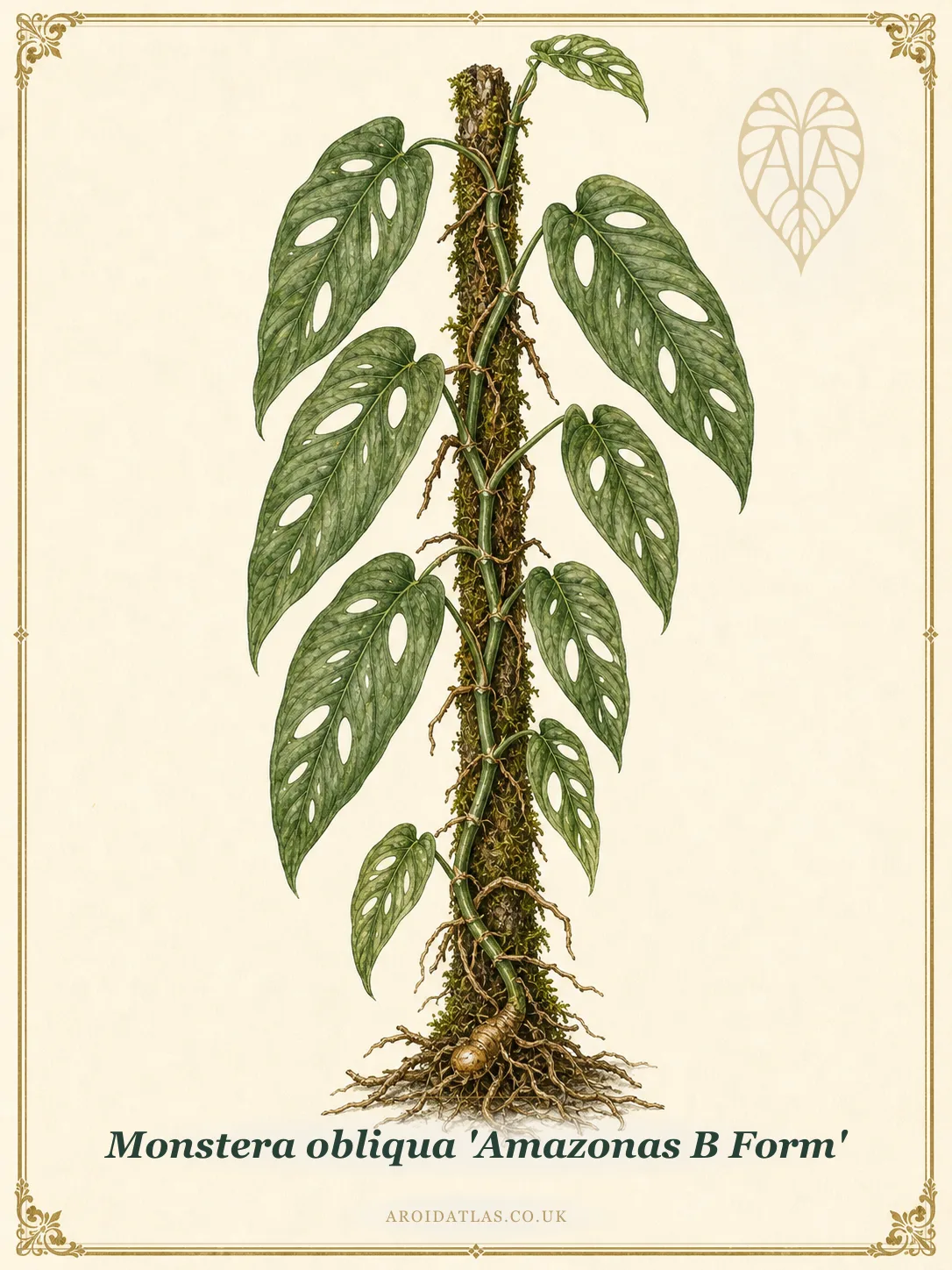
Amazonas B Form
Base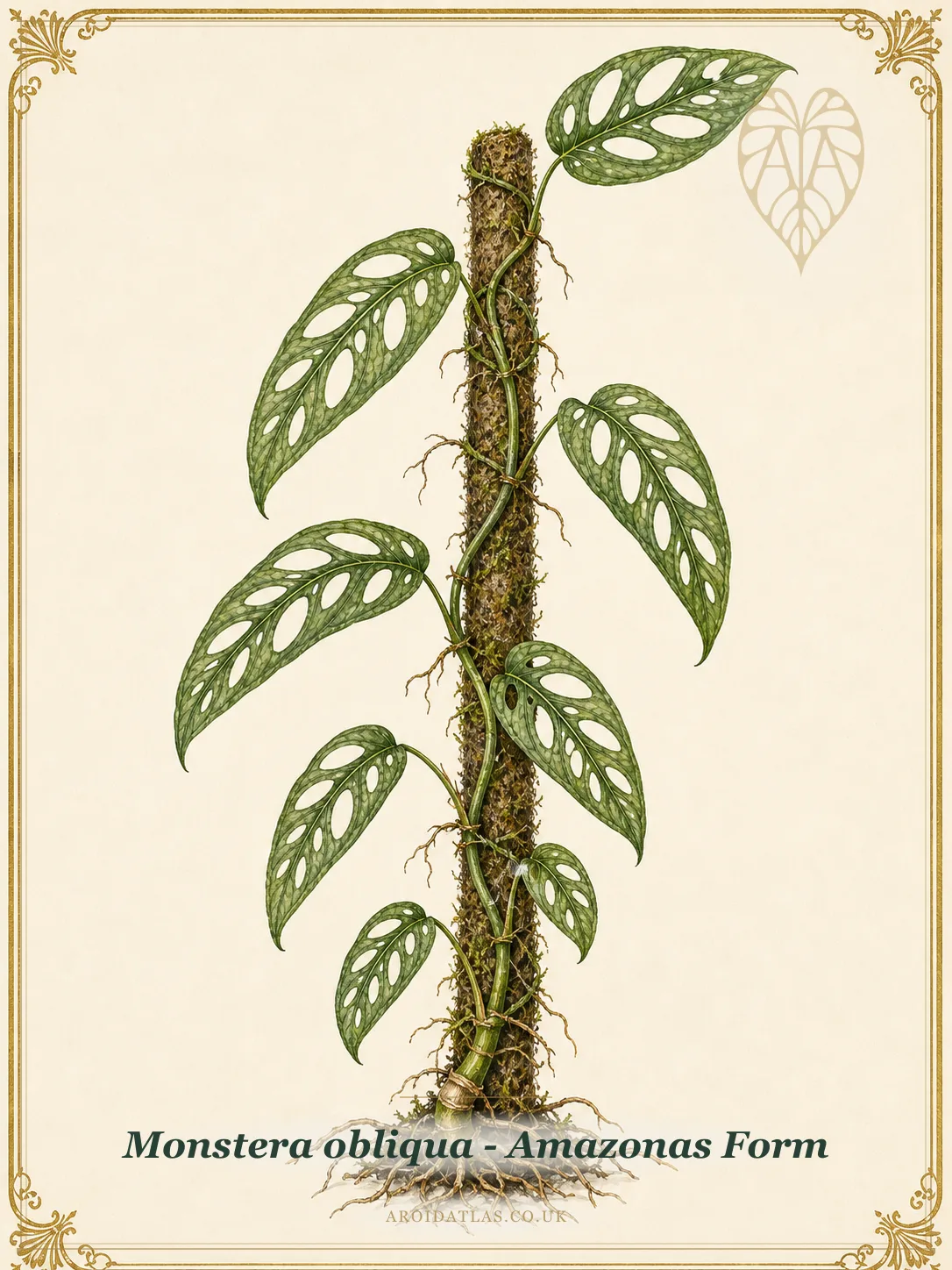
Amazonas Form
Base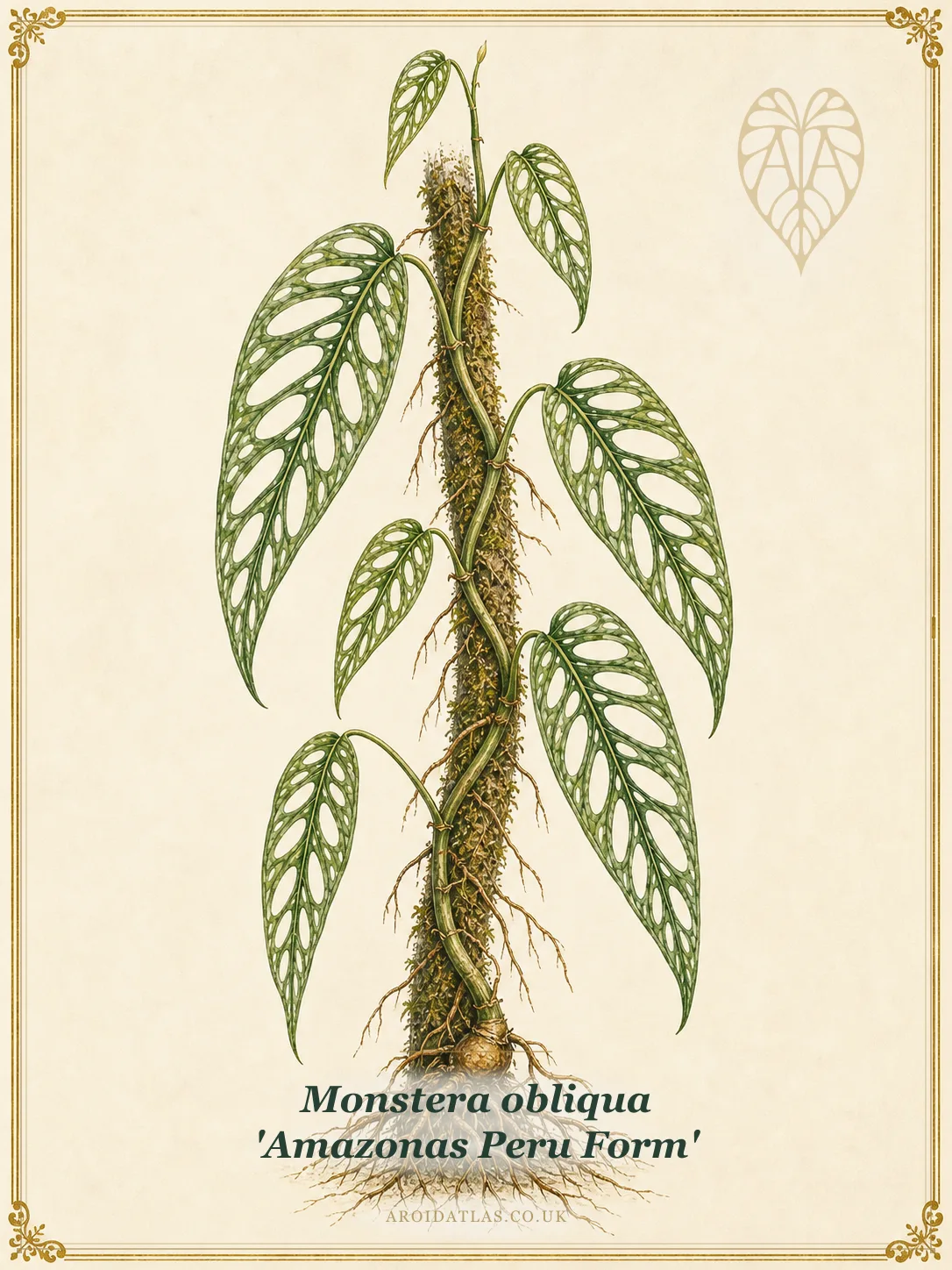
Amazonas Peru Form
Base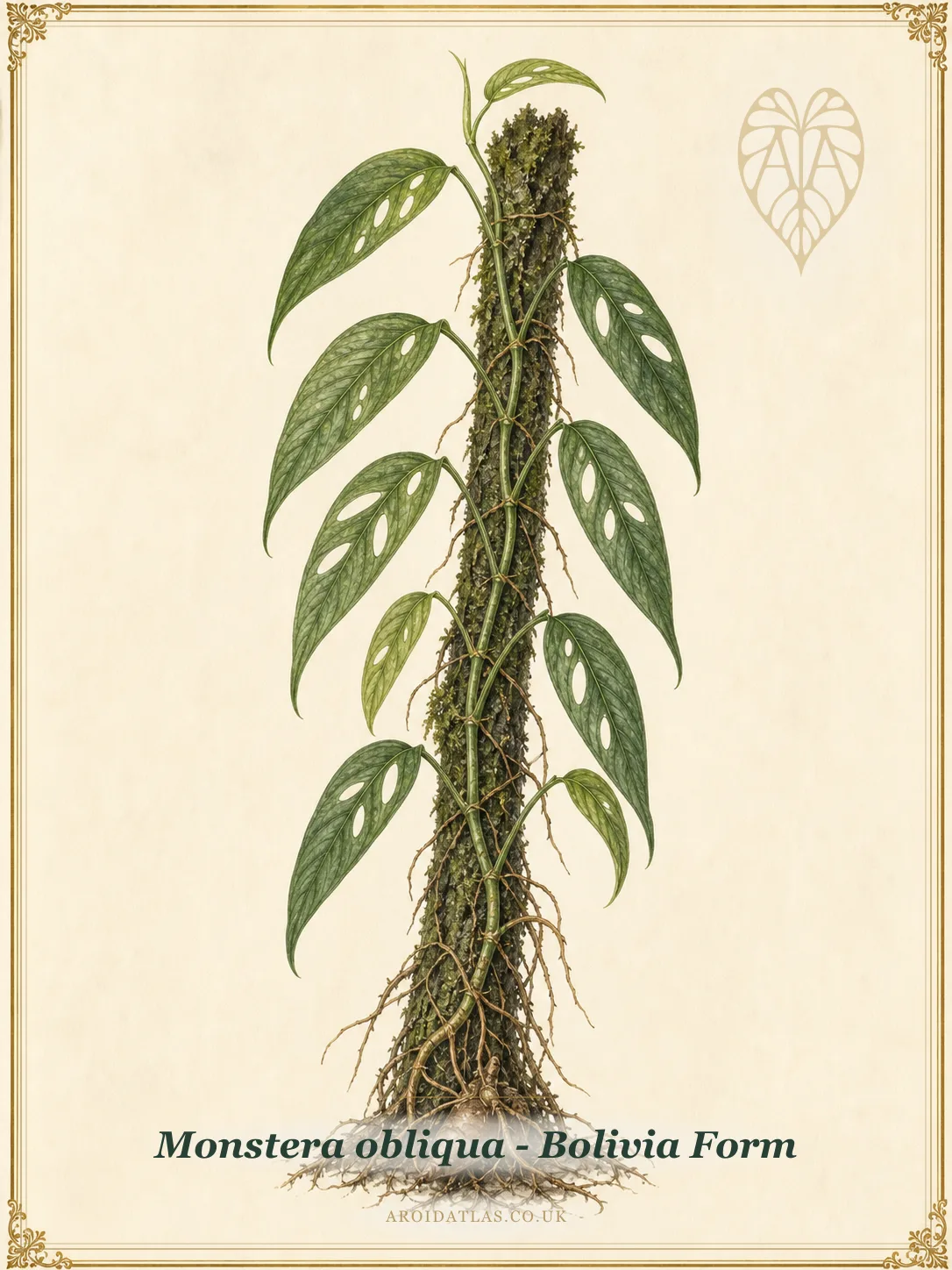
Bolivia Form
Base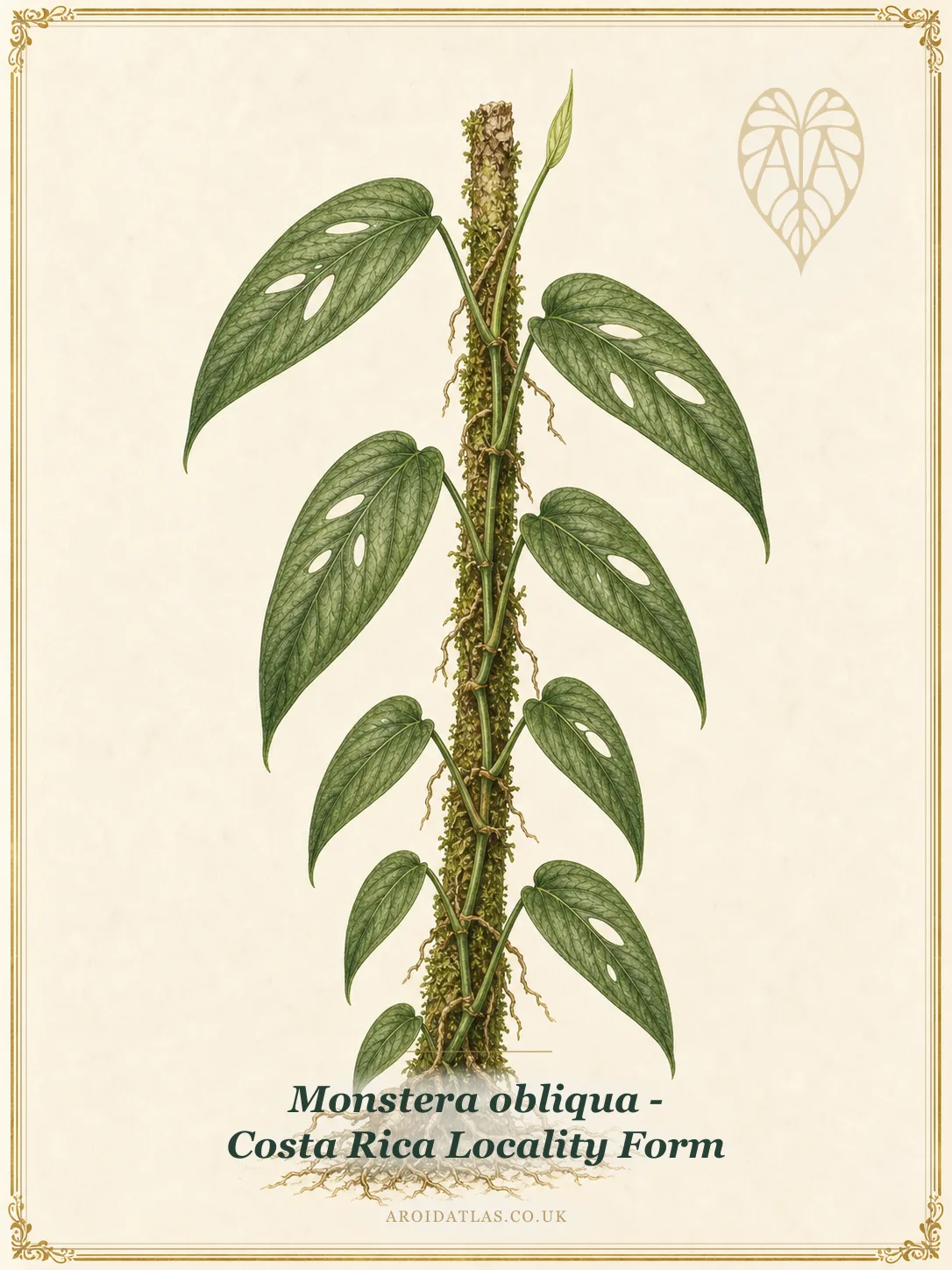 Current
Costa Rica Locality Form
Base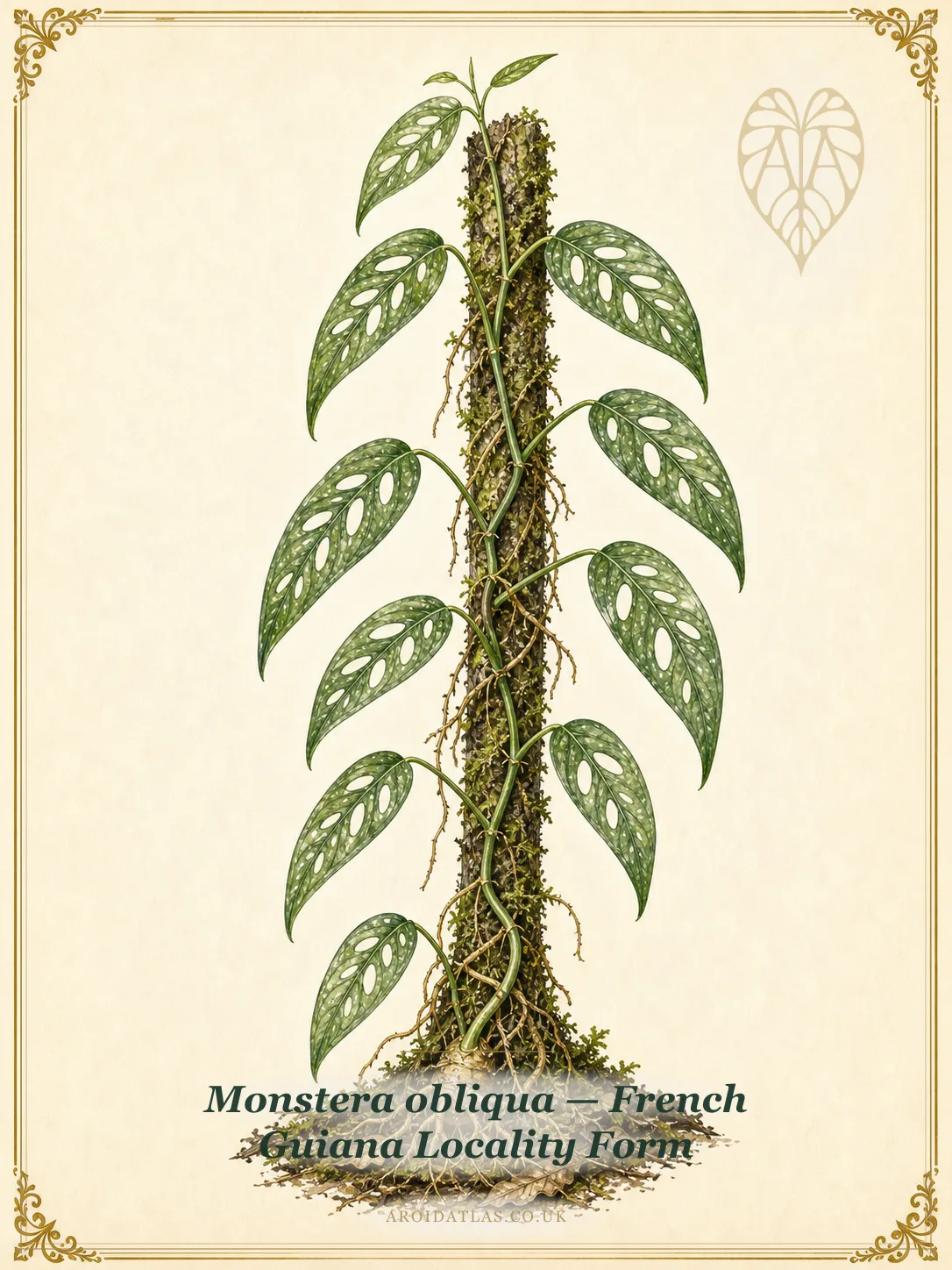
French Guiana Locality Form
Base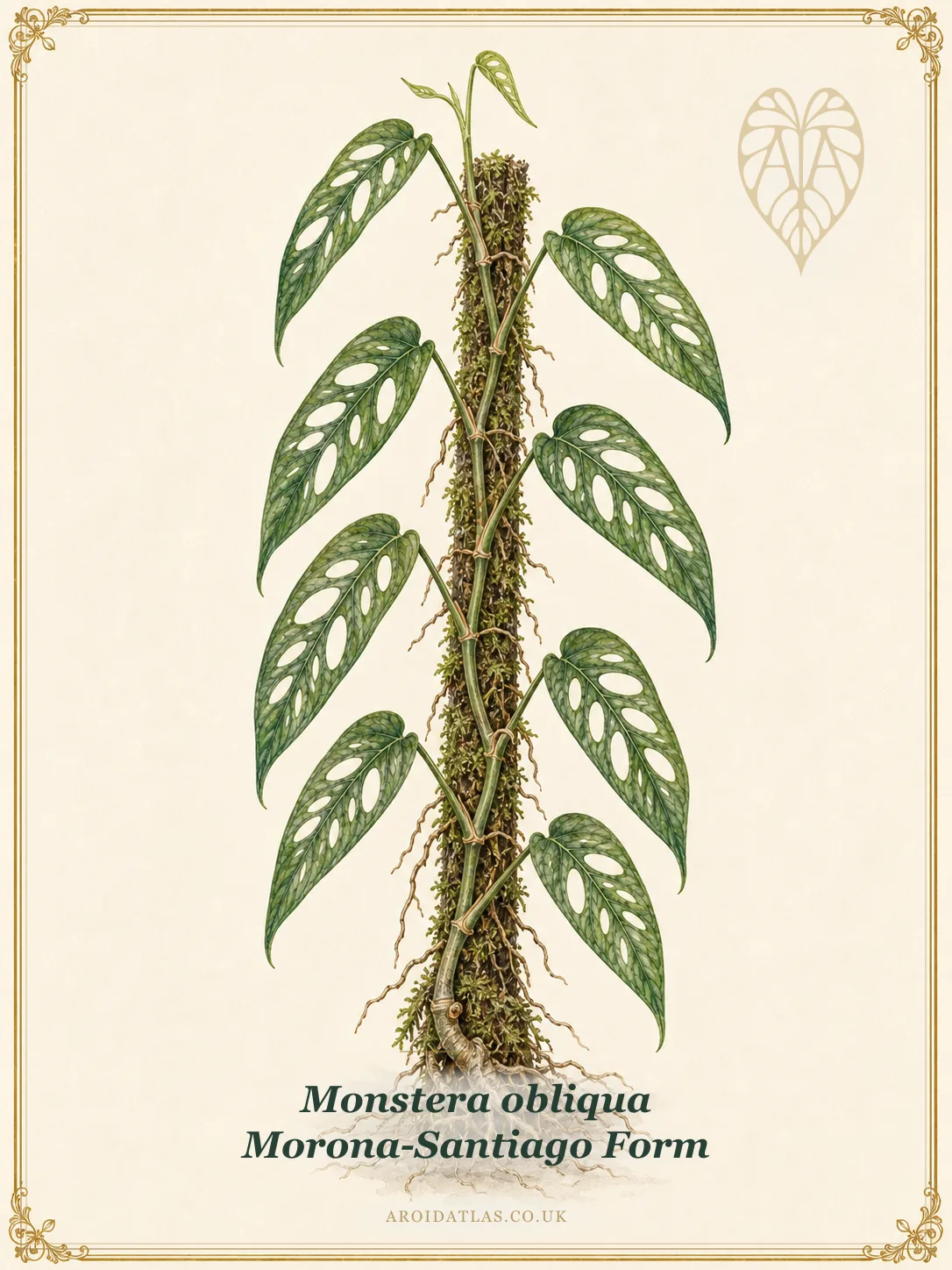
Morona-Santiago Form
Base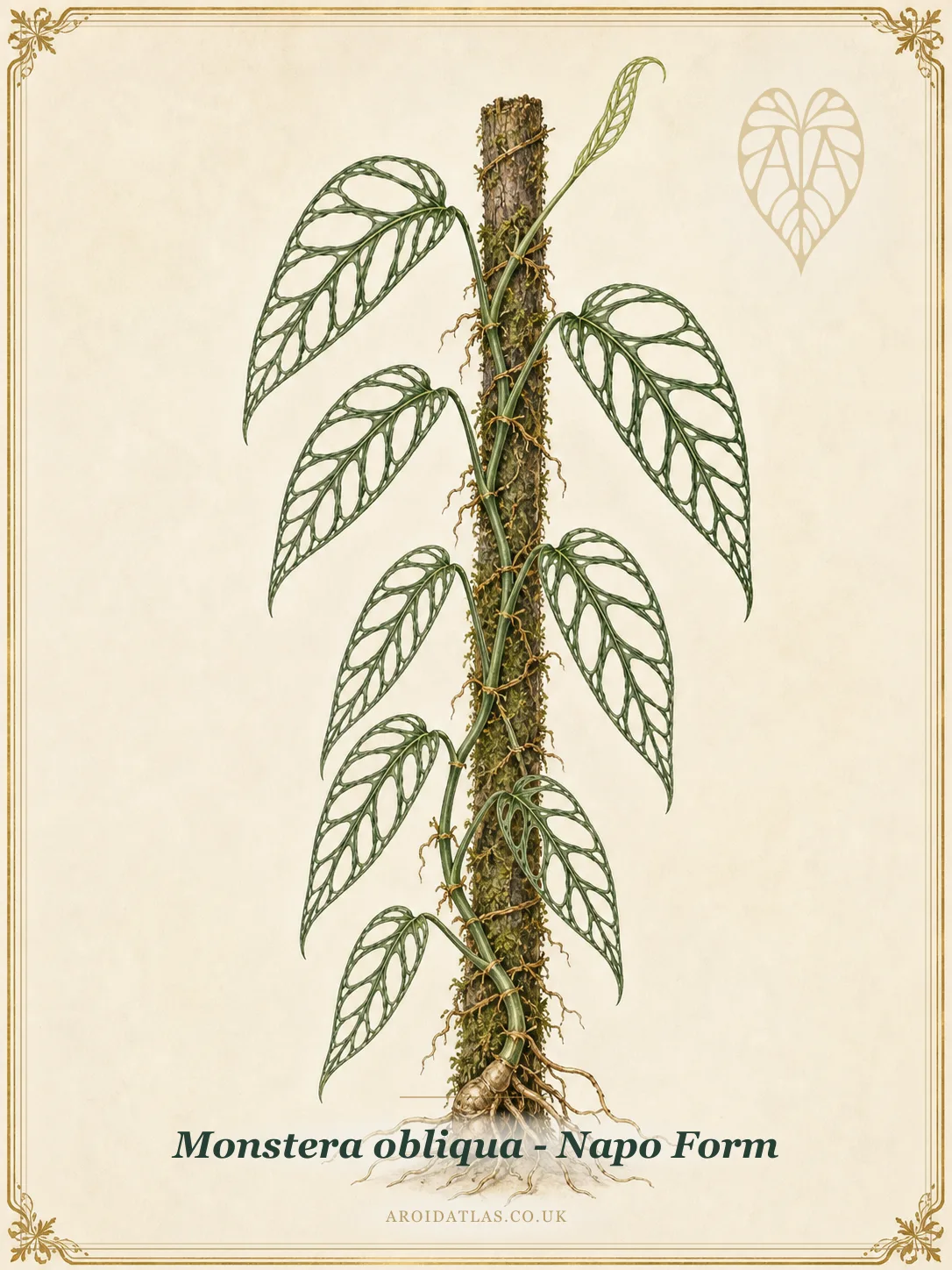
Napo Form
Base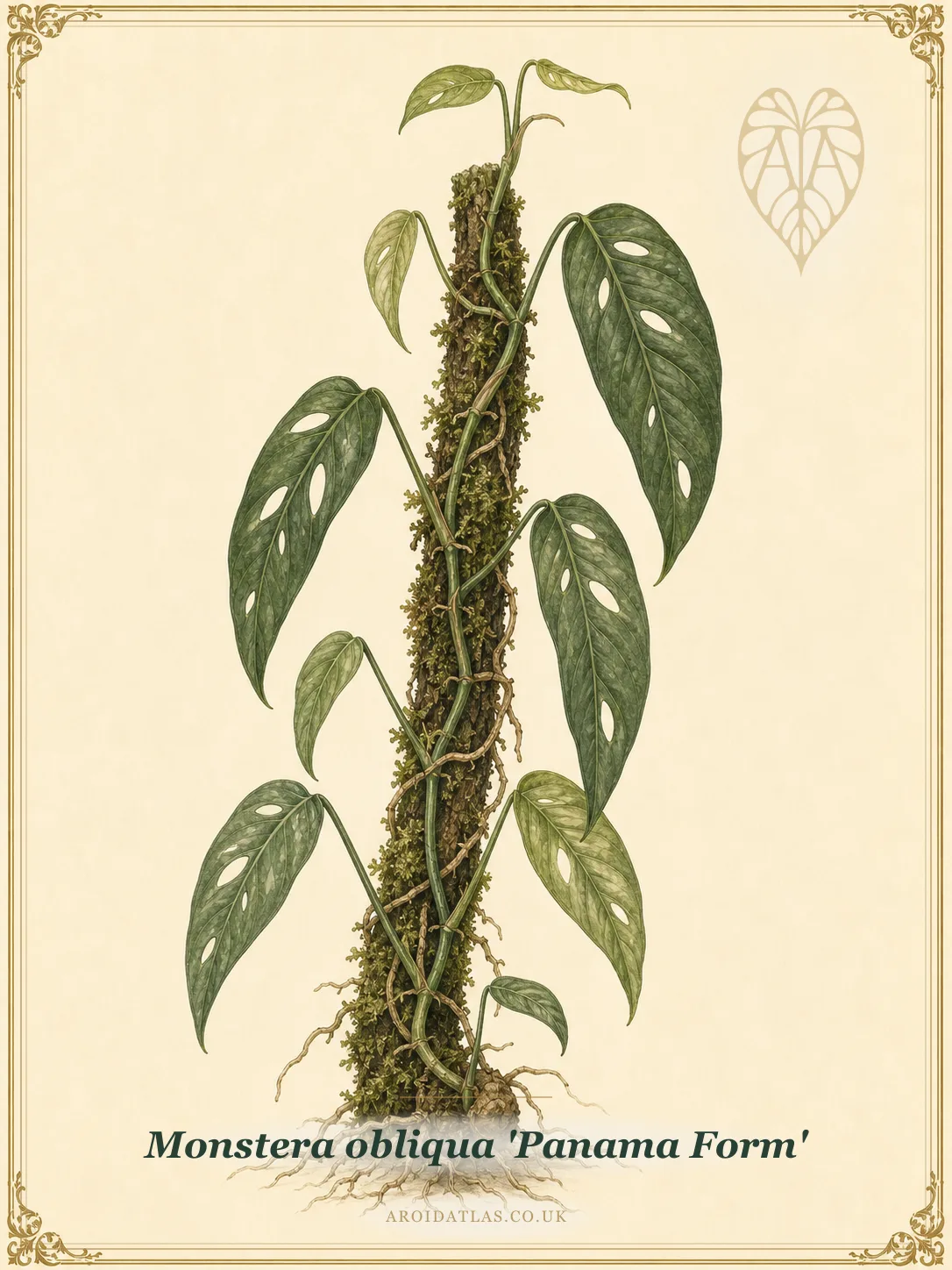
Panama Form
Base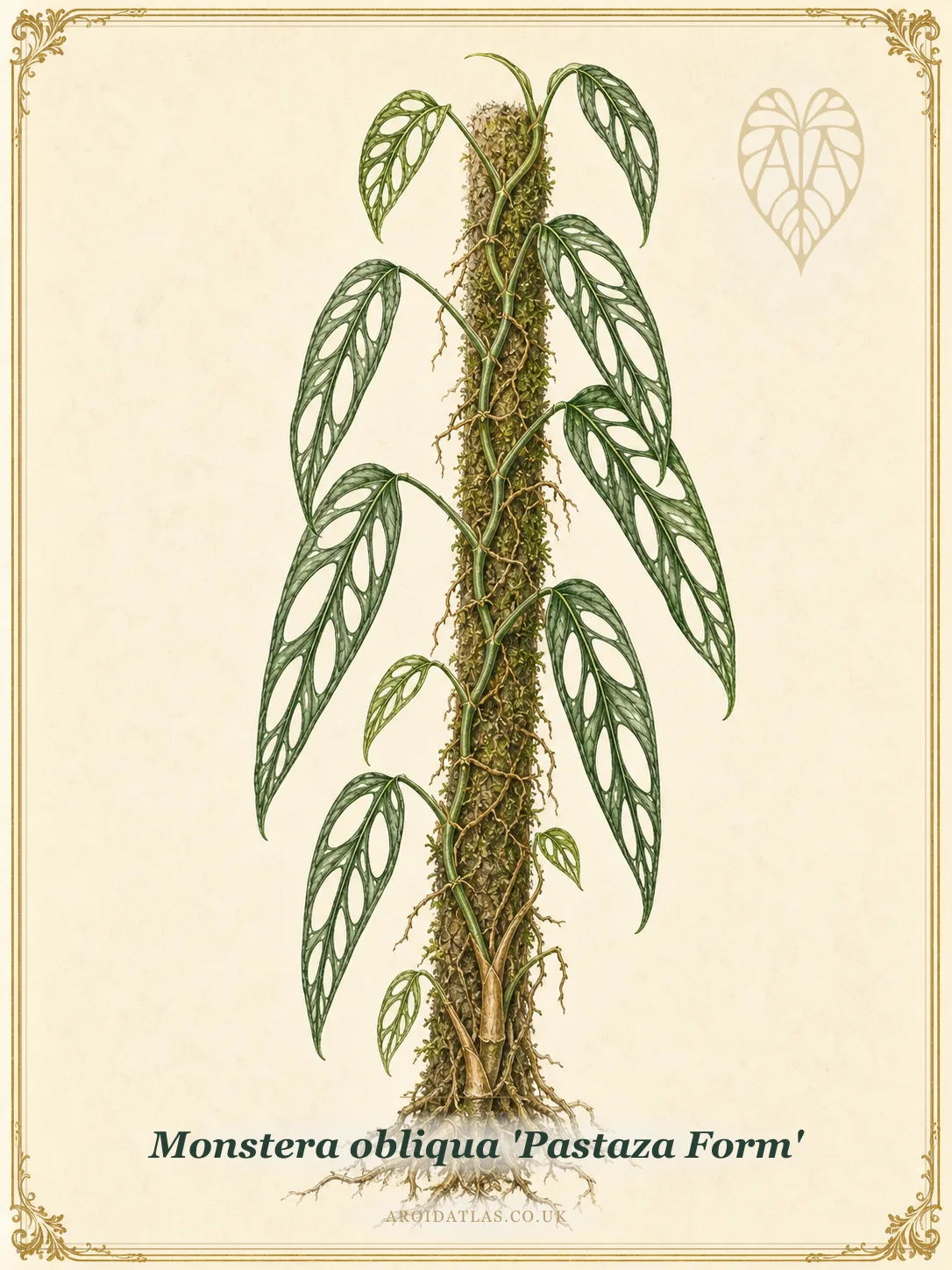
Pastaza Form
Base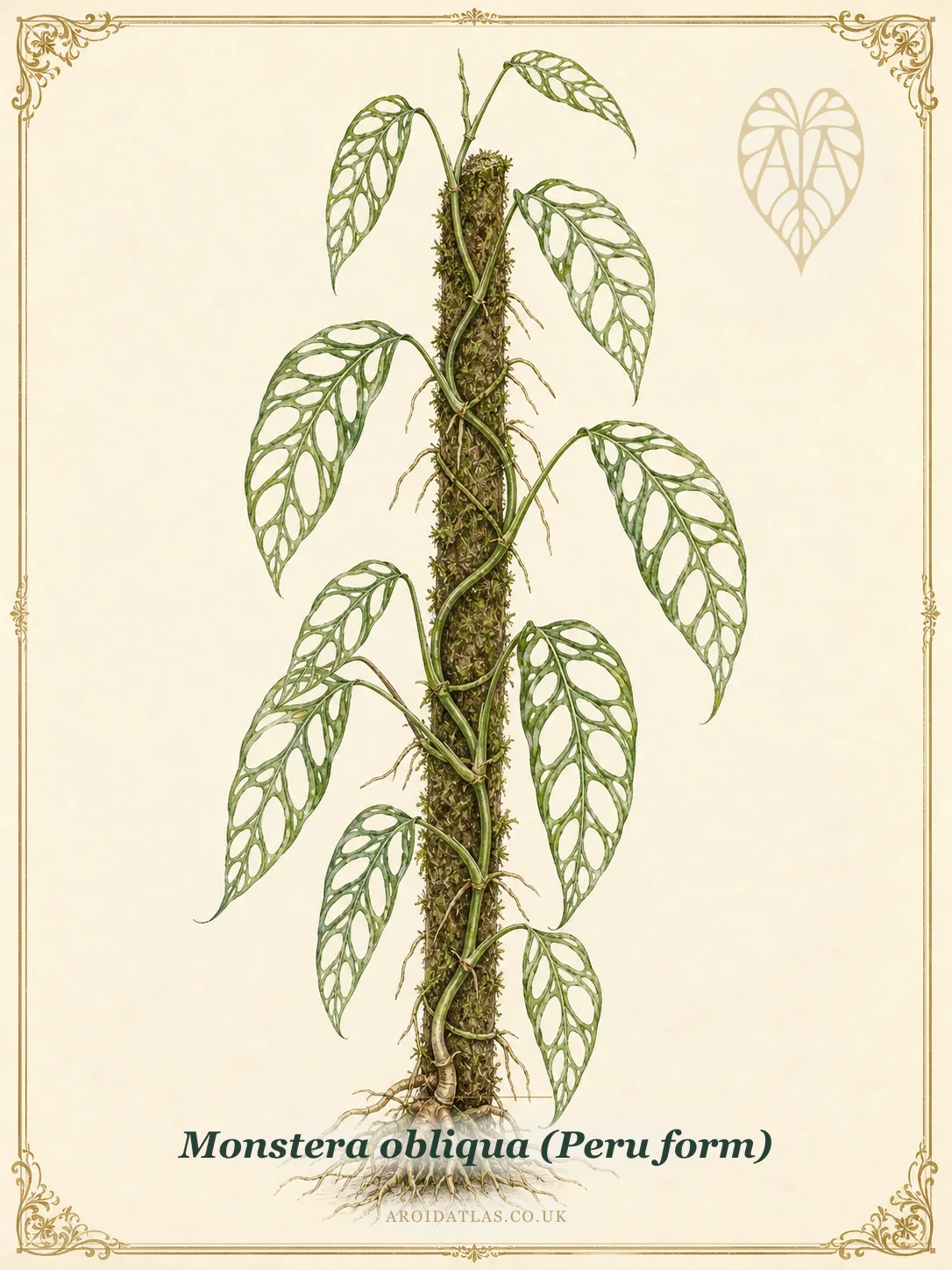
Peru form
Base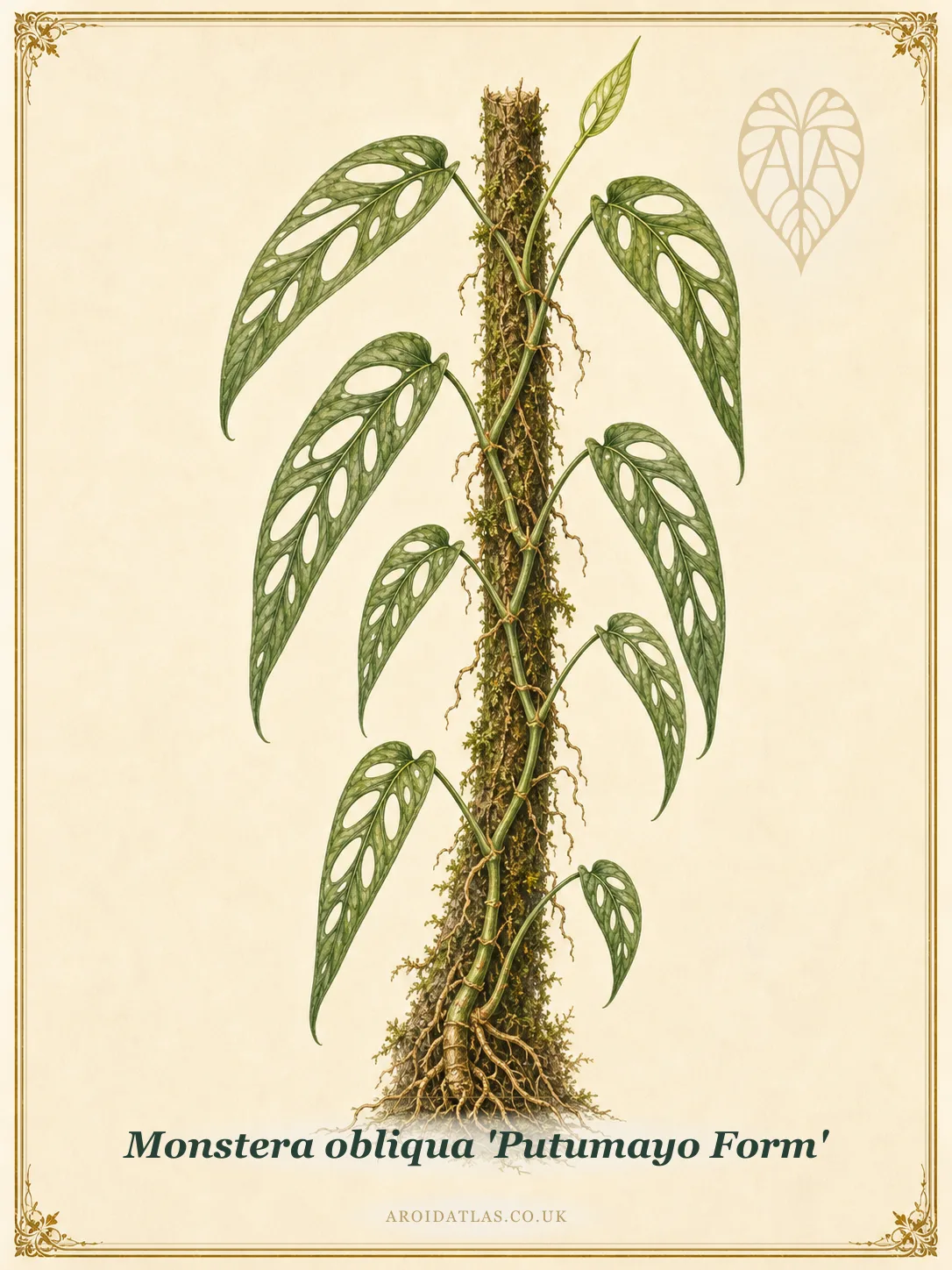
Putumayo Form
Base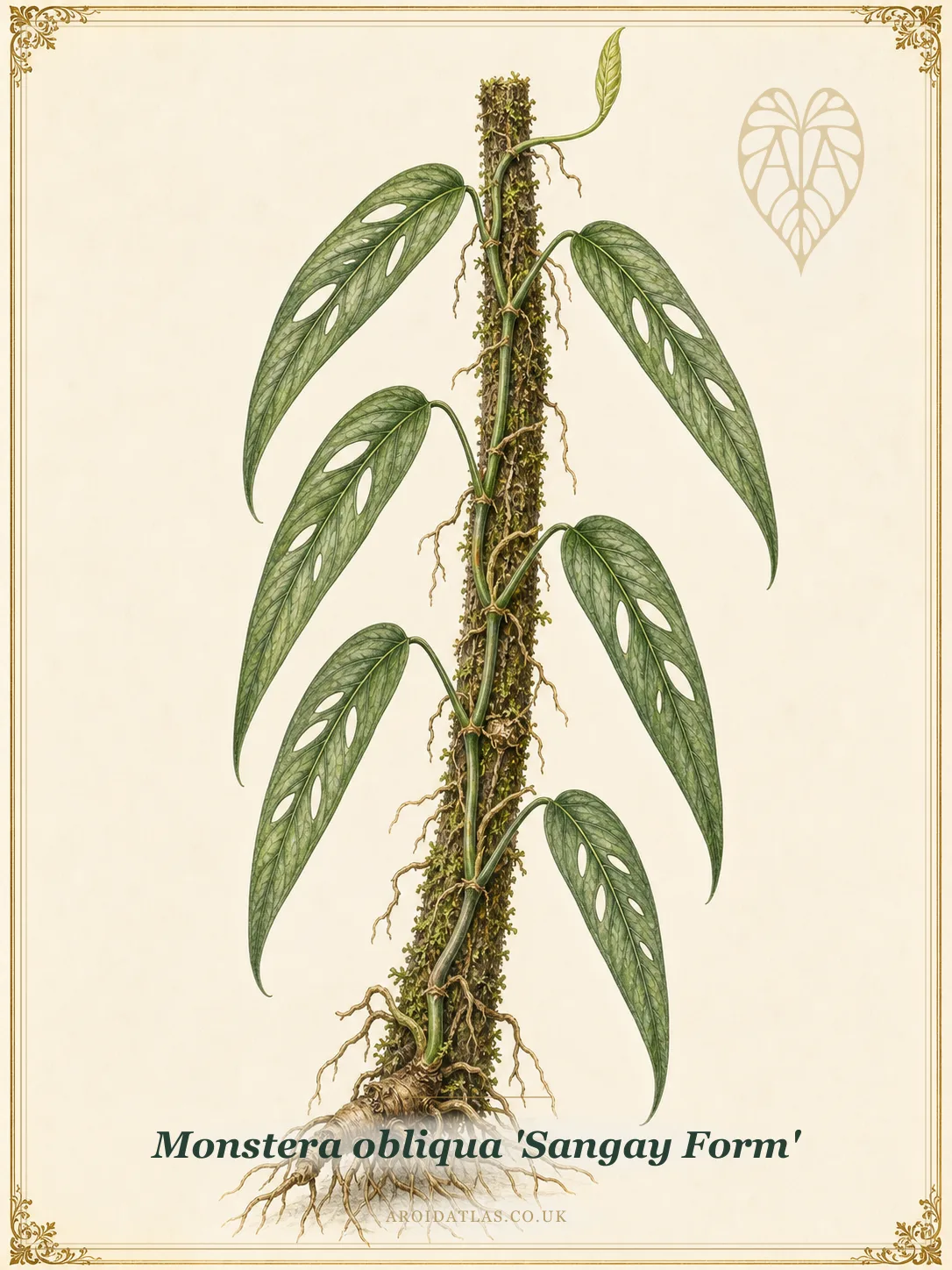
Sangay Form
Base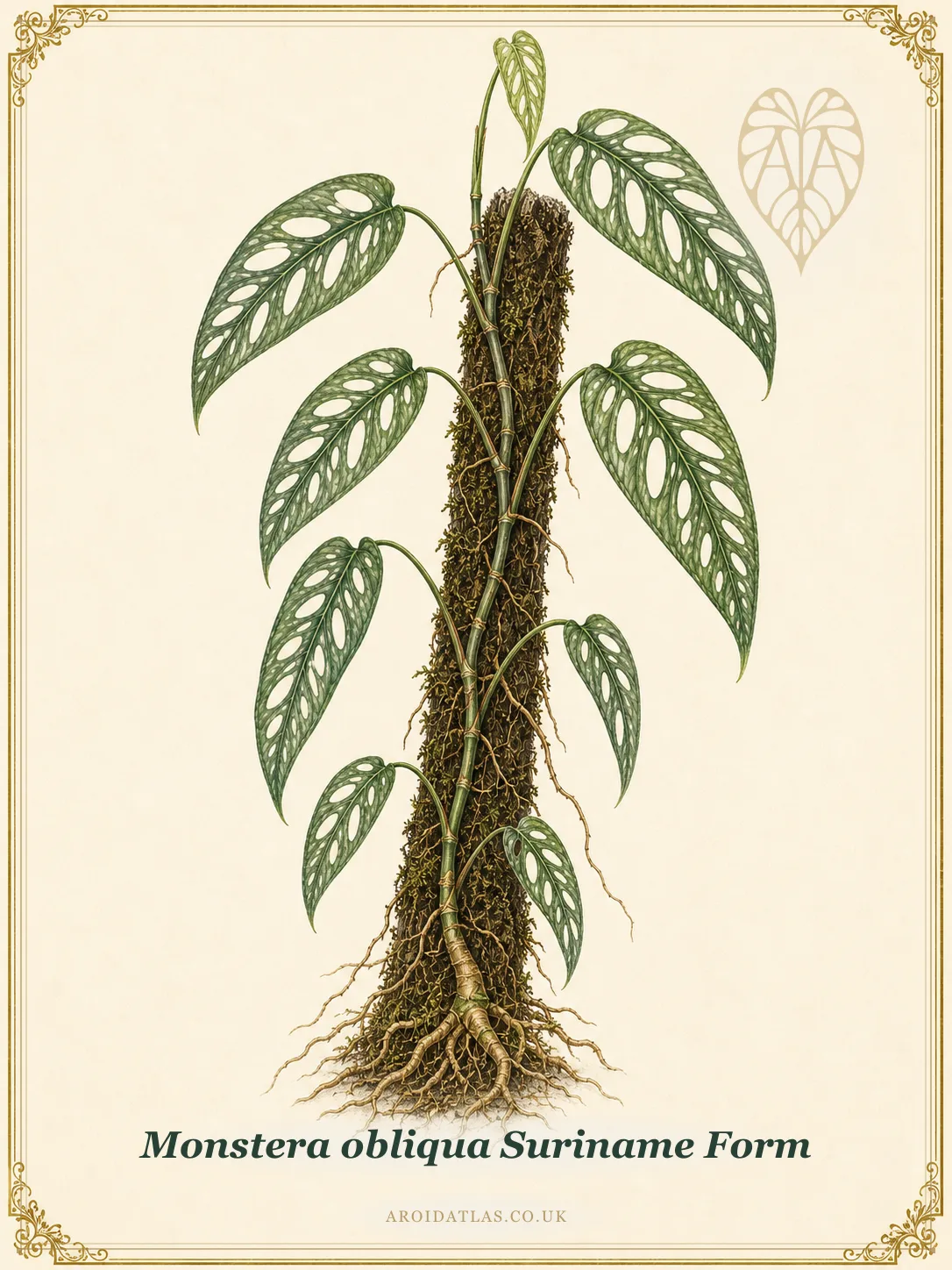
Suriname Form
Base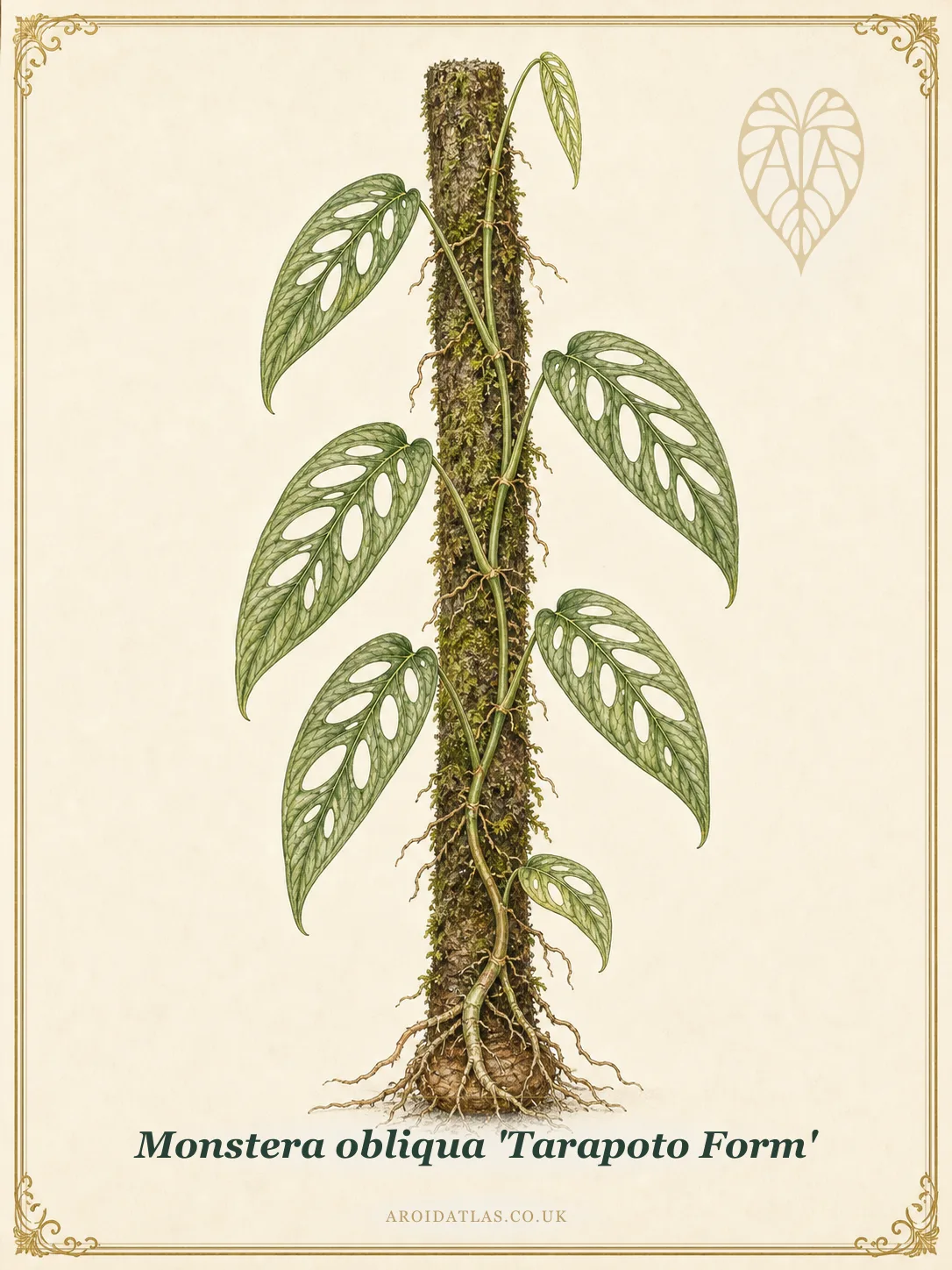
Tarapoto Form
Base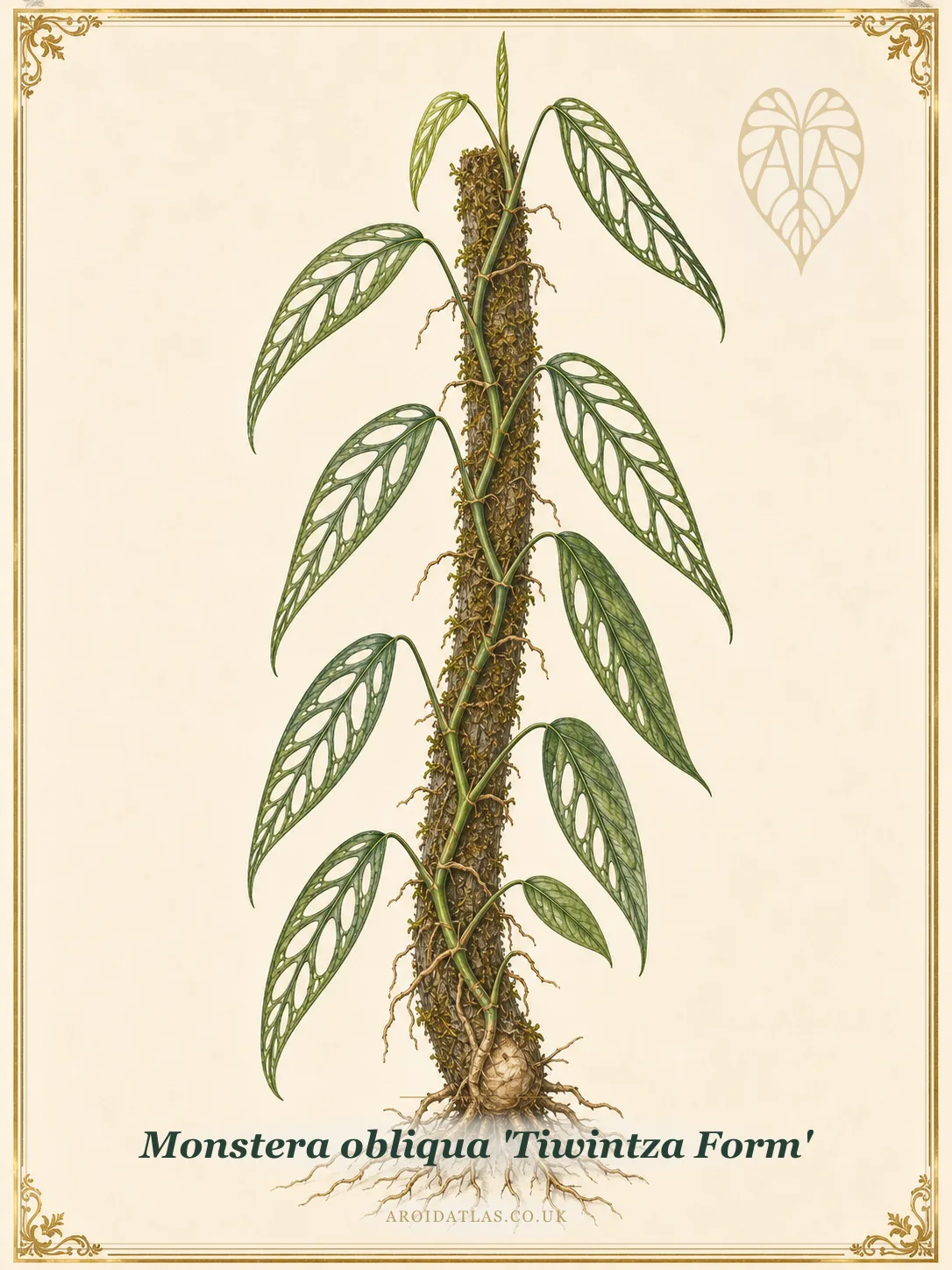
Tiwintza Form
Base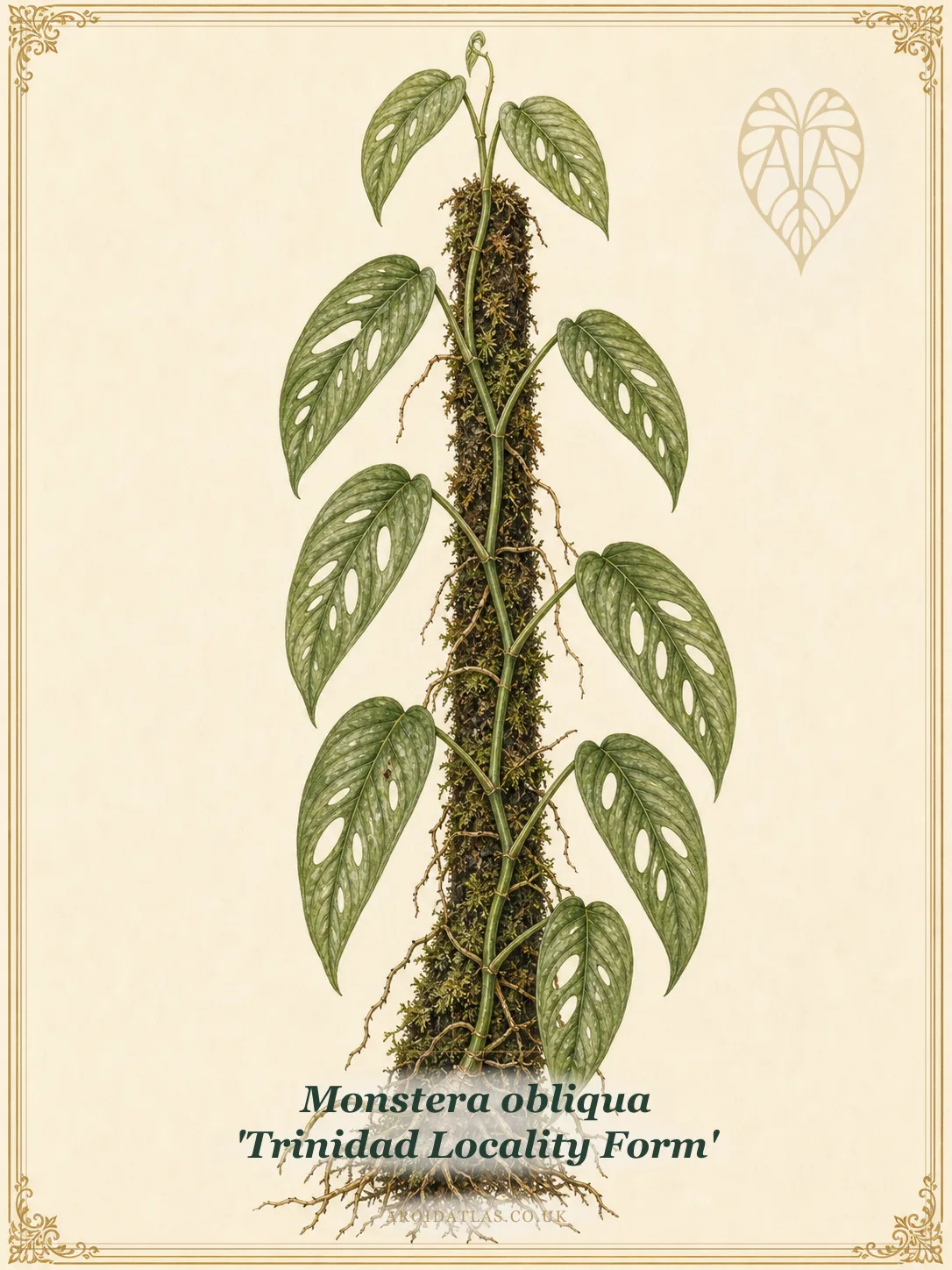
Trinidad Locality Form
Base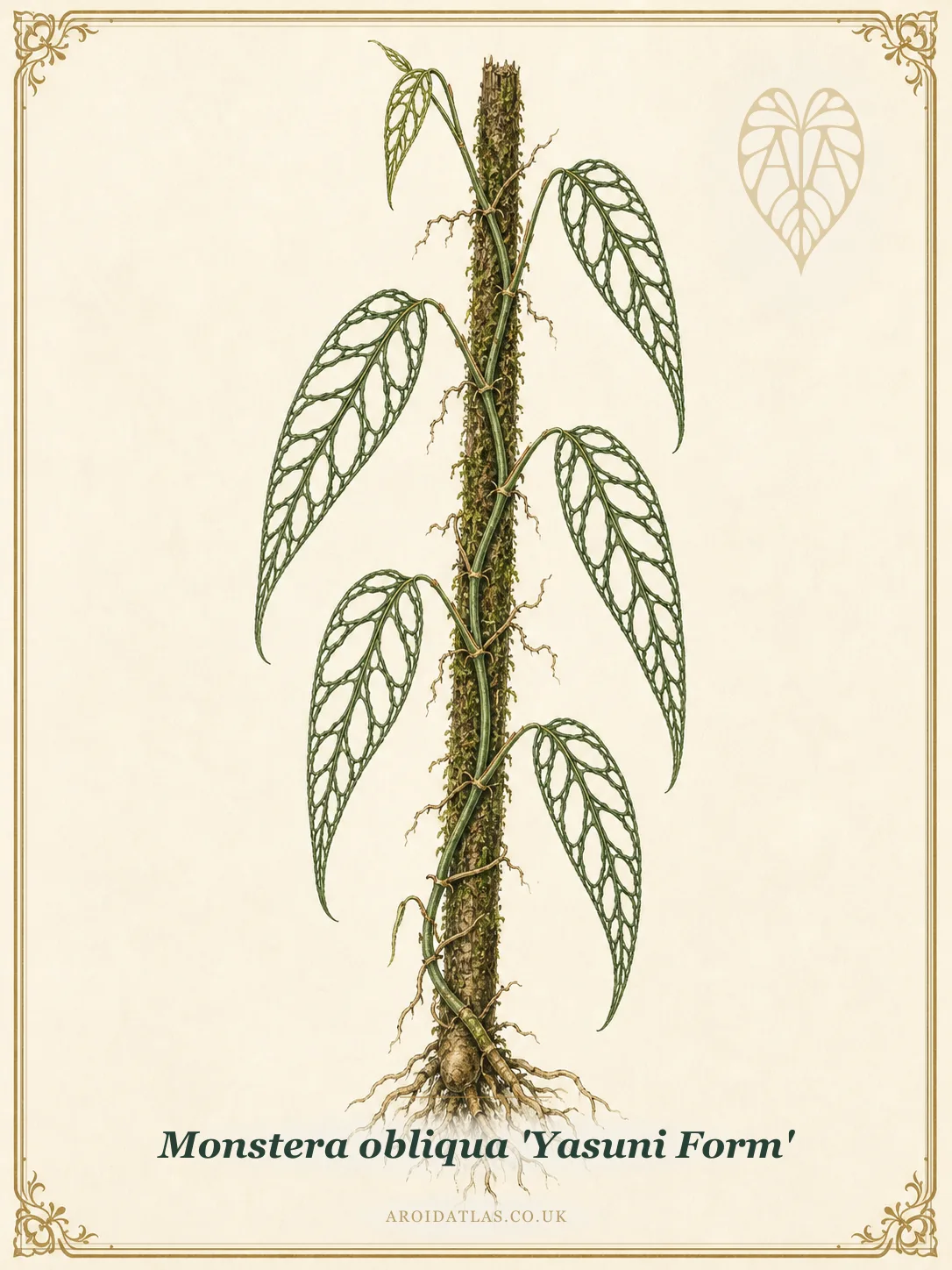
Yasuni Form
Base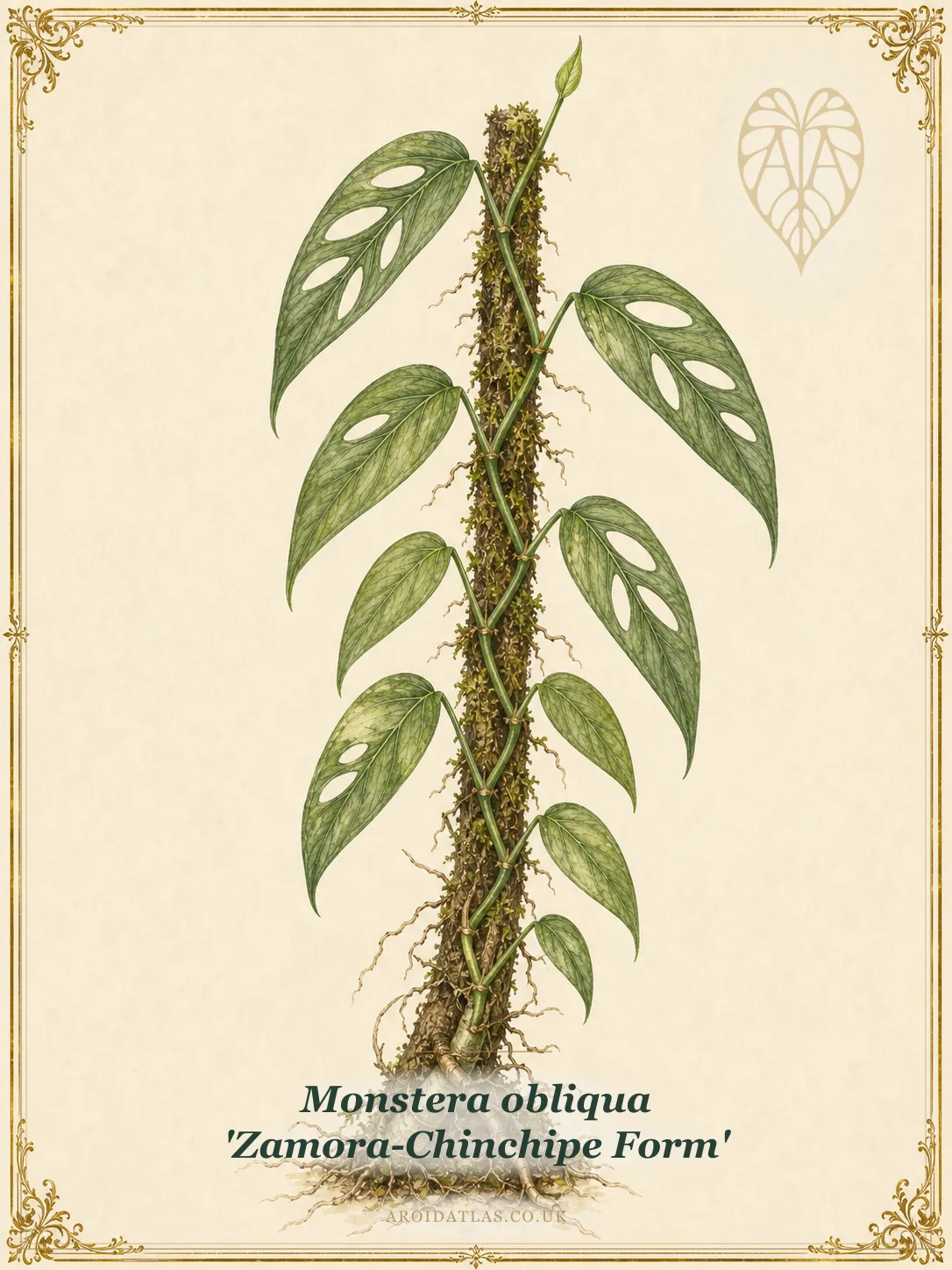
Zamora-Chinchipe Form
BaseMonstera obliqua Miq. Morphology
About Monstera obliqua Miq.
This Monstera obliqua locality form originates from Costa Rica and is a refined specimen, with narrow, oblong-elliptic to asymmetric leaves that are thin and delicate. It thrives in warm, shaded understories of humid tropical forests, requiring consistent moisture and filtered light. The plant ascends slender supports using aerial roots and exhibits less fenestration than other obliqua forms.
Native Range
Costa Rica
Market Hub
Monstera obliqua Miq. Sold Prices & Live Market
What the Target Price above is based on: eBay sold prices by plant size, live listings, and retailer stock.
No eBay sales recorded yet. Sold listings are collected as they appear on eBay.
Before You Buy
Shared checklist for Monstera obliqua and its cultivated forms
- Genuine Monstera obliqua leaves are extremely fenestrated (70-90% hole coverage) and paper-thin/near-translucent. Thicker, less extreme fenestration is almost always Monstera adansonii
- Look for leafless exploratory stolons on the plant or cutting. True obliqua produces these before leaves; adansonii does not
- Ask the seller for the specific locality/collection origin. Reputable true-obliqua sellers can usually name it; generic 'obliqua' listings with no origin are a red flag
- Given the price involved, request close-up photos of an actual leaf held up to light before buying, not just a listing photo
Propagation Guide
How to Propagate Monstera obliqua Miq.
Shared across every form of Monstera obliqua — see this form's own Morphology for variegation-specific propagation notes.
Propagation Guide
How to Propagate Monstera obliqua Miq.
Shared across every form of Monstera obliqua — see this form's own Morphology for variegation-specific propagation notes.
6-12+ months
Cultivar character is preserved through vegetative cuttings
Notoriously difficult and slow to propagate; single-node cuttings are the norm, and rot rather than rooting is the most common outcome without near-sterile, high-humidity propagation conditions (sphagnum in a sealed box or in-vitro tissue culture).
Care Guide
Monstera obliqua Miq. Care Guide & Growing Conditions
General care shared across all forms of Monstera obliqua — cultivated forms may need brighter light or higher humidity than the plain species; check this form's Quick Facts above.
Care Guide
Monstera obliqua Miq. Care Guide & Growing Conditions
General care shared across all forms of Monstera obliqua — cultivated forms may need brighter light or higher humidity than the plain species; check this form's Quick Facts above.
Very open, chunky epiphytic mix: sphagnum moss, fine orchid bark and perlite. True obliqua roots are fine and easily suffocated or rotted in dense substrate.
Keep consistently and lightly moist; the paper-thin leaves have almost no water storage capacity and desiccate quickly, but waterlogged roots rot just as fast.
75-95% is non-negotiable. This species is essentially impossible to grow well outside a closed, humidity-controlled enclosure or greenhouse in a UK home.
Very dilute liquid fertiliser (quarter strength or less) no more than once a month, since this is an extremely slow-growing plant with minimal nutrient demand.
Rarely: disturb the root system as little as possible; repot only when the container is genuinely outgrown.
Common Problems
Leaf desiccation / crisping
Humidity below the 75%+ this species requires
Move into a sealed cabinet or greenhouse. Open-room humidifiers are rarely sufficient for true obliqua
Stem/node rot
Overwatering combined with dense substrate or poor airflow
Repot into a very open mix, improve airflow, and reduce watering frequency while keeping ambient humidity high
Mislabelled purchase
The overwhelming majority of plants sold as 'Monstera obliqua' are actually Monstera adansonii
Verify fenestration ratio (70-90% hole coverage), leaf translucency, and presence of leafless exploratory stolons before paying true-obliqua prices
Field Reference
In the Wild
Field Reference
In the Wild
Field Notes
Central American Obliqua
A Costa Rican locality form of Monstera obliqua, the northern end of the species' documented range, and a genuinely useful data point for understanding the morphological variation of the species across its full distribution. Whether the Costa Rican material differs meaningfully from the Peruvian and Ecuadorian forms in ways that are apparent without molecular analysis is a live question. At the upper middle price tier, currently at 'provisional' locality form status, meaning the identification has caveats attached. Appropriate caution.