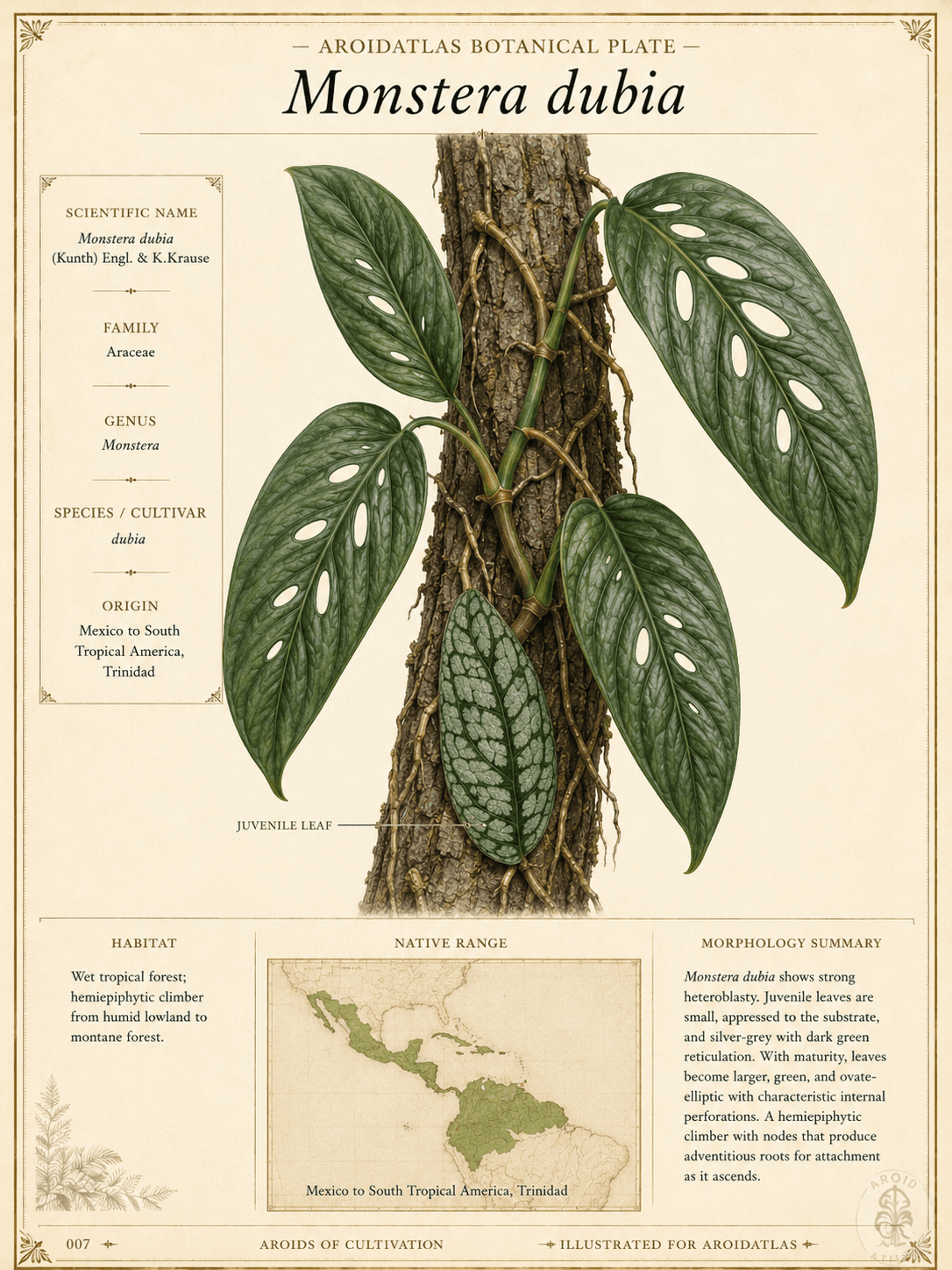
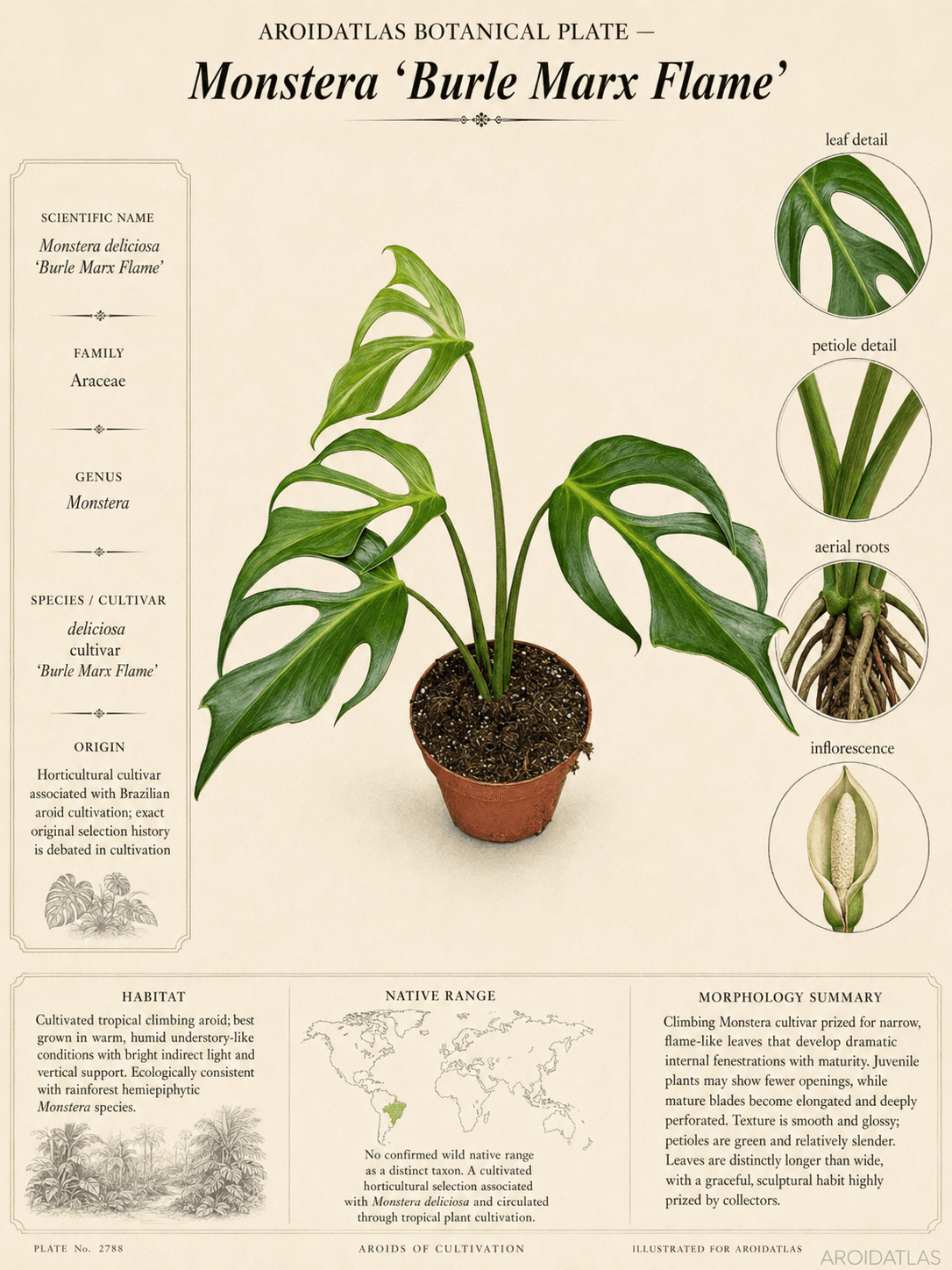
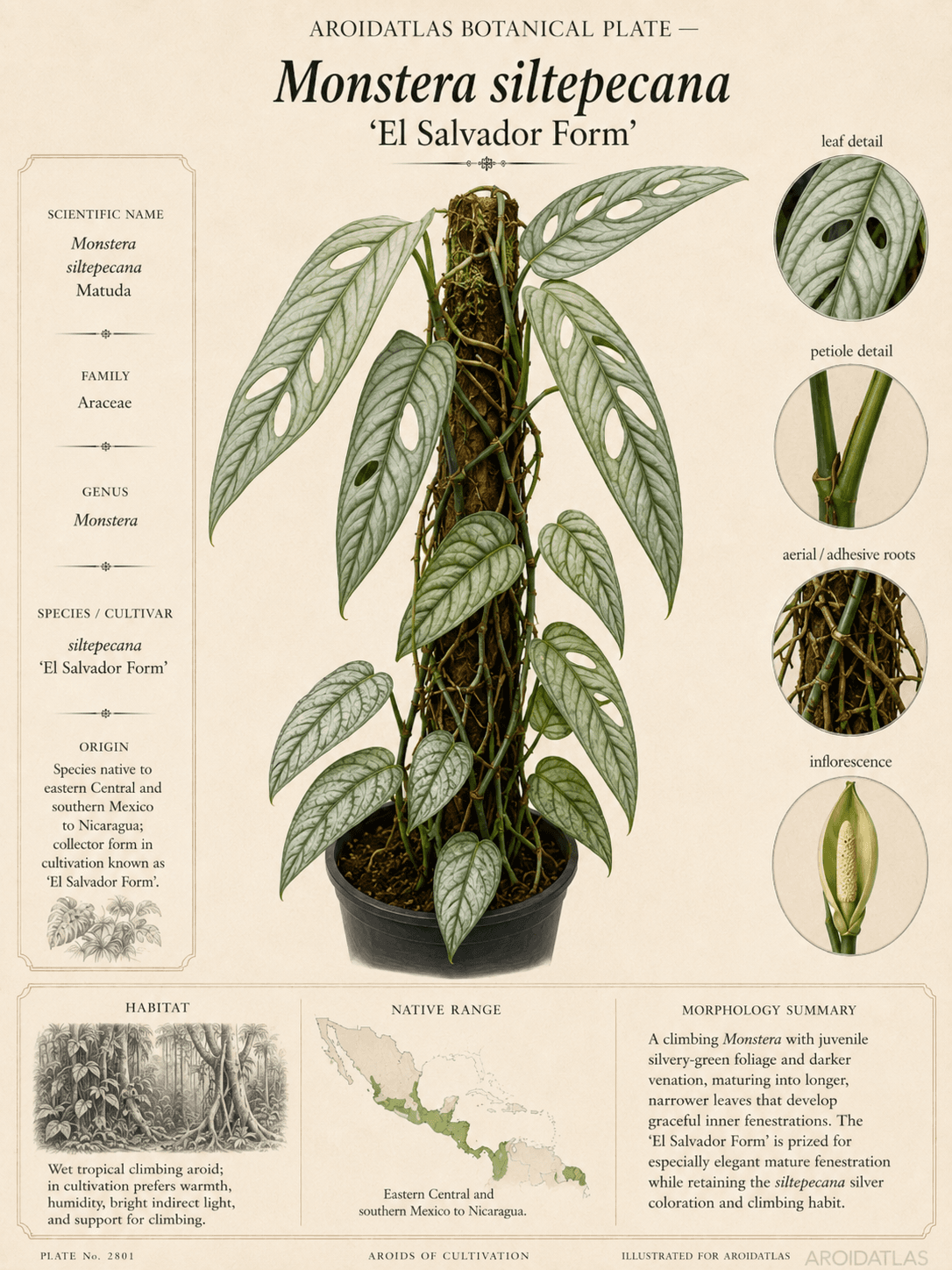
Scroll to explore forms of Monstera obliqua
 Base
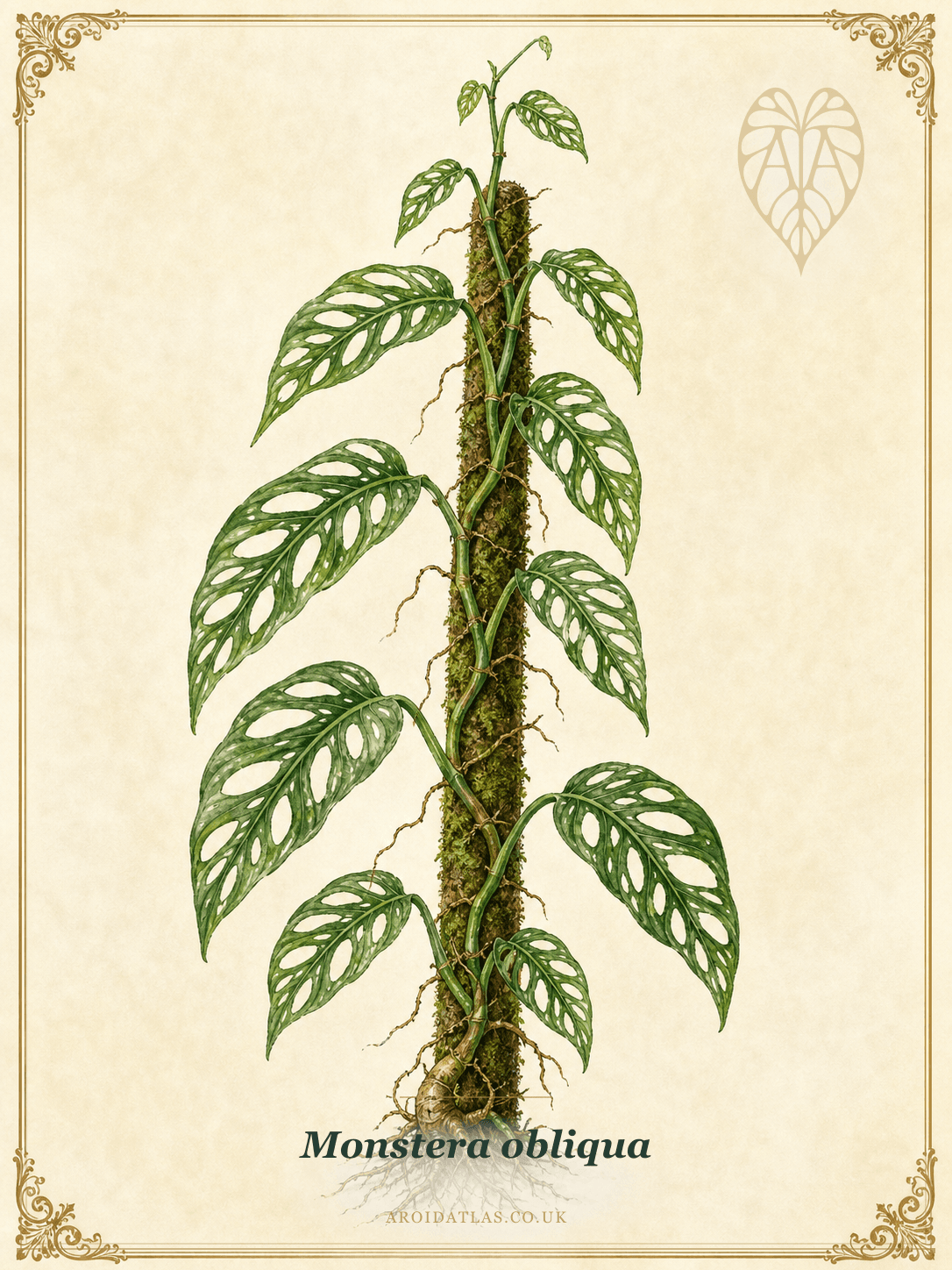
BaseMonstera obliqua
Base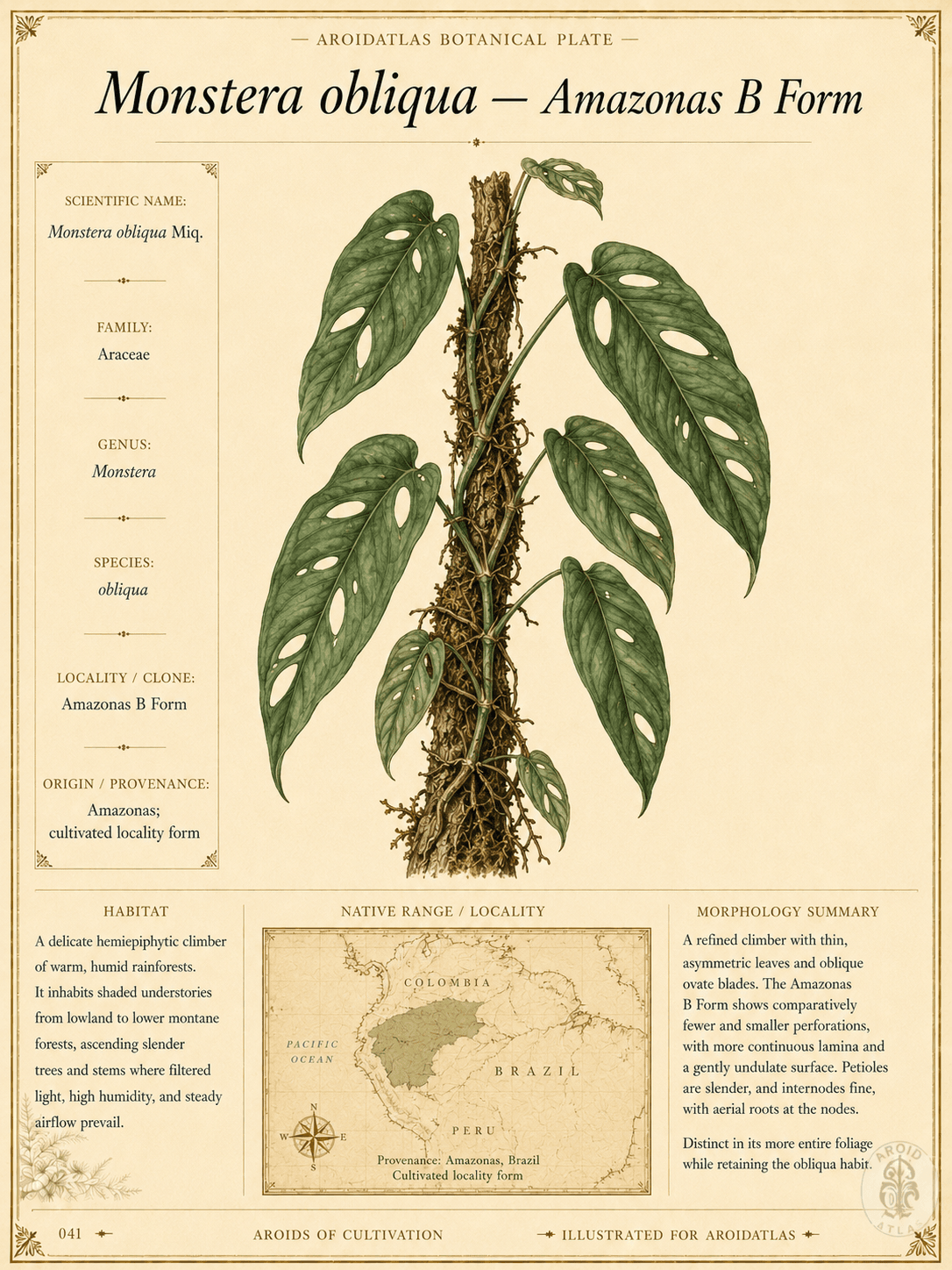
Amazonas B Form
Base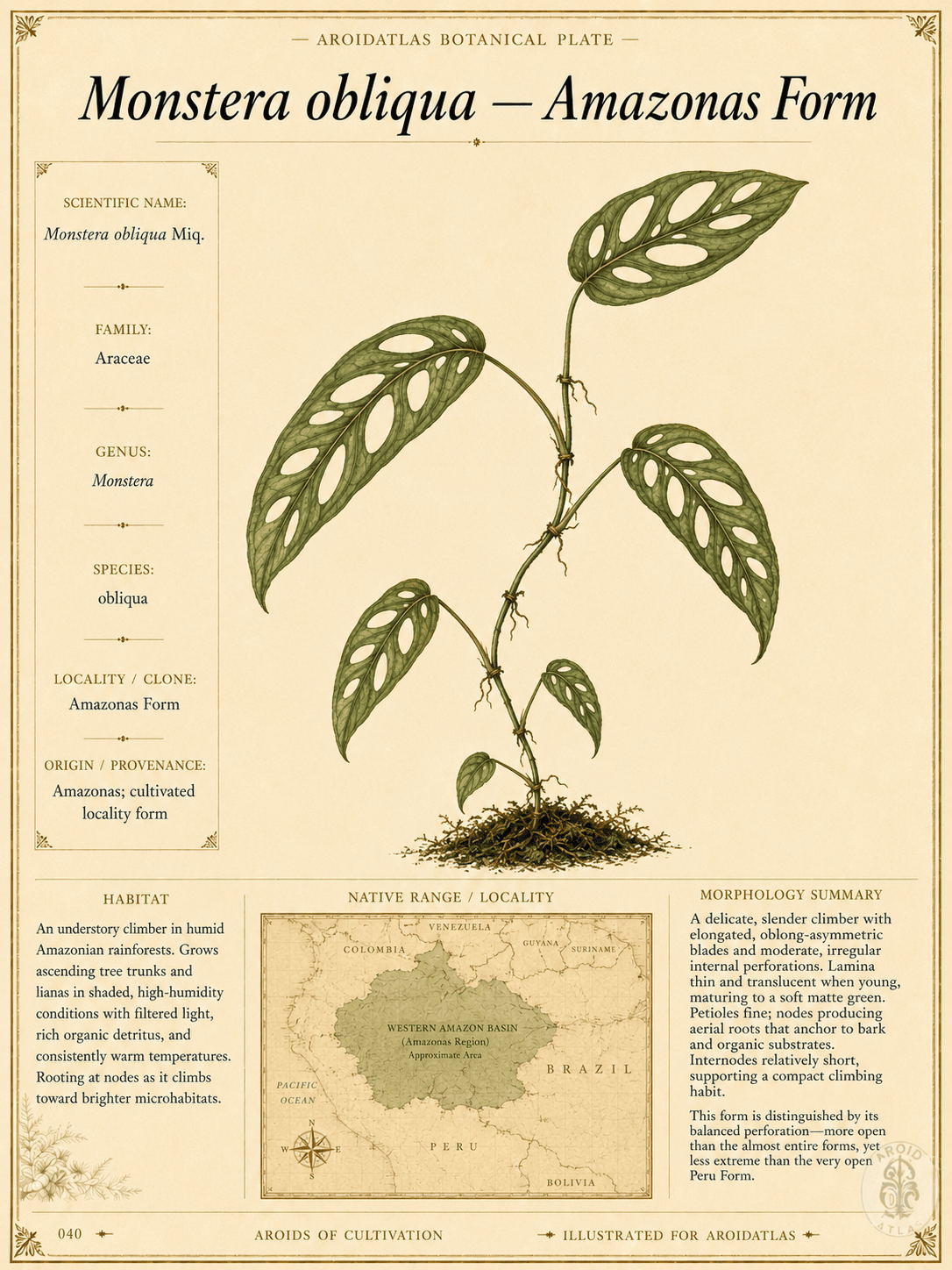
Amazonas Form
Base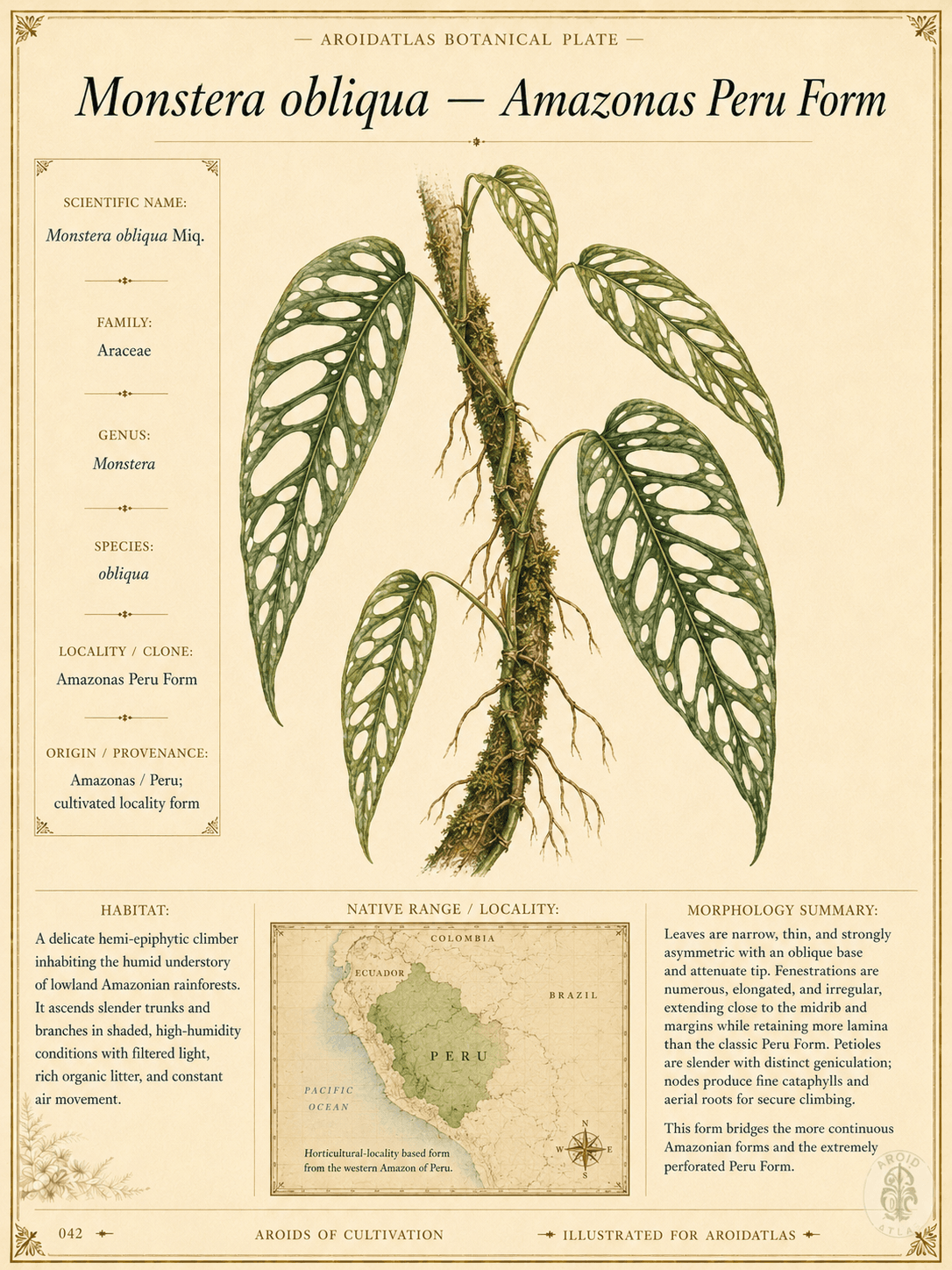
Amazonas Peru Form
Base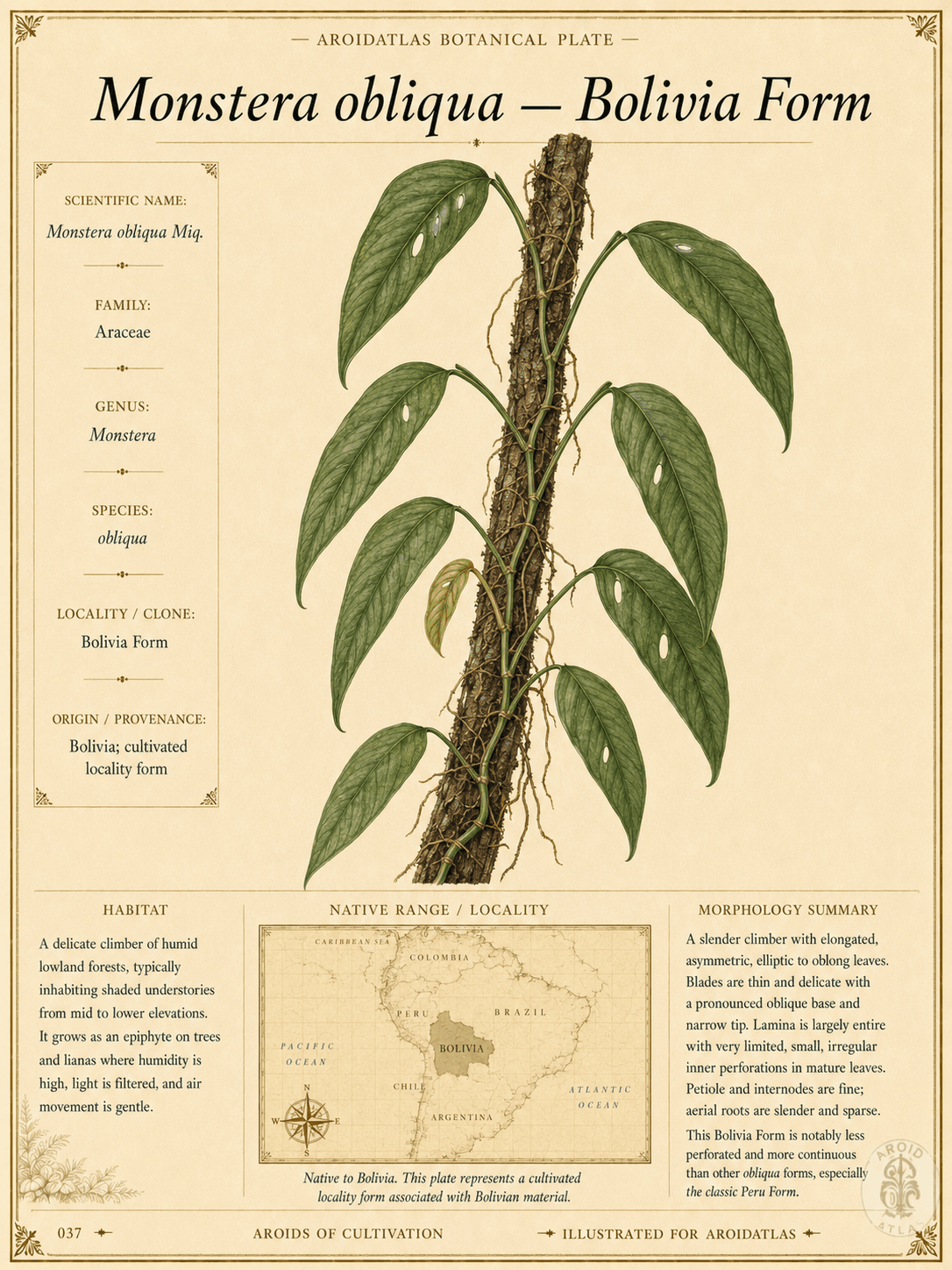
Bolivia Form
Base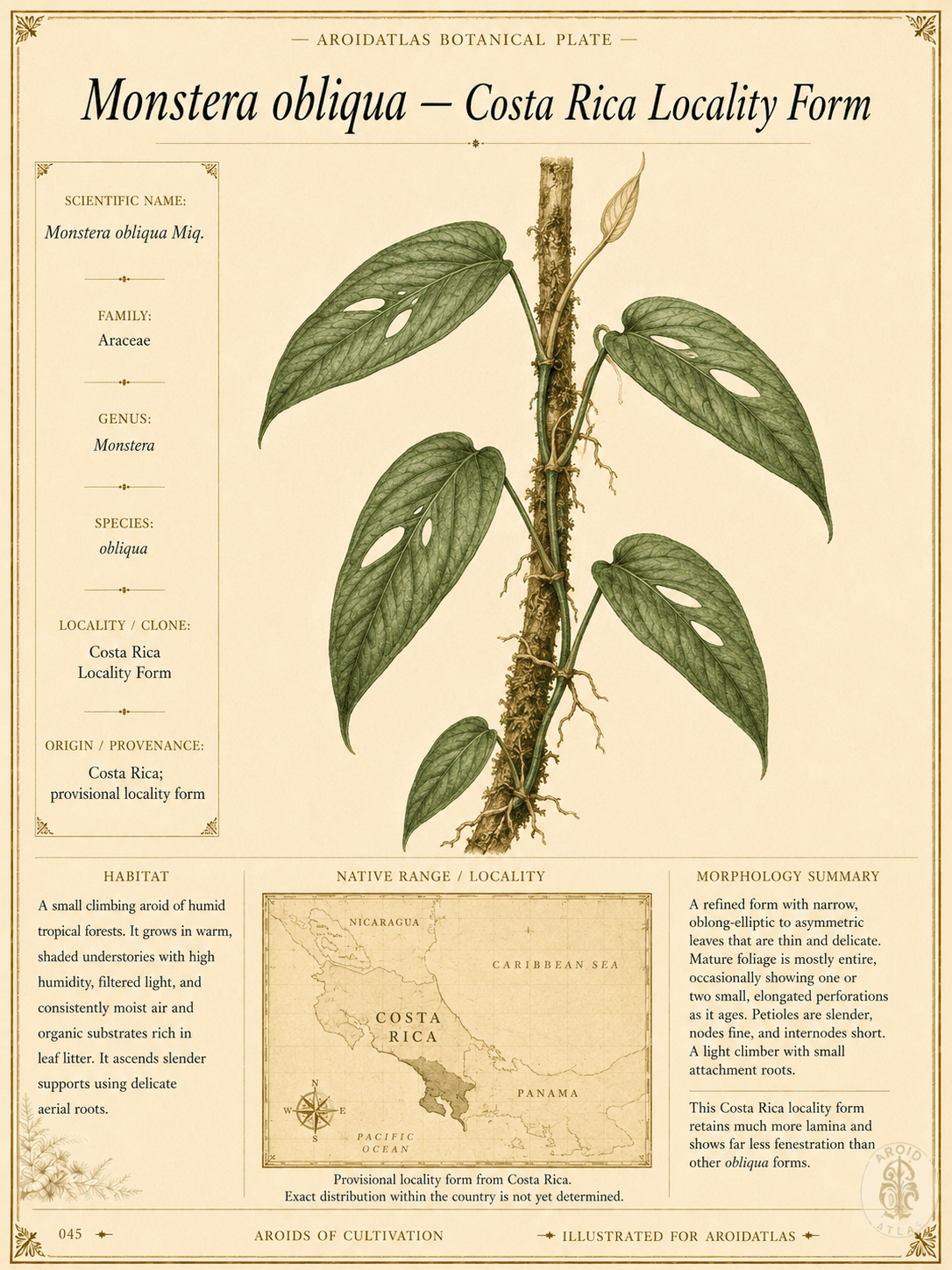
Costa Rica Locality Form
Base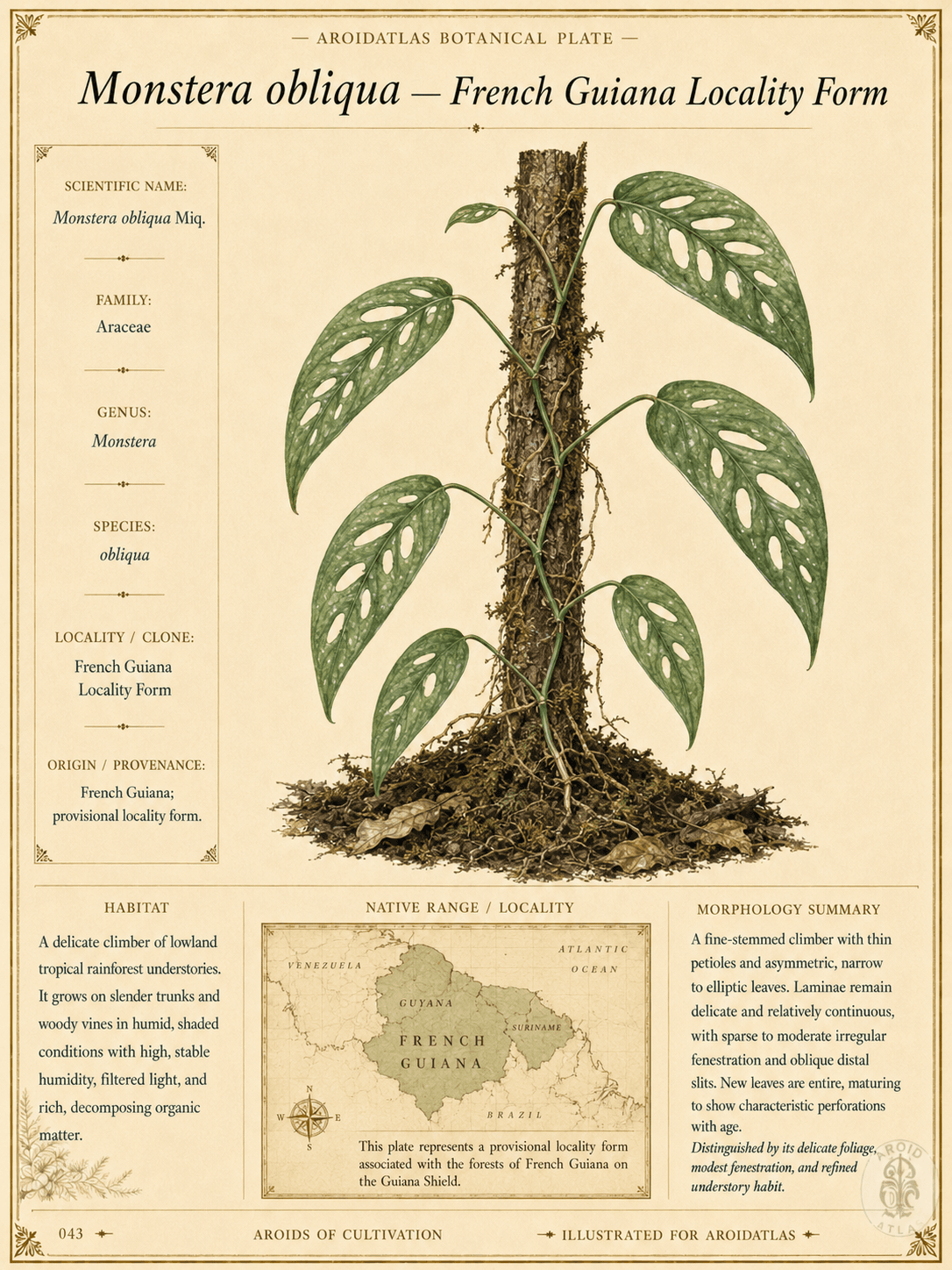
French Guiana Locality Form
Base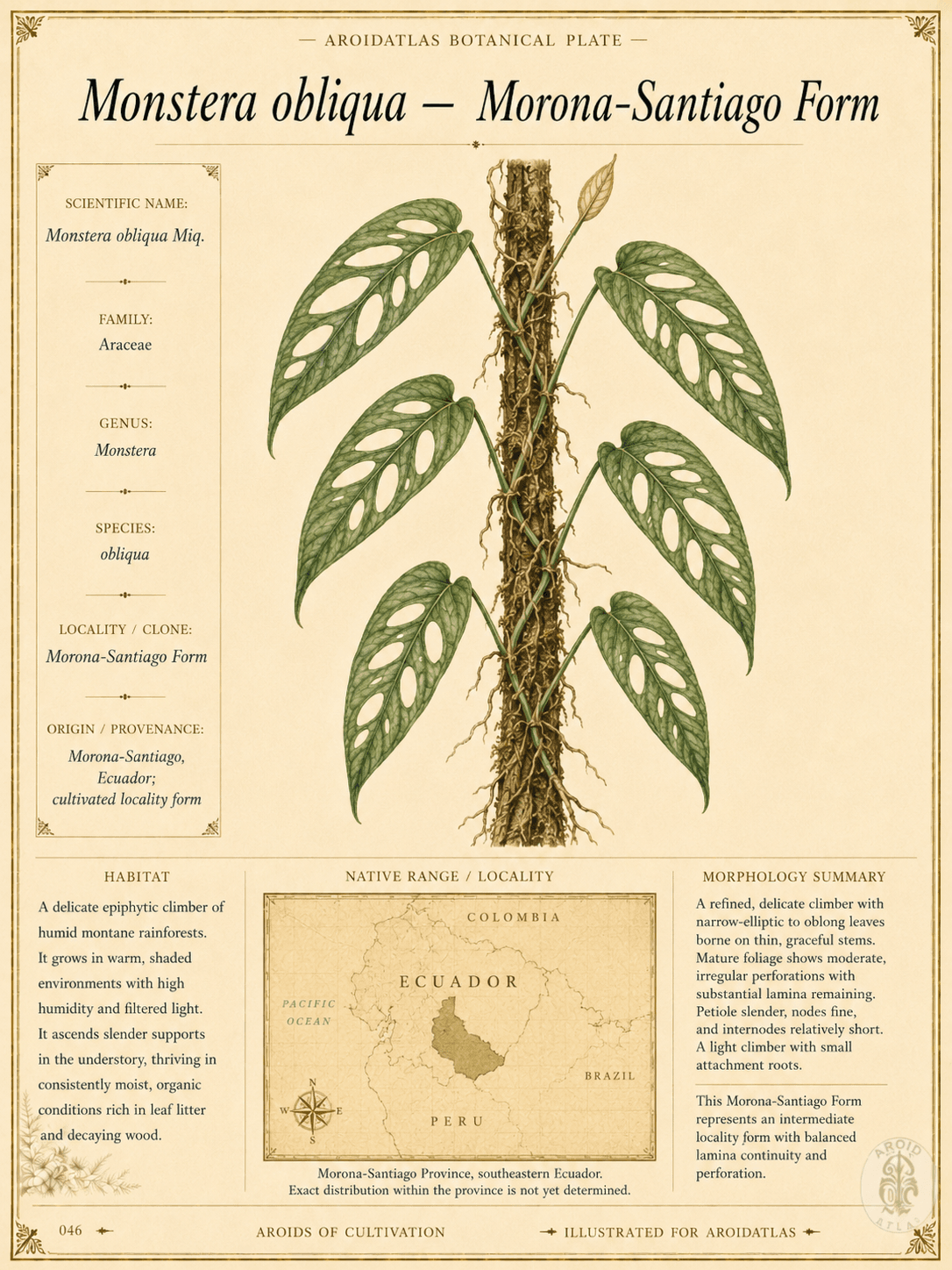
Morona-Santiago Form
Base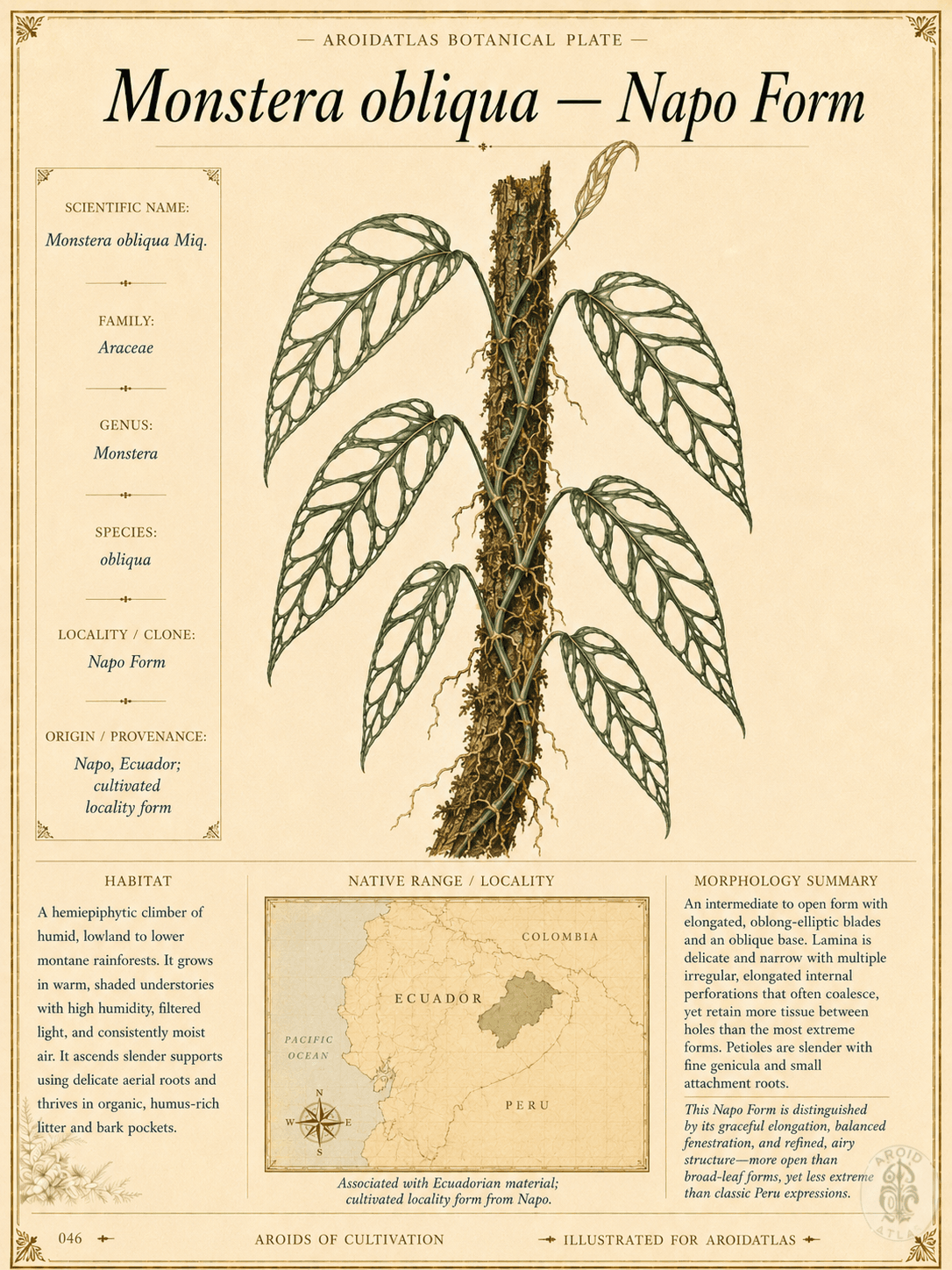
Napo Form
Base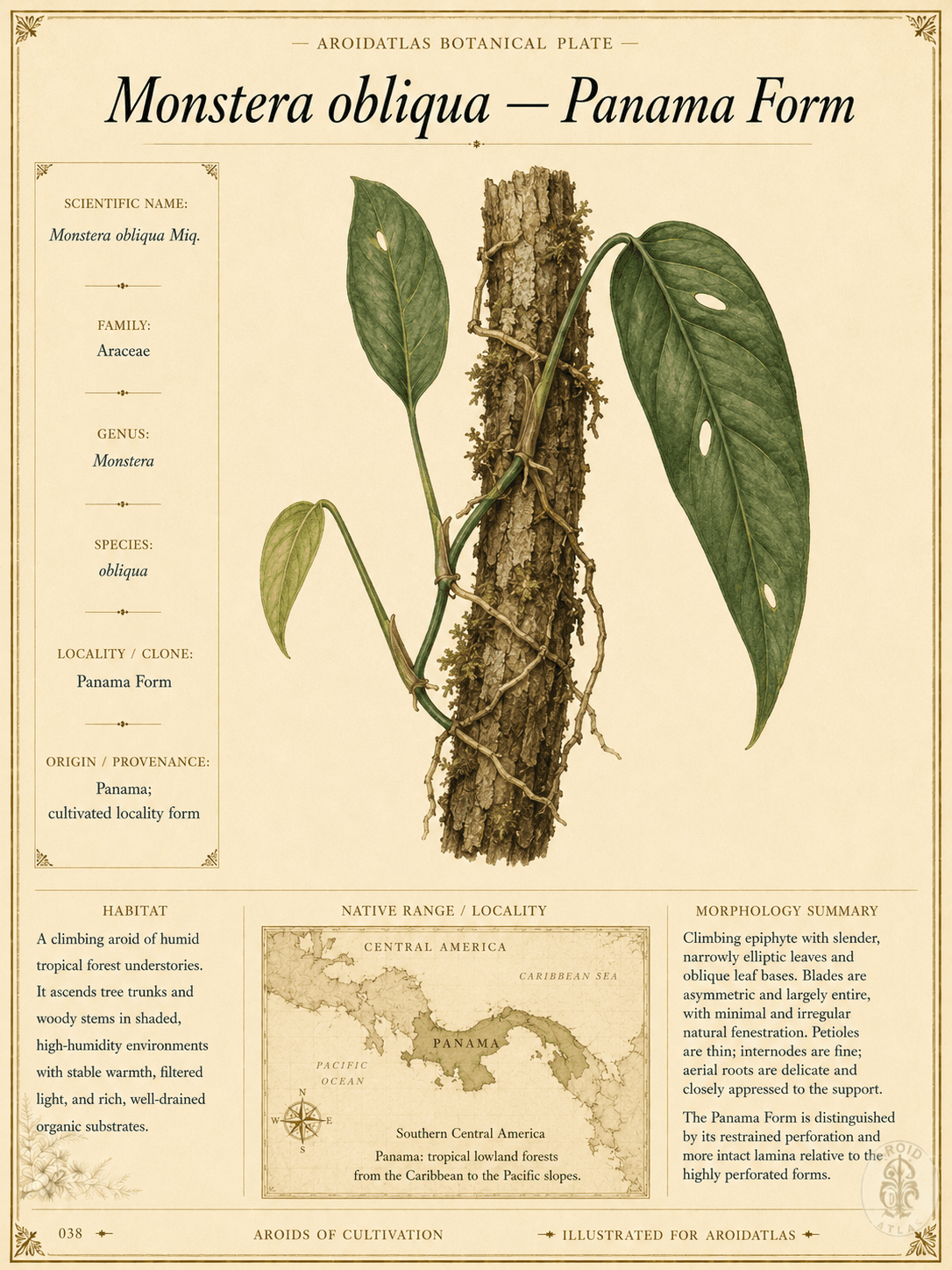
Panama Form
Base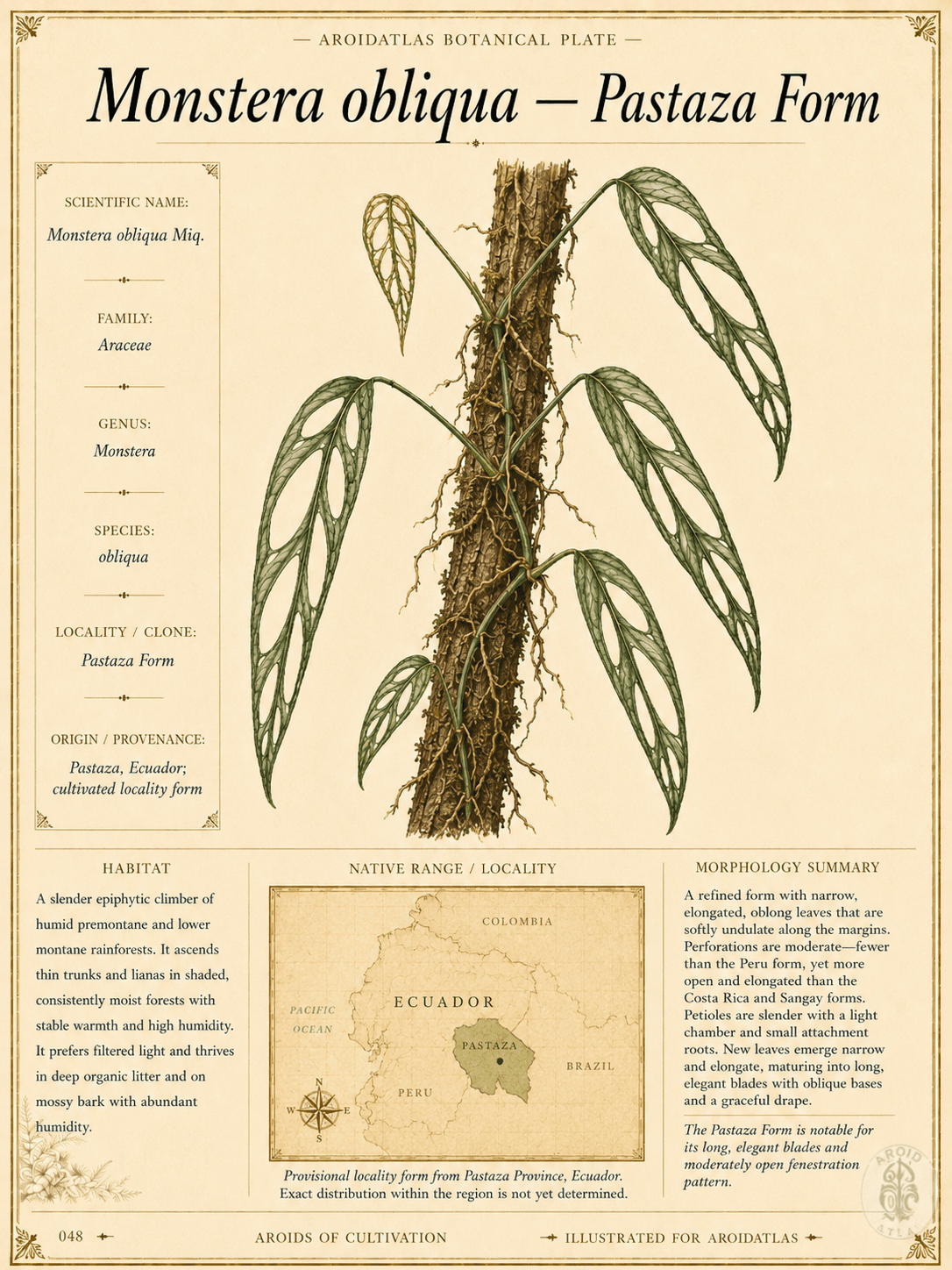
Pastaza Form
Base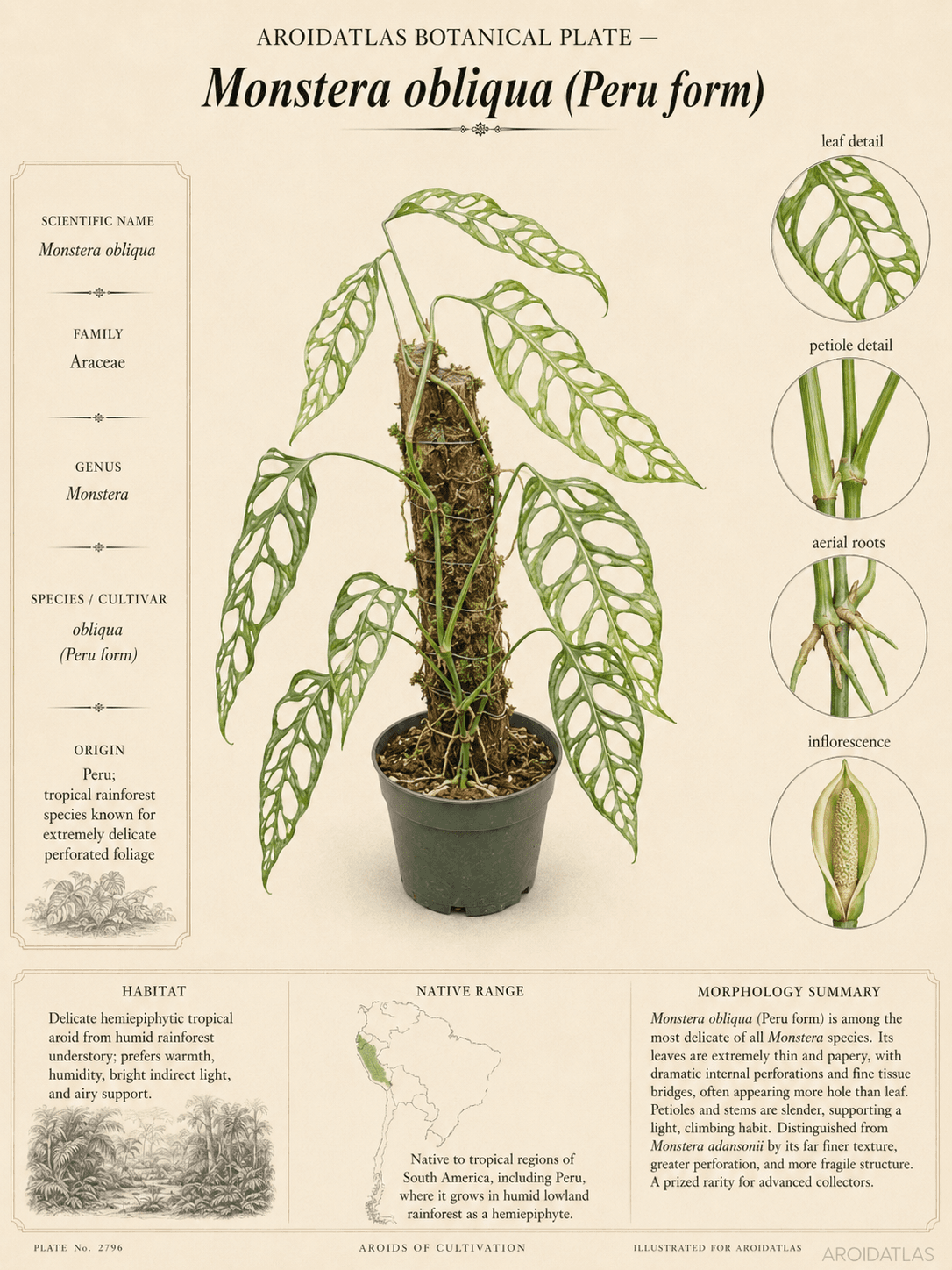 Current
Peru form
Base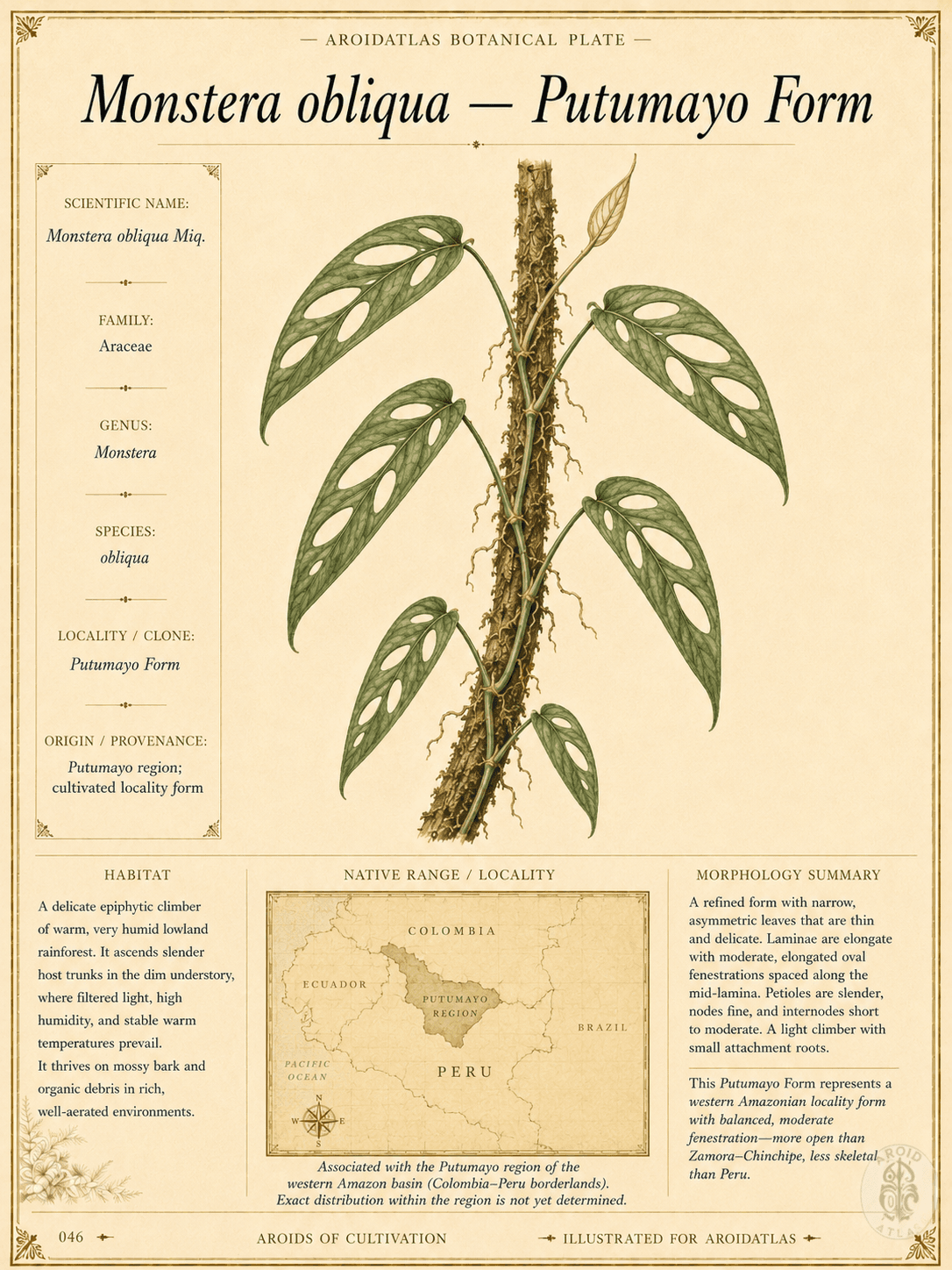
Putumayo Form
Base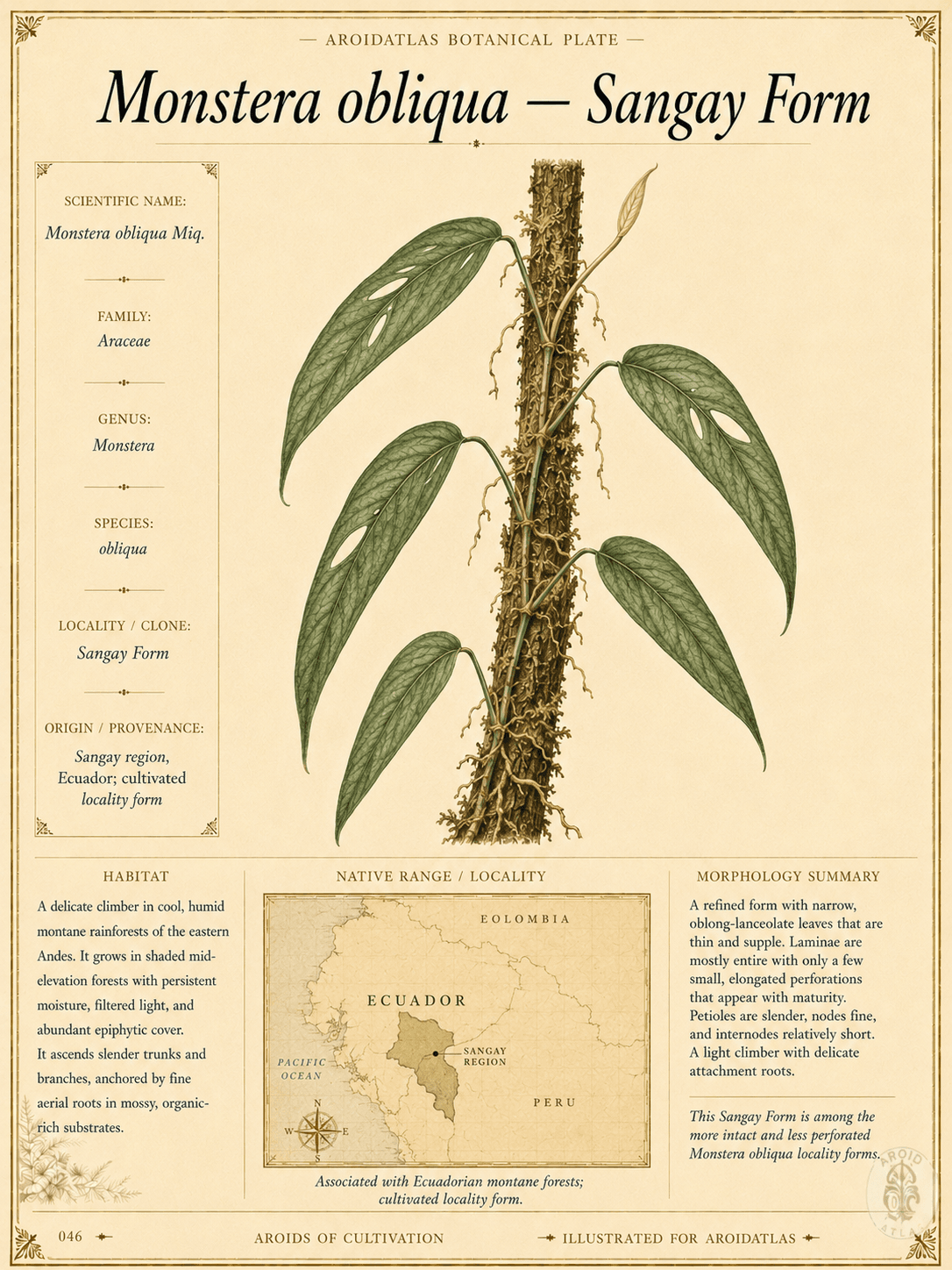
Sangay Form
Base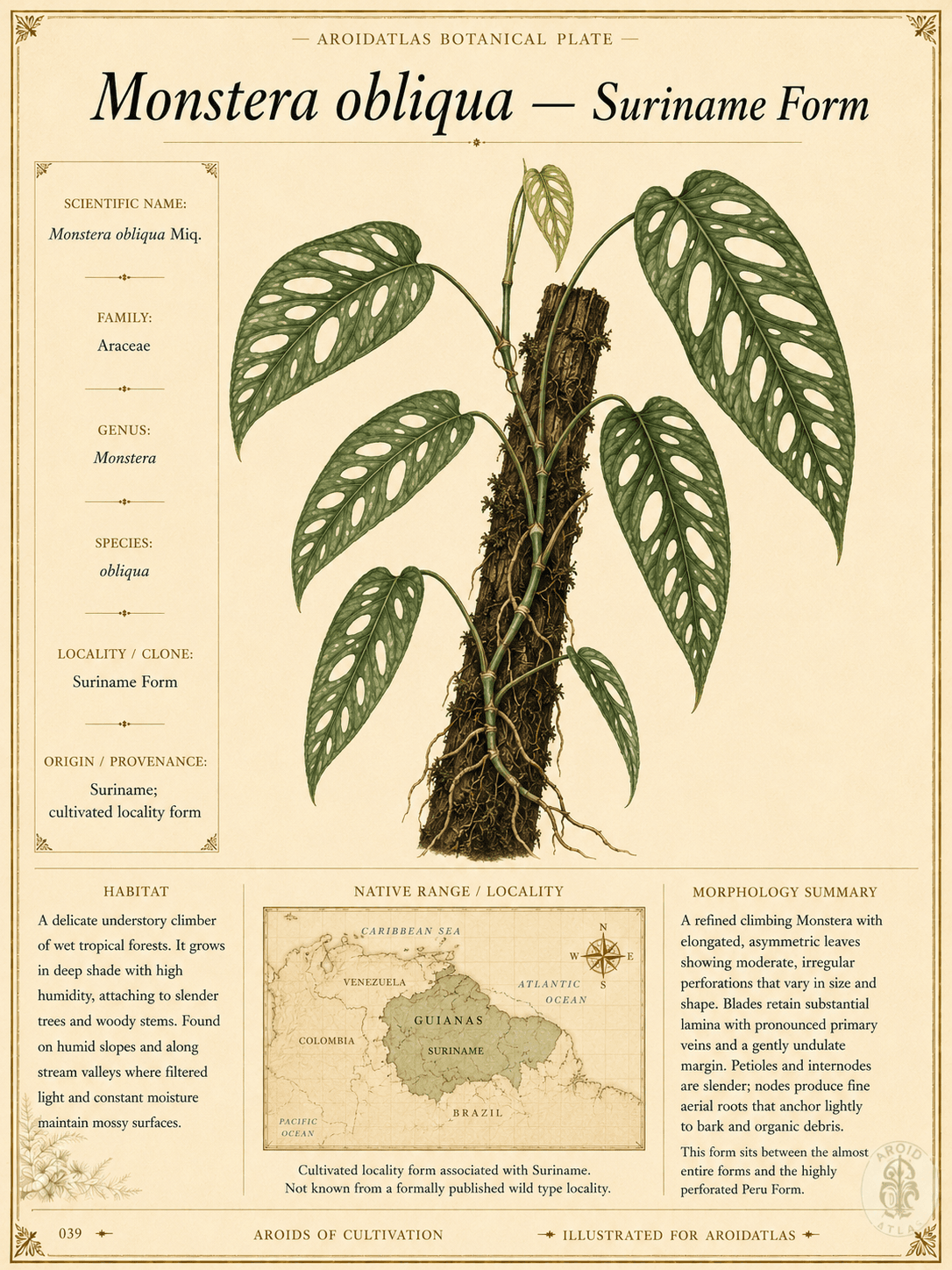
Suriname Form
Base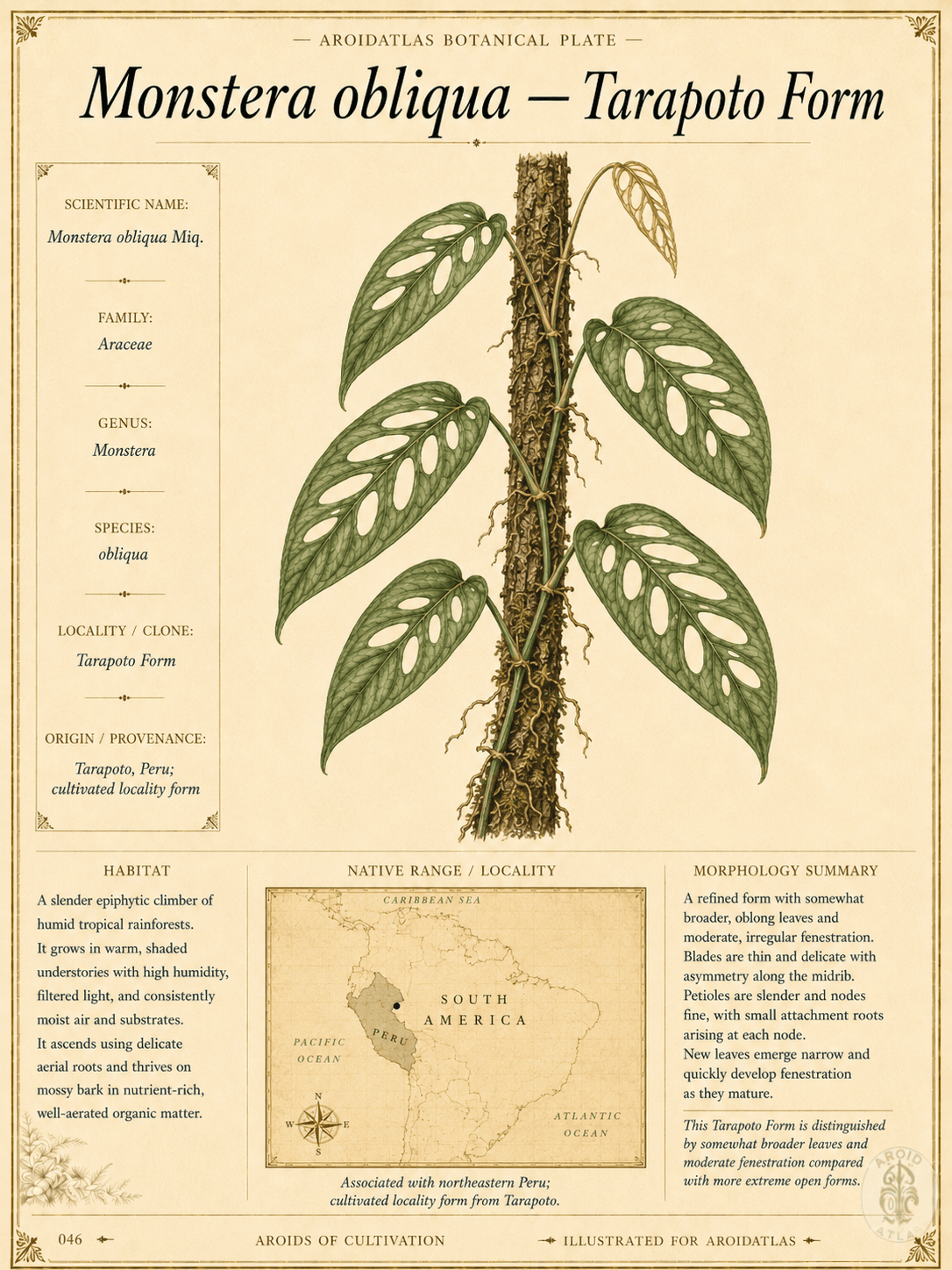
Tarapoto Form
Base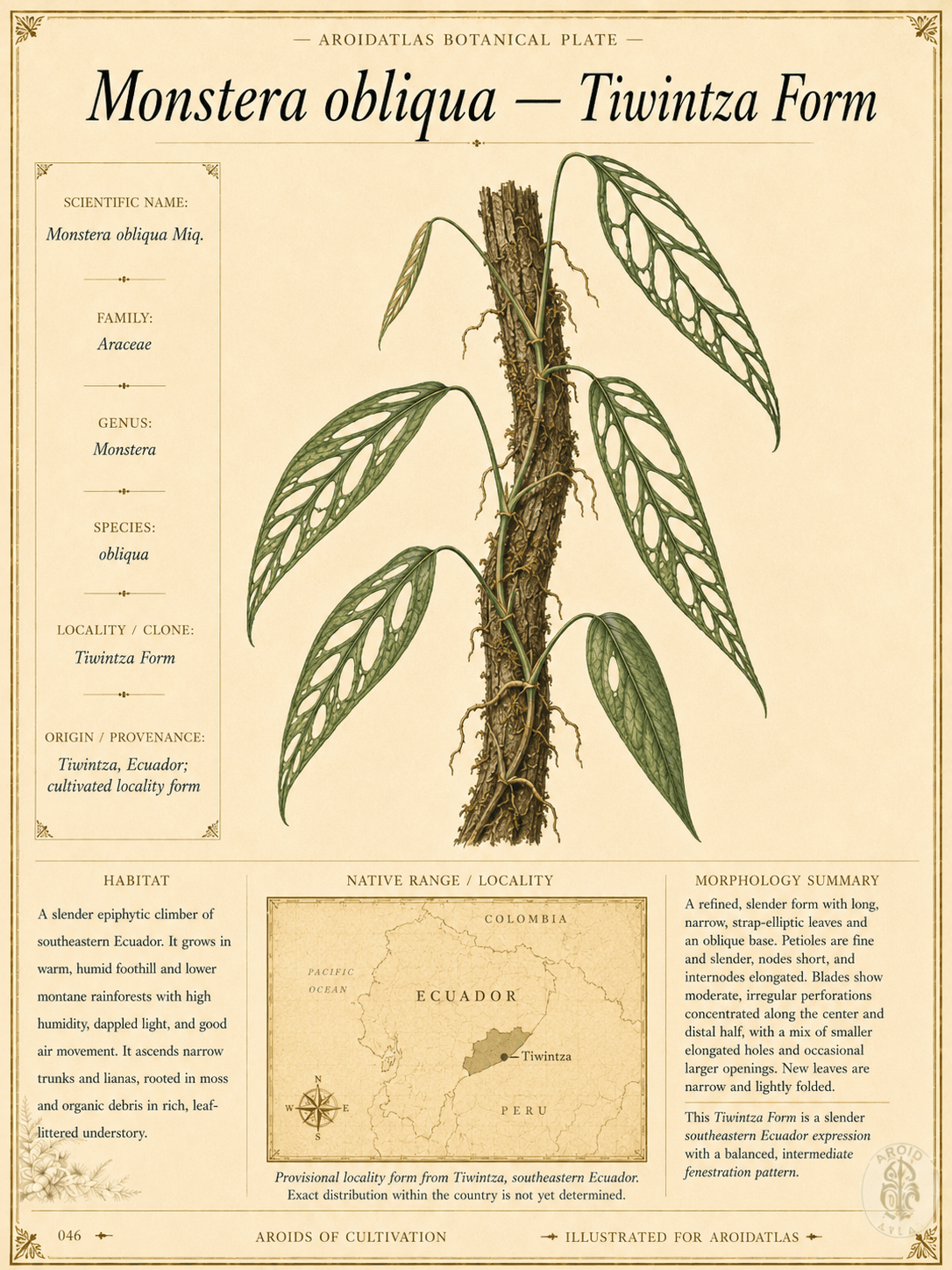
Tiwintza Form
Base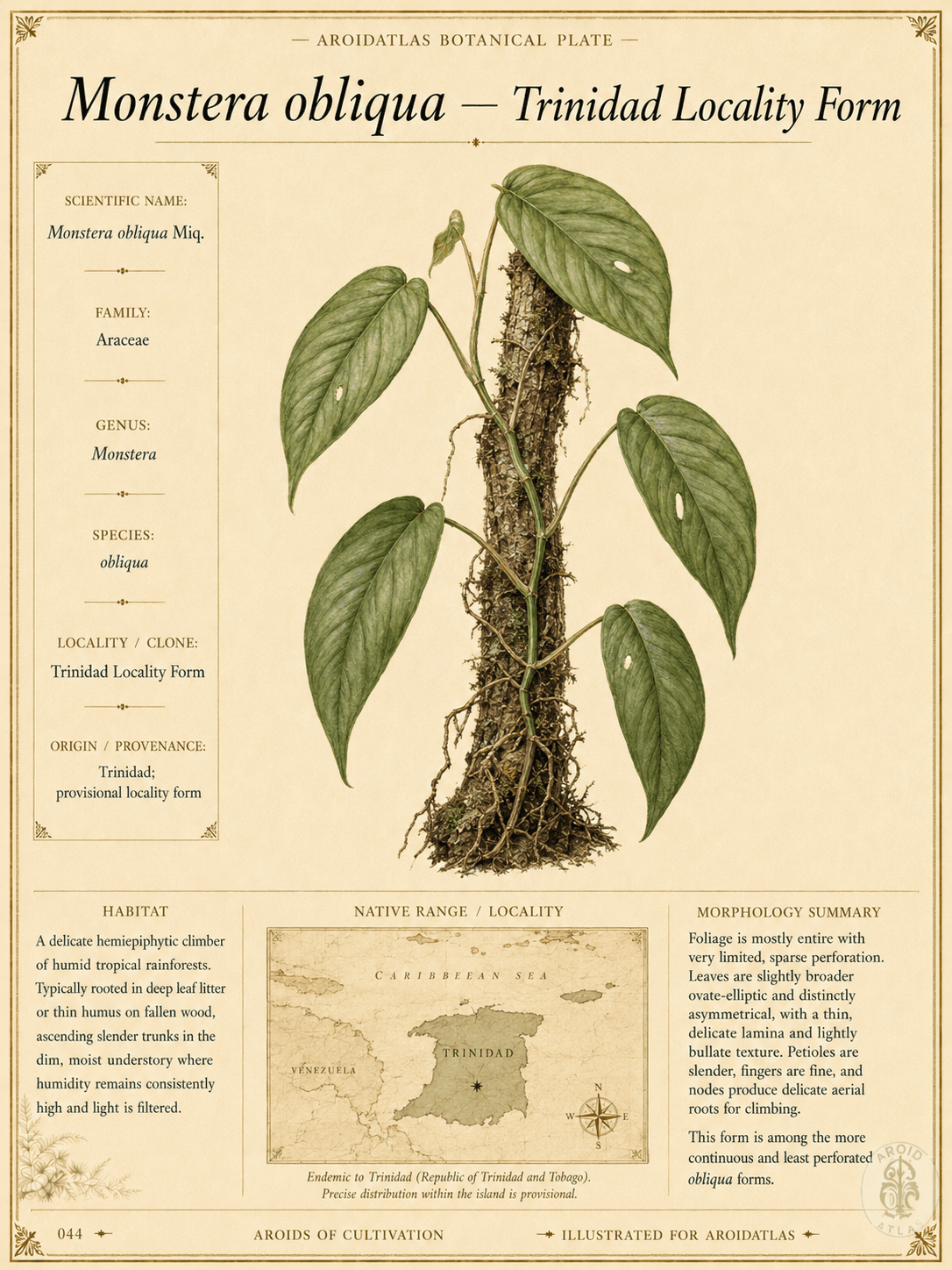
Trinidad Locality Form
Base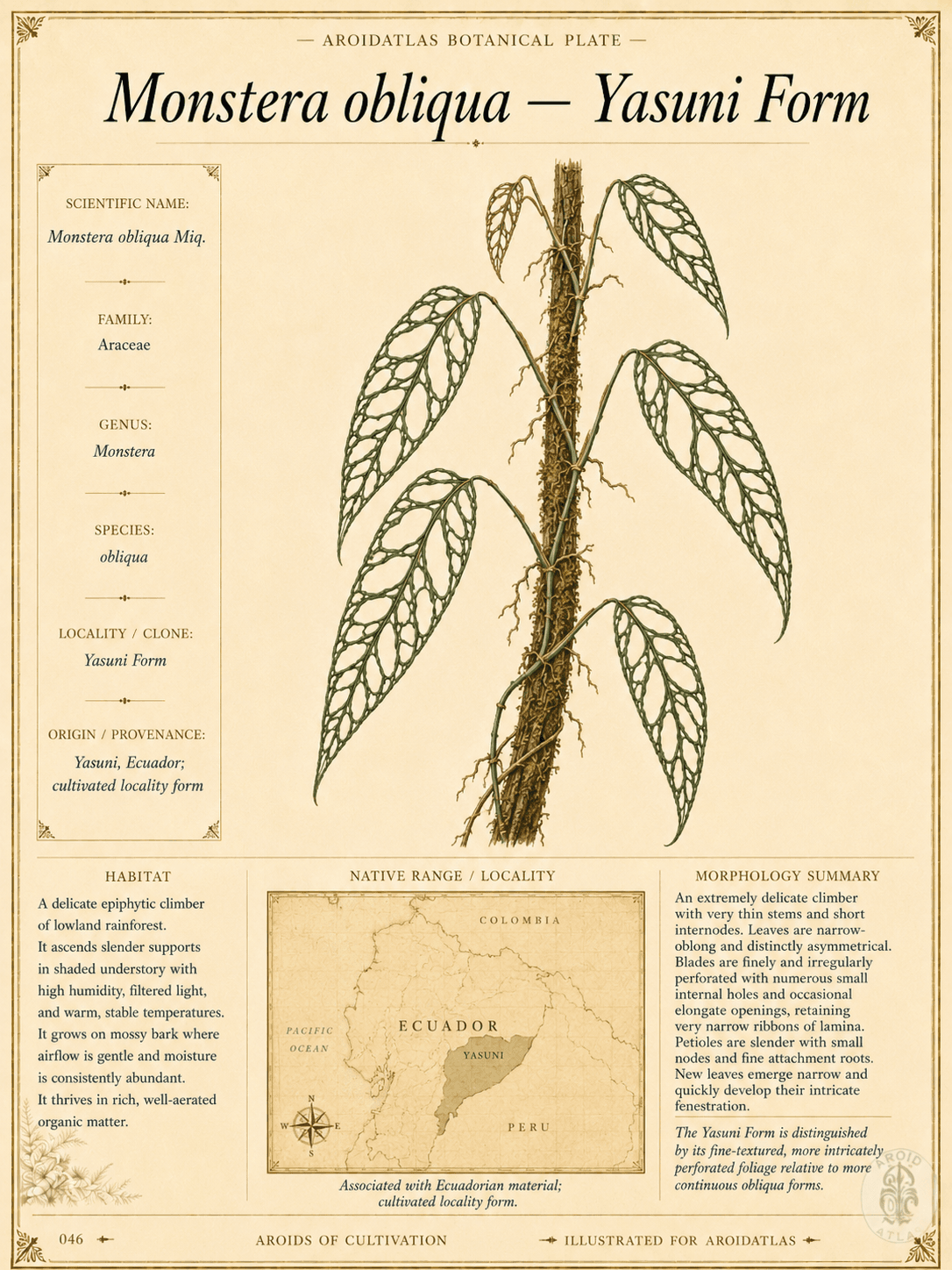
Yasuni Form
Base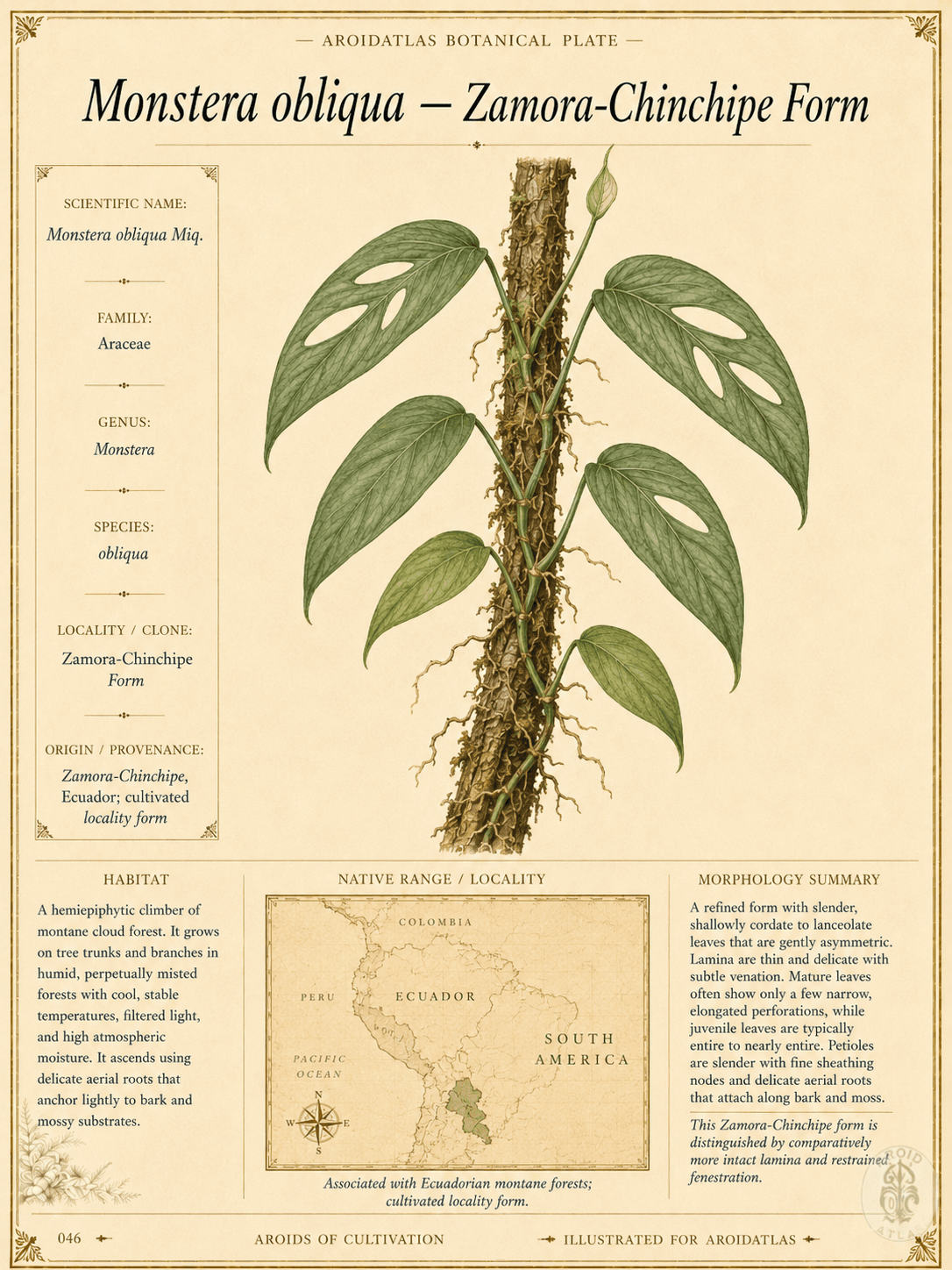
Zamora-Chinchipe Form
BaseFull Specimen Plate
Monstera obliqua (Peru form)
Monstera Obliqua Peru Form
Aroid Atlas Price Guide
Select Plant Size
Pricing Data Key
Community price estimate based on limited sales history
Other colour-form prices
Monstera obliqua Morphology
About Monstera obliqua
Monstera obliqua (Peru form) is native to the tropical lowland rainforests of Peru, South America, where it thrives as a delicate hemiepiphytic aroid. It prefers warm, humid environments with bright indirect light and airy support for its climbing habit. This particular form is among the most delicate of all Monstera species, characterized by extremely thin, papery leaves with extensive internal perforations and fine tissue bridges, often appearing more hole than leaf. Its slender petioles and stems distinguish it from species like Monstera adansonii by its finer texture and more fragile structure.
Native Range
Peru
Market Analysis
Monstera obliqua Price Guide & Auction Value
Historical eBay auction metrics and live retailer listings updated weekly.
No eBay auction history available yet. Data is collected automatically as sales appear on eBay UK.
Before You Buy
Species-specific things to check when evaluating a listing
- Ensure there is at least one healthy node present — a leaf without a node cannot produce new growth
- For variegated forms, verify variegation is present on the newest leaf and is not reverting to green
- Check for scale insects on petioles and undersides of leaves — monsteras are susceptible
- Confirm the cutting or plant has been rooted before purchasing, unless you are buying intentionally unrooted — unrooted cuttings require a propagation setup to succeed
Propagation Guide
How to Propagate Monstera obliqua
Requires particularly stable conditions during rooting. Node cuttings with one leaf are preferred. Mist frequently and maintain 80%+ humidity.
Care Guide
Monstera obliqua Care Guide & Growing Conditions
Chunky, well-draining mix: 40% potting compost, 30% perlite, 20% orchid bark, 10% worm castings. Monsteras are more tolerant of moisture than most aroids but still need drainage.
Water when the top 3–5 cm is dry. These are forgiving plants but still susceptible to root rot if kept too wet. Water less in winter.
50–70% preferred. More tolerant of typical UK indoor humidity than other aroids, though 60%+ encourages larger leaf development.
Balanced fertiliser at half strength every 2 weeks from spring through summer. Monthly in winter or none at all.
Every 12–18 months when roots emerge from drainage holes. Provide a moss pole or support — climbing encourages larger leaf production.
Common Problems
No fenestrations (splits/holes)
Plant is juvenile, or insufficient light
Ensure bright indirect light and allow the plant to mature — fenestrations develop with age and better conditions
Yellow leaves
Overwatering or nutrient deficiency
Check soil moisture before watering; begin a regular fertilising routine in growing season
Brown patches on leaves
Sunburn or cold water on leaves
Avoid direct sun; water at the base and ensure water is room temperature
More Air Than Leaf
Monstera obliqua (Peru form) is the ultimate expression of botanical fenestration. With leaves that are up to 90% holes, it looks like a green spiderweb. In Michael Madison's classic 1977 monograph on the genus Monstera, obliqua was described as a widespread but rarely collected species, with the Peru form being the most extreme. The massive fenestrations are an evolutionary strategy to cover a larger surface area to capture light flecks on the forest floor without the energetic cost of building leaf tissue. It is notoriously fragile, demanding high humidity (over 80%) to prevent the delicate leaf threads from drying out.
Also in: Fenestrated Grails
The M. obliqua complex — leaves dominated by fenestration rather than solid tissue, the most extreme expression of leaf-splitting in the genus.