Scroll to explore forms of Monstera adansonii
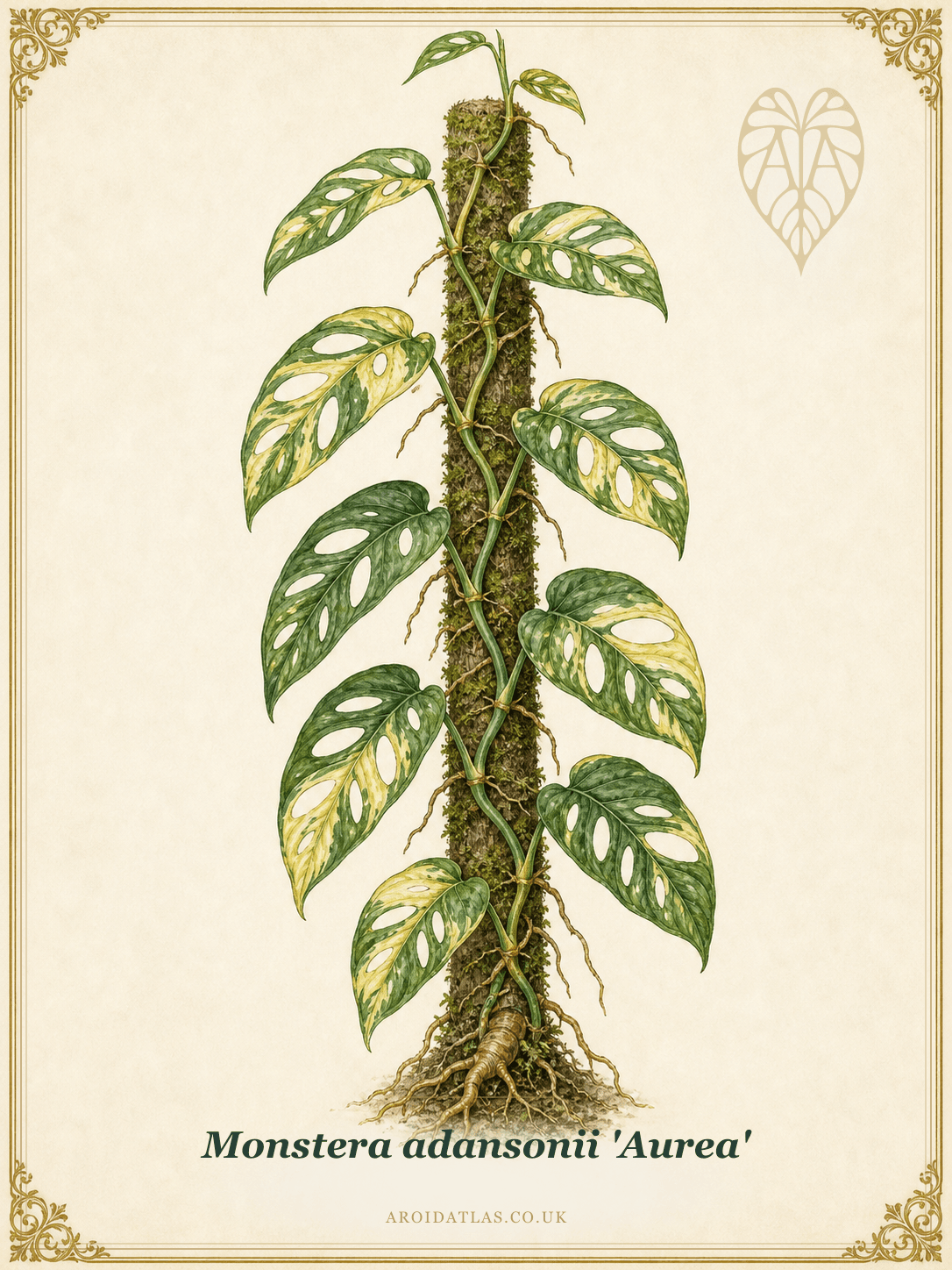
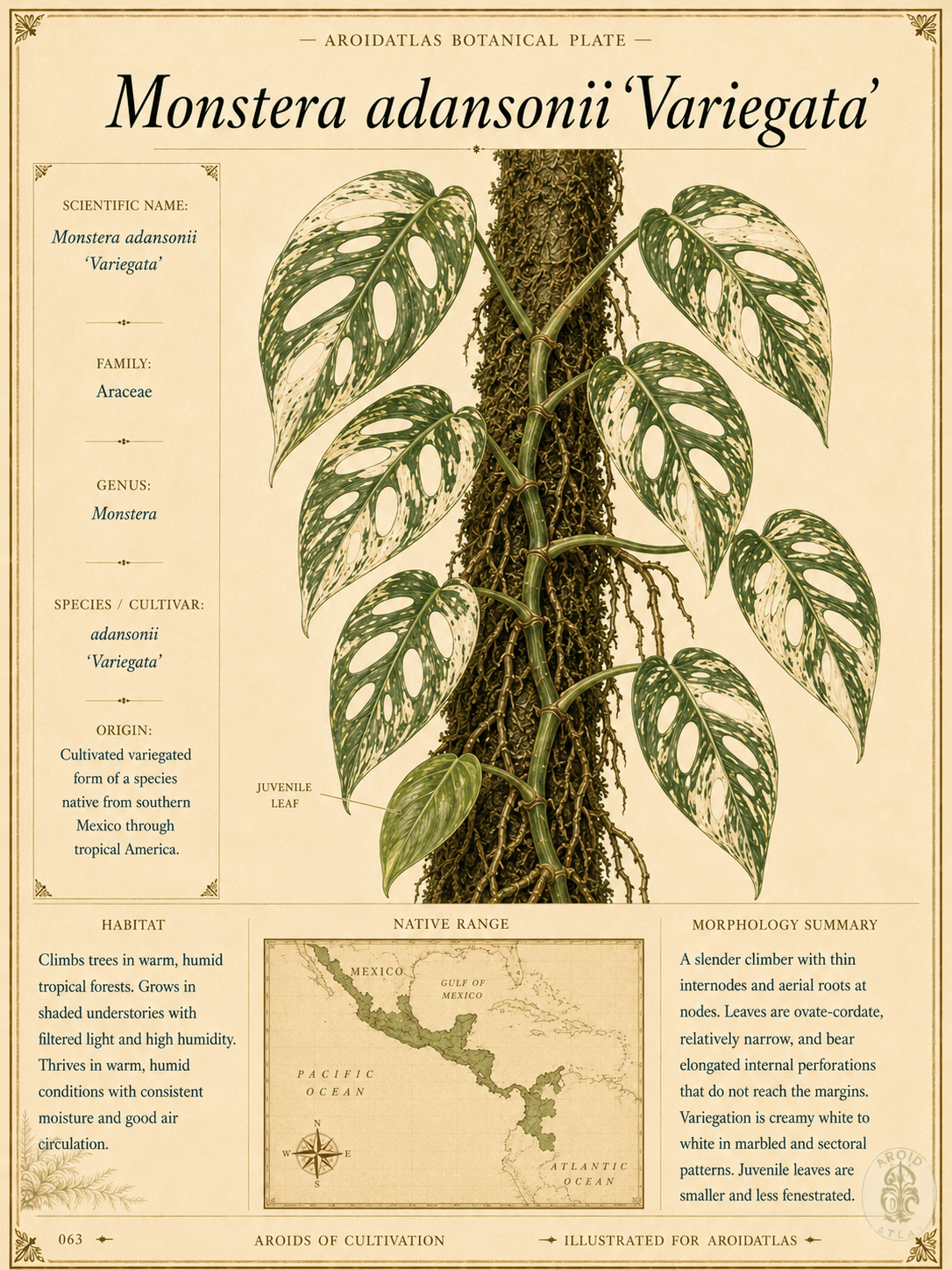
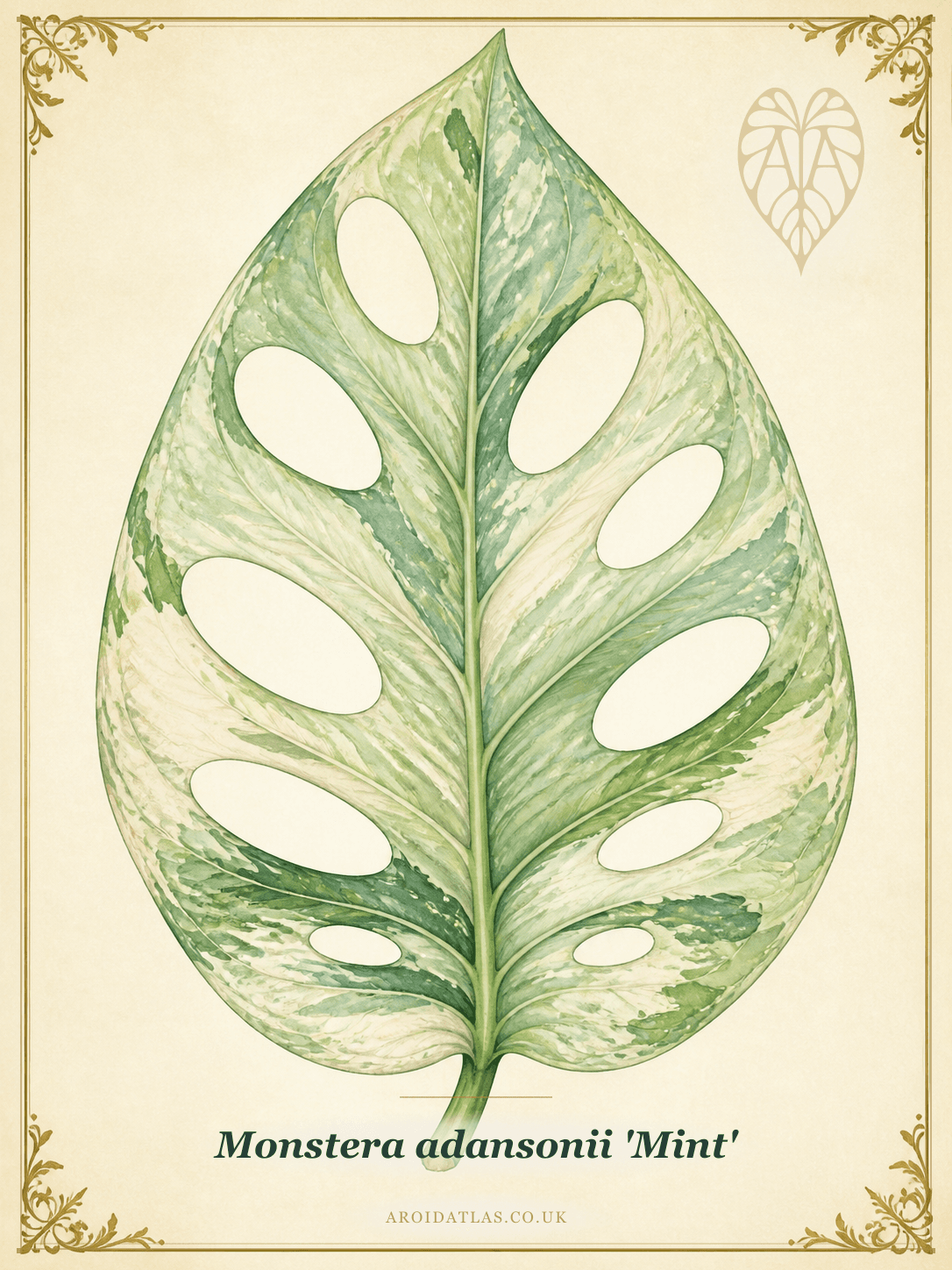
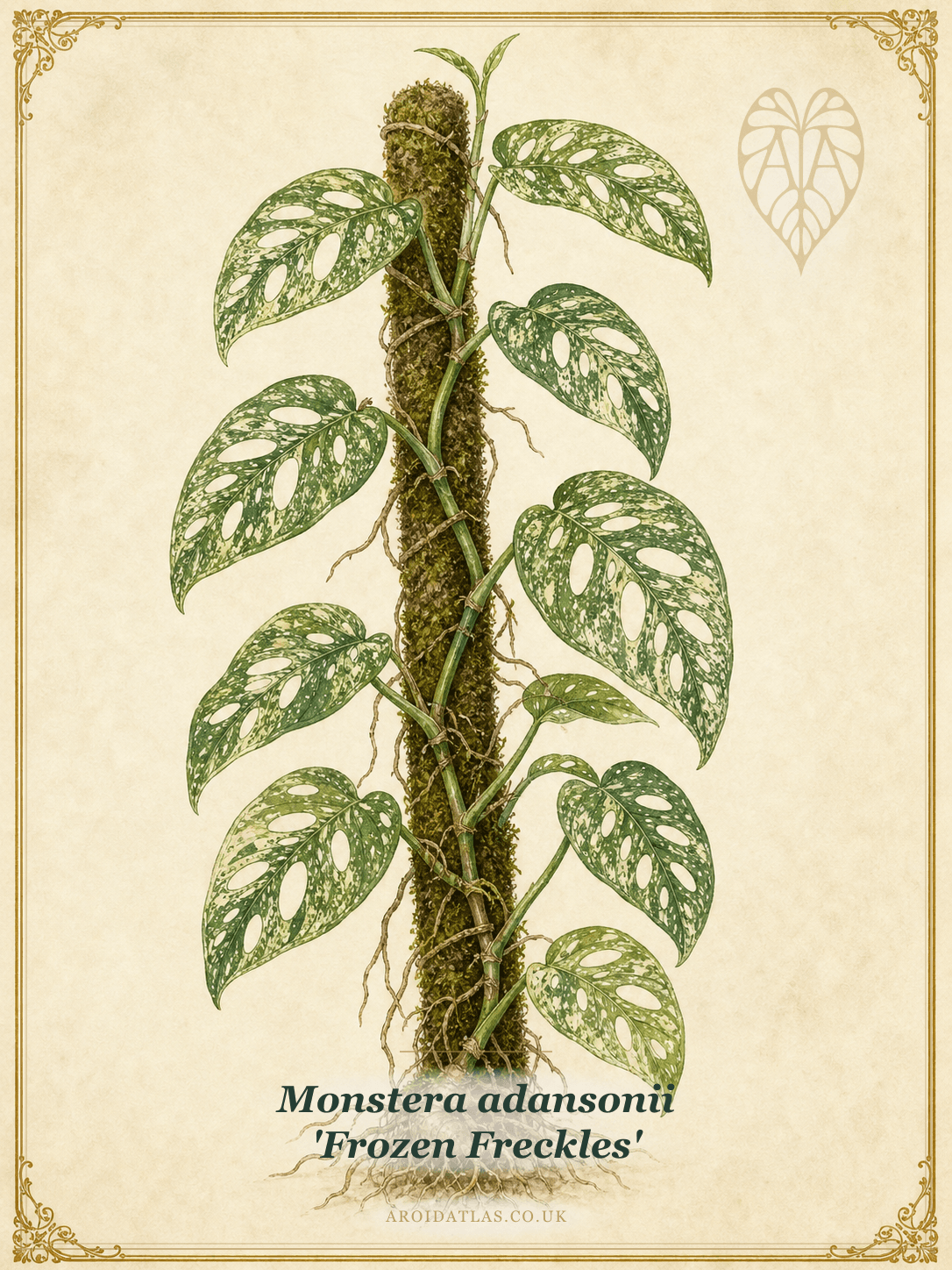
Full Specimen Plate
Monstera adansonii
Swiss Cheese Vine
Aroid Atlas Price Guide
Select Plant Size
Pricing Data Key
Community price estimate based on limited sales history
Other colour-form prices
Market Analysis
Monstera adansonii Price Guide & Auction Value
Historical eBay auction metrics and live retailer listings updated weekly.
No eBay auction history available yet. Data is collected automatically as sales appear on eBay UK.
Before You Buy
Species-specific things to check when evaluating a listing
- Ensure there is at least one healthy node present — a leaf without a node cannot produce new growth
- For variegated forms, verify variegation is present on the newest leaf and is not reverting to green
- Check for scale insects on petioles and undersides of leaves — monsteras are susceptible
- Confirm the cutting or plant has been rooted before purchasing, unless you are buying intentionally unrooted — unrooted cuttings require a propagation setup to succeed
Monstera adansonii Morphology
About Monstera adansonii
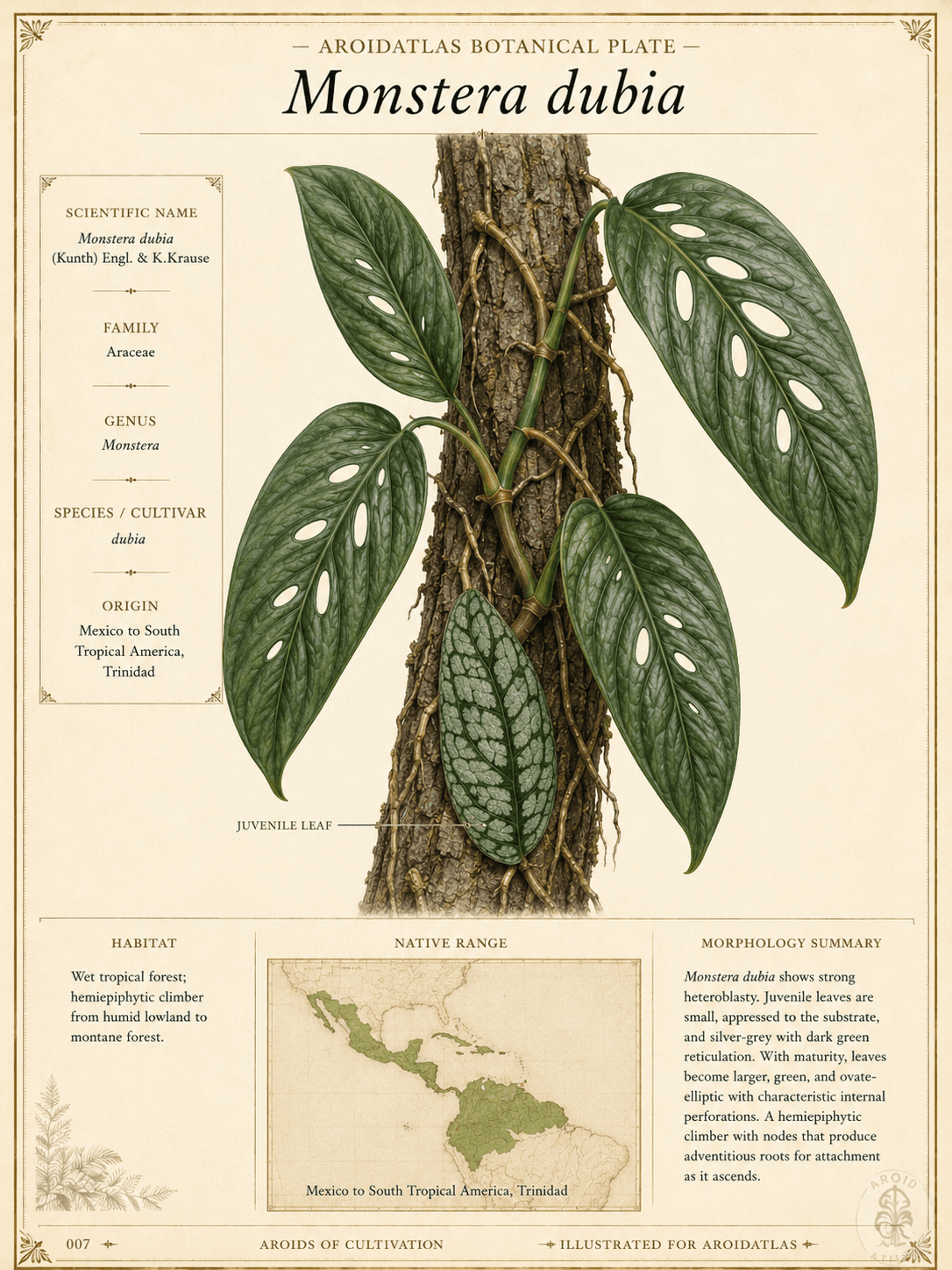
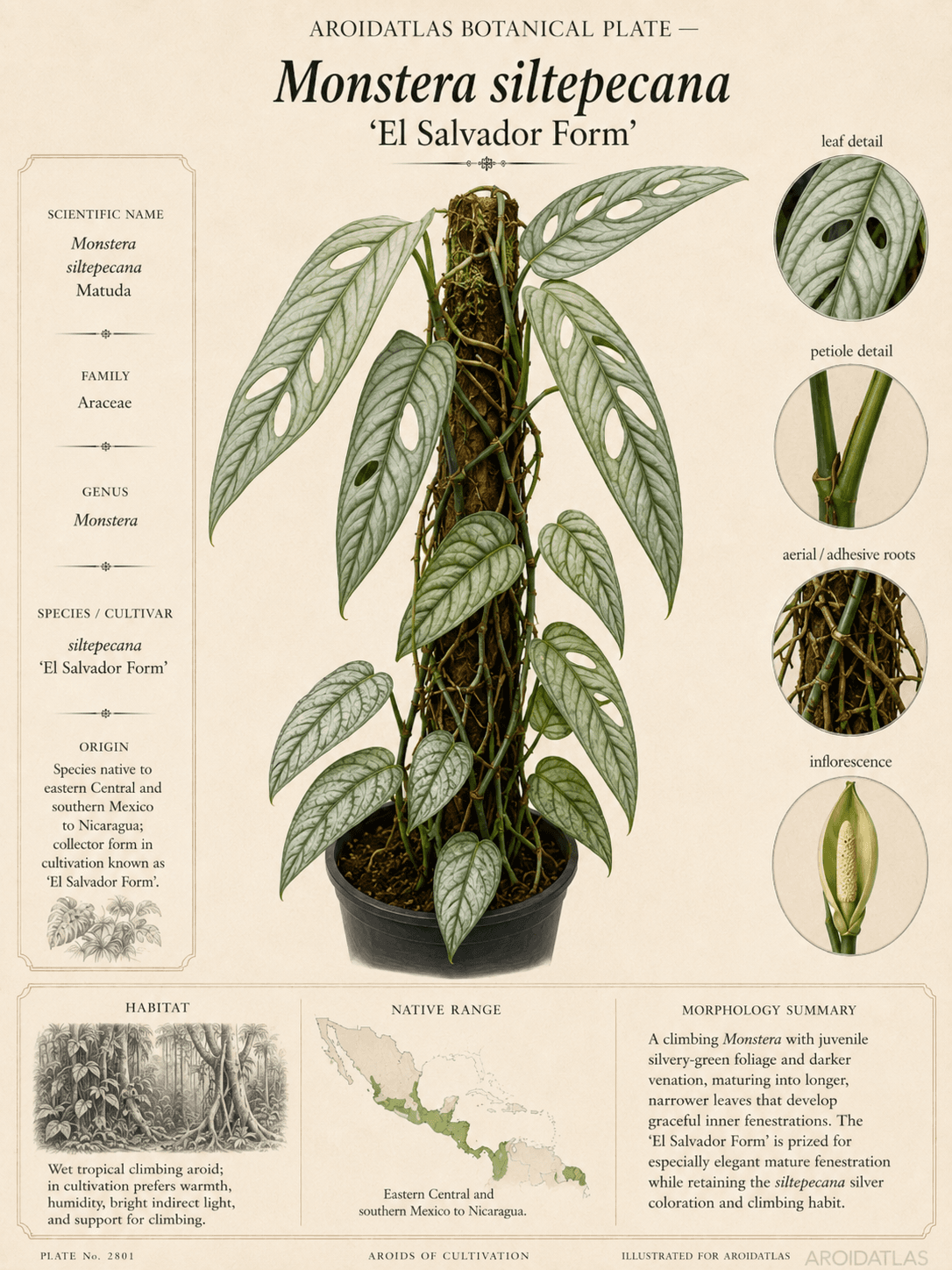
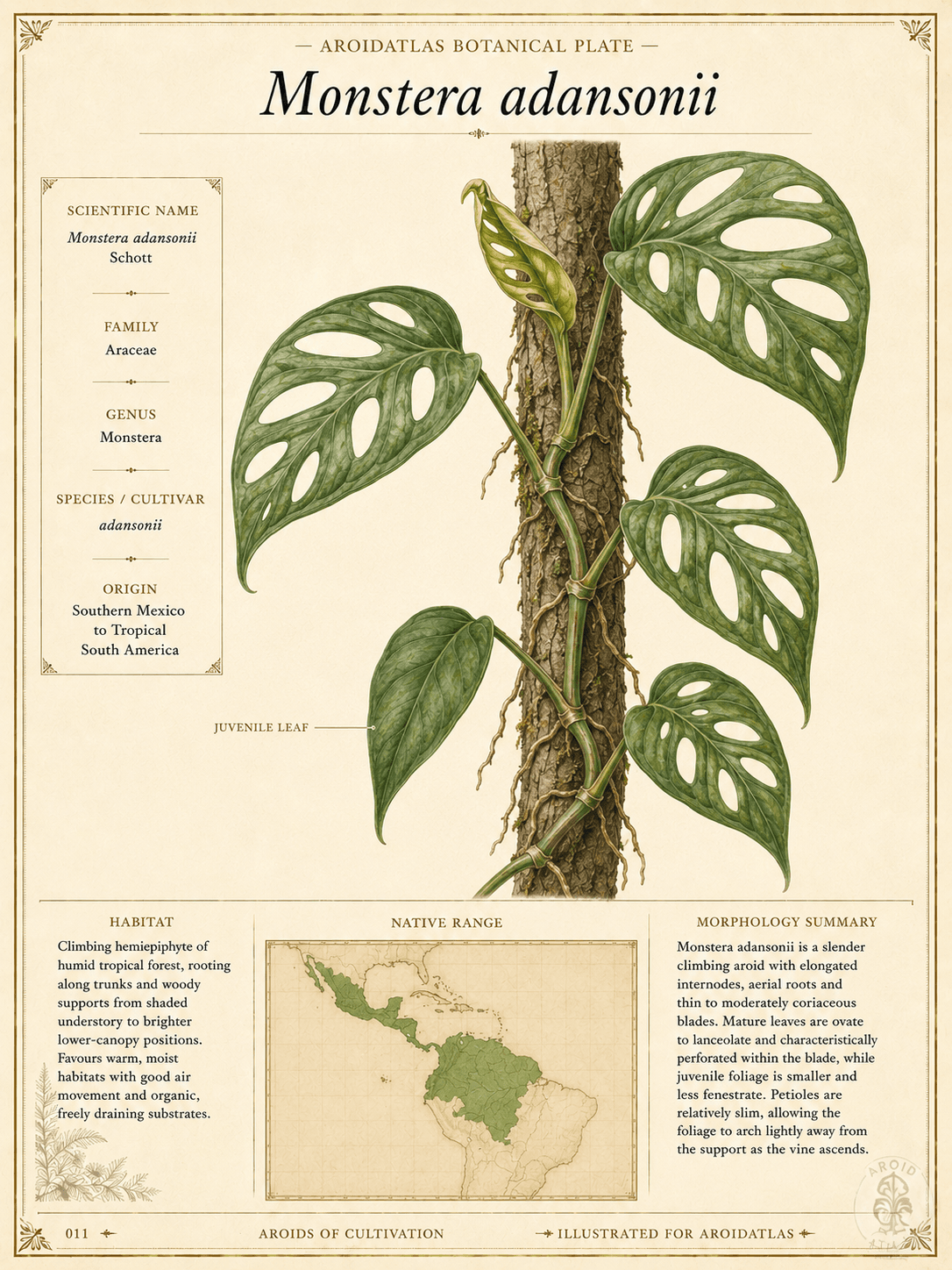
Monstera adansonii is a slender, vigorous climbing hemiepiphyte distributed widely from southern Mexico through tropical South America, rooting along trunks and woody supports from shaded understory positions up into brighter lower canopy. Unlike its famous relative Monstera deliciosa, the fenestrations in adansonii are elliptical perforations within the blade itself rather than cuts running to the margin — a botanical distinction that gives the leaves an almost lace-like quality when backlit. Juvenile foliage is smaller and intact; as the vine ascends it produces increasingly large, multi-perforated leaves on relatively slim petioles that arch lightly away from the support. Though common in the hobby, well-established mature specimens with large fenestrated leaves remain genuinely ornamental, and several unusual narrow-form and round-form variants have become collector items in their own right.
Native Range
Mexico
Propagation Guide
How to Propagate Monstera adansonii
Care Guide
Monstera adansonii Care Guide & Growing Conditions
Chunky, well-draining mix: 40% potting compost, 30% perlite, 20% orchid bark, 10% worm castings. Monsteras are more tolerant of moisture than most aroids but still need drainage.
Water when the top 3–5 cm is dry. These are forgiving plants but still susceptible to root rot if kept too wet. Water less in winter.
50–70% preferred. More tolerant of typical UK indoor humidity than other aroids, though 60%+ encourages larger leaf development.
Balanced fertiliser at half strength every 2 weeks from spring through summer. Monthly in winter or none at all.
Every 12–18 months when roots emerge from drainage holes. Provide a moss pole or support — climbing encourages larger leaf production.
Common Problems
No fenestrations (splits/holes)
Plant is juvenile, or insufficient light
Ensure bright indirect light and allow the plant to mature — fenestrations develop with age and better conditions
Yellow leaves
Overwatering or nutrient deficiency
Check soil moisture before watering; begin a regular fertilising routine in growing season
Brown patches on leaves
Sunburn or cold water on leaves
Avoid direct sun; water at the base and ensure water is room temperature
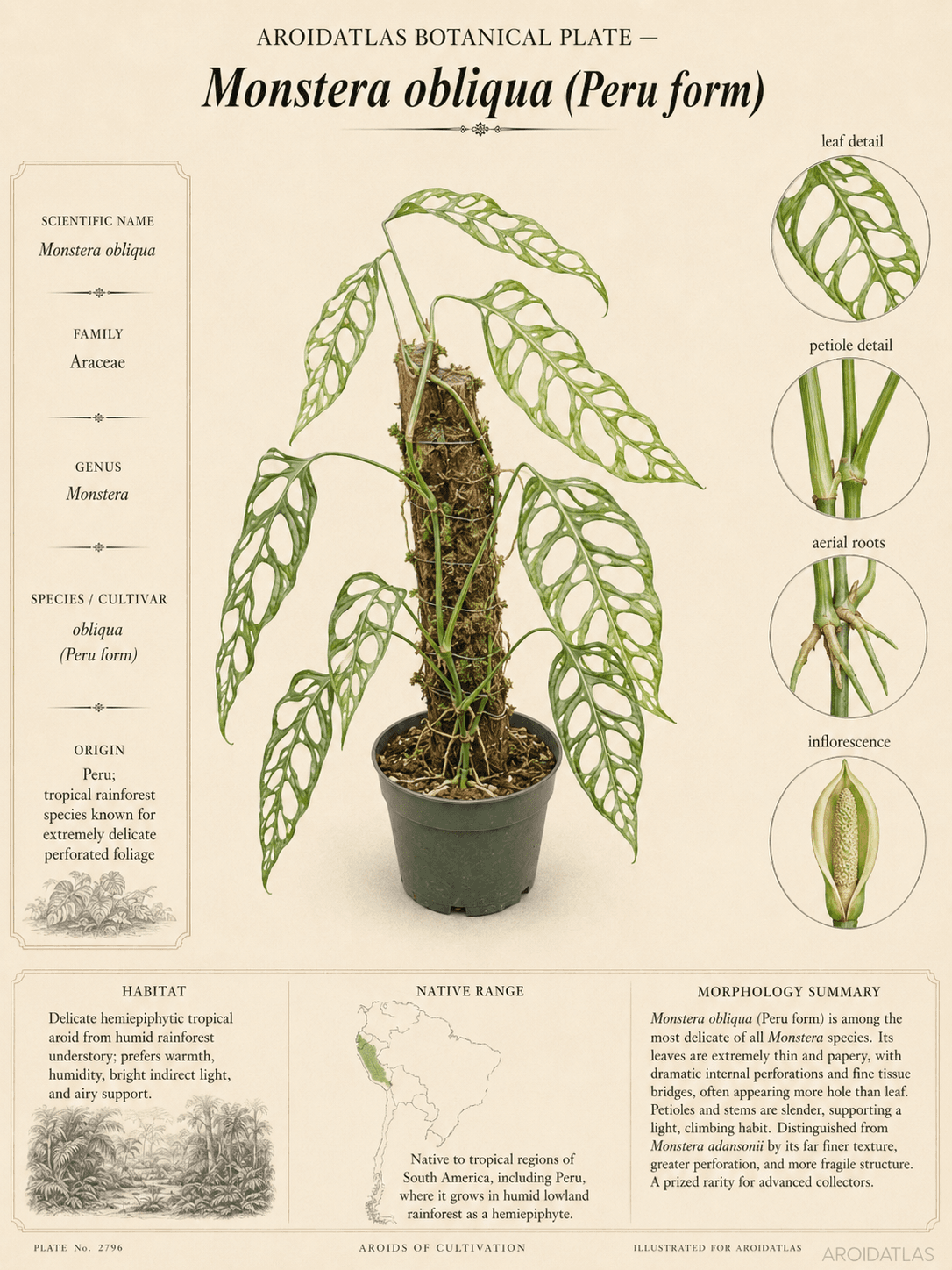
Not Obliqua. Repeat: Not Obliqua.
Let me be direct: Monstera adansonii is not Monstera obliqua. It never has been, and the prevalence of 'obliqua' labels on what is clearly adansonii represents either chronic ignorance or chronic dishonesty in the trade, and I am no longer confident it matters which. Adansonii is, however, a perfectly reasonable, moderately fenestrated climbing Monstera from a wide Central and South American distribution, growing vigorously and propagating readily and costing approximately nothing. As a plant, on its own merits, it is entirely acceptable. As a purchase, with honest labelling, it is good value. As 'Monstera obliqua' at inflated prices, it is a test of your ability to research before buying.
Also in: Small-Form Adansonii Complex
M. adansonii and its named colour forms — a compact, fast-growing species and the usual entry point into fenestrated Monstera collecting.