Scroll to explore forms of Philodendron lupinum
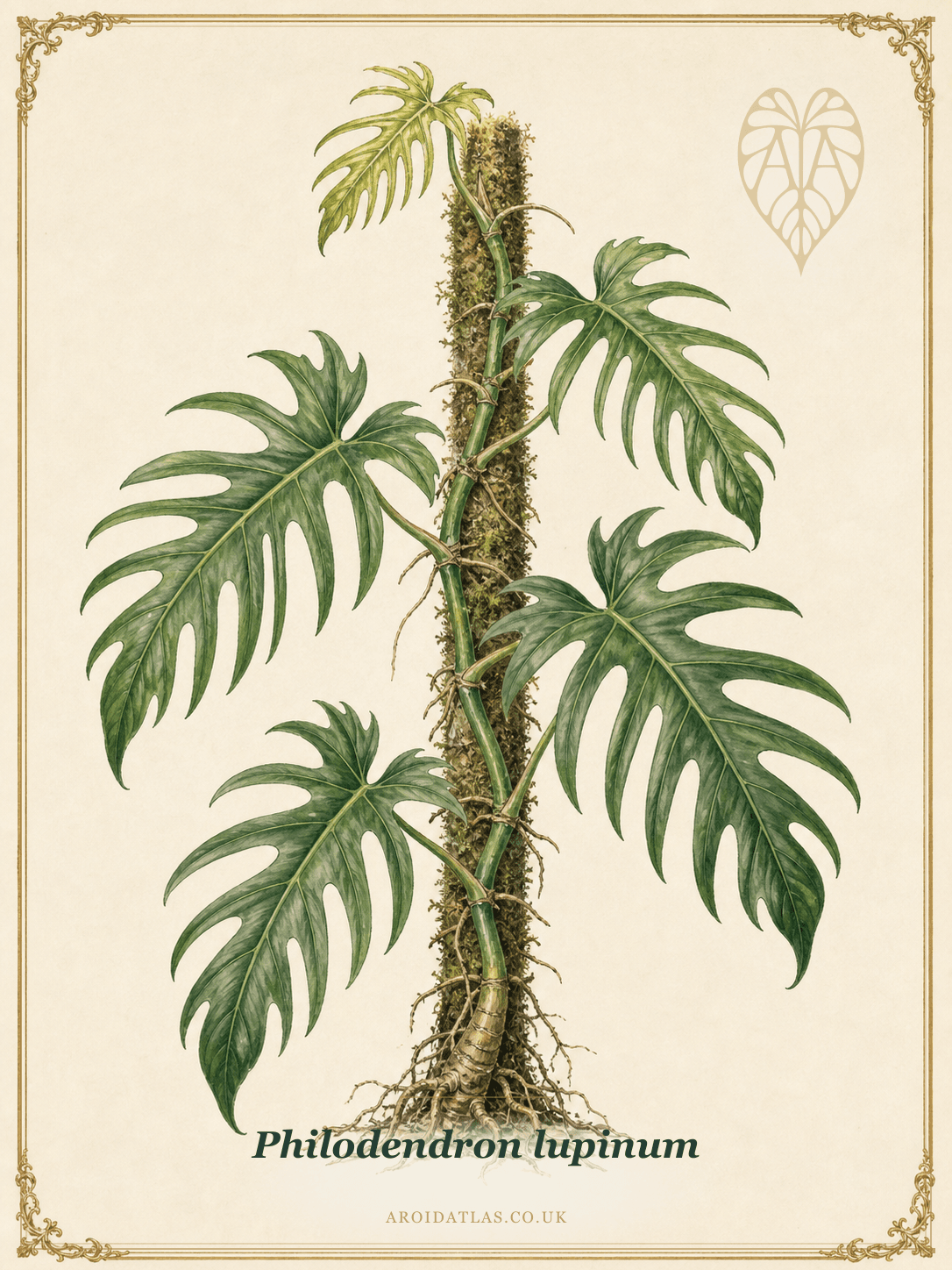
Full Specimen Plate
Philodendron lupinum
Lupinum Philodendron
Aroid Atlas Price Guide
Select Plant Size
Pricing Data Key
Other colour-form prices
Philodendron lupinum Morphology
About Philodendron lupinum
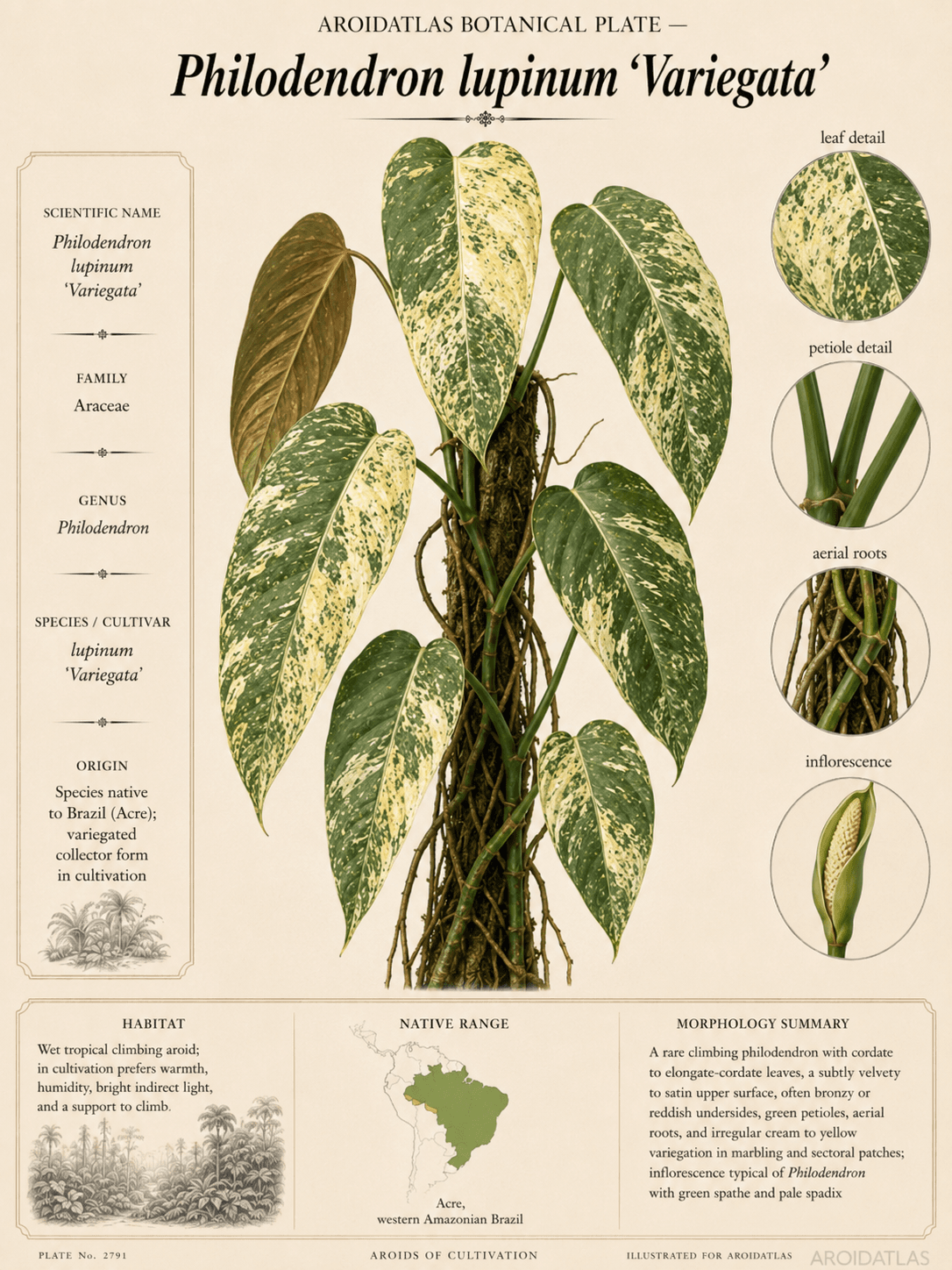
Philodendron lupinum is a rare species from Acre in western Brazil, known to collectors chiefly through specialist importers rather than mainstream trade. It carries a broad, unlobed cordate-to-sagittate leaf on a climbing stem. Juvenile leaves are smaller with a velvety, bronze-to-reddish satin sheen, maturing into larger, glossier leaves with pronounced corrugated venation, though the simple heart-shaped silhouette itself changes little. Less broadly documented than more established Philodendron species due to its recent and limited introduction to cultivation. Its variegated selection, an even rarer collector form, adds irregular cream sectoring over the same broad leaf shape.
Native Range
Brazil
Market Analysis
Philodendron lupinum Price Guide & Auction Value
Historical eBay auction metrics and live retailer listings updated weekly.
No eBay auction history available yet. Data is collected automatically as sales appear on eBay UK.
Before You Buy
Species-specific things to check when evaluating a listing
- This is a recently-introduced, low-availability species, so verify seller reputation carefully given the price point
- Roots should be firm and pale; mushy or dark roots indicate rot
- For the variegated form, confirm the variegation pattern matches photos
Propagation Guide
How to Propagate Philodendron lupinum
8-14 months
Cultivar character is preserved through vegetative cuttings
Limited propagation data given how recently this species entered cultivation. Root in a closed, high-humidity environment; establishment is slow.
Care Guide
Philodendron lupinum Care Guide & Growing Conditions
Very chunky, well-aerated mix: 40% orchid bark, 30% perlite, 20% potting compost, 10% sphagnum moss.
Water when the top layer of substrate is nearly dry throughout.
65-85%.
Low-nitrogen fertiliser at quarter strength every 3-4 weeks during the growing season.
Reluctantly, only when root-bound.
Common Problems
Slow or stalled growth
Insufficient humidity or light
Increase humidity and move to brighter indirect light
Root rot
Overwatering
Repot into fresh chunky substrate and reduce watering
Recently Introduced, Still Being Documented
Lupinum is a good example of how recently-introduced species move through the hobby, known mainly via specialist importers rather than mainstream nurseries, and with less published documentation than more established Philodendron. What's consistent across what is documented: a broad, unlobed leaf that starts with a velvety bronze-red satin sheen as a juvenile and matures into something glossier with pronounced corrugated venation, while the basic heart-to-arrow silhouette barely changes. The variegated selection is rarer again, adding irregular cream sectoring over that same shape. Given how limited the cultivation record still is, I'd treat any confident claims about long-term care requirements with some caution until more growers have logged results.