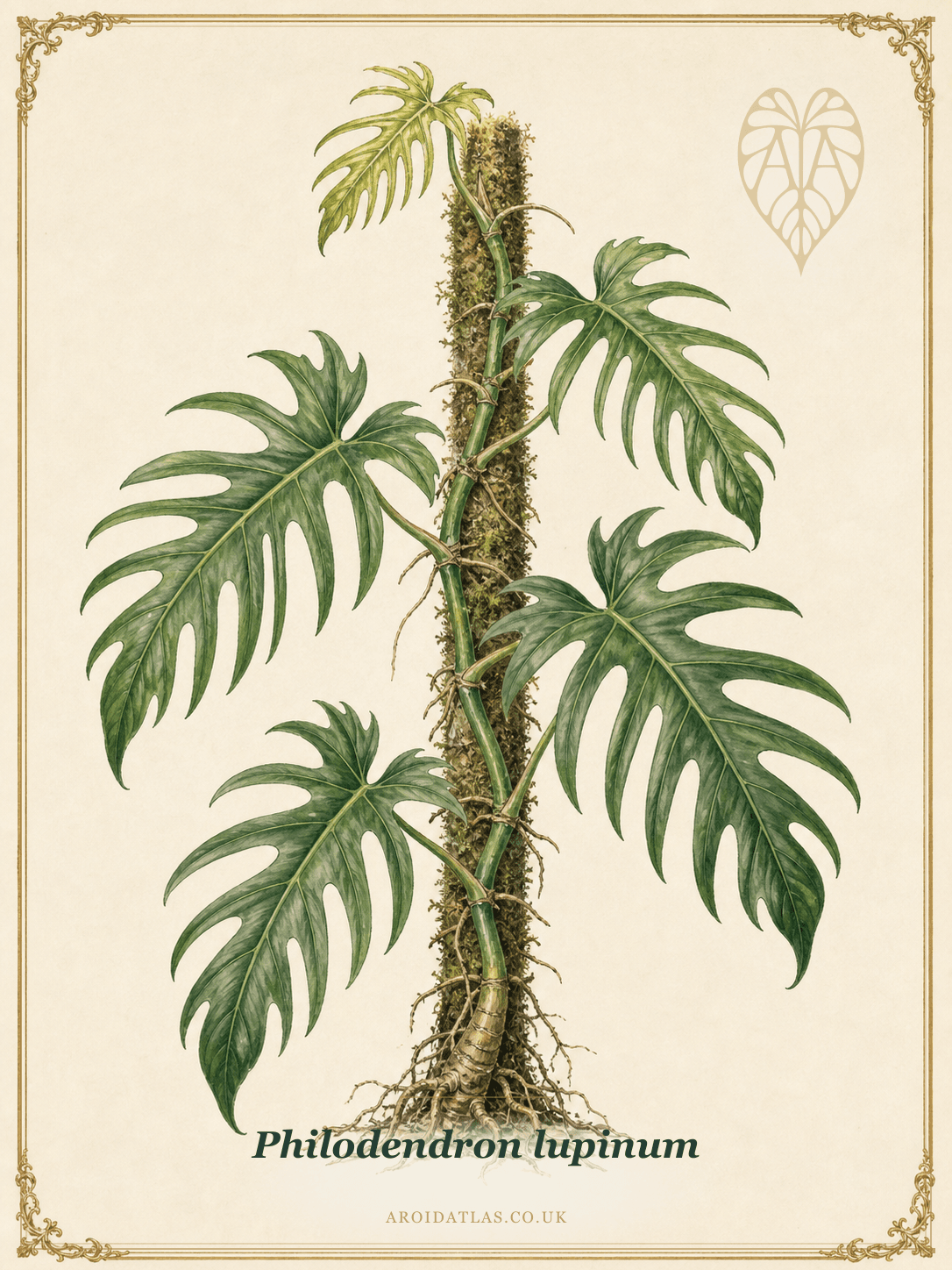
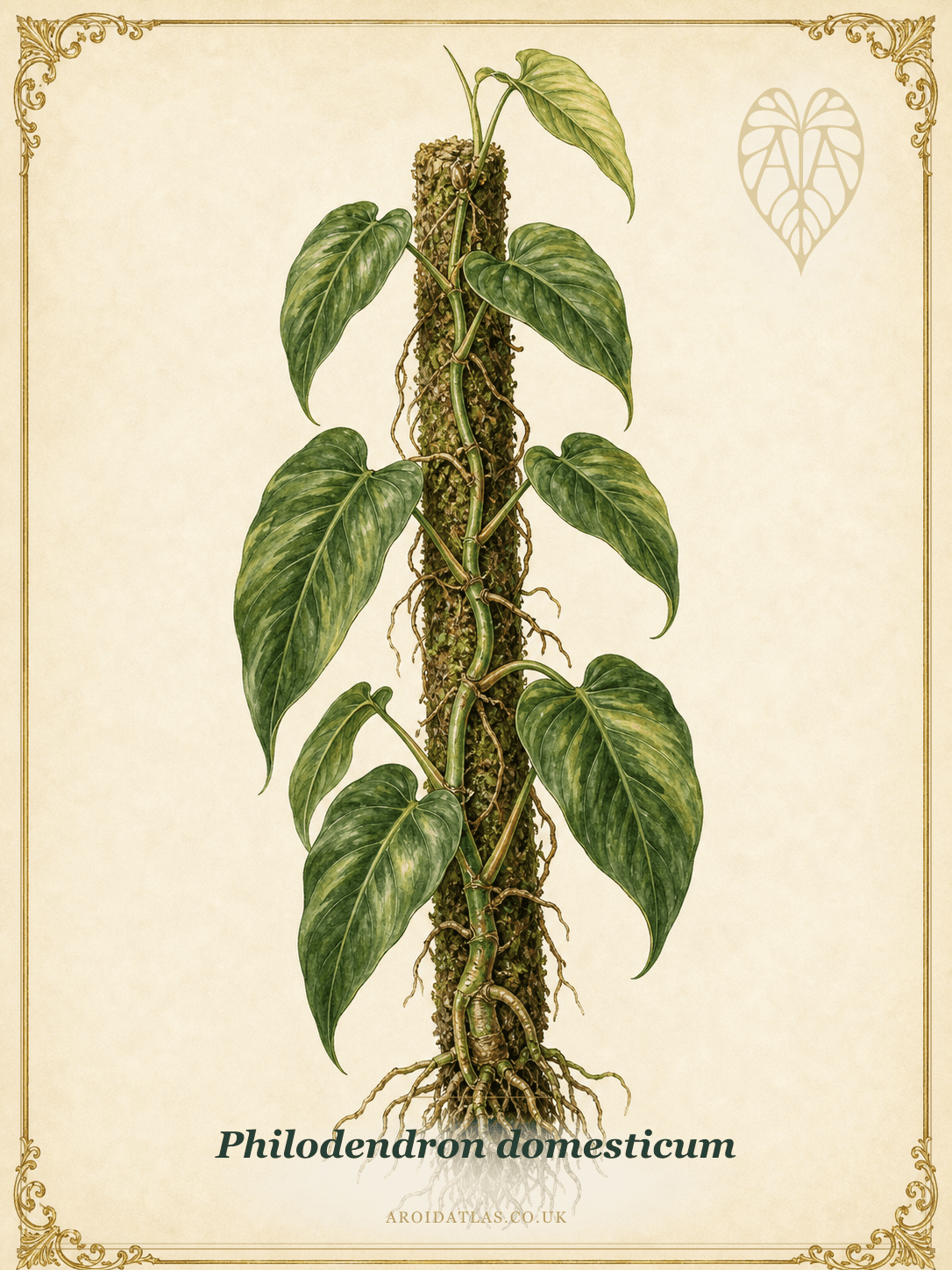
Scroll to explore forms of Philodendron nangaritense
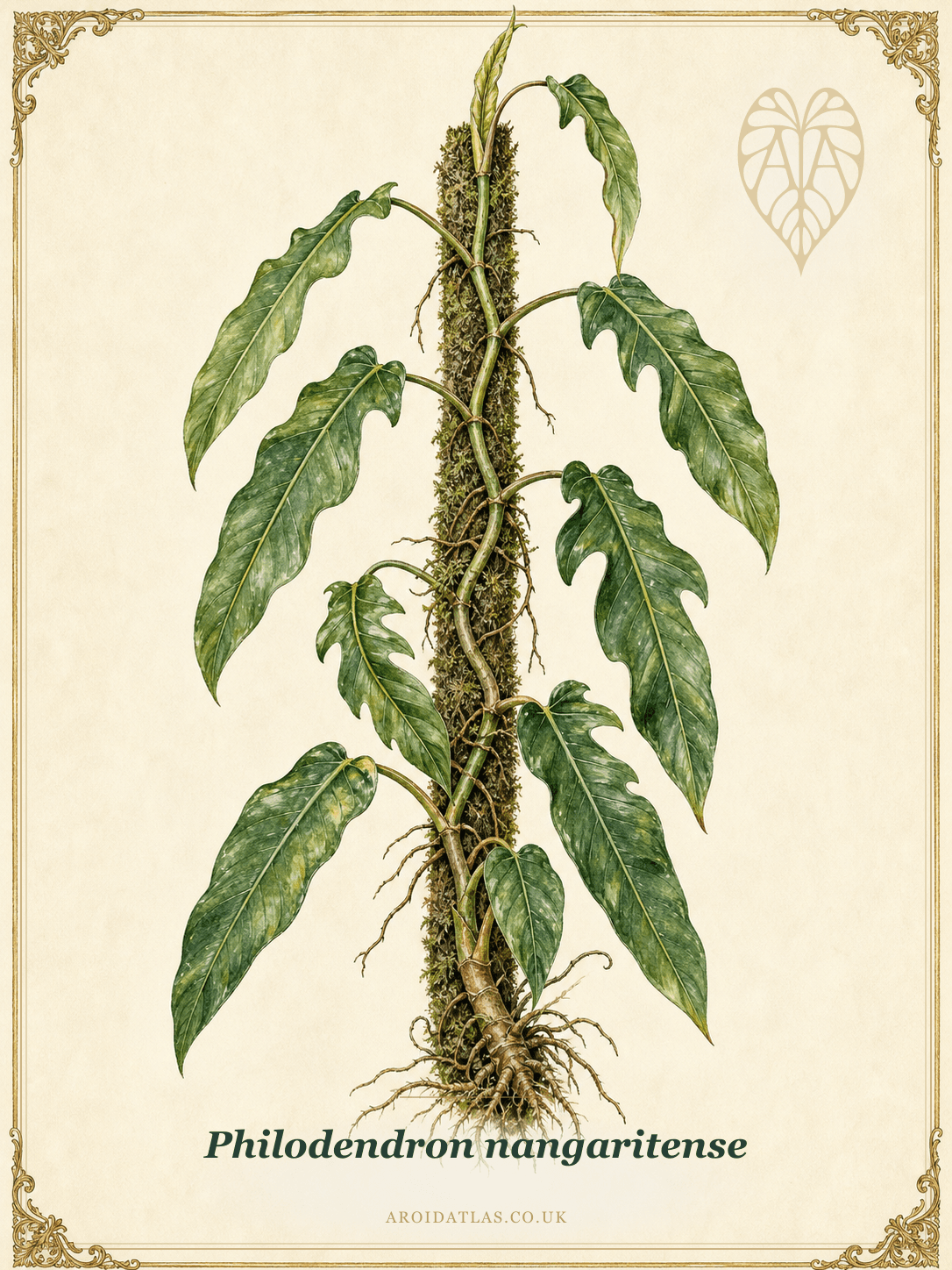
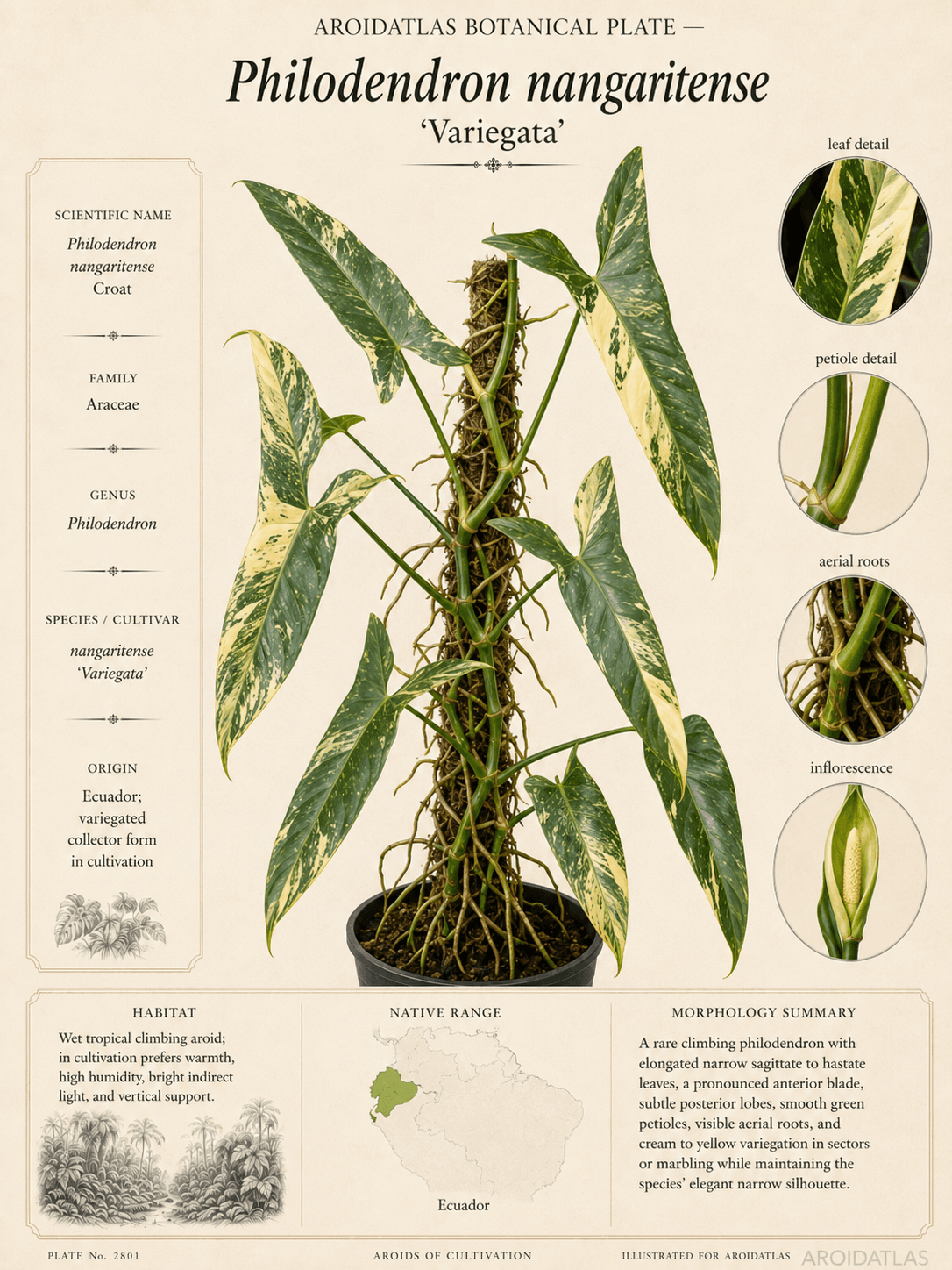
Full Specimen Plate
Philodendron nangaritense
Nangaritense Philodendron
Aroid Atlas Price Guide
Select Plant Size
Pricing Data Key
Other colour-form prices
Philodendron nangaritense Morphology
About Philodendron nangaritense
Philodendron nangaritense is an Ecuadorian species named for the Nangaritza river valley, known mainly to specialist collectors and rarely encountered outside dedicated aroid importers. Like many recently-introduced Ecuadorian Philodendron species, detailed cultivation records are still limited compared to long-established collector species. Its variegated selection is an even rarer form, layering cream sectoring over the species' foliage.
Native Range
Ecuador
Market Analysis
Philodendron nangaritense Price Guide & Auction Value
Historical eBay auction metrics and live retailer listings updated weekly.
No eBay auction history available yet. Data is collected automatically as sales appear on eBay UK.
Before You Buy
Species-specific things to check when evaluating a listing
- Documented growing experience with this species is still thin; treat specific care claims from a seller cautiously and default to general climbing-Philodendron practice
- Roots should be firm and pale; mushy or dark roots indicate rot
- For the variegated form, confirm the variegation pattern matches photos
Propagation Guide
How to Propagate Philodendron nangaritense
8-14 months
Cultivar character is preserved through vegetative cuttings
Limited propagation data given how recently this species entered cultivation. Root in a closed, high-humidity environment; establishment is slow.
Care Guide
Philodendron nangaritense Care Guide & Growing Conditions
No species-specific substrate trials are documented yet. General climbing-Philodendron practice (chunky bark/perlite mix with good drainage) is the reasonable starting point given this species' aerial-root growth habit.
Allow the top layer to dry between waterings; adjust based on how the specific substrate mix drains rather than a fixed schedule.
65-85%, per this species' quickFacts profile.
Standard dilute feeding during active growth is reasonable, though no species-specific fertilising trials have been documented.
As with most climbing Philodendron, repot only once clearly root-bound rather than on a schedule.
Common Problems
Slow or stalled growth
Insufficient humidity or light
Increase humidity and move to brighter indirect light
Named for a River, Still Rarely Seen
Nangaritense takes its name from the Nangaritza river valley in Ecuador, and like a number of recently-introduced Ecuadorian Philodendron species, it's still mostly known through dedicated aroid importers rather than general trade; detailed, long-term cultivation records simply haven't accumulated the way they have for species that have been in circulation for decades. The variegated selection is rarer again, adding cream sectoring over the species' base foliage. Given how thin the documented growing experience still is for this one, I'd treat any specific long-term care claims cautiously and lean on general climbing-Philodendron practice until more results come in from growers working with it directly.