Scroll to explore forms of Philodendron erubescens
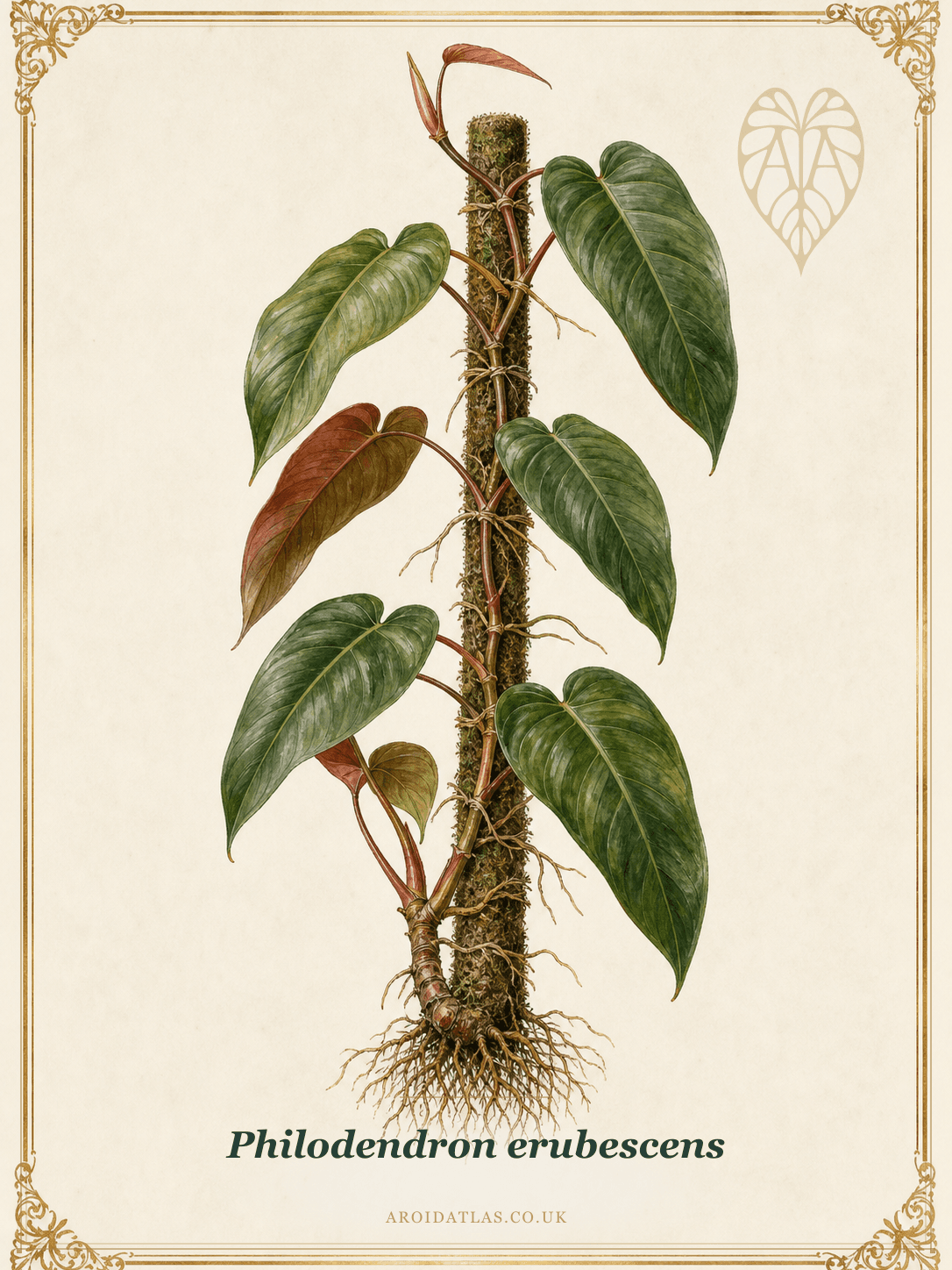
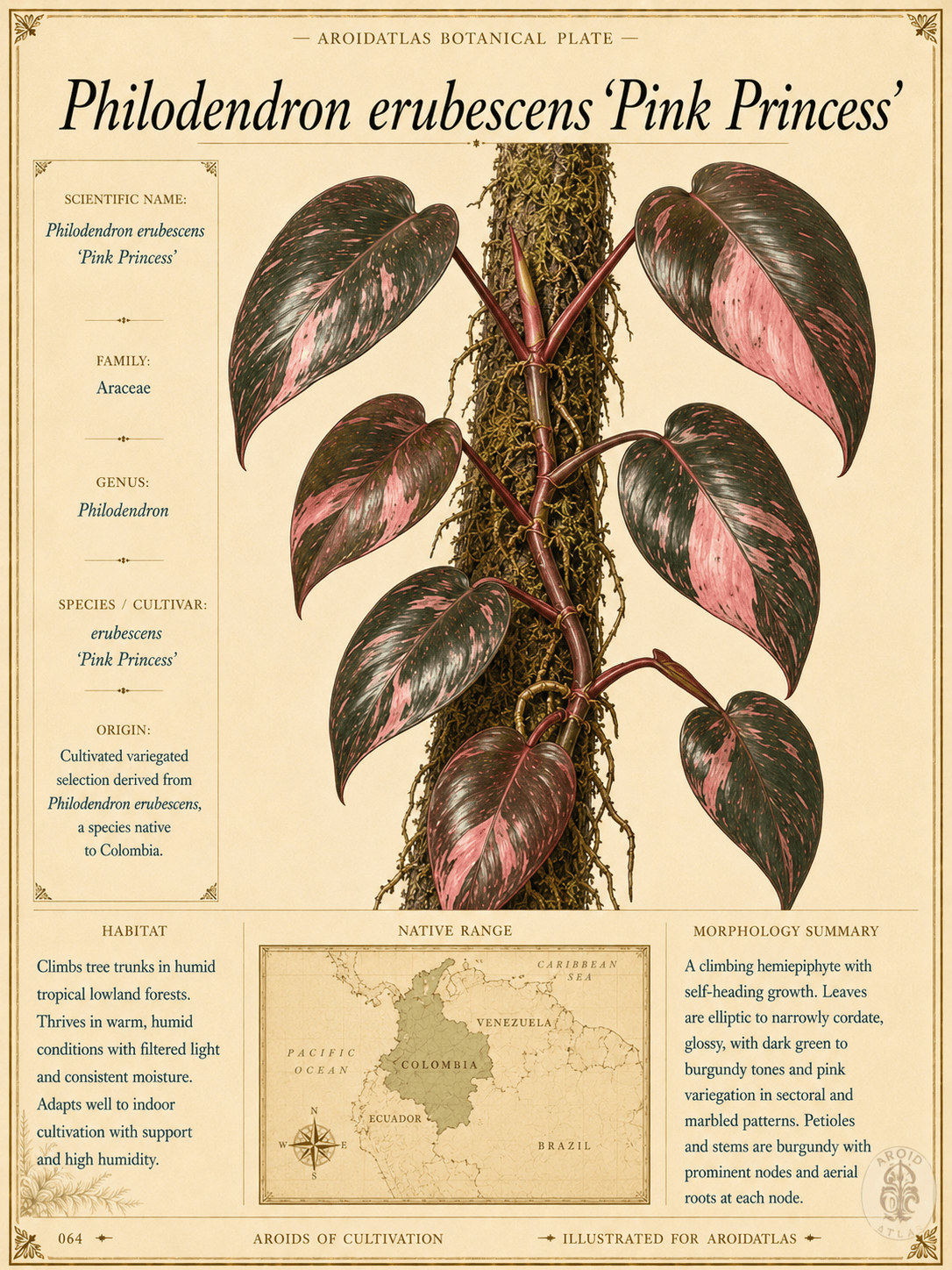
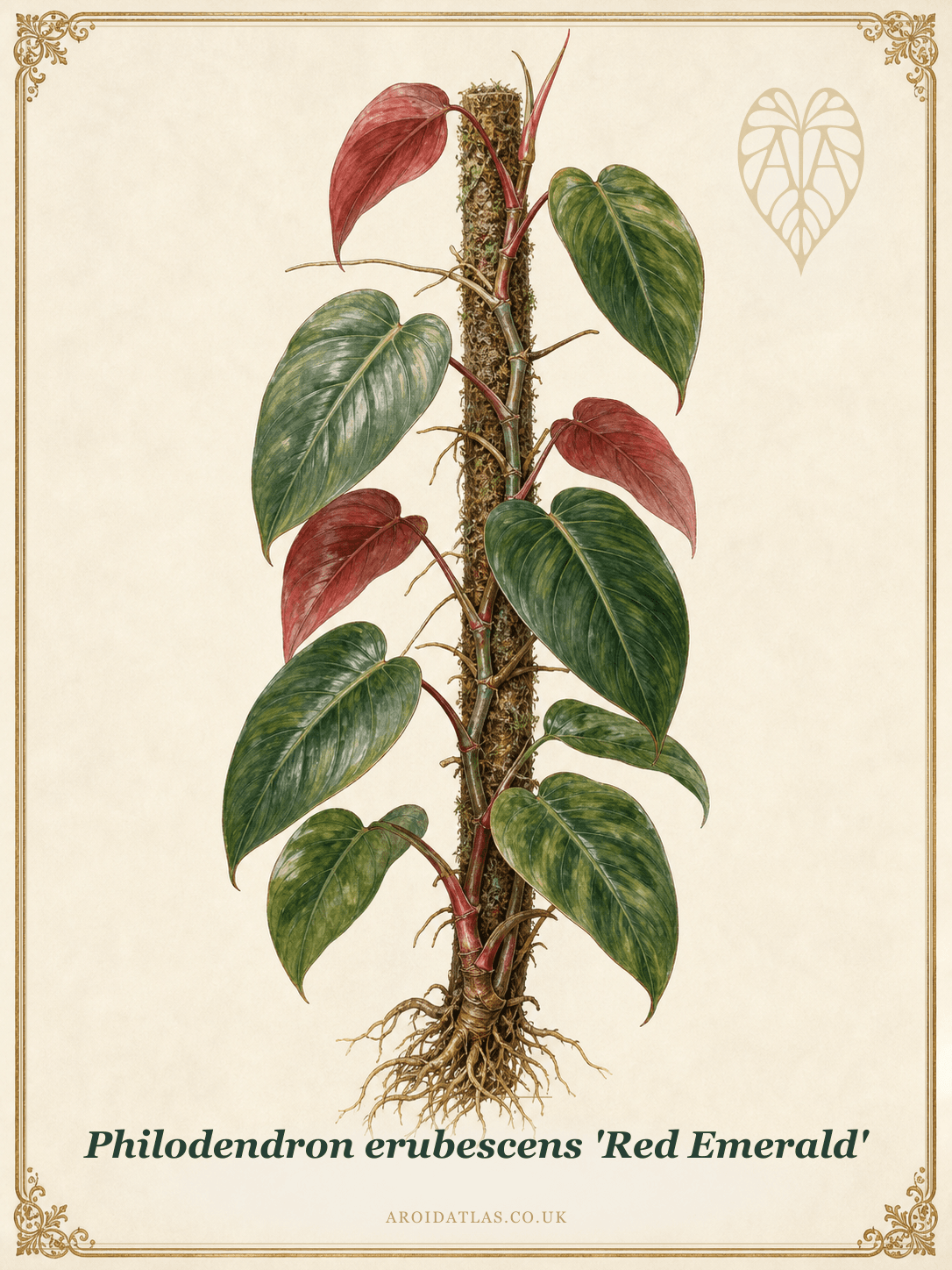
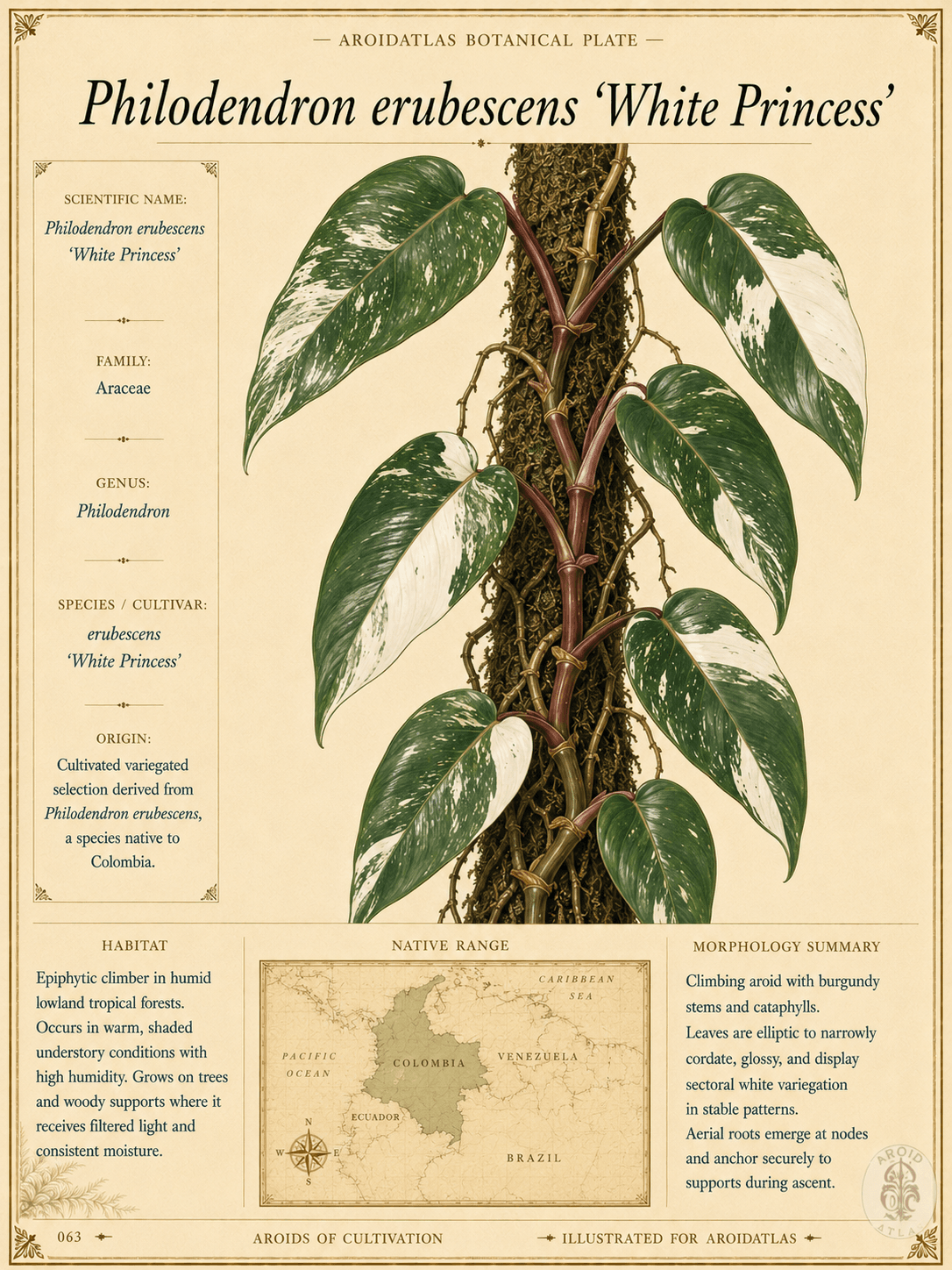
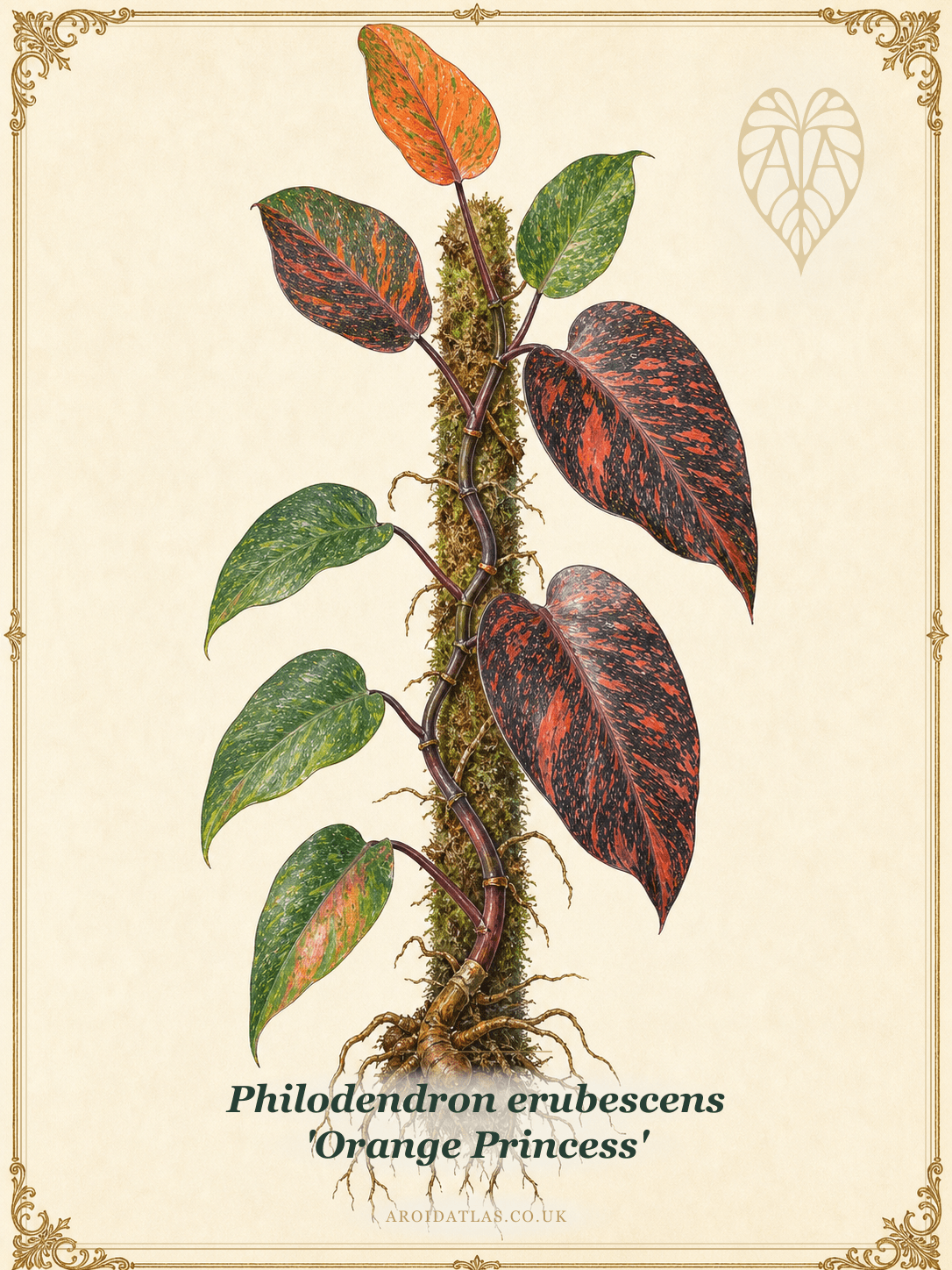
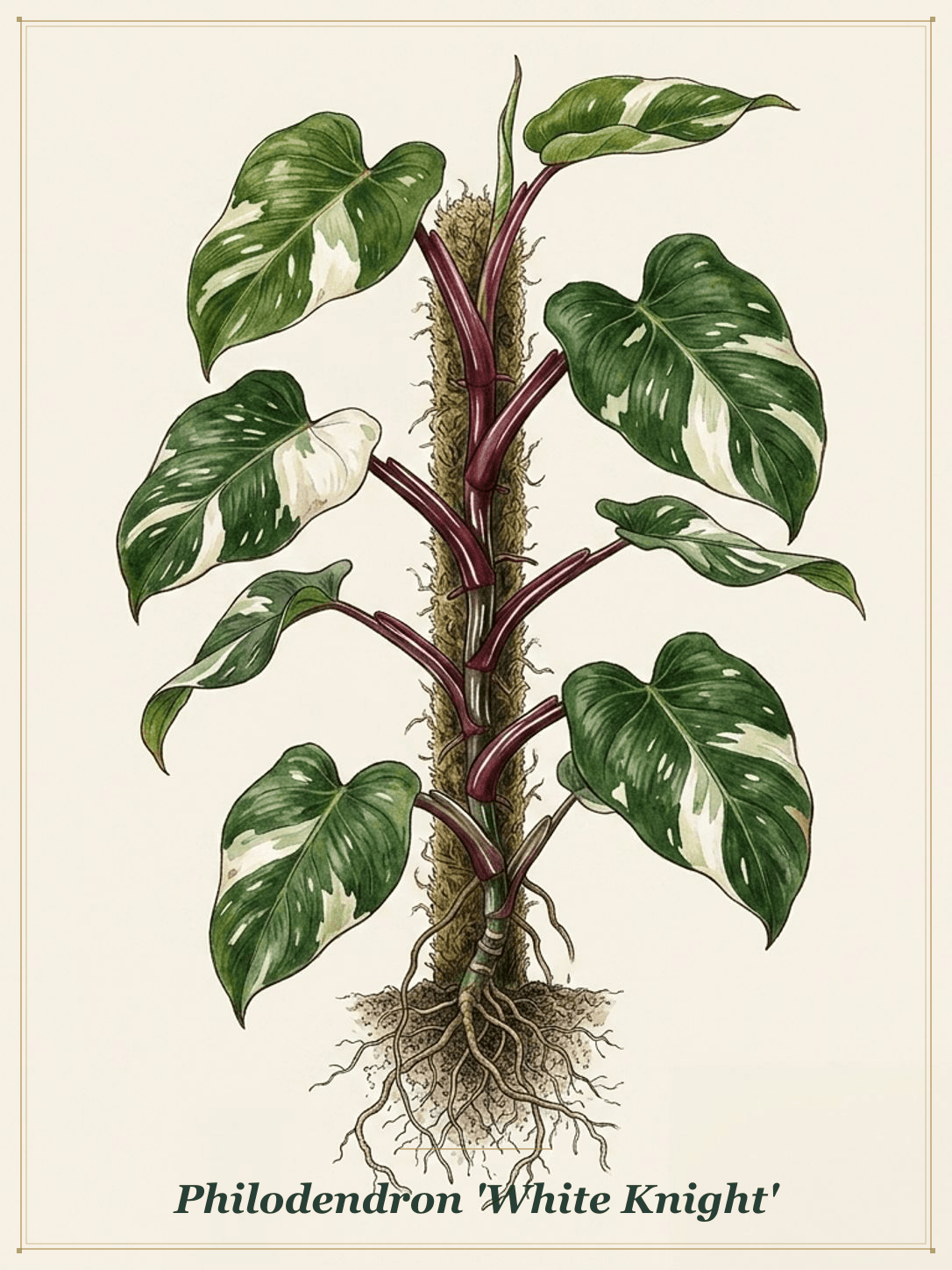

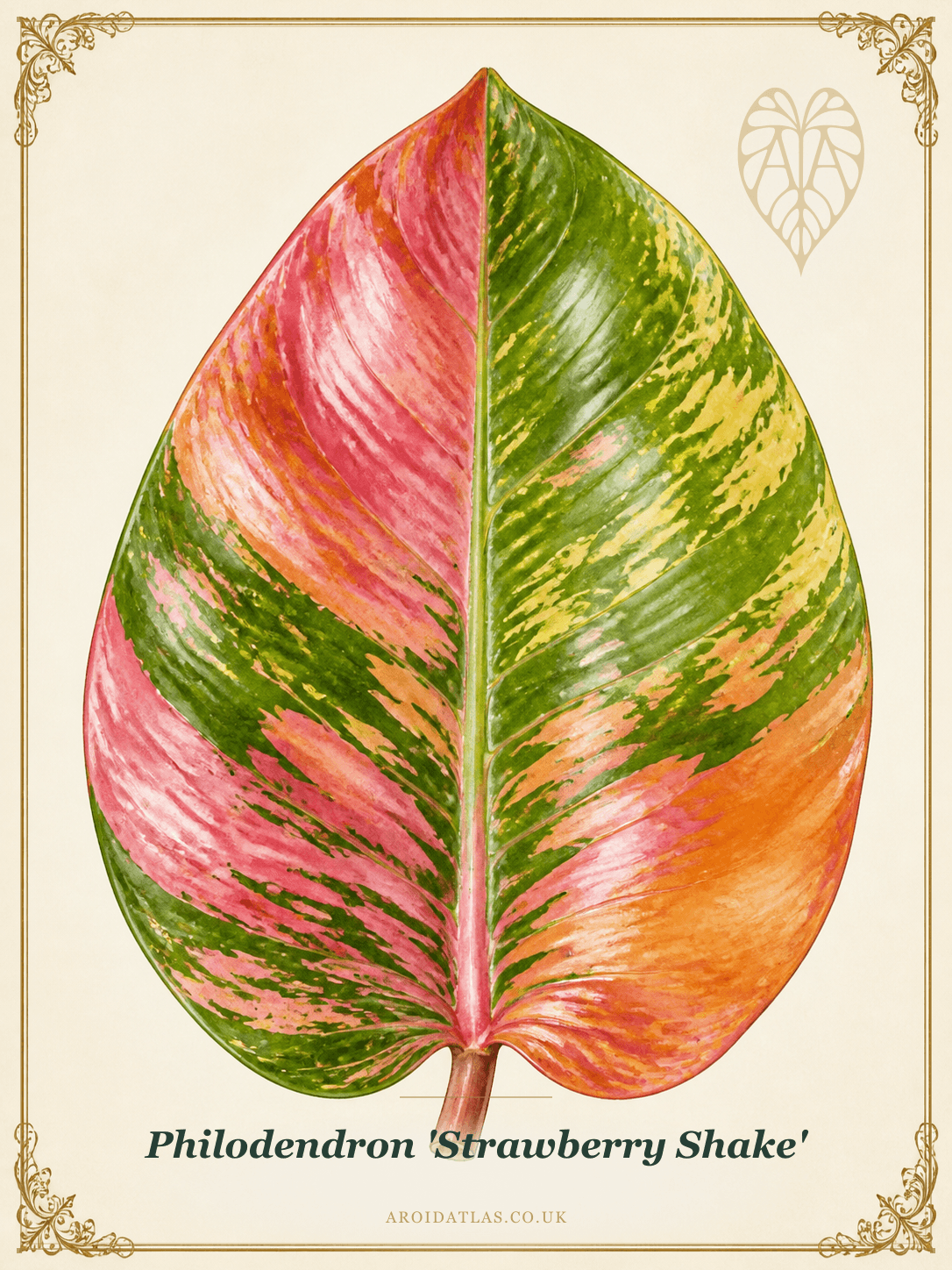
Full Specimen Plate
Philodendron erubescens 'Orange Princess'
Orange Princess Philodendron
Aroid Atlas Price Guide
Select Plant Size
Pricing Data Key
Based on online retail prices, adjusted for private sales
Other colour-form prices
Philodendron erubescens 'Orange Princess' Morphology
About Philodendron erubescens 'Orange Princess'
Philodendron erubescens 'Orange Princess' is a colour-form cultivar in the same 'Princess' line as 'Pink Princess' and 'White Princess'. New leaves emerge bright orange with fine green speckling, then darken as they mature into a mottled bronze, black and rust-red pattern with orange breaking through along the veins. Petioles and stems carry the same deep burgundy flush as the rest of the erubescens 'Princess' cultivars. It grows as a climbing hemiepiphyte and shares the group's tendency to revert to plain green on unstable nodes.
Native Range
Colombia
Market Analysis
Philodendron erubescens 'Orange Princess' Price Guide & Auction Value
Historical eBay auction metrics and live retailer listings updated weekly.
No eBay auction history available yet. Data is collected automatically as sales appear on eBay UK.
Before You Buy
Species-specific things to check when evaluating a listing
- Check the newest unfurled leaf, not just older growth; orange colouration fades as leaves age, so recent growth is the true indicator of the cultivar's stability
- A cutting with two or more active nodes showing orange is a safer buy than a single leaf with no visible node
- Look for firm stems and healthy nodes; a cutting with a mushy or blackened base is unlikely to root
- All Philodendron are toxic if ingested; keep away from pets and children
Propagation Guide
How to Propagate Philodendron erubescens 'Orange Princess'
Take cuttings only from nodes showing active orange colouration; nodes with plain green new growth are likely reverted and will not reliably regain colour.
Care Guide
Philodendron erubescens 'Orange Princess' Care Guide & Growing Conditions
Chunky, well-draining aroid mix: 40% orchid bark, 30% potting compost, 20% perlite, 10% sphagnum moss.
Allow the top few centimetres of substrate to dry between waterings. Reduce slightly in winter.
60-80%. Less forgiving of average household humidity than the plain species.
Balanced liquid fertiliser at half strength every 3-4 weeks during the growing season.
Every 1-2 years, or when roots fill the pot.
Common Problems
New leaves emerging plain green
Reversion at the growing node
Prune back to the last node showing orange colouration and propagate from there
Root rot
Overwatering or poorly-draining substrate
Unpot, trim affected roots, and repot into fresh chunky substrate; reduce watering frequency
Bacterial leaf spot
Overhead watering and poor air circulation
Water at the base, avoid wetting foliage, and improve airflow around the plant