Scroll to explore forms of Philodendron erubescens
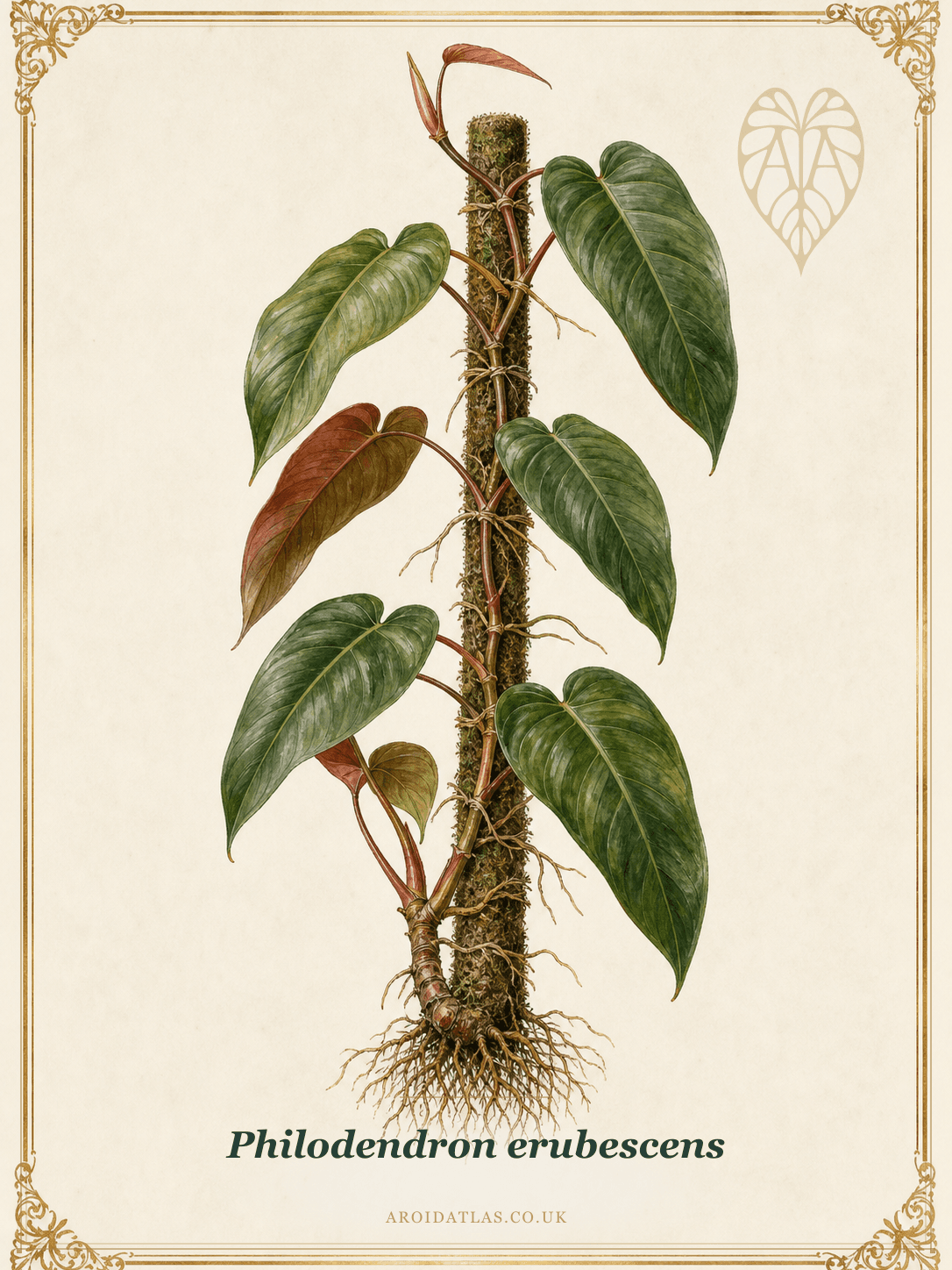
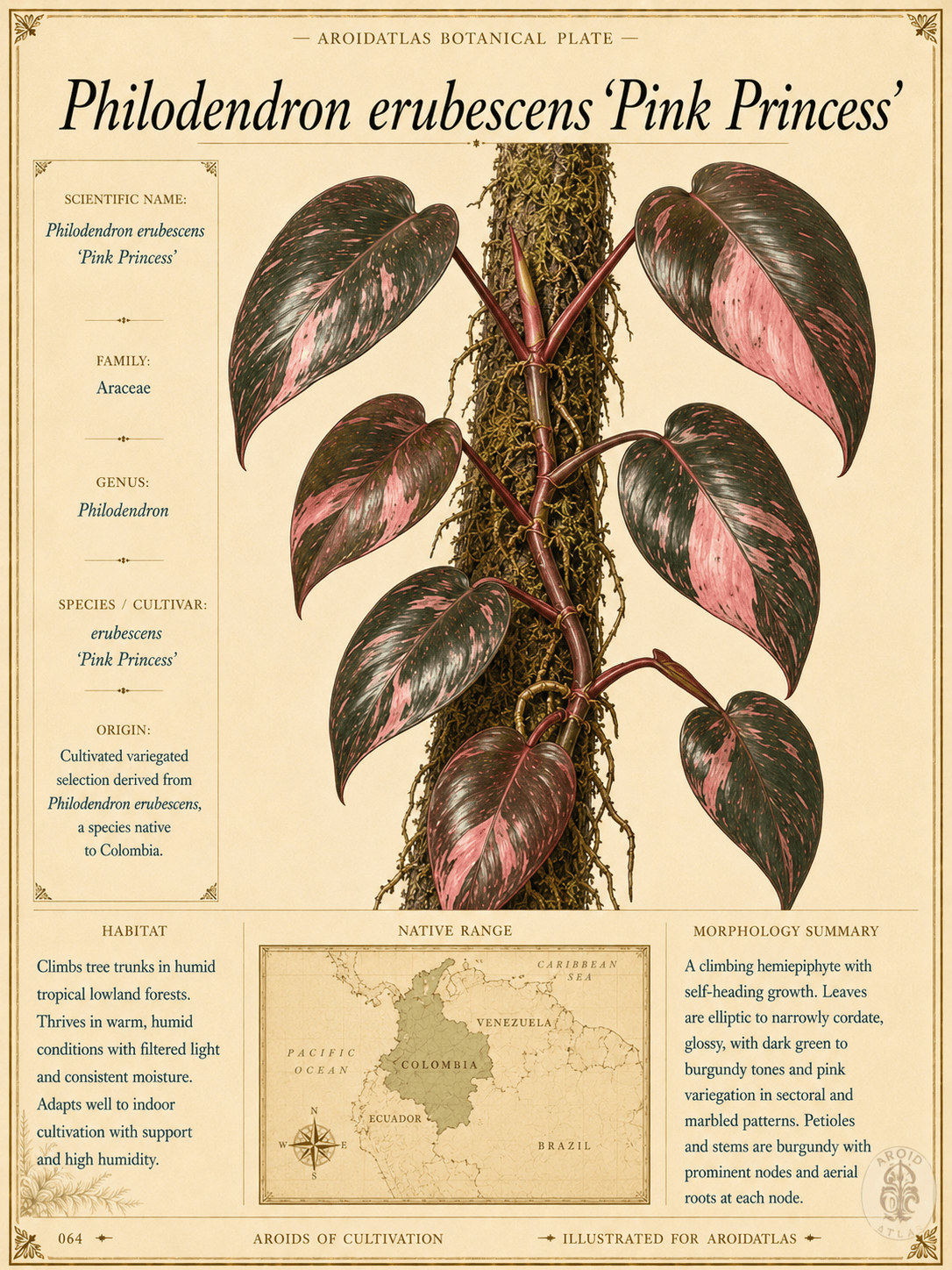
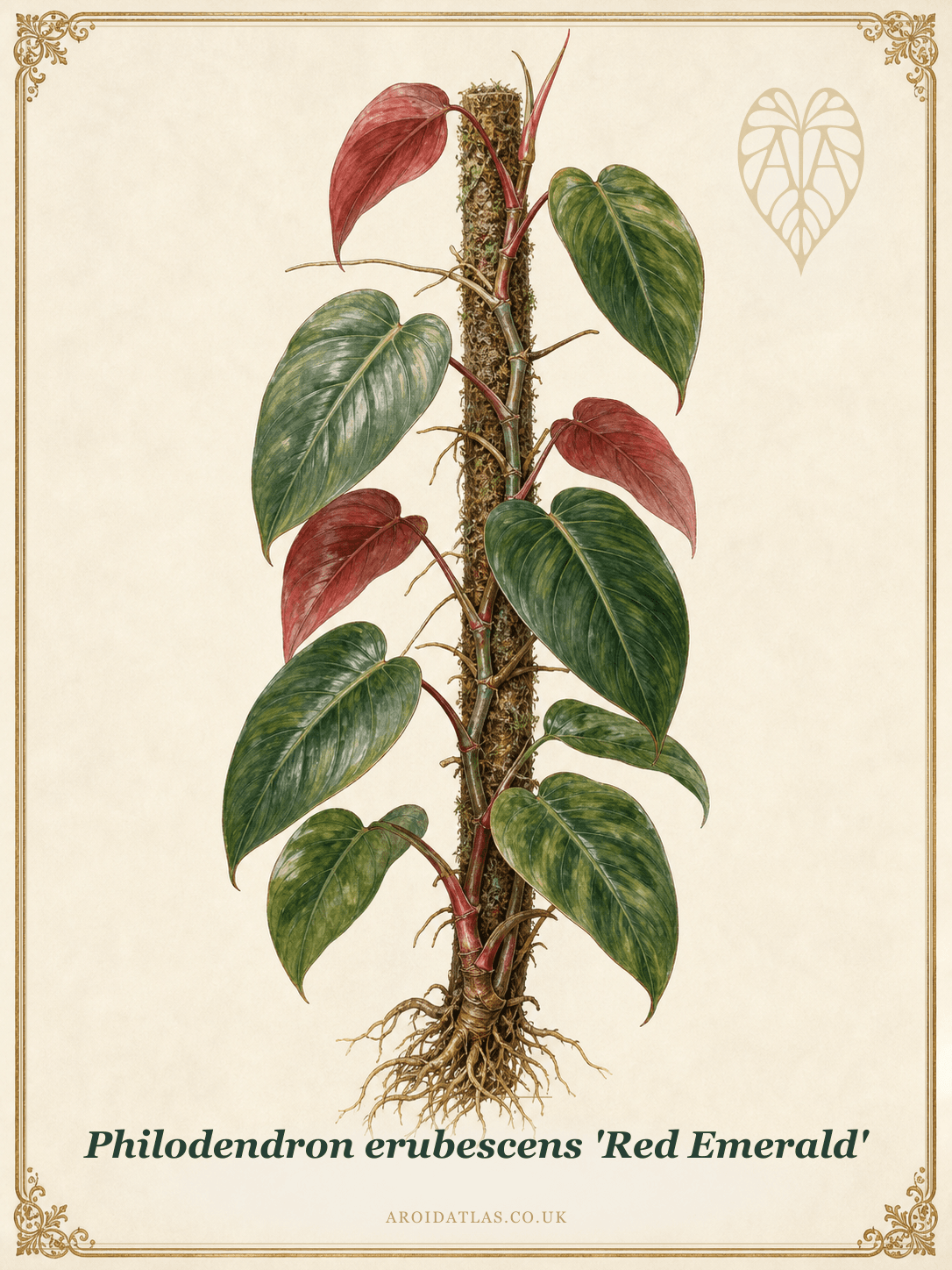
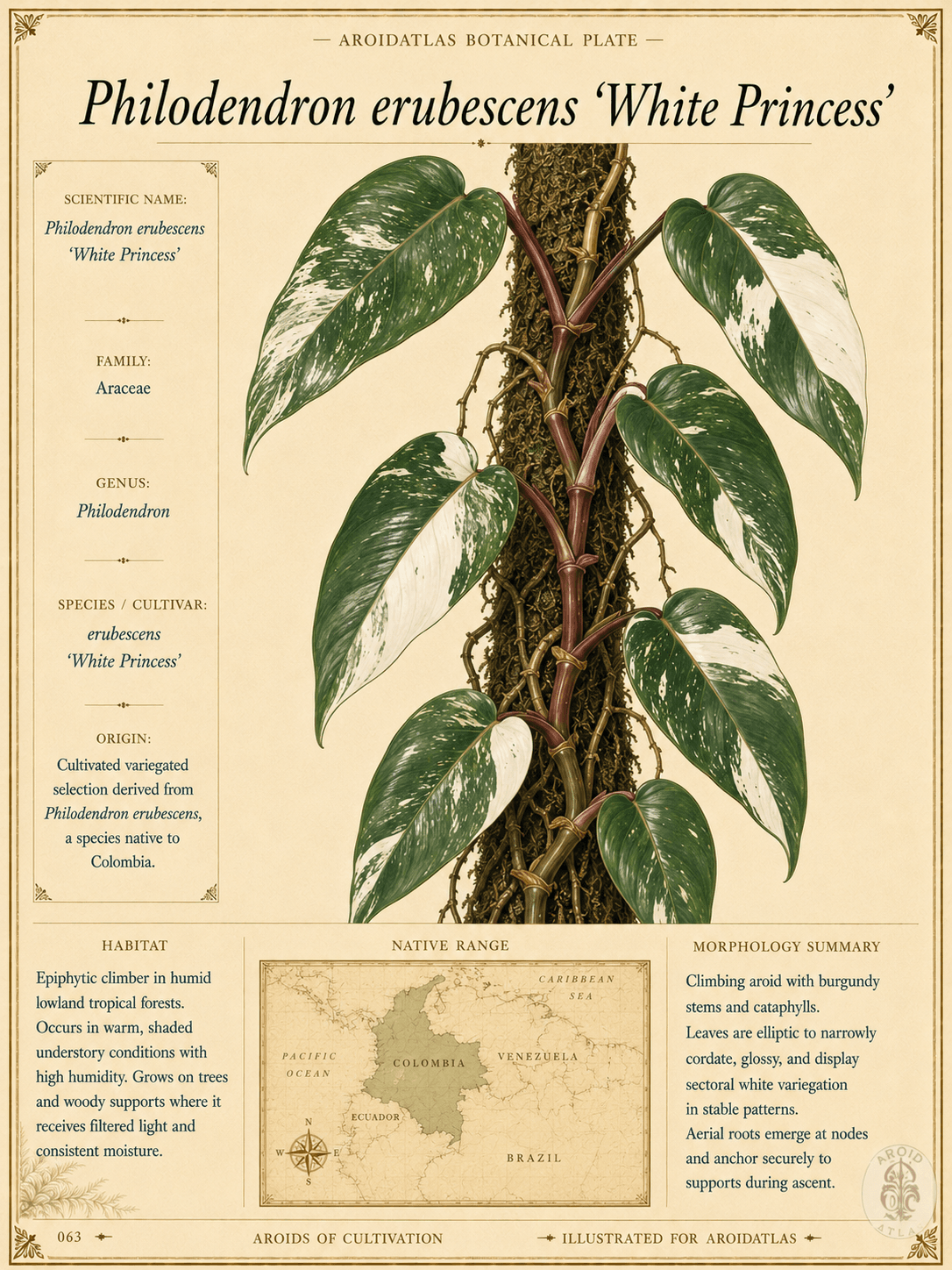
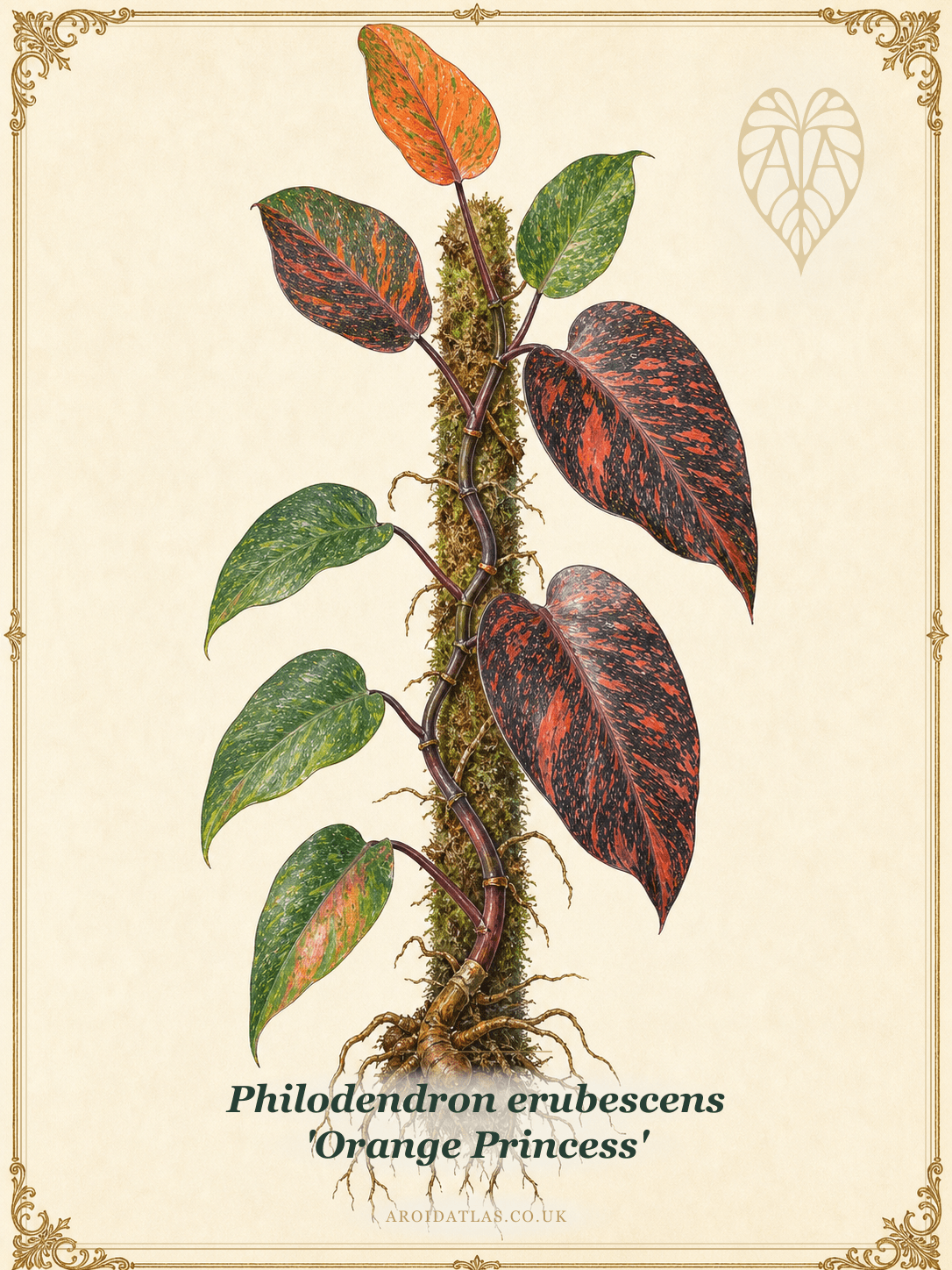
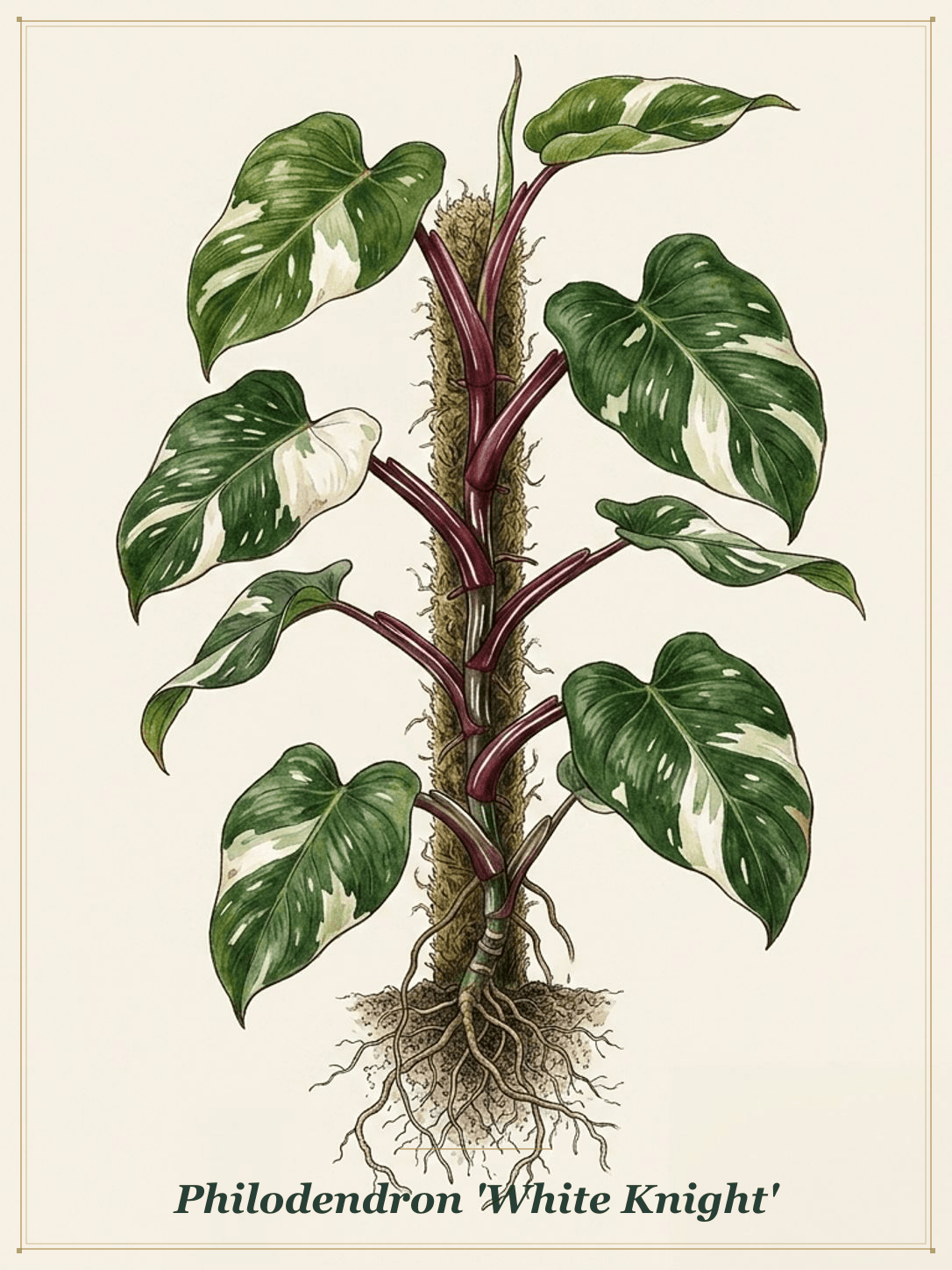

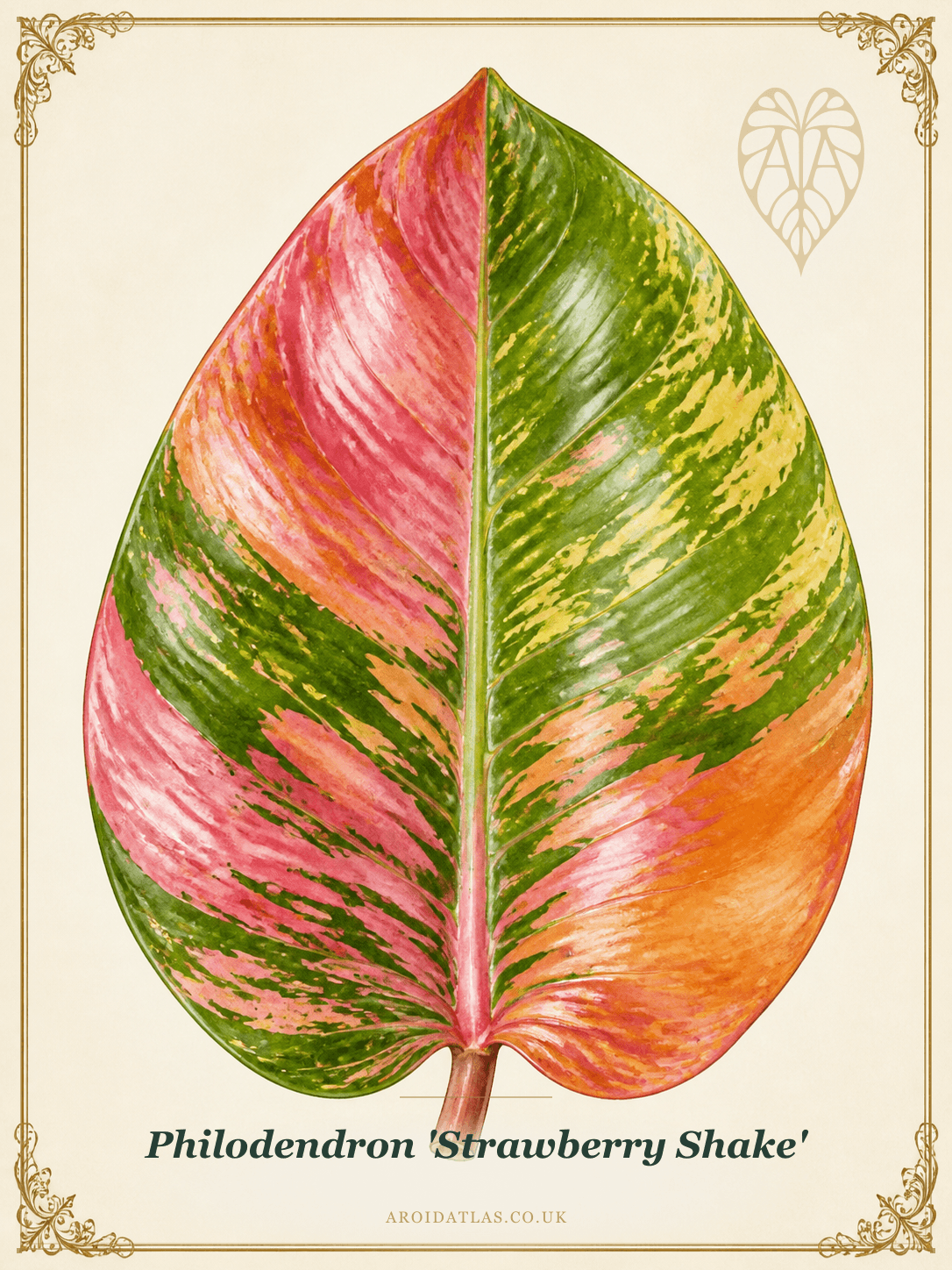
Full Specimen Plate
Philodendron erubescens
Blushing Philodendron
Aroid Atlas Price Guide
Select Plant Size
Pricing Data Key
Based on online retail prices, adjusted for private sales
Other colour-form prices
Philodendron erubescens Morphology
About Philodendron erubescens
Philodendron erubescens, the Blushing Philodendron, is a robust climbing aroid native to Colombia, named for the reddish flush on its new growth, stems, and petioles. In cultivation the plain wild-type species is rarely sold under its own name; it circulates almost entirely under long-established cultivar names like 'Red Emerald' and 'Imperial Red', selections that are effectively the standard trade form of the species rather than distinct variegated types. From this same deep-green, red-backed baseline, later mutations and selections produced the variegated 'Pink Princess' and 'White Princess', chimeric sports whose origins remain undocumented but are widely believed to trace to Florida breeding programmes of the 1960s-70s. The plain species itself is a fast, easy, forgiving climber, considerably more vigorous and tolerant than its prized variegated descendants.
Native Range
Colombia
Market Analysis
Philodendron erubescens Price Guide & Auction Value
Historical eBay auction metrics and live retailer listings updated weekly.
No eBay auction history available yet. Data is collected automatically as sales appear on eBay UK.
Before You Buy
Species-specific things to check when evaluating a listing
- The plain species (often sold as 'Red Emerald') is inexpensive and widely available; be cautious of pricing implying rarity
- For 'Pink Princess' or 'White Princess', check the variegation percentage in photos; heavily white/pink sectored cuttings are harder to establish and more valuable, but also more fragile
- Look for firm stems and healthy nodes; a cutting with a mushy or blackened base is unlikely to root
- All Philodendron are toxic if ingested; keep away from pets and children
Propagation Guide
How to Propagate Philodendron erubescens
6-10 weeks
Cultivar character is preserved through vegetative cuttings
Roots readily from stem or node cuttings in water or moist substrate. The plain species propagates fast and true; variegated sports like Pink Princess and White Princess need a cutting taken at a visibly variegated node to preserve the sectoring.
Care Guide
Philodendron erubescens Care Guide & Growing Conditions
Chunky, well-draining aroid mix: 40% orchid bark, 30% potting compost, 20% perlite, 10% sphagnum moss.
Allow the top few centimetres of substrate to dry between waterings. Reduce slightly in winter.
50-70%. Tolerates average household humidity better than most variegated Philodendron cultivars, making the plain species a forgiving climber.
Balanced liquid fertiliser at half strength every 3-4 weeks during the growing season.
Annually while young and fast-growing; every 2 years once established, or when roots fill the pot.
Common Problems
Leggy growth with small leaves
Insufficient light or no support to climb
Provide a moss pole or trellis and move to brighter indirect light; leaf size increases noticeably once the plant is climbing
Root rot
Overwatering or poorly-draining substrate
Unpot, trim affected roots, and repot into fresh chunky substrate; reduce watering frequency
Bacterial leaf spot
Overhead watering and poor air circulation
Water at the base, avoid wetting foliage, and improve airflow around the plant
The Species Behind the Cultivar Names
It's easy to grow several plants descended from Philodendron erubescens without ever seeing the species sold under its own name. In the trade it circulates almost entirely as 'Red Emerald' or 'Imperial Red', which are really just the standard cultivated form of the wild-type plant rather than distinct variegated selections. The more famous chimeric sports, Pink Princess and White Princess, trace back to this same red-flushed baseline, though their exact breeding history from 1960s-70s Florida programmes was never formally documented. The plain species itself is the most forgiving of the three to grow, considerably faster and more tolerant than either of its prized variegated descendants.