Full Specimen Plate
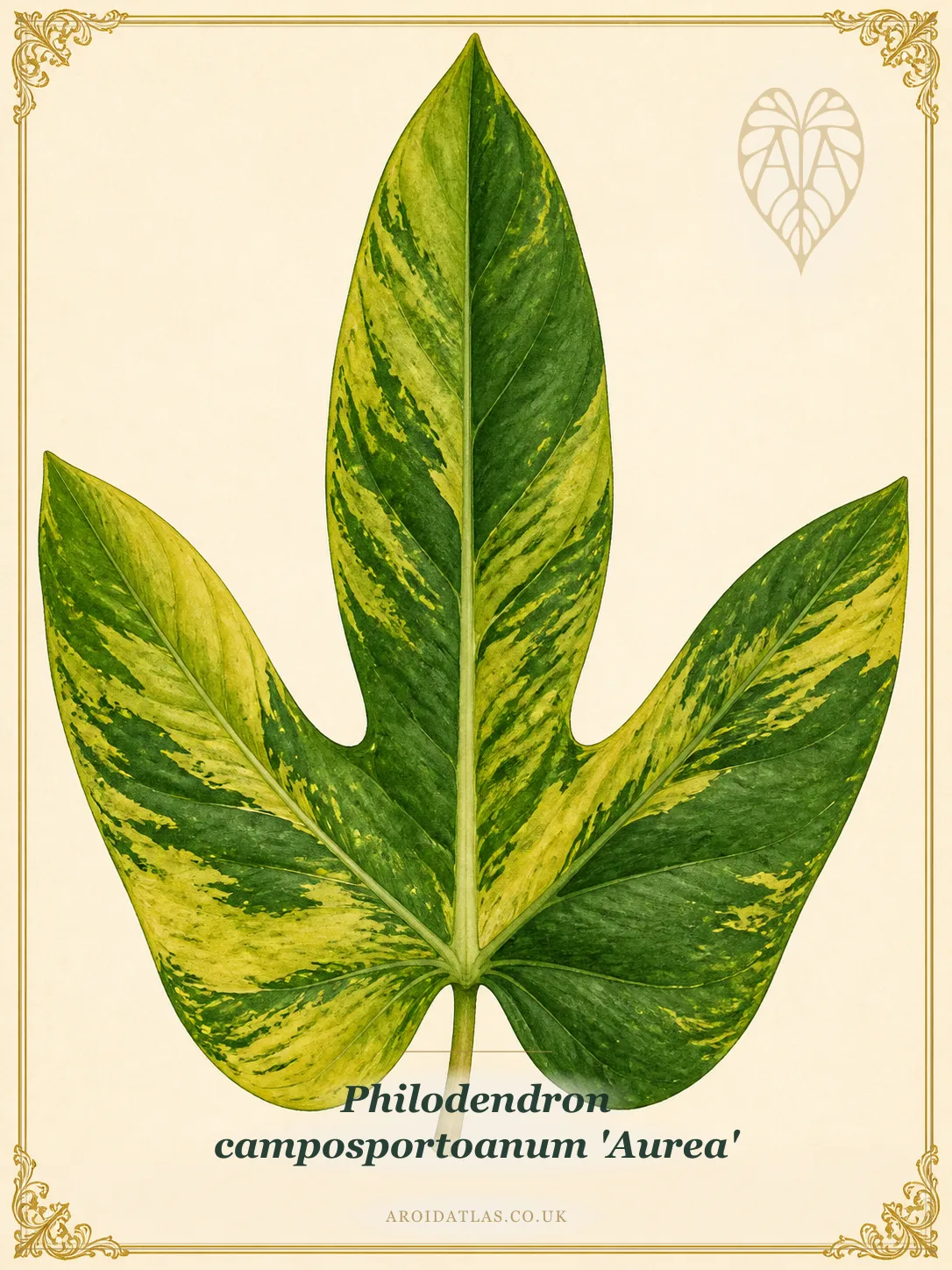
Philodendron camposportoanum 'Aurea'
Golden Camposportoanum Philodendron
- Coir Moss Pole, 120cm (4-Pack)Coco coir totem for climbing aroids to root into as they grow upward.
- Natural Rooting Powder, 3 x 75gRooting hormone powder for stem and leaf cuttings.
- Precision Bonsai Pruning Scissors, 200mmFine-bladed snips for clean node cuts when taking a cutting.
- Digital Hygrometer & ThermometerLCD humidity and temperature gauge for checking a grow spot against a plant's target range.
Amazon links — we may earn commission on qualifying purchases.
7cm Target Price
£30.00
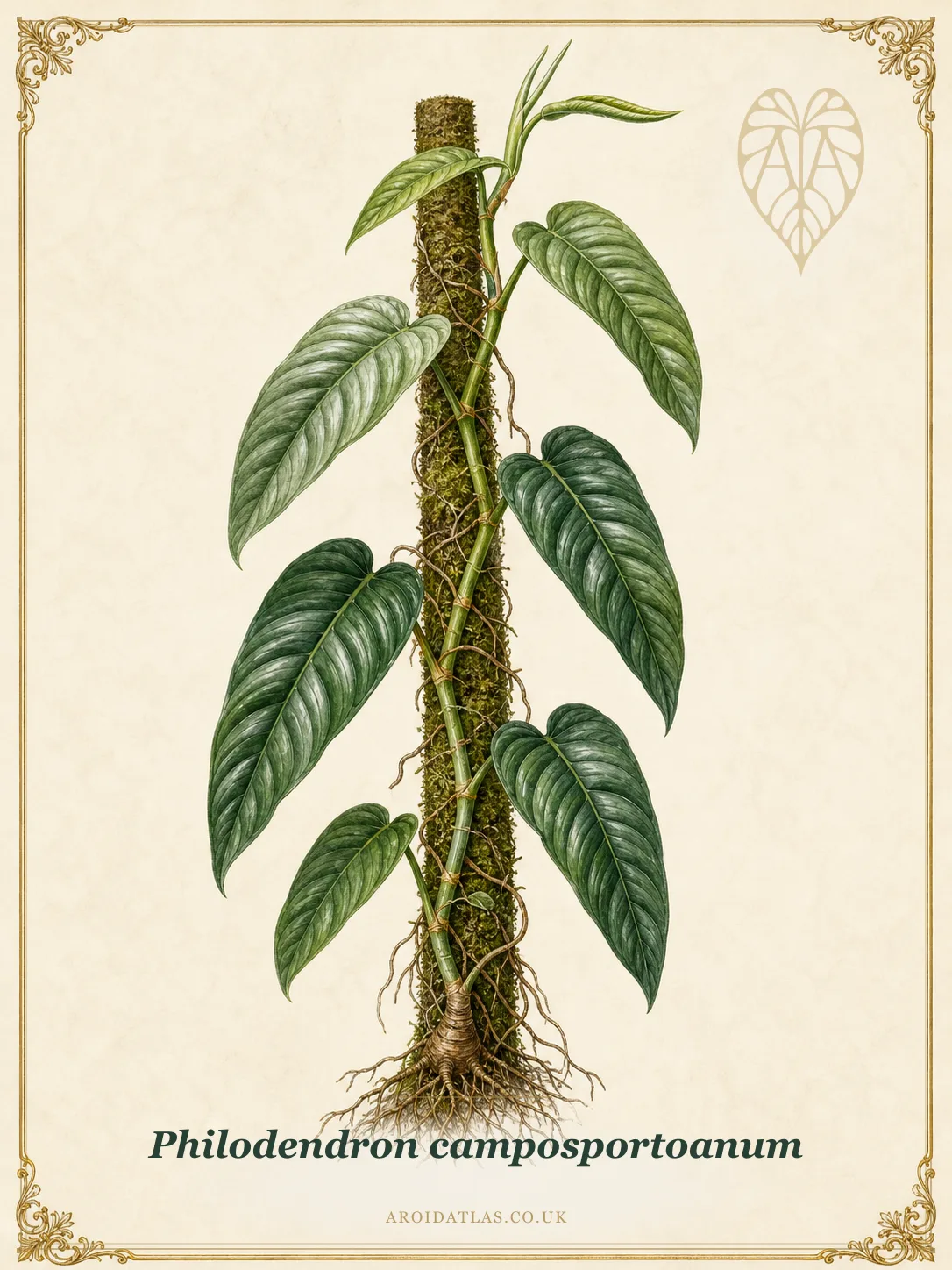
Philodendron camposportoanum 'Aurea' Morphology
About Philodendron camposportoanum 'Aurea'
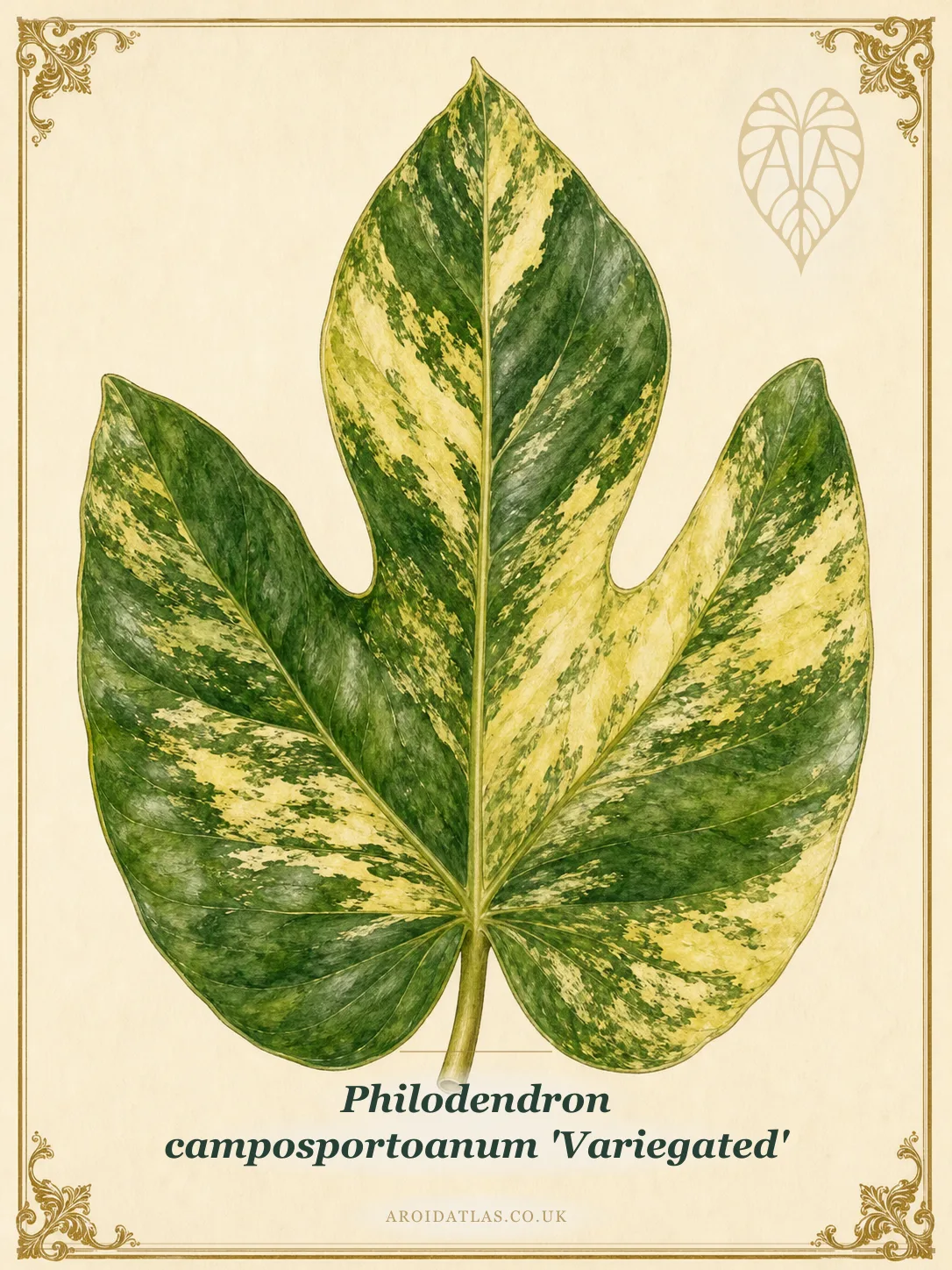
Philodendron camposportoanum 'Aurea' takes the species' distinctive heteroblastic leaf (glossy, deeply three-lobed, with a pale central stripe) and marbles it with irregular chartreuse-gold sectoring over the usual deep green rather than replacing the colour outright. It sits alongside the more established 'Variegated' cream-marbled form already catalogued, offering a gold-toned sectoral break rather than a white one. Growth follows the same compact climbing habit as the species, and colour intensity is strongly light-dependent, with plants grown in lower light settling into a duller, greener balance rather than a vivid gold.
Native Range
Brazil
Market Hub
Philodendron camposportoanum 'Aurea' Sold Prices & Live Market
What the Target Price above is based on: eBay sold prices by plant size, live listings, and retailer stock.
No eBay sales recorded yet. Sold listings are collected as they appear on eBay.
Before You Buy
Shared checklist for Philodendron camposportoanum and its cultivated forms
- Confirm the characteristic three-lobed juvenile leaf shape and pale central stripe against reference photos
- For the variegated form, check the variegation pattern matches photos
- All Philodendron are toxic if ingested; keep away from pets and children
Propagation Guide
How to Propagate Philodendron camposportoanum 'Aurea'
Shared across every form of Philodendron camposportoanum — see this form's own Morphology for variegation-specific propagation notes.
Propagation Guide
How to Propagate Philodendron camposportoanum 'Aurea'
Shared across every form of Philodendron camposportoanum — see this form's own Morphology for variegation-specific propagation notes.
6-10 weeks
Cultivar character is preserved through vegetative cuttings
Roots from stem or node cuttings in a warm, humid environment. Slower to establish than common Philodendron species.
Care Guide
Philodendron camposportoanum 'Aurea' Care Guide & Growing Conditions
General care shared across all forms of Philodendron camposportoanum — cultivated forms may need brighter light or higher humidity than the plain species; check this form's Quick Facts above.
Care Guide
Philodendron camposportoanum 'Aurea' Care Guide & Growing Conditions
General care shared across all forms of Philodendron camposportoanum — cultivated forms may need brighter light or higher humidity than the plain species; check this form's Quick Facts above.
Chunky, well-draining aroid mix: 40% orchid bark, 30% potting compost, 20% perlite, 10% sphagnum moss.
Allow the top few centimetres of substrate to dry between waterings.
65-80% for best leaf size and colour.
Balanced liquid fertiliser at half strength every 3-4 weeks during the growing season.
Every 12-18 months, or when roots fill the pot.
Common Problems
Small, pale leaves
Insufficient light
Move to brighter indirect light
Root rot
Overwatering or poor drainage
Repot into fresh chunky substrate and reduce watering
Field Reference
In the Wild
Field Reference