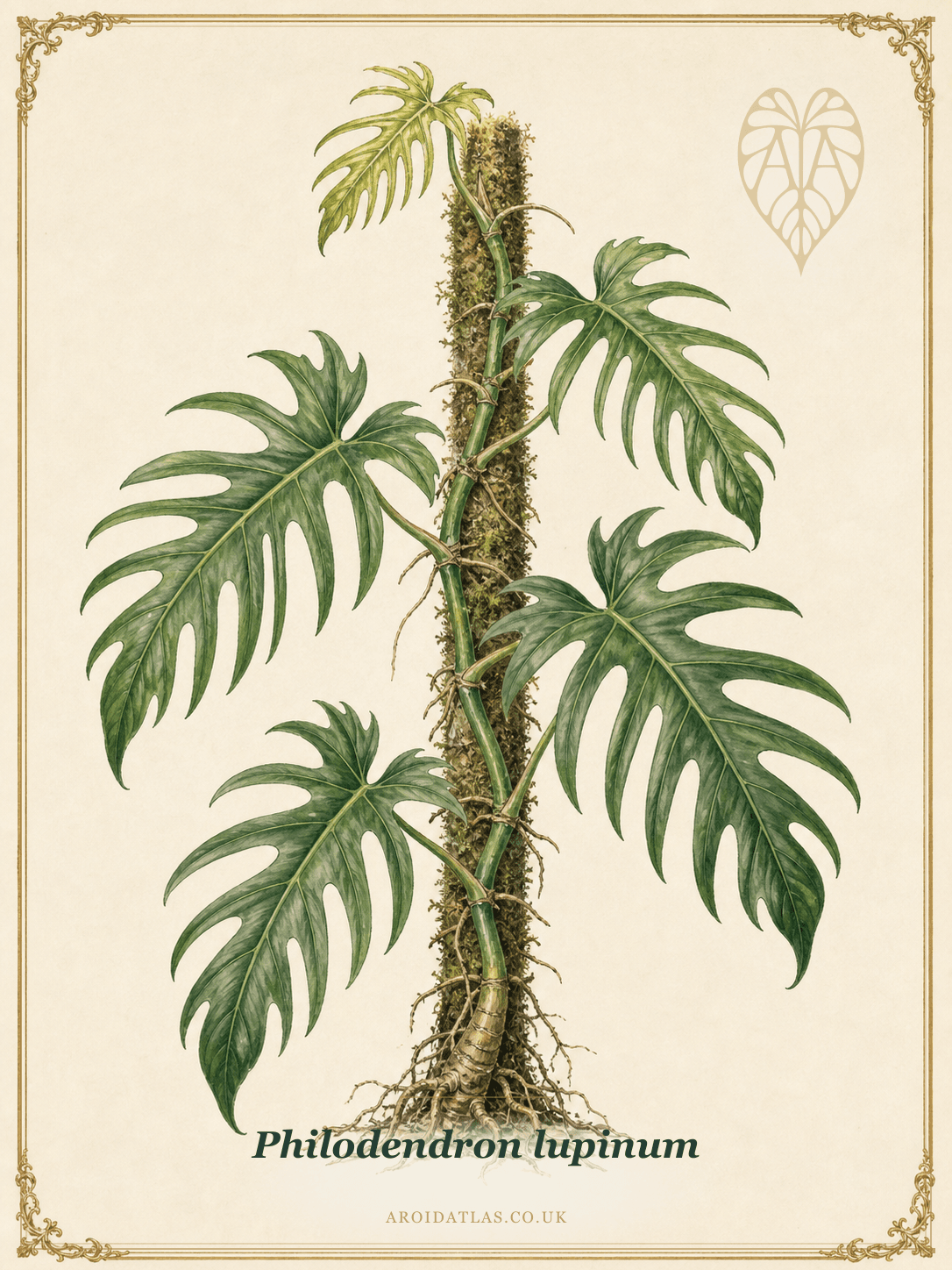
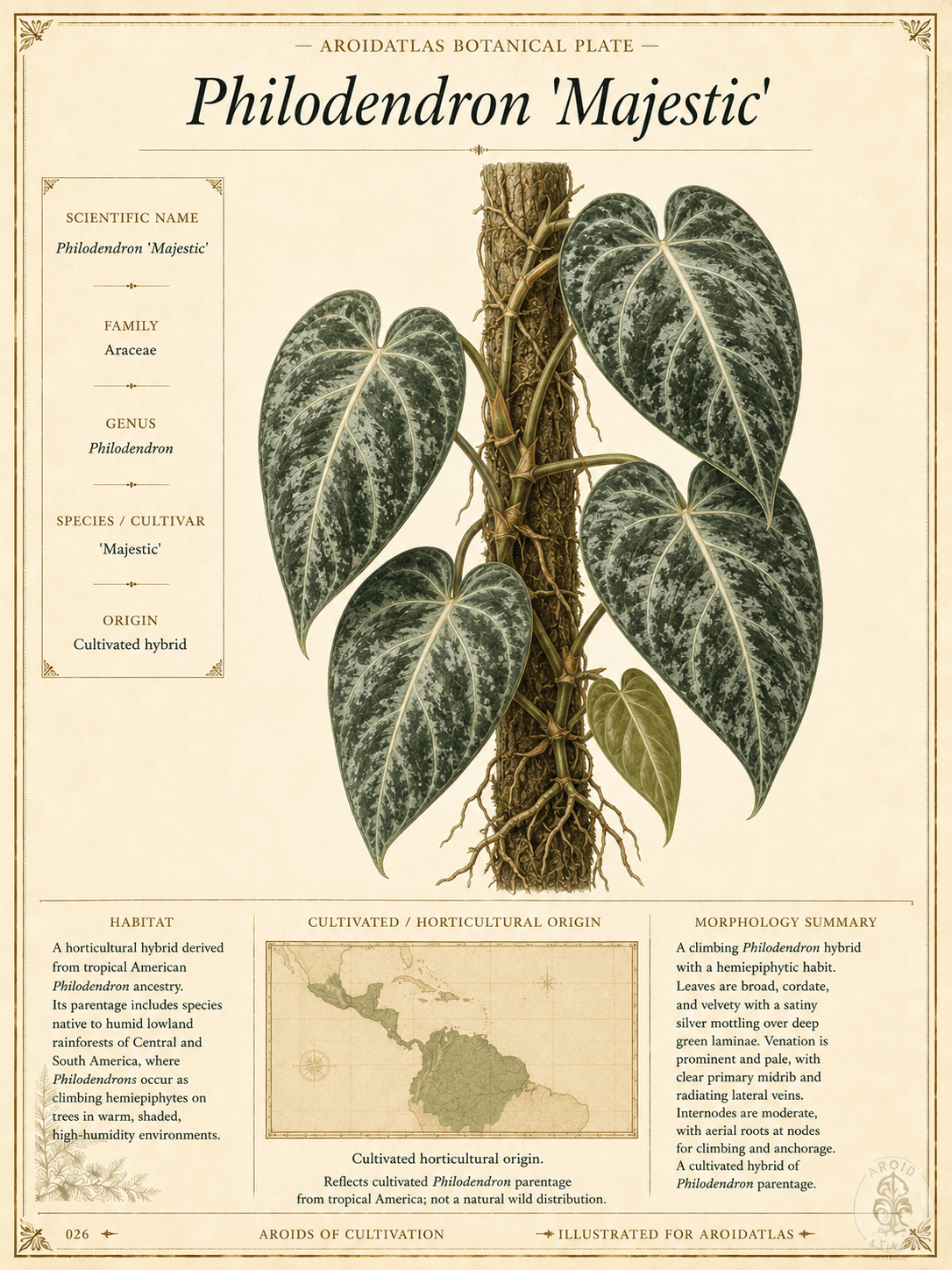
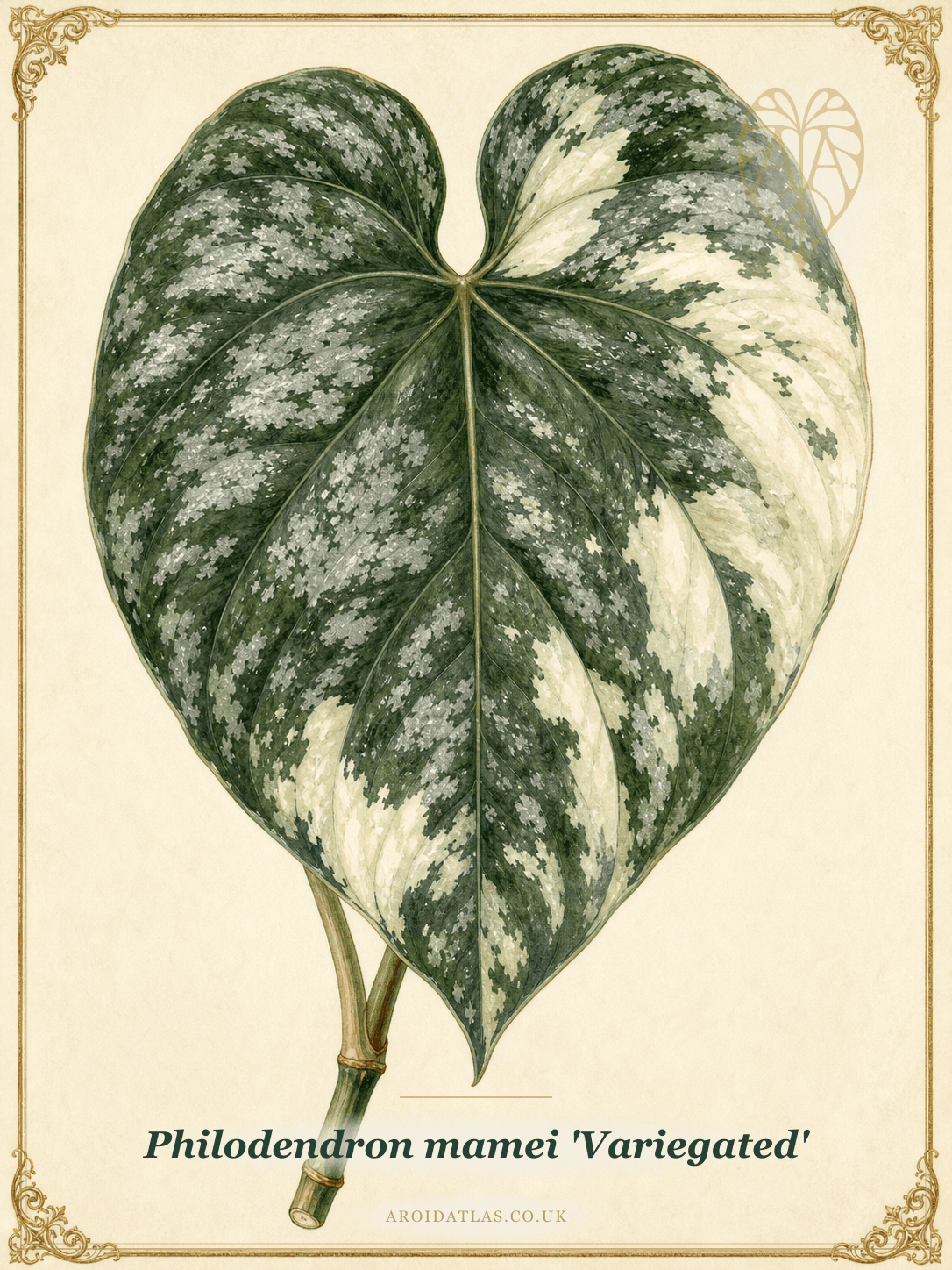
Scroll to explore forms of Philodendron billietiae
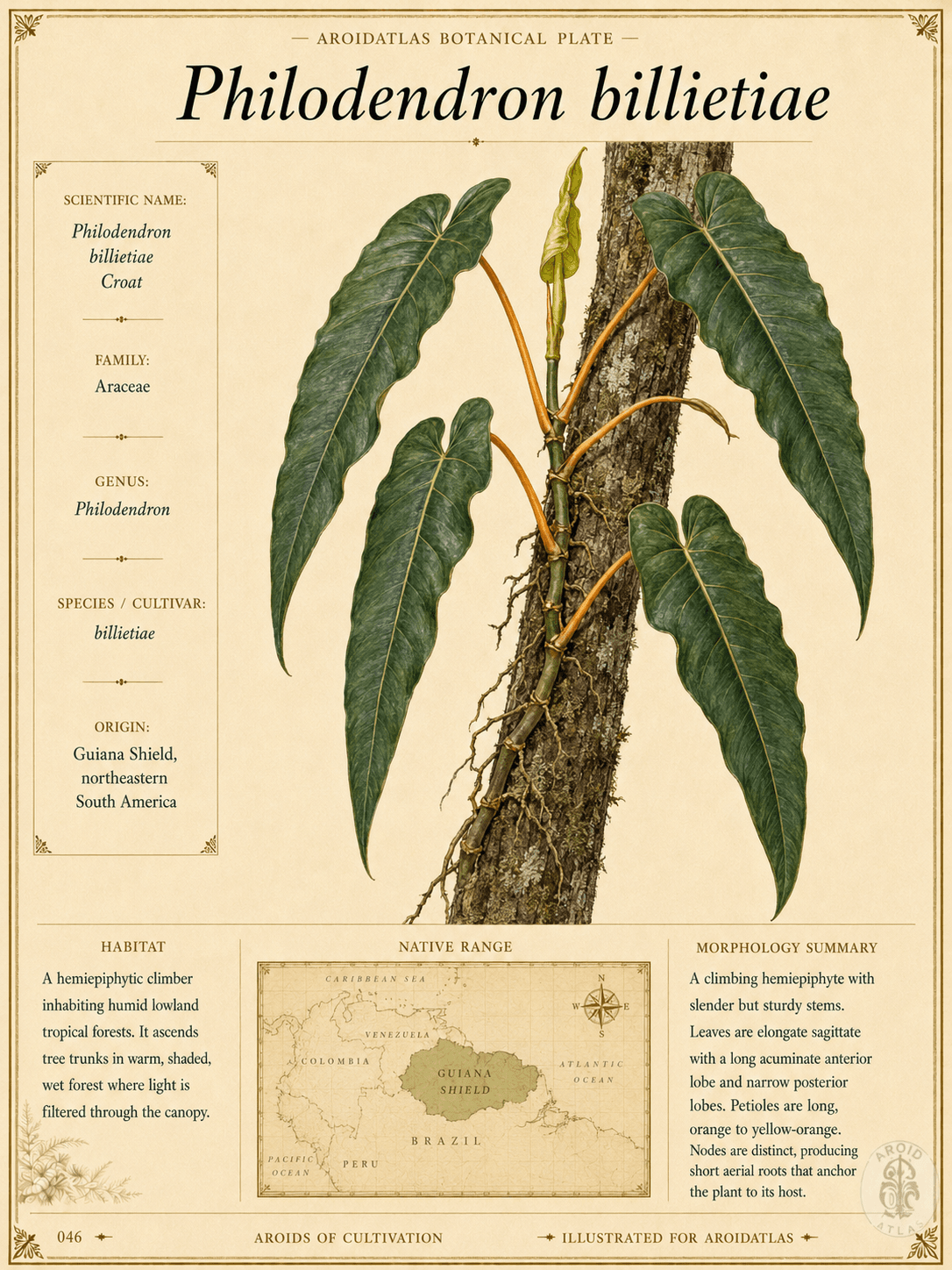
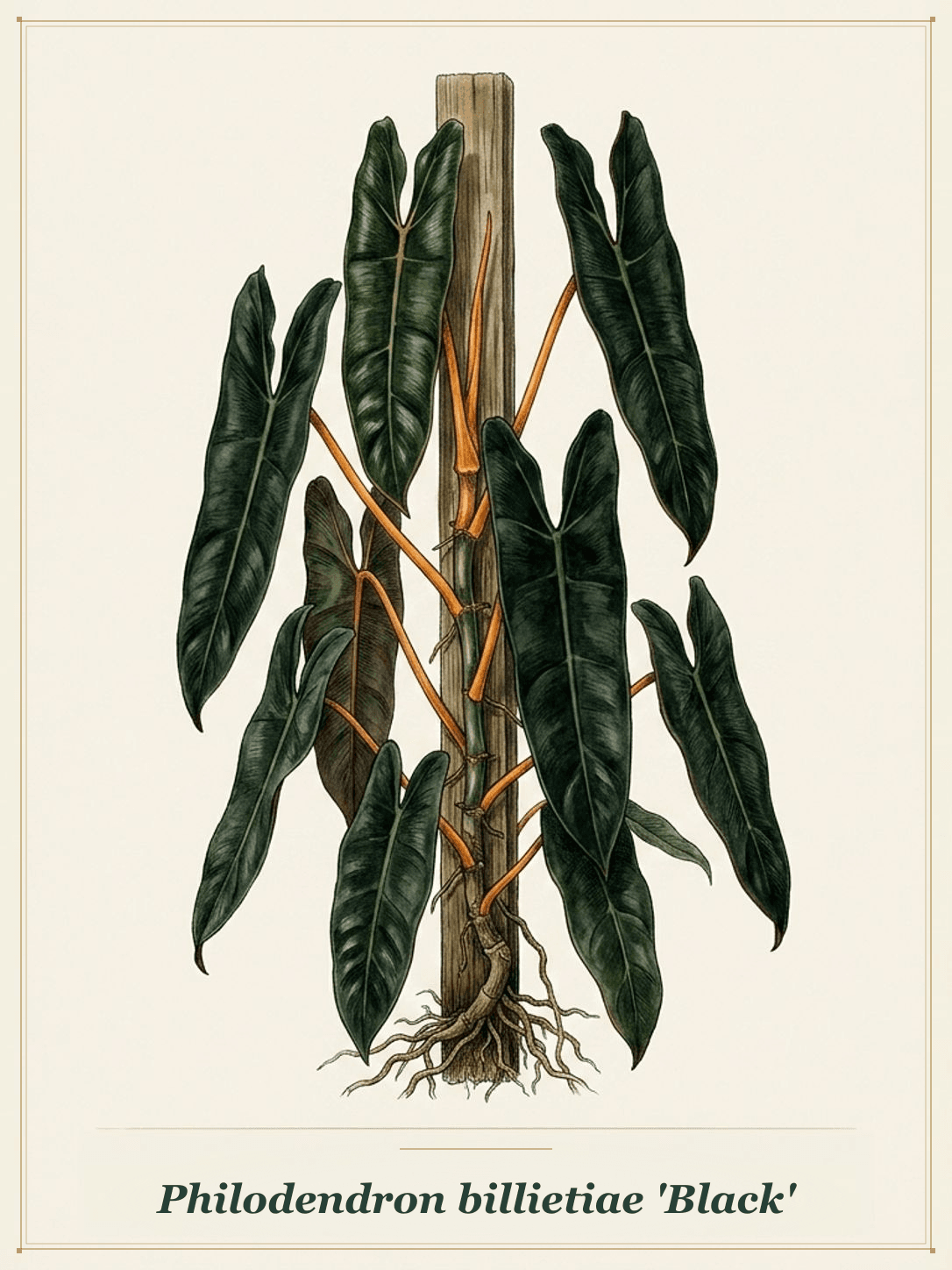
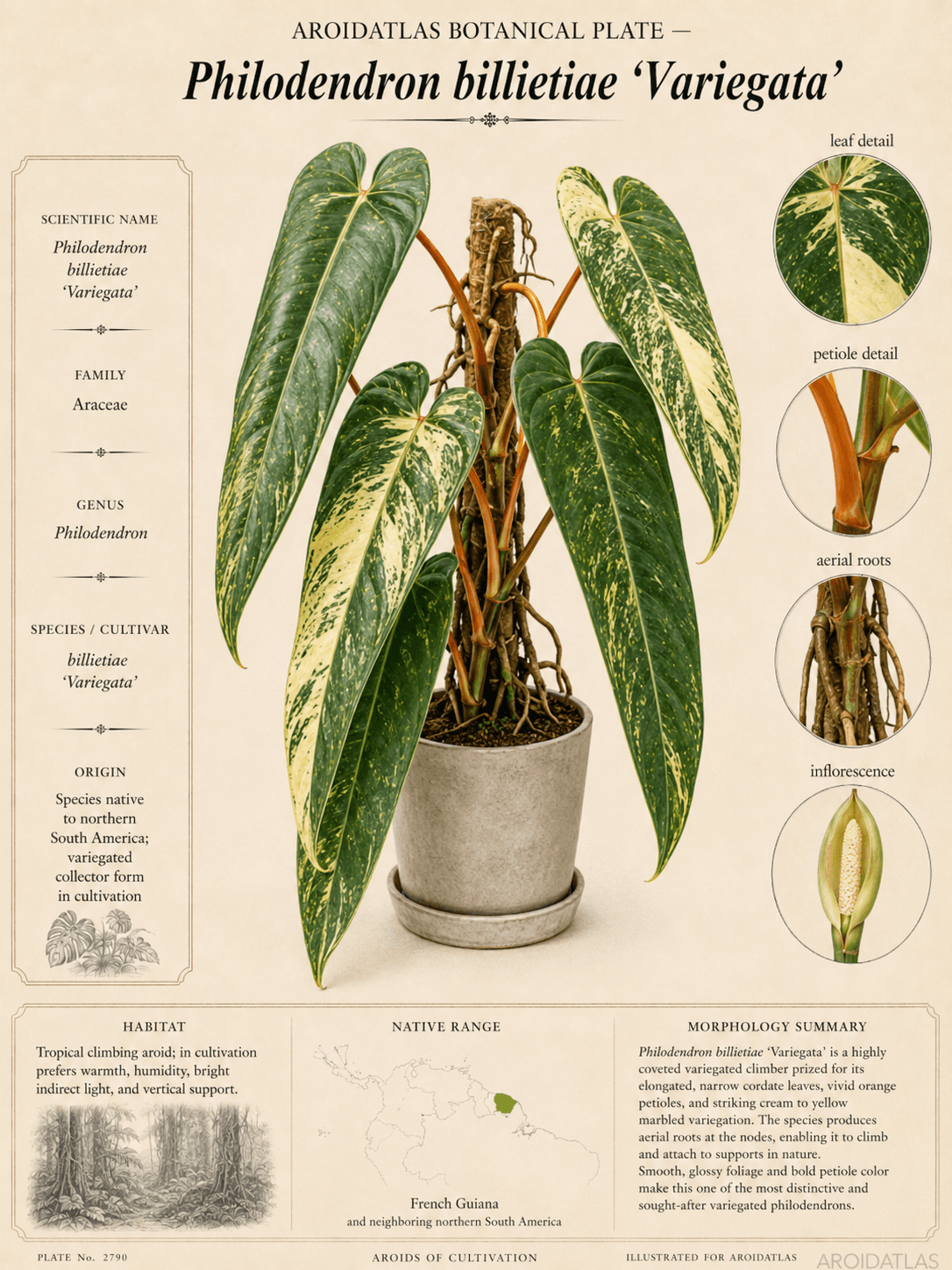
Full Specimen Plate
Philodendron billietiae 'Black'
Black Billietiae
Aroid Atlas Price Guide
Select Plant Size
Pricing Data Key
Other colour-form prices
Philodendron billietiae 'Black' Morphology
About Philodendron billietiae 'Black'
Philodendron billietiae 'Black' is a rare cultivar mutation of the species Philodendron billietiae. It has the same long, narrow, strap-shaped leaves with deeply lobed sinus ears as the species, but differs in coloration: the leaf blades are a dark, velvety, near-black green, while the petioles retain the species' bright orange-gold hue. The contrast between the near-black blades and orange petioles is its main identifying feature.
Native Range
Colombia
Market Analysis
Philodendron billietiae 'Black' Price Guide & Auction Value
Historical eBay auction metrics and live retailer listings updated weekly.
No eBay auction history available yet. Data is collected automatically as sales appear on eBay UK.
Before You Buy
Shared checklist for Philodendron billietiae and its cultivated forms
- Check that roots are firm and white to tan; avoid plants with black, slimy, or absent roots
- Inspect leaf undersides for thrips (tiny dark specks or silvery streaking) and mealybugs (white cottony deposits at leaf axils)
- Verify the plant has at least 2–3 healthy leaves and shows signs of active growth
- For listings showing only one photo, request images of the roots, underside of leaves, and any new growth before purchasing
Propagation Guide
How to Propagate Philodendron billietiae 'Black'
Shared across every form of Philodendron billietiae — see this form's own Morphology for variegation-specific propagation notes.
Single-node cuttings root readily in moist sphagnum or water. Maintain 70%+ humidity and bottom warmth for best results.
Care Guide
Philodendron billietiae 'Black' Care Guide & Growing Conditions
General care shared across all forms of Philodendron billietiae — cultivated forms may need brighter light or higher humidity than the plain species; check this form's Quick Facts above.
High-porosity mix: 50% perlite, 30% orchid bark, 20% coco coir. Good aeration is essential; philodendrons are prone to root rot in dense substrates.
Water thoroughly when the top 3–4 cm of substrate is dry. Ensure free drainage and never allow to sit in water. Reduce frequency in winter.
60–80% preferred. UK tap water can cause brown tips; use rainwater or filtered water where possible.
Balanced liquid fertiliser (e.g. 20-20-20) at quarter strength every two weeks in spring and summer. Monthly at most in winter.
Every 12–18 months or when roots circle the base of the pot. Move up one pot size only. Oversized pots increase rot risk.
Common Problems
Brown leaf tips
Low humidity or fluoride/chlorine in tap water
Increase ambient humidity and switch to rainwater or filtered water
Yellow leaves
Overwatering or compacted substrate
Allow substrate to dry further between waterings; check root health and repot if necessary
Leggy growth with small leaves
Insufficient light
Move to a brighter position with more indirect light