Leaf Detail Portrait
Epipremnum pinnatum 'Aurea'
Golden Dragon Tail Plant
- Coir Moss Pole, 120cm (4-Pack)Coco coir totem for climbing aroids to root into as they grow upward.
- Humidity Dome, Heavy-Duty Germination KitVented propagation dome for holding humidity around fresh cuttings.
- Digital Hygrometer & ThermometerLCD humidity and temperature gauge for checking a grow spot against a plant's target range.
Amazon links — we may earn commission on qualifying purchases.
7cm Target Price
£17.00
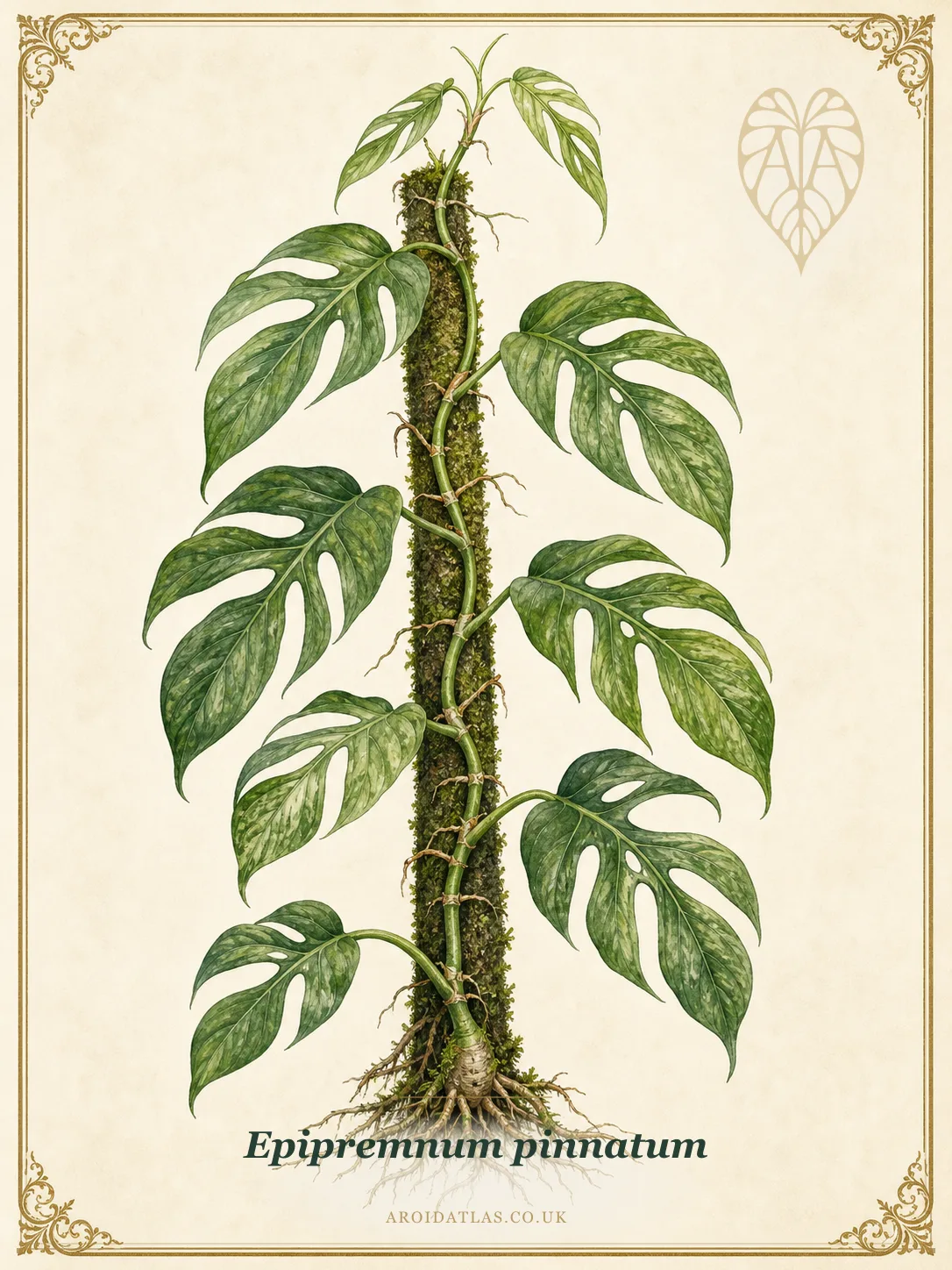
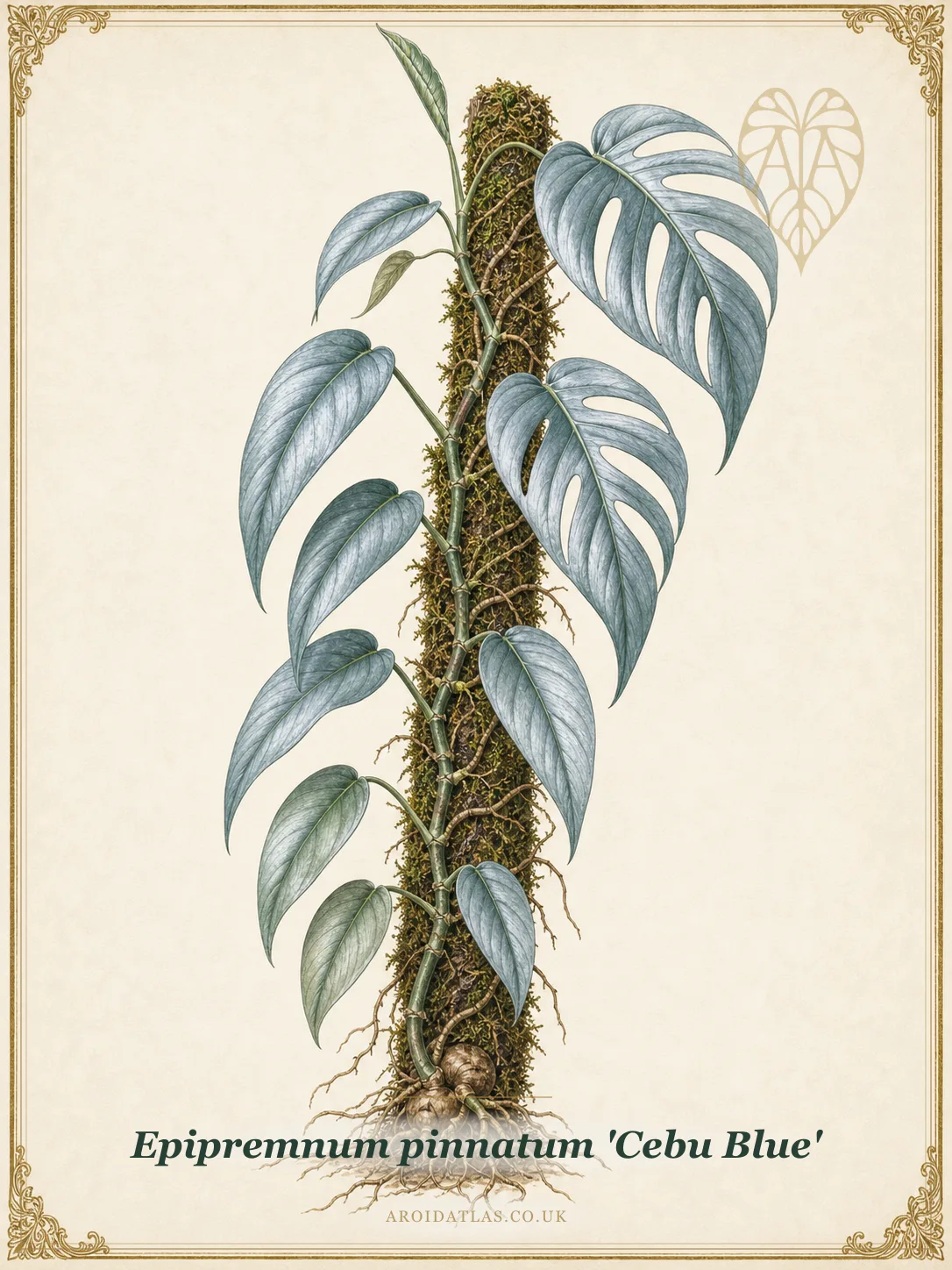
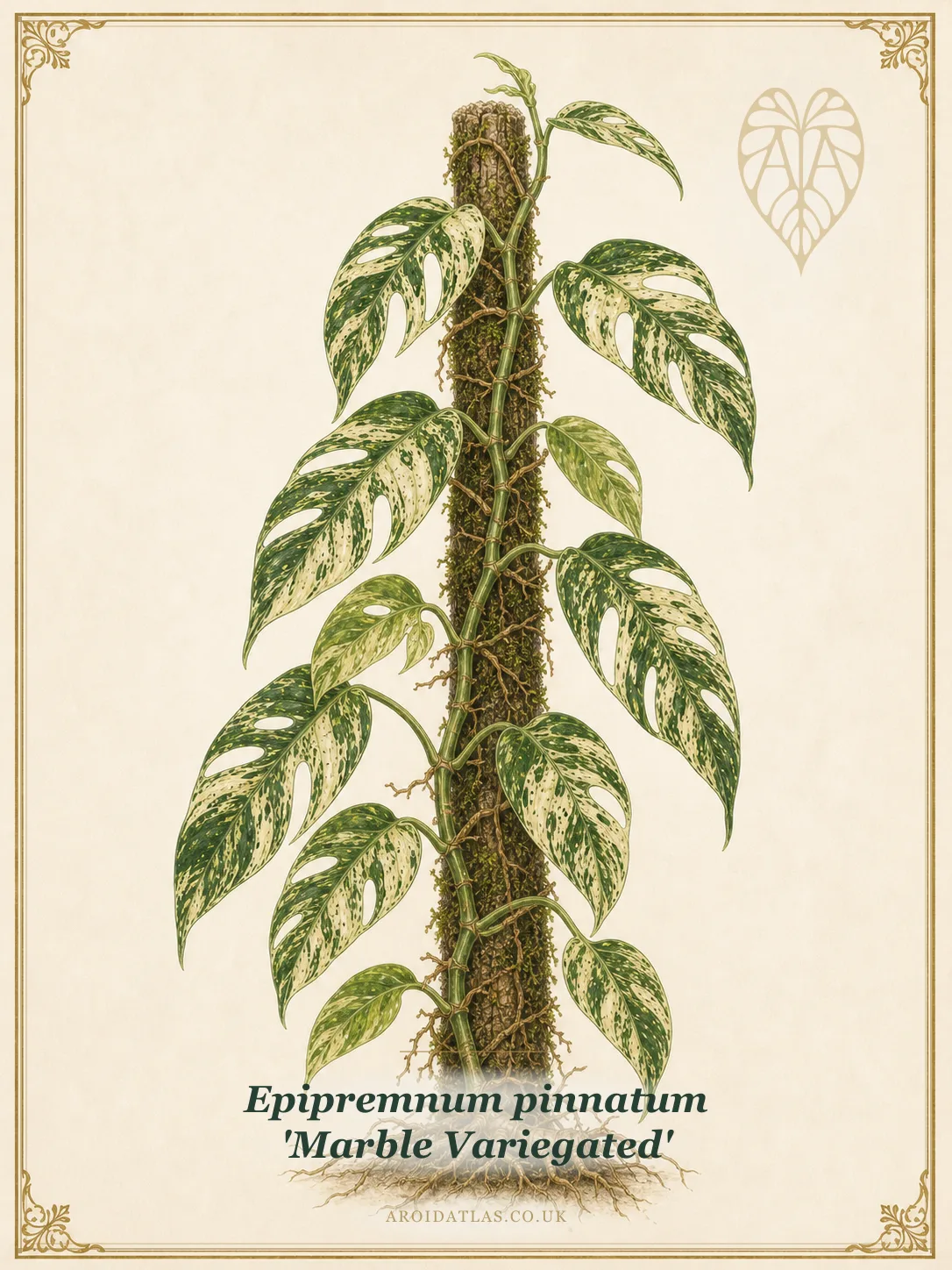
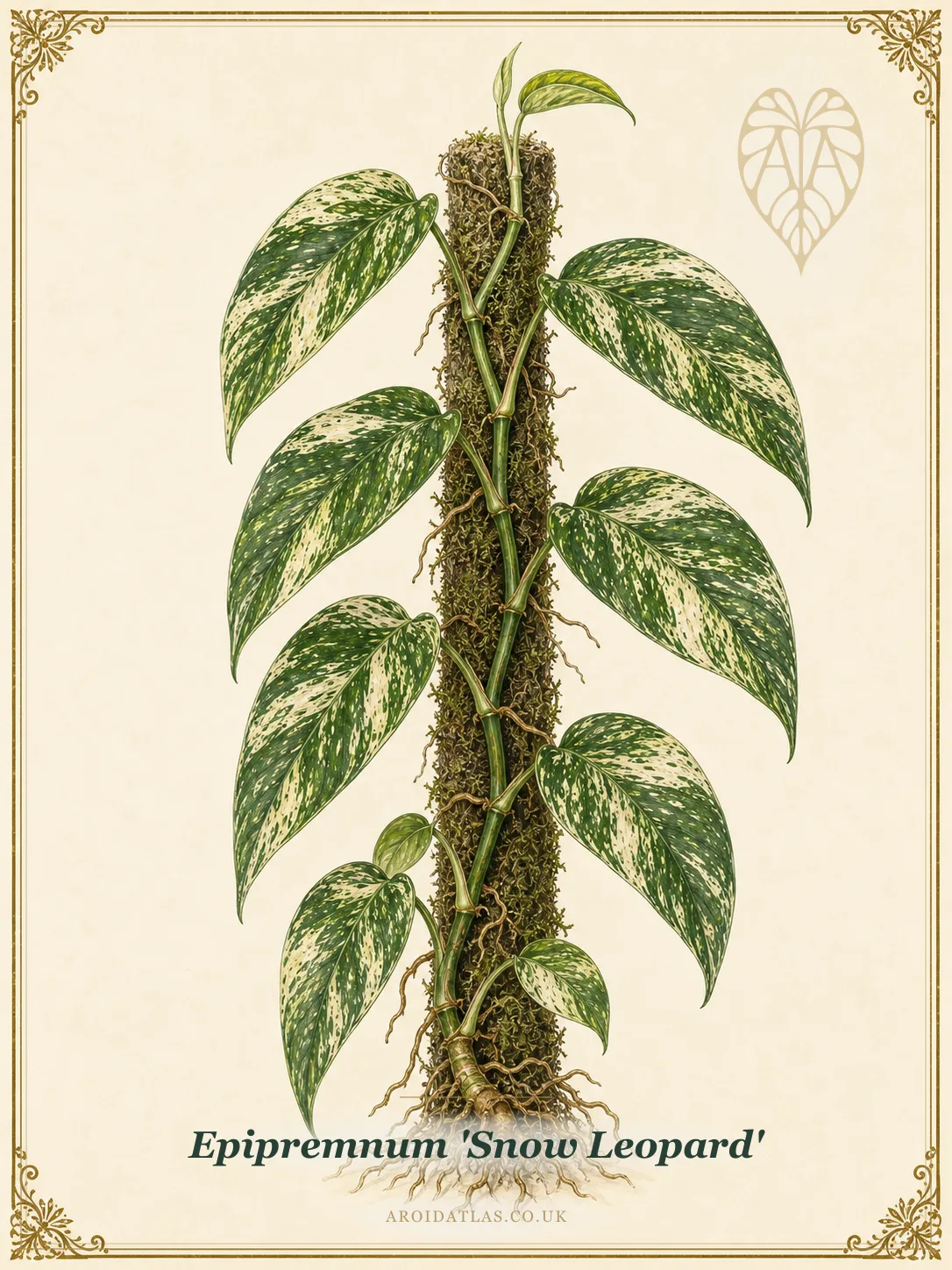
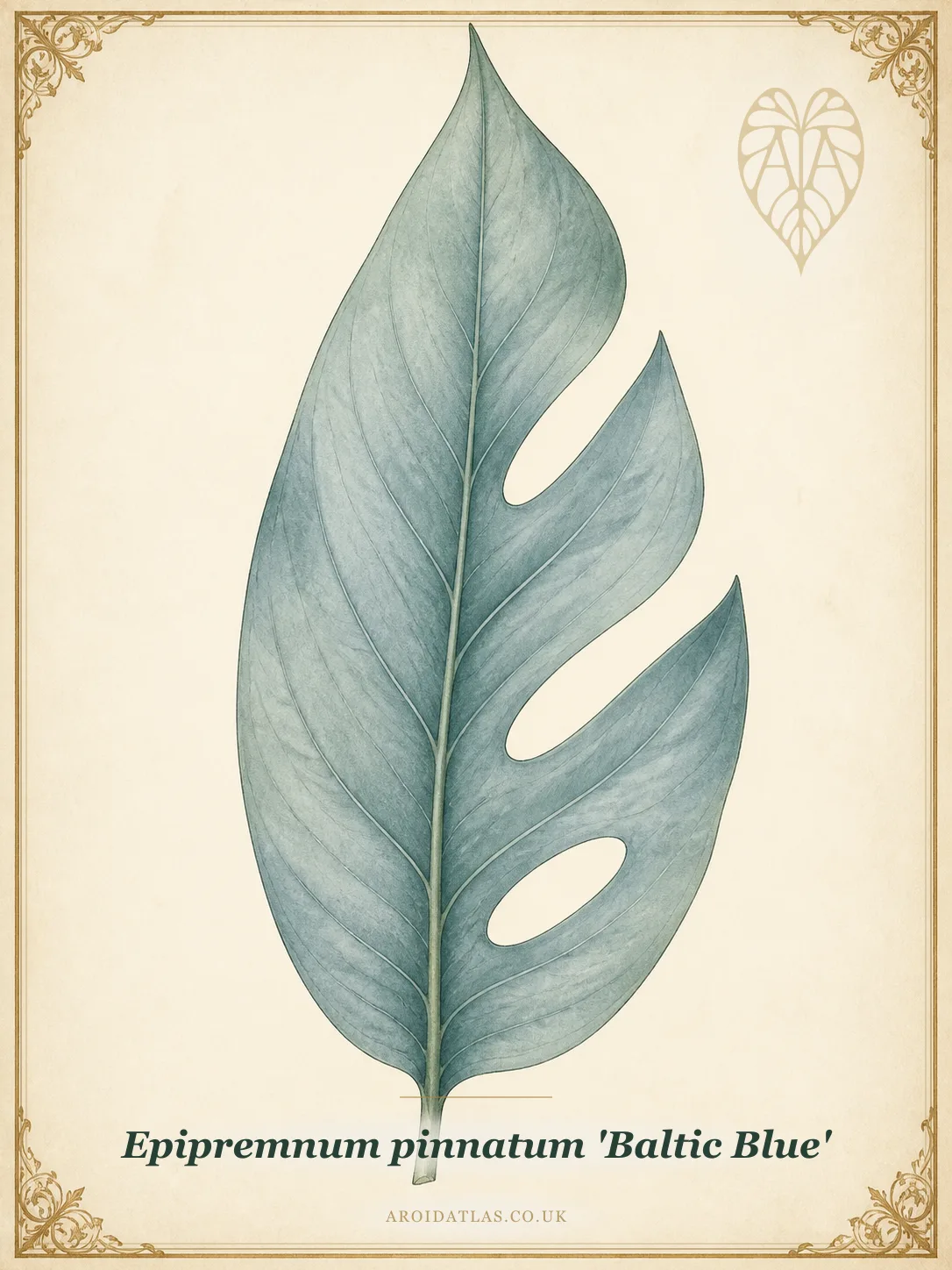
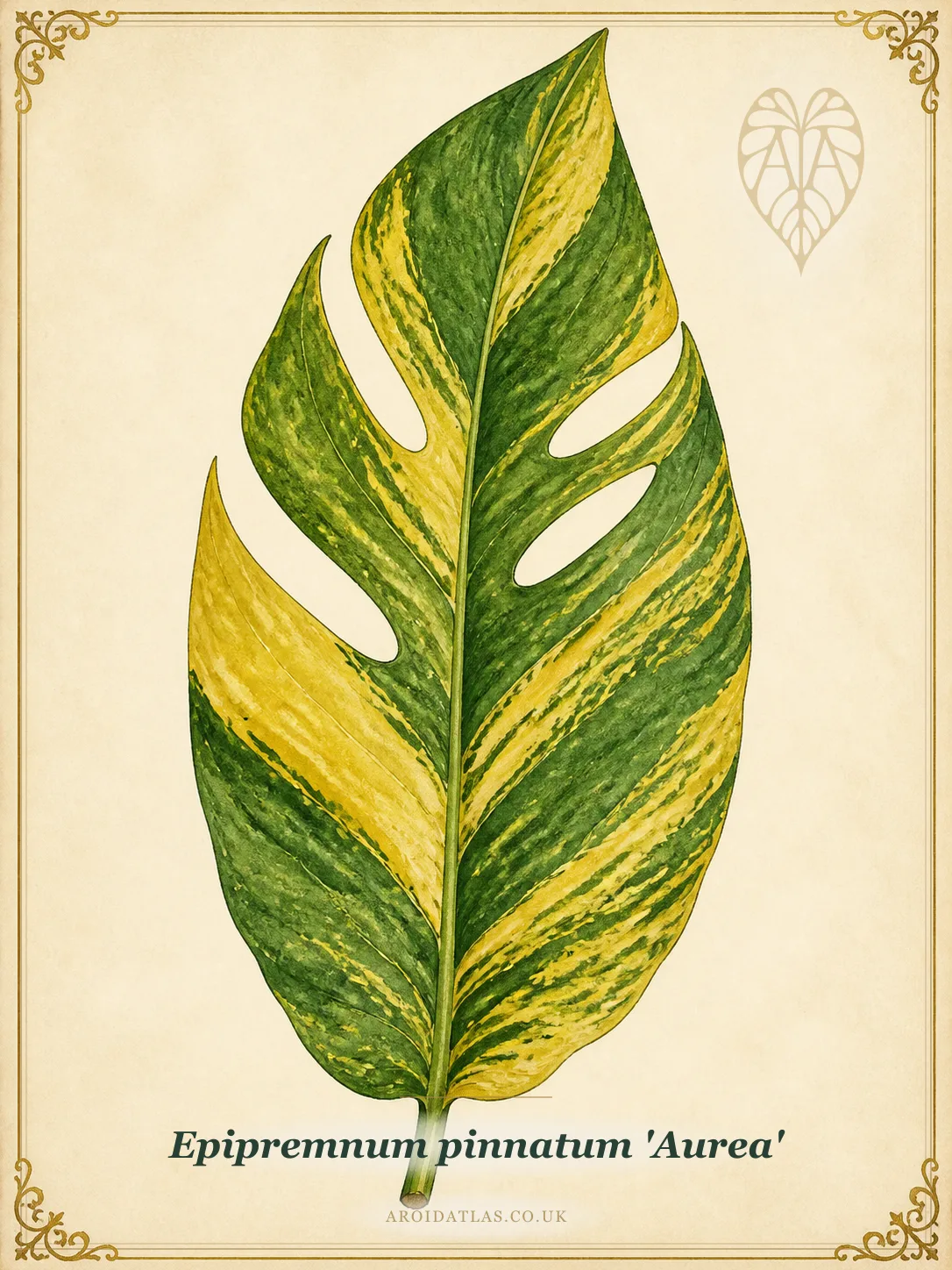
Epipremnum pinnatum 'Aurea' Morphology
About Epipremnum pinnatum 'Aurea'
Epipremnum pinnatum 'Aurea' is a golden colour-break of the plain green Dragon Tail Plant, carrying the same lance-shaped juvenile leaf and eventual pinnate fenestration as the species but marbled with irregular yellow-gold sectoring over a green base, the same chimeric mix-rather-than-solid pattern seen on Albo colour breaks elsewhere in the genus. It sits in the shadow of the much more widely available silvery-blue 'Cebu Blue' form and remains a fairly uncommon sight in UK trade compared to the golden forms of Epipremnum aureum. Given the same climbing treatment as the species (a moss pole and consistent moisture), it develops the same pinnate splitting at maturity, with the yellow marbling carrying through into mature growth.
Market Hub
Epipremnum pinnatum 'Aurea' Sold Prices & Live Market
What the Target Price above is based on: eBay sold prices by plant size, live listings, and retailer stock.
No eBay sales recorded yet. Sold listings are collected as they appear on eBay.
Before You Buy
Shared checklist for Epipremnum pinnatum and its cultivated forms
- The plain green species and 'Cebu Blue' are both inexpensive and widely available; be cautious of collector-level pricing
- Confirm whether the plant is trailing (juvenile, unsplit leaves) or climbing (mature, fenestrated leaves) before buying, as the two look markedly different at the same price point
- For 'Marble Variegated', check the variegation pattern in photos matches the named form
- Check stem nodes are firm and undamaged; this is where roots and new growth emerge from cuttings
Propagation Guide
How to Propagate Epipremnum pinnatum 'Aurea'
Shared across every form of Epipremnum pinnatum — see this form's own Morphology for variegation-specific propagation notes.
Propagation Guide
How to Propagate Epipremnum pinnatum 'Aurea'
Shared across every form of Epipremnum pinnatum — see this form's own Morphology for variegation-specific propagation notes.
3-6 weeks
Cultivar character is preserved through vegetative cuttings
Roots readily from stem or node cuttings in water or moist substrate. Climbing on a moss pole (rather than trailing) encourages the larger, more fenestrated mature leaf form.
Care Guide
Epipremnum pinnatum 'Aurea' Care Guide & Growing Conditions
General care shared across all forms of Epipremnum pinnatum — cultivated forms may need brighter light or higher humidity than the plain species; check this form's Quick Facts above.
Care Guide
Epipremnum pinnatum 'Aurea' Care Guide & Growing Conditions
General care shared across all forms of Epipremnum pinnatum — cultivated forms may need brighter light or higher humidity than the plain species; check this form's Quick Facts above.
Standard well-draining houseplant mix: 60% potting compost, 25% perlite, 15% orchid bark.
Allow the top few centimetres of substrate to dry between waterings.
Tolerates average household humidity; higher humidity (60%+) encourages larger, more fenestrated mature leaves.
Balanced liquid fertiliser at half strength every 4 weeks during the growing season.
Every 12-18 months, or when root-bound.
Common Problems
Stays juvenile / never fenestrates
No support to climb; this species needs to be trained vertically to trigger mature, split foliage
Provide a moss pole or similar support and train the growing tip against it
Reversion to green on variegated forms
Insufficient light
Increase light levels and prune reverted all-green growth to favour variegated tissue
Root rot
Overwatering or poor drainage
Repot into fresh, well-draining substrate and reduce watering frequency
Field Reference
In the Wild
Field Reference


