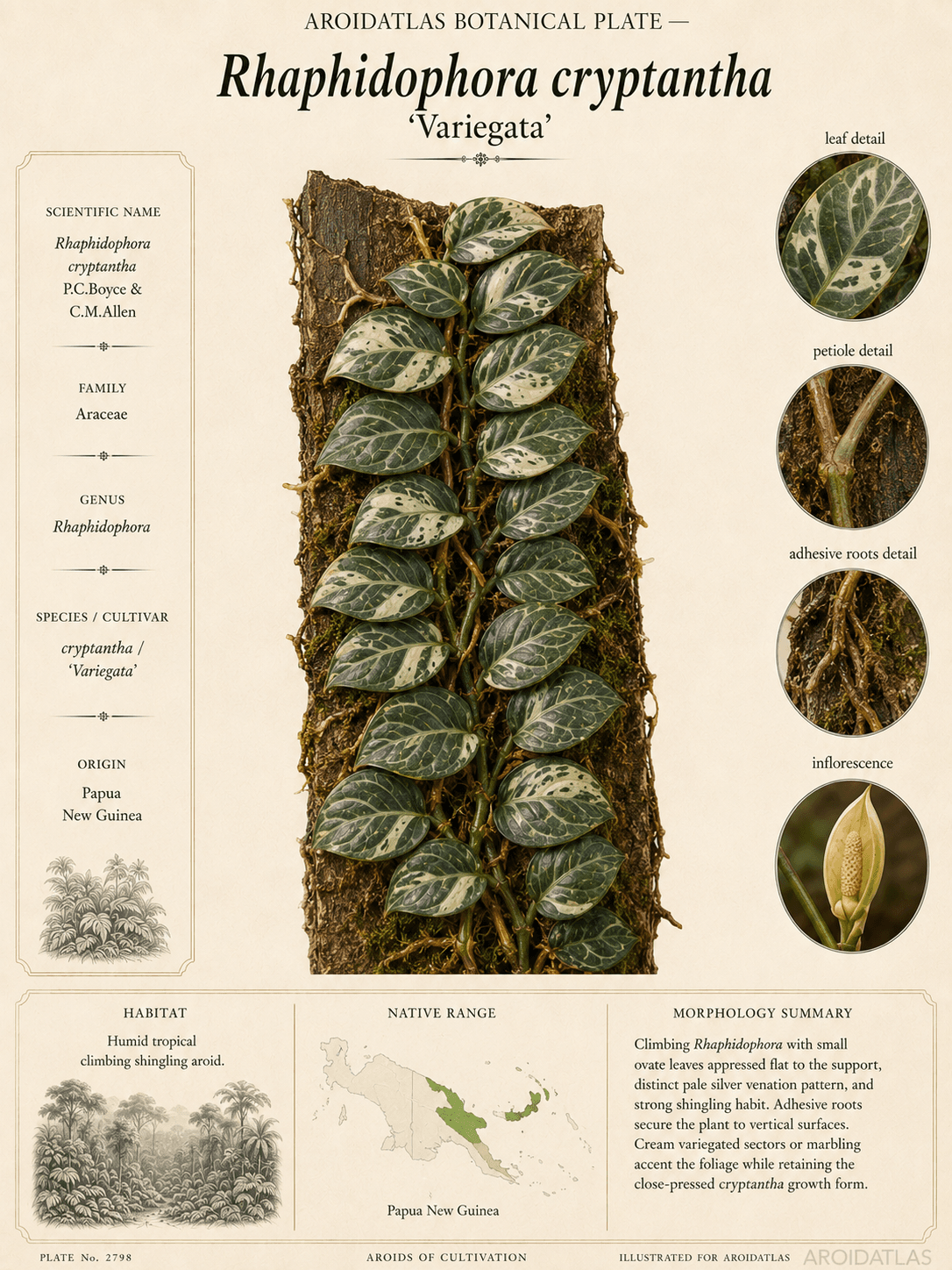
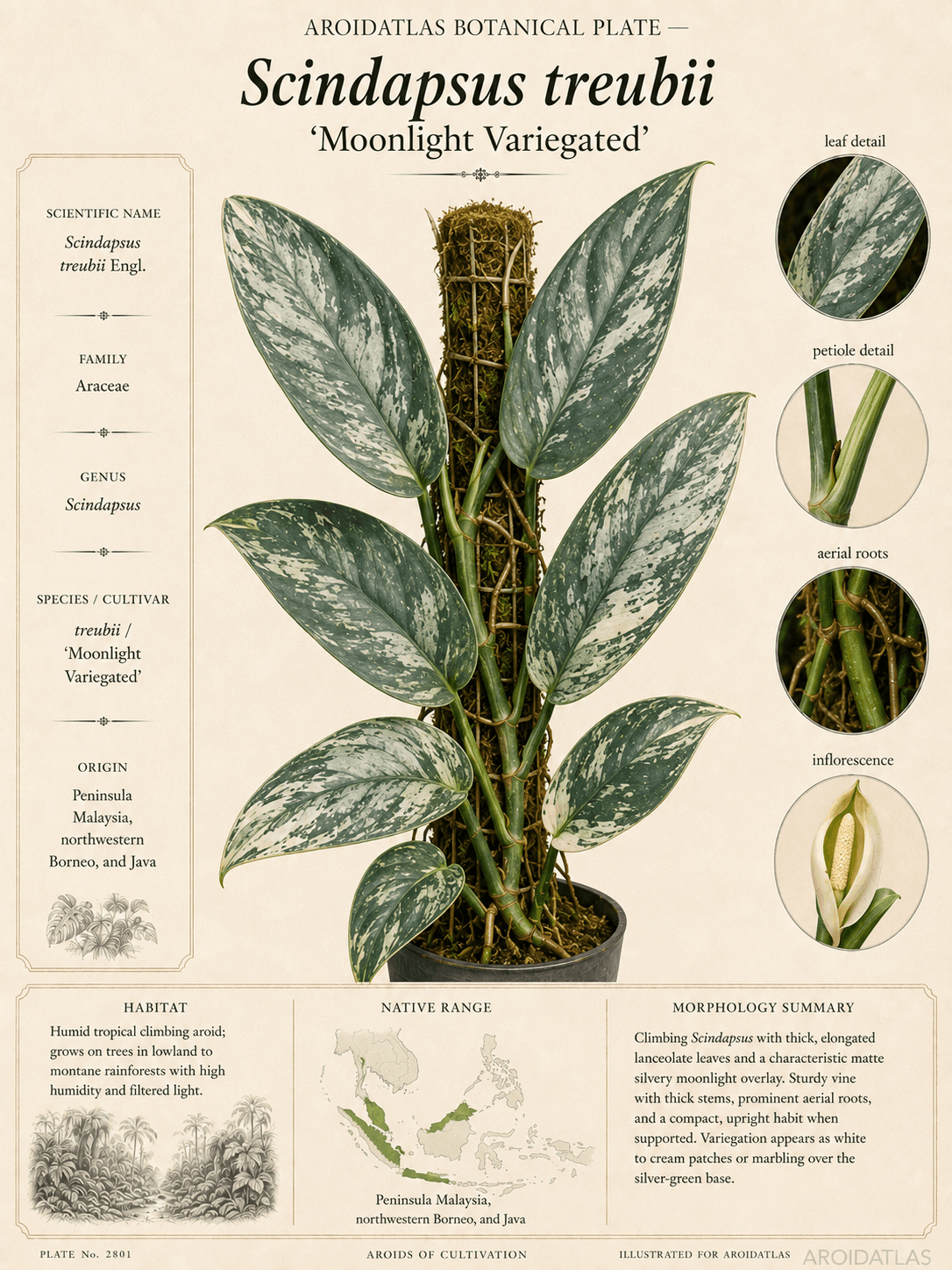
Scroll to explore forms of Epipremnum pinnatum
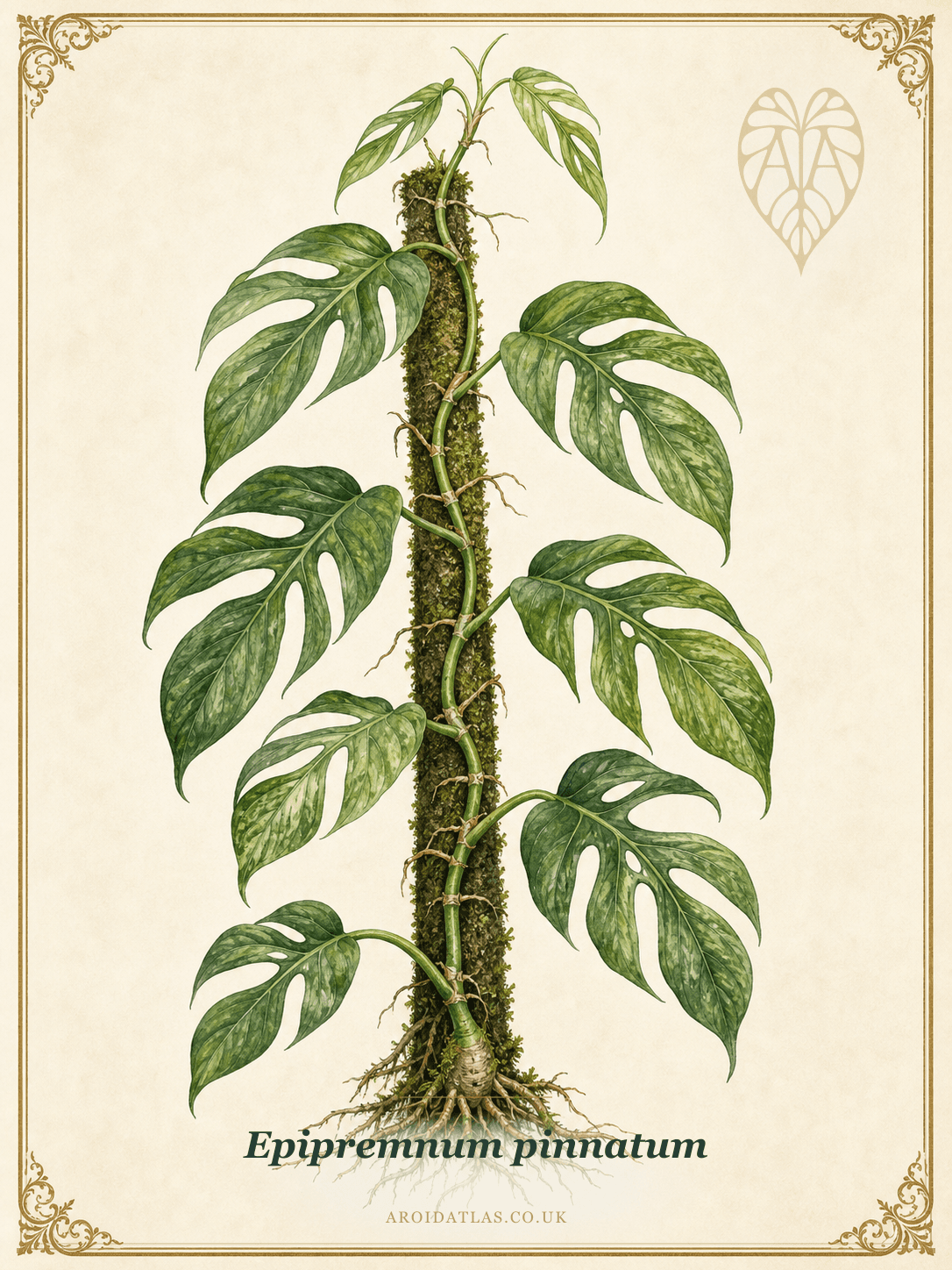

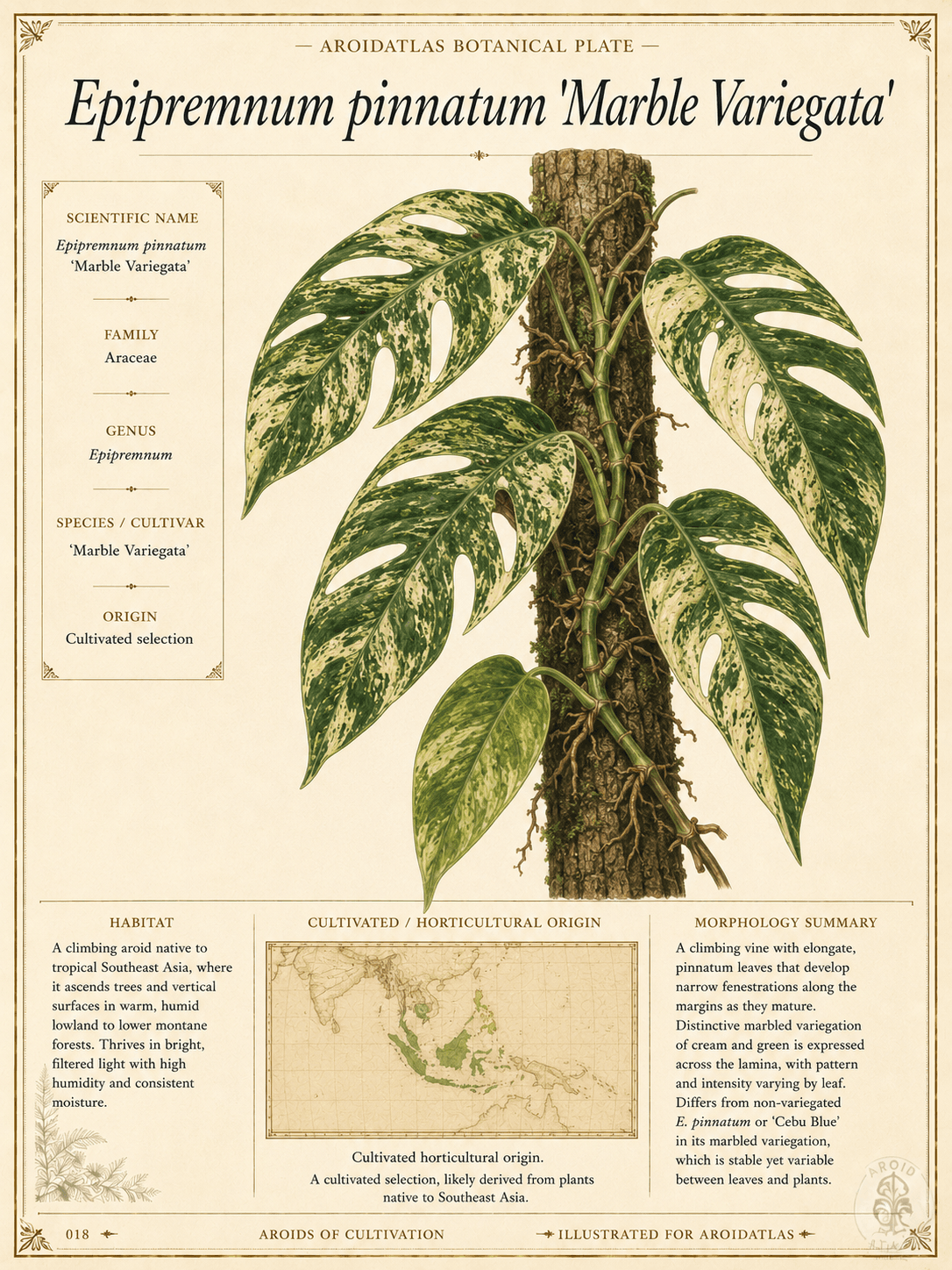

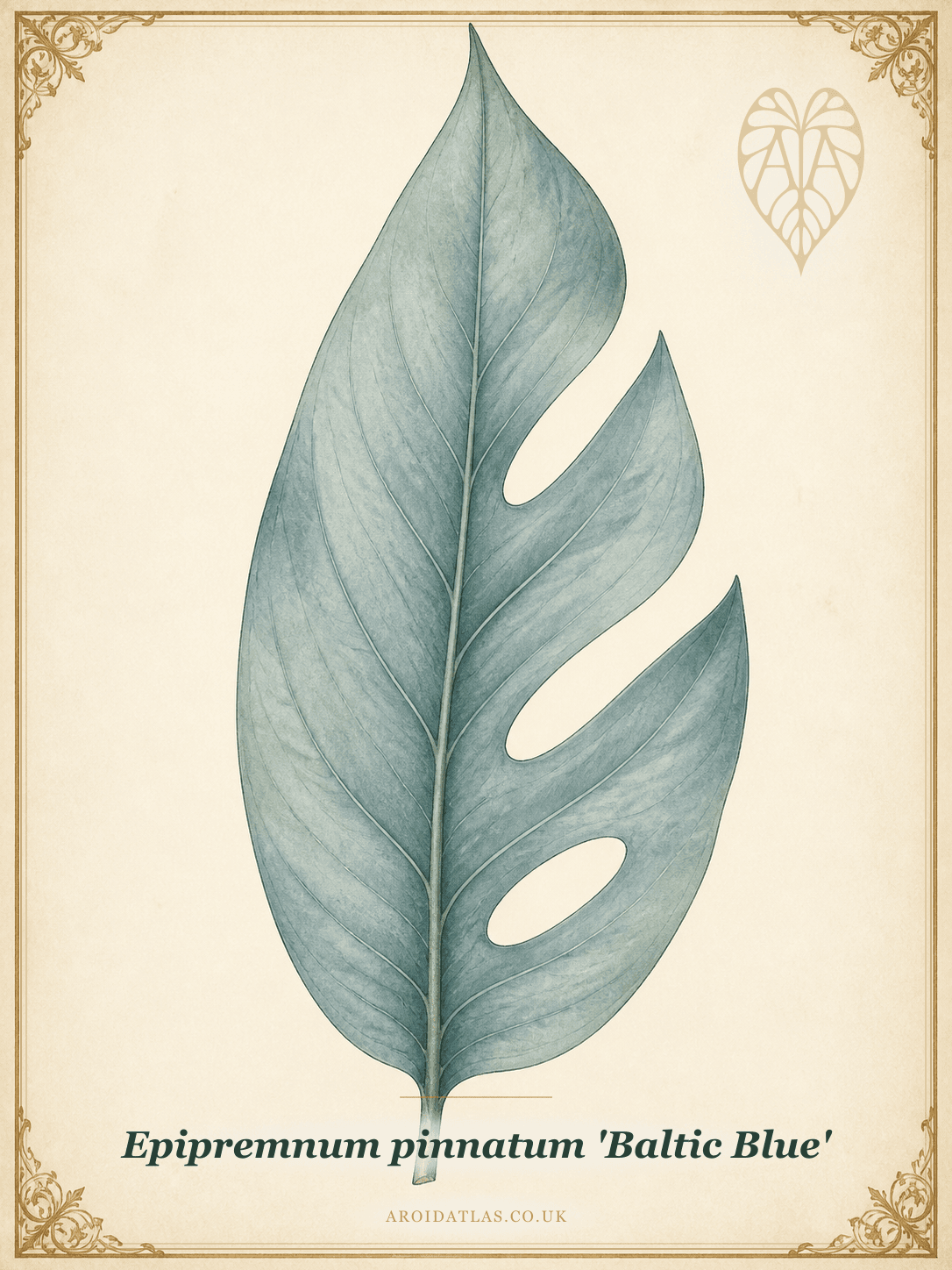

Full Specimen Plate
Epipremnum pinnatum 'Cebu Blue'
Cebu Blue Pothos
Aroid Atlas Price Guide
Select Plant Size
Pricing Data Key
Community price estimate based on limited sales history
Other colour-form prices
Epipremnum pinnatum 'Cebu Blue' Morphology
About Epipremnum pinnatum 'Cebu Blue'
Epipremnum pinnatum 'Cebu Blue' is a highly popular climbing cultivar selected for its glaucous, silver-blue foliage — a colouration rarely seen in aroids and derived from the plant's ancestry in the humid lowland forests of tropical Southeast Asia. Juvenile leaves are narrow and lance-shaped with a blue-silver sheen, while mature climbing specimens develop significantly larger, paddle-shaped leaves that begin to fenestrate and pinnate along the midrib. It is named for its association with Cebu island in the Philippines, where the parent species Epipremnum pinnatum is native. Easy to grow and visually unique.
Native Range
Philippines
Market Analysis
Epipremnum pinnatum 'Cebu Blue' Price Guide & Auction Value
Historical eBay auction metrics and live retailer listings updated weekly.
No eBay auction history available yet. Data is collected automatically as sales appear on eBay UK.
Before You Buy
Species-specific things to check when evaluating a listing
- Ensure there is at least one healthy node present — a cutting without a node cannot produce new growth
- For variegated forms, check that the variegation pattern appears on the newest growth and shows no signs of reversion to green
- Inspect the underside of leaves for spider mites (fine webbing or stippling) which are common on pothos-family plants
- Confirm the cutting has visible roots or a healthy node before purchasing — unrooted cuttings require propagation experience to succeed
Propagation Guide
How to Propagate Epipremnum pinnatum 'Cebu Blue'
2-4 months
Care Guide
Epipremnum pinnatum 'Cebu Blue' Care Guide & Growing Conditions
Well-draining mix: 40% perlite, 40% potting compost, 20% orchid bark.
Water when the top 3–4 cm is dry. These are generally forgiving and will tolerate slight drought better than overwatering.
50–70% preferred. Most varieties in this group are more adaptable to typical indoor conditions than true aroids.
Balanced liquid fertiliser at half strength every 2 weeks in spring and summer. Monthly in winter.
Every 12–18 months when root-bound. These vining plants grow quickly and may need annual repotting in peak years.
Common Problems
Yellowing leaves
Overwatering or too little light
Allow to dry more between waterings; move to a brighter position
Loss of variegation (for variegated forms)
Insufficient light causing reversion to green
Move to a brighter position — variegated leaves need more light to maintain their pattern
Root rot
Overwatering or compacted substrate
Repot into fresh well-draining substrate; reduce watering frequency
Blue by Name
Epipremnum pinnatum 'Cebu Blue' is a selection associated with the island of Cebu in the Philippines, producing juvenile leaves with a distinctive blue-grey, almost metallic sheen that photographs attractively and holds up reasonably well in situ. The adult form develops fenestrated leaves; most cultivated specimens remain in the attractive juvenile phase. At accessible price tier for what is, at base, a Epipremnum — a genus I have complicated feelings about on taxonomic grounds — but a visually interesting selection that is worth growing without embarrassment.