Scroll to explore forms of Epipremnum pinnatum



Full Specimen Plate
Epipremnum pinnatum
Dragon Tail Plant
Aroid Atlas Price Guide
Select Plant Size
Pricing Data Key
Based on online retail prices, adjusted for private sales
Other colour-form prices
Epipremnum pinnatum Morphology
About Epipremnum pinnatum
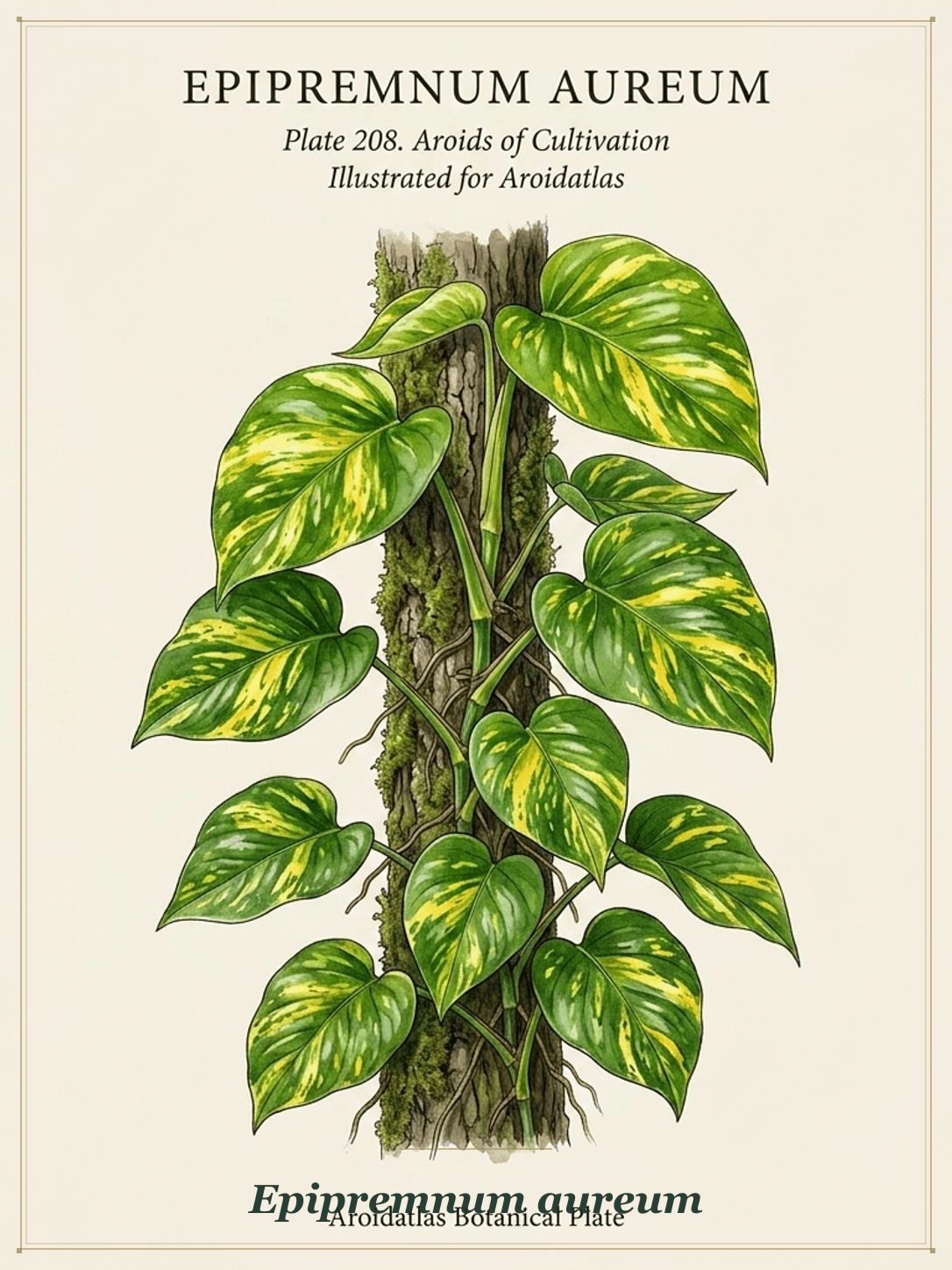
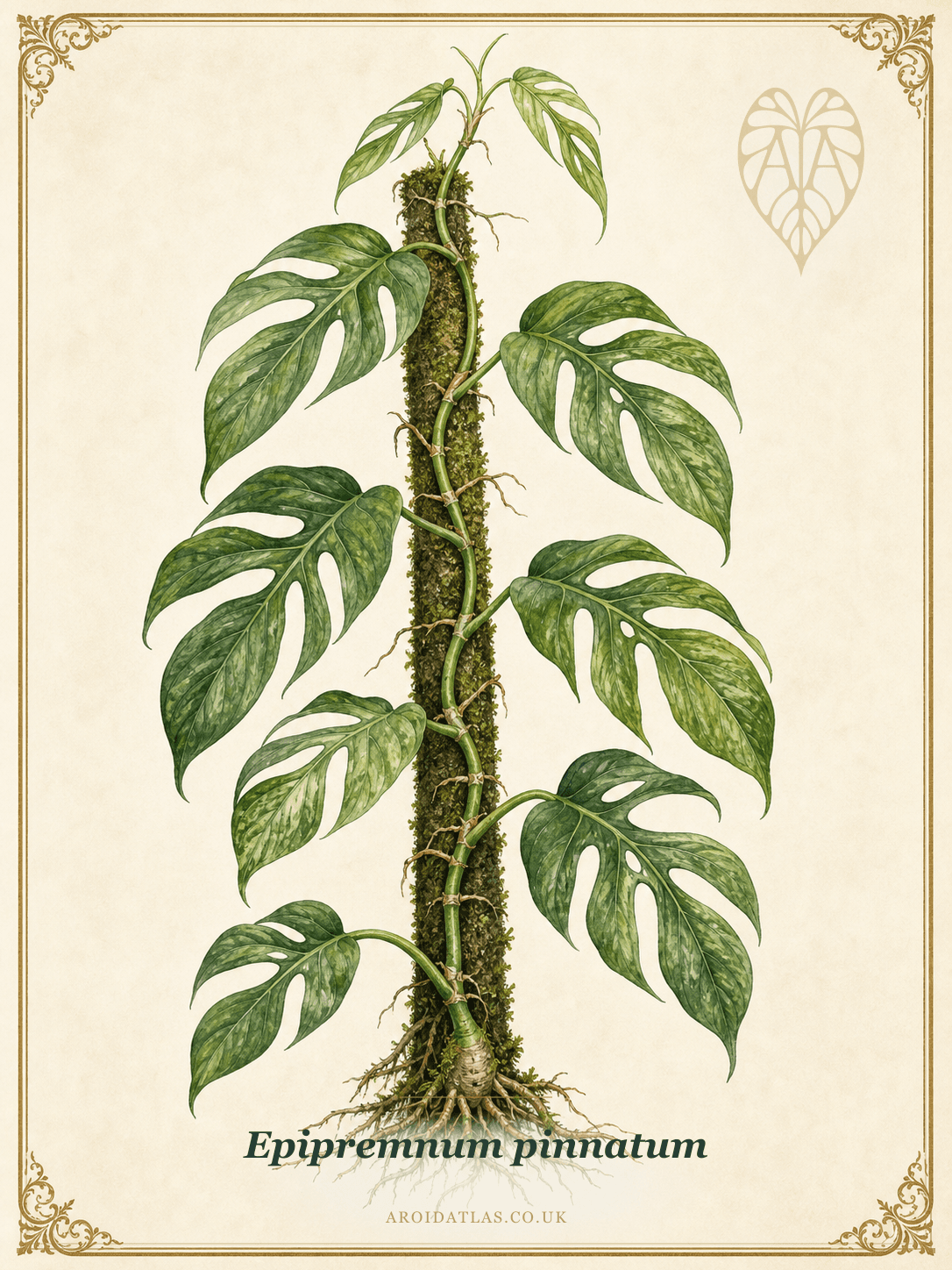
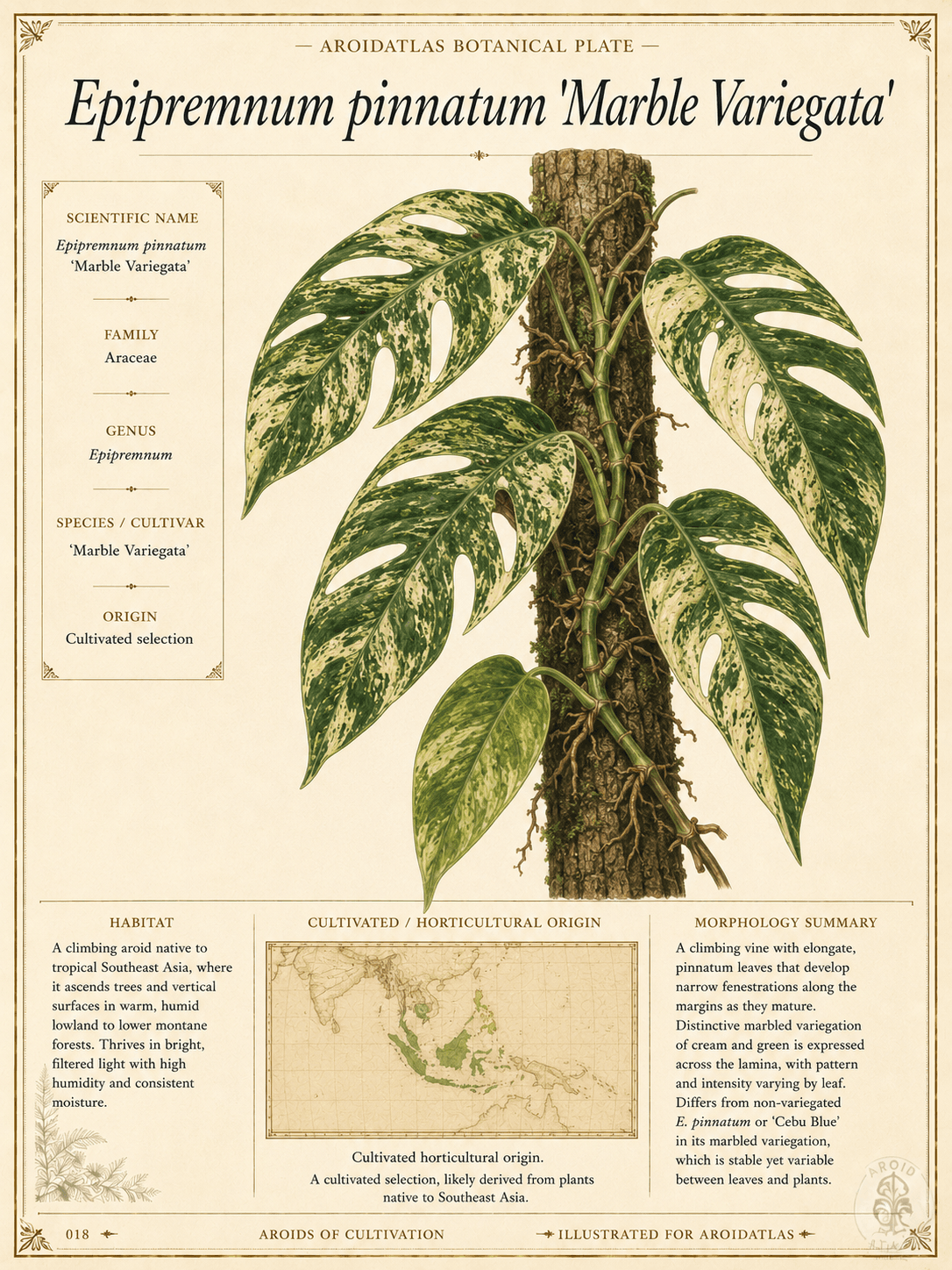
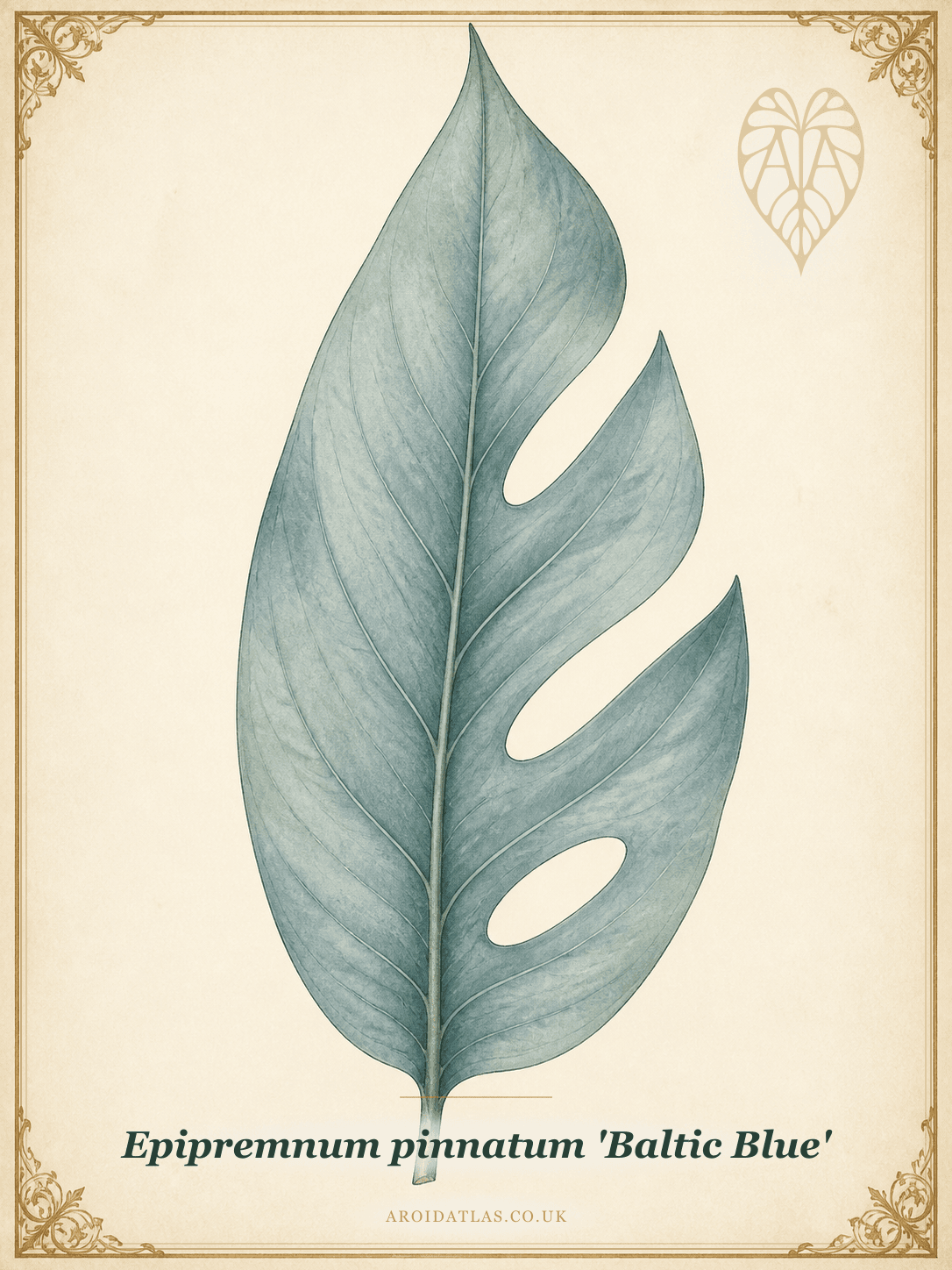
Epipremnum pinnatum, the Dragon Tail Plant, is a close relative of the ubiquitous Golden Pothos, distinguished by narrower, more lance-shaped juvenile leaves that develop pinnate splits and fenestrations more readily once the plant is given something to climb. The plain wild-type species carries solid, glossy deep green leaves, the same leaf shape and climbing habit later made famous by the silvery-blue 'Cebu Blue' colour form, which is otherwise essentially identical to the species and is by far the more commonly sold form in cultivation. A separate 'Marble Variegated' selection adds irregular cream-white sectoring over the same green baseline. Like most Epipremnum, it stays compact and non-fenestrating as a trailing houseplant but grows into a heavily split, larger-leaved climber when trained up a moss pole.
Native Range
Philippines
Market Analysis
Epipremnum pinnatum Price Guide & Auction Value
Historical eBay auction metrics and live retailer listings updated weekly.
No eBay auction history available yet. Data is collected automatically as sales appear on eBay UK.
Before You Buy
Species-specific things to check when evaluating a listing
- The plain green species and 'Cebu Blue' are both inexpensive and widely available; be cautious of pricing implying rarity
- Confirm whether the plant is trailing (juvenile, unsplit leaves) or climbing (mature, fenestrated leaves) before buying, as the two look markedly different at the same price point
- For 'Marble Variegated', check the variegation pattern in photos matches the named form
- Check stem nodes are firm and undamaged; this is where roots and new growth emerge from cuttings
Propagation Guide
How to Propagate Epipremnum pinnatum
3-6 weeks
Cultivar character is preserved through vegetative cuttings
Roots readily from stem or node cuttings in water or moist substrate. Climbing on a moss pole (rather than trailing) encourages the larger, more fenestrated mature leaf form.
Care Guide
Epipremnum pinnatum Care Guide & Growing Conditions
Standard well-draining houseplant mix: 60% potting compost, 25% perlite, 15% orchid bark.
Allow the top few centimetres of substrate to dry between waterings.
Tolerates average household humidity; higher humidity (60%+) encourages larger, more fenestrated mature leaves.
Balanced liquid fertiliser at half strength every 4 weeks during the growing season.
Every 12-18 months, or when root-bound.
Common Problems
Stays juvenile / never fenestrates
No support to climb; this species needs to be trained vertically to trigger mature, split foliage
Provide a moss pole or similar support and train the growing tip against it
Reversion to green on variegated forms
Insufficient light
Increase light levels and prune reverted all-green growth to favour variegated tissue
Root rot
Overwatering or poor drainage
Repot into fresh, well-draining substrate and reduce watering frequency
The Species Behind Cebu Blue
It surprises people that the plain green Epipremnum pinnatum and the silvery-blue 'Cebu Blue' are, structurally, the same plant: same leaf shape, same climbing habit, same fenestration behaviour, just a different colour form of the species rather than a separate cultivar. The wild-type green form is actually the less commonly traded of the two, which is a little unusual for a species-vs-selection pairing. Either way, the split, fenestrated mature leaves only really show up once the plant is climbing; left to trail, it stays compact and largely unsplit, same as most of the genus.