Scroll to explore forms of Monstera deliciosa
 Base
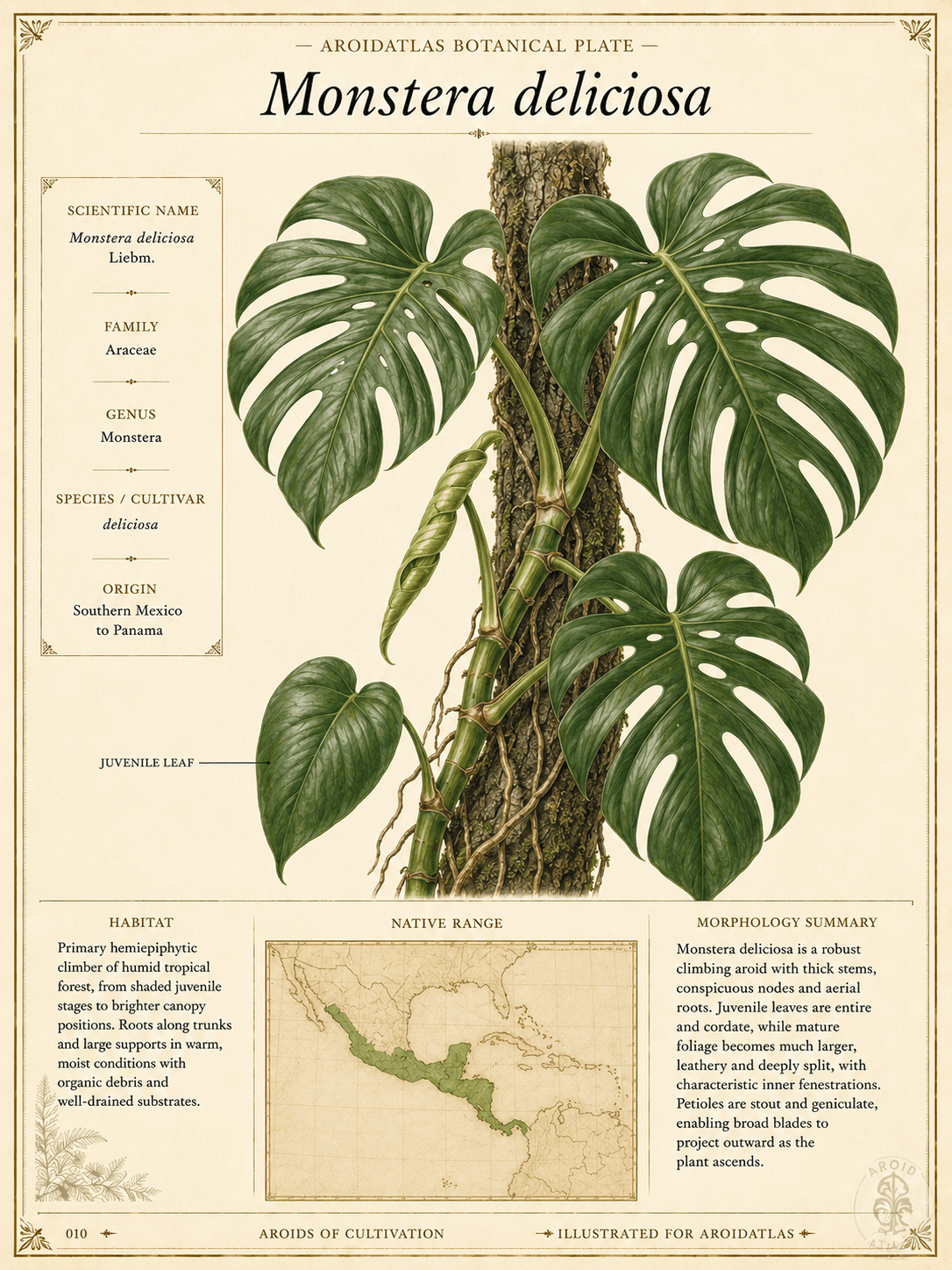
BaseMonstera deliciosa
Base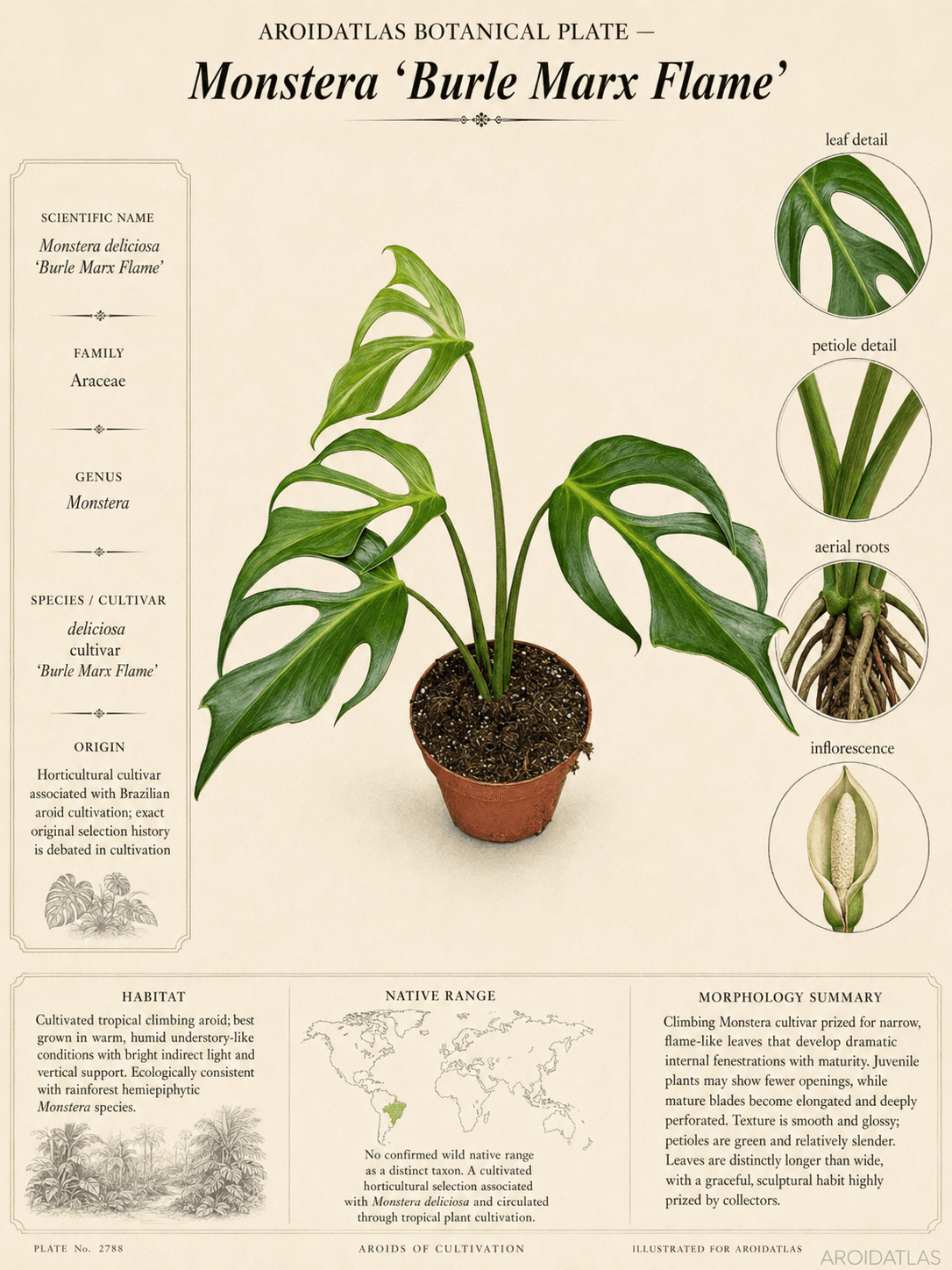
Burle Marx Flame
Base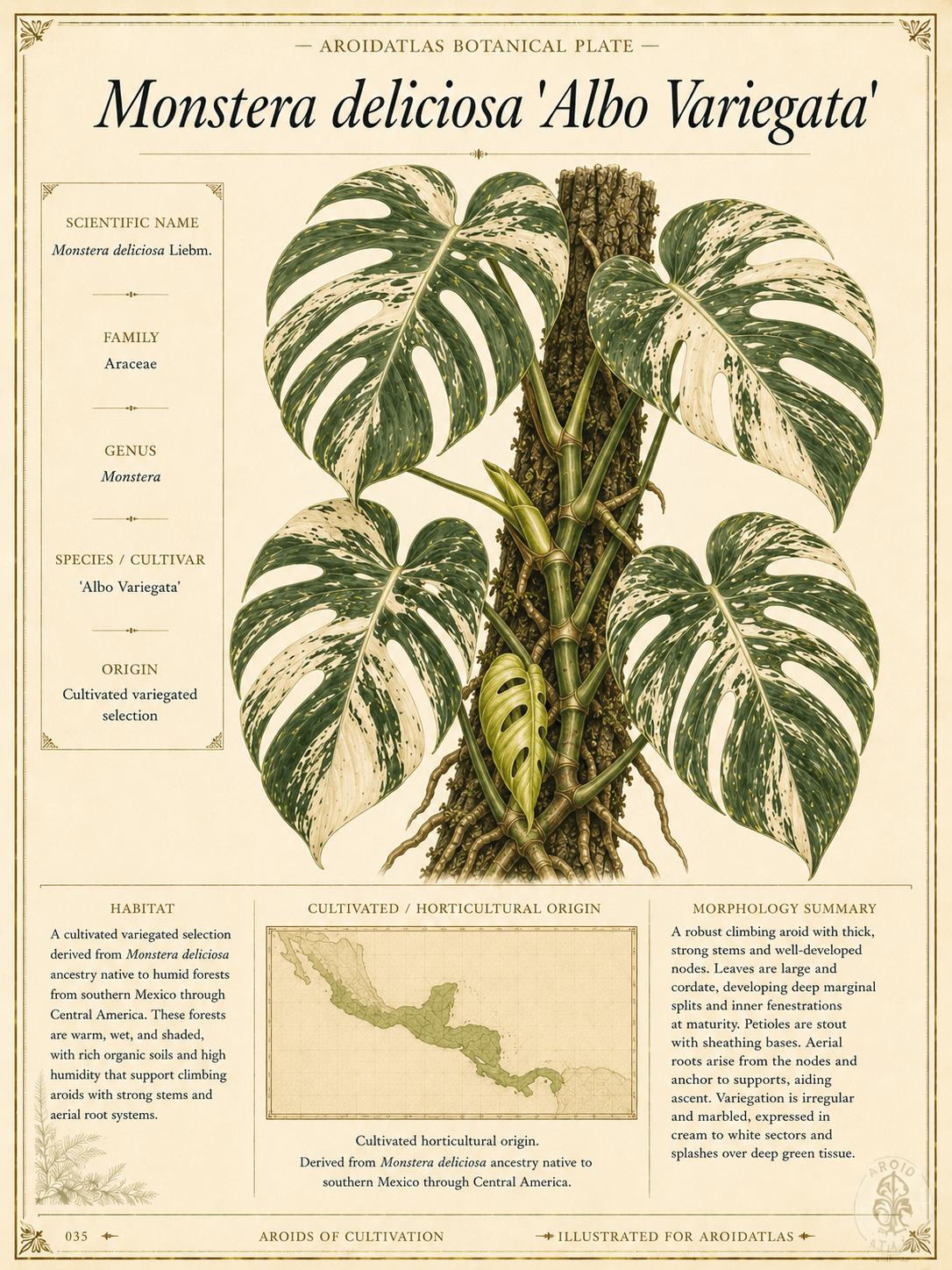
Albo Variegated
Albo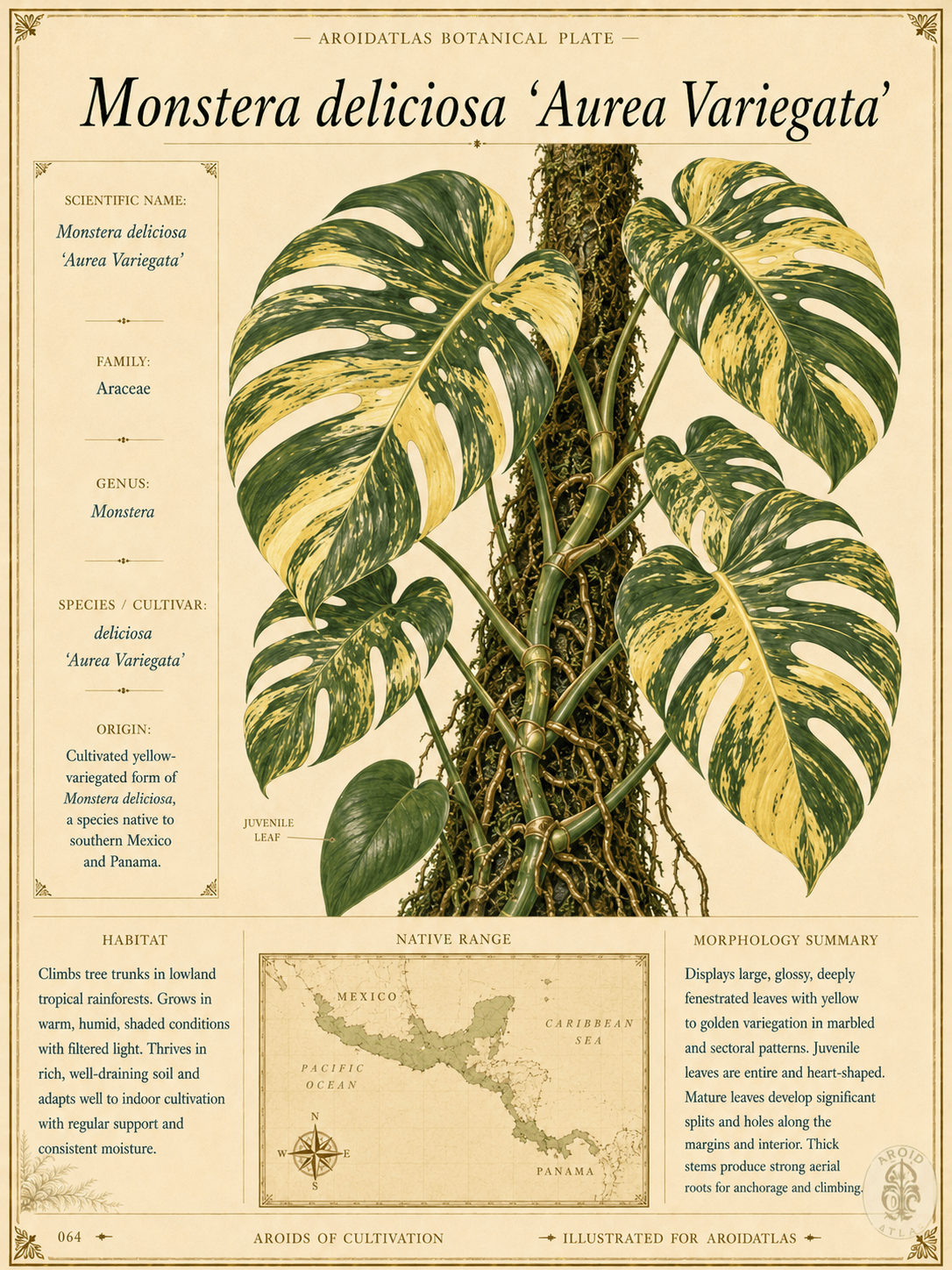
Aurea Variegated
Aurea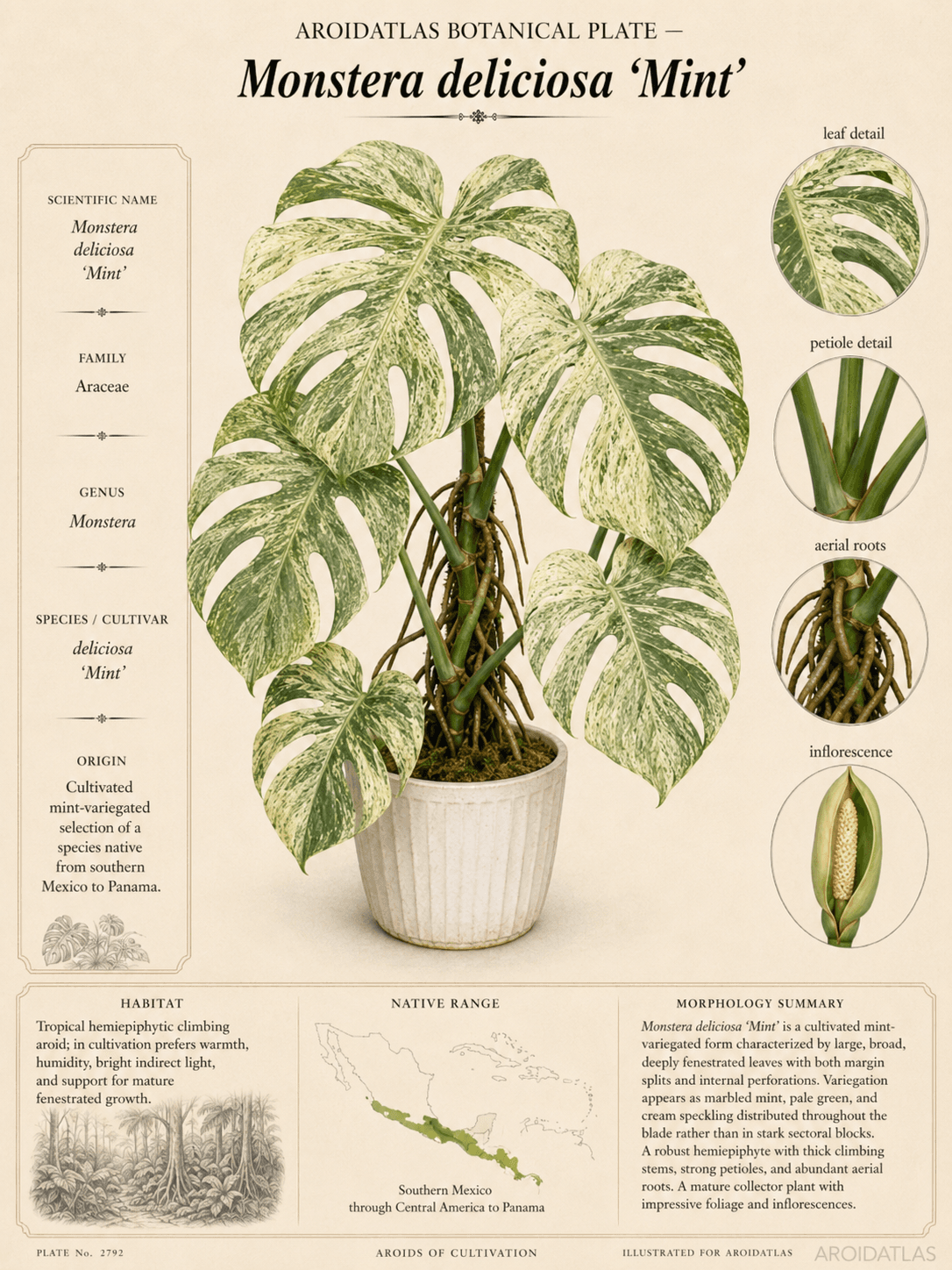
Mint
Mint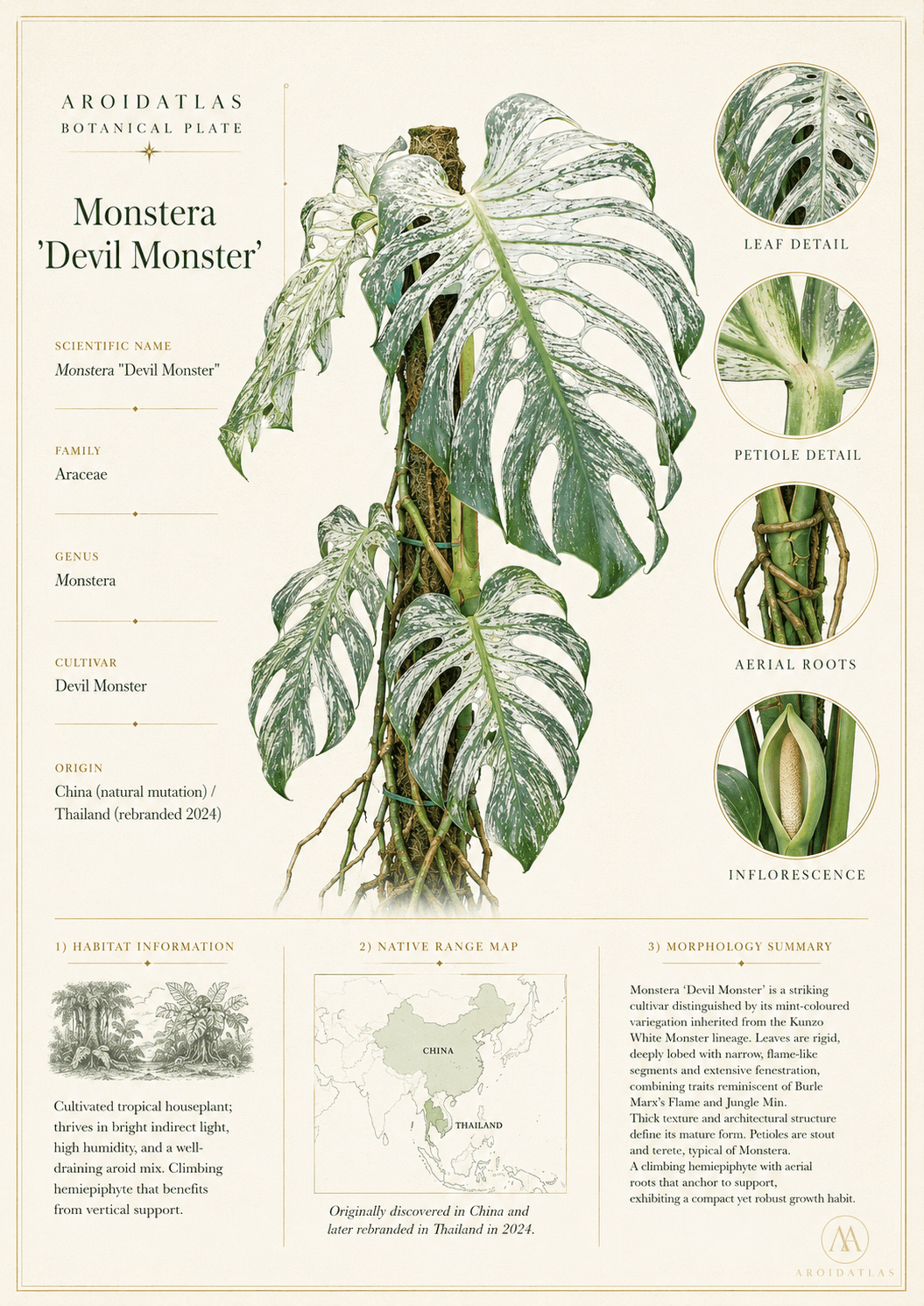
Devil Monster
Albo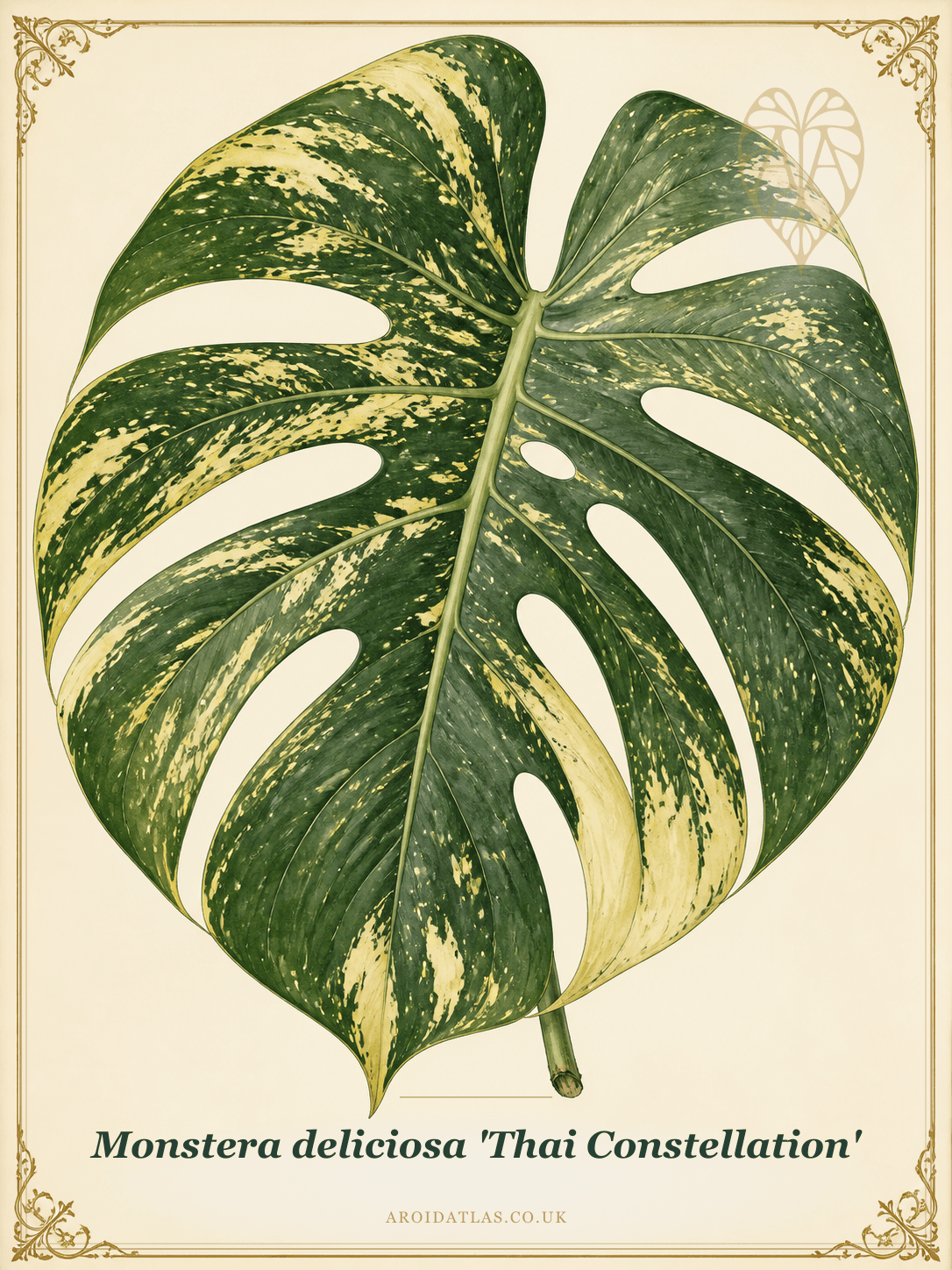
Thai Constellation
Aurea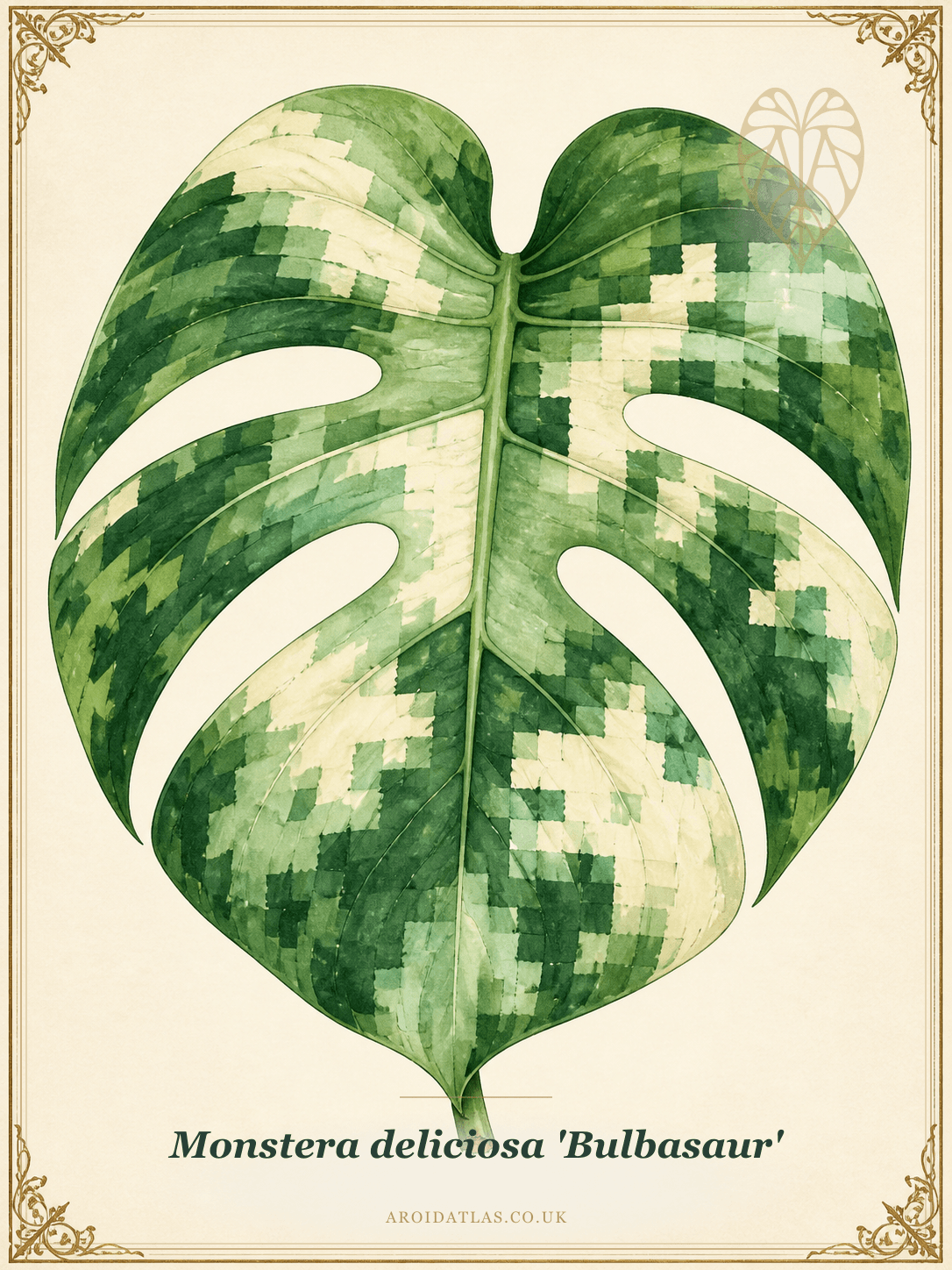
Bulbasaur
Mint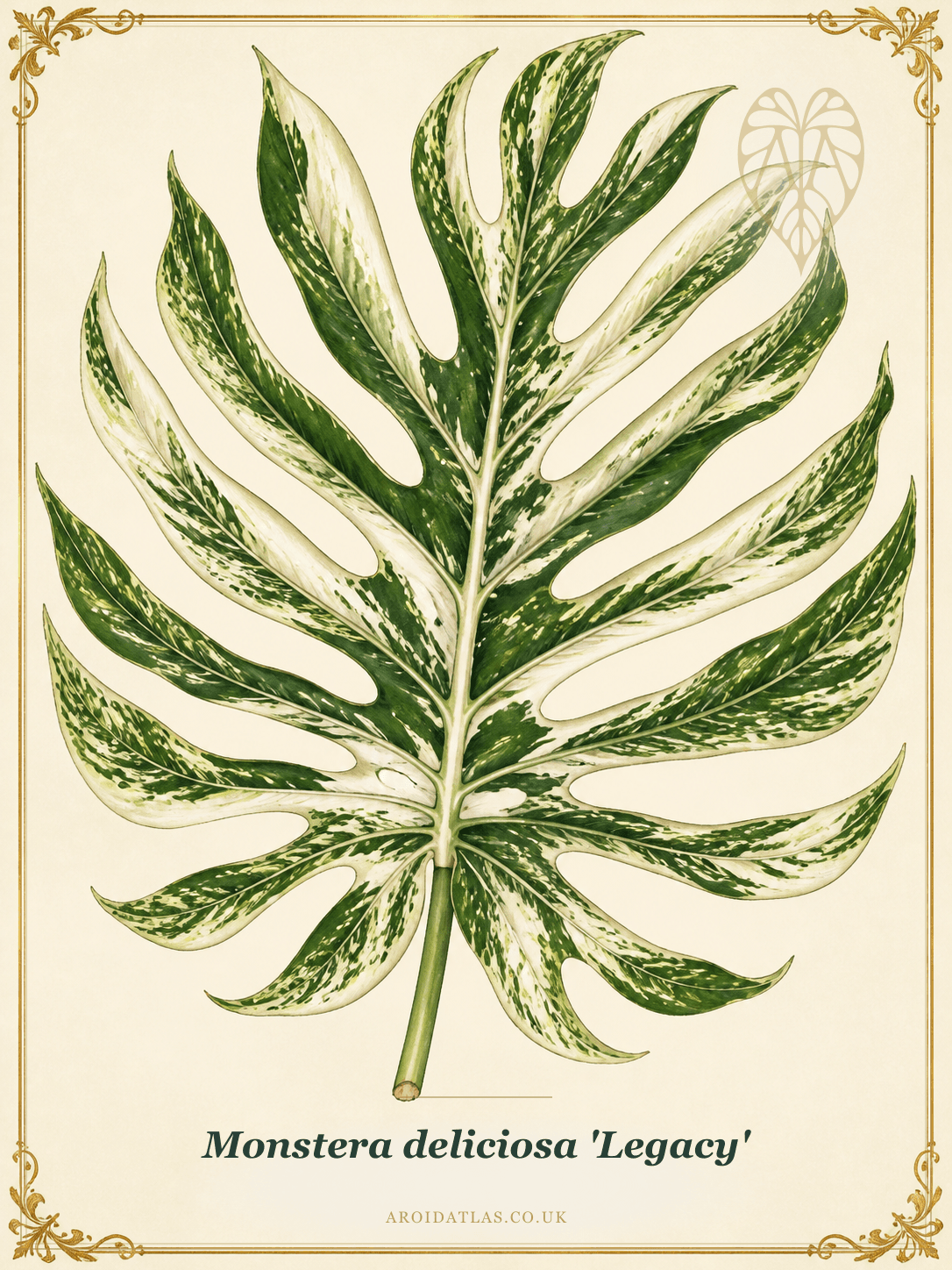
Legacy
Aurea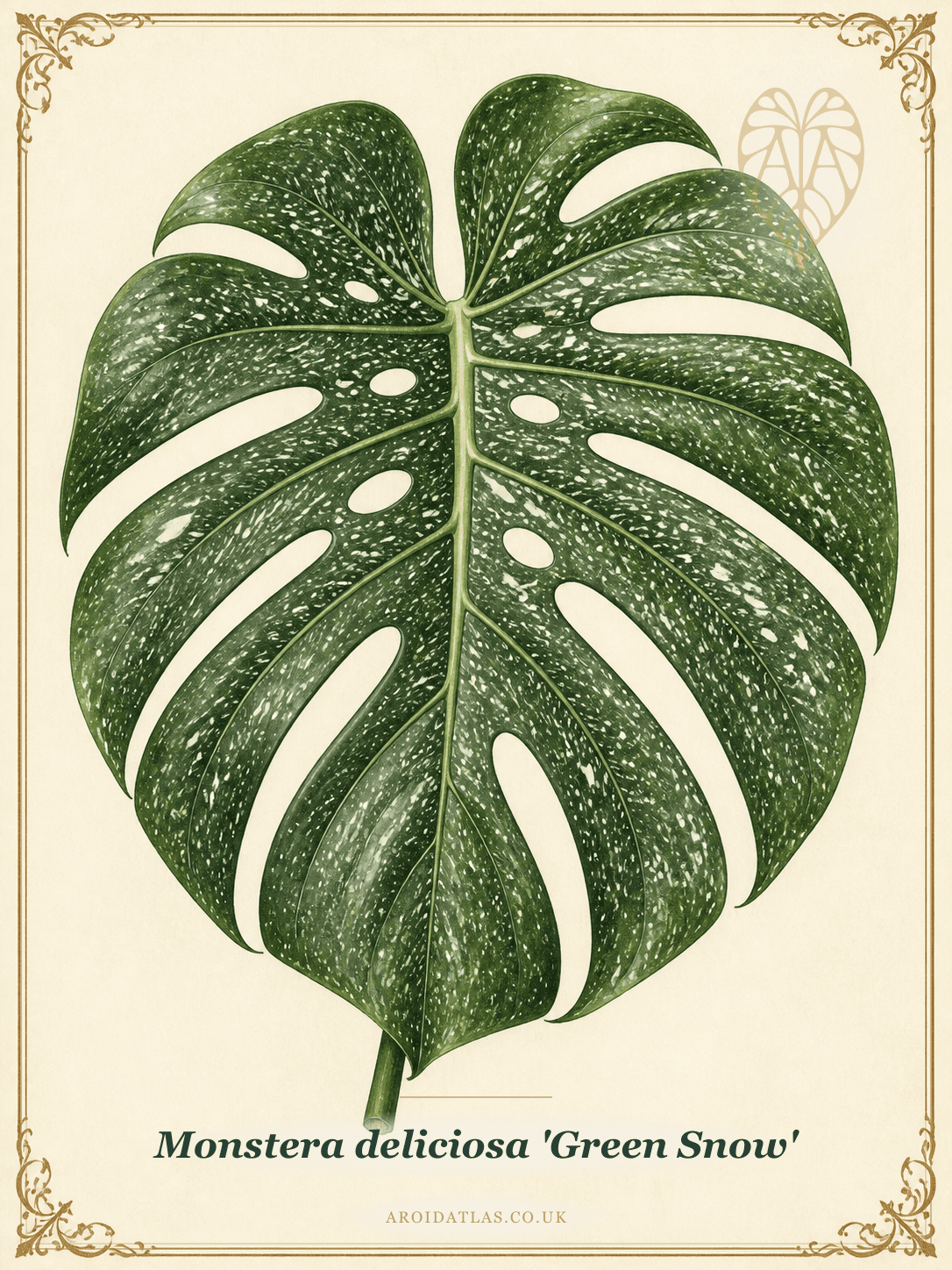
Green Snow
Mint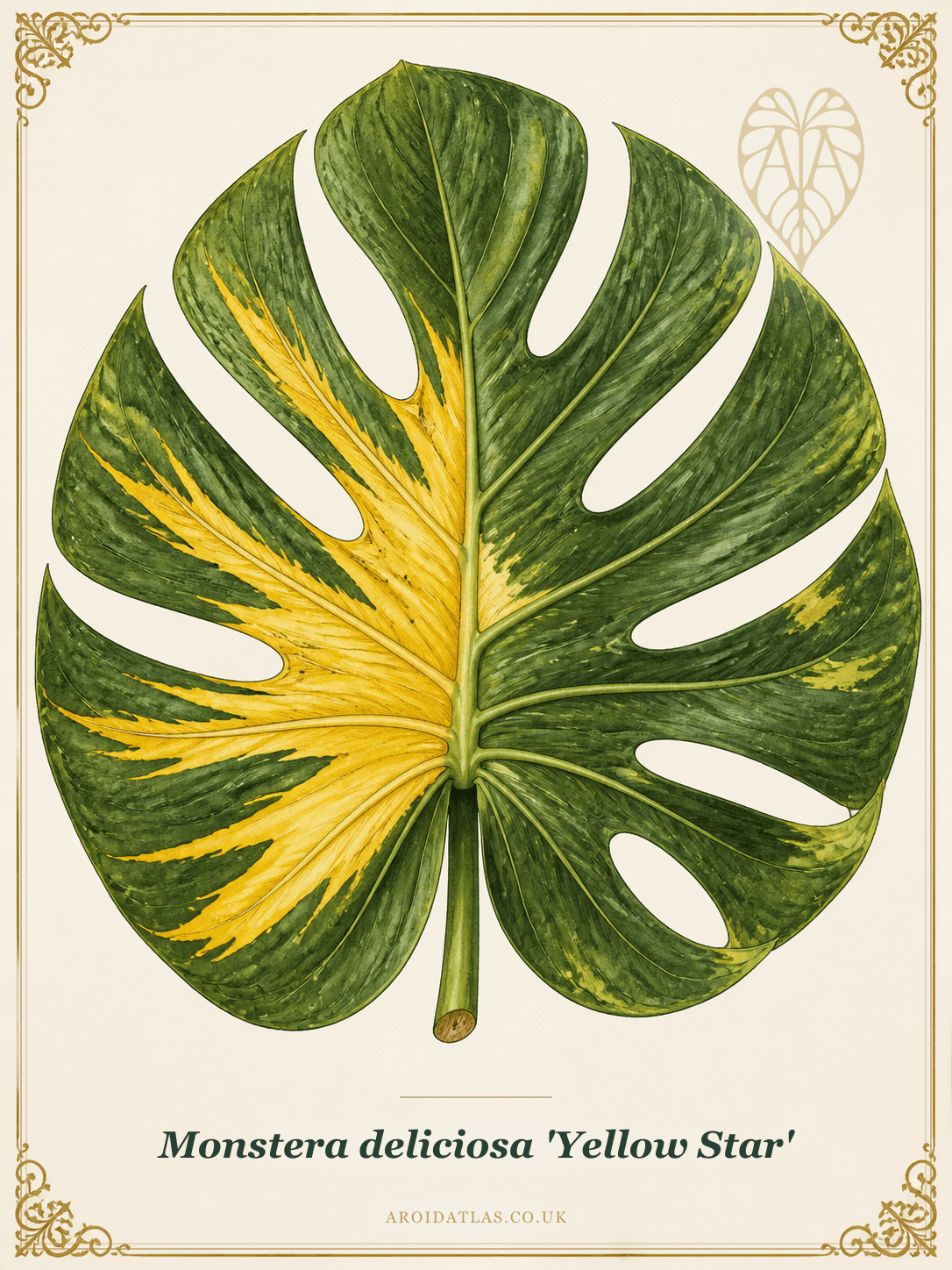
Yellow Star
Aurea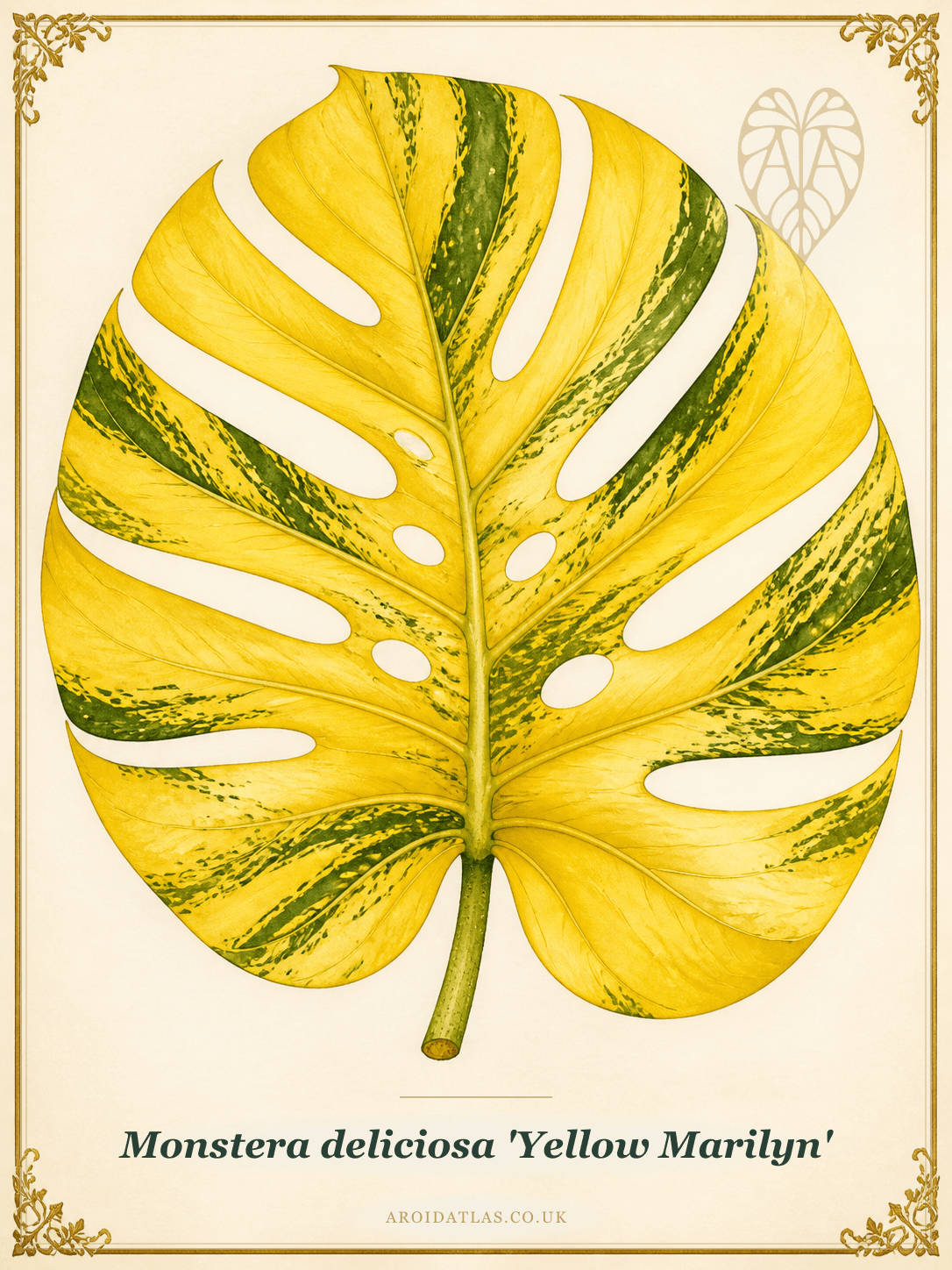
Yellow Marilyn
Aurea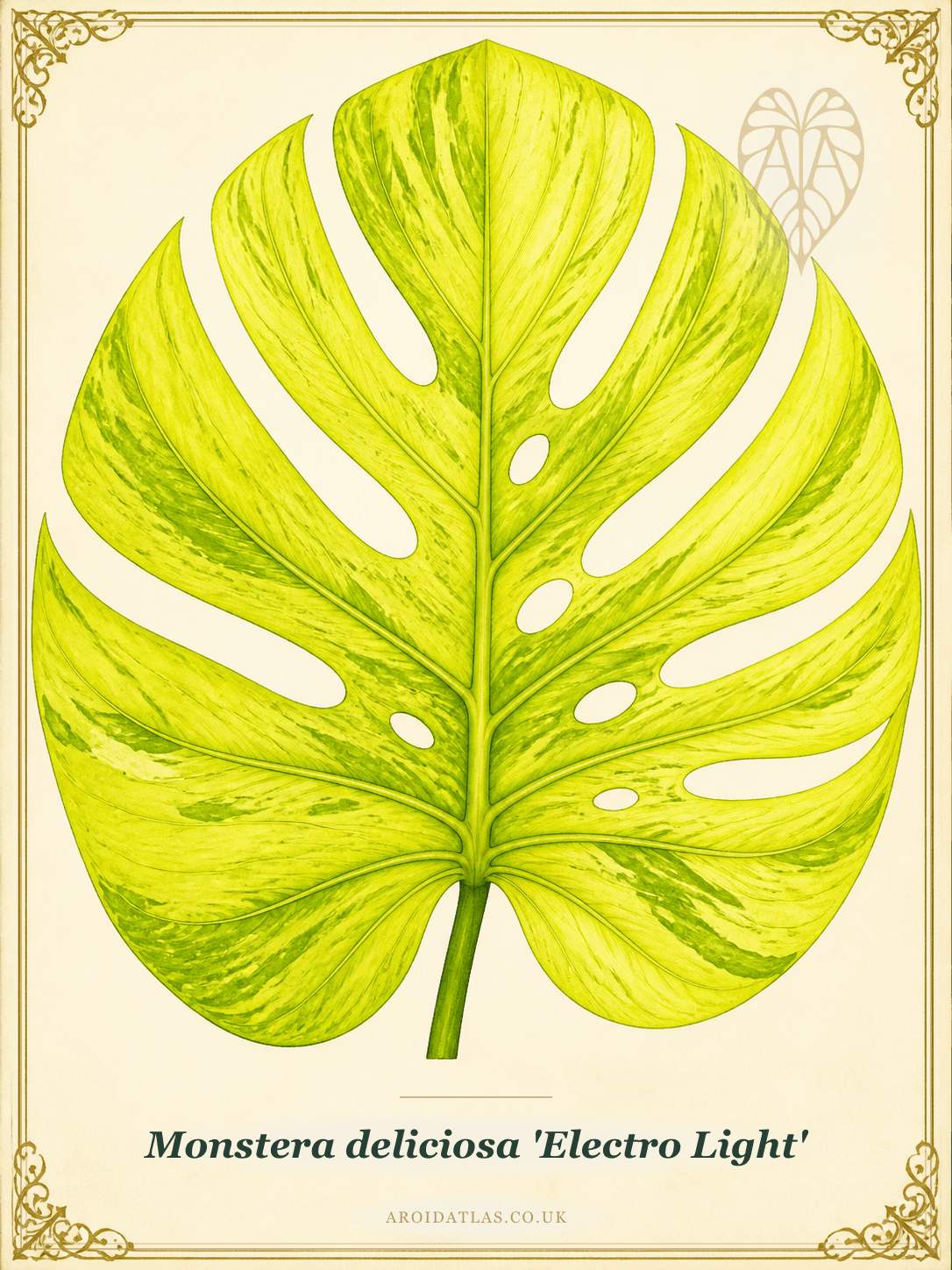
Electro Light
Aurea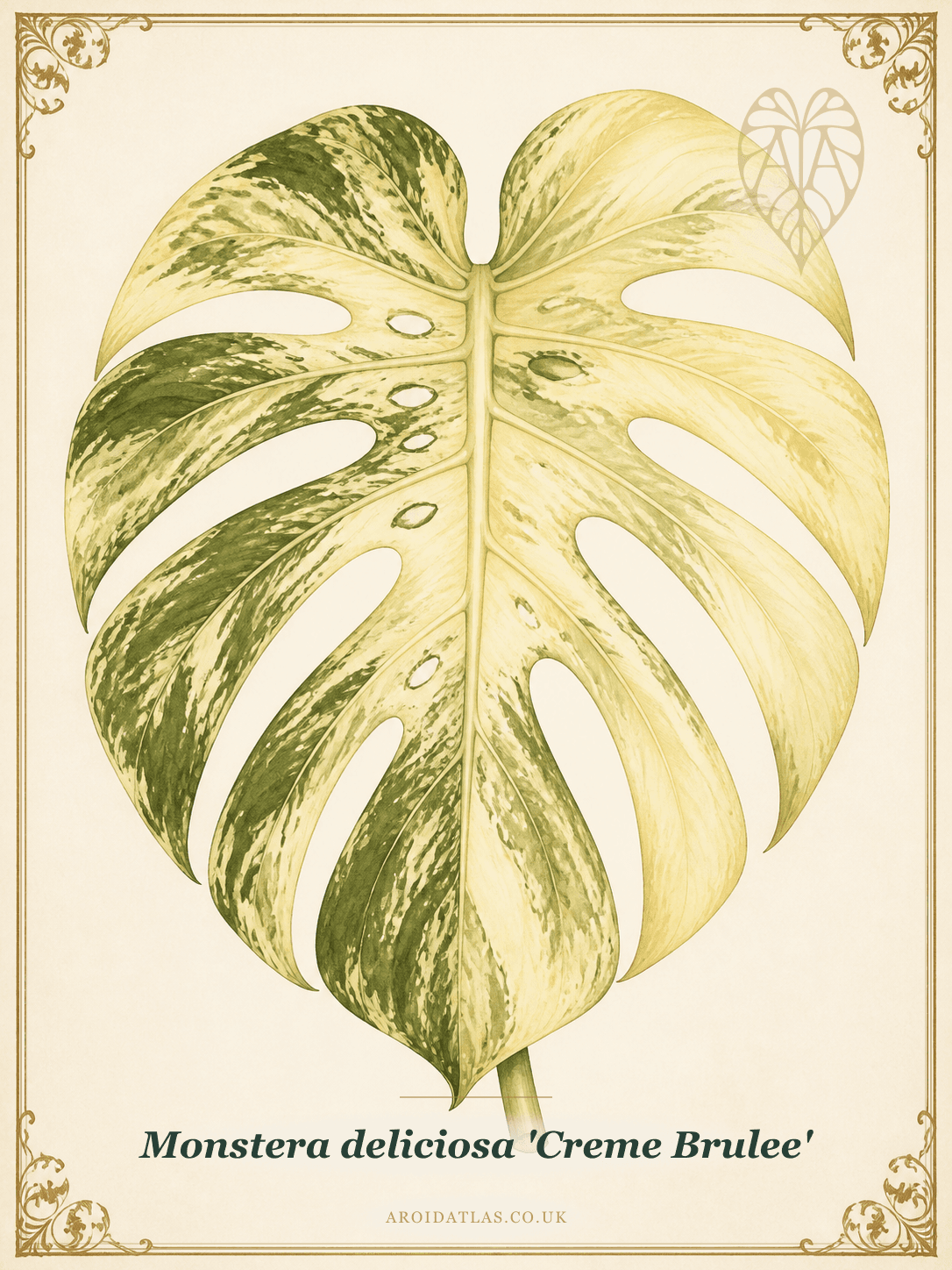
Creme Brulee
Albo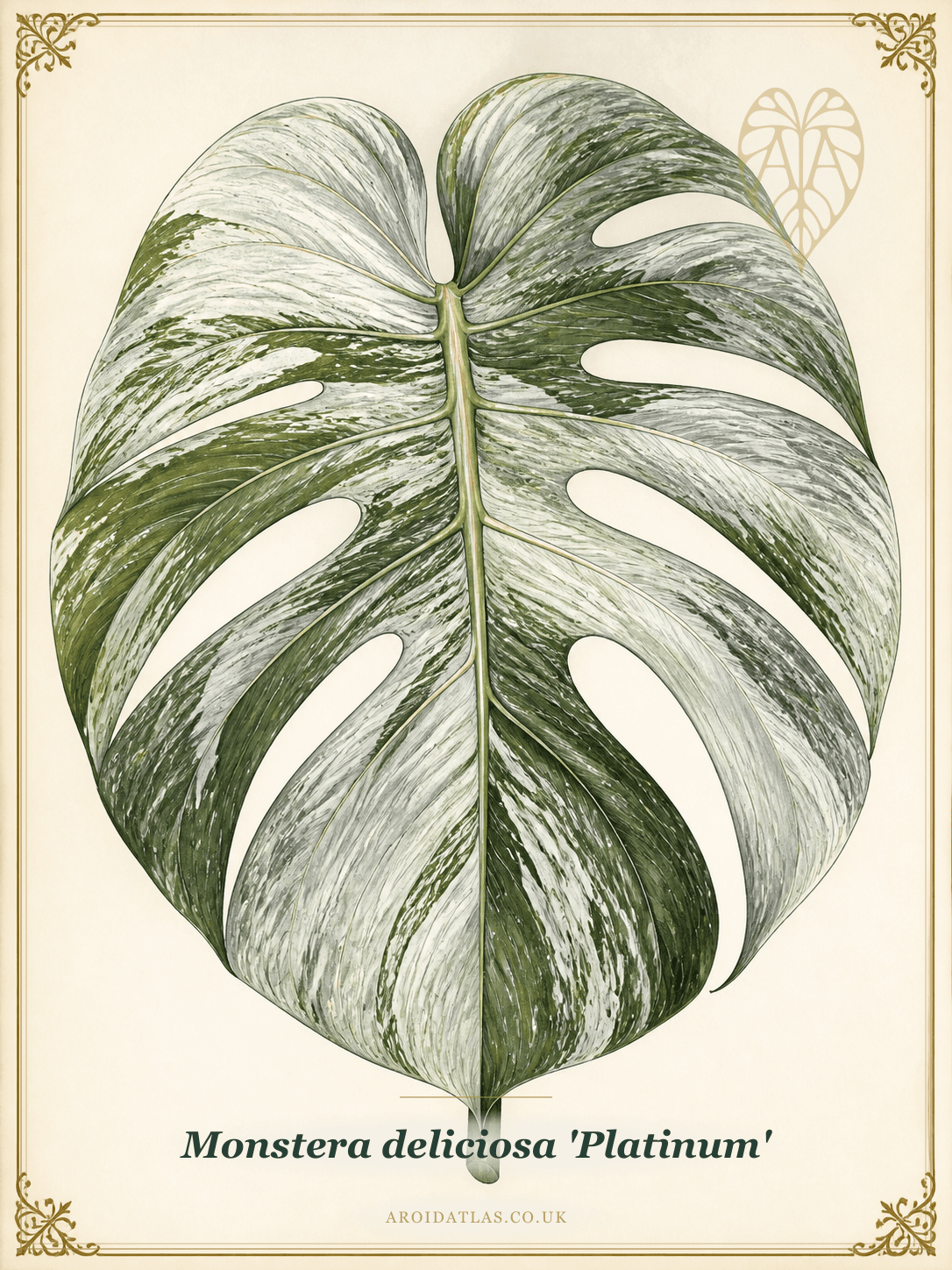
Platinum
Albo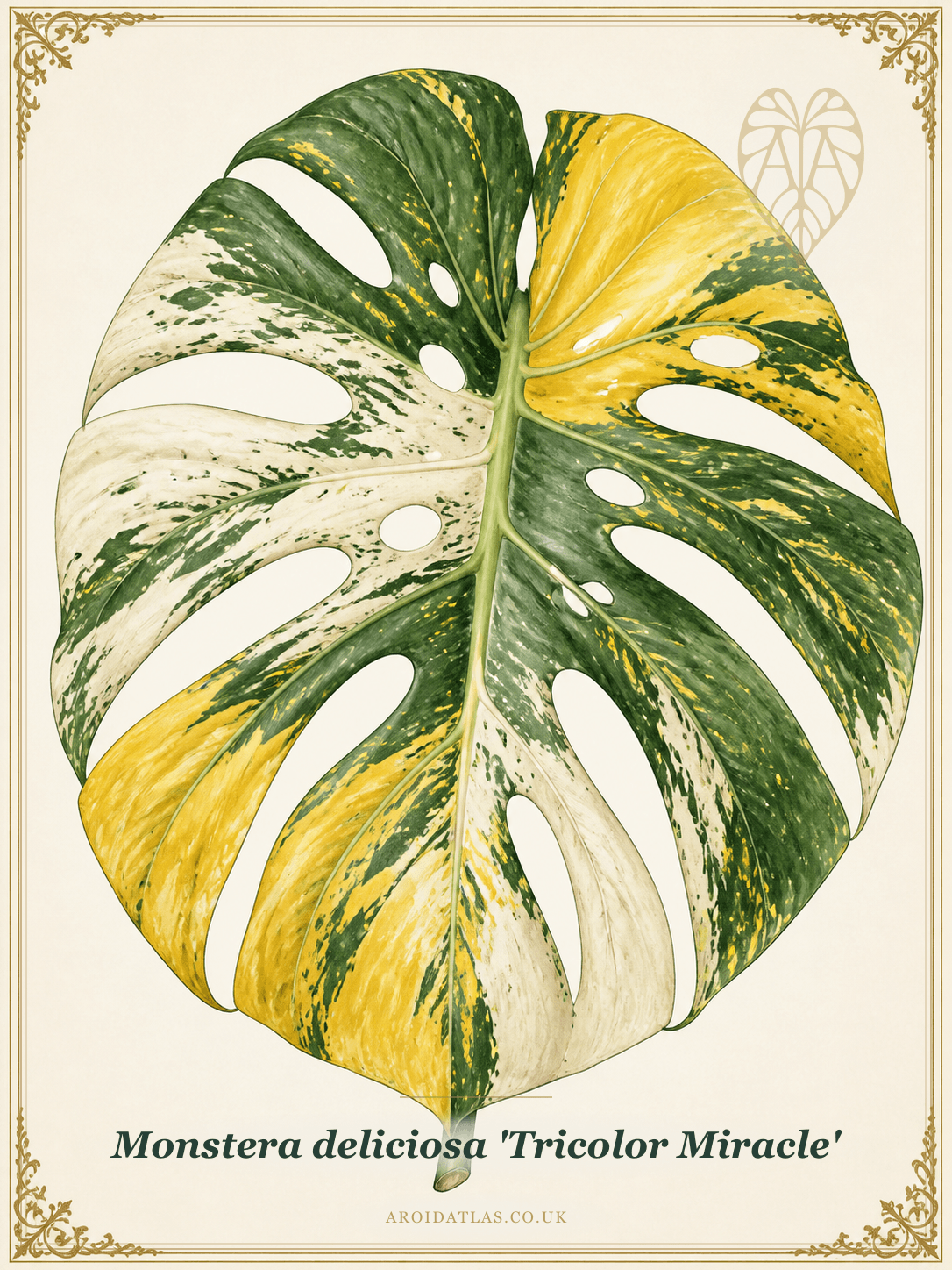
Tricolor Miracle
Tricolour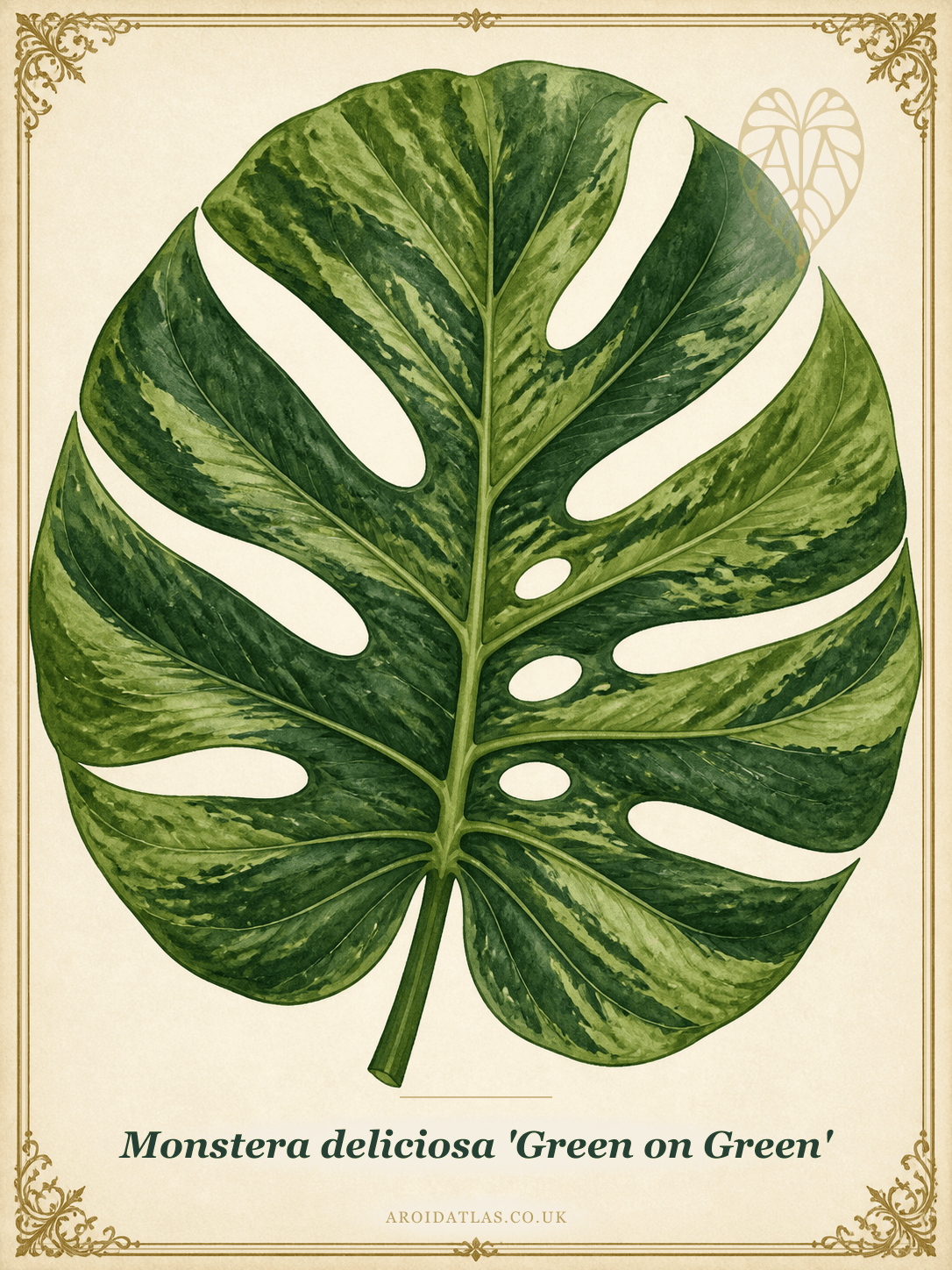 Current
Green on Green
Mint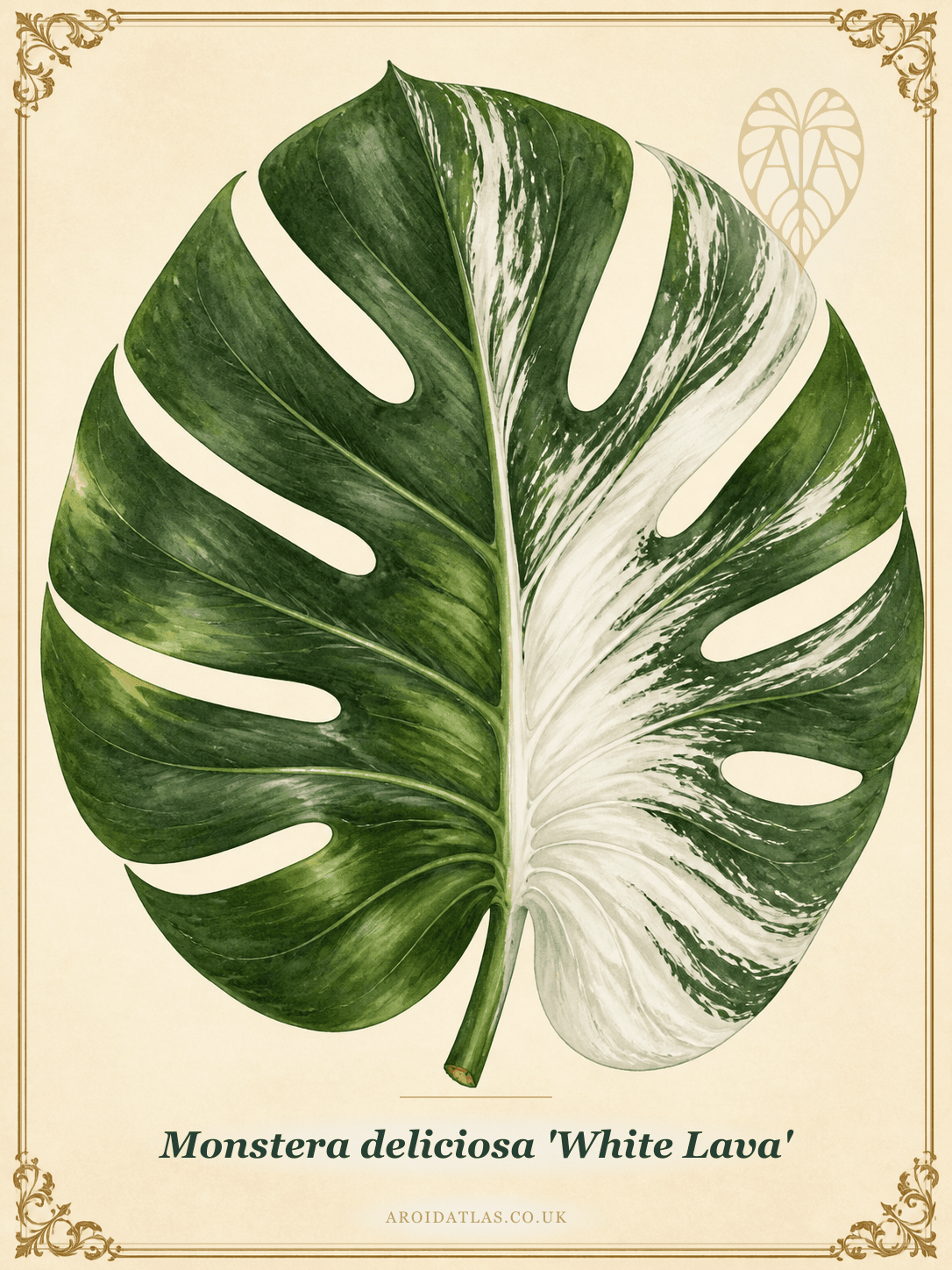
White Lava
AlboLeaf Detail Portrait
Monstera deliciosa 'Green on Green'
Green on Green Monstera
Aroid Atlas Price Guide
Select Plant Size
Pricing Data Key
Other colour-form prices
Monstera deliciosa 'Green on Green' Morphology
About Monstera deliciosa 'Green on Green'
Green on Green is a genuine outlier among named deliciosa colour forms: there is no white or yellow pigment loss at all. Instead, two distinct tones of green (a darker forest green and a lighter olive or jade green) form a soft mottled pattern across the same blade, entirely within the green colour family. Because there is no reduced-chlorophyll sectoring involved, it tends to be considerably more forgiving under lower light than the true variegated deliciosa forms, and grows at a closer-to-normal pace. Documented trade history under this name is limited, so treat rarity and pricing as provisional.
Market Analysis
Monstera deliciosa 'Green on Green' Price Guide & Auction Value
Historical eBay auction metrics and live retailer listings updated weekly.
No eBay auction history available yet. Data is collected automatically as sales appear on eBay UK.
Before You Buy
Shared checklist for Monstera deliciosa and its cultivated forms
- Ensure there is at least one healthy node present. A leaf without a node cannot produce new growth
- For variegated forms, verify variegation is present on the newest leaf and is not reverting to green
- Check for scale insects on petioles and undersides of leaves, as monsteras are susceptible
- Confirm the cutting or plant has been rooted before purchasing, unless you are buying intentionally unrooted (unrooted cuttings require a propagation setup to succeed)
Propagation Guide
How to Propagate Monstera deliciosa 'Green on Green'
Shared across every form of Monstera deliciosa — see this form's own Morphology for variegation-specific propagation notes.
Care Guide
Monstera deliciosa 'Green on Green' Care Guide & Growing Conditions
General care shared across all forms of Monstera deliciosa — cultivated forms may need brighter light or higher humidity than the plain species; check this form's Quick Facts above.
Chunky, well-draining mix: 40% potting compost, 30% perlite, 20% orchid bark, 10% worm castings. Monsteras are more tolerant of moisture than most aroids but still need drainage.
Water when the top 3–5 cm is dry. These are forgiving plants but still susceptible to root rot if kept too wet. Water less in winter.
50–70% preferred. More tolerant of typical UK indoor humidity than other aroids, though 60%+ encourages larger leaf development.
Balanced fertiliser at half strength every 2 weeks from spring through summer. Monthly in winter or none at all.
Every 12–18 months when roots emerge from drainage holes. Provide a moss pole or support, which encourages larger leaf production.
Common Problems
No fenestrations (splits/holes)
Plant is juvenile, or insufficient light
Ensure bright indirect light and allow the plant to mature; fenestrations develop with age and better conditions
Yellow leaves
Overwatering or nutrient deficiency
Check soil moisture before watering; begin a regular fertilising routine in growing season
Brown patches on leaves
Sunburn or cold water on leaves
Avoid direct sun; water at the base and ensure water is room temperature