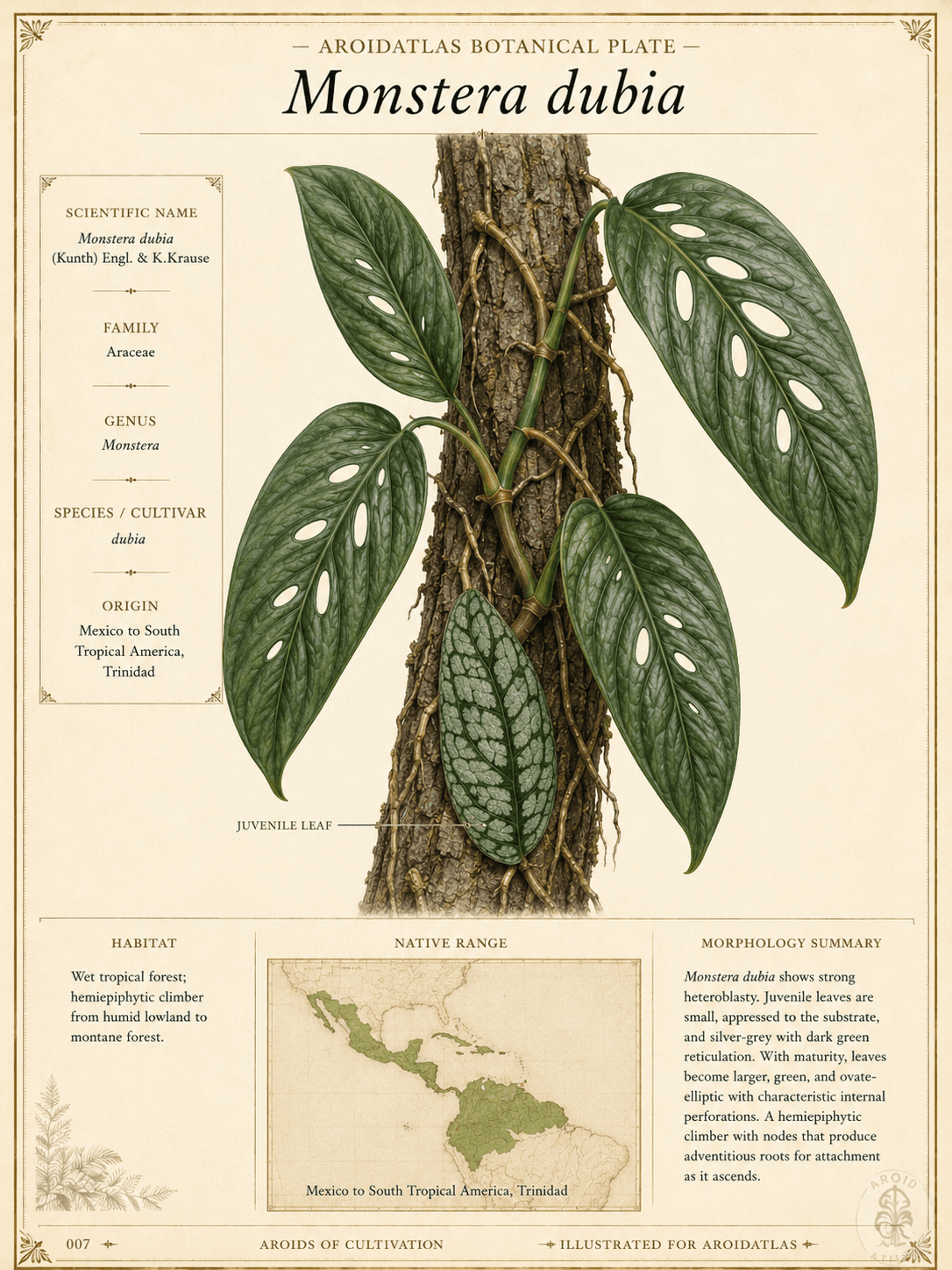
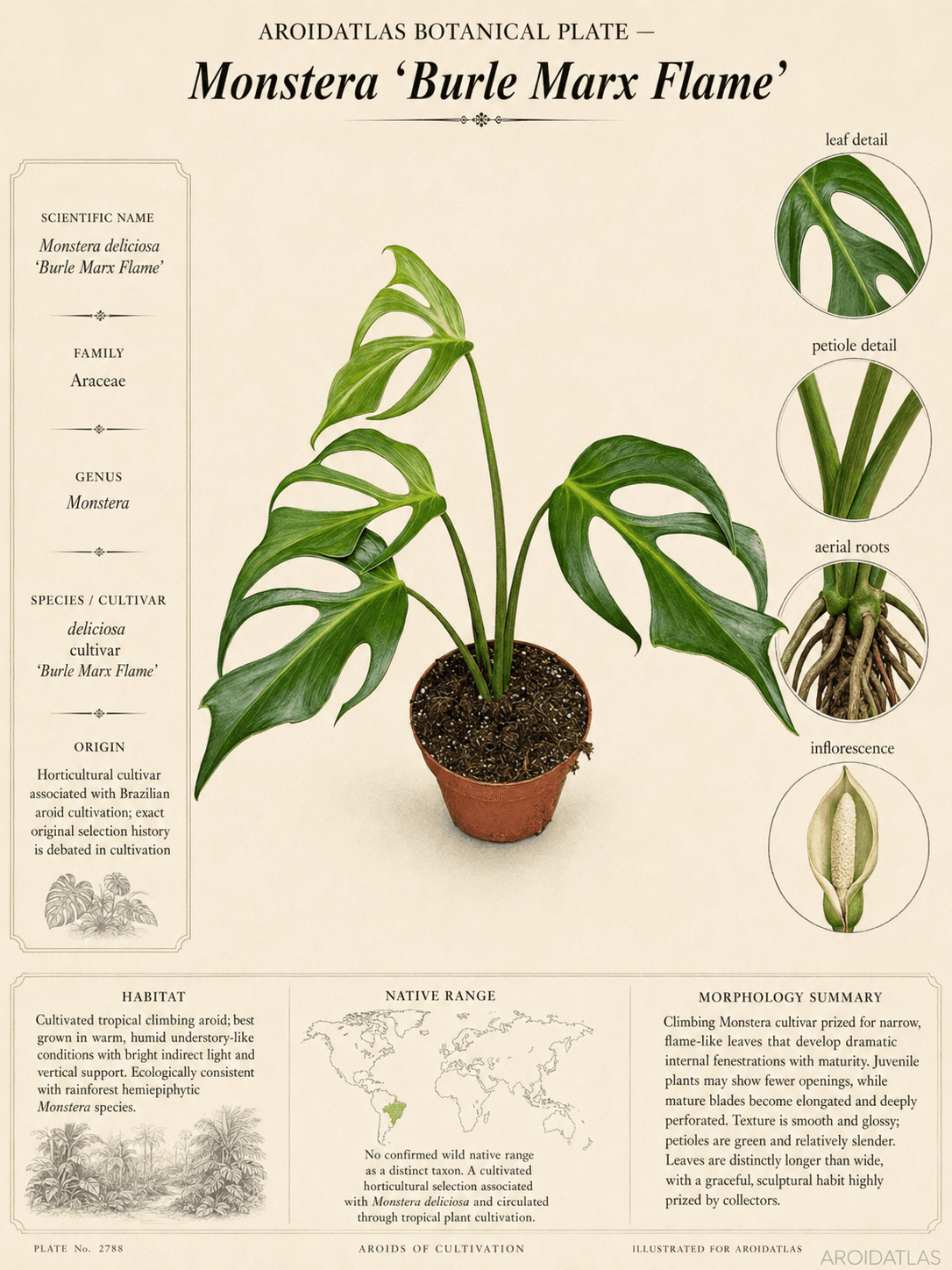
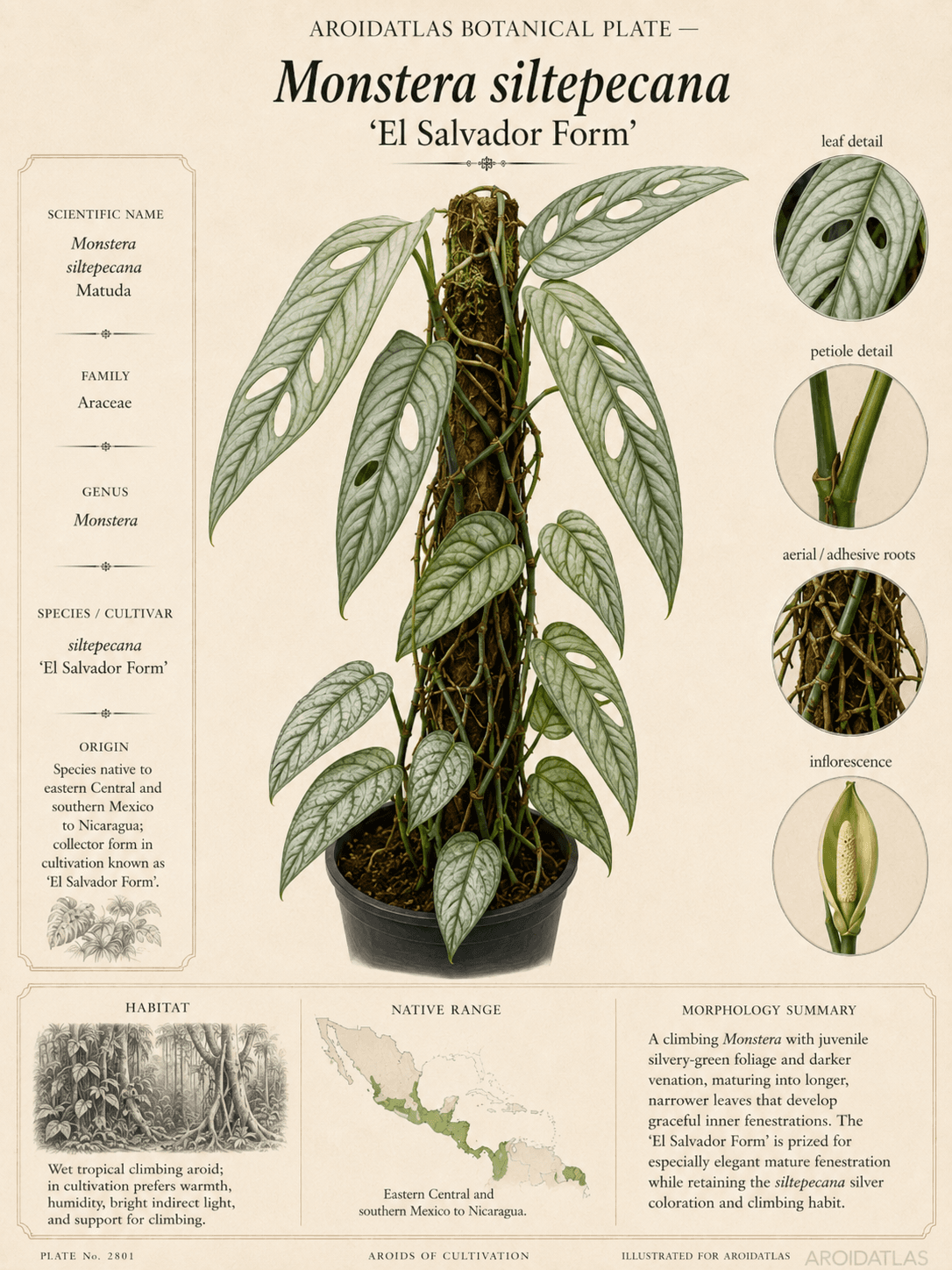
Full Specimen Plate
Monstera spruceana
Monstera spruceana
Aroid Atlas Price Guide
Select Plant Size
Pricing Data Key
Community price estimate based on limited sales history
Market Analysis
Monstera spruceana Price Guide & Auction Value
Historical eBay auction metrics and live retailer listings updated weekly.
No eBay auction history available yet. Data is collected automatically as sales appear on eBay UK.
Before You Buy
Species-specific things to check when evaluating a listing
- Ensure there is at least one healthy node present — a leaf without a node cannot produce new growth
- For variegated forms, verify variegation is present on the newest leaf and is not reverting to green
- Check for scale insects on petioles and undersides of leaves — monsteras are susceptible
- Confirm the cutting or plant has been rooted before purchasing, unless you are buying intentionally unrooted — unrooted cuttings require a propagation setup to succeed
Monstera spruceana Morphology
About Monstera spruceana
Monstera spruceana is a naturally occurring climbing species endemic to tropical America, found in wet tropical forests. It typically grows as an epiphytic or hemiepiphytic climber, ascending trees from the forest floor and thriving in high humidity, filtered light, and rich, well-drained organic soils. Juvenile plants exhibit a distinctive shingling growth habit, featuring entire, overlapping leaves that tightly hug their support. As the plant matures, its leaves elongate significantly, developing irregular splits and characteristic perforations, often appearing subpinnate while maintaining a narrow, architectural form. This plant securely climbs using aerial roots that emerge at its nodes.
Propagation Guide
How to Propagate Monstera spruceana
Care Guide
Monstera spruceana Care Guide & Growing Conditions
Chunky, well-draining mix: 40% potting compost, 30% perlite, 20% orchid bark, 10% worm castings. Monsteras are more tolerant of moisture than most aroids but still need drainage.
Water when the top 3–5 cm is dry. These are forgiving plants but still susceptible to root rot if kept too wet. Water less in winter.
50–70% preferred. More tolerant of typical UK indoor humidity than other aroids, though 60%+ encourages larger leaf development.
Balanced fertiliser at half strength every 2 weeks from spring through summer. Monthly in winter or none at all.
Every 12–18 months when roots emerge from drainage holes. Provide a moss pole or support — climbing encourages larger leaf production.
Common Problems
No fenestrations (splits/holes)
Plant is juvenile, or insufficient light
Ensure bright indirect light and allow the plant to mature — fenestrations develop with age and better conditions
Yellow leaves
Overwatering or nutrient deficiency
Check soil moisture before watering; begin a regular fertilising routine in growing season
Brown patches on leaves
Sunburn or cold water on leaves
Avoid direct sun; water at the base and ensure water is room temperature
Spruce's Monstera
Named for Richard Spruce, the Victorian botanist who spent seventeen years collecting plants in Amazonia and the Andes between 1849 and 1864 — one of the great field botanists of any era, working in difficult conditions with very limited support. He was also the person who identified and collected the cinchona tree that eventually saved millions of lives from malaria. Naming a Monstera after him seems almost insufficient. The plant itself — a climbing species from tropical America at upper middle tier pricing — is honest and legitimate if somewhat overshadowed by its namesake's history.