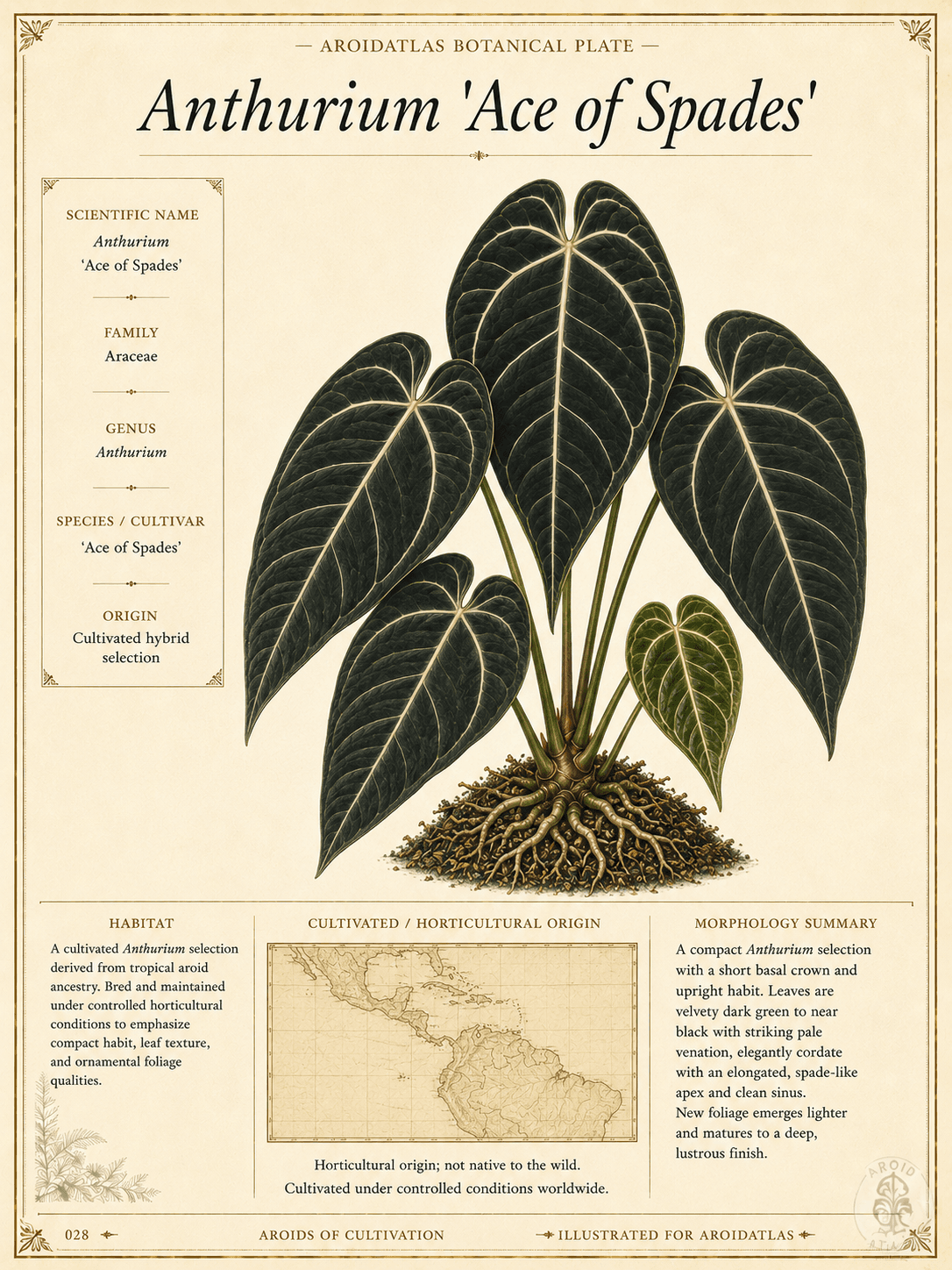
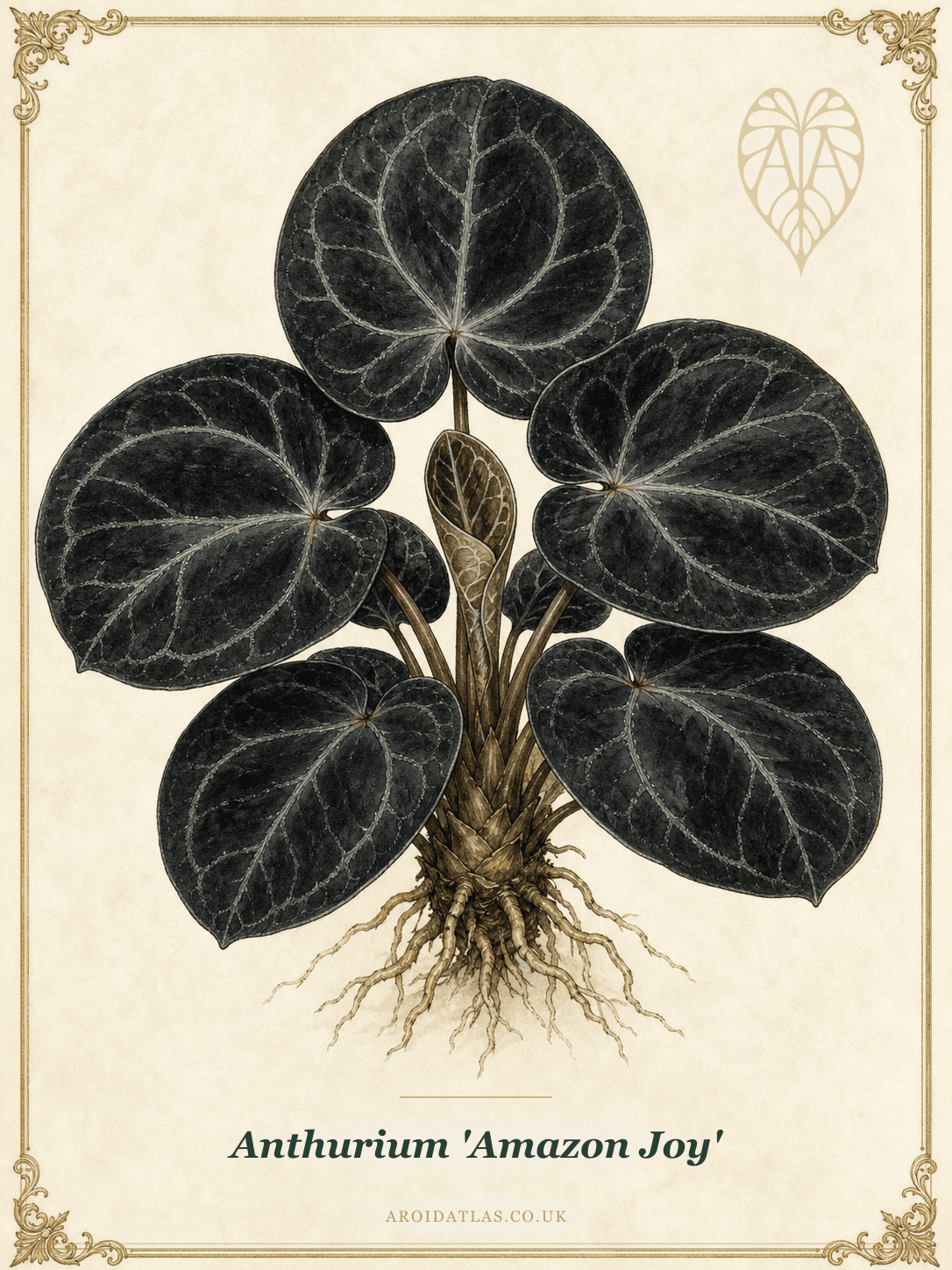
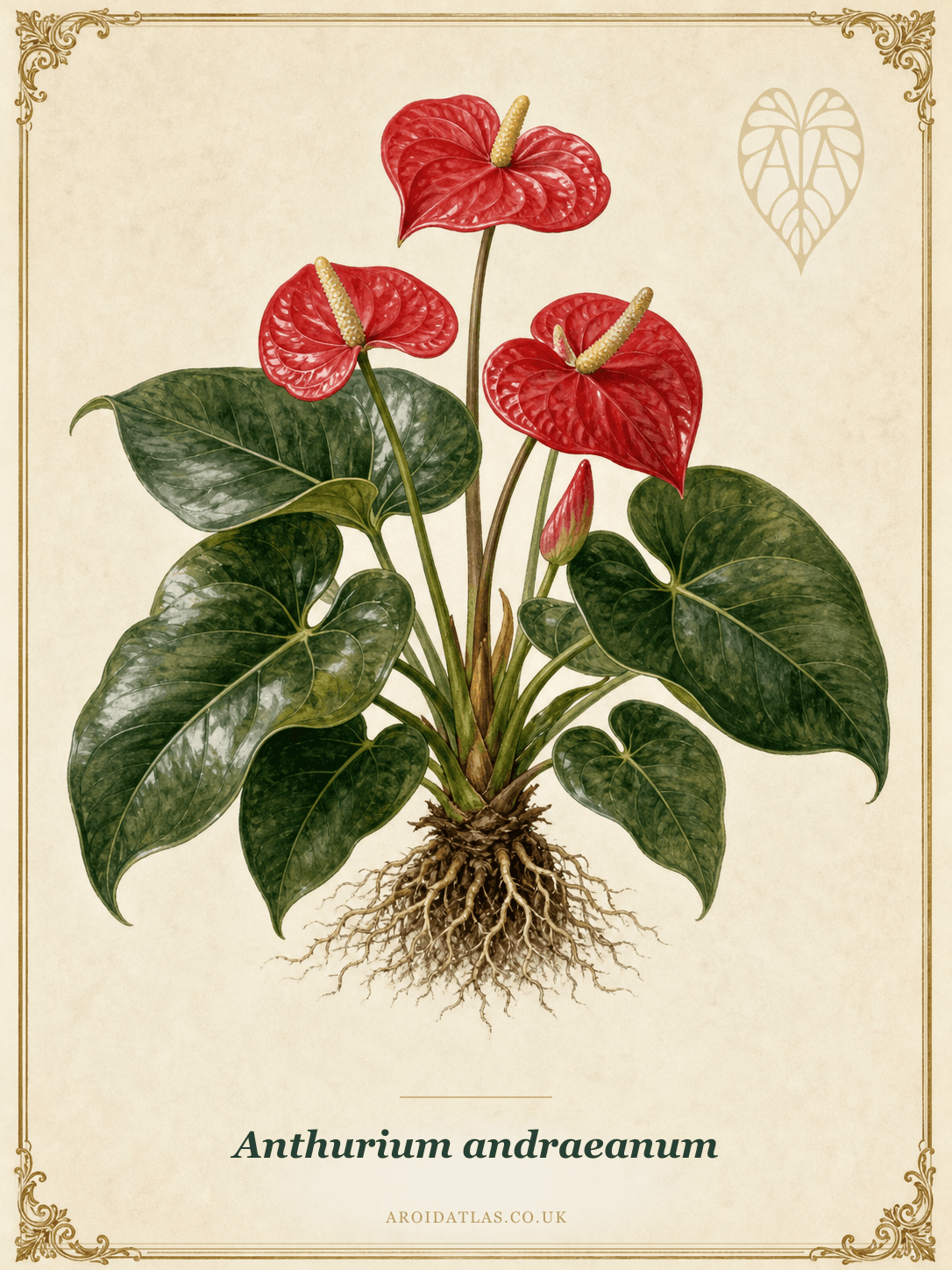
Scroll to explore forms of Anthurium veitchii
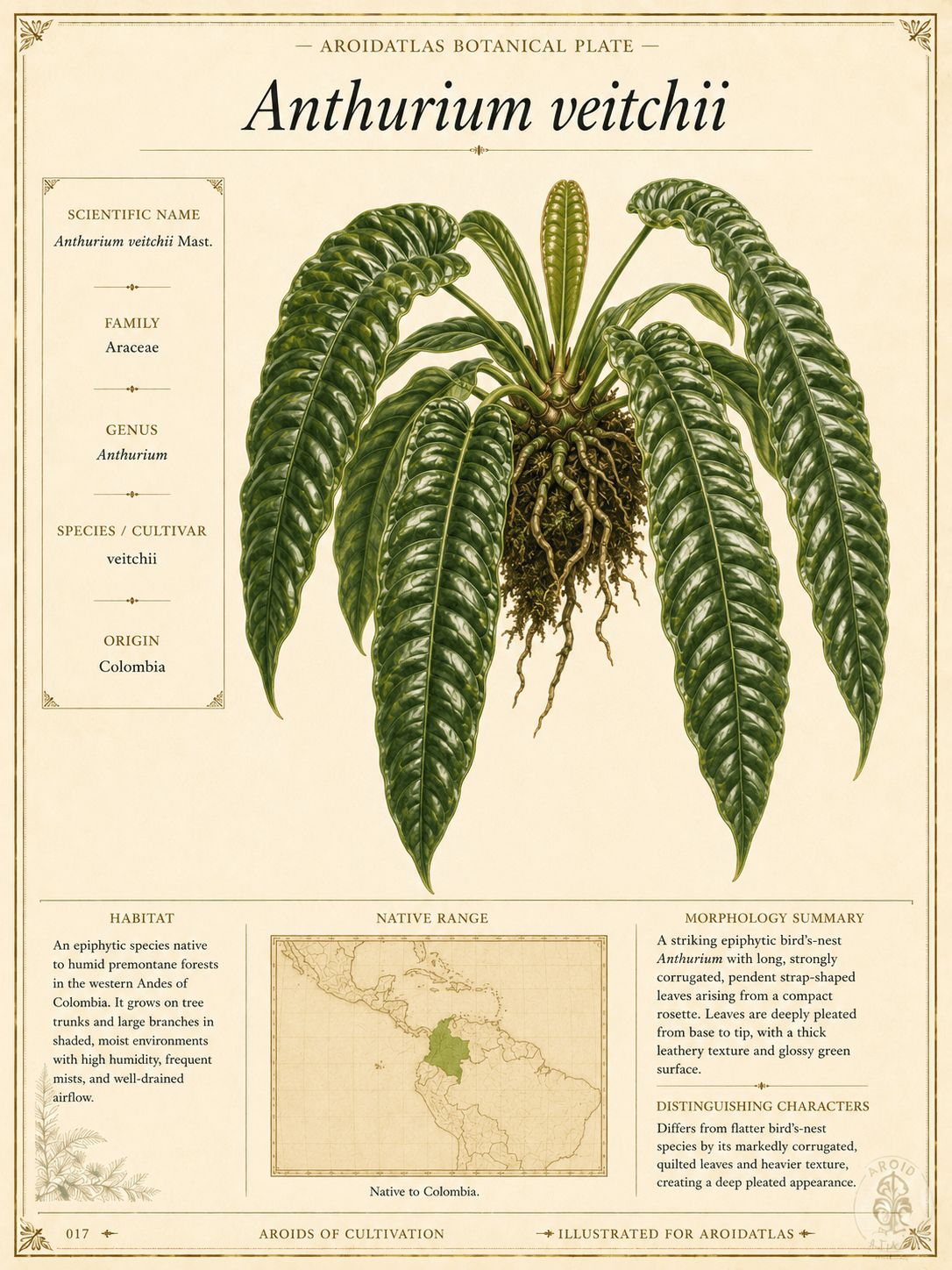
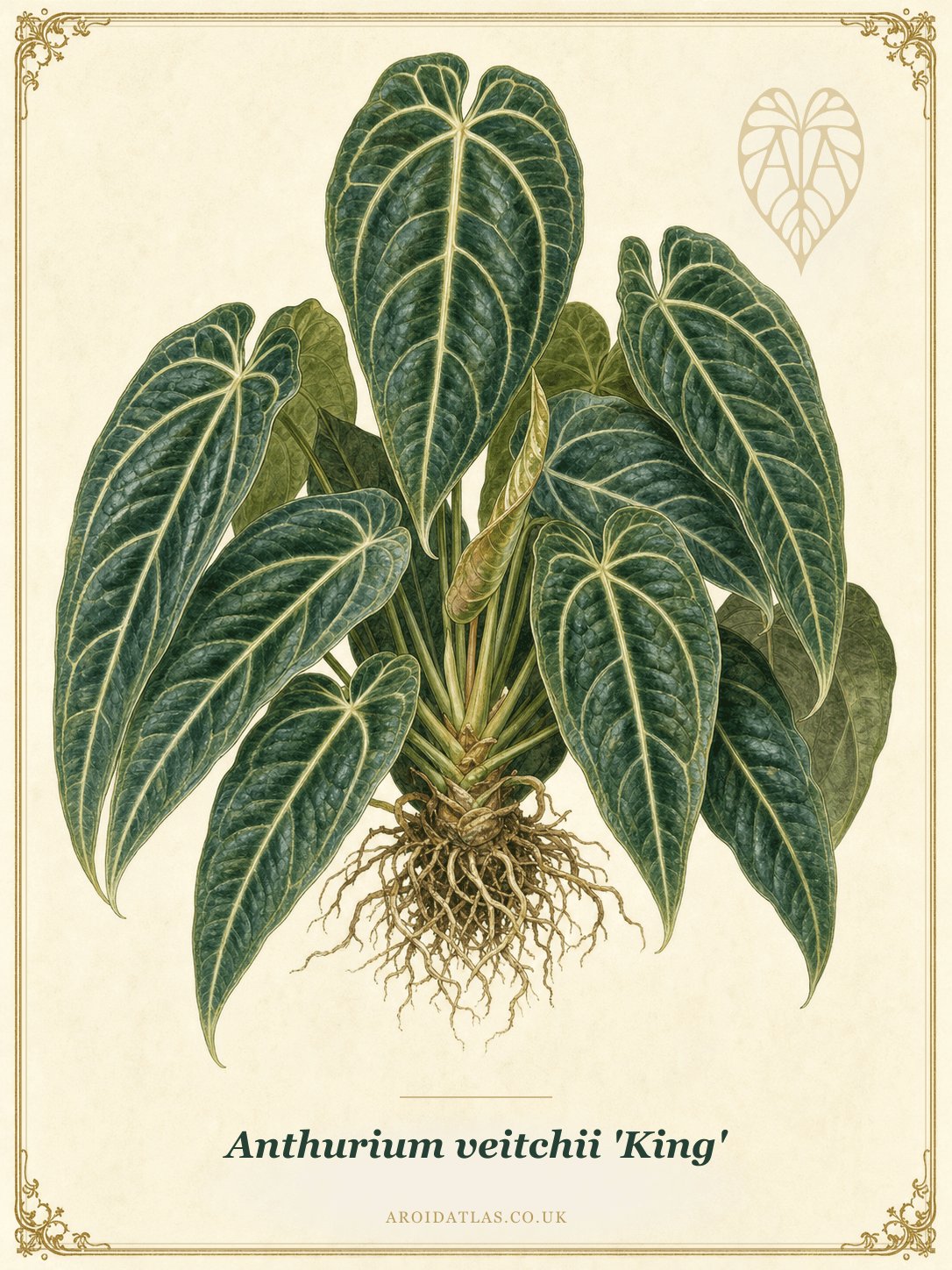
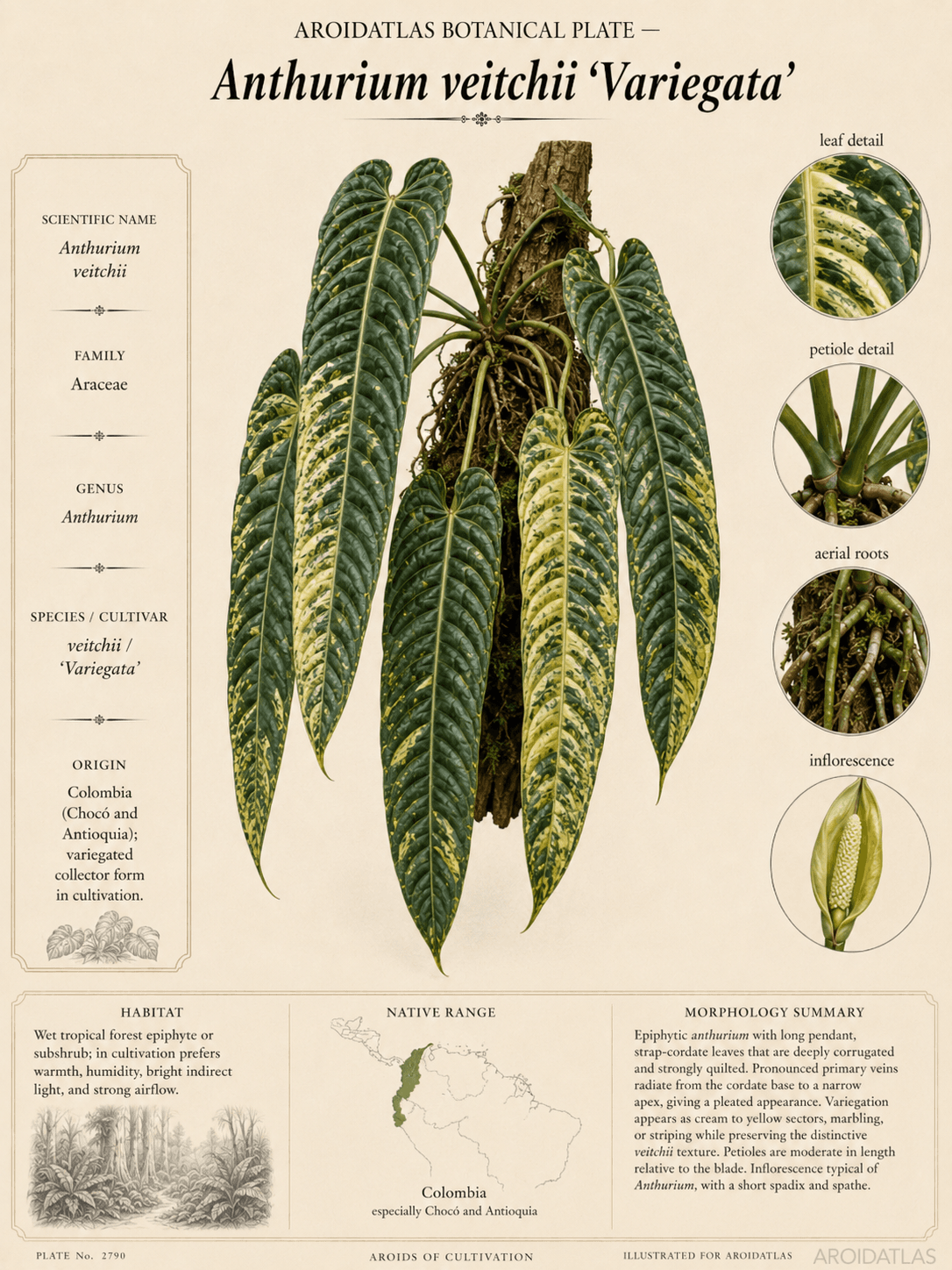
Full Specimen Plate
Anthurium veitchii 'King Form'
King Anthurium
Aroid Atlas Price Guide
Select Plant Size
Pricing Data Key
Other colour-form prices
Anthurium veitchii 'King Form' Morphology
About Anthurium veitchii 'King Form'
Anthurium veitchii, known among growers as the 'King Anthurium', produces some of the largest pendant foliage in the genus: enormous, deeply corrugated leaves that hang like rippled curtains as they mature. This selected 'King Form' represents especially broad, heavily quilted specimens with exceptional depth to the corrugation and rich, dark green colouring with a subtle metallic sheen. As leaves lengthen with age they can exceed a metre, developing a pendulous habit that displays the full ripple of the blade. It is a benchmark specimen plant among aroid collectors for its scale and its slow growth.
Native Range
Colombia
Market Analysis
Anthurium veitchii 'King Form' Price Guide & Auction Value
Historical eBay auction metrics and live retailer listings updated weekly.
No eBay auction history available yet. Data is collected automatically as sales appear on eBay UK.
Before You Buy
Shared checklist for Anthurium veitchii and its cultivated forms
- Check leaf ribbing is deep and well-defined, not shallow; depth of corrugation is a key indicator of specimen quality and age.
- For larger, more mature specimens, confirm the price reflects current market volatility for this species rather than an outdated listing.
Propagation Guide
How to Propagate Anthurium veitchii 'King Form'
Shared across every form of Anthurium veitchii — see this form's own Morphology for variegation-specific propagation notes.
9-14 months
Cultivar character is preserved through vegetative cuttings
Slow to establish; offsets are the standard method as stem cuttings rarely succeed on mature, pendulous growth.
Care Guide
Anthurium veitchii 'King Form' Care Guide & Growing Conditions
General care shared across all forms of Anthurium veitchii — cultivated forms may need brighter light or higher humidity than the plain species; check this form's Quick Facts above.
Very chunky, well-aerated epiphyte mix: orchid bark, perlite and sphagnum moss. Good drainage is essential given the plant's size and root mass.
Water when the top half of the substrate is dry. Avoid letting the substrate dry out completely; its slow growth makes recovery from drought stress slow.
75-90%: consistently high humidity is needed to reach the leaf lengths this species is known for; below that, growth is stunted and ribbing is less pronounced.
Low-nitrogen fertiliser at quarter strength every 4-6 weeks; its slow growth means it needs feeding less often than fast-growing Anthurium.
Only when fully root-bound, roughly every 2-3 years: a large, heavy plant that is disruptive to repot often.
Common Problems
Leaves failing to reach full length or lacking deep ribbing
Insufficient humidity
Raise humidity toward the top of its 75-90% range; leaf size and ribbing depth track humidity closely in this species.