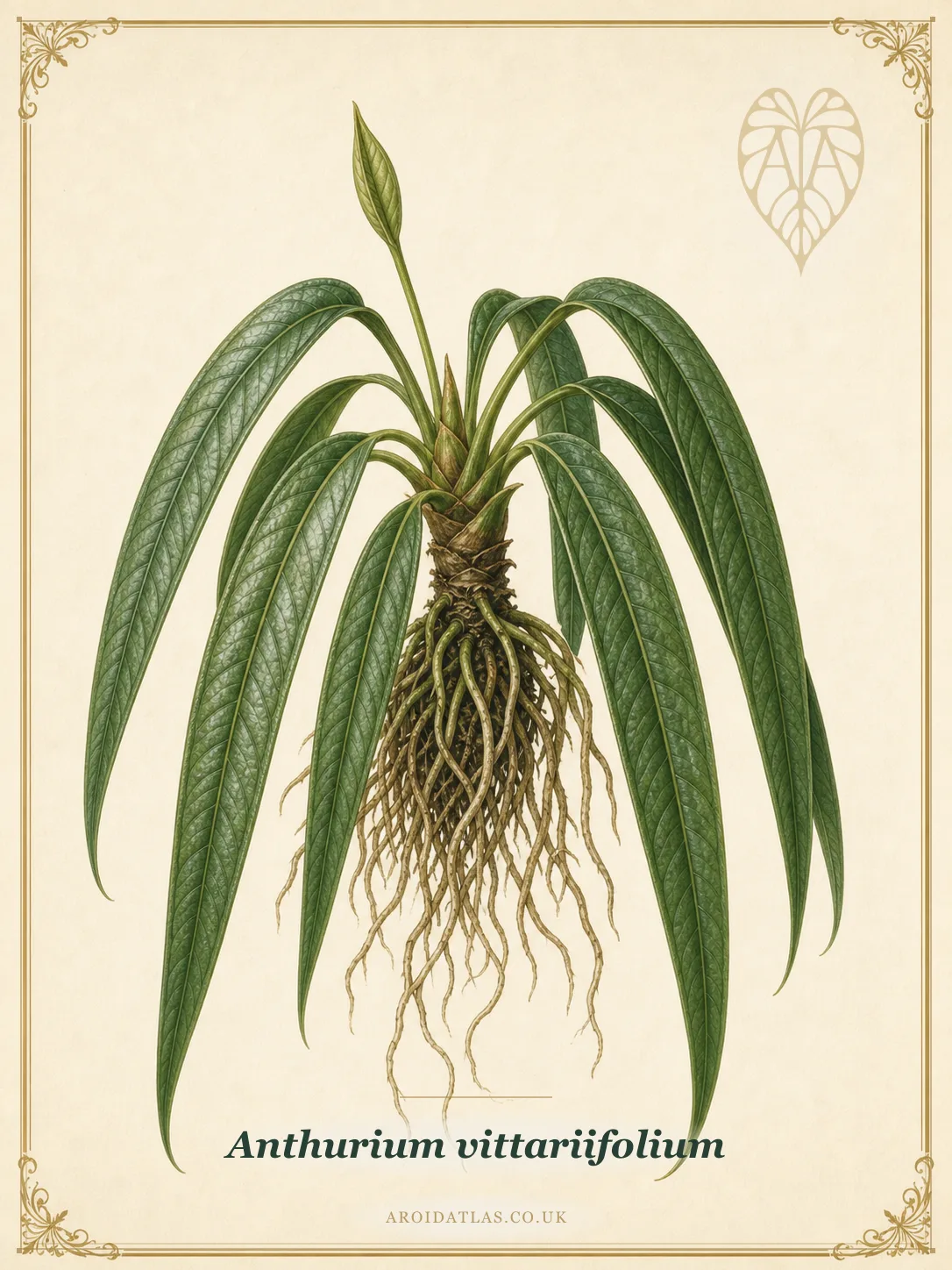
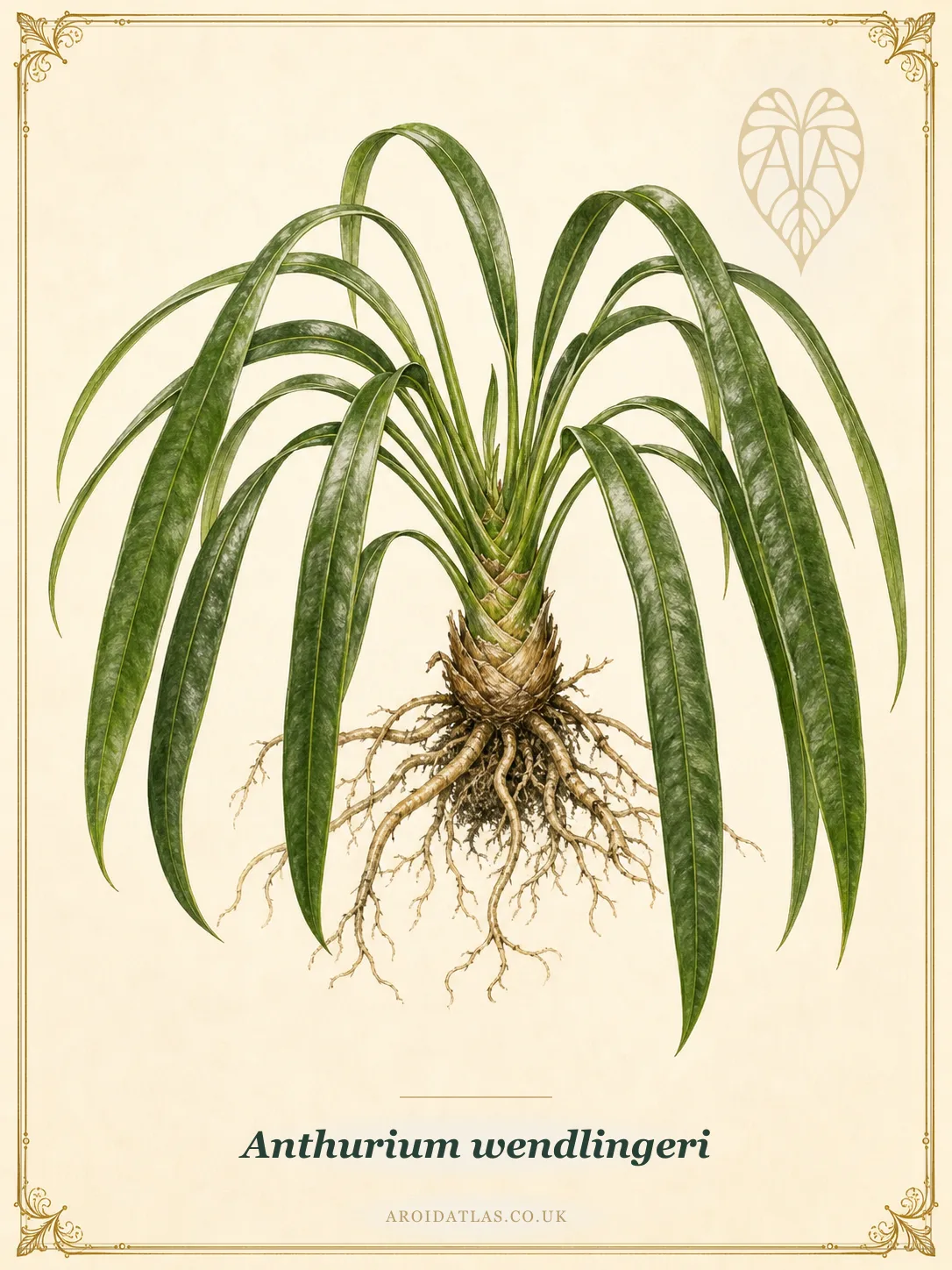
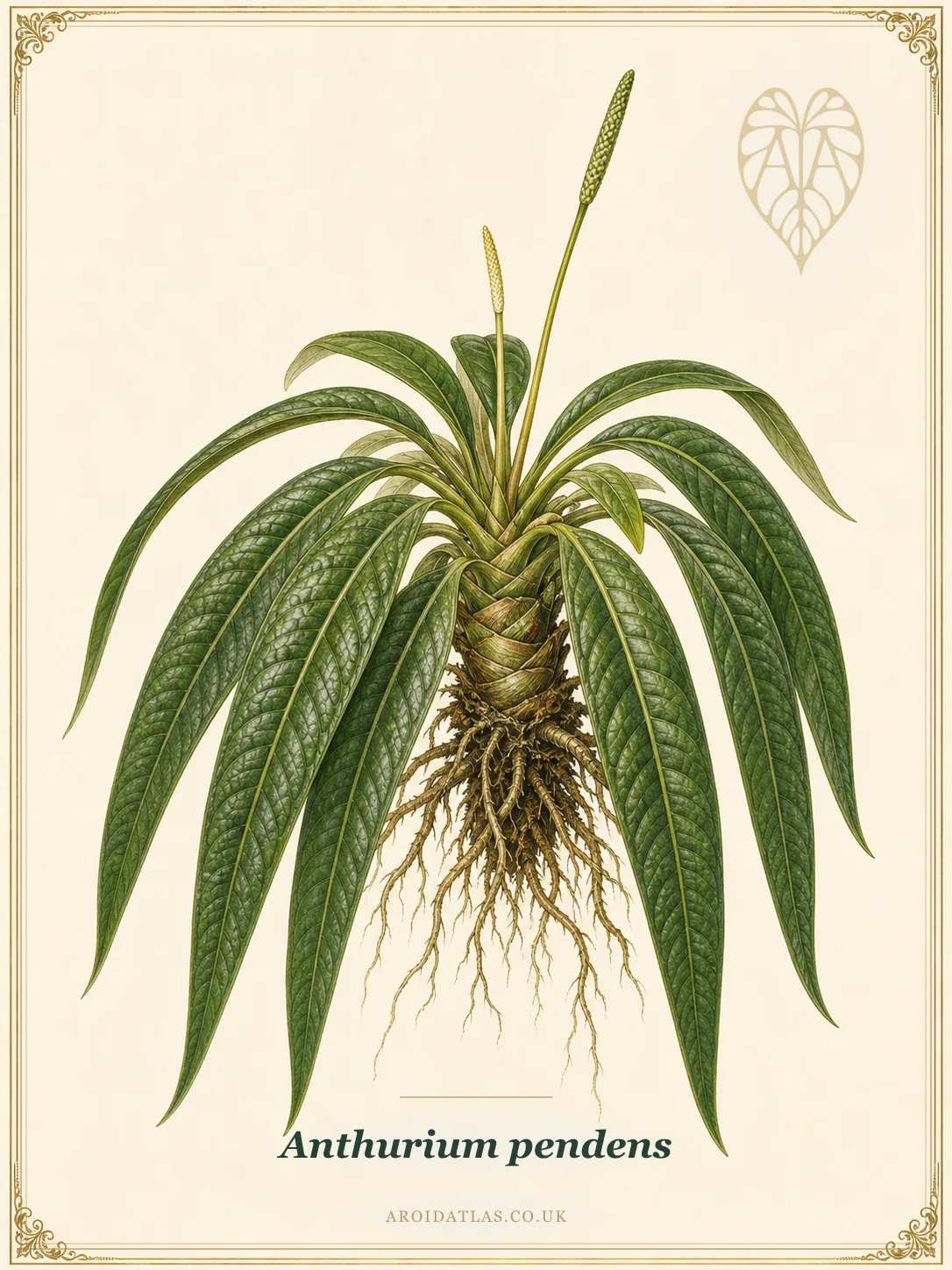
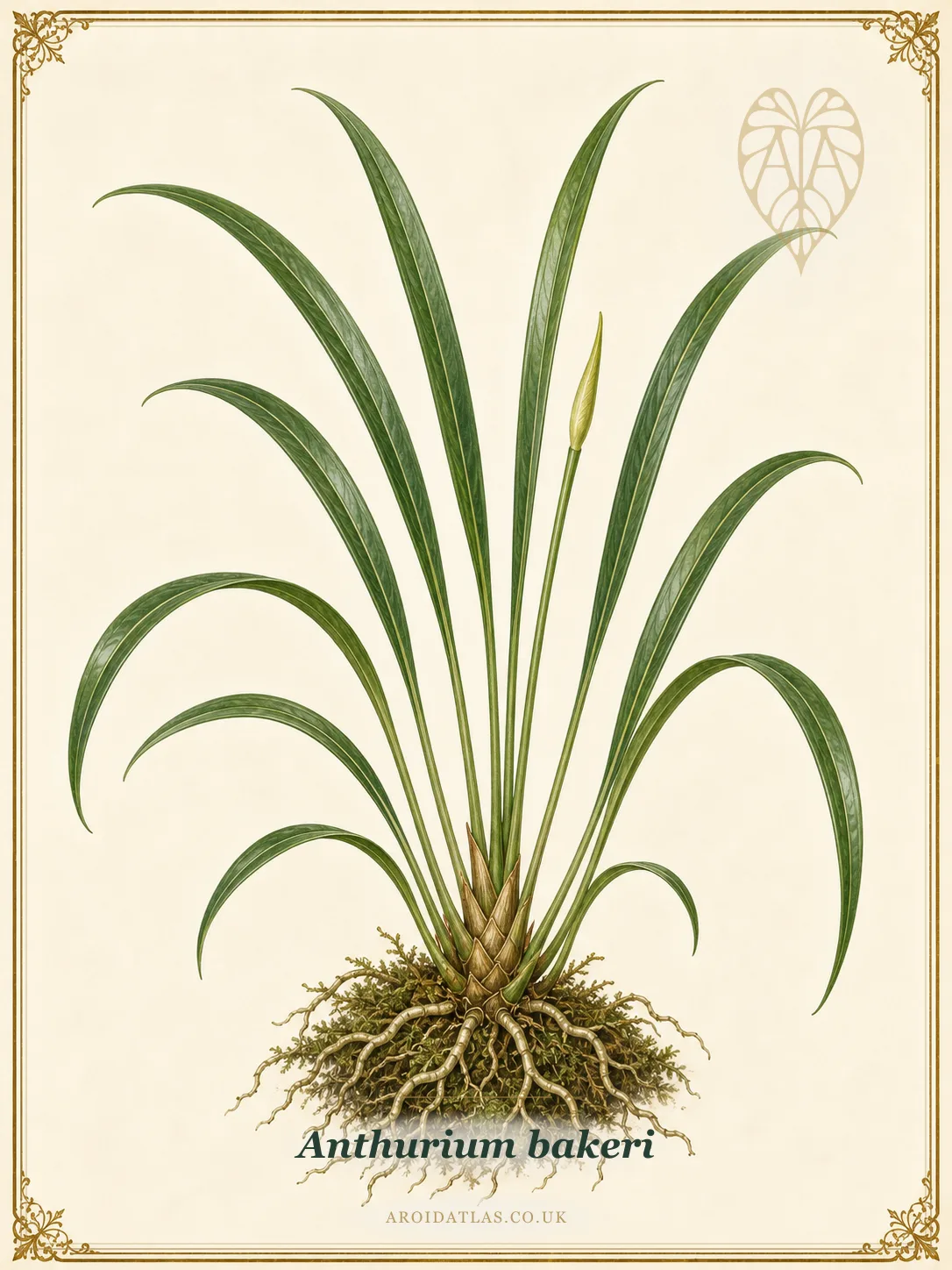
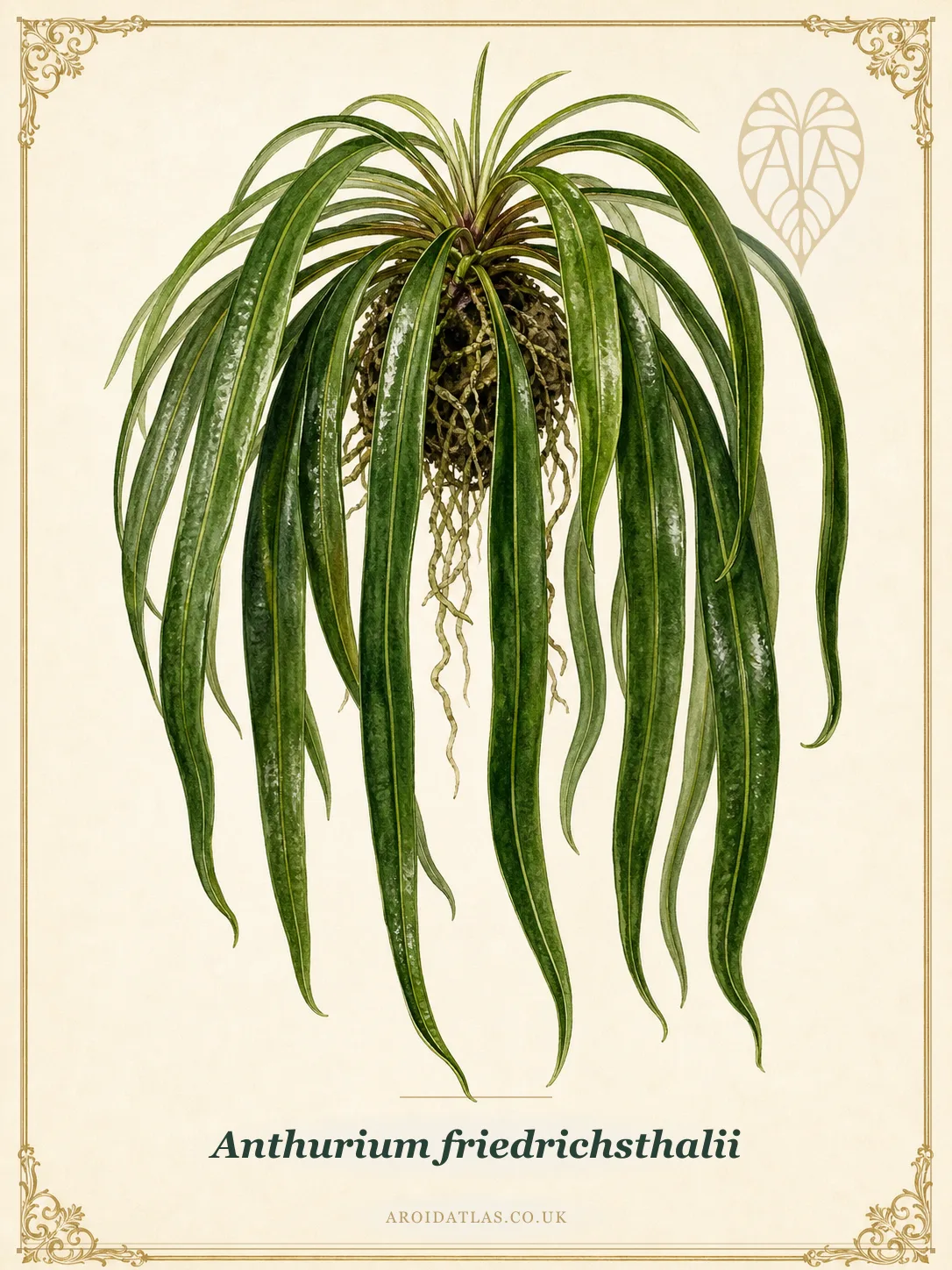
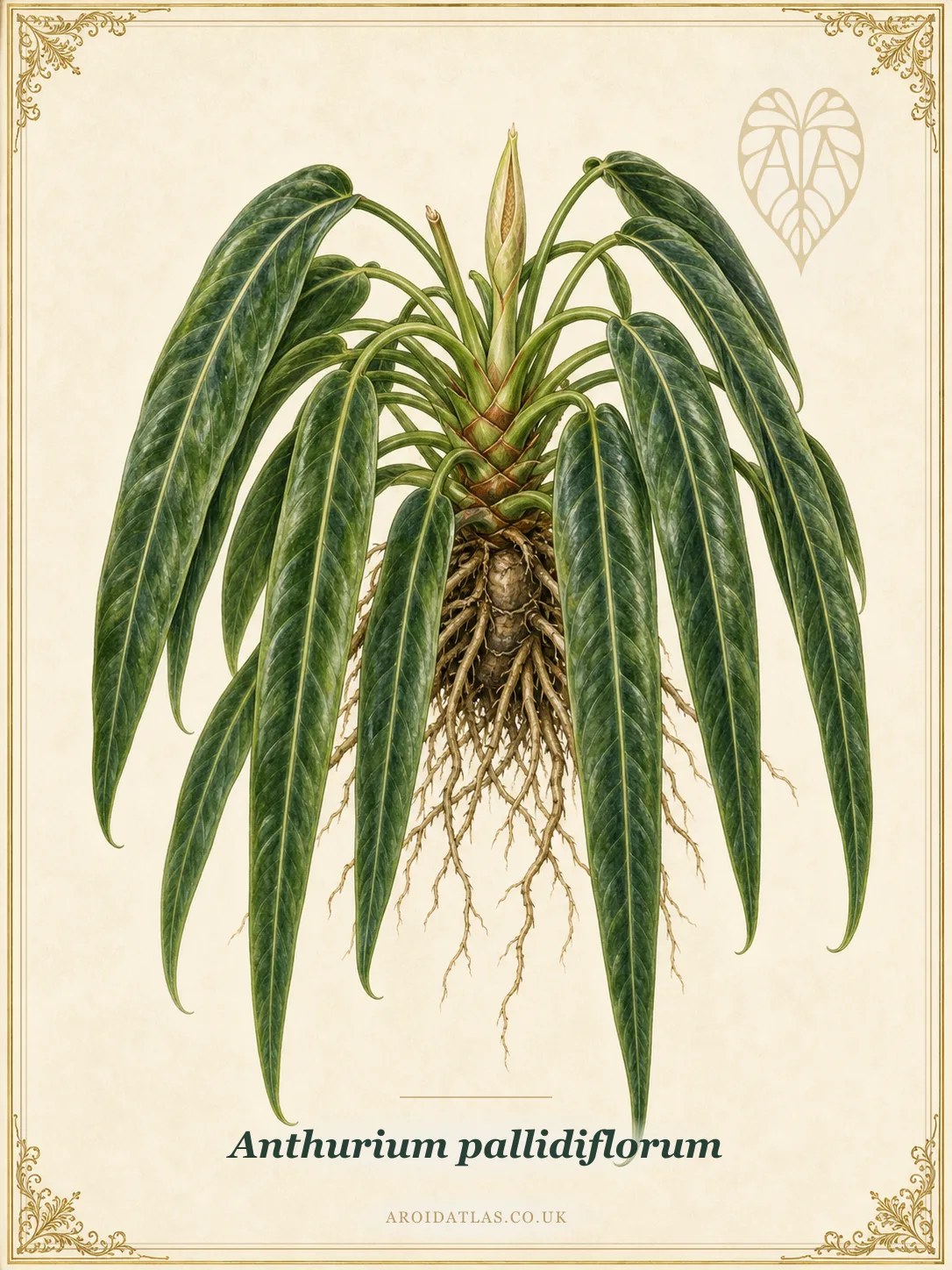
Full Specimen Plate
Anthurium pendulifolium
Pendant Leaf Anthurium
- Premium New Zealand Sphagnum Moss, 100gLong-fibre sphagnum for air-layering, top-dressing, and epiphyte substrate mixes.
- Natural Rooting Powder, 3 x 75gRooting hormone powder for stem and leaf cuttings.
- Precision Bonsai Pruning Scissors, 200mmFine-bladed snips for clean node cuts when taking a cutting.
- Humidity Dome, Heavy-Duty Germination KitVented propagation dome for holding humidity around fresh cuttings.
Amazon links — we may earn commission on qualifying purchases.
7cm Target Price
£75.00
Market Hub
Anthurium pendulifolium Sold Prices & Live Market
What the Target Price above is based on: eBay sold prices by plant size, live listings, and retailer stock.
No eBay sales recorded yet. Sold listings are collected as they appear on eBay.
Before You Buy
Species-specific things to check when evaluating a listing
- Count the healthy leaves; strap-leaf anthuriums grow very slowly, so buying a plant with only one leaf means a long wait before it becomes an attractive specimen
- Check for scale insects along the underside midrib of leaves; they are small, brown, and flat and easy to miss
- Roots should be firm. Check that drainage holes are visible in listing photos; root rot from waterlogged shipping medium is common
- Ask the seller how many roots the plant has; a well-rooted plant establishes far faster than a recently divided offset
Anthurium pendulifolium Morphology
About Anthurium pendulifolium
A compact crown of long, strap-like leaves hangs down from Anthurium pendulifolium in a genuinely waterfall-like cascade, some of the longest foliage among the pendant anthuriums. Native to wet tropical forest in Colombia and northern Peru, it grows in the shaded, filtered light beneath the forest canopy, its leathery, glossy, dark green leaves running linear-lanceolate to narrowly oblanceolate on petioles short relative to the blade length. That proportion — short stem, very long leaf — is what makes it suited to a hanging basket or mount rather than a standard pot.
Native Range
Colombia
Propagation Guide
How to Propagate Anthurium pendulifolium
Propagation Guide
How to Propagate Anthurium pendulifolium
10-16 months
Strap-leaf anthuriums rarely branch and are slow to produce offshoots. Stem cuttings require high humidity and warmth. Success rates are lower than velvet types.
Care Guide
Anthurium pendulifolium Care Guide & Growing Conditions
Care Guide
Anthurium pendulifolium Care Guide & Growing Conditions
Very coarse epiphytic mix: 50% orchid bark, 30% perlite, 20% sphagnum moss. Can also be grown mounted on cork bark for best airflow.
Allow to approach dryness between waterings; strap-leaf anthuriums are more drought-tolerant than velvet types. Water thoroughly, then allow to drain completely.
High, 70-85%. More tolerant of lower humidity than the velvet-leaf species but still benefits from consistent moisture in the air.
Half-strength orchid fertiliser monthly during growing season. These are slow growers, and overfeeding can burn roots.
Infrequently, every 2–3 years. These species often bloom better when slightly root-bound. Consider mounting on cork board instead.
Common Problems
Root rot
Dense substrate or overwatering
Switch to a very coarse bark-heavy mix; allow to dry more between waterings
No new growth
Too cold or too dark
Ensure minimum 18°C and bright indirect light
Brown leaf tips
Low humidity or salt buildup from fertiliser
Flush substrate with clean water to remove salt buildup; increase humidity
Field Reference
In the Wild
Field Reference
In the Wild
Field Notes
For Those with Ceiling Height
Another of the pendant strap-leaved anthuriums, pendulifolium produces impressively long leaves that cascade naturally from Colombia to northern Peru in wet tropical forest. Like all pendant anthuriums, it demands display space that most British homes do not freely offer: a ceiling hook, a high shelf, or a conservatory rafter. Treated correctly it creates a trailing curtain of long narrow leaves that no upright plant can replicate. The growth habit is the point. If you do not have the ceiling height, buy something else.
Also in: Pendant Strap-Leaf
Species with long, narrow, downward-hanging leaves, usually grown mounted or in hanging baskets rather than upright.