Full Specimen Plate
Anthurium friedrichsthalii
Narrow-Leaf Anthurium
Aroid Atlas Price Guide
Select Plant Size
Pricing Data Key
Anthurium friedrichsthalii Morphology
About Anthurium friedrichsthalii
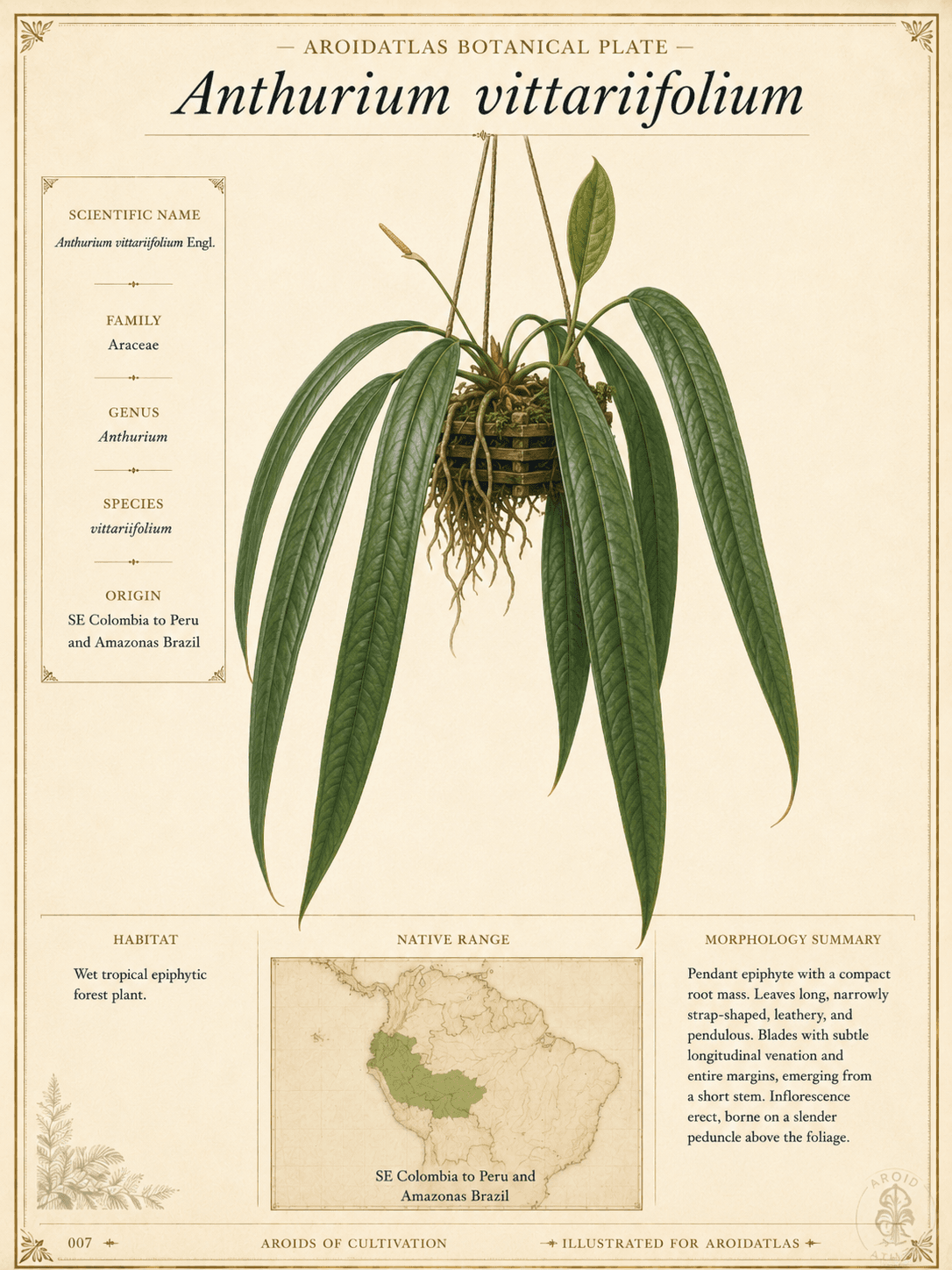
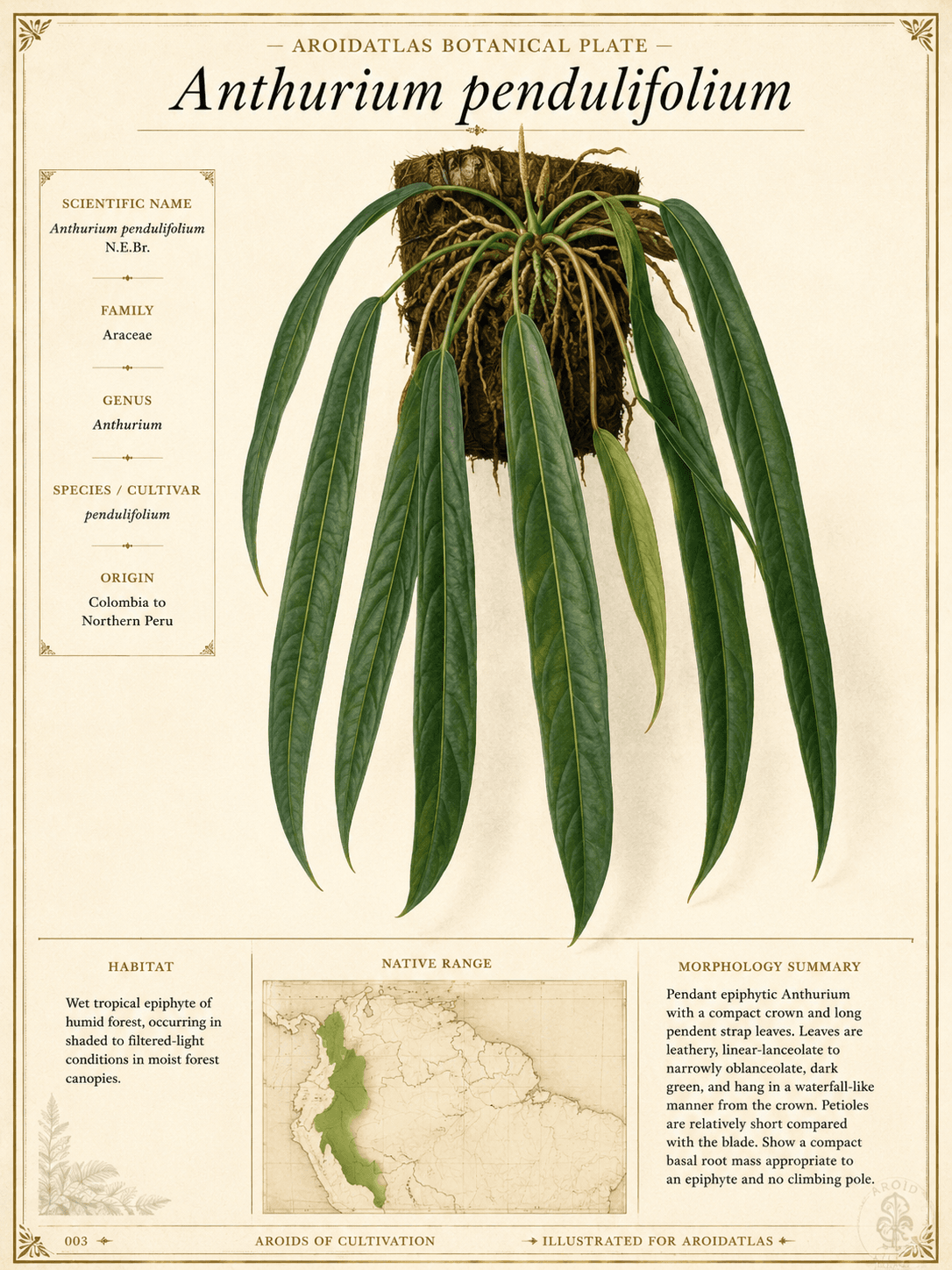
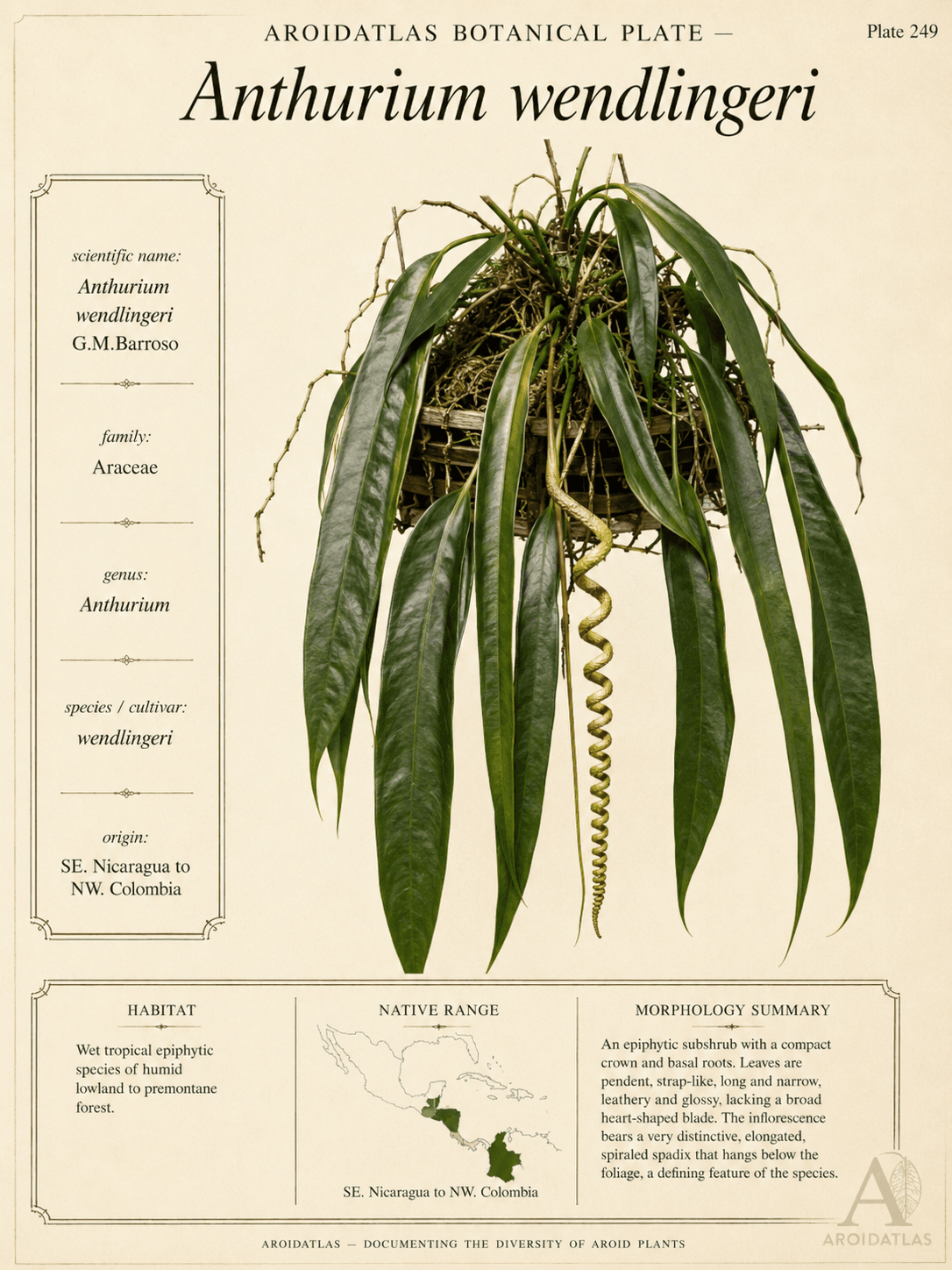
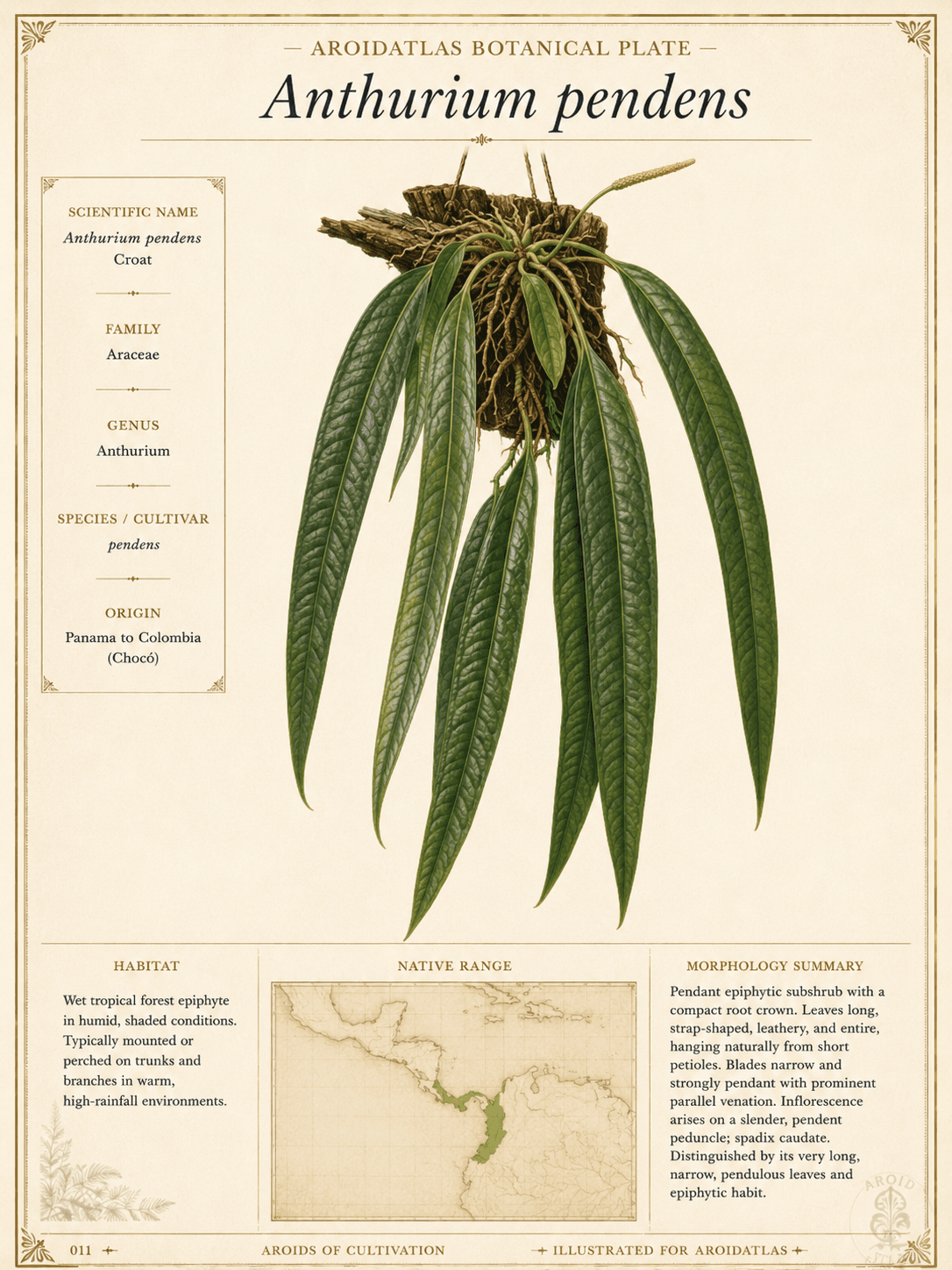
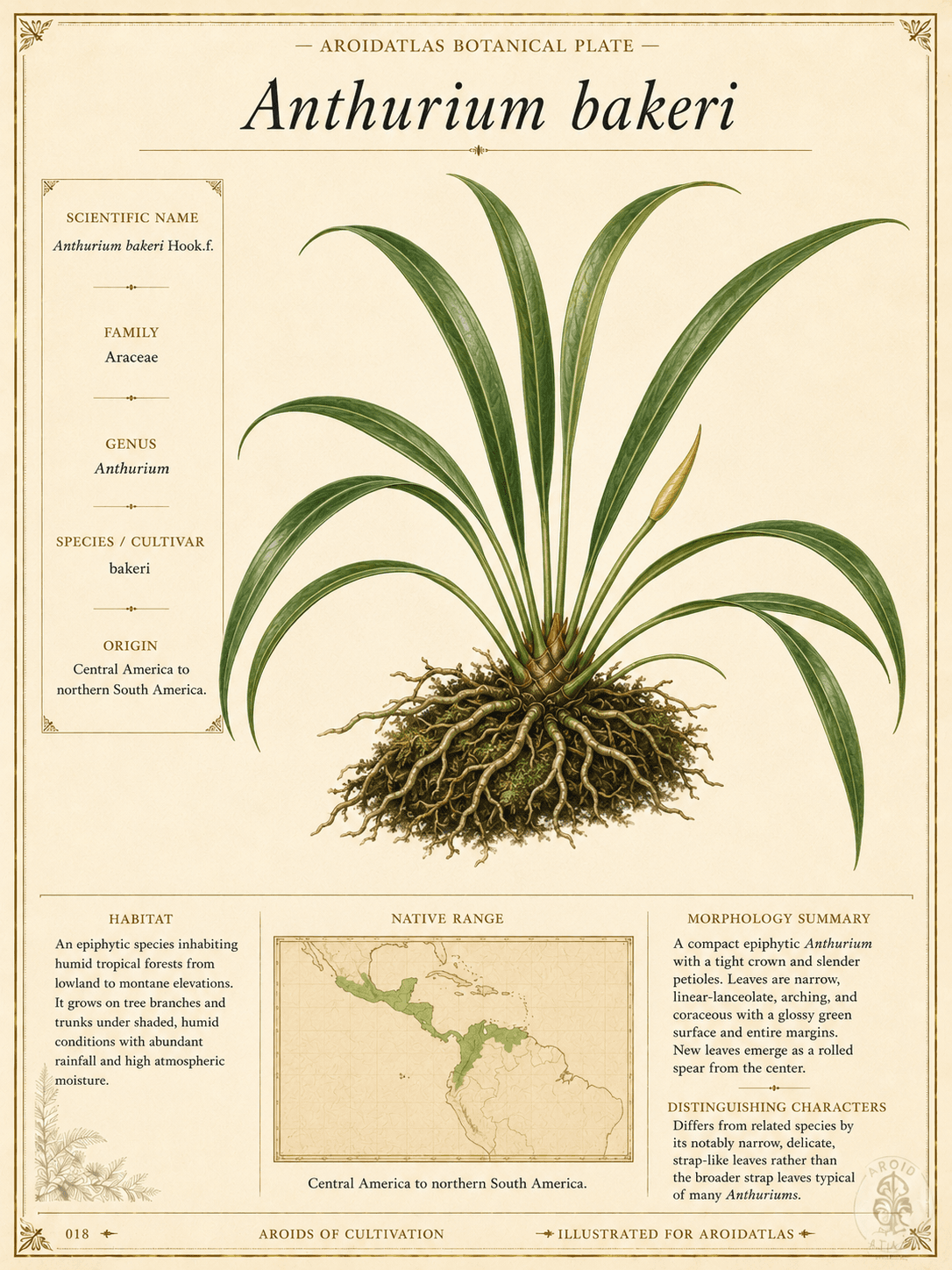
Anthurium friedrichsthalii is a narrow, strap-leaved species that stands apart from the broad, heart-shaped foliage typical of many popular collector Anthuriums; its long, pendulous, glossy leaves give it a more grass-like, cascading appearance well suited to hanging displays. It is an epiphytic species from Central American rainforests, appreciated by collectors seeking foliage texture and shape distinct from the velvet-leaved or bird's-nest forms that dominate the genus's popularity.
Native Range
Panama
Market Analysis
Anthurium friedrichsthalii Price Guide & Auction Value
Historical eBay auction metrics and live retailer listings updated weekly.
No eBay auction history available yet. Data is collected automatically as sales appear on eBay UK.
Before You Buy
Species-specific things to check when evaluating a listing
- Check root health carefully; this epiphytic species is prone to rot if kept too wet
- Confirm leaves are firm and glossy, not soft or yellowing
- Best suited to hanging display; consider your space before buying a mature specimen
Propagation Guide
How to Propagate Anthurium friedrichsthalii
4-8 months
Cultivar character is preserved through vegetative cuttings
Divide established clumps once offsets/pups form at the base.
Care Guide
Anthurium friedrichsthalii Care Guide & Growing Conditions
Very free-draining epiphytic mix: 40% orchid bark, 30% perlite, 20% sphagnum, 10% charcoal, or mount on bark/wood.
Water thoroughly then allow to approach dryness between waterings; this species is more epiphytic than terrestrial.
65-85% preferred.
Balanced liquid fertiliser at quarter strength every 4 weeks in spring and summer.
Every 18-24 months, or when offsets crowd the container.
Common Problems
Root rot
Substrate staying too wet
Ensure very free drainage and allow the substrate to approach dryness between waterings; this species is more sensitive to overwatering than terrestrial Anthuriums
Sparse, thin leaves
Insufficient light
Move to brighter indirect light
A Different Silhouette Entirely
Friedrichsthalii doesn't look like most people's mental image of a collector Anthurium: no velvet, no heart shape, no bold veining. Instead it offers a cascading, grass-like texture that fills a genuinely different role in a hanging display than the upright rosette species that dominate the genus.
Also in: Pendant Strap-Leaf
Species with long, narrow, downward-hanging leaves, usually grown mounted or in hanging baskets rather than upright.