A horticultural cross — priced, illustrated and tracked independently of either parent. Sources disagree on the exact cross; see the field notes below.
Sources:Missouri Botanical Garden: Alocasia 'Portora' ·Gardenia.net: Alocasia 'Portora'
Full Specimen Plate
Alocasia portadora
Upright Elephant Ear
Aroid Atlas Price Guide
Select Plant Size
Pricing Data Key
Alocasia portadora Morphology
About Alocasia portadora
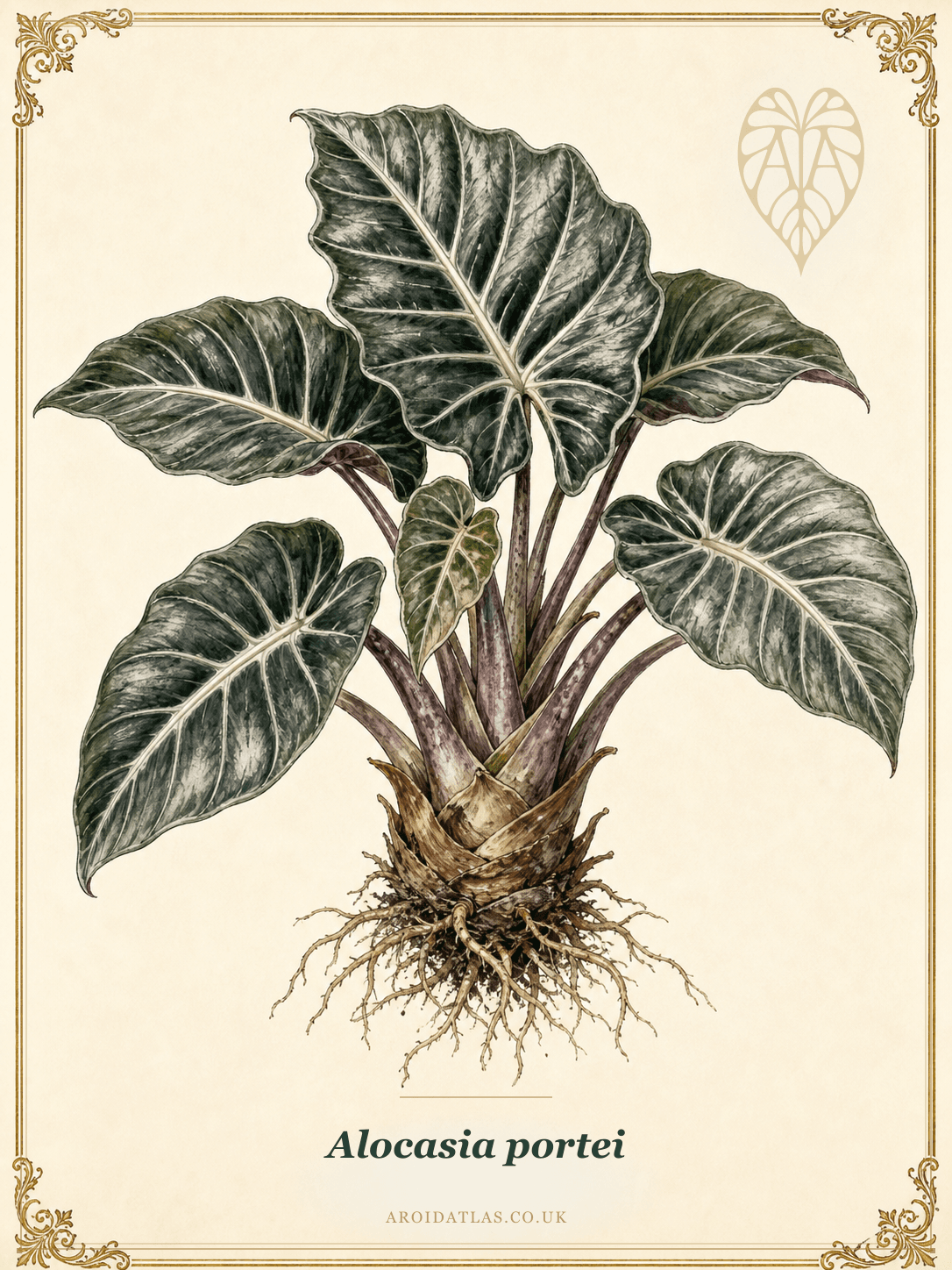
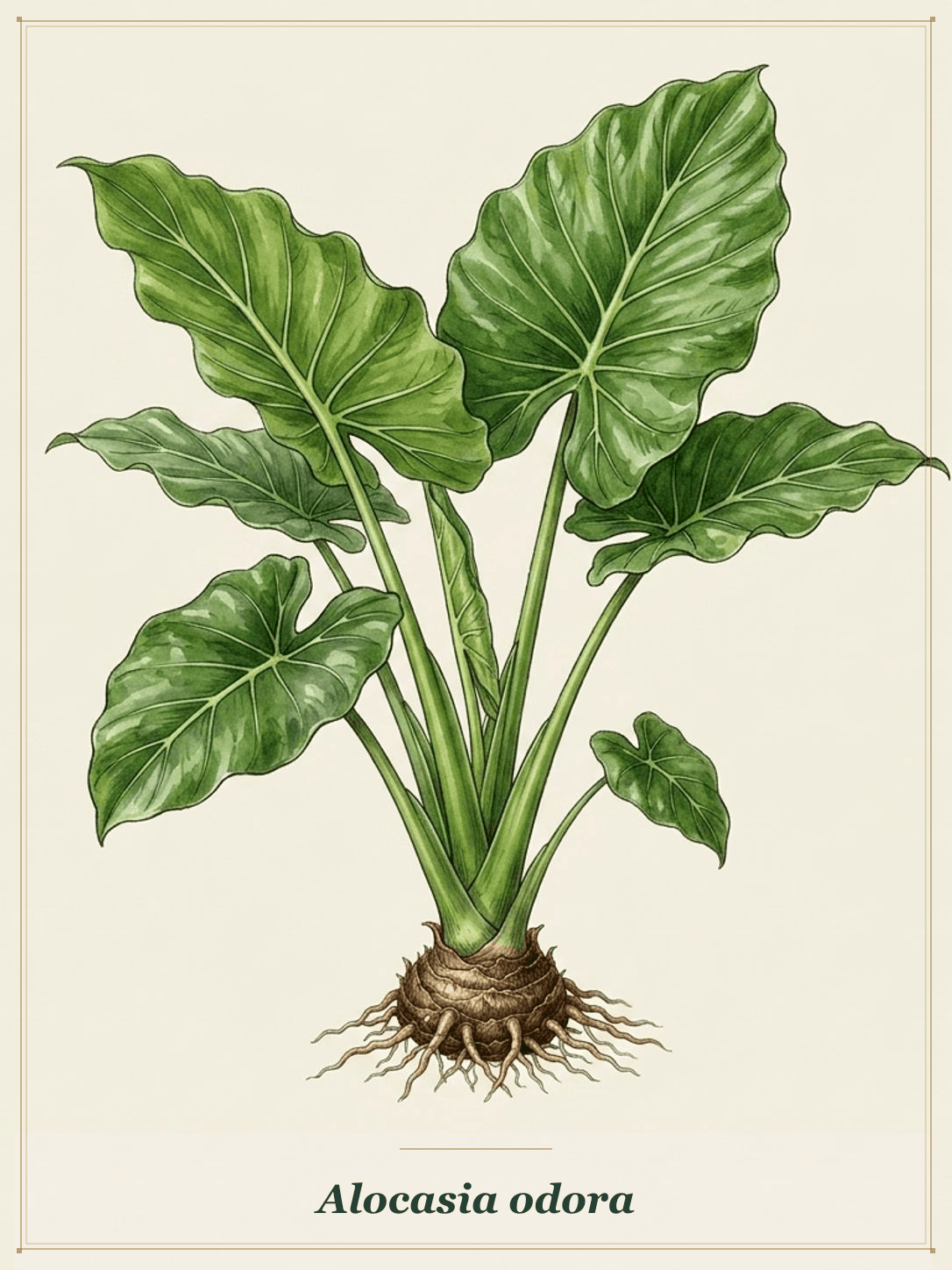
Alocasia portadora, commonly known as the Upright Elephant Ear, is a horticultural hybrid created by crossing Alocasia odora and Alocasia portei. It is characterized by massive, strongly upright-facing sagittate leaves with ruffled, wavy margins. The foliage is a rich green color with deeply set primary veins. Its petioles are exceptionally thick and fleshy, with reddish-purple mottled speckling, especially near the base.
Market Analysis
Alocasia portadora Price Guide & Auction Value
Historical eBay auction metrics and live retailer listings updated weekly.
No eBay auction history available yet. Data is collected automatically as sales appear on eBay UK.
Before You Buy
Species-specific things to check when evaluating a listing
- Given documented naming confusion (Portora/Portadora/Portodora), ask the seller which specific cross they're offering rather than relying on the listing title alone
- Leaves should be strongly upright-facing with ruffled, wavy margins; a flatter or smoother leaf may indicate a different odora-type hybrid
- Check the petiole for reddish-purple mottled speckling near the base, a trait distinguishing this hybrid from plain odora
- Widely available and inexpensive, so be cautious of pricing that implies rarity
- Factor in eventual size (1.5-2.5m) before buying a small offset, given the fast growth rate
Portora, Portadora, Portodora
LariAnn Garner's original cross was named 'Portora': Alocasia portei x Alocasia odora. Portadora, Portodora and a couple of other spellings followed as the plant spread through the trade, and at least one source explicitly warns that some sellers apply these names to an unrelated seedling selection, not the original cross. I've recorded the original, well-documented parentage, but treat any specific plant sold as 'Portadora' with a little caution until you know which one you're actually getting.