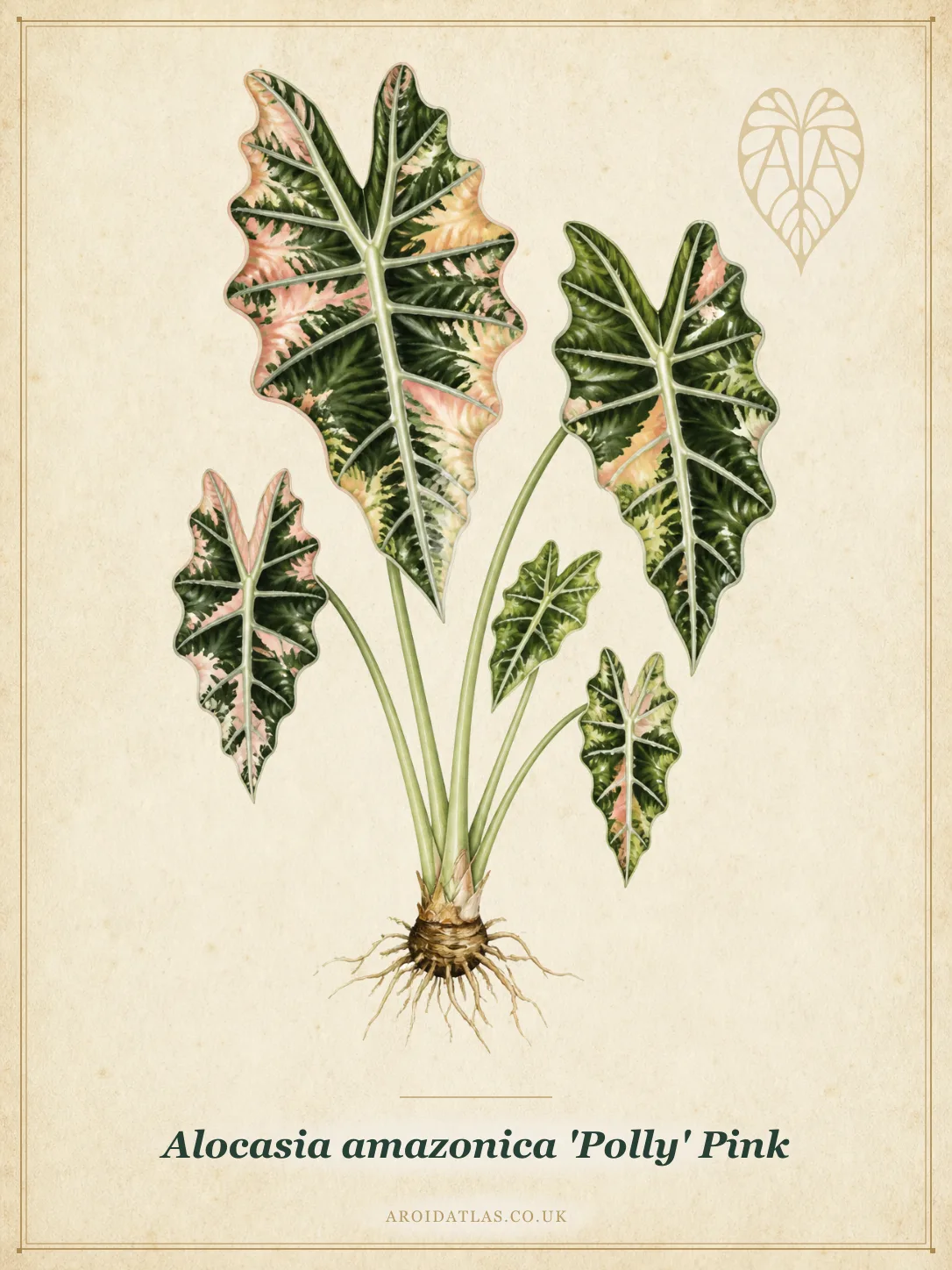
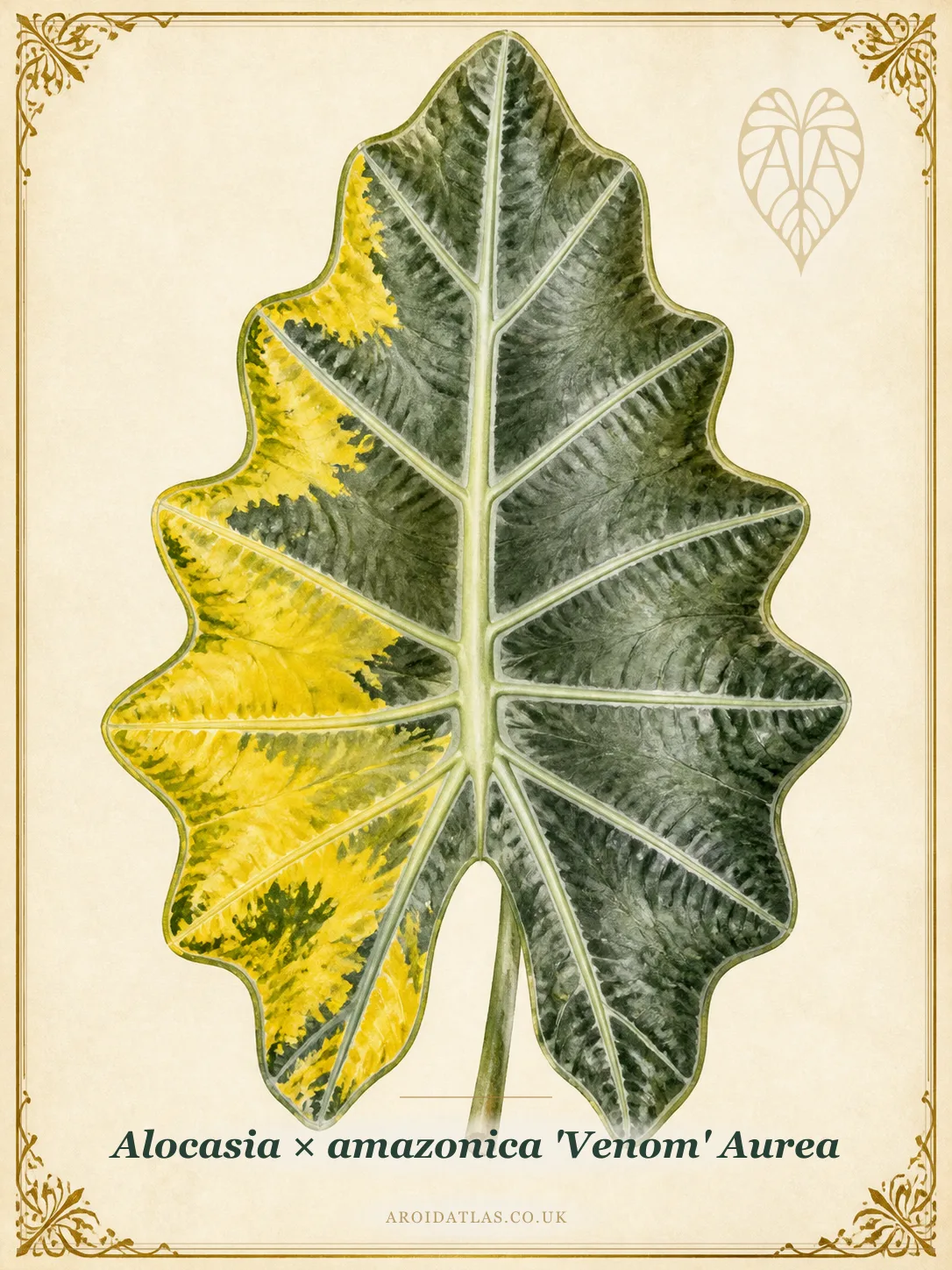
Full Specimen Plate
Alocasia 'Bambino' Pink
Pink Variegated Bambino
- Flowers of Sulphur, 99.99% PurityDusted onto a fresh corm or rhizome cut to guard against rot before repotting.
- Precision Bonsai Pruning Scissors, 200mmFine-bladed snips for clean node cuts when taking a cutting.
- Humidity Dome, Heavy-Duty Germination KitVented propagation dome for holding humidity around fresh cuttings.
- Digital Hygrometer & ThermometerLCD humidity and temperature gauge for checking a grow spot against a plant's target range.
Amazon links — we may earn commission on qualifying purchases.
7cm Target Price
£20.00
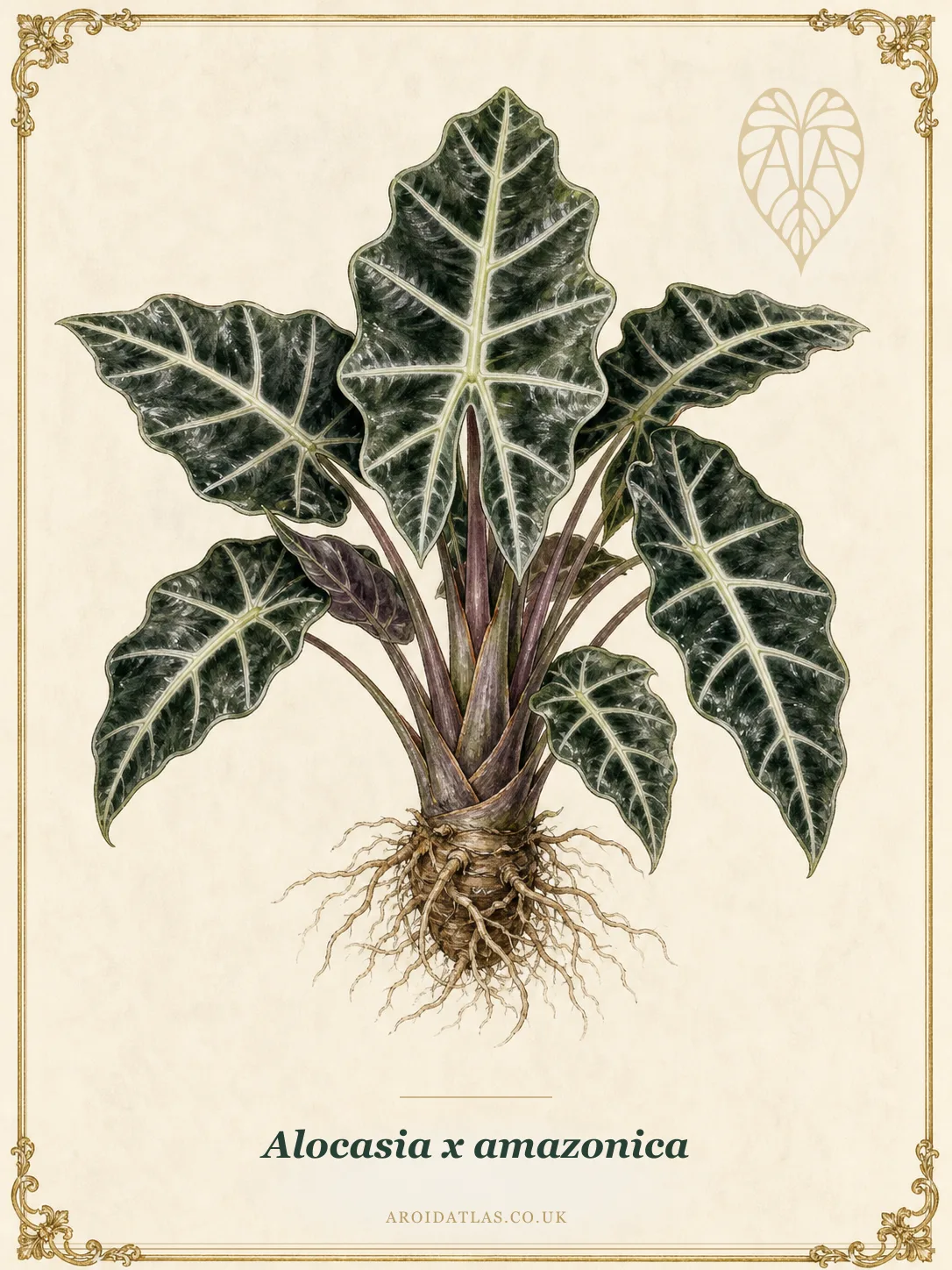
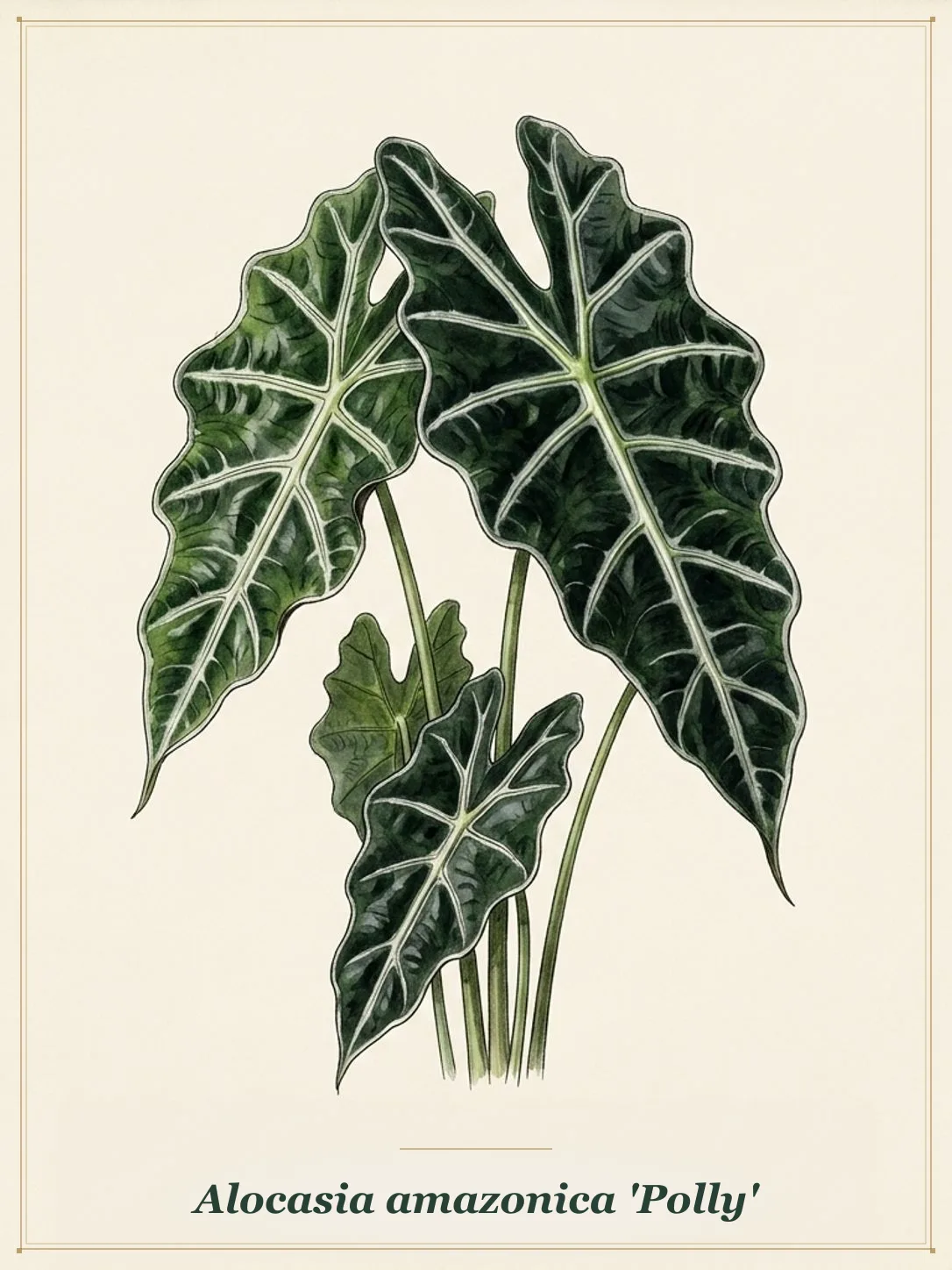
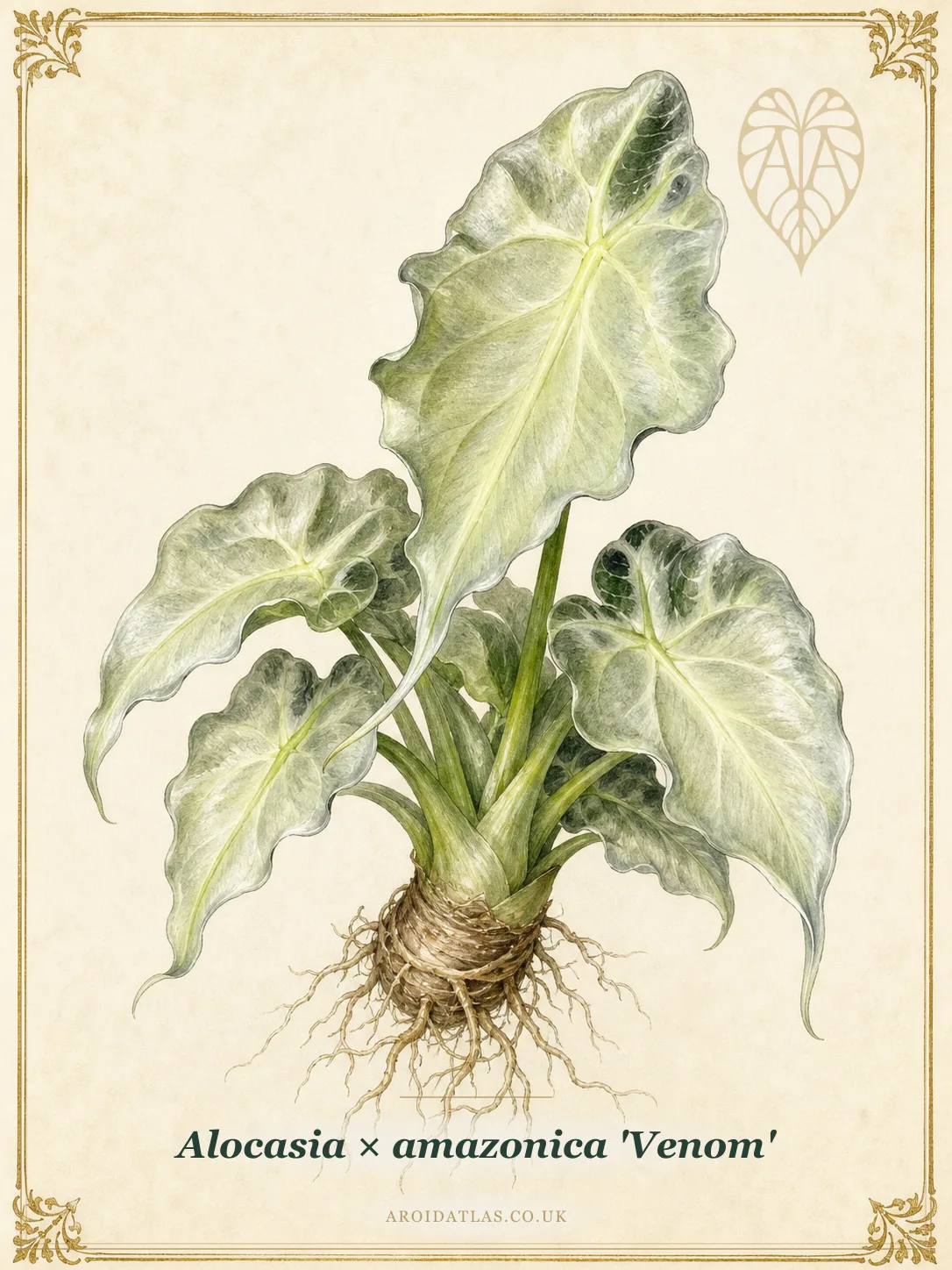
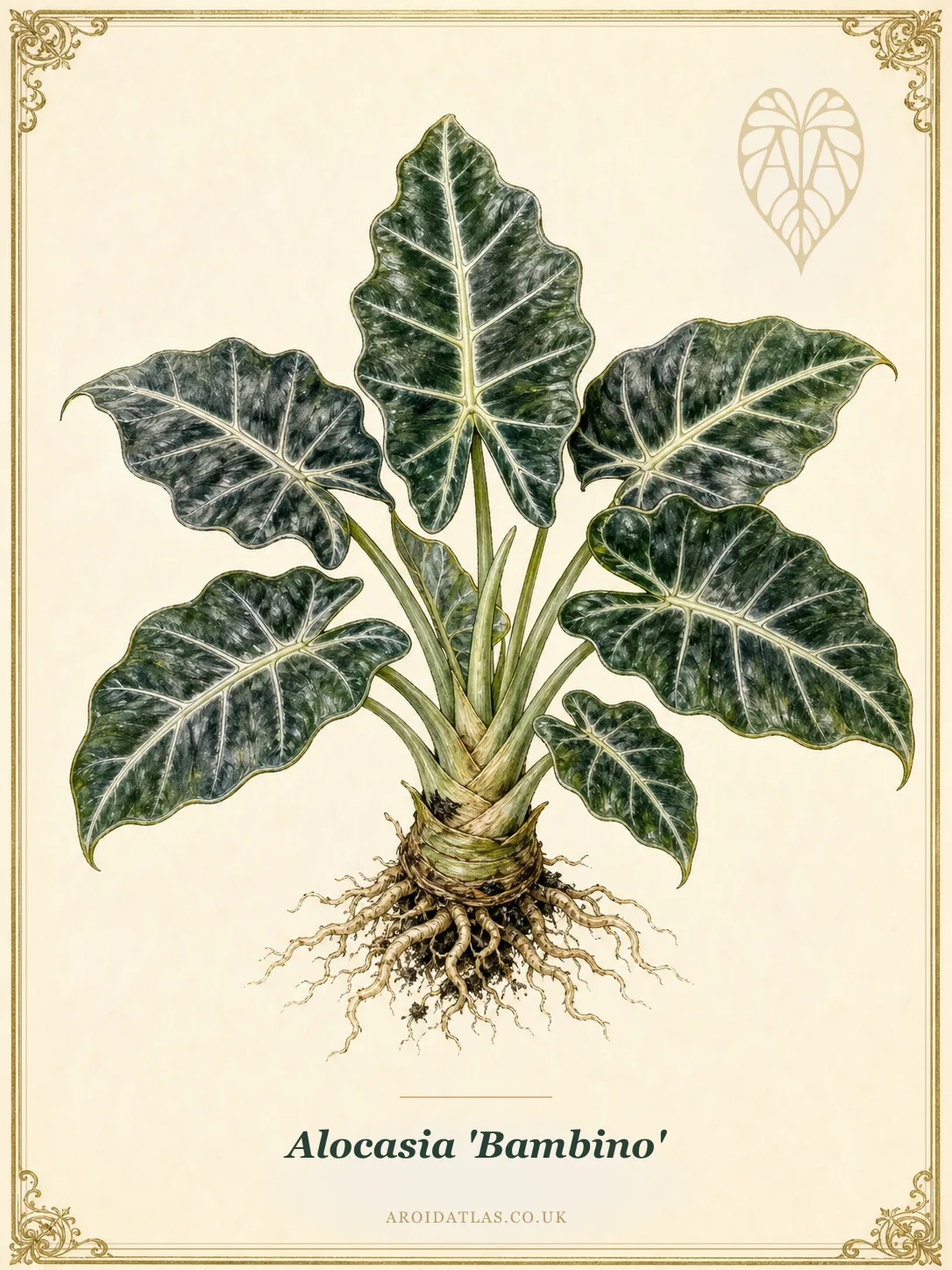
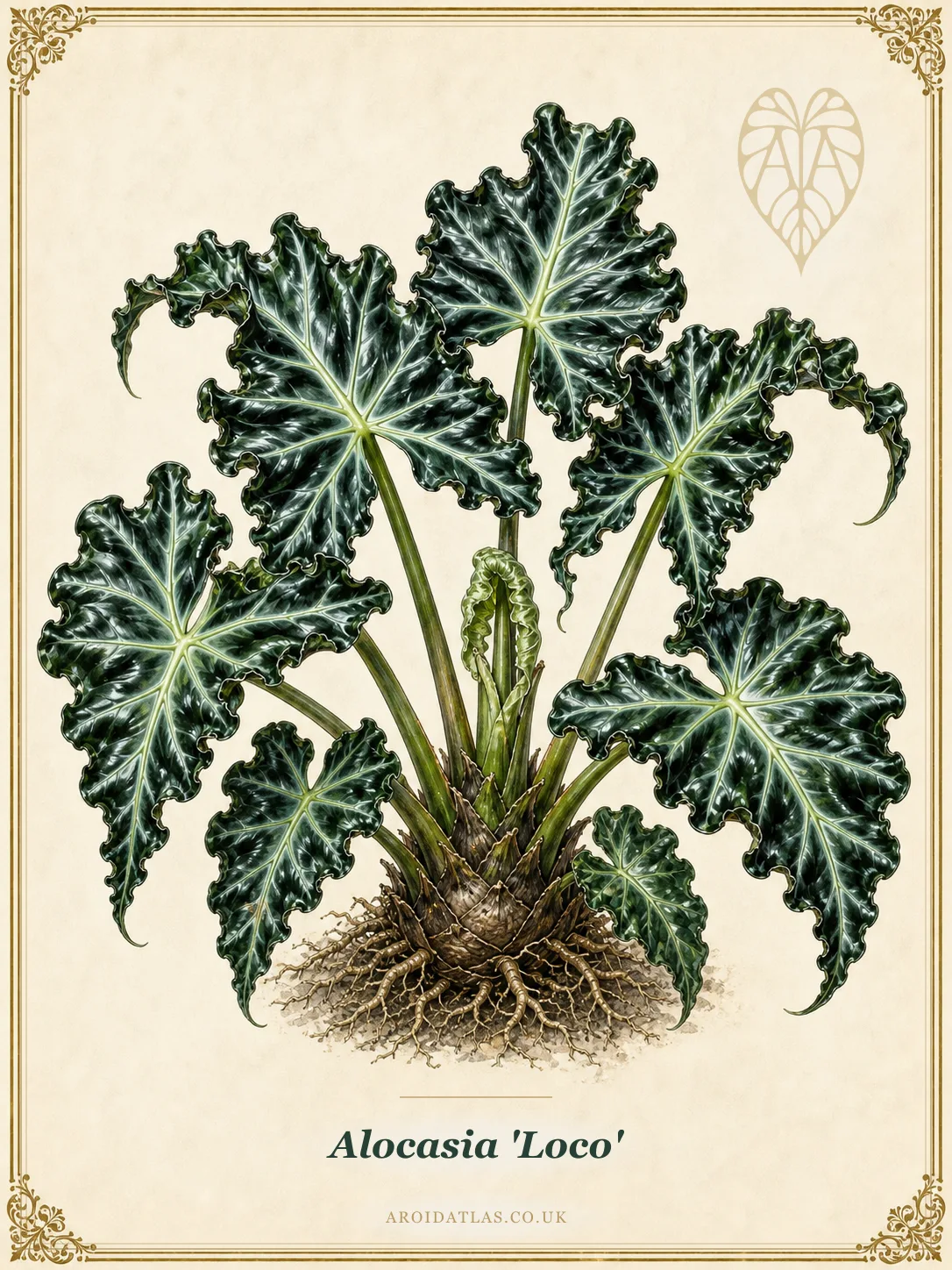
Alocasia 'Bambino' Pink Morphology
About Alocasia 'Bambino' Pink
Alocasia 'Bambino' is a narrow, compact hybrid derived from the same 1950s Amazon Nursery breeding lines behind Alocasia amazonica, staying smaller and more elongated than the standard Amazonica or Polly. It matures at just 12-20cm tall, with narrow arrow-shaped leaves and an undulating margin. The pink-variegated form develops irregular splashes and sectors of soft pink, creamy white and pale green over the dark glossy base, and every leaf carries a different distribution of these pale sectors.
Market Hub
Alocasia 'Bambino' Pink Sold Prices & Live Market
What the Target Price above is based on: eBay sold prices by plant size, live listings, and retailer stock.
No eBay sales recorded yet. Sold listings are collected as they appear on eBay.
Before You Buy
Species-specific things to check when evaluating a listing
- Assess the ratio of green to pink tissue on the newest growth to confirm the plant has enough chlorophyll to sustain itself
- Check the corm and roots are firm; this form's slower growth means a weak root system takes longer to recover from
- Inspect leaf undersides for spider mites and thrips before introducing to your collection
- Compare the asking price against recent sold listings for this exact form; the plain green plant sells for a fraction of the variegated price, so a mislabelled listing is easy to overpay for
Propagation Guide
How to Propagate Alocasia 'Bambino' Pink
Propagation Guide
How to Propagate Alocasia 'Bambino' Pink
3-6 months
Divide offsets from the mother plant once they have their own root system. Pink pigment is not fixed leaf to leaf, so a pup showing little pink can still develop more as it matures.
Care Guide
Alocasia 'Bambino' Pink Care Guide & Growing Conditions
Care Guide
Alocasia 'Bambino' Pink Care Guide & Growing Conditions
Well-draining loamy mix: 40% potting compost, 30% perlite, 20% orchid bark, 10% worm castings.
Keep evenly moist, never waterlogged. Heavily pink leaves photosynthesise significantly less than green tissue, so this form takes up water more slowly than the standard Bambino and is more sensitive to overwatering.
50-70%, on the higher end of that range where possible. Low humidity causes brown leaf edges, which show more visibly against the pale pink sectors.
Balanced fertiliser at half strength every 2-3 weeks in spring and summer, reduced to match the plant's slower growth. Stop feeding in winter.
Every 12-18 months in spring. Keep the pot slightly snug.
Common Problems
Root rot
Reduced photosynthetic capacity in the pink sections slows water uptake, so the substrate stays wet longer than expected on a standard watering schedule
Let the substrate dry further between waterings and check roots regularly for firmness
New growth emerging fully green
Insufficient light reducing the mutation's expression
Move to a brighter spot with more indirect light
Brown edges on the pink or cream sections
Low humidity or fluctuating watering
Increase ambient humidity and keep watering consistent
Field Reference
In the Wild
Field Reference
In the Wild
Field Notes
Dwarf Amazonica Breeding Lines
The original Bambino cultivar was selected for its compact size and narrow foliage, aimed at collectors who wanted the Amazonica look without the larger plant's footprint. The pink-variegated sport layers soft pink and cream sectors over the same dark green tissue and ivory-white veins, and its reduced photosynthetic capacity means it needs a more careful watering routine than the standard green Bambino.