Scroll to explore forms of Alocasia × amazonica 'Venom'
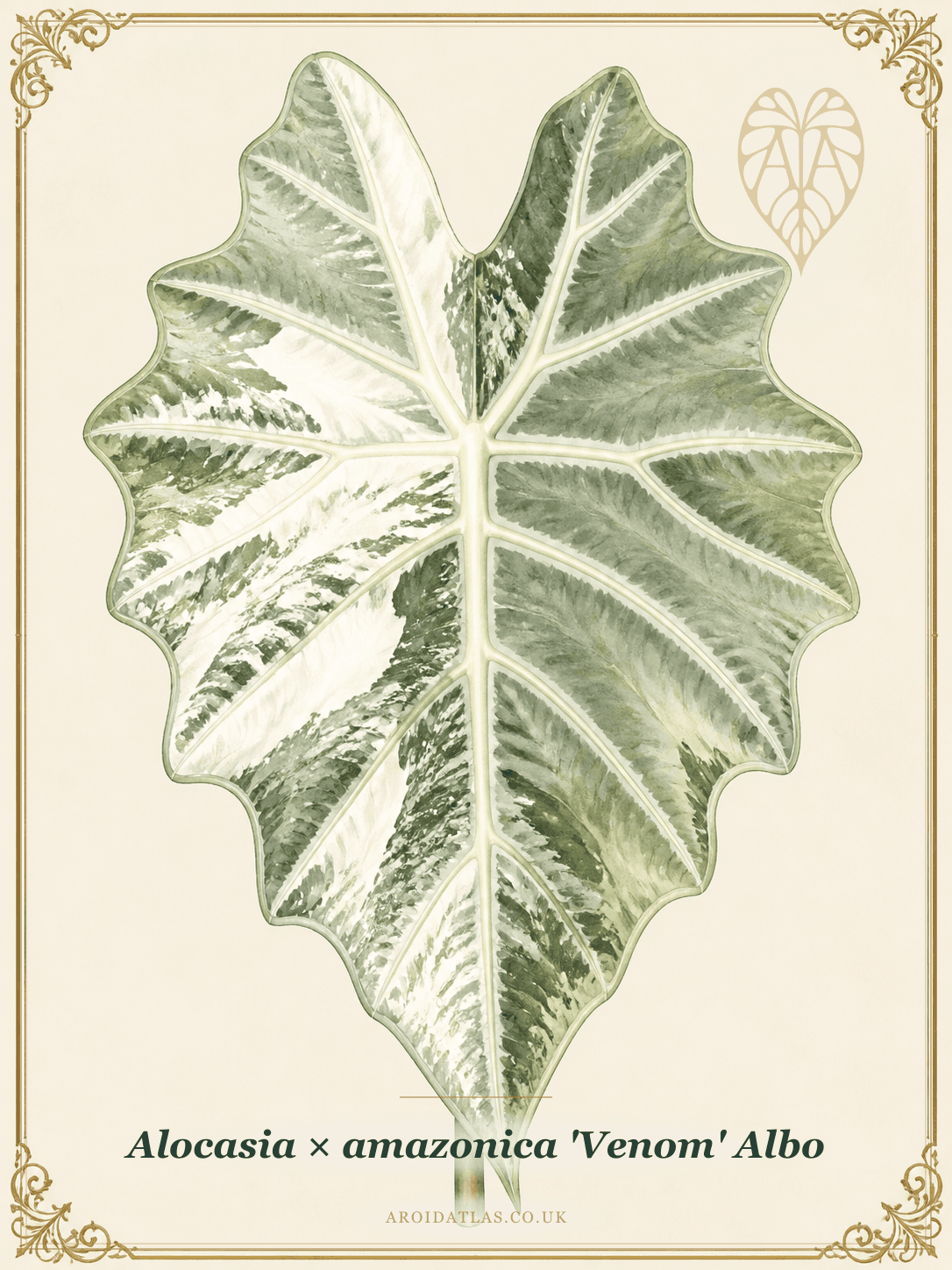
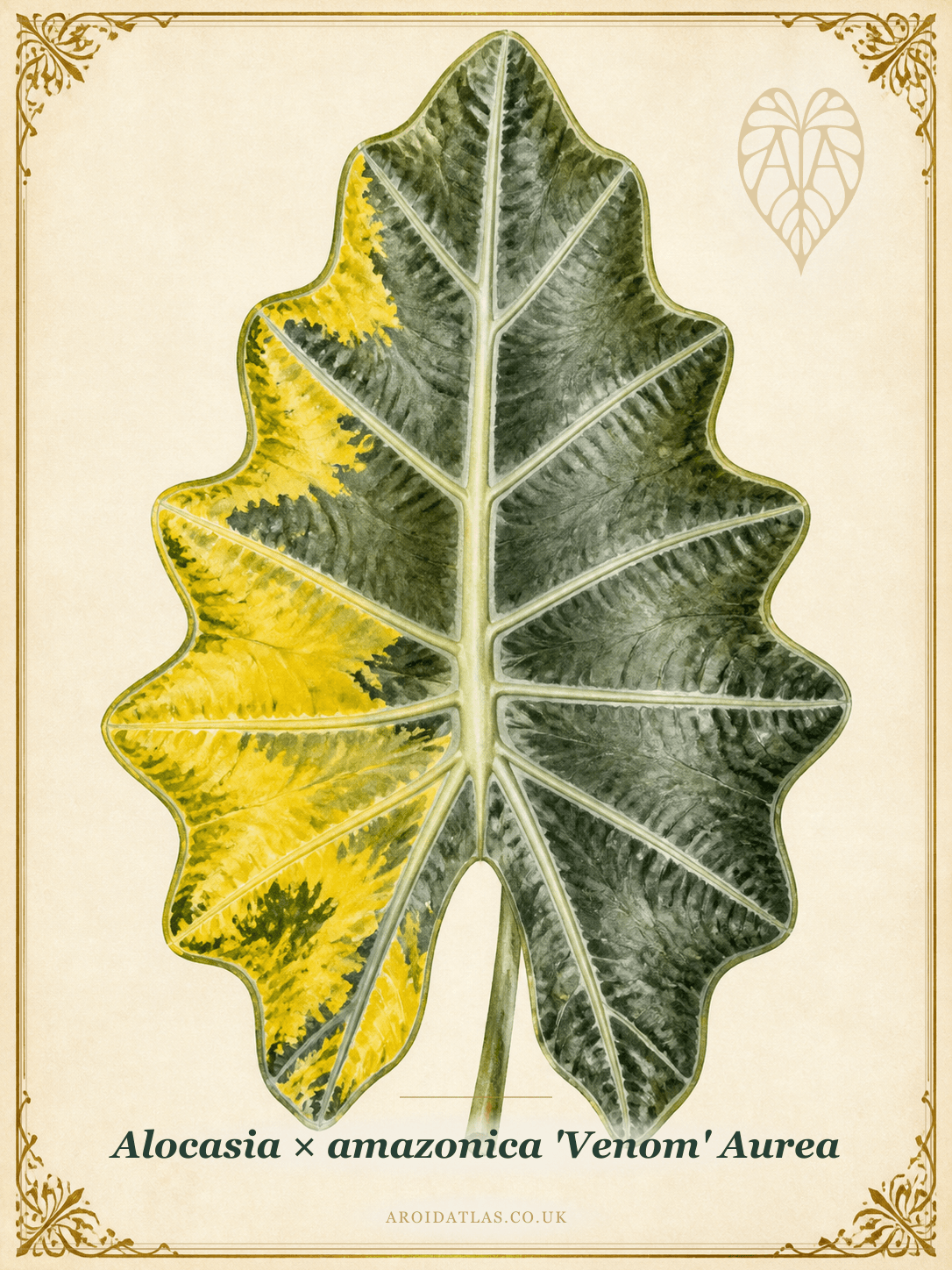
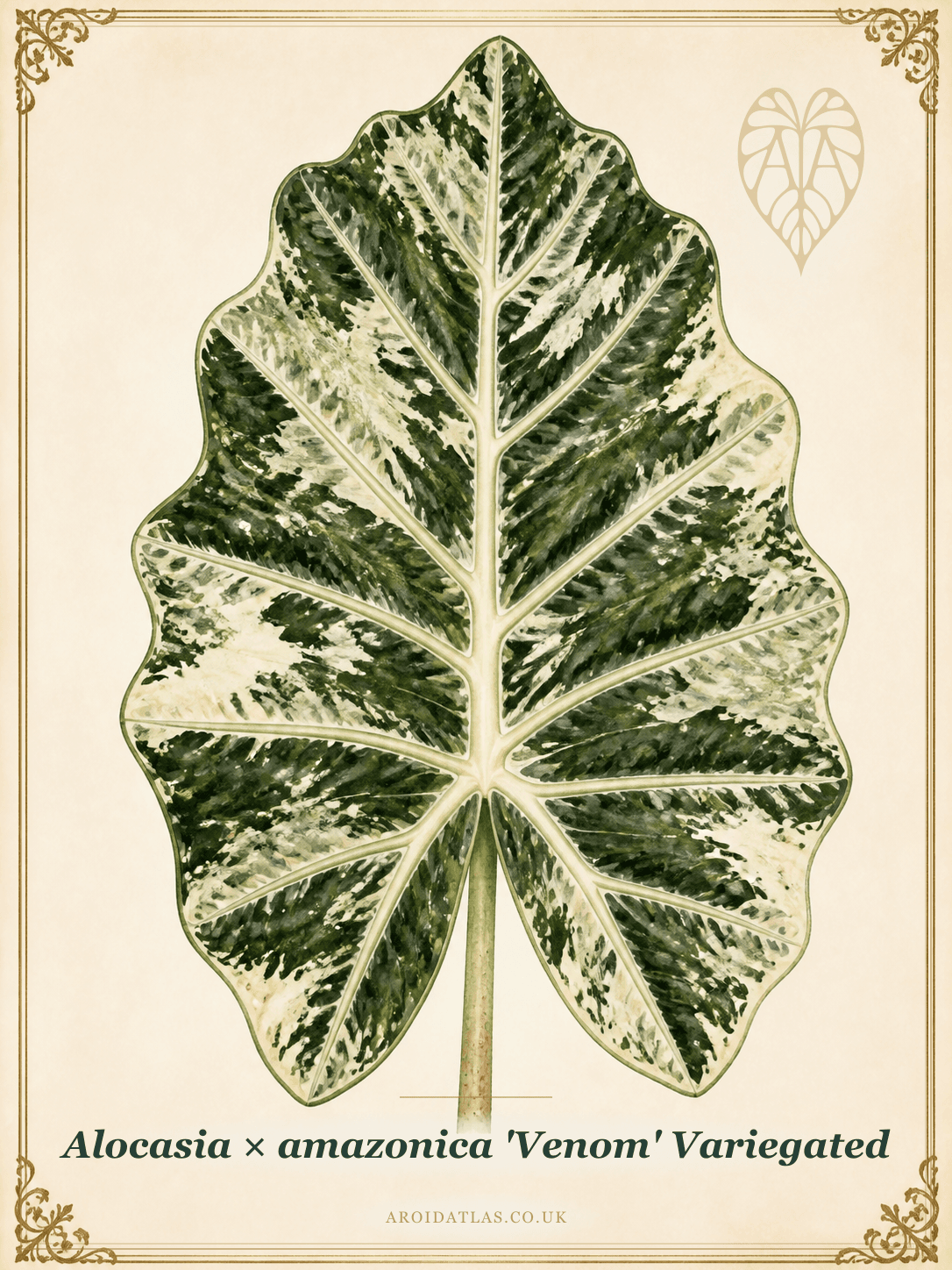
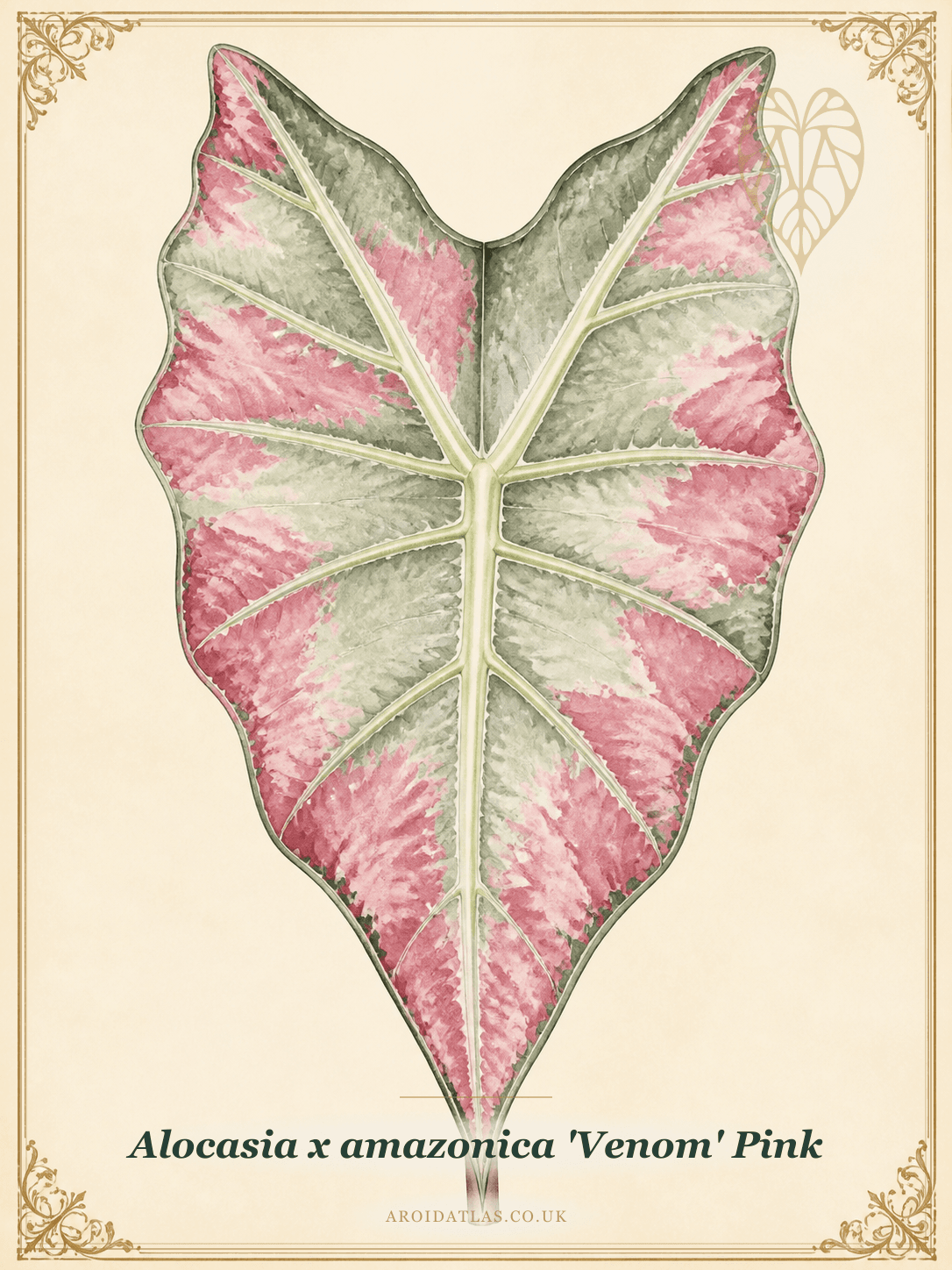
Full Specimen Plate
Alocasia × amazonica 'Venom'
Venom Alocasia
Aroid Atlas Price Guide
Select Plant Size
Pricing Data Key
Community price estimate based on limited sales history
Other colour-form prices
Market Analysis
Alocasia × amazonica 'Venom' Price Guide & Auction Value
Historical eBay auction metrics and live retailer listings updated weekly.
No eBay auction history available yet. Data is collected automatically as sales appear on eBay UK.
Before You Buy
Species-specific things to check when evaluating a listing
- Check the corm is firm — a soft or shrunken corm indicates dehydration or rot and is very difficult to recover
- Verify there is at least one established leaf; avoid bare corms from unknown sellers unless you have experience germinating alocasia corms
- Spider mites are the most common pest: inspect leaf undersides for fine webbing or stippling, especially in dry indoor environments
- Alocasias can enter dormancy when stressed by shipping — a plant arriving with no leaves but a firm corm is not necessarily dead
Alocasia × amazonica 'Venom' Morphology
About Alocasia × amazonica 'Venom'
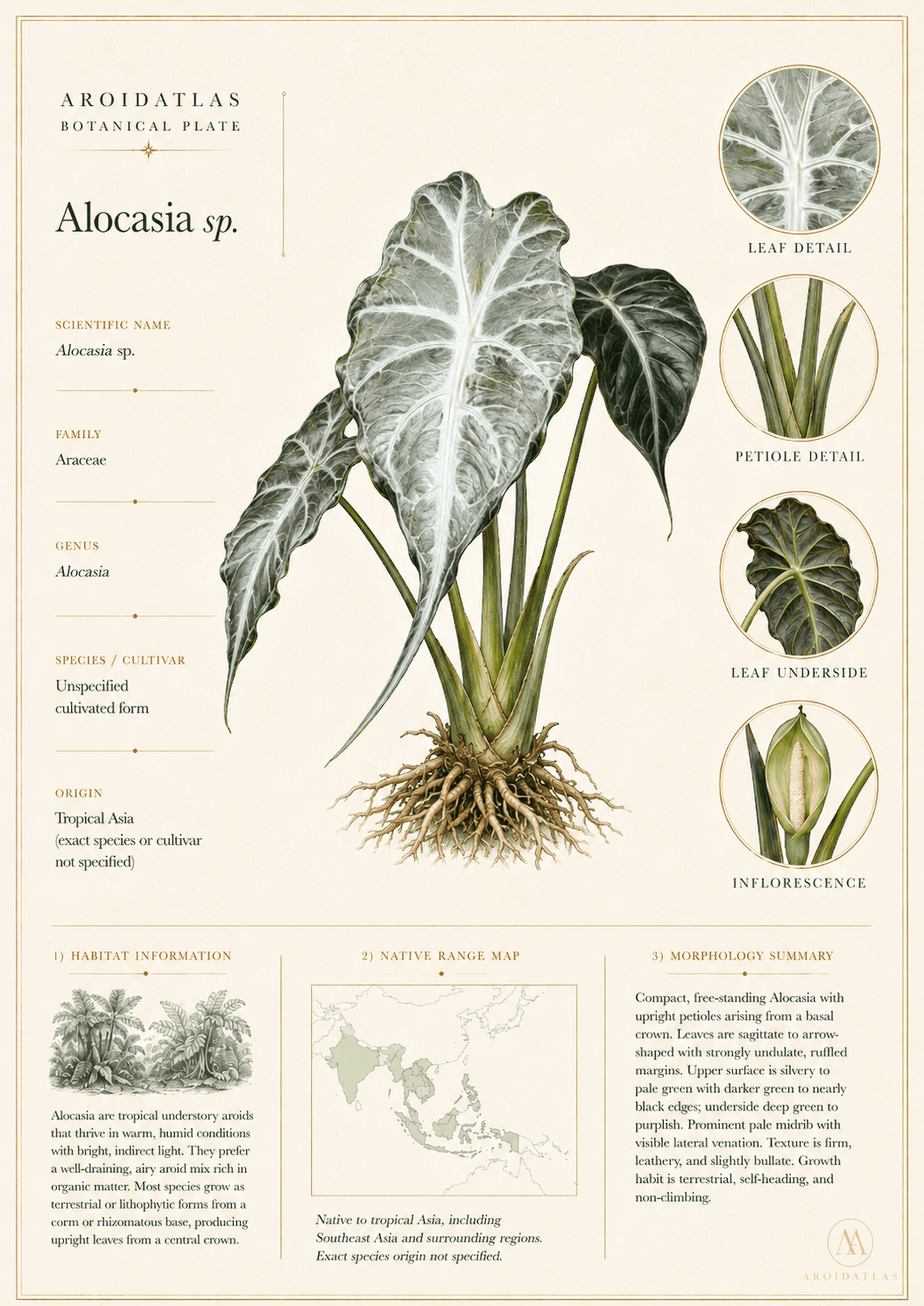
Alocasia 'Venom' was discovered around 2019 by Mason Lee of Mason Plants in South Korea as a spontaneous mutation of Alocasia amazonica, itself a hybrid of A. sanderiana and A. longiloba 'Watsoniana' developed at Amazon Nursery in Miami in the 1950s. Venom was not a deliberate cross but a chance mutation, which Mason Lee recognized as something distinct enough to name and cultivate separately. The name refers to the most immediately distinctive feature of the plant: the elongated leaf tip that tapers into a narrow, curling, fang-like extension unlike anything else in the Amazonica lineage. Beyond the distinctive tip, Venom has a character all its own. The leaves are shield-shaped with softly undulating margins and pronounced raised venation. Juvenile leaves emerge darker green, but as the plant matures the foliage develops a pale, matte, silvery-green finish that holds consistently rather than deepening with age. The veins appear slightly lighter than the surrounding tissue, creating subtle contrast rather than the heavy white-on-dark pattern of its Amazonica relatives. The overall effect is quieter and more refined than Polly or Bambino, but the leaf form is genuinely singular. Venom is a slow-to-moderate grower and expects 6–10 weeks between new leaf flushes during the active season, which is normal for the cultivar and not a sign of poor conditions.
Origin
Bred by Mason Plants, South Korea, 2019.
South Korea
Propagation Guide
How to Propagate Alocasia × amazonica 'Venom'
3-6 months
Cultivar character is preserved through vegetative cuttings
Wait for the mother plant to produce corms or pups before dividing. Larger, well-established plants produce offsets most readily. Alocasias do not propagate reliably from stem cuttings.
Care Guide
Alocasia × amazonica 'Venom' Care Guide & Growing Conditions
Well-draining loamy mix: 40% potting compost, 30% perlite, 20% orchid bark, 10% worm castings. Alocasias need moisture retention unlike most aroids but still require good drainage.
Keep evenly moist during the growing season — never waterlogged, never bone dry. Check soil every 3–4 days in summer. Reduce significantly in winter when growth slows.
60–80%. Lower humidity causes brown leaf edges; very low humidity combined with dry compost will trigger dormancy.
Balanced fertiliser at half strength every 2 weeks during spring and summer. Stop feeding in winter.
Every 12–18 months in spring. Alocasias like being slightly snug in their pots — don't overpot.
Common Problems
Leaves yellowing and dropping
Overwatering, cold temperatures, or natural dormancy
Reduce watering; ensure temperatures stay above 16°C; dormancy is normal in winter
Brown leaf edges
Low humidity or irregular watering
Increase humidity and maintain consistent watering routine
Spider mites
Most common pest; thrive in hot, dry conditions
Mist regularly; treat with neem oil or insecticidal soap; increase humidity
Spontaneous Mutations and Curled Fangs
Mutations are the engine of collector interest, and Alocasia 'Venom' is proof. A spontaneous mutation of the common hybrid Alocasia × amazonica discovered in South Korea in 2019, Venom turns the typical shield leaf into an aggressive, curling fang-like structure. The leaves arch sharply backward, and the tip forms a distinct, elongated spiral. A 2020 article in the Journal of Tropical Horticulture noted that somatic mutations of this type are highly unstable, yet micropropagation has managed to stabilize Venom's crazy morphology. It's moody, slow-growing, and visually sinister.