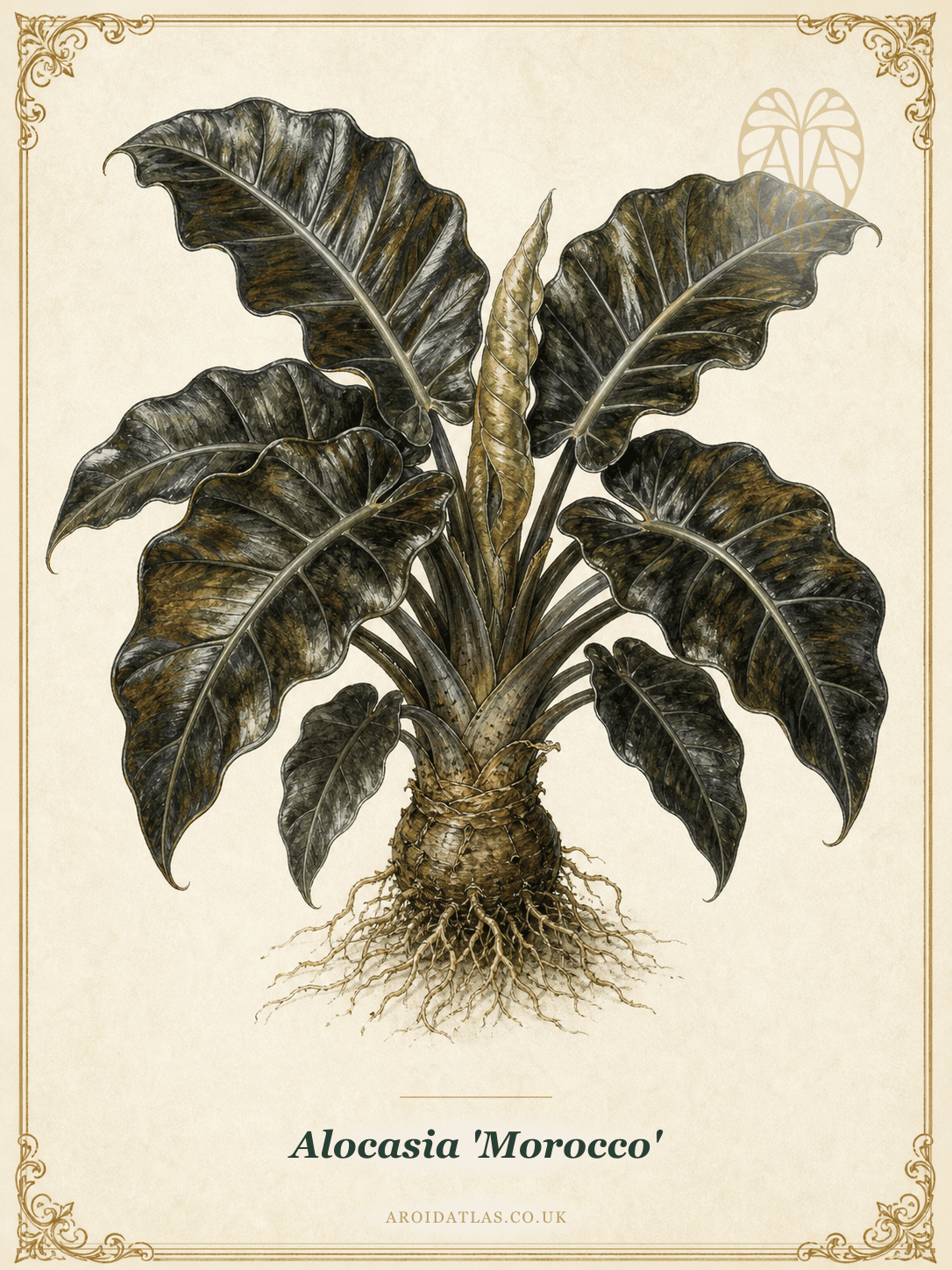
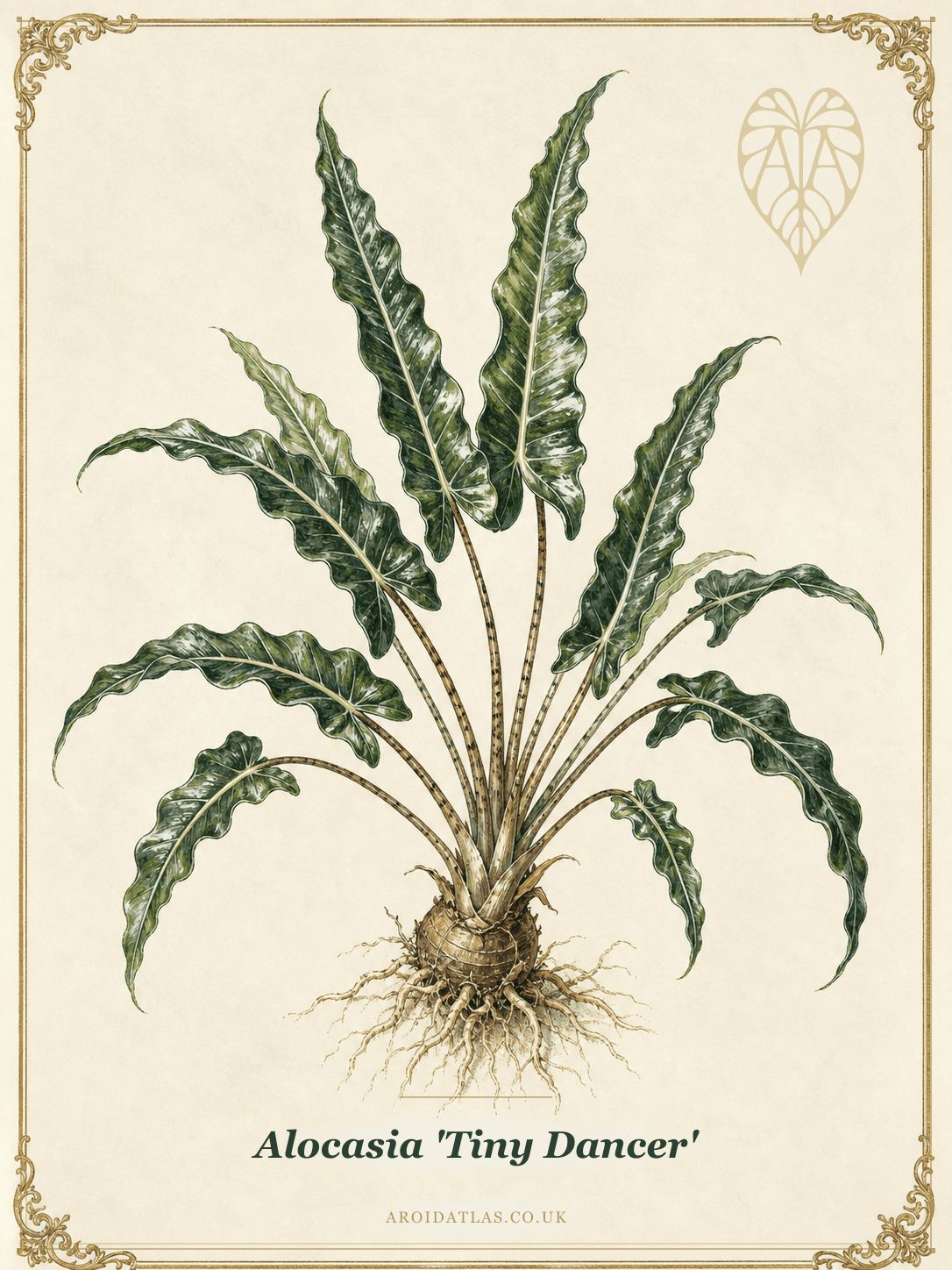
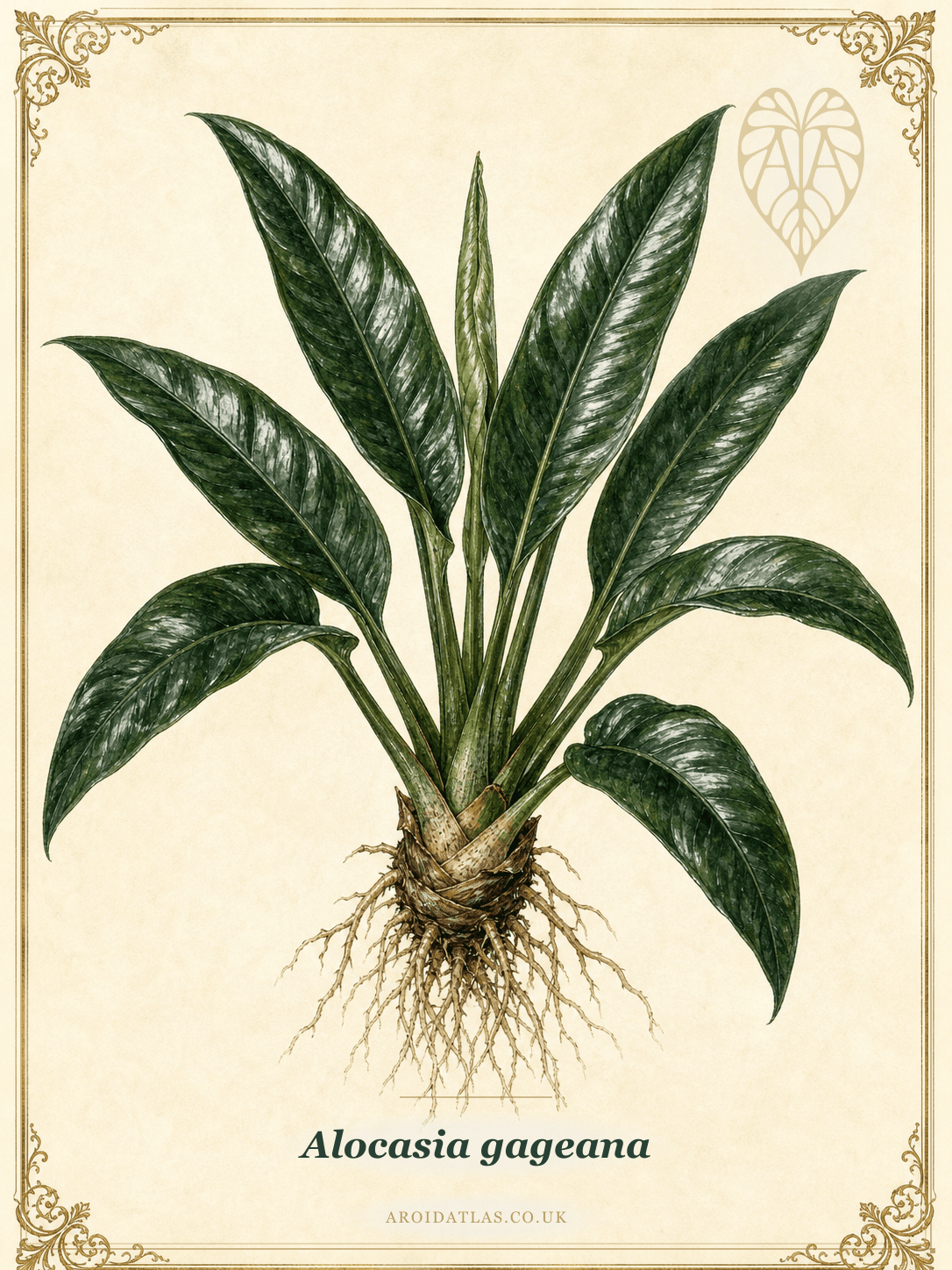
Scroll to explore forms of Alocasia gageana
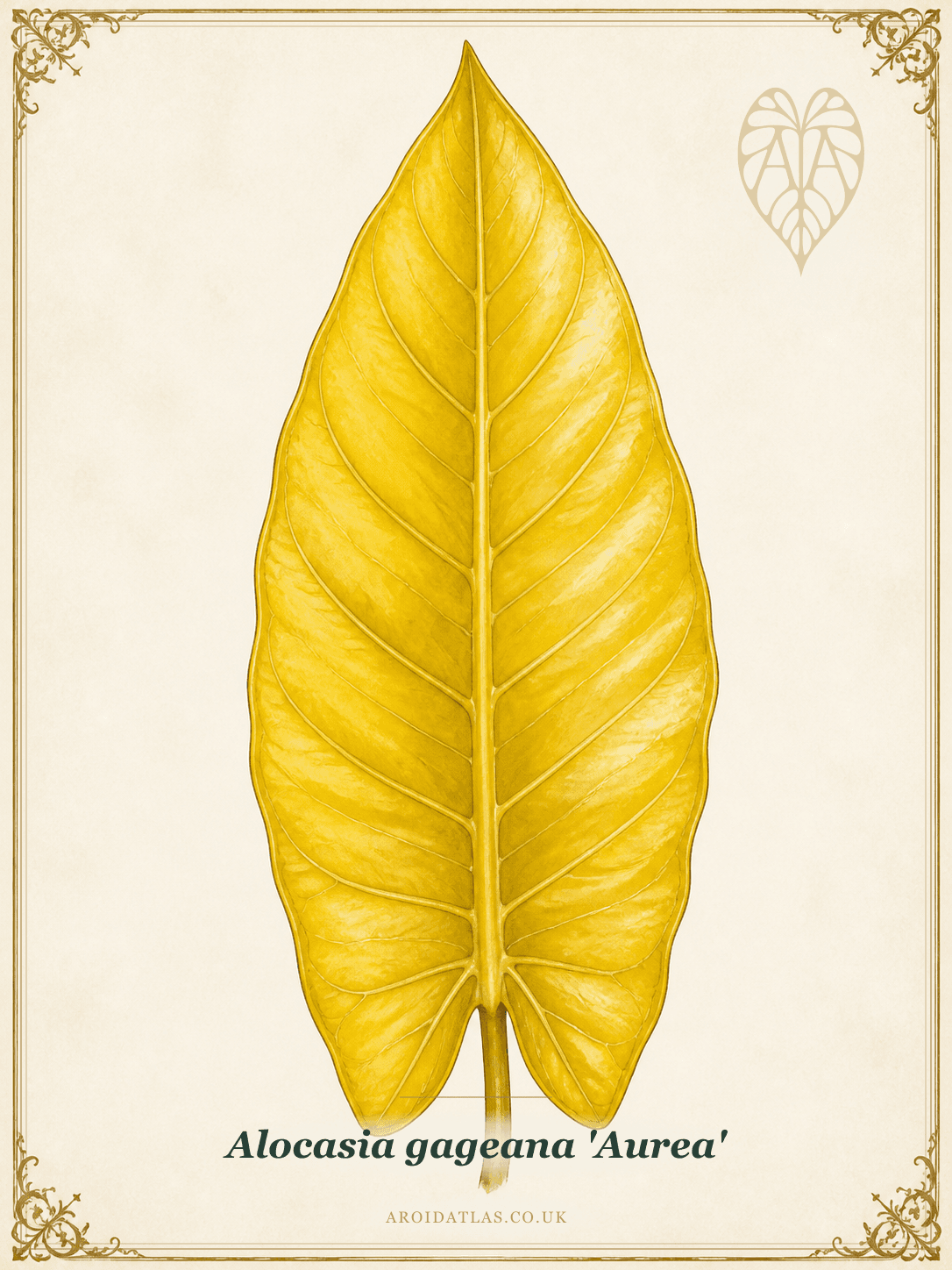

Leaf Detail Portrait
Alocasia gageana 'Aurea'
Gageana Aurea
Aroid Atlas Price Guide
Select Plant Size
Pricing Data Key
Other colour-form prices
Alocasia gageana 'Aurea' Morphology
About Alocasia gageana 'Aurea'
Aurea is a yellow-gold colour form of Alocasia gageana, replacing the wild-type species' dark green foliage with a warm, near-uniform golden tone. Because the golden leaves carry noticeably less chlorophyll than the green species, growth is slower and light requirements are higher, but the resulting colour is one of the more distinctive golden foliage forms in the genus.
Market Analysis
Alocasia gageana 'Aurea' Price Guide & Auction Value
Historical eBay auction metrics and live retailer listings updated weekly.
No eBay auction history available yet. Data is collected automatically as sales appear on eBay UK.
Before You Buy
Shared checklist for Alocasia gageana and its cultivated forms
- Check the corm/base is firm, not soft or mushy
- Confirm at least one healthy leaf or visible growth point
- Inspect for spider mites on leaf undersides, a common Alocasia pest
Propagation Guide
How to Propagate Alocasia gageana 'Aurea'
Shared across every form of Alocasia gageana — see this form's own Morphology for variegation-specific propagation notes.
2-4 months
Cultivar character is preserved through vegetative cuttings
Clumps naturally and can be divided at the base once offsets have their own roots.
Care Guide
Alocasia gageana 'Aurea' Care Guide & Growing Conditions
General care shared across all forms of Alocasia gageana — cultivated forms may need brighter light or higher humidity than the plain species; check this form's Quick Facts above.
Chunky, well-draining aroid mix: 40% potting compost, 30% perlite, 20% orchid bark, 10% horticultural charcoal.
Water when the top 3-4 cm of substrate is dry.
55-75% preferred.
Balanced liquid fertiliser at half strength every 4 weeks during active growth.
Every 12-18 months, or when the clump crowds the pot.
Common Problems
Sparse, thin leaves
Insufficient light
Move to brighter indirect light
Spider mites
Low humidity and dry air
Increase humidity and inspect leaf undersides regularly