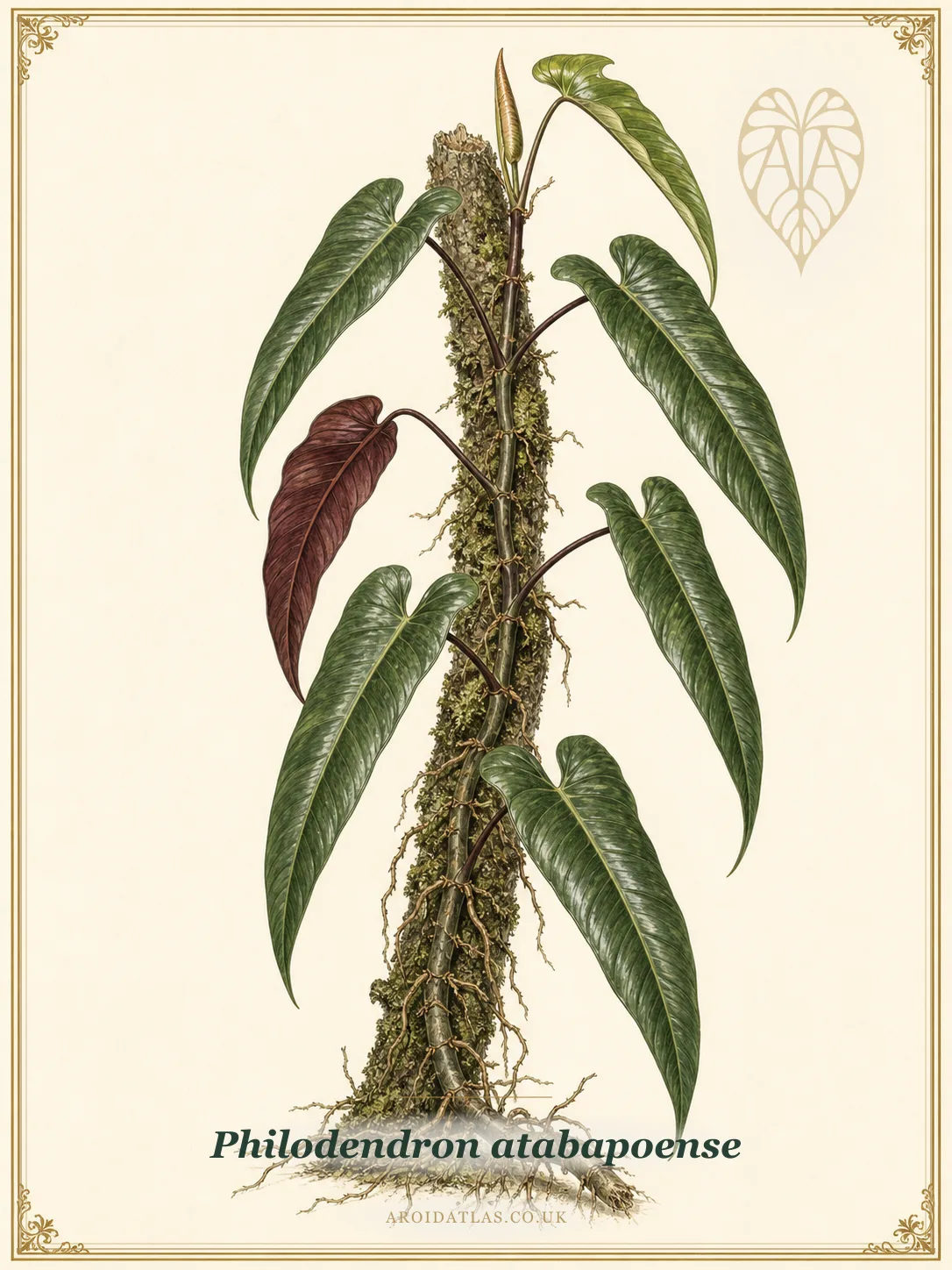
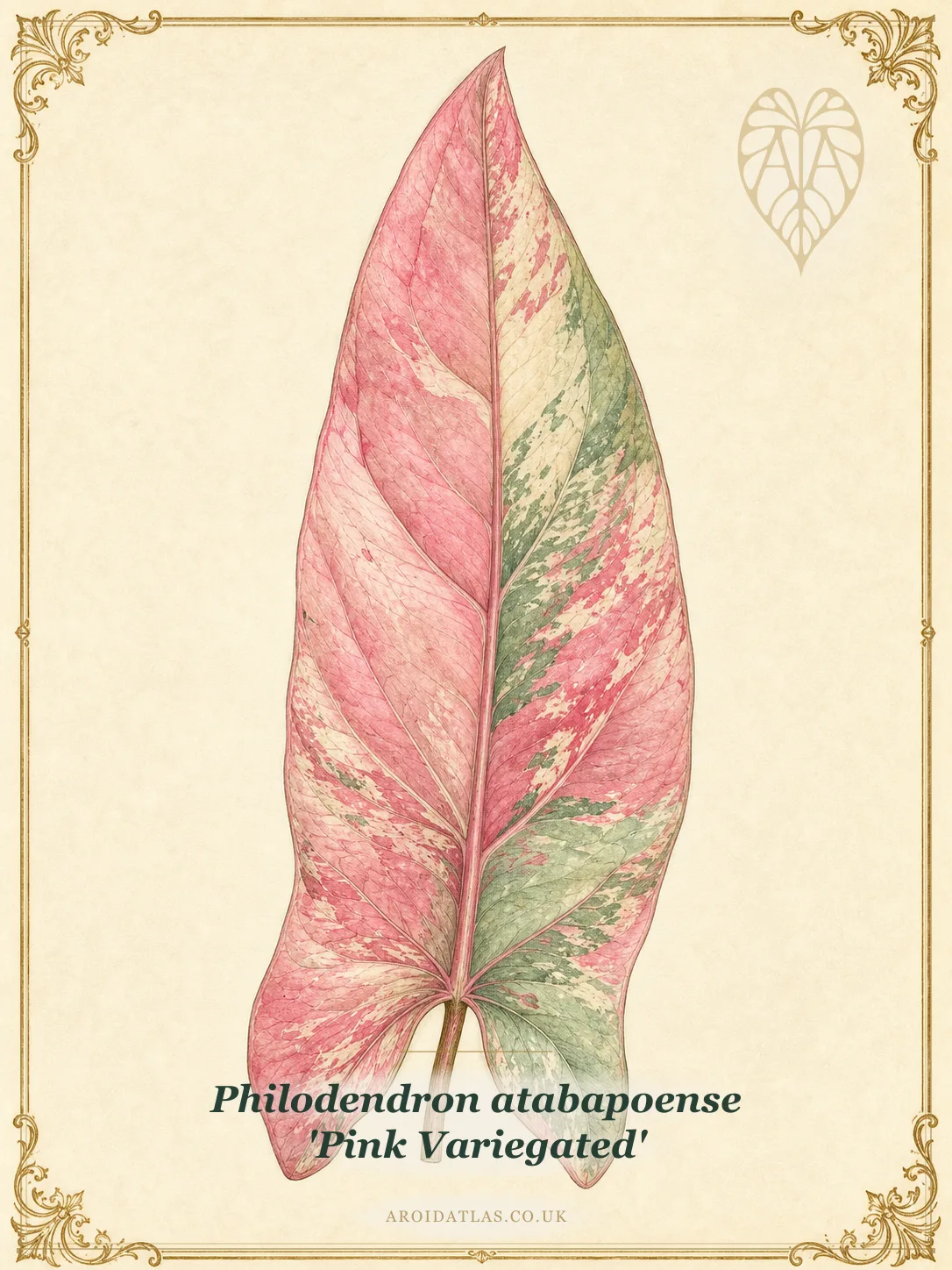
Full Specimen Plate
Philodendron atabapoense
Atabapo Philodendron
- Coir Moss Pole, 120cm (4-Pack)Coco coir totem for climbing aroids to root into as they grow upward.
- Natural Rooting Powder, 3 x 75gRooting hormone powder for stem and leaf cuttings.
- Precision Bonsai Pruning Scissors, 200mmFine-bladed snips for clean node cuts when taking a cutting.
- Digital Hygrometer & ThermometerLCD humidity and temperature gauge for checking a grow spot against a plant's target range.
Amazon links — we may earn commission on qualifying purchases.
7cm Target Price
£9.00
Market Hub
Philodendron atabapoense G.S.Bunting Sold Prices & Live Market
What the Target Price above is based on: eBay sold prices by plant size, live listings, and retailer stock.
No eBay sales recorded yet. Sold listings are collected as they appear on eBay.
Before You Buy
Species-specific things to check when evaluating a listing
- Check that roots are firm and pale to tan; avoid plants with black, slimy, or absent roots
- Look at the leaf underside for genuine maroon colouring rather than a plain green, since this is the trait the species is grown for
- Confirm the plant is already established on or ready for a climbing support
- Inspect leaf undersides and stem nodes for pests, which are easy to miss on the darker underside colouring
Philodendron atabapoense G.S.Bunting Morphology
About Philodendron atabapoense G.S.Bunting
Glossy dark green on top, deep maroon underneath: the two-tone contrast on Philodendron atabapoense is most visible when light catches a mature leaf from below, and it's the main reason collectors seek this species out. Native to shaded riverine forest in the upper Orinoco region of Venezuela and Colombia, it climbs on slender internodes and active aerial roots, well suited to a moss pole or totem support. Elongated leaves and an architectural silhouette give it real presence once established on a proper climbing structure.
Native Range
Colombia
Propagation Guide
How to Propagate Philodendron atabapoense G.S.Bunting
Propagation Guide
How to Propagate Philodendron atabapoense G.S.Bunting
4-8 months
Cultivar character is preserved through vegetative cuttings
Stem cuttings with at least one node and aerial root root readily in damp sphagnum or water within 3-6 weeks; giving the cutting something to climb from the start speeds establishment.
Care Guide
Philodendron atabapoense G.S.Bunting Care Guide & Growing Conditions
Care Guide
Philodendron atabapoense G.S.Bunting Care Guide & Growing Conditions
A high-porosity mix — 50% perlite, 30% orchid bark, 20% coco coir — with a moss pole or similar support set in at planting time. Philodendrons are prone to root rot in denser substrates, and the aerial roots need something to climb as much as the pot needs drainage.
Water thoroughly, then let the top third of the mix dry before watering again. Consistent moisture suits this species better than a strict dry-out cycle, provided the mix itself drains fast.
High, 60-80%.
Feed at quarter to half strength every 2-3 weeks in the growing season with a balanced fertiliser; drop to monthly over winter.
Repot every 12-18 months, sizing up the climbing support alongside the pot — a support that's too short holds back leaf size and the mature two-tone colouring this species is grown for.
Common Problems
Underside colour reading dull rather than deep maroon
A young or juvenile leaf, or insufficient light
Be patient with young growth and check the plant is getting bright, indirect light rather than deep shade
Root rot
Substrate that stays wet, often from a mix that's too dense or a pot with poor drainage
Repot into a chunkier mix immediately and trim away any mushy roots
Leggy growth with long gaps between leaves
Insufficient light
Move to brighter indirect light
Field Reference
In the Wild
Field Reference
In the Wild
Field Notes
Orinoco Tributary Origins
Named for the Atabapo River in southern Venezuela, a tributary of the Orinoco that runs through one of the more botanically productive but under-surveyed regions of the continent. Philodendron atabapoense has bicoloured leaves: deep green above, distinctively red or burgundy on the underside, a contrast most apparent when the light catches the underside of a mature leaf. At accessible price tier for a plant with genuine visual distinction and an interesting provenance. Worth growing on a proper climbing structure to develop the mature leaf form.
Also in: Climbing Hemiepiphytes
Species that climb via aerial roots and attach to a support as they grow; leaf size and shape mature with height.