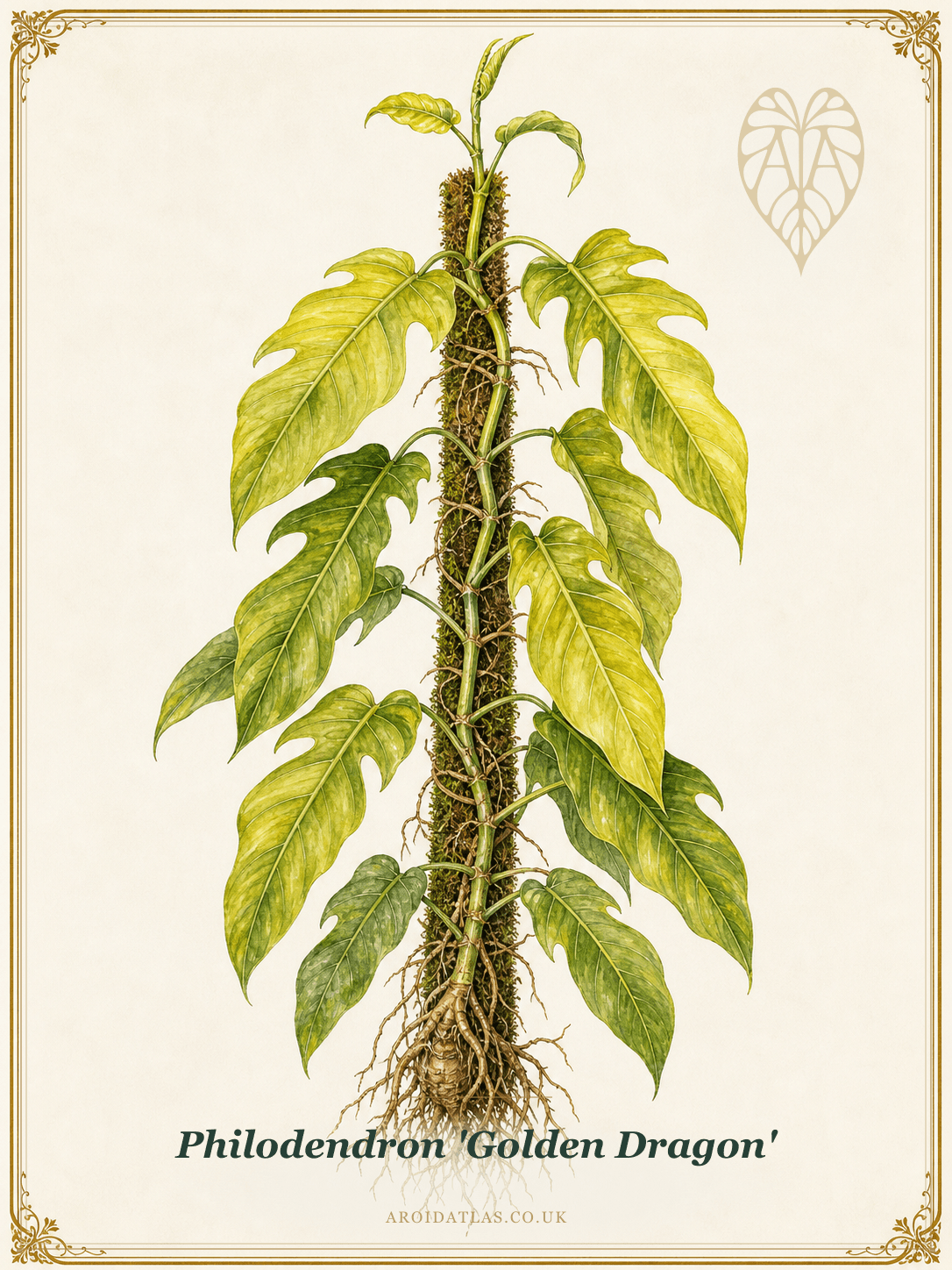
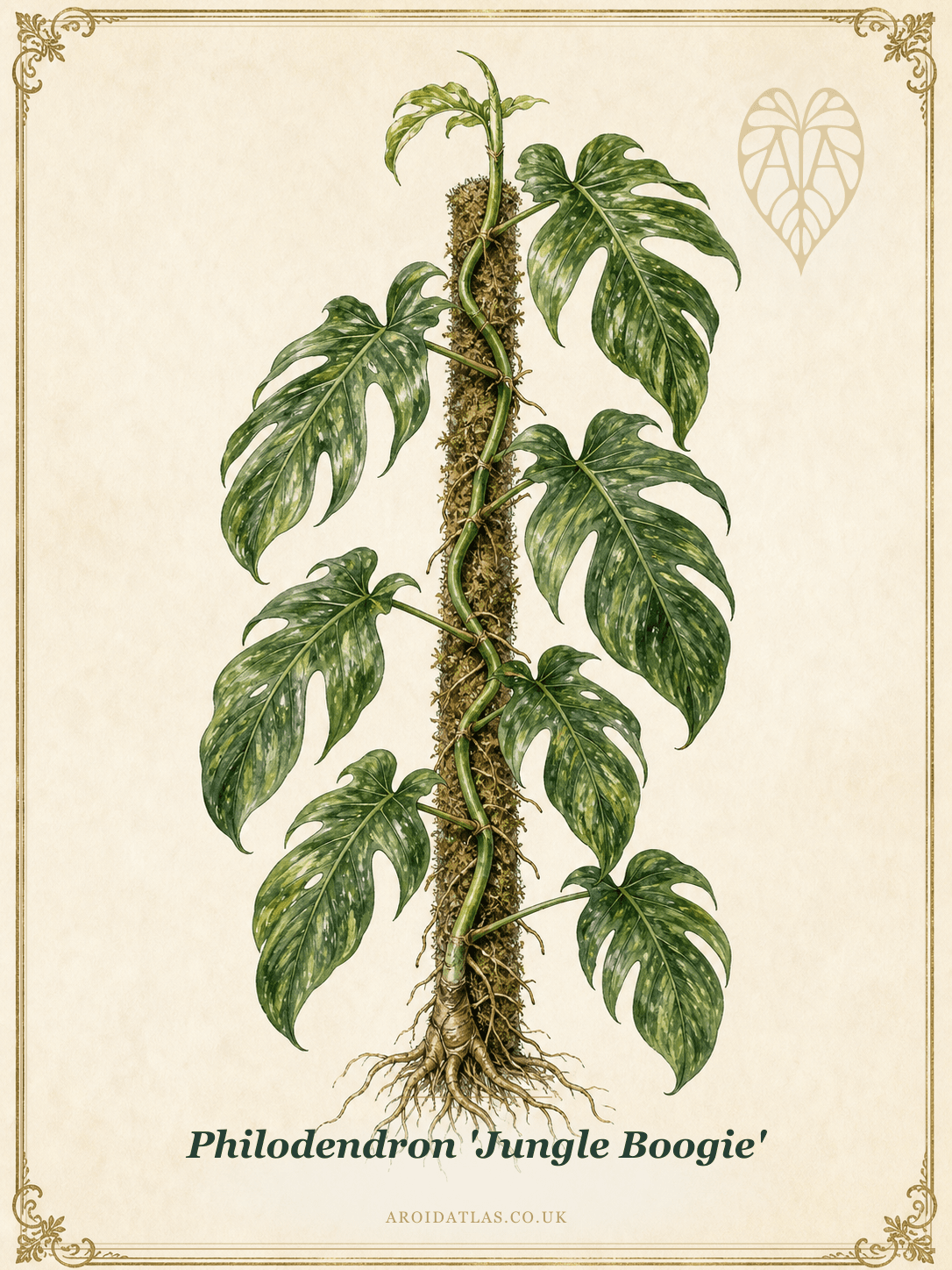
Full Specimen Plate
Philodendron bipennifolium
Fiddleleaf Philodendron
Aroid Atlas Price Guide
Select Plant Size
Pricing Data Key
Philodendron bipennifolium Morphology
About Philodendron bipennifolium
Philodendron bipennifolium is a climbing hemiepiphyte instantly recognisable by its distinctive fiddle- or violin-shaped leaf, pinched in at the middle before flaring out again toward the tip, a silhouette shared with a handful of other Philodendron species but rarely confused with anything outside the genus. Native to the Amazon basin, it climbs readily on a support, producing progressively larger and more deeply lobed leaves as it matures from its juvenile, more oval-leaved form. A yellow-variegated 'Aurea' selection also circulates in the trade, but the plain green species remains an underrated architectural climber in its own right.
Native Range
Brazil
Market Analysis
Philodendron bipennifolium Price Guide & Auction Value
Historical eBay auction metrics and live retailer listings updated weekly.
No eBay auction history available yet. Data is collected automatically as sales appear on eBay UK.
Before You Buy
Species-specific things to check when evaluating a listing
- Juvenile plants have simpler oval leaves; verify the seller's ID against mature reference photos if buying a young specimen
- Ensure there is at least one healthy node present for propagation potential
- Check for scale insects on petioles and leaf undersides
Propagation Guide
How to Propagate Philodendron bipennifolium
2-4 months
Cultivar character is preserved through vegetative cuttings
Root single or multi-node stem cuttings in moist sphagnum or water with warmth and humidity.
Care Guide
Philodendron bipennifolium Care Guide & Growing Conditions
Chunky, well-draining mix: 40% potting compost, 30% perlite, 20% orchid bark, 10% worm castings.
Water when the top 3-5 cm of substrate is dry. Reduce frequency in winter.
55-75% preferred for the best leaf size and shape.
Balanced liquid fertiliser at half strength every 2-4 weeks in spring and summer.
Every 12-18 months, or when roots emerge from drainage holes. Provide a moss pole or support for climbing growth.
Common Problems
Leaves staying oval rather than developing the fiddle shape
Plant is still juvenile
The characteristic pinched silhouette develops with maturity and a climbing support; be patient with young plants
Yellow leaves
Overwatering or nutrient deficiency
Check substrate moisture before watering and maintain a regular feeding schedule
The Violin-Leafed Climber
Bipennifolium is one of those species whose common name does all the explaining necessary. Once you've seen the pinched, fiddle-shaped mature leaf, it's unmistakable. It's a genuinely good climbing species that's often overlooked in favour of flashier variegated cultivars, but the leaf silhouette alone earns it a place in a collection.
Also in: Climbing Hemiepiphytes
Species that climb via aerial roots and attach to a support as they grow; leaf size and shape mature with height.