Full Specimen Plate
Begonia masoniana 'Variegata'
Iron Cross Begonia Variegata
- Natural Rooting Powder, 3 x 75gRooting hormone powder for stem and leaf cuttings.
- Precision Bonsai Pruning Scissors, 200mmFine-bladed snips for clean node cuts when taking a cutting.
- Digital Hygrometer & ThermometerLCD humidity and temperature gauge for checking a grow spot against a plant's target range.
Amazon links — we may earn commission on qualifying purchases.
7cm Target Price
£90.00
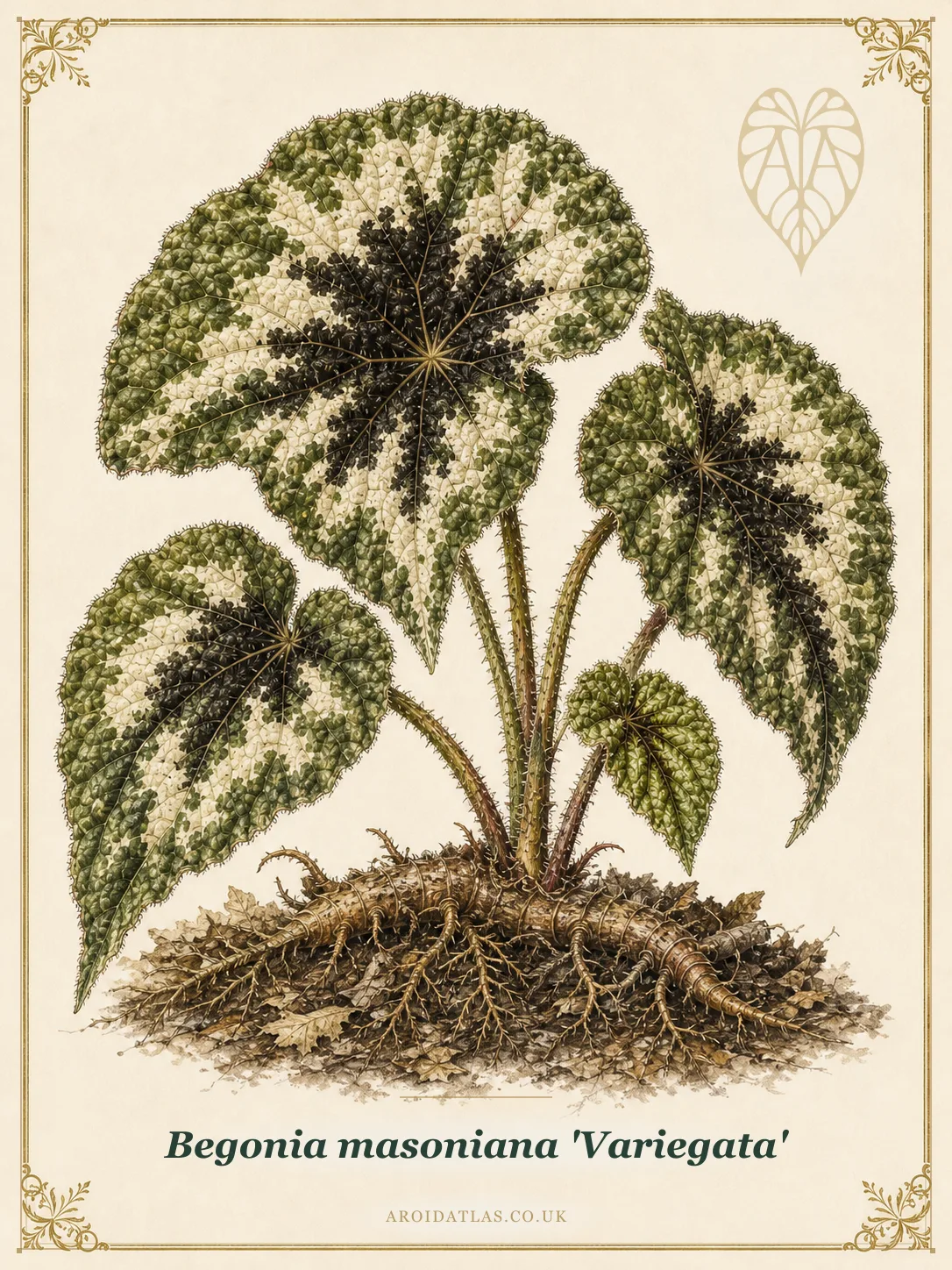
Begonia masoniana 'Variegata' Morphology
About Begonia masoniana 'Variegata'
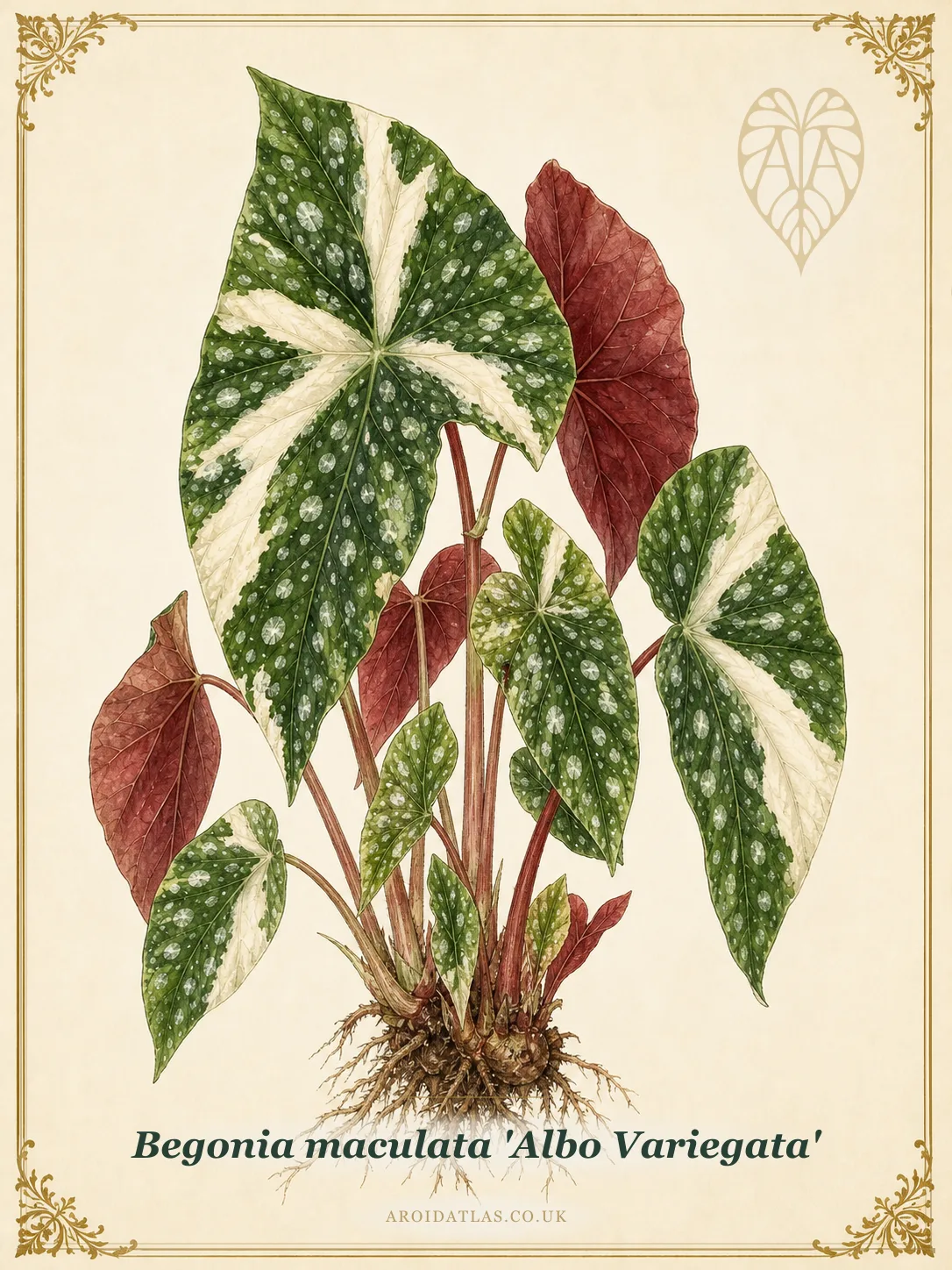
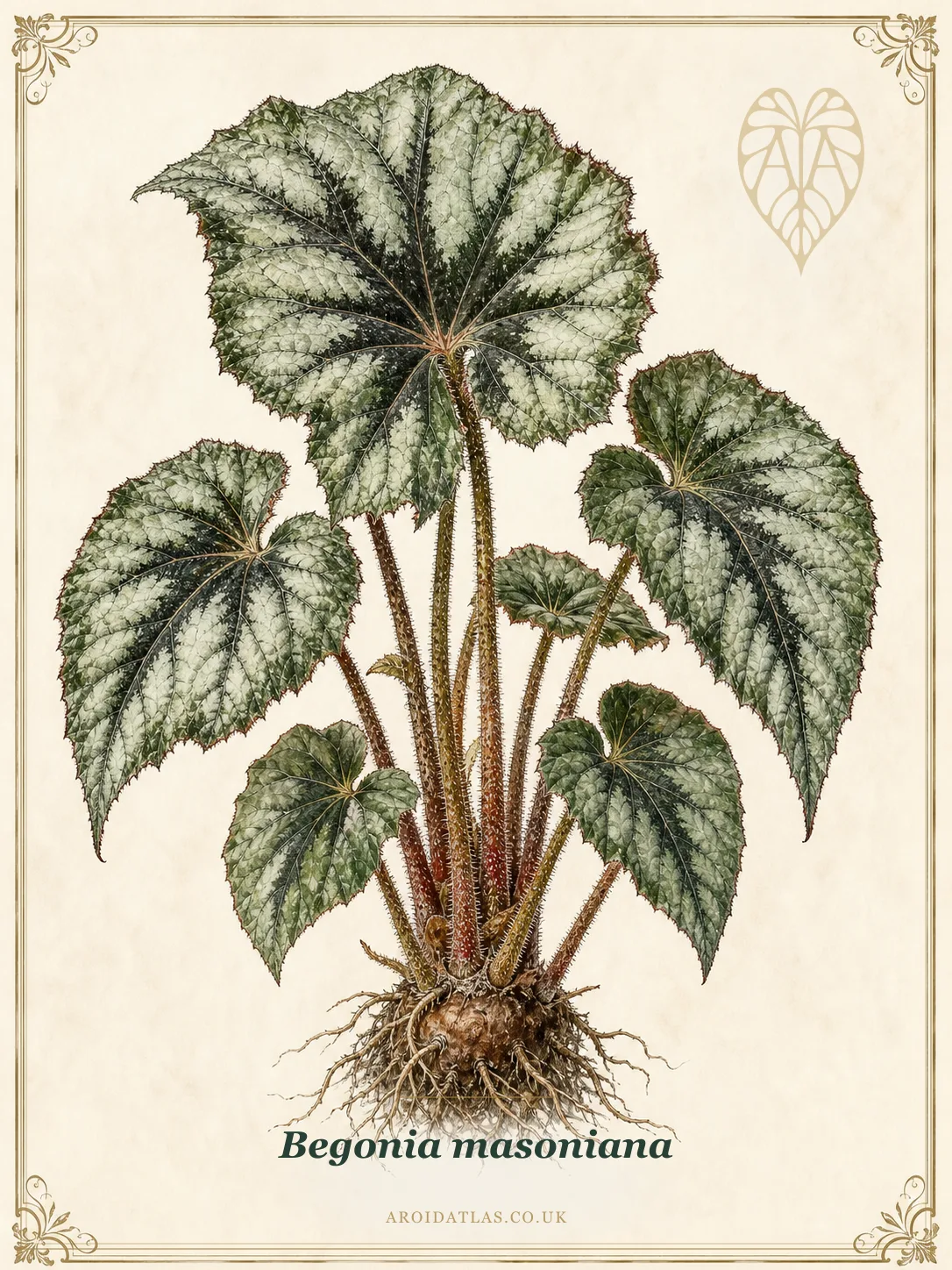
Begonia masoniana 'Variegata' is a cultivated selection derived from Begonia masoniana Irmsch., the 'Iron Cross Begonia' (a rhizomatous species associated with the humid forest habitats of southern China and northern Vietnam), grown in warm, shaded, humid conditions that replicate its native understory environment. The base species already has large, heavily bullate and hairy leaves bearing a prominent dark iron-cross marking at the centre of each blade. In the 'Variegata' form, irregular creamy-white variegation is added to this iron-cross pattern across the deep green to olive lamina, producing leaves with an additional layer of pattern. The creeping rhizome habit remains unchanged.
Native Range
Vietnam
Market Hub
Begonia masoniana 'Variegata' Sold Prices & Live Market
What the Target Price above is based on: eBay sold prices by plant size, live listings, and retailer stock.
No eBay sales recorded yet. Sold listings are collected as they appear on eBay.
Before You Buy
Species-specific things to check when evaluating a listing
- Check for powdery mildew (a white dusty coating on leaf surfaces, especially in dry conditions); it spreads rapidly between plants
- Inspect for mealybugs at leaf axils and the underside of stems where they hide in white cottony deposits
- Rhizome begonias should show firm, healthy rhizome tissue; avoid plants with soft, discoloured rhizomes
- Most begonias ship well as leaf cuttings; if buying a cutting, ensure it has a healthy petiole and no signs of rot at the cut end
Propagation Guide
How to Propagate Begonia masoniana 'Variegata'
Propagation Guide
How to Propagate Begonia masoniana 'Variegata'
3-5 months
Cultivar character is preserved through vegetative cuttings
Most rhizomatous begonias root readily from leaf sections or petiole cuttings placed on moist substrate. Keep warm and humid until plantlets emerge at leaf margins.
Care Guide
Begonia masoniana 'Variegata' Care Guide & Growing Conditions
Care Guide
Begonia masoniana 'Variegata' Care Guide & Growing Conditions
Light, well-draining mix: 50% perlite, 30% potting compost, 20% orchid bark. Begonias are susceptible to root rot, so excellent drainage is essential.
Allow the top half of the substrate to dry between waterings. Water at the base; wet leaves invite fungal problems. Reduce in winter.
50–70%. More tolerant of average indoor humidity than tropical aroids, but consistent moisture prevents crispy leaf margins.
Balanced liquid fertiliser at quarter strength every 2–3 weeks during the growing season. Do not feed in winter.
Every 12–18 months in spring. Begonias like shallow, wide pots that suit rhizomatous growth. Don't bury the rhizome.
Common Problems
Powdery mildew
Poor air circulation combined with high humidity
Improve airflow; avoid wetting leaves; treat with a dilute bicarbonate of soda spray
Botrytis (grey mould)
Overwatering, dead leaves left on plant, poor air circulation
Remove dead foliage promptly; increase airflow; reduce watering
Leggy stems
Insufficient light
Move to a brighter position; begonias need good indirect light to maintain compact growth
Field Reference
In the Wild
Field Reference
In the Wild
Field Notes
Cross Pattern, Now with Added Complication
Begonia masoniana is the Iron Cross Begonia: that pleasantly unfussy species with a rough, textured surface and the dark cross-shaped zone centred on each leaf blade. The variegated selection overlays cream or pale sectors across that already distinctive surface. Whether this improves upon the original is a matter of taste: the cross pattern is partially obscured, the overall effect is busier, and the care requirements become somewhat more demanding as variegated tissue is metabolically weaker. The original masoniana is a better houseplant. The variegated form is a more interesting collector specimen. Decide accordingly.
Also in: Iron-Cross & Bullate
Species with a raised, quilted leaf surface, including B. masoniana's namesake dark iron-cross marking.