Scroll to explore forms of Begonia masoniana

Full Specimen Plate
Begonia masoniana
Iron Cross Begonia
Aroid Atlas Price Guide
Select Plant Size
Pricing Data Key
Other colour-form prices
Begonia masoniana Morphology
About Begonia masoniana
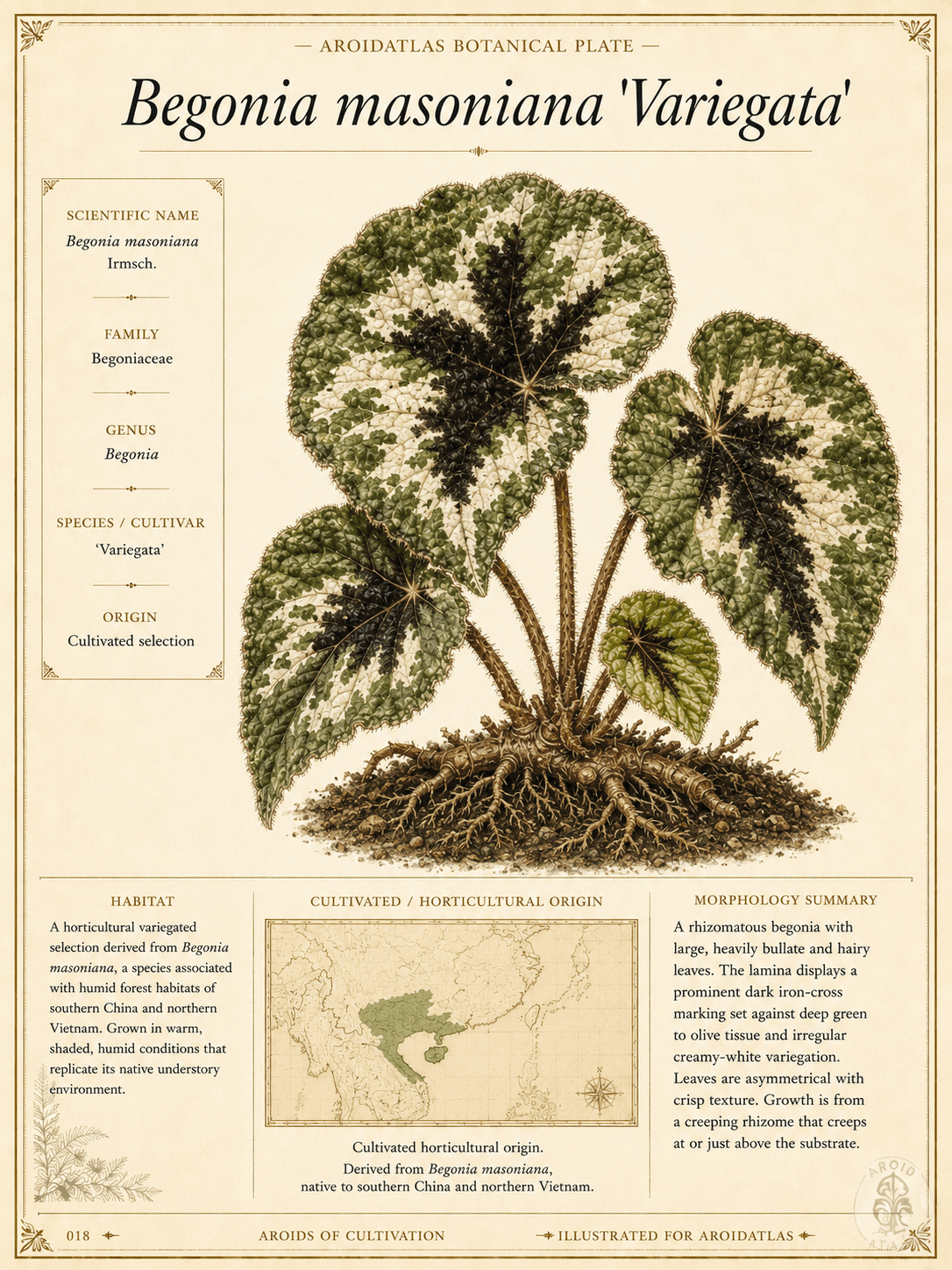
Begonia masoniana, the Iron Cross Begonia, is named for the dark brown-black cross-shaped mark radiating from the centre of each puckered, textured leaf against a bright apple-green background, a distinctive pattern that needs no variegation. A rhizomatous begonia rather than a cane type, it grows low and spreading from a thick creeping rhizome. The plain species is widely available and inexpensive; its variegated selection adds irregular cream sectoring to the same iron-cross pattern, a considerably rarer and pricier form.
Native Range
Vietnam
Market Analysis
Begonia masoniana Price Guide & Auction Value
Historical eBay auction metrics and live retailer listings updated weekly.
No eBay auction history available yet. Data is collected automatically as sales appear on eBay UK.
Before You Buy
Species-specific things to check when evaluating a listing
- Check for powdery mildew, common on this fuzzy-leaved species
- Rhizome should be firm, not soft or discoloured
- For the variegated form, confirm the cream sectoring pattern matches photos
Propagation Guide
How to Propagate Begonia masoniana
3-5 months
Cultivar character is preserved through vegetative cuttings
Roots readily from leaf sections or rhizome division. Keep warm and humid until plantlets emerge.
Care Guide
Begonia masoniana Care Guide & Growing Conditions
Light, well-draining mix: 50% perlite, 30% potting compost, 20% orchid bark.
Allow the top half of the substrate to dry between waterings. Water at the base.
55-75%.
Balanced liquid fertiliser at quarter strength every 2-3 weeks during the growing season.
Every 12-18 months in shallow, wide pots suited to the rhizomatous habit.
Common Problems
Powdery mildew
Poor air circulation with high humidity
Improve airflow and avoid wetting leaves
Botrytis (grey mould)
Overwatering, dead leaves left on plant
Remove dead foliage and increase airflow
A Pattern That Doesn't Need Variegation
Most of the patterned begonias on this site earn their look through variegation: cream or white sectoring layered over a solid leaf. Masoniana's iron-cross mark works differently: it's fixed pigment, not missing chlorophyll, a dark brown-black cross radiating from the centre of an otherwise apple-green, heavily puckered leaf. Worth remembering when comparing this species to its own variegated selection, which adds genuine cream sectoring on top of the same cross pattern rather than replacing it; the iron-cross marking and the variegation are independent traits, and a plant needs both to be correctly sold as the variegated form.
Also in: Iron-Cross & Bullate
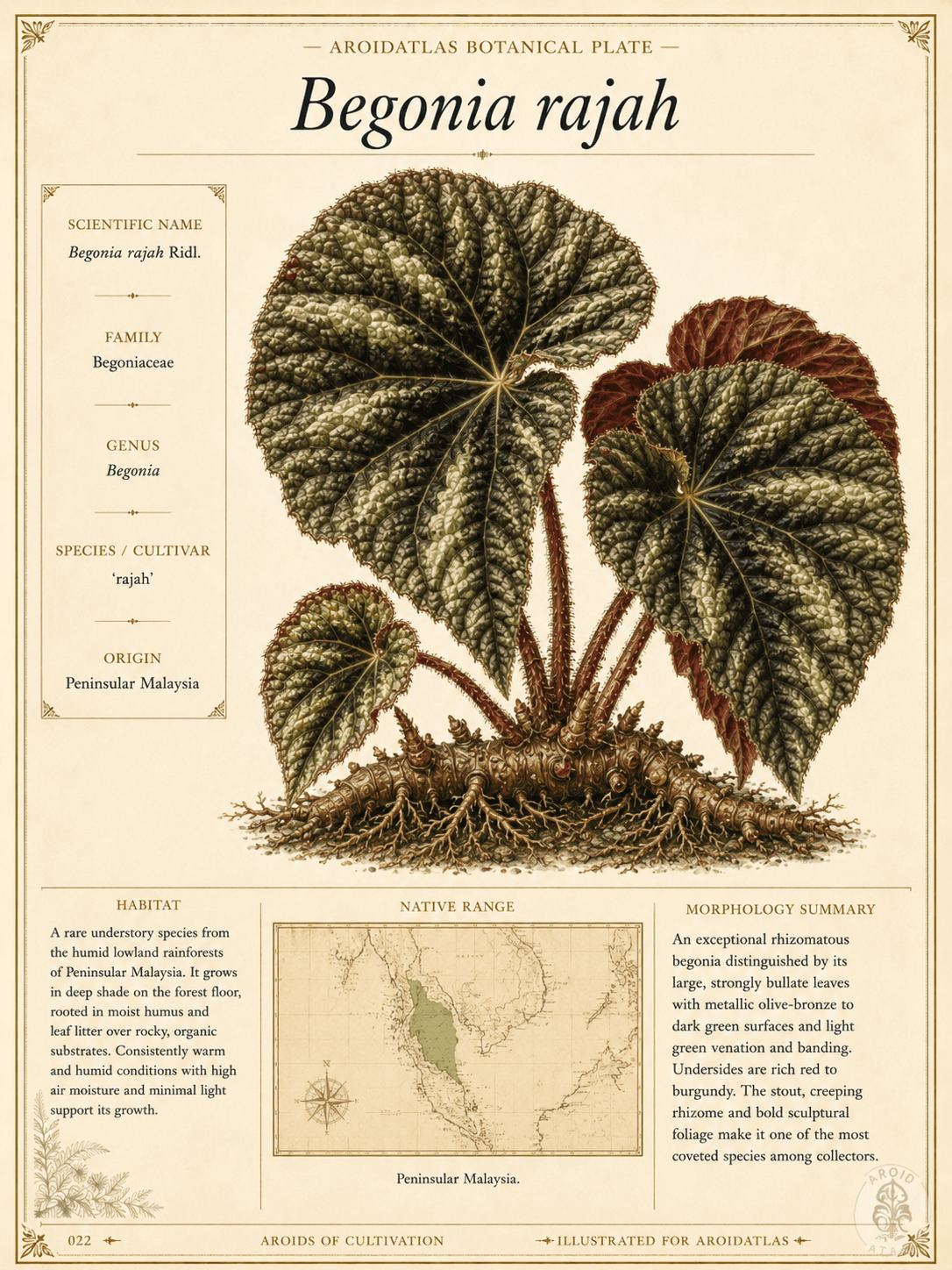
Species with a raised, quilted leaf surface, including B. masoniana's namesake dark iron-cross marking.