Scroll to explore forms of Begonia maculata
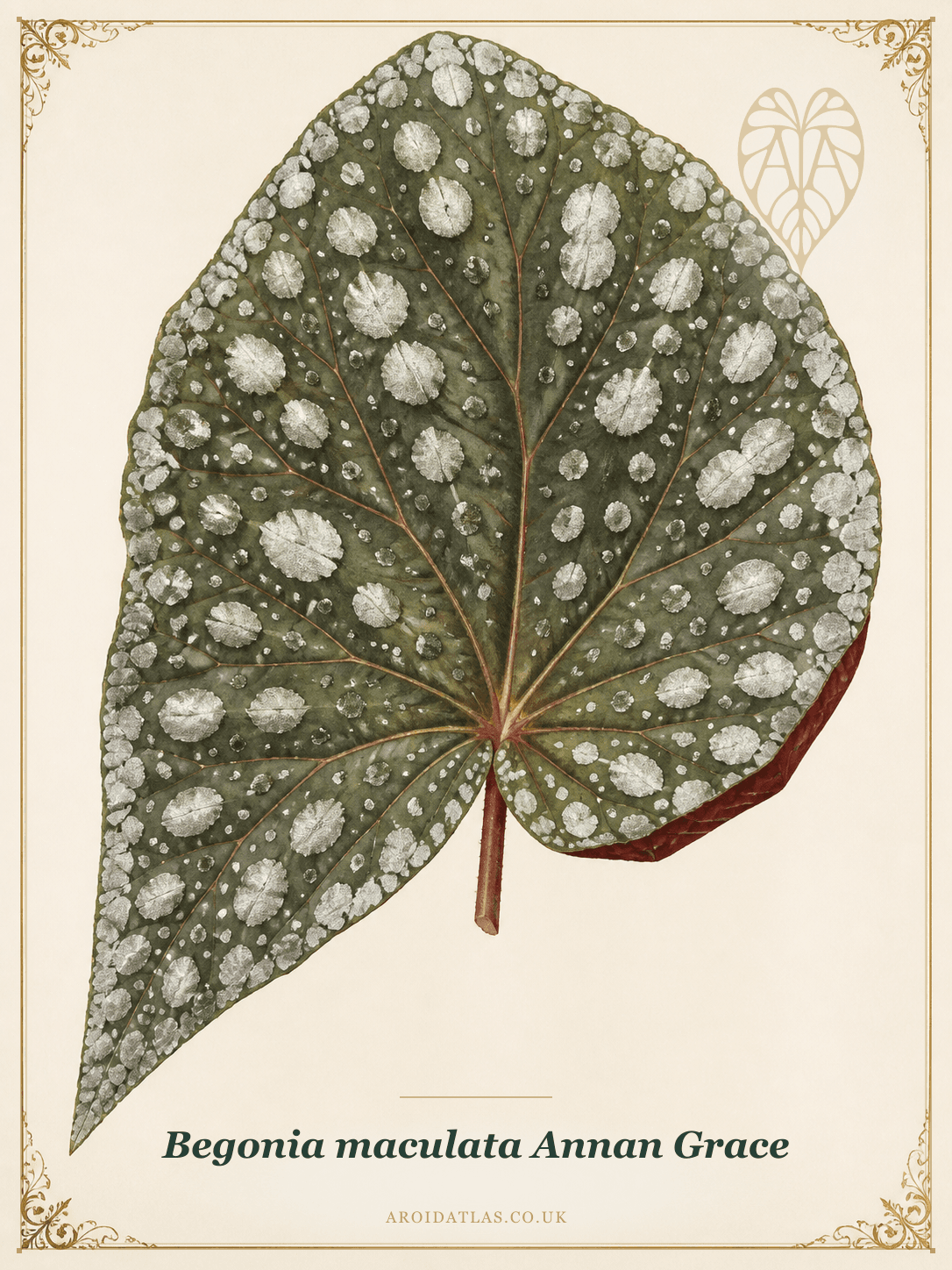
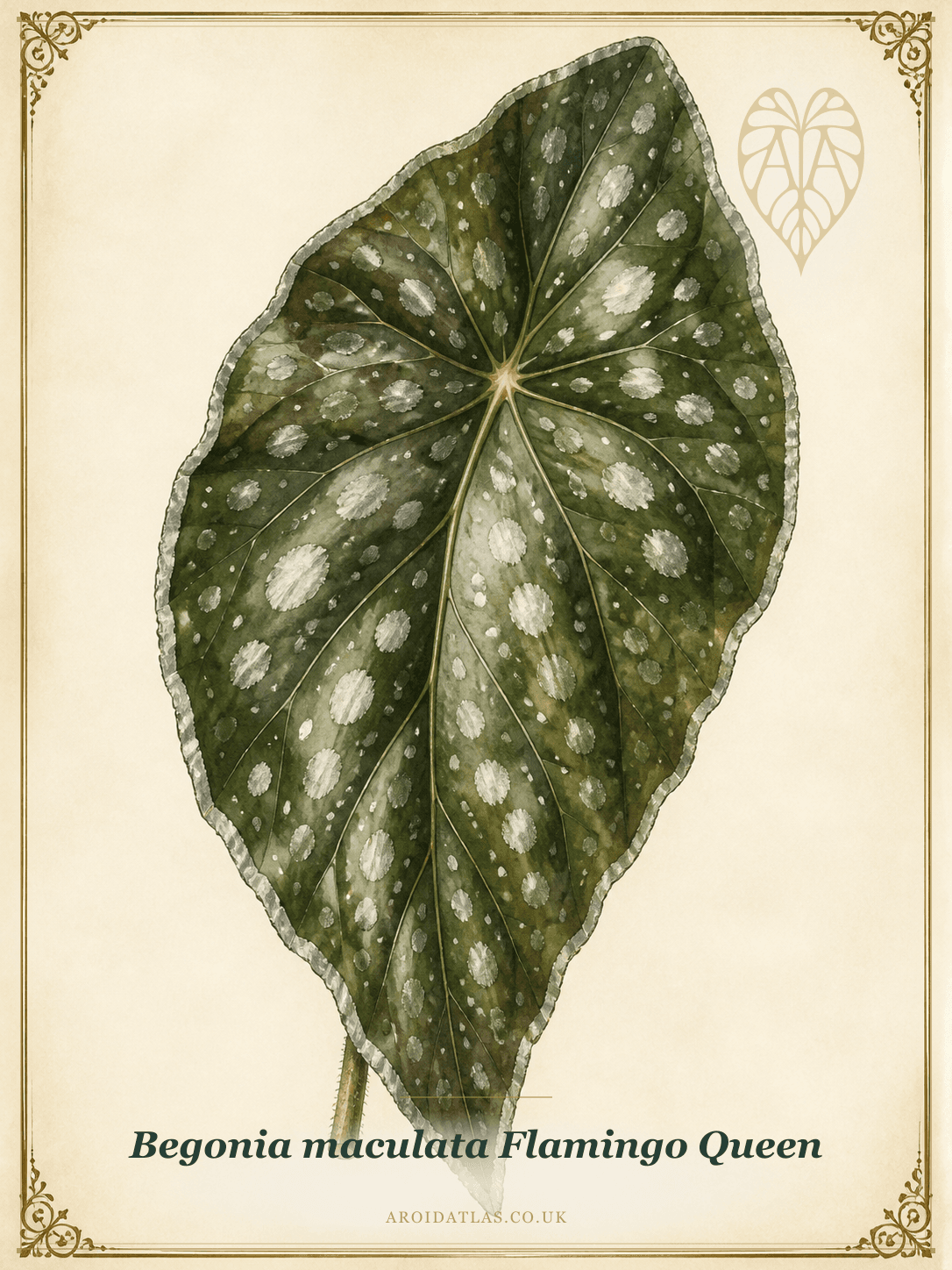
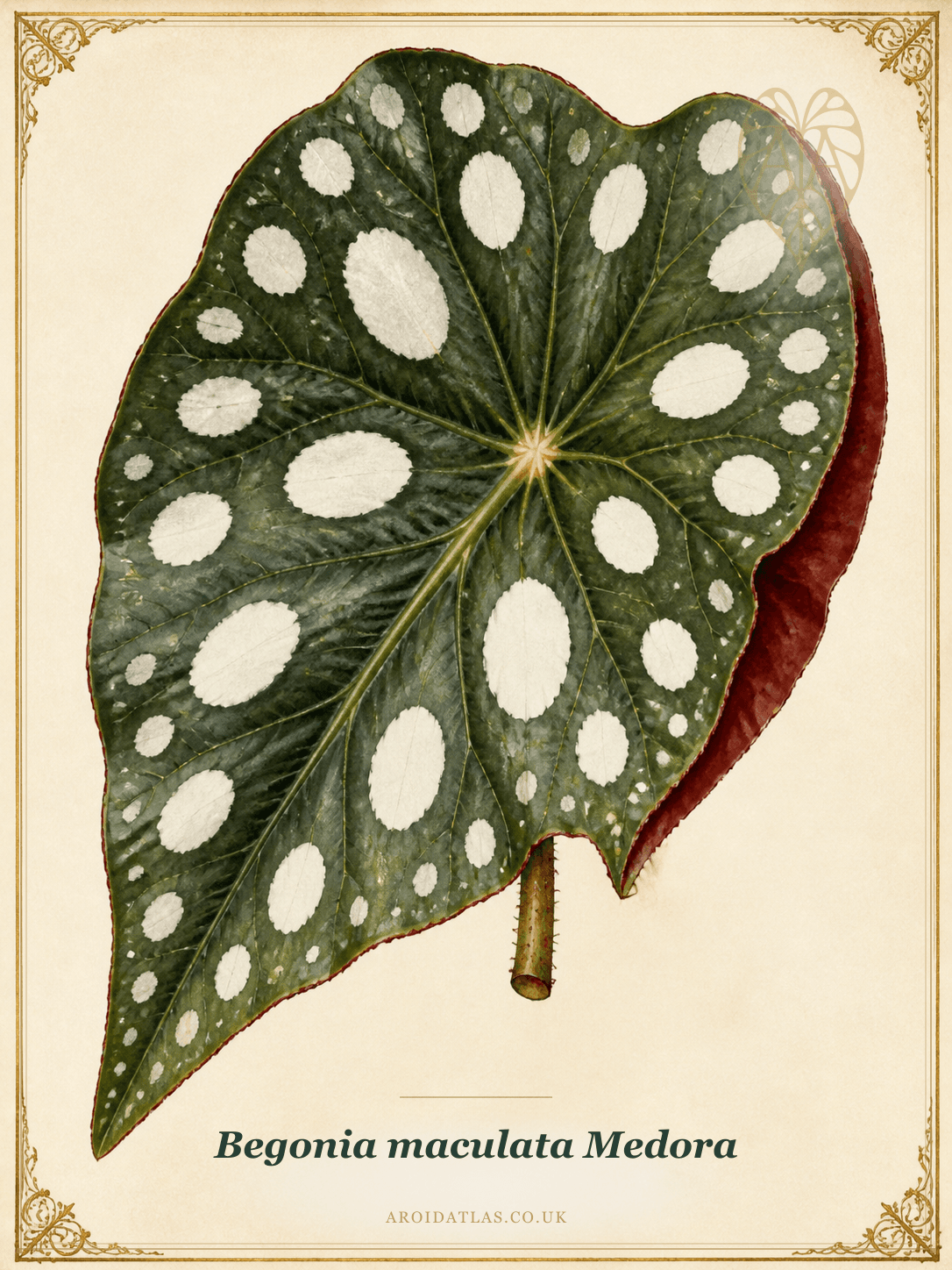
Full Specimen Plate
Begonia maculata
Polka Dot Begonia
Aroid Atlas Price Guide
Select Plant Size
Pricing Data Key
Based on online retail prices, adjusted for private sales
Other colour-form prices
Begonia maculata Morphology
About Begonia maculata
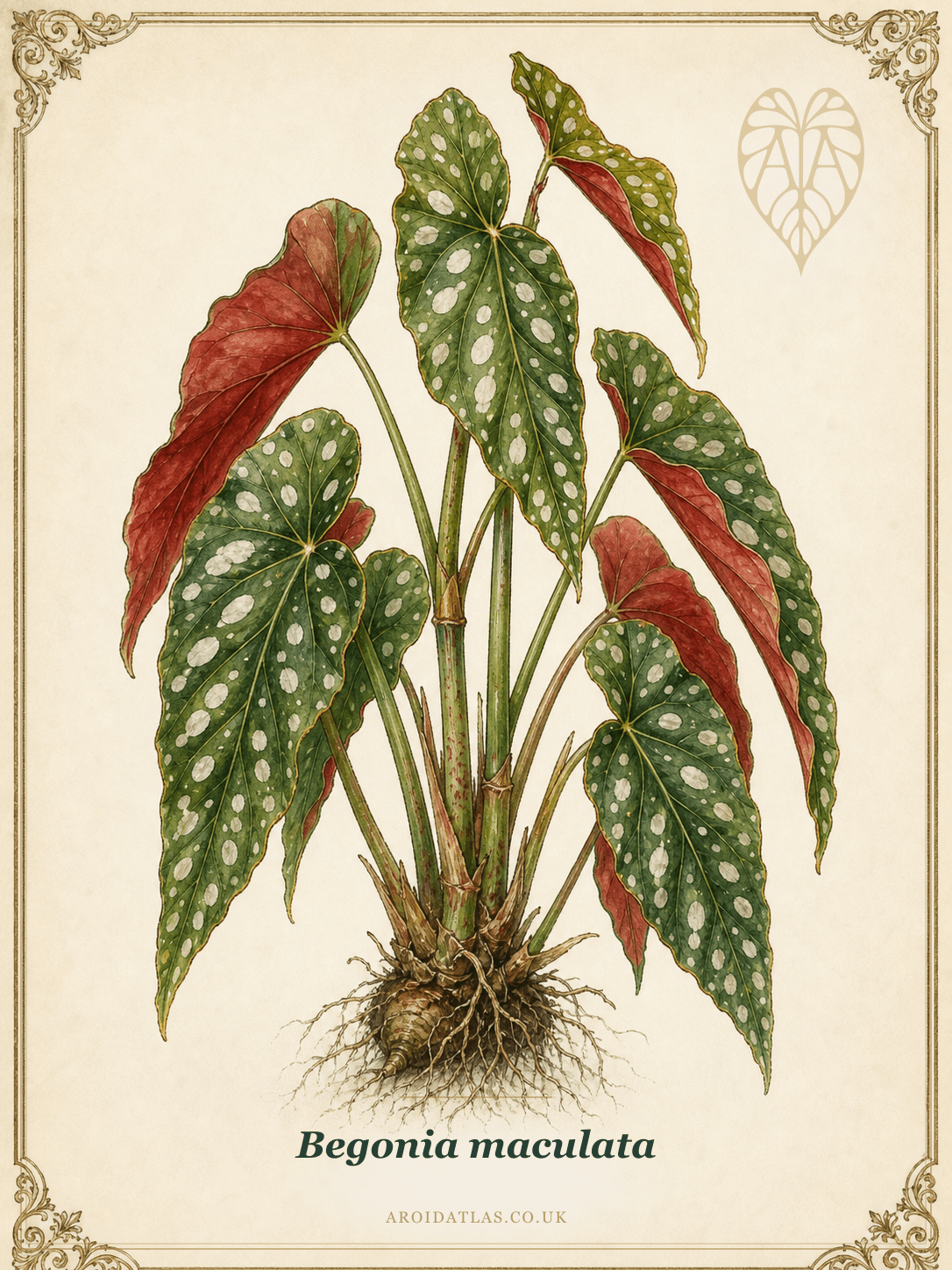
The plain wild-type Begonia maculata Raddi is the widely available cane begonia that every variegated form on this page is derived from: asymmetrical, angel-wing shaped leaves in solid deep green, marked only with the species' signature metallic silver polka dots and deep red undersides. It is inexpensive, easy to find at almost any garden centre, and propagates from cuttings with almost no effort, which keeps its price low and stable. It is included here purely as the baseline reference point for the variegated forms above; its price is tracked entirely separately and is never blended into their averages.
Native Range
Brazil
Market Analysis
Begonia maculata Price Guide & Auction Value
Historical eBay auction metrics and live retailer listings updated weekly.
No eBay auction history available yet. Data is collected automatically as sales appear on eBay UK.
Before You Buy
Species-specific things to check when evaluating a listing
- Check for powdery mildew (a white dusty coating on leaf surfaces, especially in dry conditions); it spreads rapidly between plants
- Inspect for mealybugs at leaf axils and the underside of stems where they hide in white cottony deposits
- Rhizome begonias should show firm, healthy rhizome tissue; avoid plants with soft, discoloured rhizomes
- Most begonias ship well as leaf cuttings; if buying a cutting, ensure it has a healthy petiole and no signs of rot at the cut end
- For variegated or cultivar forms, confirm the cutting or plant shows the named form's characteristic variegation/leaf pattern; heavily reverted (all-green) growth is worth considerably less
Propagation Guide
How to Propagate Begonia maculata
3-5 months
Cultivar character is preserved through vegetative cuttings
Most rhizomatous begonias root readily from leaf sections or petiole cuttings placed on moist substrate. Keep warm and humid until plantlets emerge at leaf margins. Variegated and cultivar forms of the species should be propagated from cuttings taken at a node that shows the desired variegation or leaf character; see that form's own page for details.
Care Guide
Begonia maculata Care Guide & Growing Conditions
Light, well-draining mix: 50% perlite, 30% potting compost, 20% orchid bark. Begonias are susceptible to root rot, so excellent drainage is essential.
Allow the top half of the substrate to dry between waterings. Water at the base; wet leaves invite fungal problems. Reduce in winter.
50–70%. More tolerant of average indoor humidity than tropical aroids, but consistent moisture prevents crispy leaf margins. Heavily variegated forms often want the higher end of this range; check that form's Quick Facts.
Balanced liquid fertiliser at quarter strength every 2–3 weeks during the growing season. Do not feed in winter.
Every 12–18 months in spring. Begonias like shallow, wide pots that suit rhizomatous growth. Don't bury the rhizome.
Common Problems
Powdery mildew
Poor air circulation combined with high humidity
Improve airflow; avoid wetting leaves; treat with a dilute bicarbonate of soda spray
Botrytis (grey mould)
Overwatering, dead leaves left on plant, poor air circulation
Remove dead foliage promptly; increase airflow; reduce watering
Leggy stems
Insufficient light
Move to a brighter position; begonias need good indirect light to maintain compact growth
The Baseline Everything Else Gets Measured Against
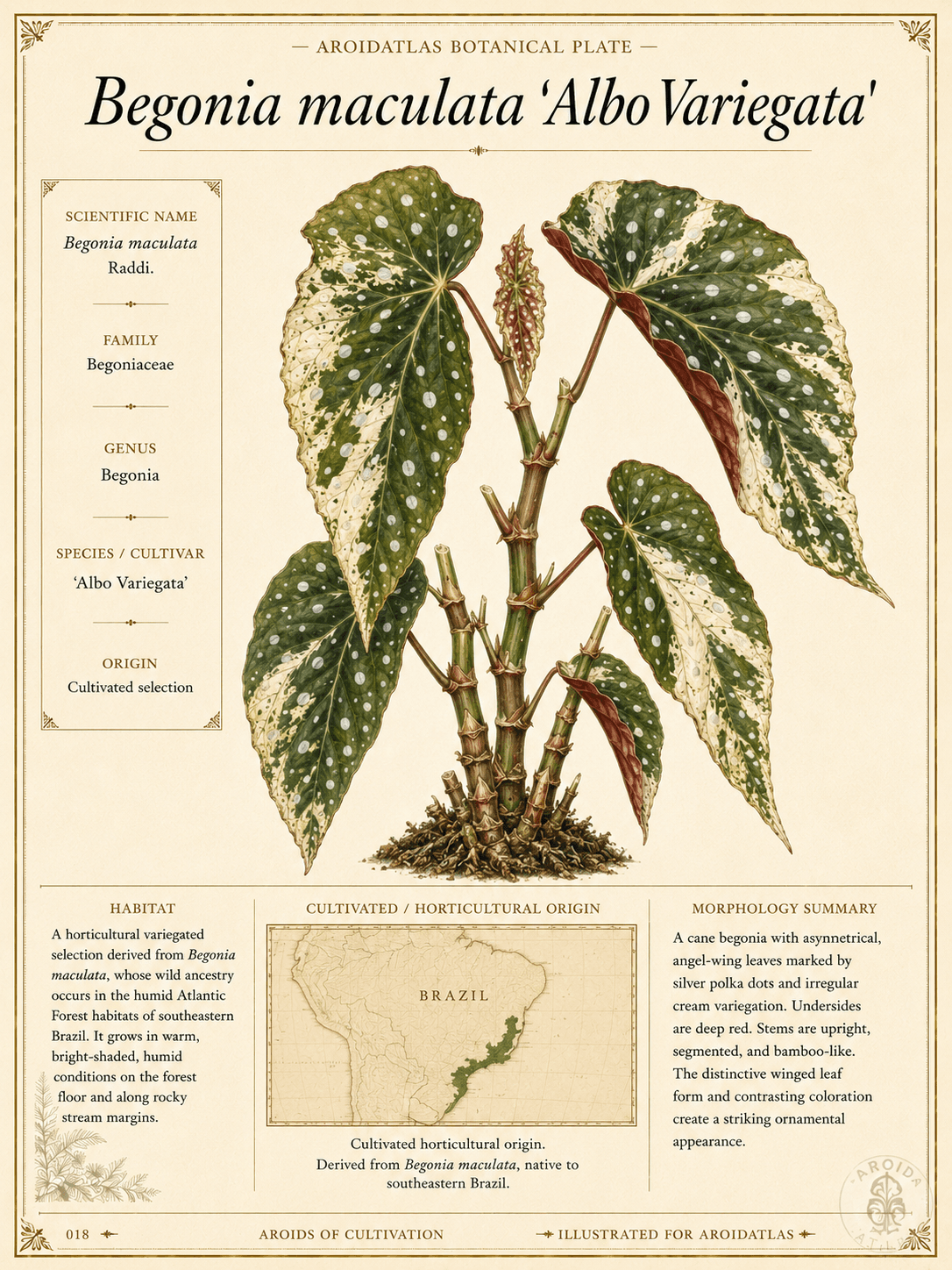
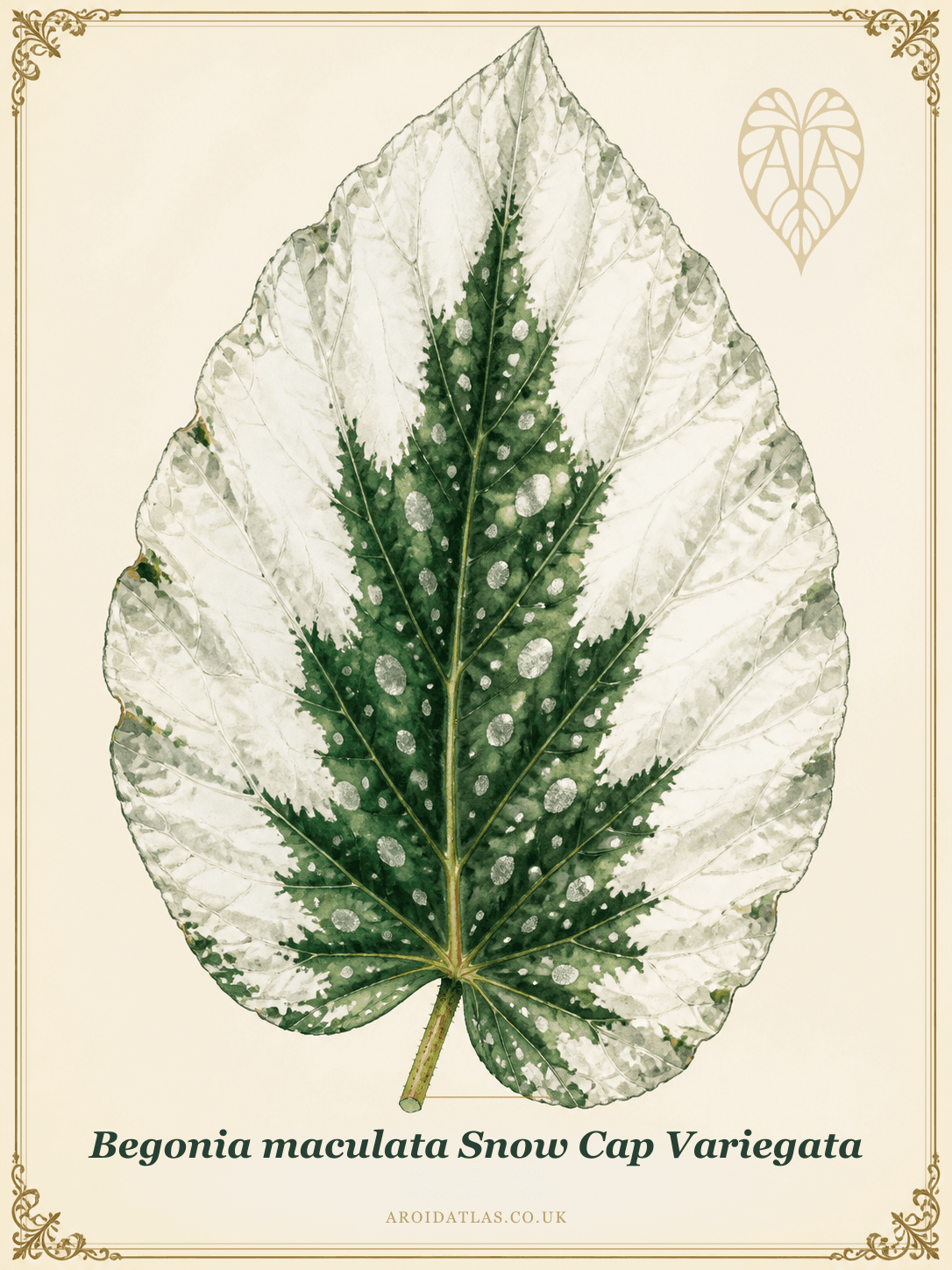
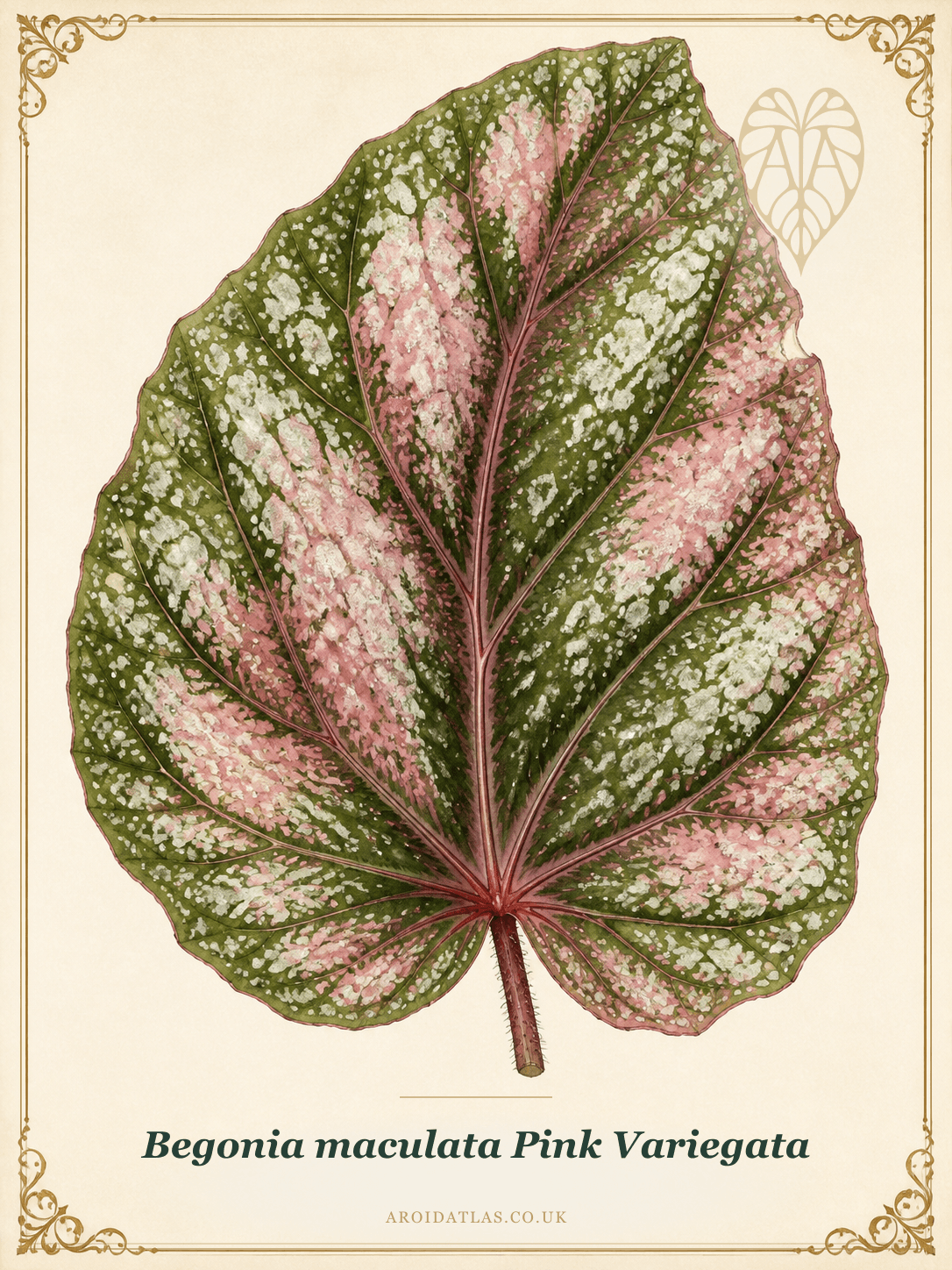
Every variegated form and named selection on this page (Albo, Snow Cap, Pink, Annan Grace, Flamingo Queen, Medora) is a derivative of this same wild-type plant: solid deep green, angel-wing leaves marked only with the species' signature silver polka dots and red undersides. None of that variation came from further crossing; it's mutation and selection layered onto one species. That's also why the plain species stays inexpensive and price-stable while its variegated offshoots command considerably more: buyers are paying for a stable sport of this same baseline plant, not a rarer species underneath it.
Also in: Angel-Wing Maculata Line
B. maculata and its named cultivars and variegated forms, sharing the species' asymmetrical angel-wing leaf shape and silver polka-dot spotting.