Propagating Begonia
Begonia isn't an aroid, and it doesn't propagate like one: rhizomatous species root new plantlets straight from a leaf, while cane-type Angel-Wings root from stem cuttings instead. The two methods aren't interchangeable.
Two growth habits, two propagation methods
Begonia isn't a single propagation story. The bullate, rhizomatous species in this catalogue (B. masoniana, B. ferox, B. rajah and their relatives) grow from a creeping rhizome and can regenerate an entire new plant from a piece of leaf alone, without any stem or node involved at all. The cane-type Angel-Wing line (B. maculata and its named cultivars) grows upright on jointed, bamboo-like stems instead, and roots the same way a Dieffenbachia or Dracaena cane does: from a stem cutting with at least one node, not from a leaf.
Using the wrong method isn't fatal, but it wastes material: a leaf wedge from an Angel-Wing maculata is far less reliable than a stem cutting, and a stem cutting from a rhizomatous species like masoniana skips over its actual strength, which is regenerating from leaf tissue most cane-type Begonia can't match.
Step by Step
Follow the trail below, one component at a time — each illustrated in the same antique botanical plate style used across our species archive.
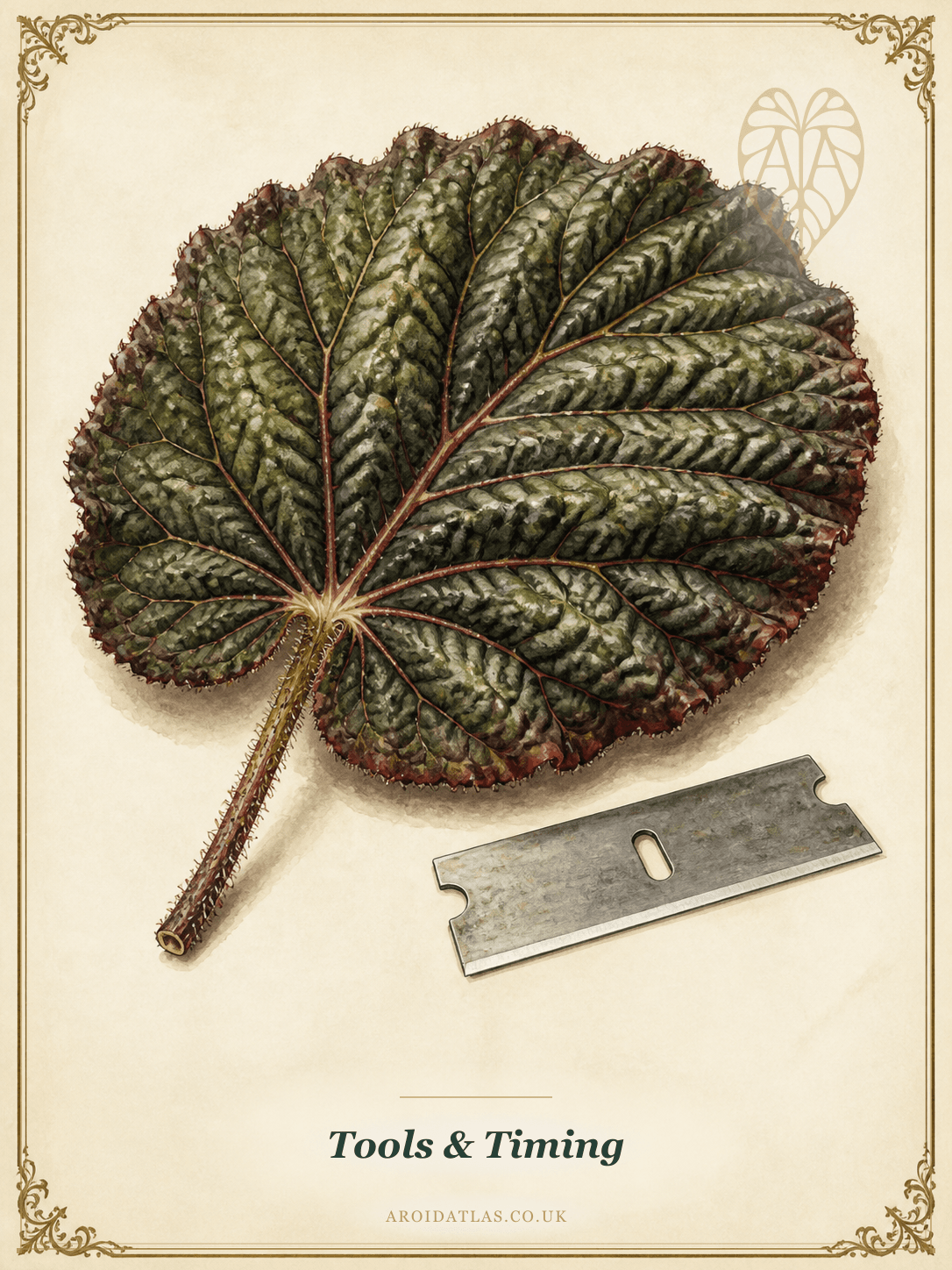
Tools & Timing
A clean, sharp blade or fresh razor is worth the trouble here: a torn or crushed leaf cut is slower to callus and more prone to rotting before it ever produces a plantlet. Propagate during active growth in spring or summer; a leaf wedge taken from a plant that's slowed down for winter roots far more slowly, if at all.
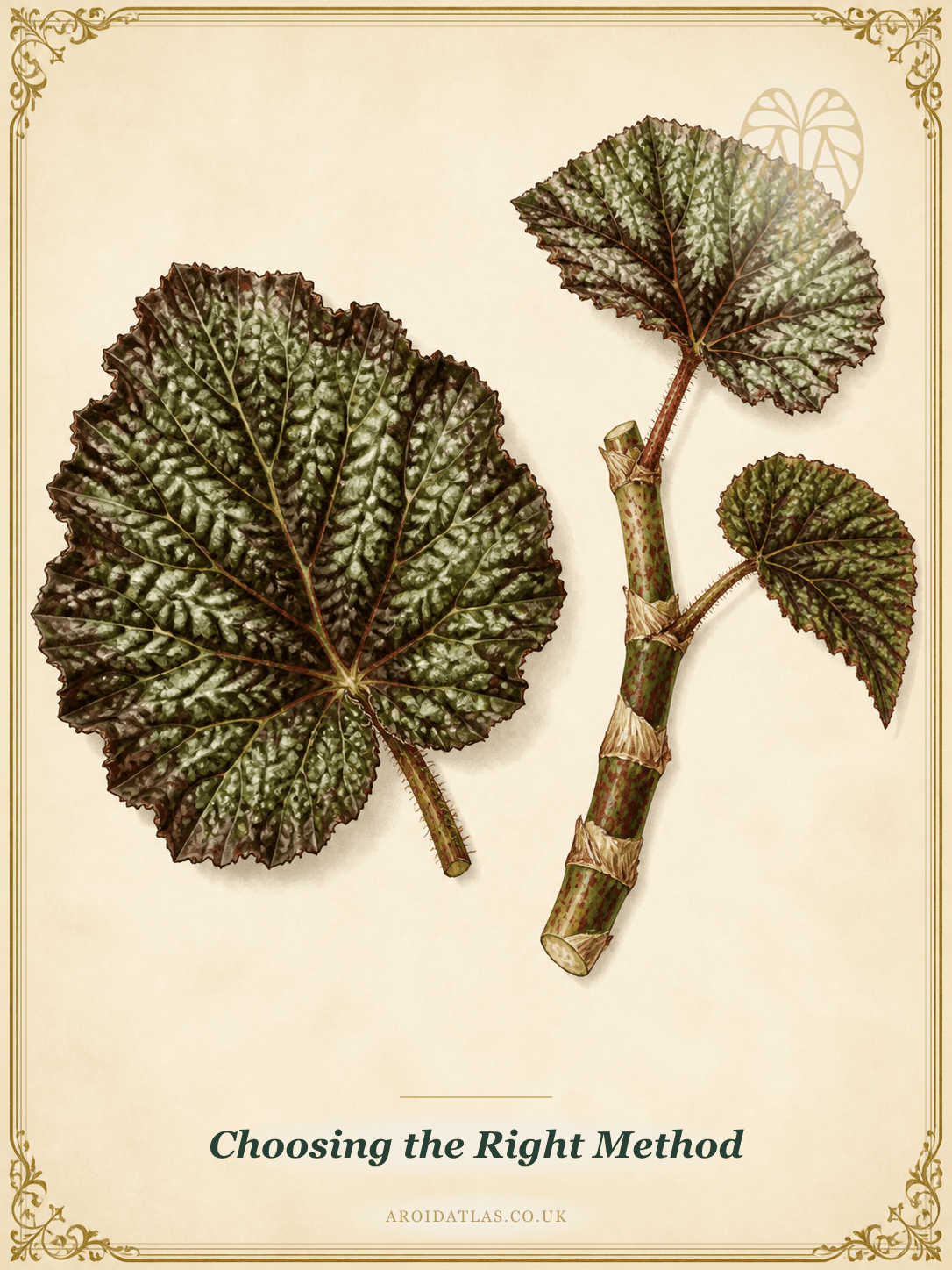
Choosing the Right Method
For rhizomatous, bullate species (masoniana, ferox, rajah and relatives), select a mature, healthy leaf with no damage and take a leaf-wedge or whole-leaf cutting. For cane-type Angel-Wing maculata forms, instead take a stem cutting with at least one node and a couple of leaves attached, cut just below a node the same way you would for a Dieffenbachia.
Don't mix the two methods up: a stem cutting from a rhizomatous species and a leaf wedge from an Angel-Wing maculata both root far less reliably than the method matched to that plant's actual growth habit.
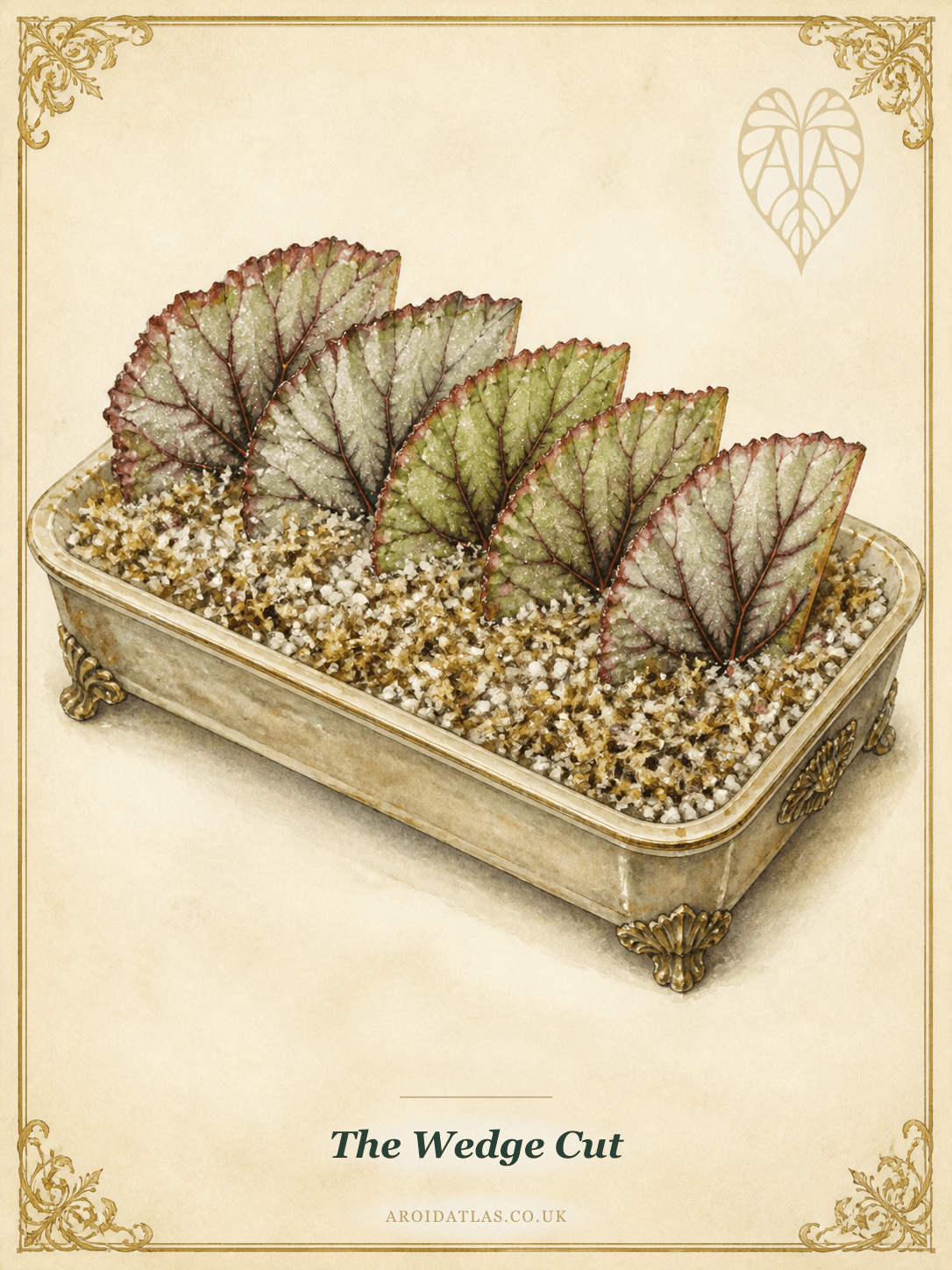
The Wedge Cut (Rhizomatous Species)
Cut the leaf into pie-slice wedges, making sure each wedge includes a section of a major vein; plantlets form at the cut vein, not from the leaf blade generally. Insert the cut edge of each wedge vertically into a moist, well-aerated mix (perlite and sphagnum work well) so the vein contacts the medium directly.
No vein in the wedge means no plantlet: every piece needs a visible section of major leaf vein included in the cut.
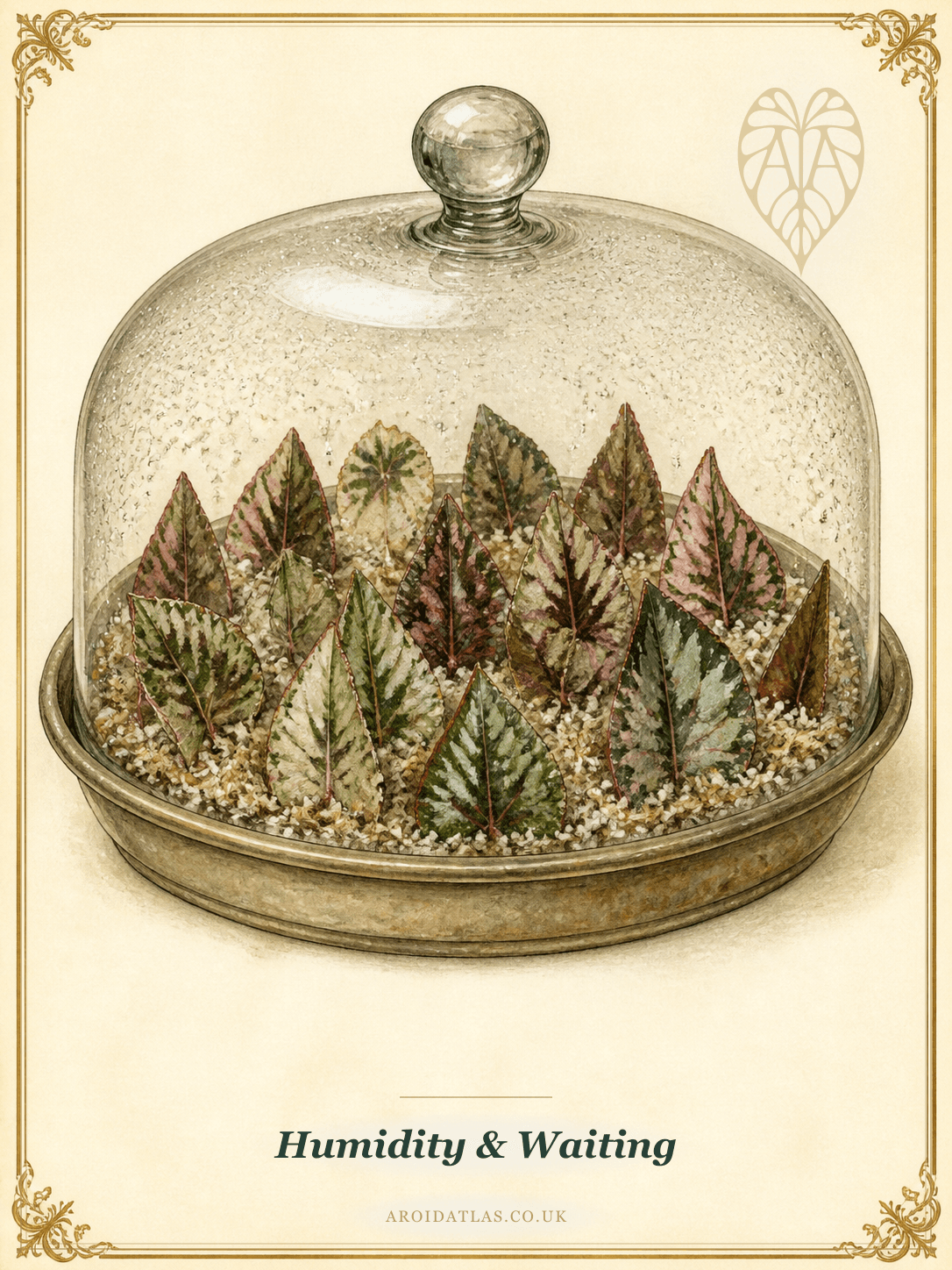
Humidity & Waiting
Cover wedge cuttings with a clear humidity dome or bag and keep them out of direct sun, which scorches the exposed, wounded leaf tissue. New plantlets typically emerge from the cut vein over several weeks to a couple of months. This is a genuinely slow method, and a lack of visible progress in the first few weeks isn't a sign of failure.
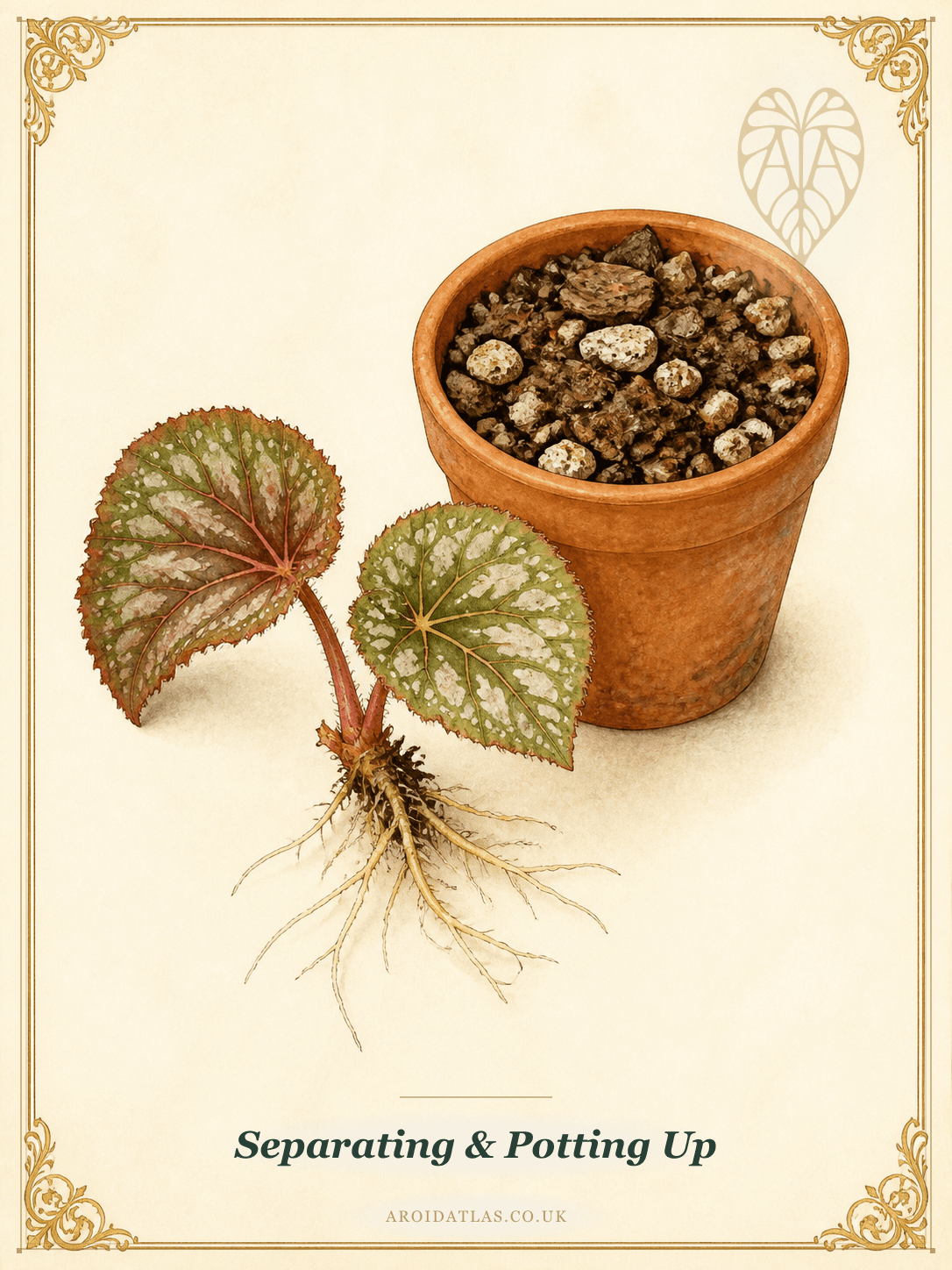
Separating & Potting Up
Once a plantlet has developed a small root system and at least one or two of its own true leaves, separate it from the parent leaf wedge and pot it into its own small container of well-draining aroid-style mix. For cane-type stem cuttings, pot up once roots are visible and at least 2-3cm long, the same threshold used for climbing aroid cuttings.
The variegation caveat
Variegated Begonia forms (Albo Variegata lines, pink-sectored maculata cultivars) are chimeric sports, the same as variegated aroids; the white or pink pigmentation exists only in some of the plant's growing tissue. A leaf wedge or stem cutting taken from a section without variegated tissue will root and grow, but it will grow back plain green, regardless of how the parent plant looks overall.
Good airflow matters more than high humidity here
Begonia leaf cuttings and young plantlets are notably prone to powdery mildew and rot in still, overly humid air: vent a propagation dome briefly each day rather than sealing it completely for weeks on end.
A whole-leaf pin-down works alongside wedges
Instead of cutting a leaf into wedges, some growers lay a whole leaf flat on moist substrate, make small nicks across the major veins with a blade, and pin the leaf down with wire or toothpicks. Plantlets emerge at each nick point, a slower setup than wedges, but it can produce more plantlets from a single leaf.
Angel-Wing cuttings root reliably in plain water
Cane-type maculata stem cuttings root readily in a glass of water, the same as many climbing aroids; a widely repeated shortcut compared to the slower leaf-wedge method needed for rhizomatous species.
Variegated wedges need to include variegated tissue
If the goal is a variegated plantlet, take the wedge from a visibly variegated section of leaf specifically: a wedge from an all-green part of the same leaf will root true to green only, same as any other chimeric sport.