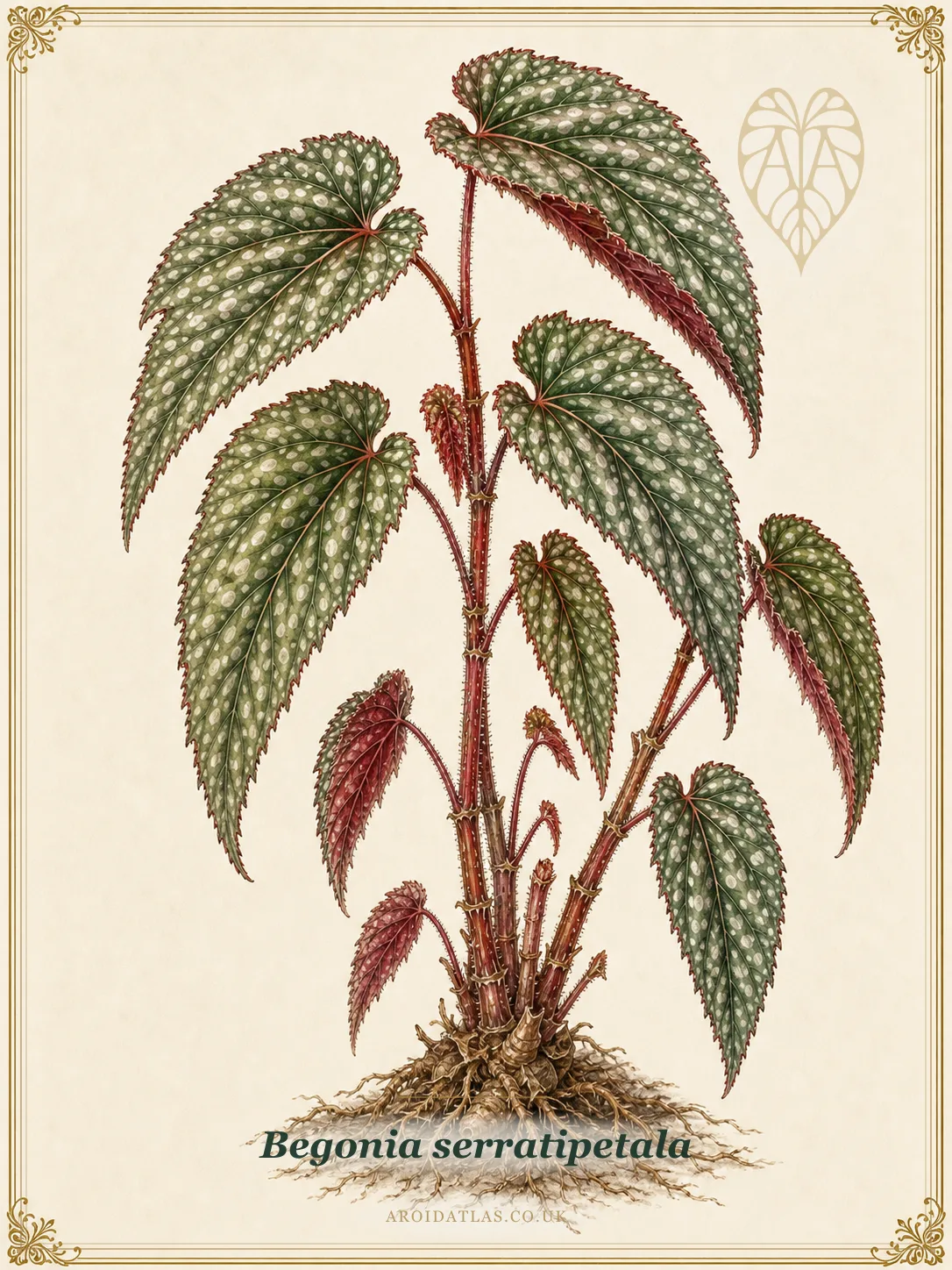
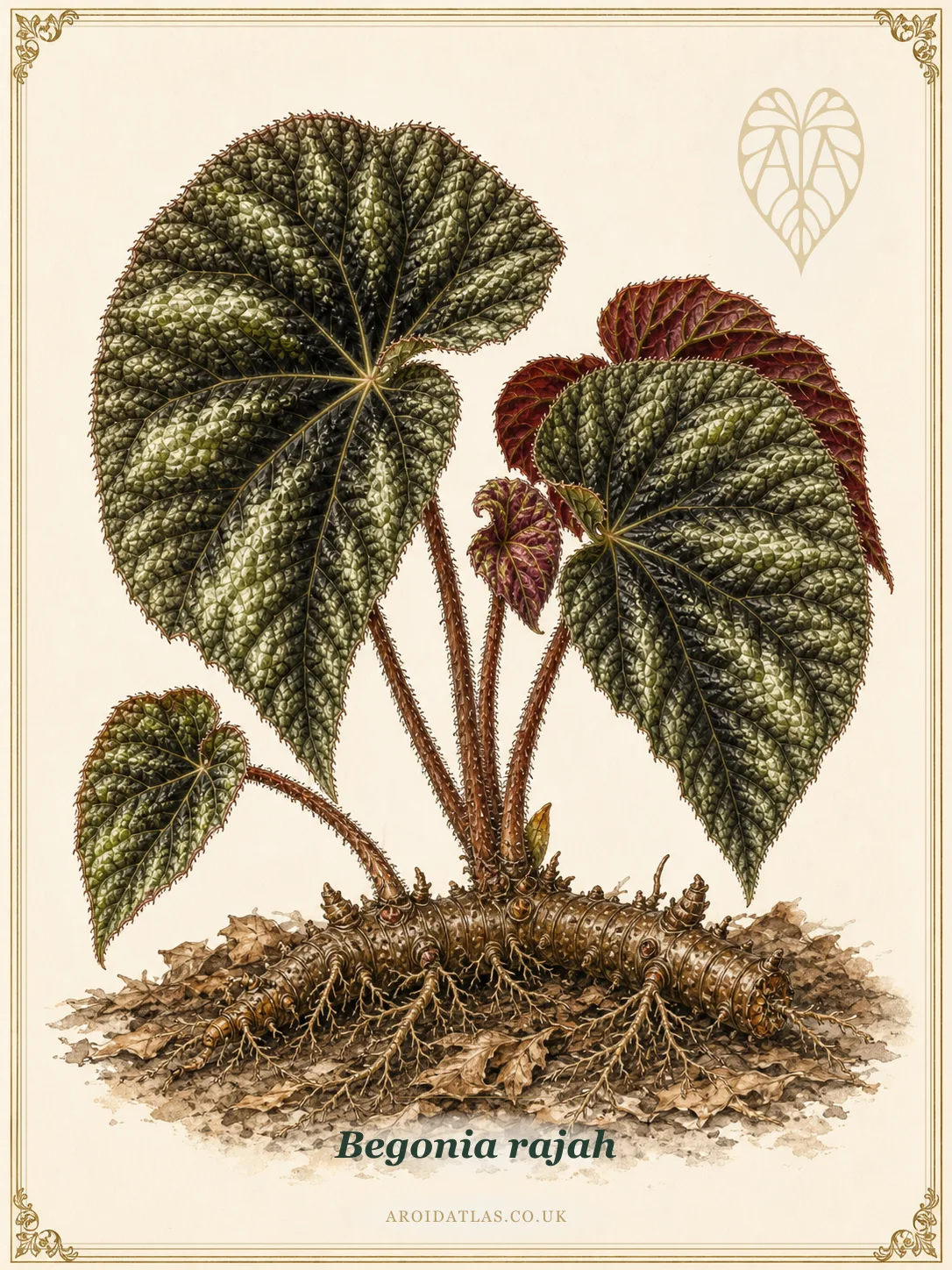
Full Specimen Plate
Begonia chlorosticta
Green-Spotted Begonia
- Natural Rooting Powder, 3 x 75gRooting hormone powder for stem and leaf cuttings.
- Precision Bonsai Pruning Scissors, 200mmFine-bladed snips for clean node cuts when taking a cutting.
- Humidity Dome, Heavy-Duty Germination KitVented propagation dome for holding humidity around fresh cuttings.
- Digital Hygrometer & ThermometerLCD humidity and temperature gauge for checking a grow spot against a plant's target range.
Amazon links — we may earn commission on qualifying purchases.
7cm Target Price
£15.00
Market Hub
Begonia chlorosticta Sold Prices & Live Market
What the Target Price above is based on: eBay sold prices by plant size, live listings, and retailer stock.
No eBay sales recorded yet. Sold listings are collected as they appear on eBay.
Before You Buy
Species-specific things to check when evaluating a listing
- Press the rhizome gently — it should feel firm throughout, with no soft or discoloured patches
- Check leaf axils and the underside of the rhizome for mealybugs, which hide in the crevices between growth points
- Confirm the spot pattern reads with real contrast — pale, washed-out spotting can indicate the plant has been under-humidified
- Ask how it's been kept, since a plant moved straight from a closed terrarium into open room air will need a gradual acclimation period
Begonia chlorosticta Morphology
About Begonia chlorosticta
Near-black leaves scattered with luminous lime-green spots put Begonia chlorosticta (Sands) near the top of the Bornean spotted-begonia hierarchy. It's a rhizomatous species from the rainforest understory of Sarawak, growing in deep shade on moist, well-drained, humus-rich substrate where humidity and warmth stay high year-round. Each asymmetrical, heart-ovate leaf is subtly bullate, patterned with pale spotting of real intensity against dark foliage, red underneath; the creeping rhizome stays at substrate level, building compact clumps rather than sprawling. Few spotted begonias from Borneo pull off quite this much contrast between blade and spot.
Native Range
Sarawak, Malaysian Borneo
Propagation Guide
How to Propagate Begonia chlorosticta
Propagation Guide
How to Propagate Begonia chlorosticta
3-5 months
Cultivar character is preserved through vegetative cuttings
Divide the rhizome into sections with at least one growth point, or root leaf-with-petiole cuttings flat on moist substrate; plantlets form at the base of the petiole within a few weeks in consistently warm, humid conditions.
Care Guide
Begonia chlorosticta Care Guide & Growing Conditions
Care Guide
Begonia chlorosticta Care Guide & Growing Conditions
A very free-draining mix — 50% perlite, 30% potting compost, 20% orchid bark — is essential; the rhizome sits at the surface and rots quickly in anything that stays wet.
Let the top half of the substrate dry before watering again, and water at the base rather than over the rhizome itself. Rhizome rot, not underwatering, is what actually kills most of these in cultivation.
Very high, 85-95% — among the most humidity-demanding species in this collection. A closed cabinet or terrarium is close to essential rather than optional.
Feed at quarter strength every 2-3 weeks through the growing season. These are slower, more deliberate growers than cane begonias and don't need or want heavy feeding.
Repot every 12-18 months into a shallow, wide pot that matches the rhizome's spreading habit — never a deep pot, and never bury the rhizome itself.
Common Problems
Rhizome rot
Substrate that stays wet, or a rhizome partially buried in compost
Cut back to firm, healthy tissue, let the wound callus, and keep the rhizome fully exposed at the surface going forward
Fading or dull spot pattern
Insufficient humidity or too much direct light bleaching the contrast
Keep it in bright, indirect light in a consistently humid enclosure rather than a sunnier windowsill
Stalled growth after division
A division with too small a section of rhizome or too few roots
Keep divisions warm and humid until new growth resumes, which can take several weeks
Field Reference
In the Wild
Field Reference
In the Wild
Field Notes
Pale Dots on Dark Ground
A Sarawak begonia with leaves covered in scattered pale yellow or cream dots: the name chlorosticta means 'green spot,' which is somewhat misleading given the spots are paler than the ground colour, but taxonomy is not always a descriptive science. The spotting pattern is quite unlike the bold polka-dot arrangement of Begonia maculata and is subtler, more fine and scattered, which suits certain aesthetic sensibilities better. Genuinely uncommon in cultivation. Humid terrarium conditions required. The kind of plant you find in someone's collection and spend five minutes trying to identify.
Also in: Natural Silver & Spot Patterning
Wild species carrying naturally occurring leaf spotting or striping, distinct from the chimeric variegation seen in cultivated colour-break forms.