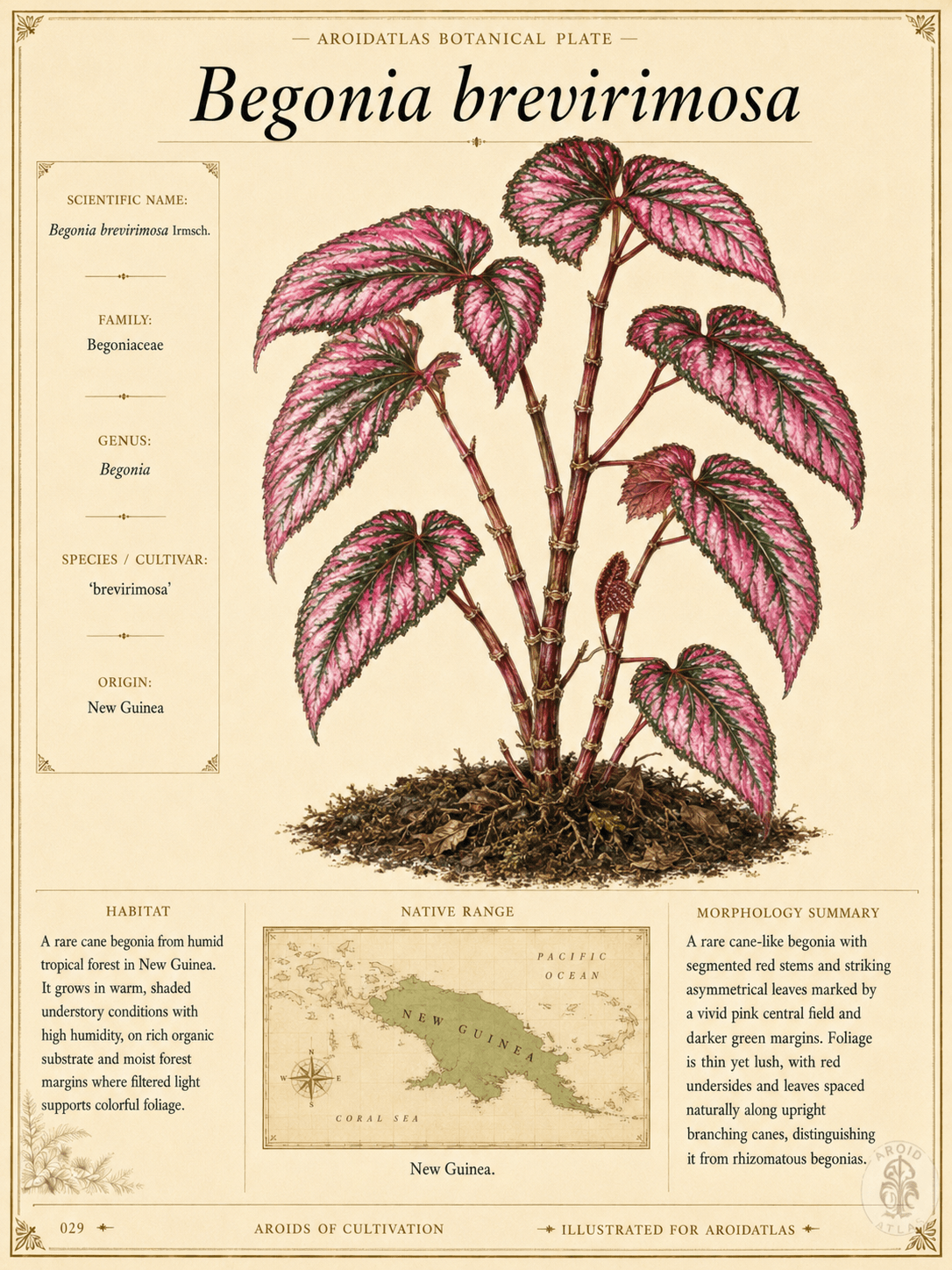
Full Specimen Plate
Begonia serratipetala
Pink Spot Cane Begonia
Aroid Atlas Price Guide
Select Plant Size
Pricing Data Key
Community price estimate based on limited sales history
Market Analysis
Begonia serratipetala Price Guide & Auction Value
Historical eBay auction metrics and live retailer listings updated weekly.
No eBay auction history available yet. Data is collected automatically as sales appear on eBay UK.
Before You Buy
Species-specific things to check when evaluating a listing
- Check for powdery mildew — a white dusty coating on leaf surfaces, especially in dry conditions; it spreads rapidly between plants
- Inspect for mealybugs at leaf axils and the underside of stems where they hide in white cottony deposits
- Rhizome begonias should show firm, healthy rhizome tissue — avoid plants with soft, discoloured rhizomes
- Most begonias ship well as leaf cuttings — if buying a cutting, ensure it has a healthy petiole and no signs of rot at the cut end
Begonia serratipetala Morphology
About Begonia serratipetala
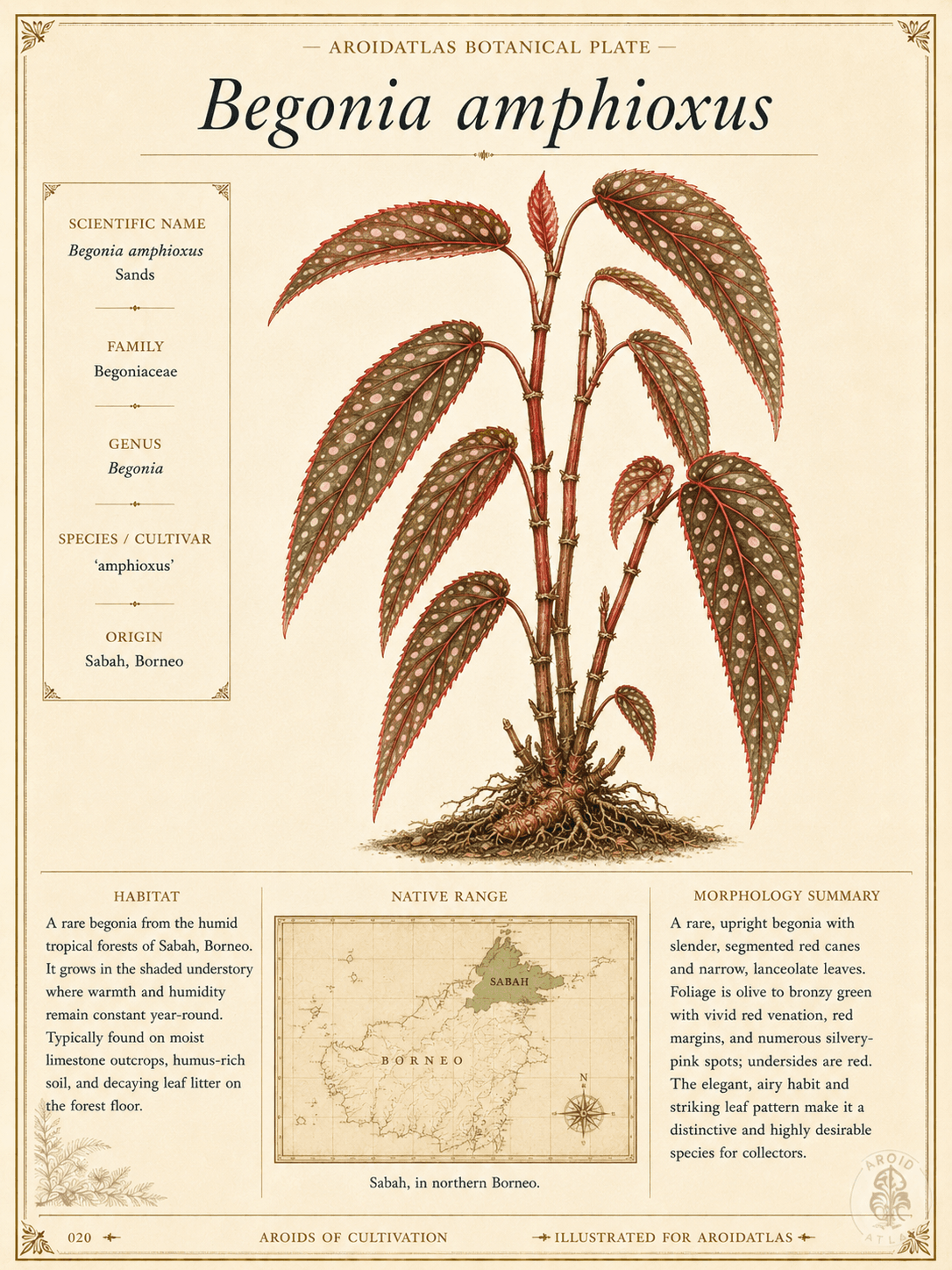
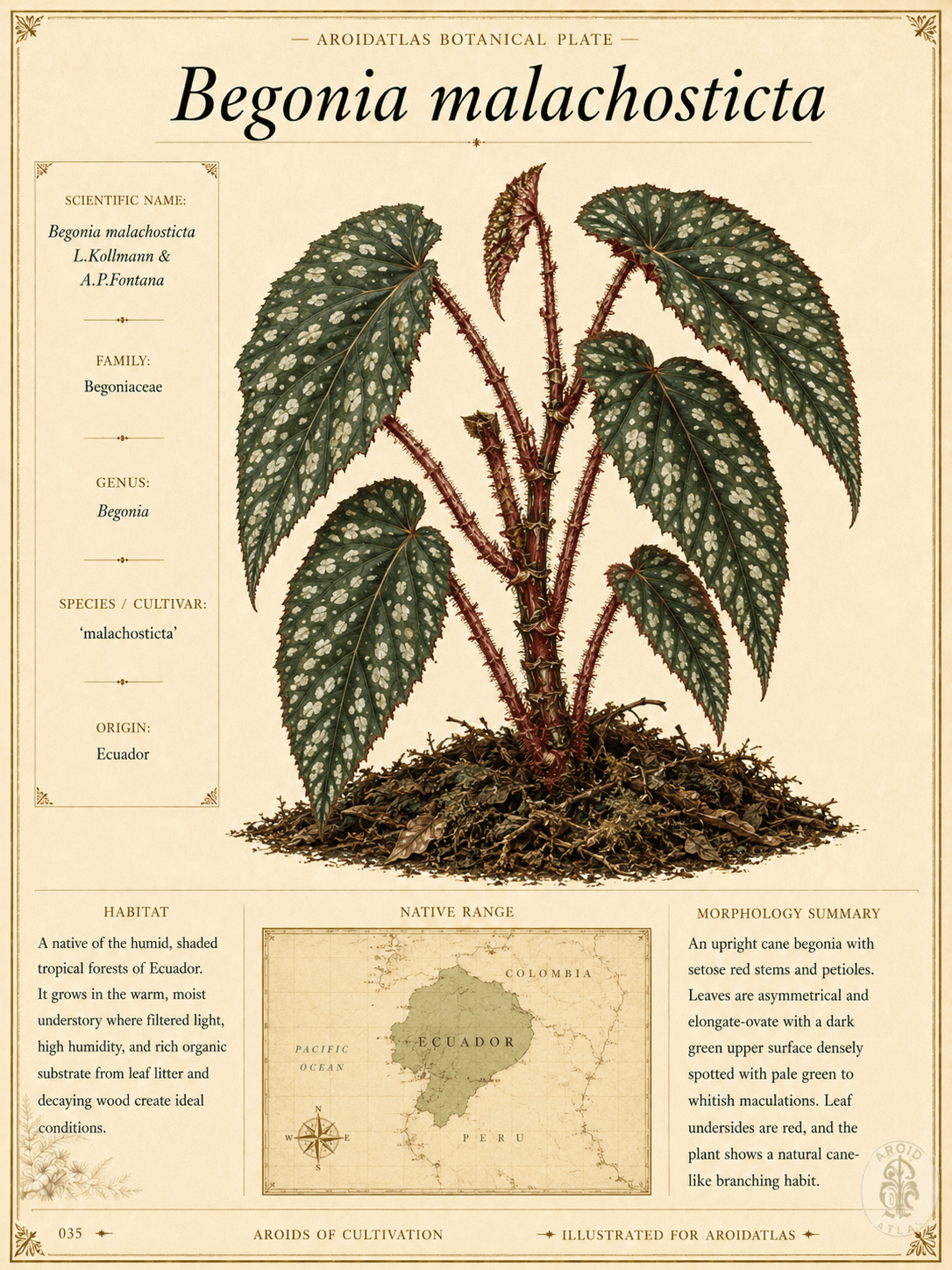
Begonia serratipetala, described by Irmsch., is a caulescent cane begonia from the humid tropical forests of New Guinea, growing in warm, shaded understory conditions with high humidity on moist organic substrate where filtered light supports its refined habit. The slender upright canes with distinct nodes carry asymmetrical, elongated leaves of deep green densely marked with silvery spots, with serrate to finely toothed margins adding textural interest. Reddish, setose petioles and leaf undersides are characteristic. The plant's combination of the spotted foliage pattern with the clean cane habit and serrated margins gives it a more refined, graphic quality than many cane begonias, and it remains a popular choice for collectors who want something more interesting than the common maculata but more manageable than the rarer Bornean species.
Native Range
New Guinea
Propagation Guide
How to Propagate Begonia serratipetala
3-5 months
Cultivar character is preserved through vegetative cuttings
Most rhizomatous begonias root readily from leaf sections or petiole cuttings placed on moist substrate. Keep warm and humid until plantlets emerge at leaf margins.
Care Guide
Begonia serratipetala Care Guide & Growing Conditions
Light, well-draining mix: 50% perlite, 30% potting compost, 20% orchid bark. Begonias are susceptible to root rot — excellent drainage is essential.
Allow the top half of the substrate to dry between waterings. Water at the base — wet leaves invite fungal problems. Reduce in winter.
50–70%. More tolerant of average indoor humidity than tropical aroids, but consistent moisture prevents crispy leaf margins.
Balanced liquid fertiliser at quarter strength every 2–3 weeks during the growing season. Do not feed in winter.
Every 12–18 months in spring. Begonias like shallow, wide pots that suit rhizomatous growth. Don't bury the rhizome.
Common Problems
Powdery mildew
Poor air circulation combined with high humidity
Improve airflow; avoid wetting leaves; treat with a dilute bicarbonate of soda spray
Botrytis (grey mould)
Overwatering, dead leaves left on plant, poor air circulation
Remove dead foliage promptly; increase airflow; reduce watering
Leggy stems
Insufficient light
Move to a brighter position — begonias need good indirect light to maintain compact growth
Spotted and Pendant from New Guinea
A cane-type begonia from New Guinea with spotted, serrate-edged leaves and somewhat pendulous flower clusters that add to the general impression of an enthusiastically ornamental plant. More interesting than typical cane begonias encountered in garden centres, and priced accordingly. From the humid tropical forest understory; requires decent humidity and bright indirect light to produce its best foliar expression and, in season, the pendant flower clusters that make serratipetala worth seeking specifically. The combination of spotted foliage and hanging flowers is reasonably uncommon.
Also in: Natural Silver & Spot Patterning
Wild species carrying naturally occurring leaf spotting or striping, distinct from the chimeric variegation seen in cultivated colour-break forms.