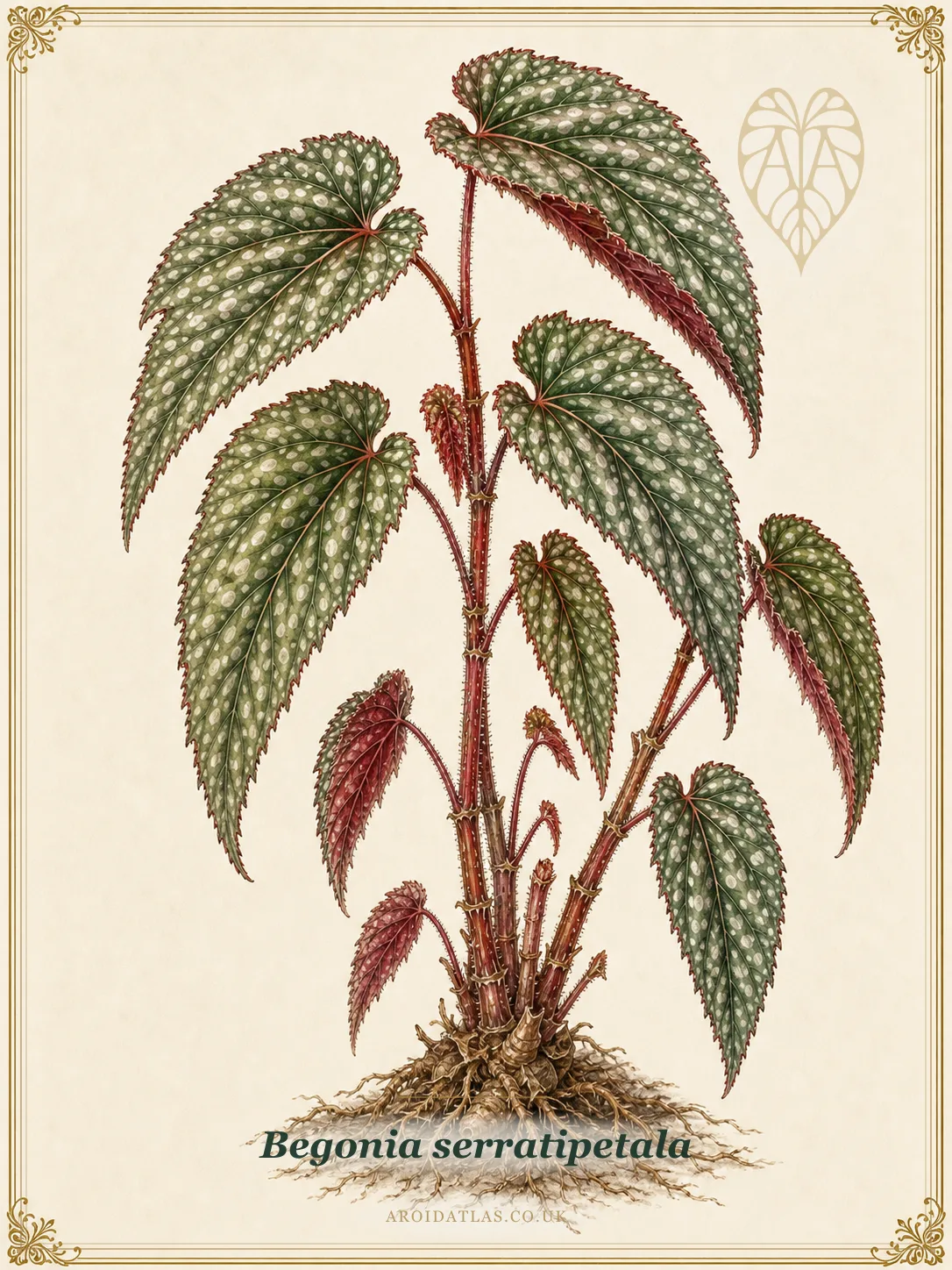
Full Specimen Plate
Begonia amphioxus
Spotted Cane Begonia
- Natural Rooting Powder, 3 x 75gRooting hormone powder for stem and leaf cuttings.
- Precision Bonsai Pruning Scissors, 200mmFine-bladed snips for clean node cuts when taking a cutting.
- Humidity Dome, Heavy-Duty Germination KitVented propagation dome for holding humidity around fresh cuttings.
- Digital Hygrometer & ThermometerLCD humidity and temperature gauge for checking a grow spot against a plant's target range.
Amazon links — we may earn commission on qualifying purchases.
7cm Target Price
£11.00
Market Hub
Begonia amphioxus Sold Prices & Live Market
What the Target Price above is based on: eBay sold prices by plant size, live listings, and retailer stock.
No eBay sales recorded yet. Sold listings are collected as they appear on eBay.
Before You Buy
Species-specific things to check when evaluating a listing
- Check the base of each cane for softness or dark discolouration, a sign of rot that will spread upward
- Look for healthy nodes along the cane rather than long bare stretches, which suggest the plant has been stretching for light
- Inspect new growth tips and leaf undersides for mealybugs, which favour the leaf axils on cane begonias
- If buying a rooted cutting, confirm it already shows fresh root growth rather than just a cut stem in water
Begonia amphioxus Morphology
About Begonia amphioxus
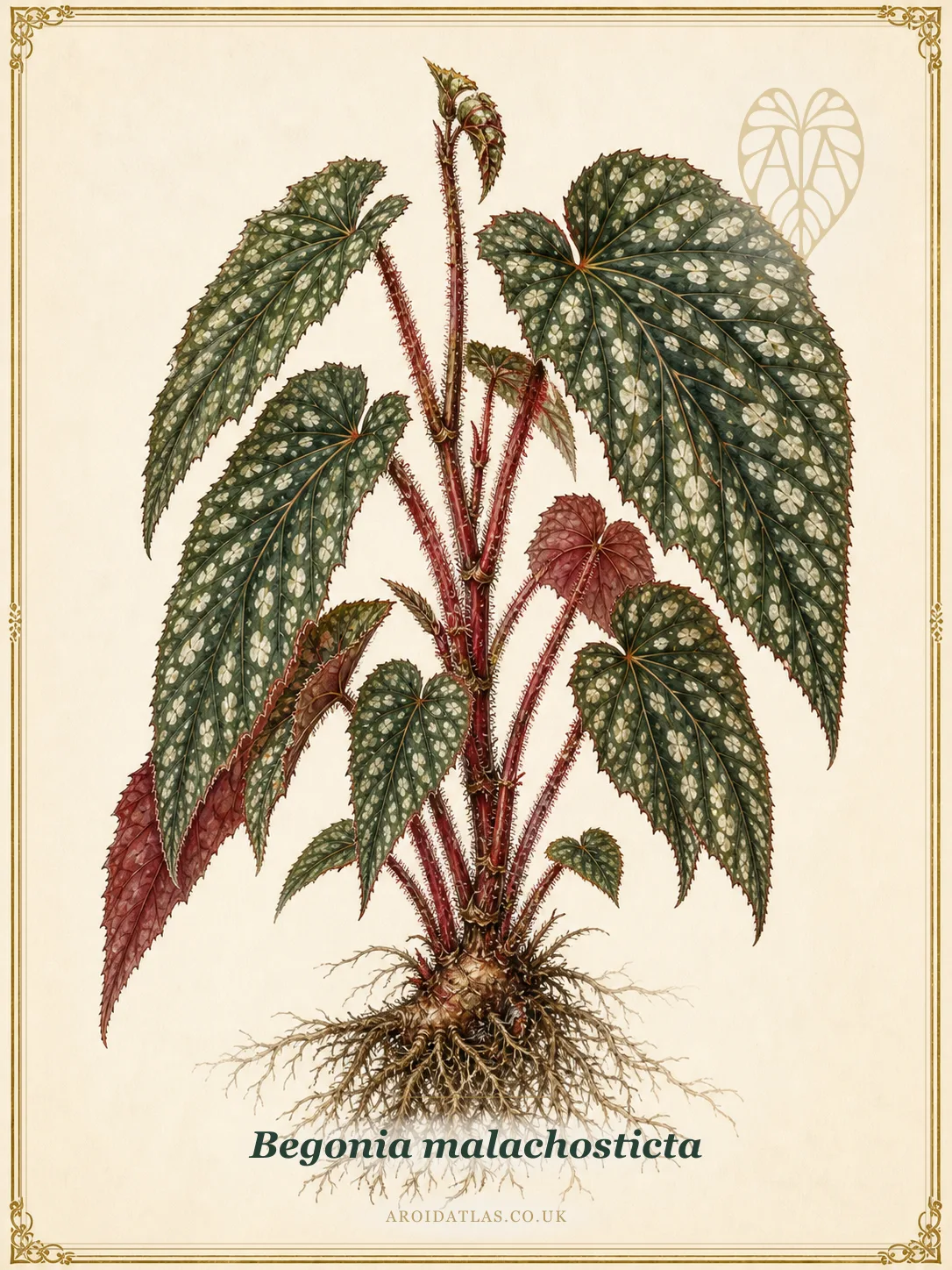
Sabah's limestone outcrops, in the humid forests of northern Borneo, are the only place Begonia amphioxus (Sands) grows wild. It is an upright cane species found on moist, humus-rich soil among decaying leaf litter in constantly shaded, humid understory. Slender, segmented red canes carry narrow, lance-shaped leaves in olive to bronzy green, marked with vivid red venation, red margins and dense silvery-pink spotting; the undersides run entirely red. That combination of narrow, pointed leaves, dense spotting and cane habit makes it one of the most recognisable Begonia species in cultivation, and prices among collectors reflect it.
Native Range
Sabah, Malaysian Borneo
Propagation Guide
How to Propagate Begonia amphioxus
Propagation Guide
How to Propagate Begonia amphioxus
3-5 months
Cultivar character is preserved through vegetative cuttings
Cane begonias propagate readily from stem cuttings — a length of cane with two or three nodes roots in a few weeks in moist substrate or even water. Leaf cuttings work too but take longer to establish than on rhizomatous types.
Care Guide
Begonia amphioxus Care Guide & Growing Conditions
Care Guide
Begonia amphioxus Care Guide & Growing Conditions
A loose, well-draining mix — 40% perlite or pumice, 40% potting compost, 20% orchid bark — gives the roots aeration without drying out the taller canes' root run between waterings.
Keep the substrate lightly, evenly moist rather than letting it dry out fully; canes root above soil level and tolerate more consistent moisture than a rhizomatous begonia, but waterlogged compost still causes basal stem rot.
Very high, 80-90% — the highest of the collection's cane begonias, reflecting its constantly humid limestone-forest habitat. A closed cabinet or well-humidified room suits it better than open room air.
Cane begonias are vigorous growers through spring and summer — feed with a balanced liquid fertiliser at half strength every 2 weeks in the growing season, dropping to monthly over winter.
Repot when roots fill the pot, usually every 12-18 months. Choose a pot with enough depth to anchor the height of the canes rather than the shallow pans suited to rhizomatous begonias.
Common Problems
Bare, leggy lower canes
Insufficient light, or old age as the lowest leaves naturally senesce
Move to brighter indirect light and prune leggy canes back to encourage fresh basal growth
Leaf drop
Underwatering, cold draughts, or a sudden change in humidity
Keep watering consistent and avoid moving the plant between very different microclimates
Basal stem rot
Waterlogged substrate or a pot with poor drainage
Let the top few centimetres dry between waterings and repot into a freer-draining mix if rot recurs
Field Reference
In the Wild
Field Reference
In the Wild
Field Notes
Spotted Lancelets from Borneo
A tiny, red-pink spotted begonia from Sabah in northern Borneo with elongated lance-shaped leaves dotted with irregular spots that are more pink than red in most light conditions. Amphioxus is the name of a genus of lancelets (a reference to the leaf shape rather than any vertebrate ambition). Genuinely uncommon in cultivation despite accessible pricing; the microhabitats of Bornean limestone forest present a consistent challenge to replicate in a British terrarium context. High humidity, good drainage, bright indirect light in a humid cabinet. Worth attempting for the patient collector.
Also in: Natural Silver & Spot Patterning
Wild species carrying naturally occurring leaf spotting or striping, distinct from the chimeric variegation seen in cultivated colour-break forms.