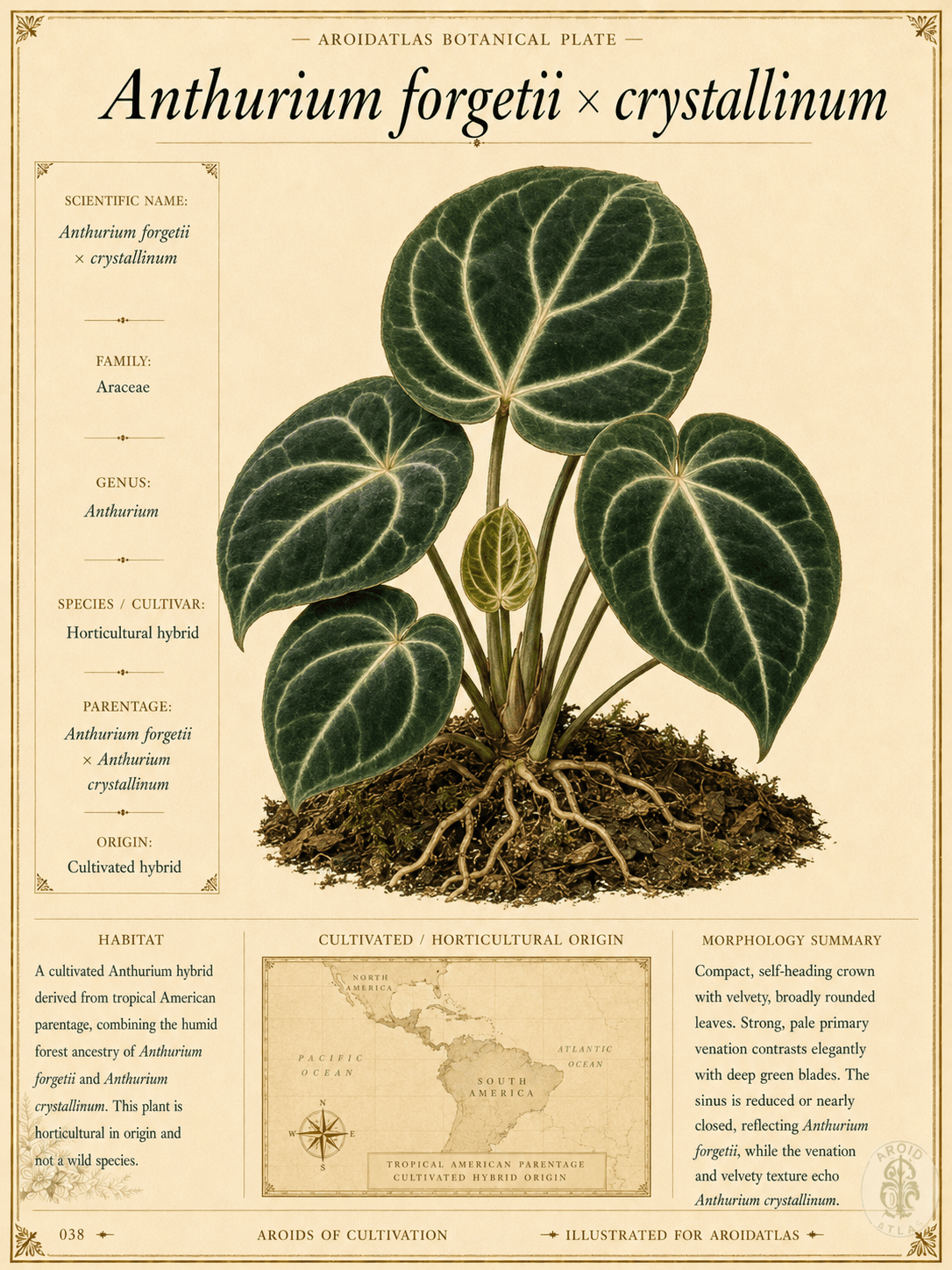
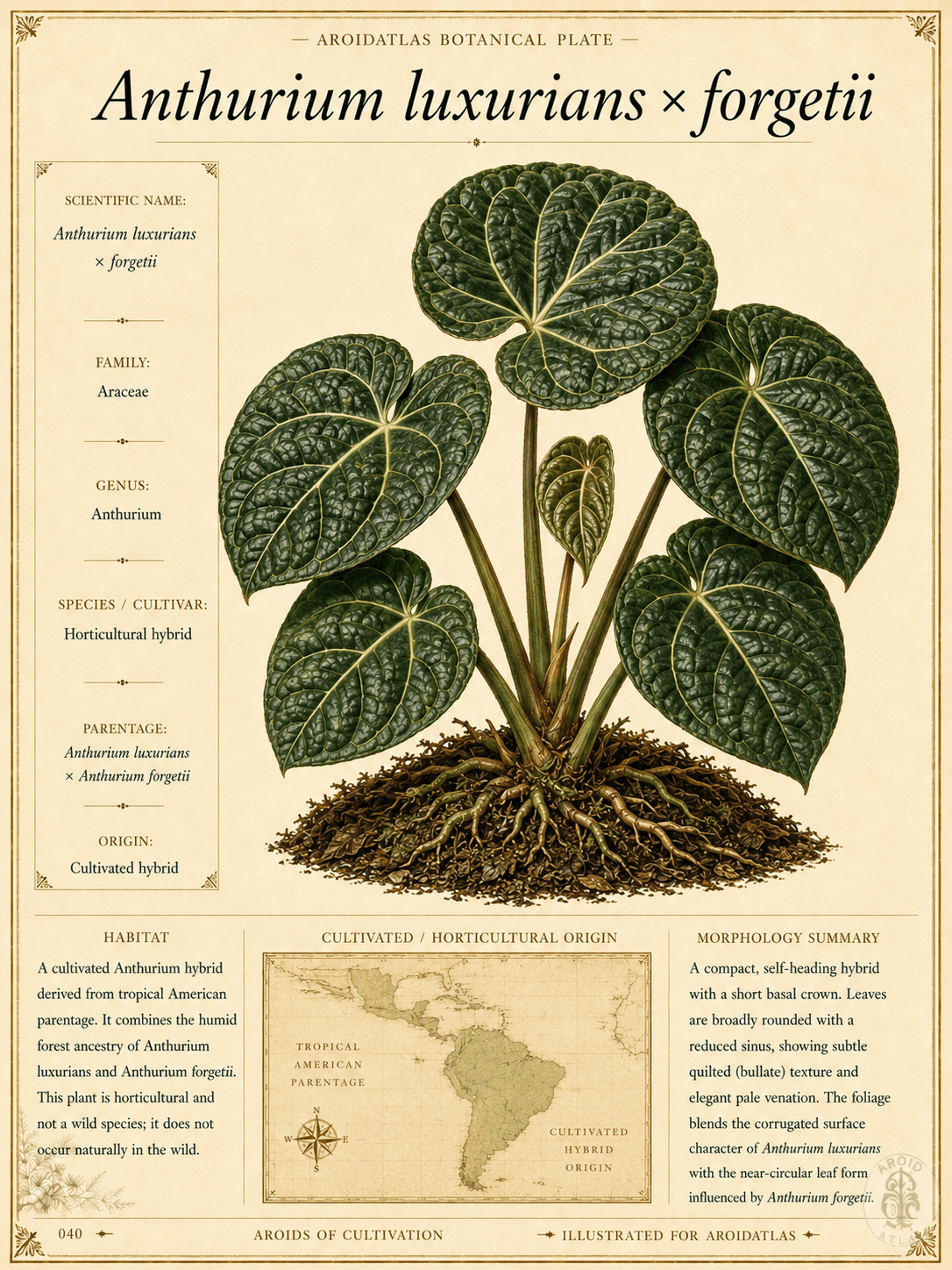
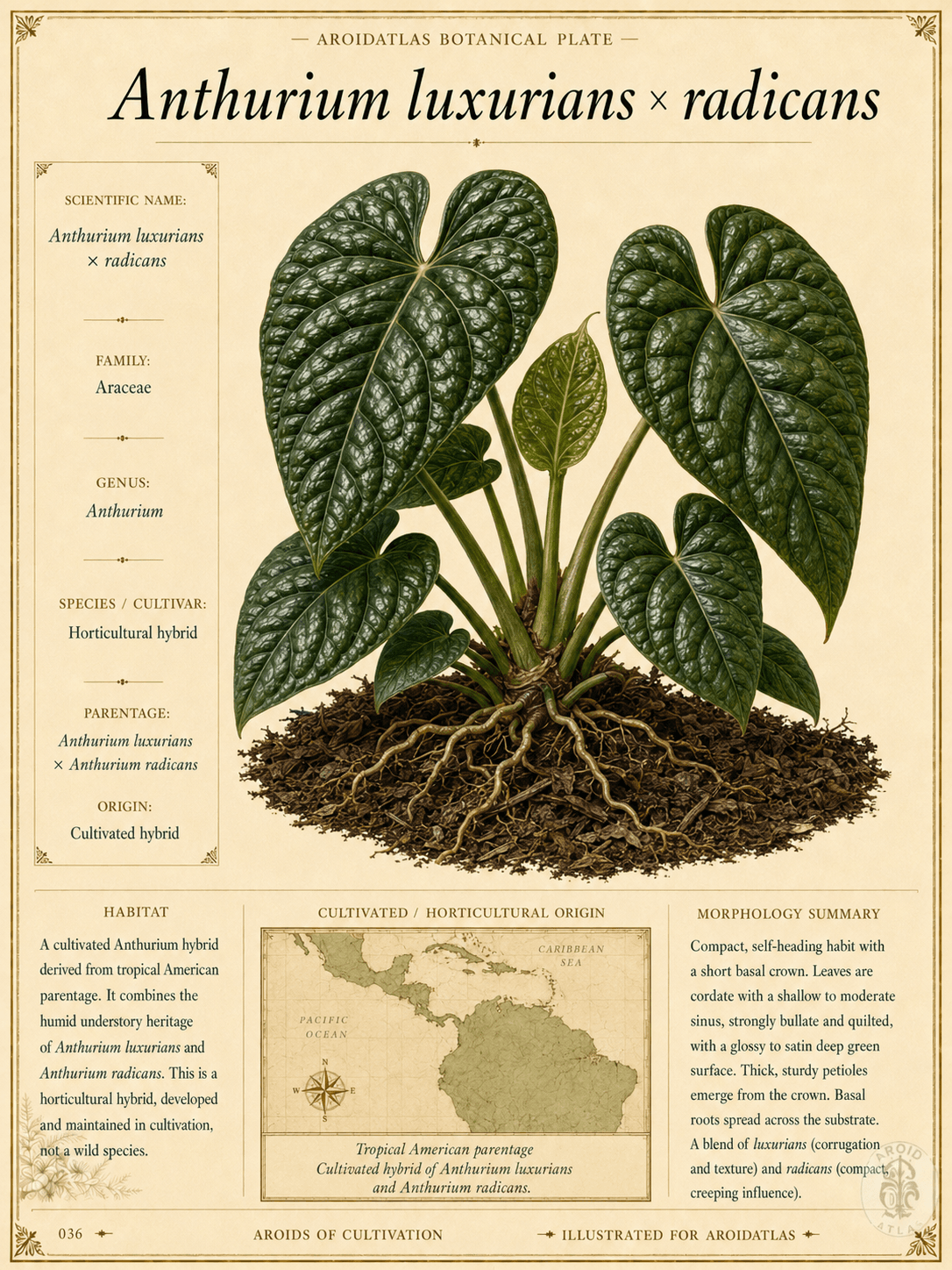
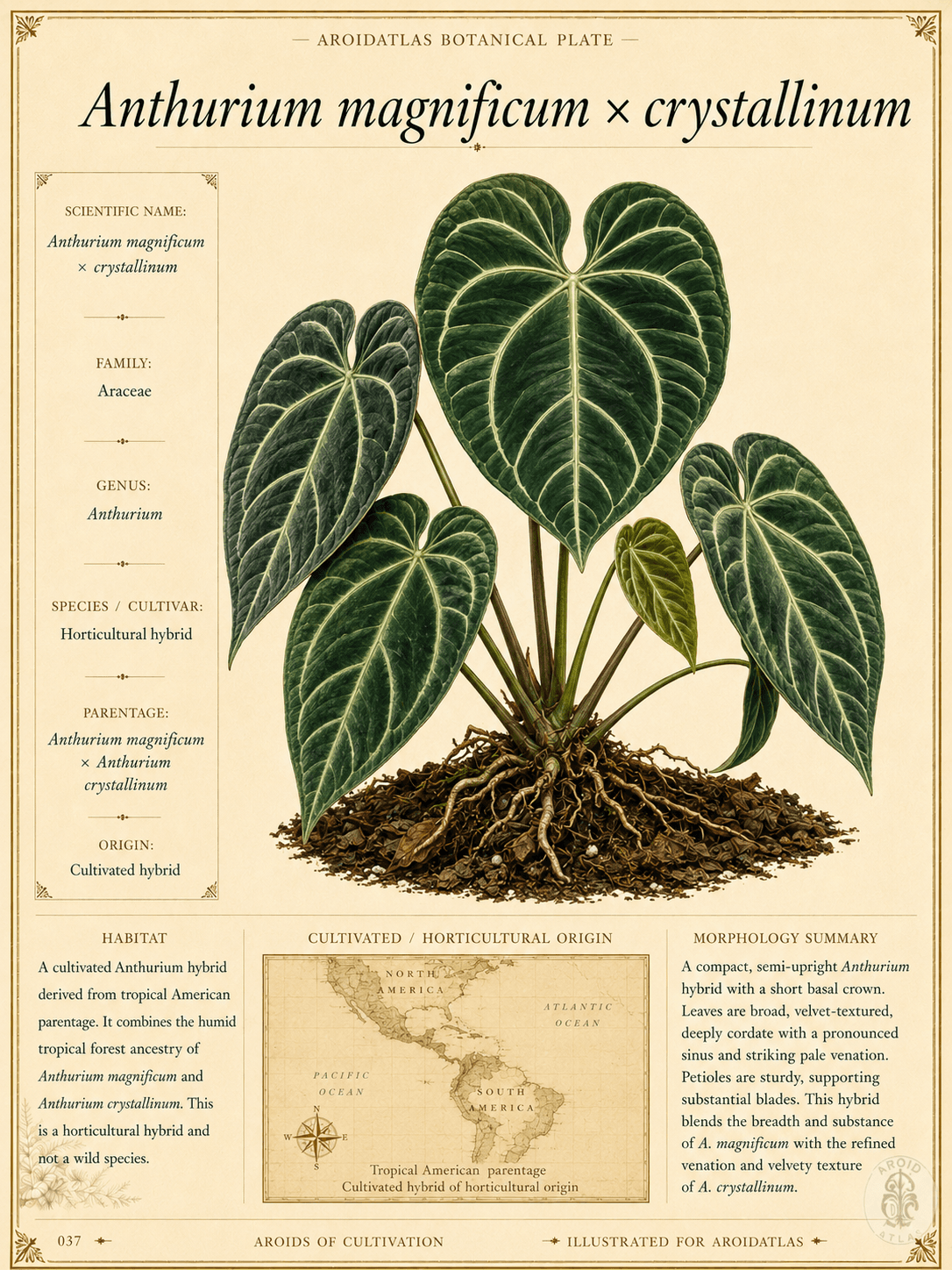
A horticultural cross — priced, illustrated and tracked independently of either parent.
Full Specimen Plate
Anthurium papillilaminum × magnificum
Papillilaminum Magnificum Hybrid
Aroid Atlas Price Guide
Select Plant Size
Pricing Data Key
Community price estimate based on limited sales history
Market Analysis
Anthurium papillilaminum × magnificum Price Guide & Auction Value
Historical eBay auction metrics and live retailer listings updated weekly.
No eBay auction history available yet. Data is collected automatically as sales appear on eBay UK.
Before You Buy
Species-specific things to check when evaluating a listing
- Inspect new growth carefully for thrips — check the undersides of unfurling leaves for tiny dark insects or silvery streaking, as velvet anthuriums are a primary target
- Roots should be firm and pale — mushy or dark roots indicate rot often caused by poor transit conditions
- Avoid plants with more than one yellowing leaf; minor leaf loss in transit is normal but multiple yellows suggest stress before shipping
- Request a photo of the most recently unfurled leaf to judge current health — a crispy or damaged newest leaf is a red flag
Anthurium papillilaminum × magnificum Morphology
About Anthurium papillilaminum × magnificum
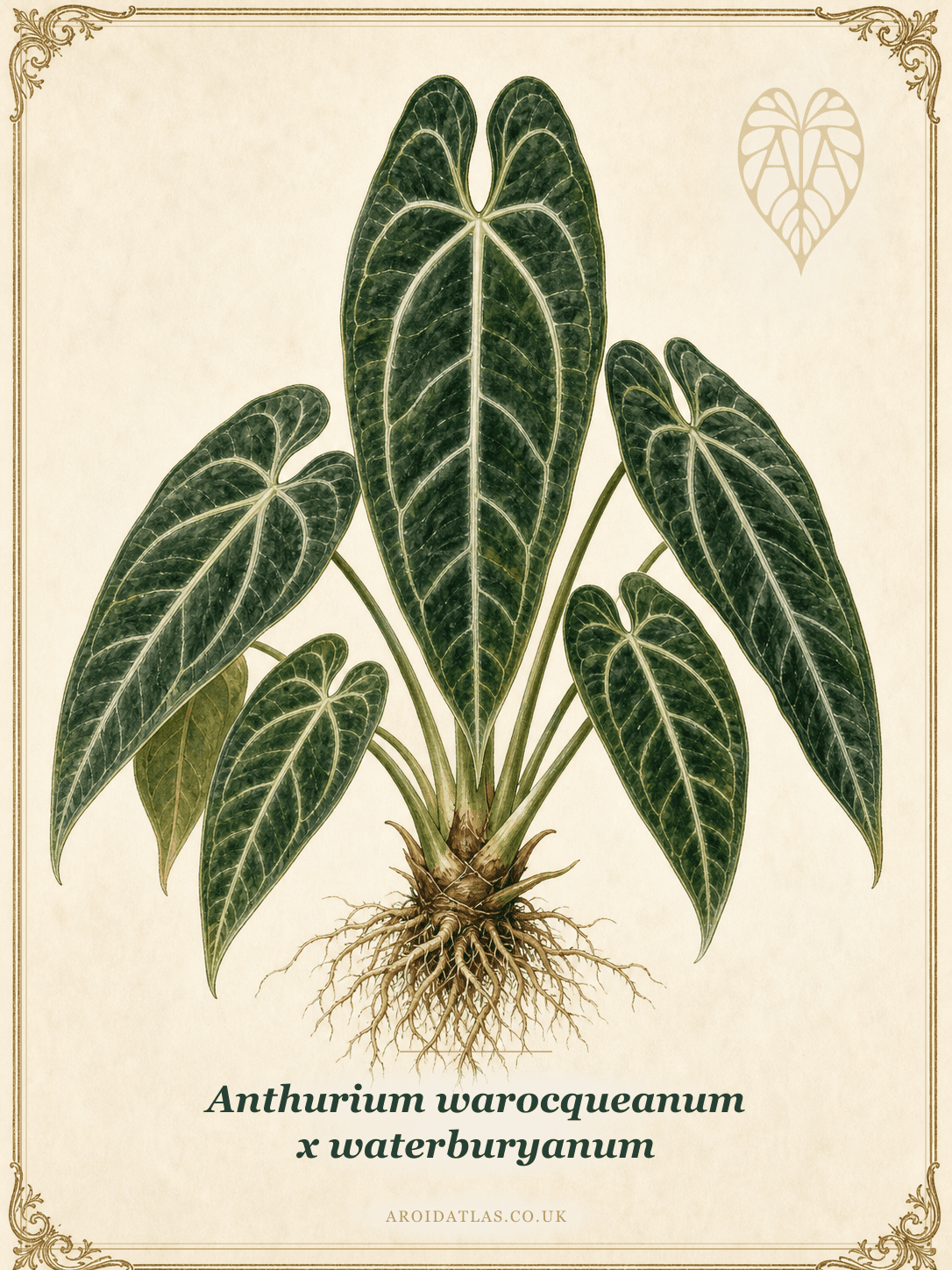
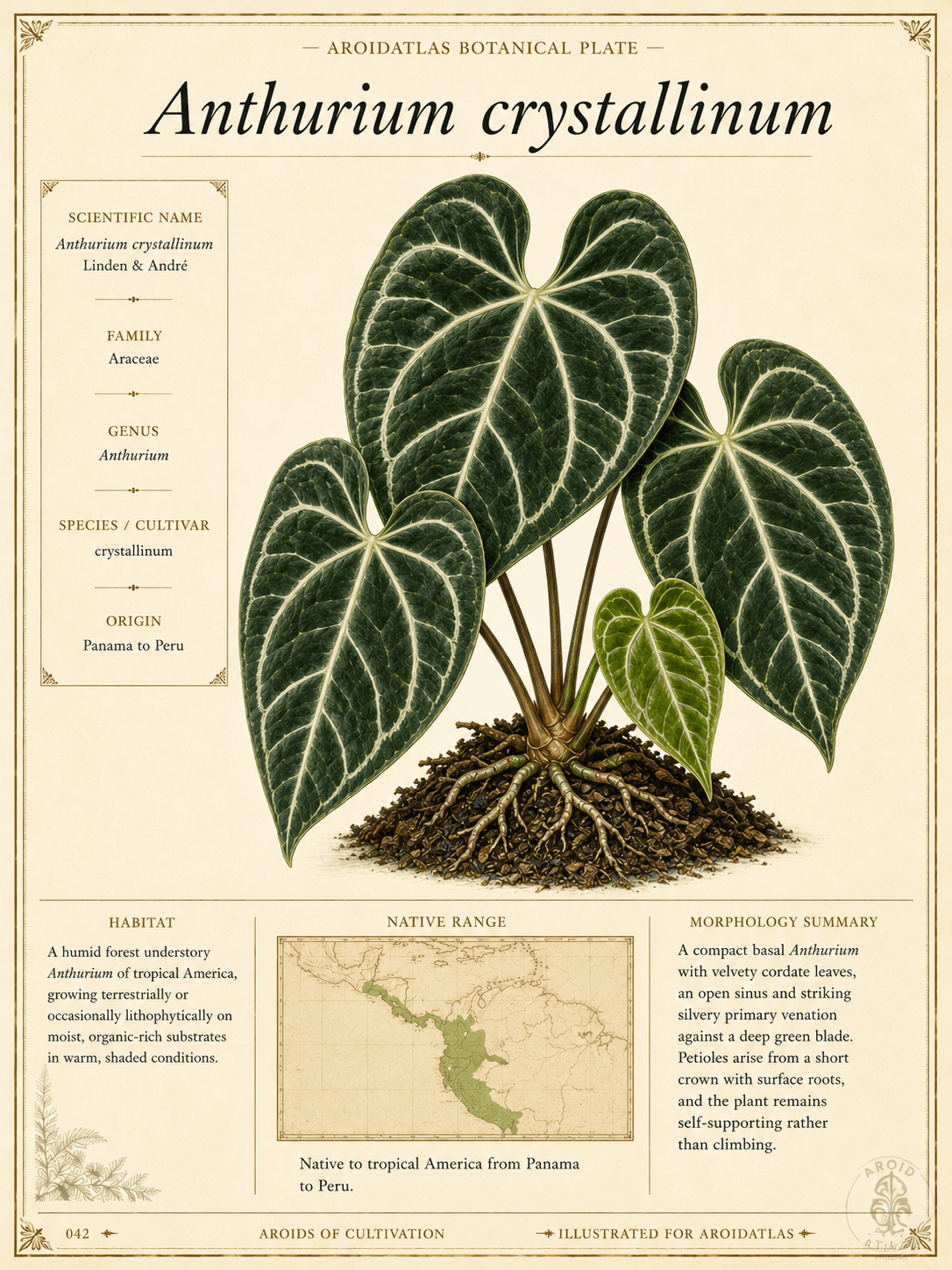
Anthurium papillilaminum × magnificum is a horticultural hybrid uniting two species with complementary leaf qualities. The papillilaminum parent — a rare Panamanian species with elongated, subtly textured leaves and a distinctive papillate surface — contributes a more refined leaf outline, while magnificum contributes breadth, substance, and its bold, square-petioled presence. The result is a compact, self-heading plant with a short basal crown producing dark, velvety, cordate leaves of substantial size, with pale to olive-toned venation and a moderate open sinus. Sturdy petioles support blades that combine papillilaminum's elongated outline with magnificum's broader leaf mass. Foliage becomes larger and more developed as the plant matures.
Propagation Guide
How to Propagate Anthurium papillilaminum × magnificum
Root in a closed high-humidity environment. Mature specimens may produce basal offshoots that can be carefully divided. Patience is essential — establishment is slow.
Care Guide
Anthurium papillilaminum × magnificum Care Guide & Growing Conditions
Very chunky, well-aerated mix: 40% orchid bark, 30% perlite, 20% sphagnum moss, 10% activated charcoal. Anthuriums suffocate in dense soil — roots need airflow.
Water when the substrate is nearly dry throughout. Less is more — overwatering is the primary killer of velvet anthuriums. Always use room-temperature water.
70–85% is essential. Below 60% causes stunted growth and curling leaves. A dedicated humidifier is strongly recommended for UK growers.
Low-nitrogen fertiliser (e.g. 5-10-10 or orchid fertiliser) at quarter strength every 3–4 weeks. High nitrogen produces lush but weak growth susceptible to pests.
Reluctantly — only when completely root-bound (every 2–3 years). These plants dislike disturbance and may sulk after repotting.
Common Problems
Yellowing leaves
Overwatering or root rot
Remove from pot, trim affected roots, repot into fresh dry substrate and reduce watering
Curling or crispy leaf edges
Low humidity or cold draughts
Increase humidity above 70% and move away from cold windows
Thrips
Common on velvet-leaf anthuriums; hard to detect early
Inspect new growth and leaf undersides regularly; treat with neem oil or systemic insecticide at first sign
Dark and Broad
Anthurium papillilaminum brings dark surface colouration and velvety depth to the cross; Anthurium magnificum brings scale, venation breadth, and a somewhat easier temperament. The hybrid tends toward a large-leaved, darkly handsome plant that is more forgiving than papillilaminum alone. Bred enthusiastically in Southeast Asian nurseries during the peak of the velvet anthurium market and now circulating widely in UK cultivation. Solidly good.
Also in: Complex Hybrids
Deliberate crosses between two named species, combining leaf shape, texture and size traits from both parents.