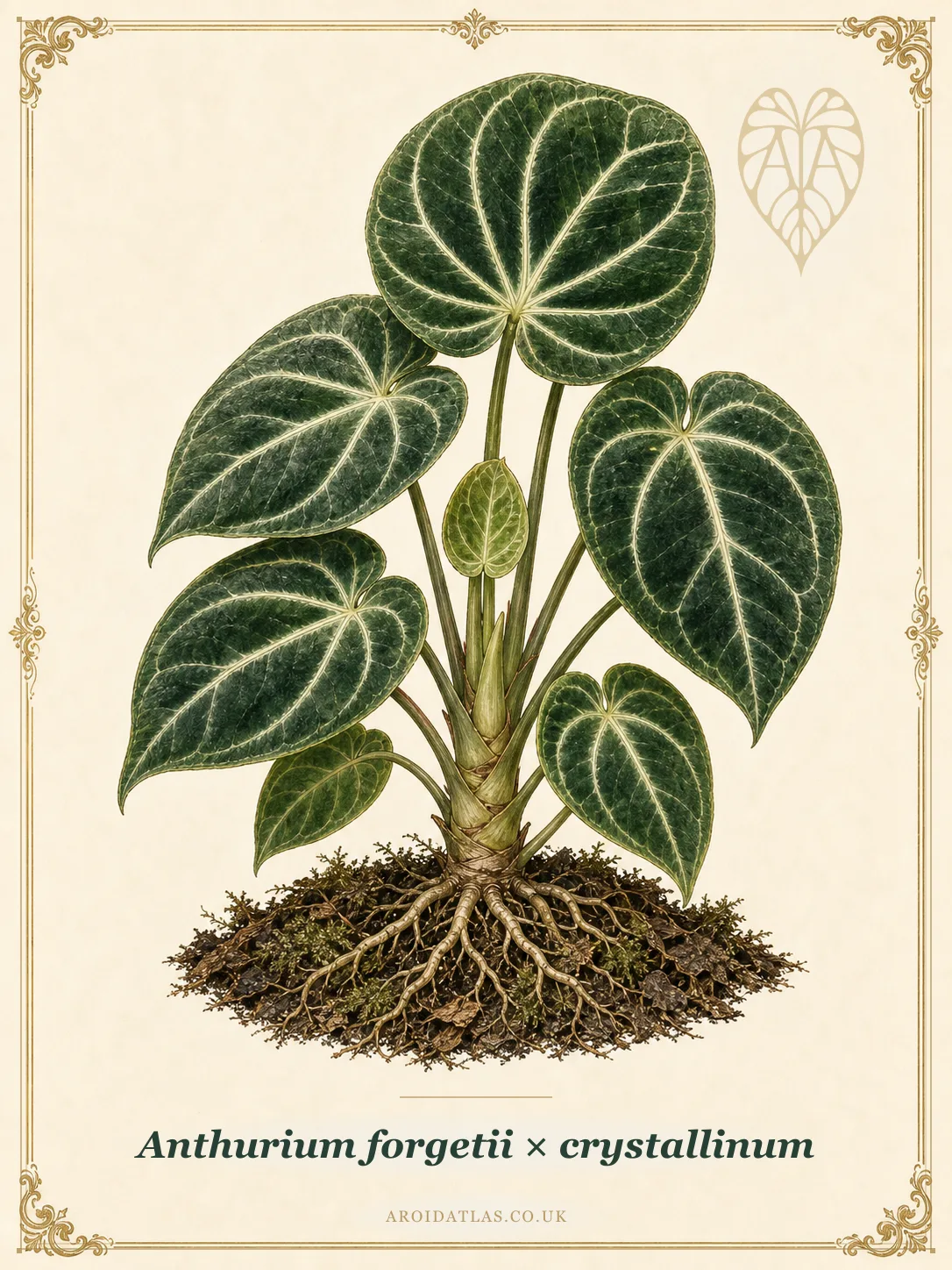
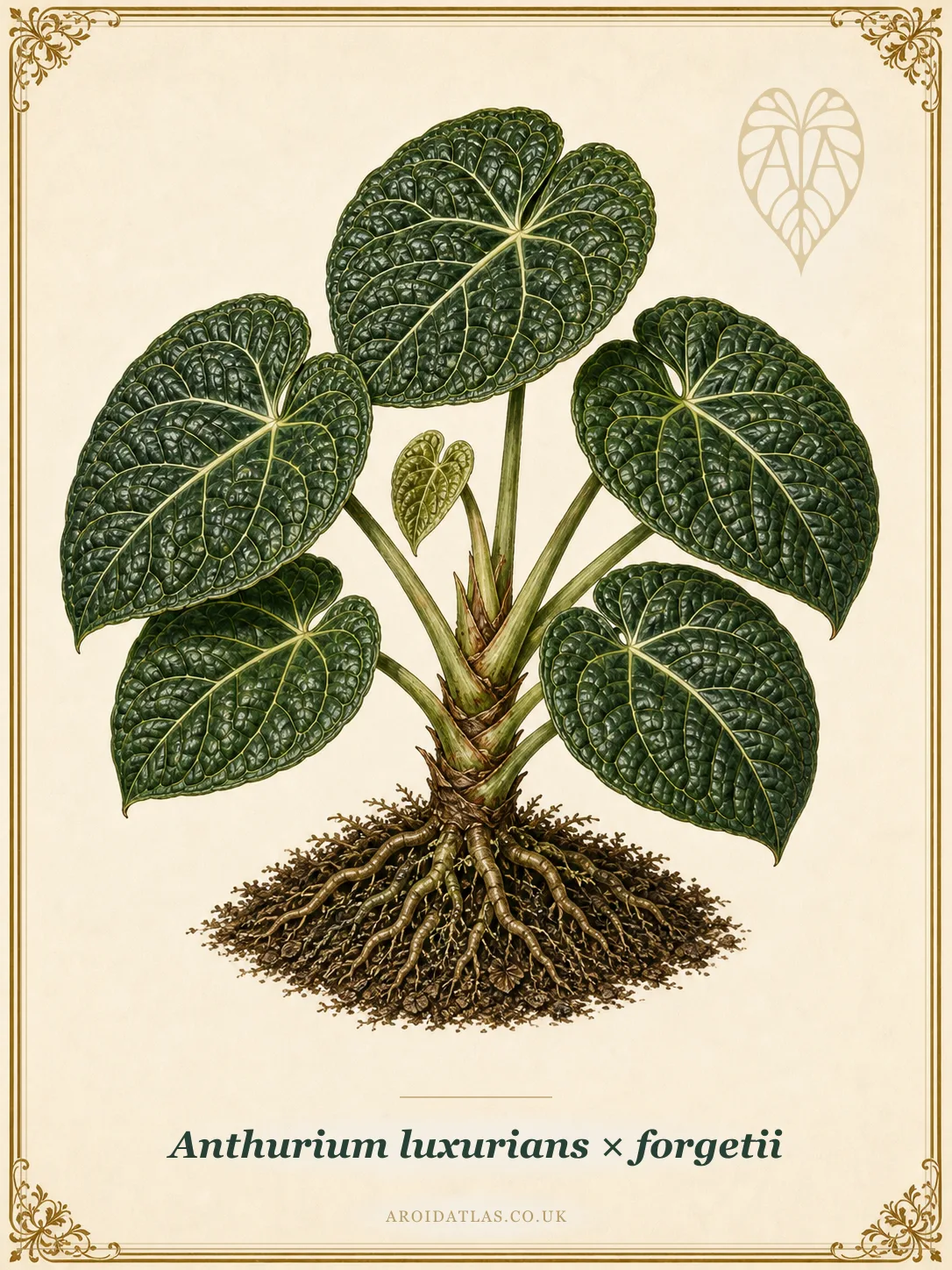
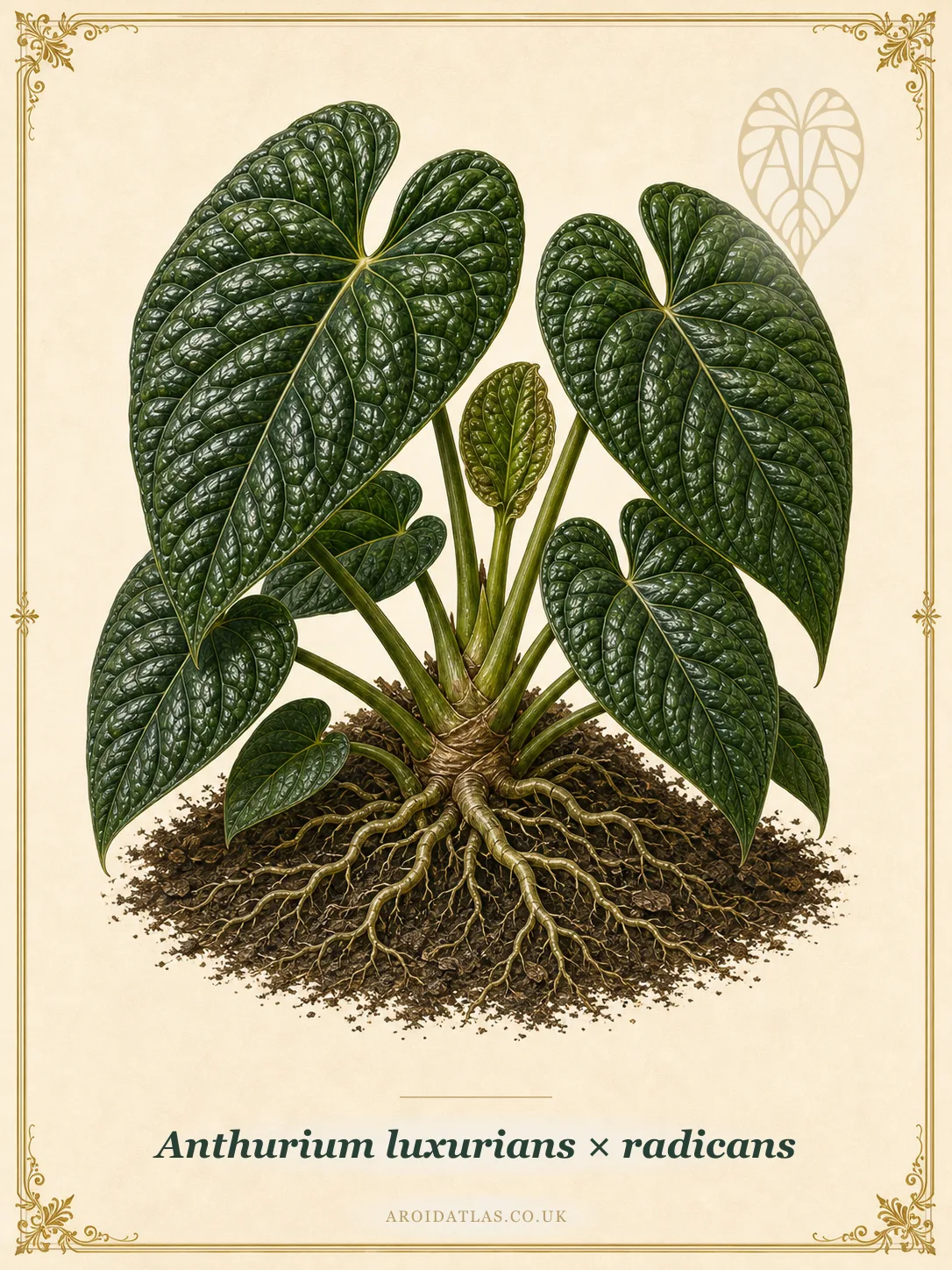
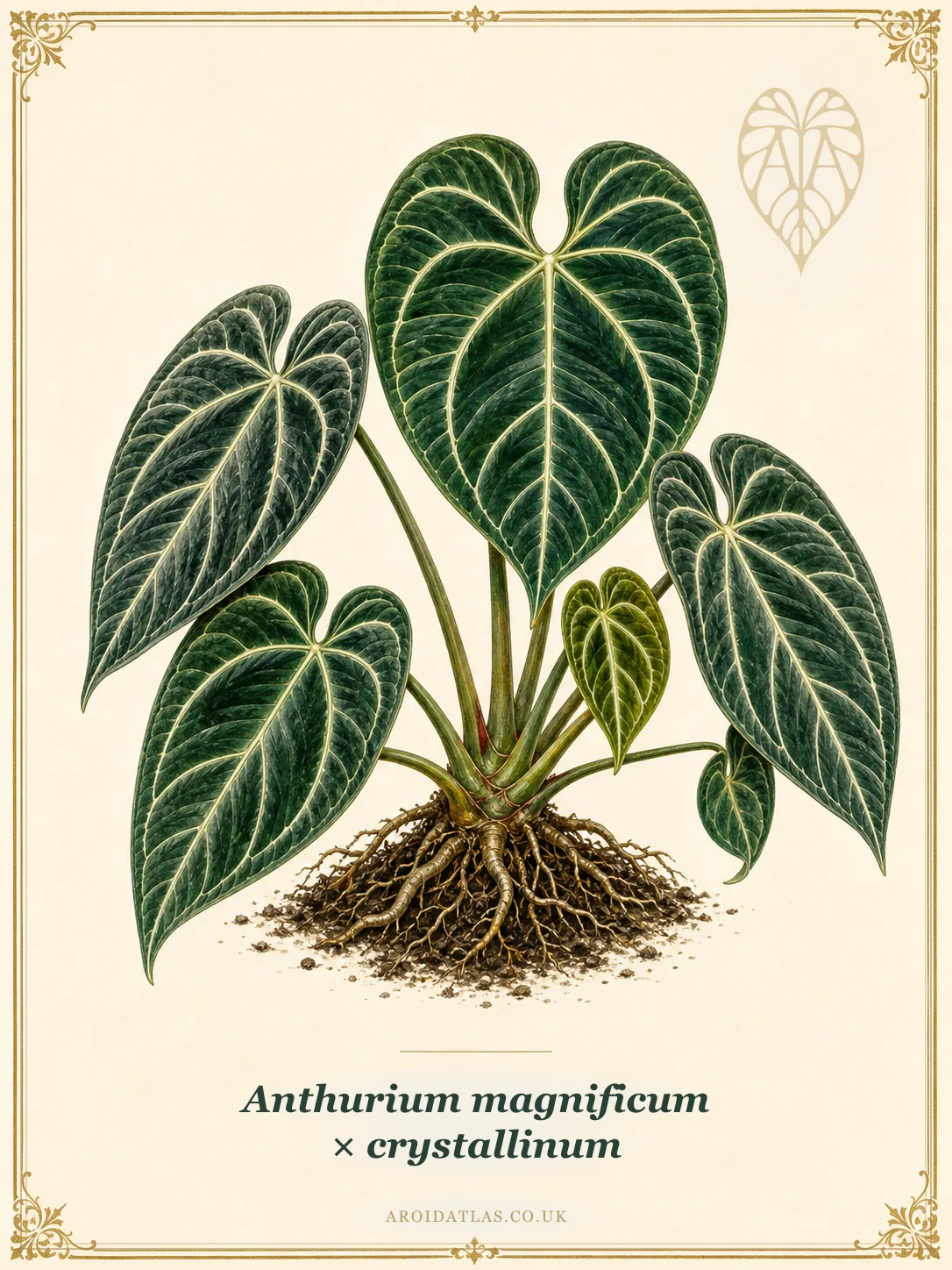
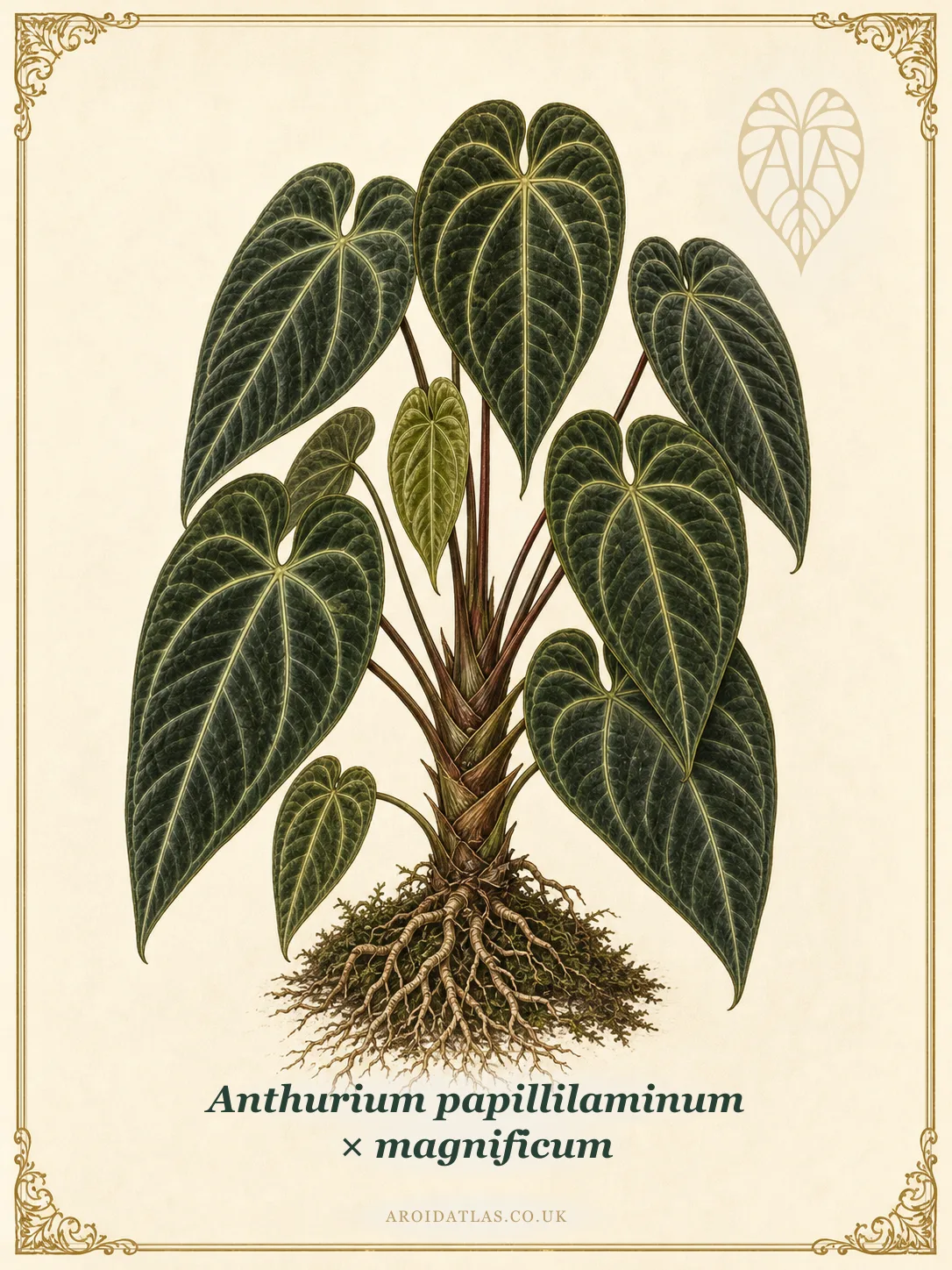
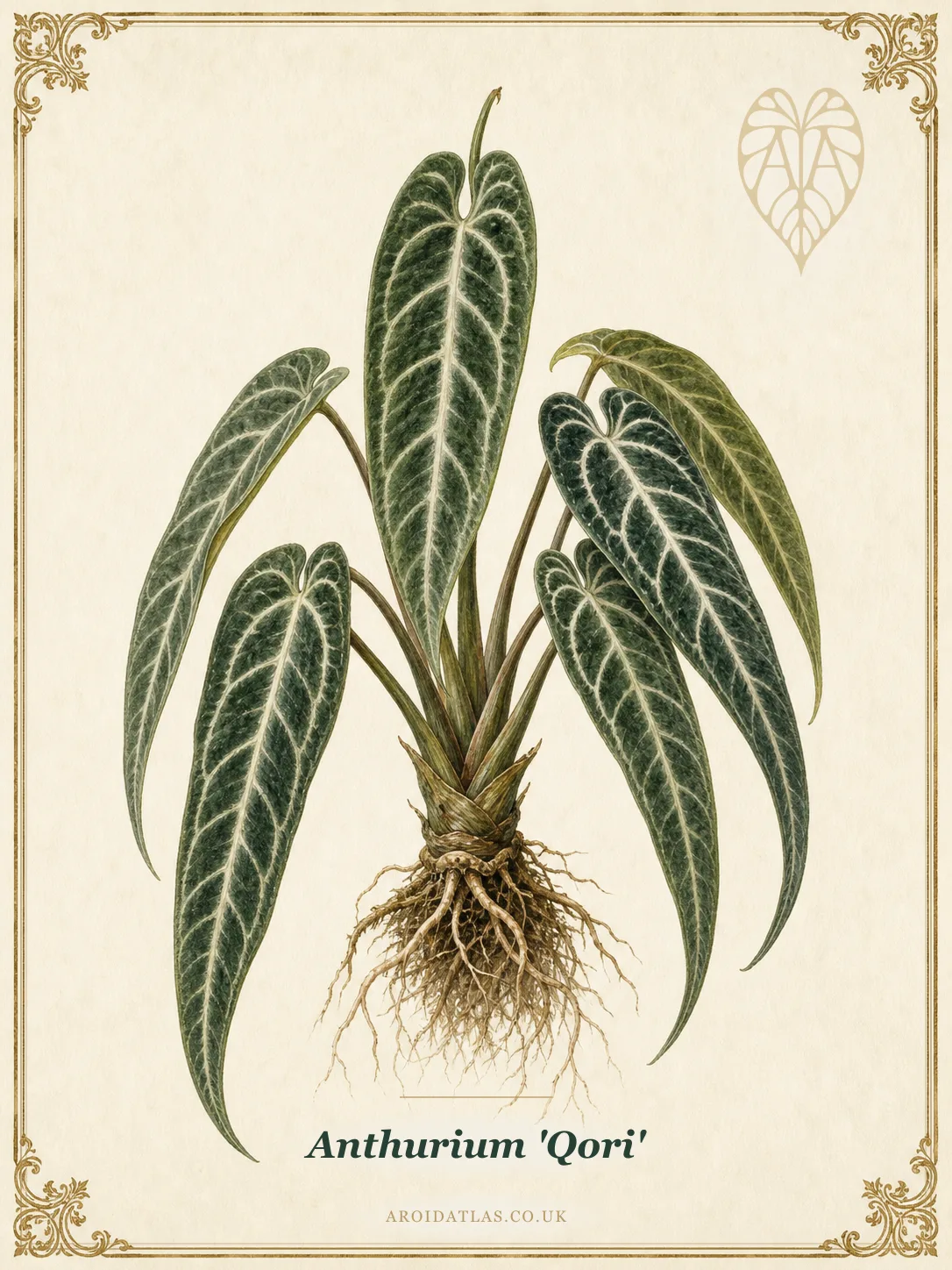
Full Specimen Plate
Anthurium warocqueanum × waterburyanum
Warocqueanum Waterburyanum Hybrid
- Premium New Zealand Sphagnum Moss, 100gLong-fibre sphagnum for air-layering, top-dressing, and epiphyte substrate mixes.
- Natural Rooting Powder, 3 x 75gRooting hormone powder for stem and leaf cuttings.
- Precision Bonsai Pruning Scissors, 200mmFine-bladed snips for clean node cuts when taking a cutting.
- Coir Moss Pole, 120cm (4-Pack)Coco coir totem for climbing aroids to root into as they grow upward.
Amazon links — we may earn commission on qualifying purchases.
7cm Target Price
£140.00
Anthurium warocqueanum × waterburyanum Morphology
About Anthurium warocqueanum × waterburyanum
This cross combines the enormous, elongated velvet leaf and silvery-white venation of the 'Queen Anthurium' (warocqueanum) with the broader, more compact cordate blade of Anthurium waterburyanum. The result keeps warocqueanum's prized velvet texture and pale vein contrast at a noticeably more manageable leaf length, while waterburyanum's stouter petiole and hemiepiphytic vigour make it a more forgiving grower than either straight warocqueanum or the largest waterburyanum specimens. It hasn't yet settled on a single trade name, and recurs across several specialist growers as a plain parentage listing rather than a branded cultivar.
Market Hub
Anthurium warocqueanum × waterburyanum Sold Prices & Live Market
What the Target Price above is based on: eBay sold prices by plant size, live listings, and retailer stock.
No eBay sales recorded yet. Sold listings are collected as they appear on eBay.
Before You Buy
Species-specific things to check when evaluating a listing
- Inspect new growth carefully for thrips, checking the undersides of unfurling leaves for tiny dark insects or silvery streaking, as velvet anthuriums are a primary target
- Roots should be firm and pale; mushy or dark roots indicate rot, often caused by poor transit conditions
- Avoid plants with more than one yellowing leaf; minor leaf loss in transit is normal but multiple yellows suggest stress before shipping
- Request a photo of the most recently unfurled leaf to judge current health; a crispy or damaged newest leaf is a red flag
Propagation Guide
How to Propagate Anthurium warocqueanum × waterburyanum
Propagation Guide
How to Propagate Anthurium warocqueanum × waterburyanum
8-14 months
Root in a closed high-humidity environment. Mature specimens may produce basal offshoots that can be carefully divided. Patience is essential; establishment is slow.
Care Guide
Anthurium warocqueanum × waterburyanum Care Guide & Growing Conditions
Care Guide
Anthurium warocqueanum × waterburyanum Care Guide & Growing Conditions
Very chunky, well-aerated mix: 40% orchid bark, 30% perlite, 20% sphagnum moss, 10% activated charcoal. Anthuriums suffocate in dense soil; roots need airflow.
Water when the substrate is nearly dry throughout. Less is more: overwatering is the primary killer of velvet anthuriums. Always use room-temperature water.
70–85% is essential. Below 60% causes stunted growth and curling leaves. A dedicated humidifier is strongly recommended for UK growers.
Low-nitrogen fertiliser (e.g. 5-10-10 or orchid fertiliser) at quarter strength every 3–4 weeks. High nitrogen produces lush but weak growth susceptible to pests.
Reluctantly, only when completely root-bound (every 2–3 years). These plants dislike disturbance and may sulk after repotting.
Common Problems
Yellowing leaves
Overwatering or root rot
Remove from pot, trim affected roots, repot into fresh dry substrate and reduce watering
Curling or crispy leaf edges
Low humidity or cold draughts
Increase humidity above 70% and move away from cold windows
Thrips
Common on velvet-leaf anthuriums; hard to detect early
Inspect new growth and leaf undersides regularly; treat with neem oil or systemic insecticide at first sign
Lineage
Anthurium warocqueanum × waterburyanum Parentage
Lineage
Anthurium warocqueanum × waterburyanum Parentage
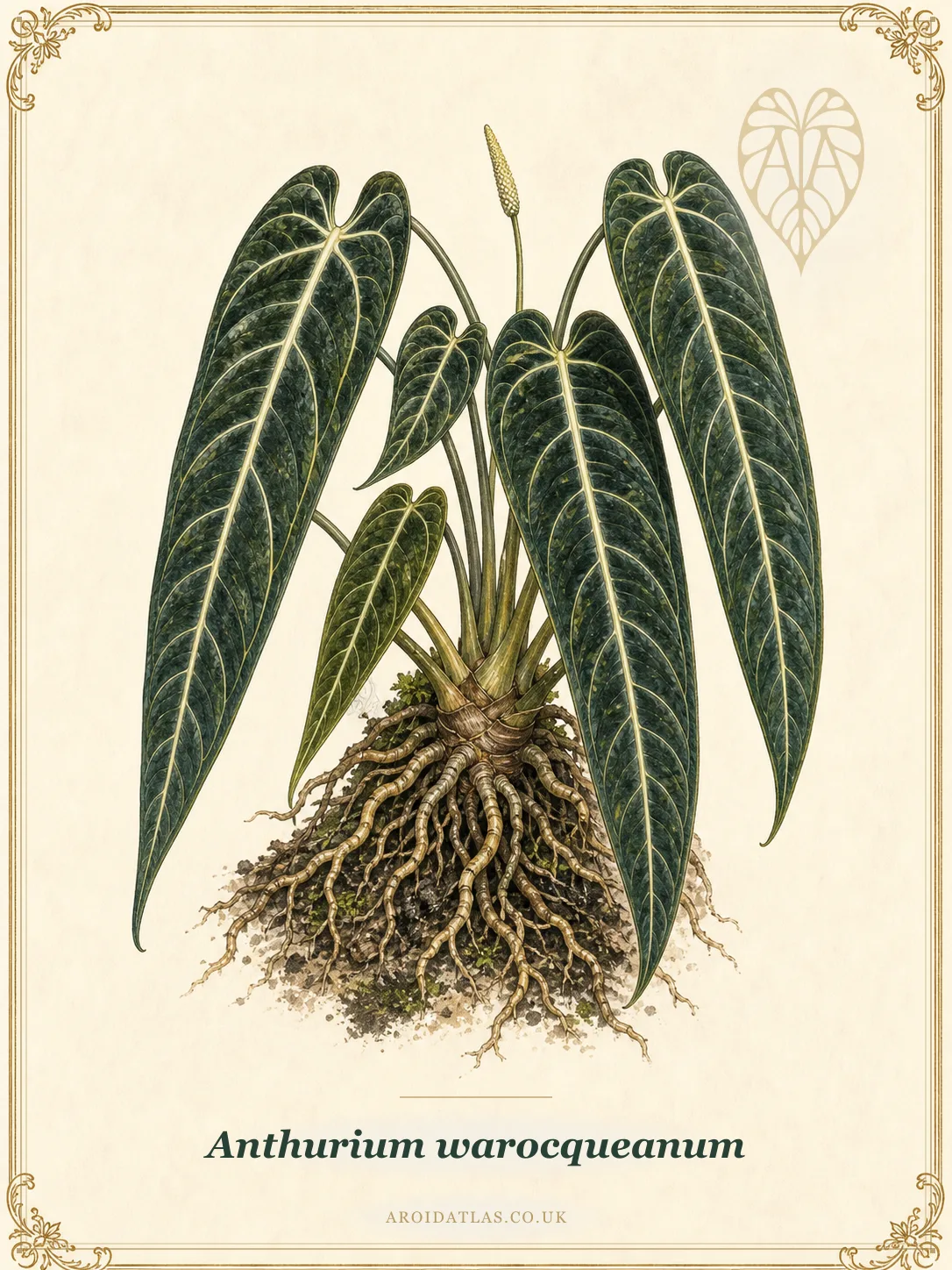
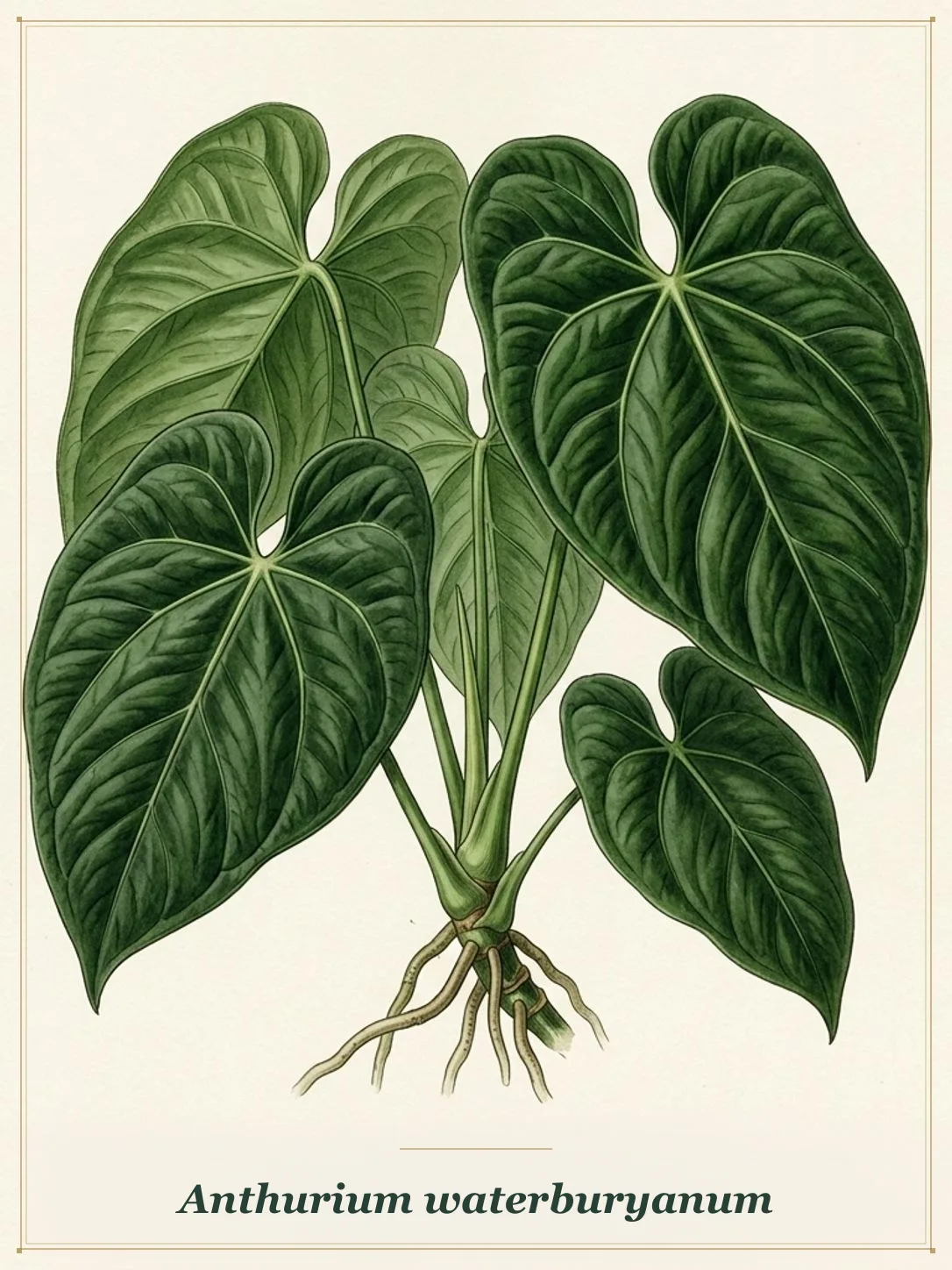
A horticultural cross — priced, illustrated and tracked independently of either parent.
Field Reference
In the Wild
Field Reference
In the Wild
Field Notes
A Cross Still Waiting on a Name
Unlike most of the crosses on this site, this one hasn't consolidated under a single branded name: it recurs independently at more than one specialist grower, always described plainly by its parentage rather than sold under a cultivar tag. That's arguably a point in its favour: what you're buying is exactly what the listing says it is, no folklore attached. Expect that to change eventually, since named crosses tend to command a premium once a breeder puts their name to one, but for now this is as straightforward a warocqueanum-line hybrid as the market offers.
Also in: Complex Hybrids
Deliberate crosses between two named species, combining leaf shape, texture and size traits from both parents.