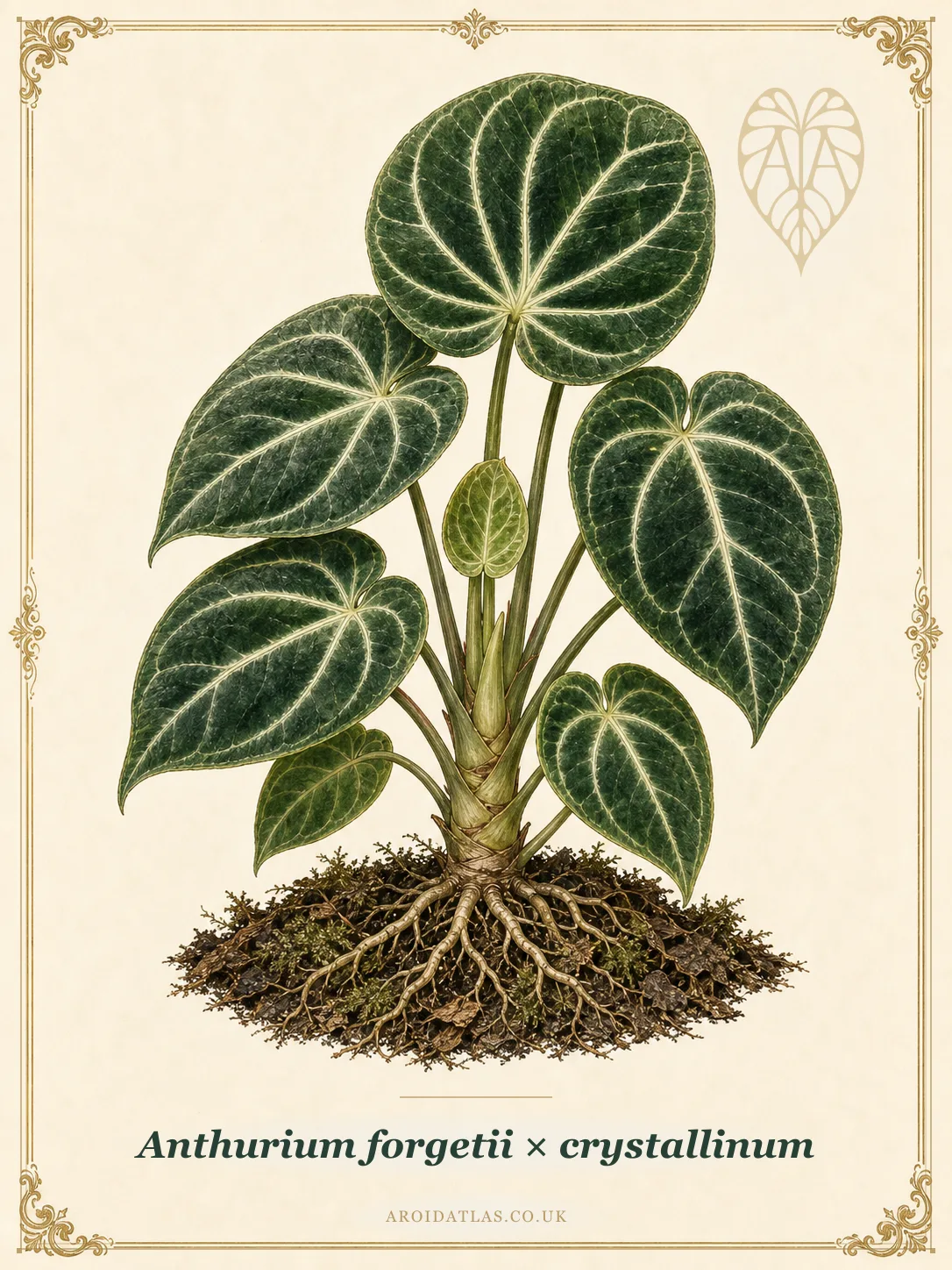
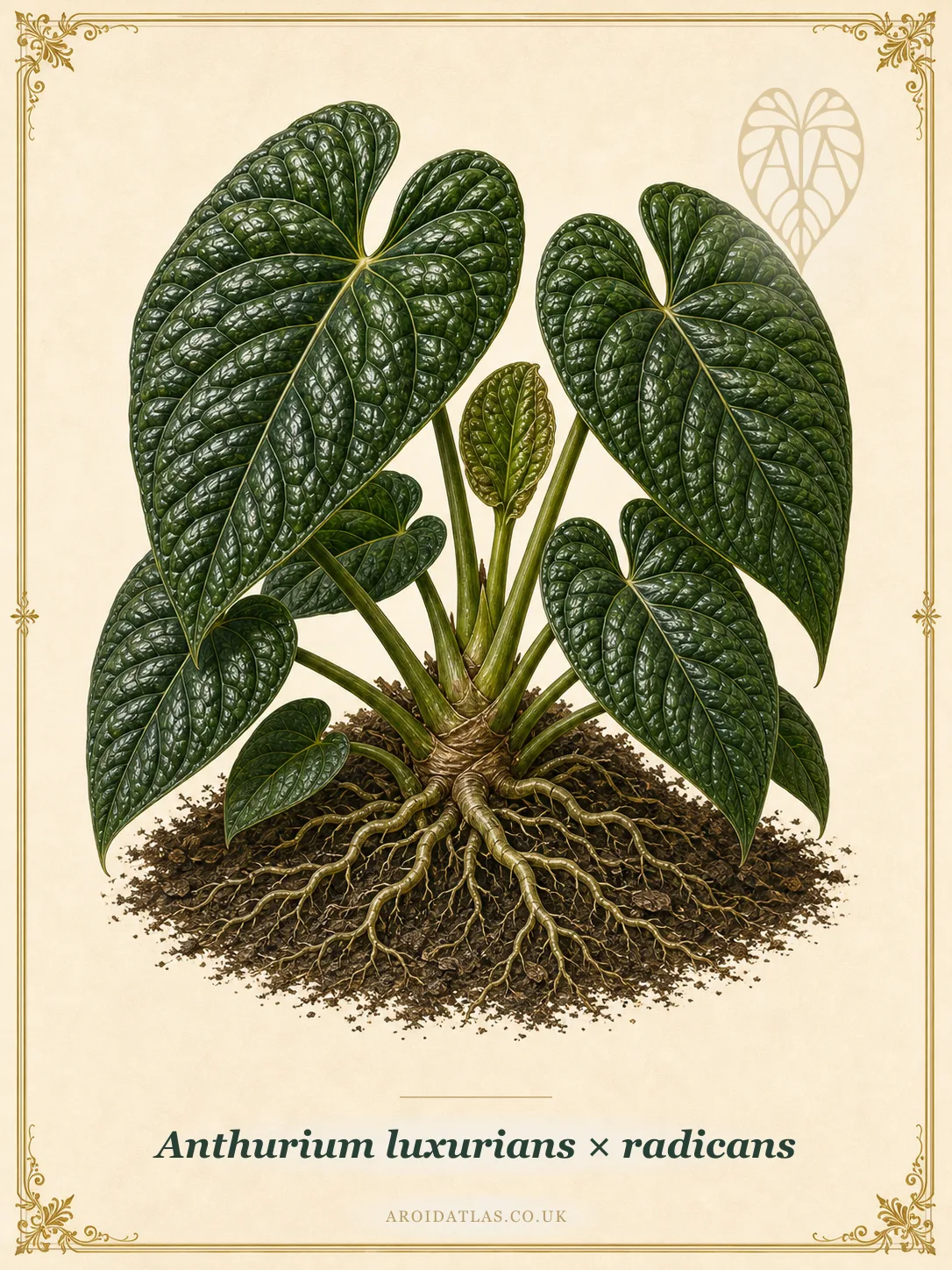
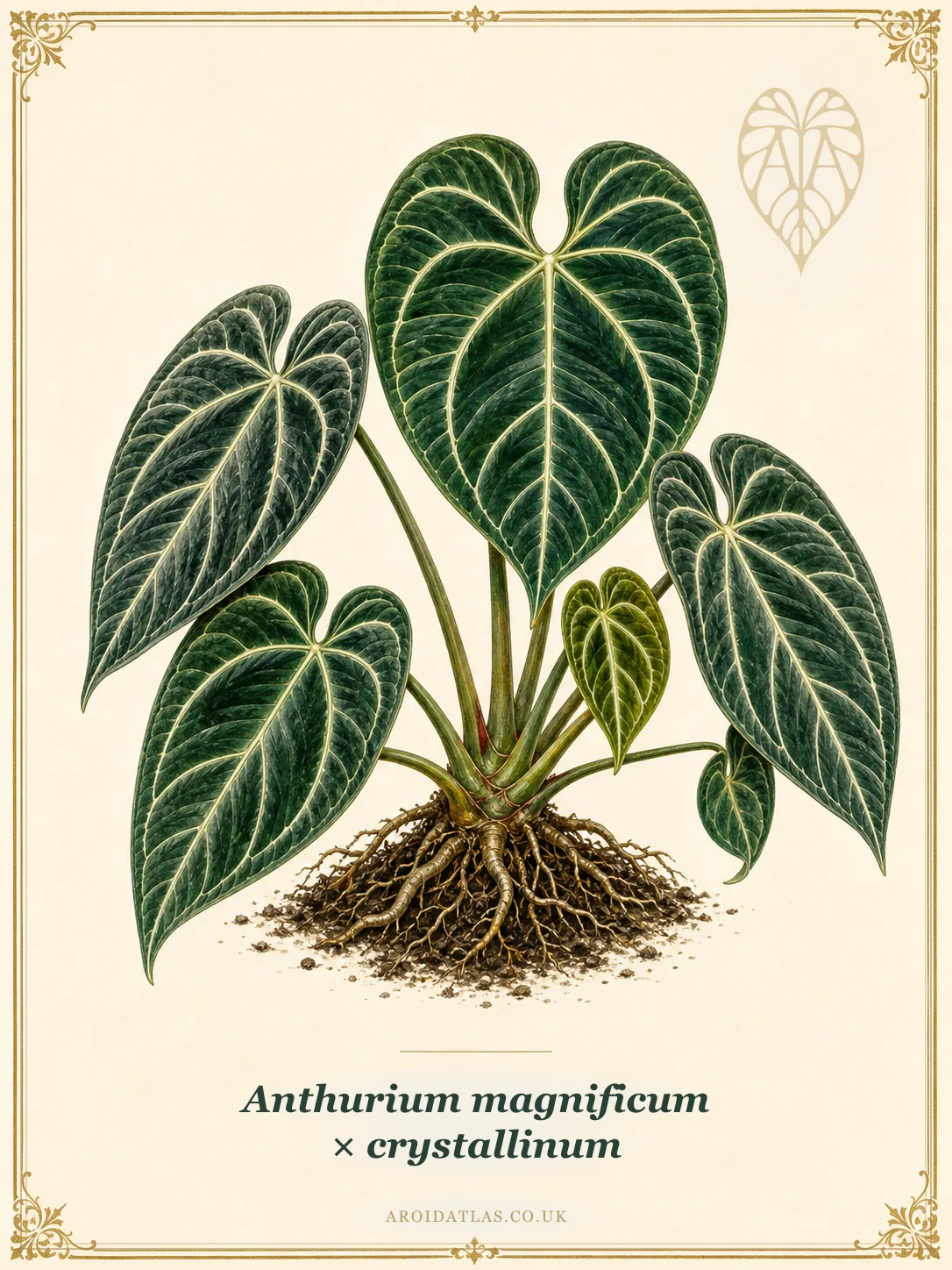
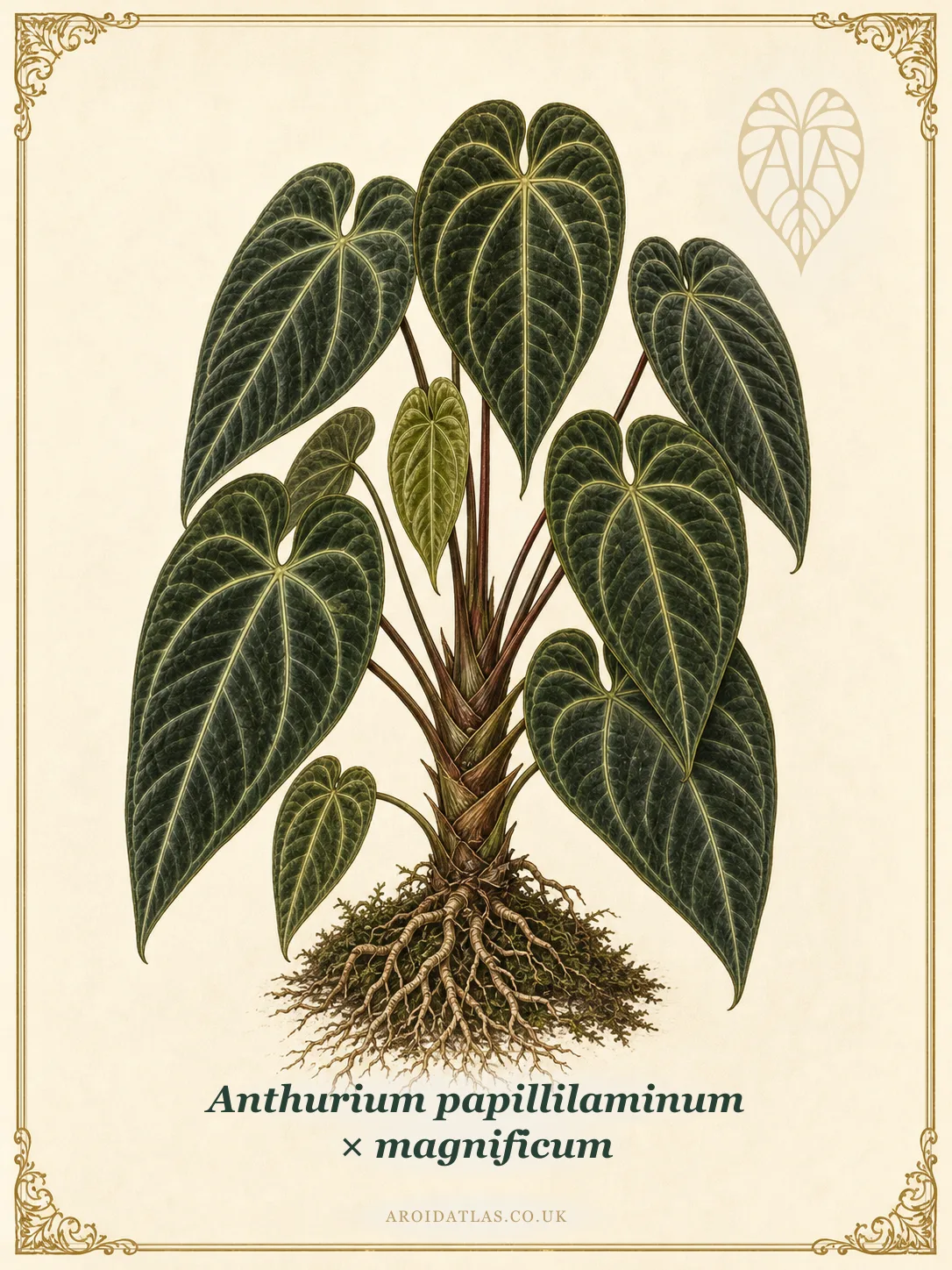
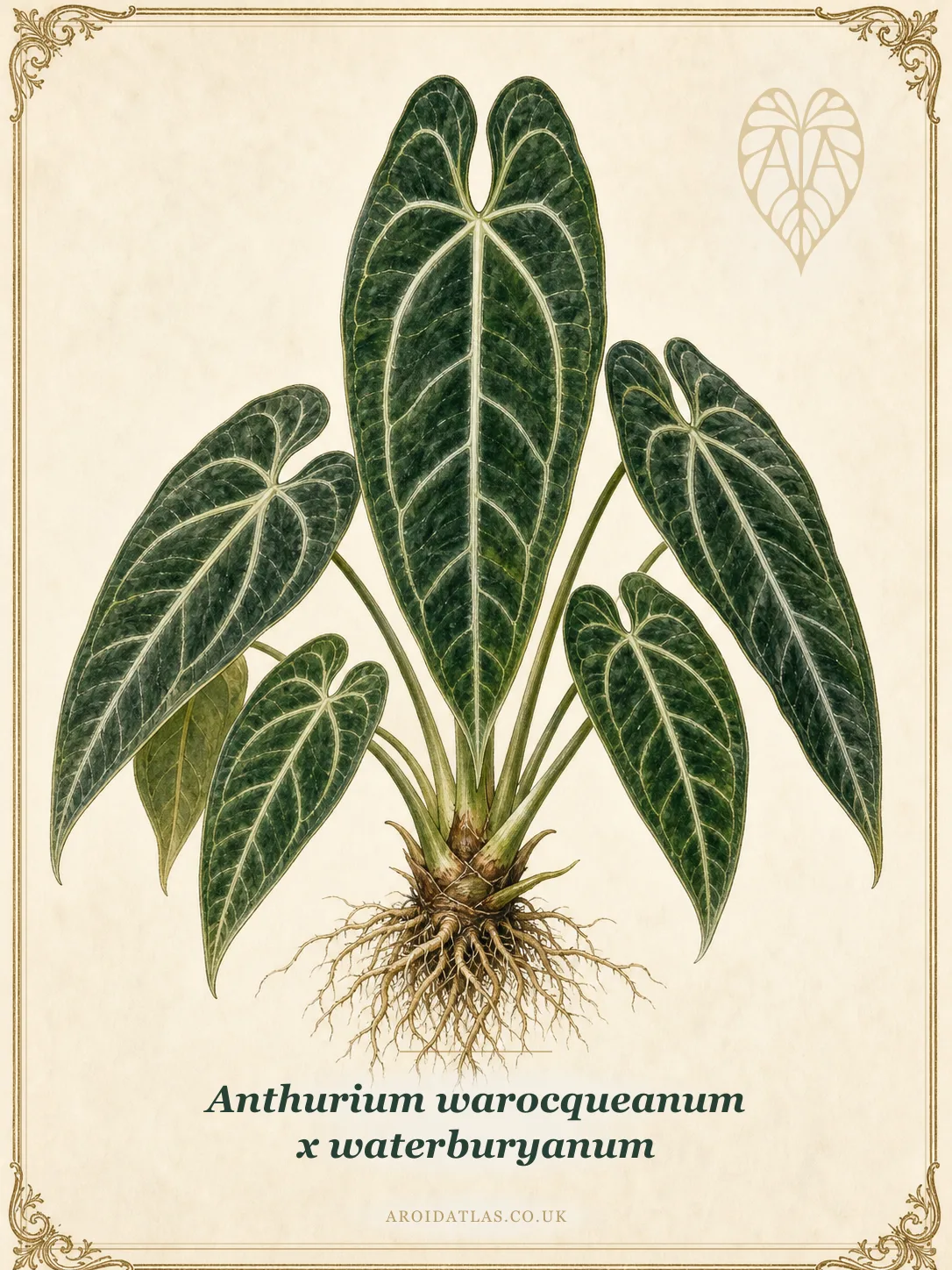
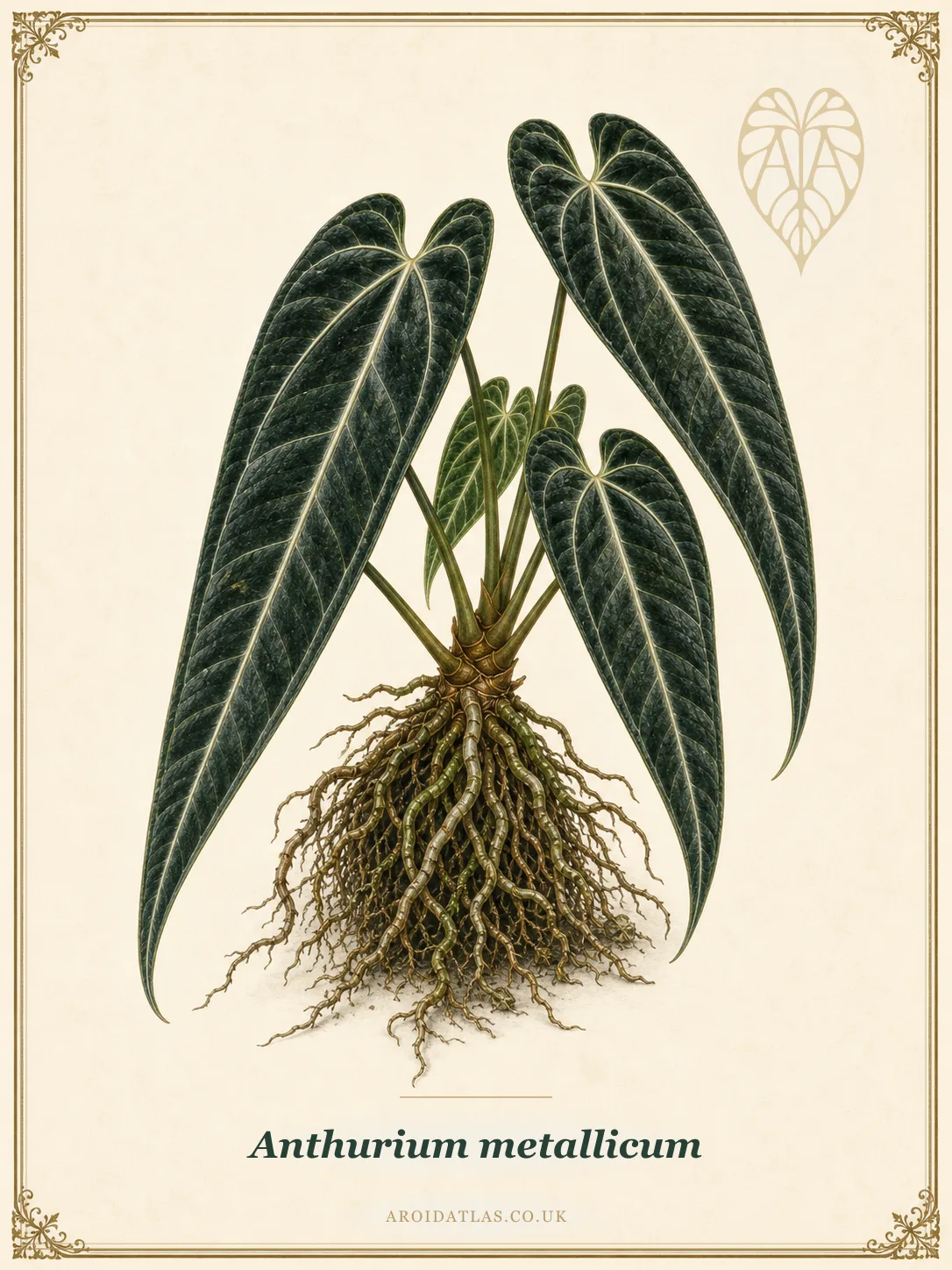
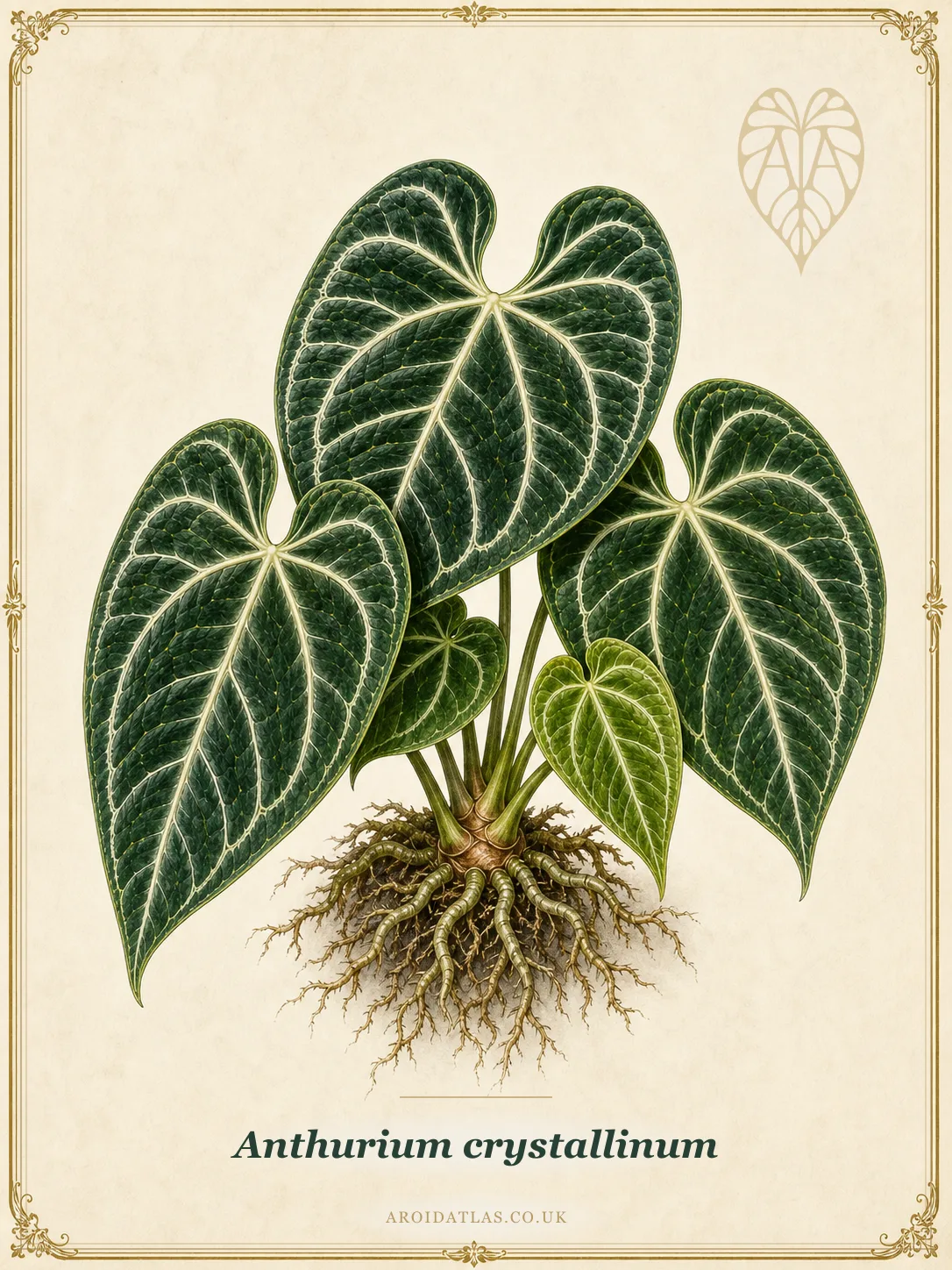
Full Specimen Plate
Anthurium luxurians × forgetii
Luxurians Forgetii Hybrid
- Premium New Zealand Sphagnum Moss, 100gLong-fibre sphagnum for air-layering, top-dressing, and epiphyte substrate mixes.
- Natural Rooting Powder, 3 x 75gRooting hormone powder for stem and leaf cuttings.
- Precision Bonsai Pruning Scissors, 200mmFine-bladed snips for clean node cuts when taking a cutting.
- Humidity Dome, Heavy-Duty Germination KitVented propagation dome for holding humidity around fresh cuttings.
Amazon links — we may earn commission on qualifying purchases.
7cm Target Price
£120.00
Market Hub
Anthurium luxurians × forgetii Sold Prices & Live Market
What the Target Price above is based on: eBay sold prices by plant size, live listings, and retailer stock.
No eBay sales recorded yet. Sold listings are collected as they appear on eBay.
Before You Buy
Species-specific things to check when evaluating a listing
- Check the growing point (the newest, unopened leaf) for firmness — softness here usually means rot has already reached the crown
- Look at the root system through the drainage holes if possible; healthy roots are firm and pale, not brown and mushy
- Look for well-developed quilted texture across the leaf rather than a flatter, less textured blade
- Given the premium this cross commands, compare pricing against pure luxurians before assuming the hybrid is the better buy
Anthurium luxurians × forgetii Morphology
About Anthurium luxurians × forgetii
Two complementary traits meet in this hybrid: luxurians contributes its bullate, corrugated surface texture, a quilted quality that resembles hammered dark metal, while forgetii shapes the leaf toward the broader, near-circular, closed-sinus silhouette it's known for. The result is a compact, self-heading plant with broadly rounded cordate leaves showing a reduced sinus and a subtle but distinct quilted texture on a deep, rich green surface. Among the bullate-forgetii crosses, this is one of the more consistent combinations — texture from one parent, clean rounded form from the other, without either trait fighting the other for dominance.
Propagation Guide
How to Propagate Anthurium luxurians × forgetii
Propagation Guide
How to Propagate Anthurium luxurians × forgetii
8-14 months
Divides cleanly at the base once a plant has produced multiple growth points — separate with a clean cut, dust with cinnamon or a fungicide, and pot each division into fresh, chunky aroid mix. Top cuttings with at least one node and aerial root also root reliably in damp sphagnum.
Care Guide
Anthurium luxurians × forgetii Care Guide & Growing Conditions
Care Guide
Anthurium luxurians × forgetii Care Guide & Growing Conditions
A chunky, open aroid mix — equal parts orchid bark, perlite and coco chunk, with a smaller portion of moss or coco coir for moisture retention — mimics the loose, well-aerated leaf litter these grow in naturally. Standard potting compost alone stays too wet around the roots.
Water thoroughly, then let the top third of the mix dry before watering again. Velvet-leaf anthuriums are more sensitive to root rot than most houseplants, so err on the side of underwatering rather than keeping it constantly damp.
High, 75-90%. Consistent humidity keeps the quilted texture and colour depth at their best; average room humidity alone tends to show it within a few weeks.
Feed at quarter to half strength every 2 weeks in the growing season with a balanced, nitrogen-forward fertiliser; drop to monthly over winter. Heavy fertilising scorches the fine root system faster than it helps growth.
Repot every 12-18 months, or when roots fill the pot and start pushing the plant upward. Choose a pot only slightly larger than the current one; these dislike being over-potted into a large volume of slow-drying mix.
Common Problems
Root rot
Substrate that stays wet, often from a mix that's too dense or a pot with poor drainage
Repot into a chunkier mix immediately, trim away any mushy roots, and let the plant recover in a smaller pot before sizing up again
Thrips or spider mite damage
Dry air and still conditions, especially indoors over winter
Increase humidity and airflow together, and treat visible pest damage with a systemic or contact treatment rather than water alone
Flattened quilting on new leaves
Insufficient light or humidity for the bullate texture to develop fully
Increase both light and humidity together; the surface texture this hybrid is grown for is a direct response to good conditions
Lineage
Anthurium luxurians × forgetii Parentage
Lineage
Anthurium luxurians × forgetii Parentage
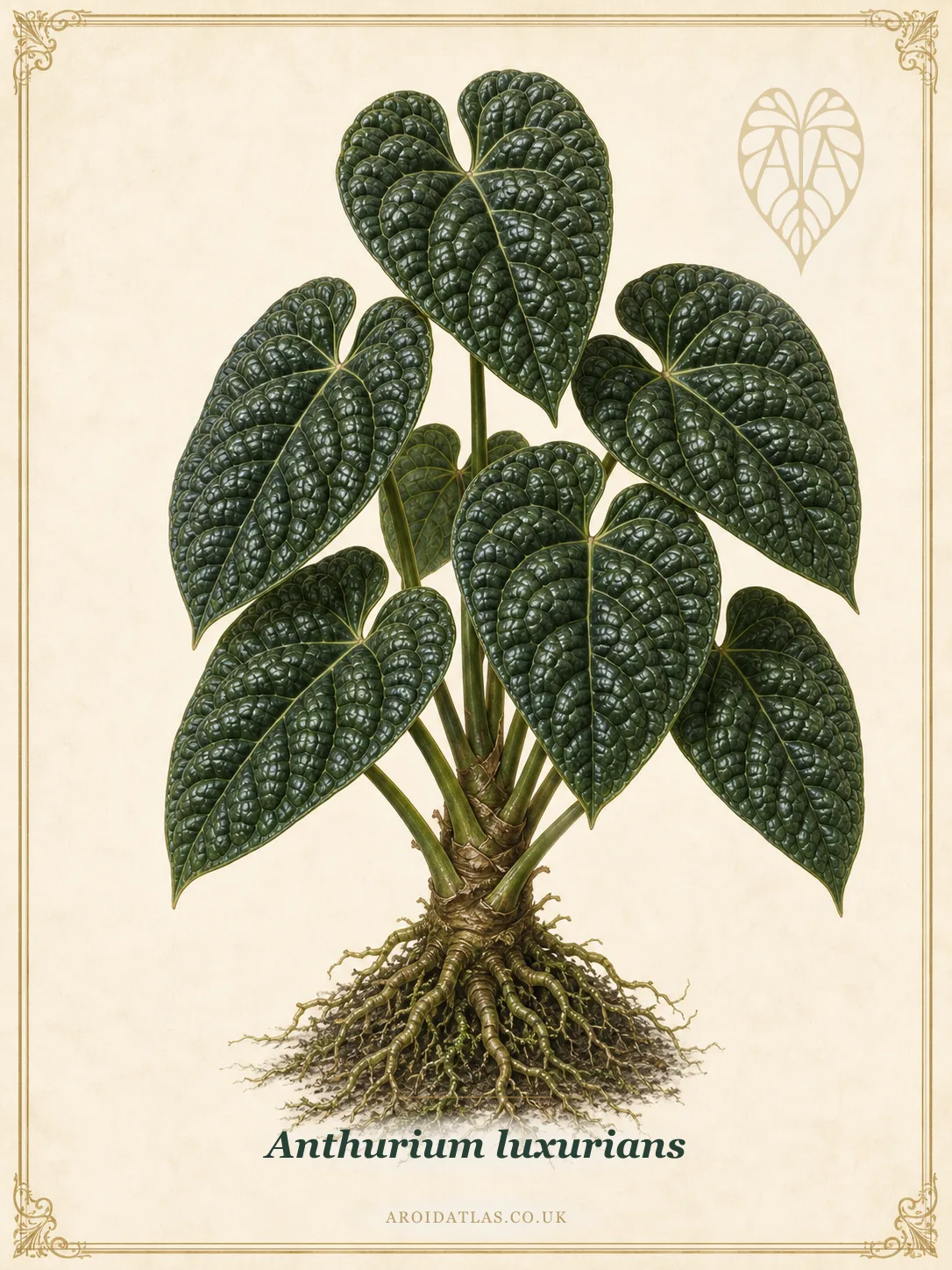
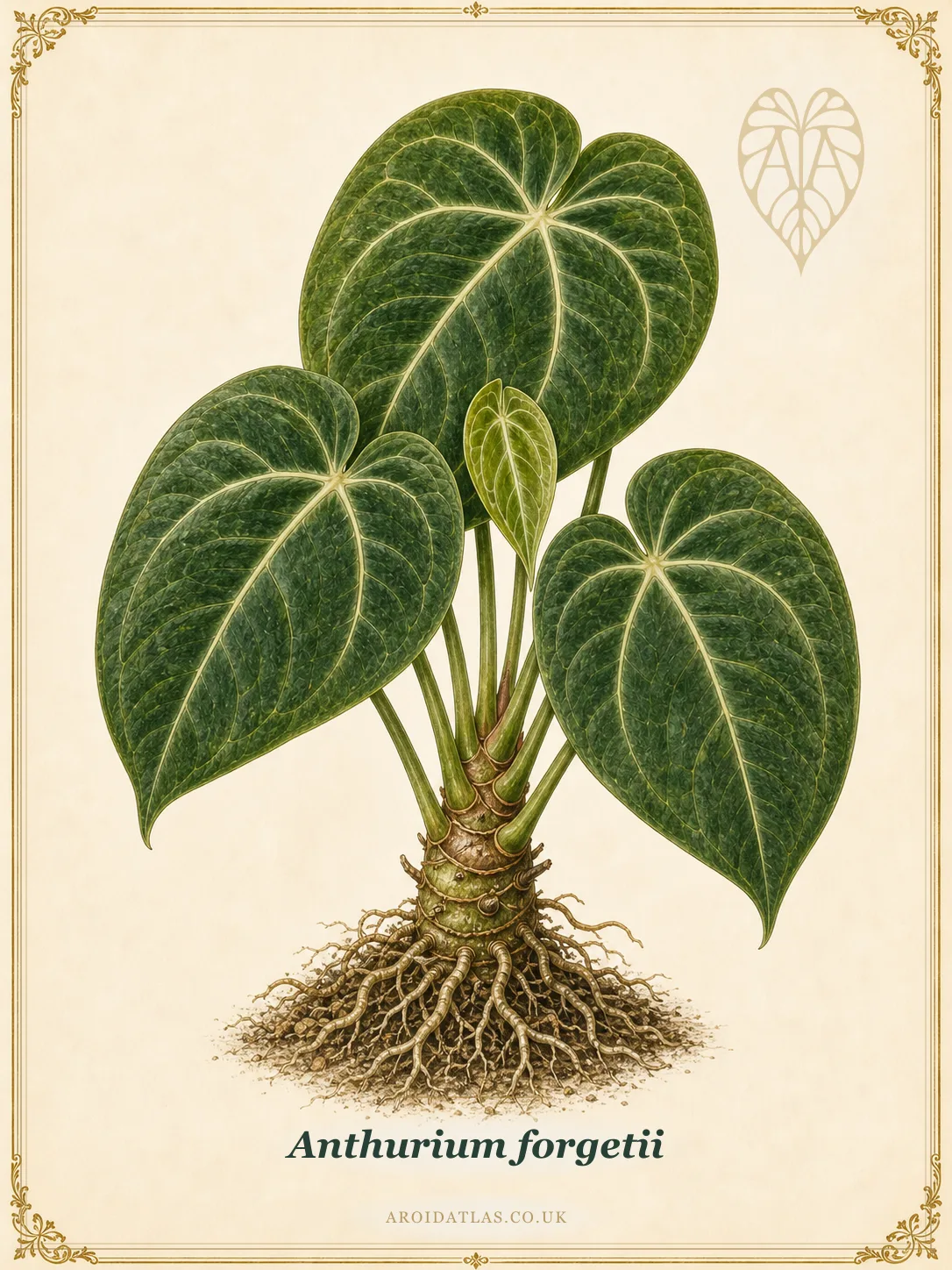
A horticultural cross — priced, illustrated and tracked independently of either parent.
Field Reference
In the Wild
Field Reference
In the Wild
Field Notes
Texture Meets Elegance
The bullate surface drama of Anthurium luxurians combined with the round, sinus-free leaf form of forgetii produces something that is, in this case, genuinely better than the sum of its parts. Luxurians contributes a puckered, hammered surface quality that flat-leaved crosses lack; forgetii contributes the elegant, oval silhouette that many velvet collectors prefer to the more typical cordate form. The result is a compact, textured, darkly handsome plant. Horticultural crosses like this one are where deliberate breeding has meaningfully improved on what nature provided, purely for domestic cultivation purposes.
Also in: Complex Hybrids
Deliberate crosses between two named species, combining leaf shape, texture and size traits from both parents.