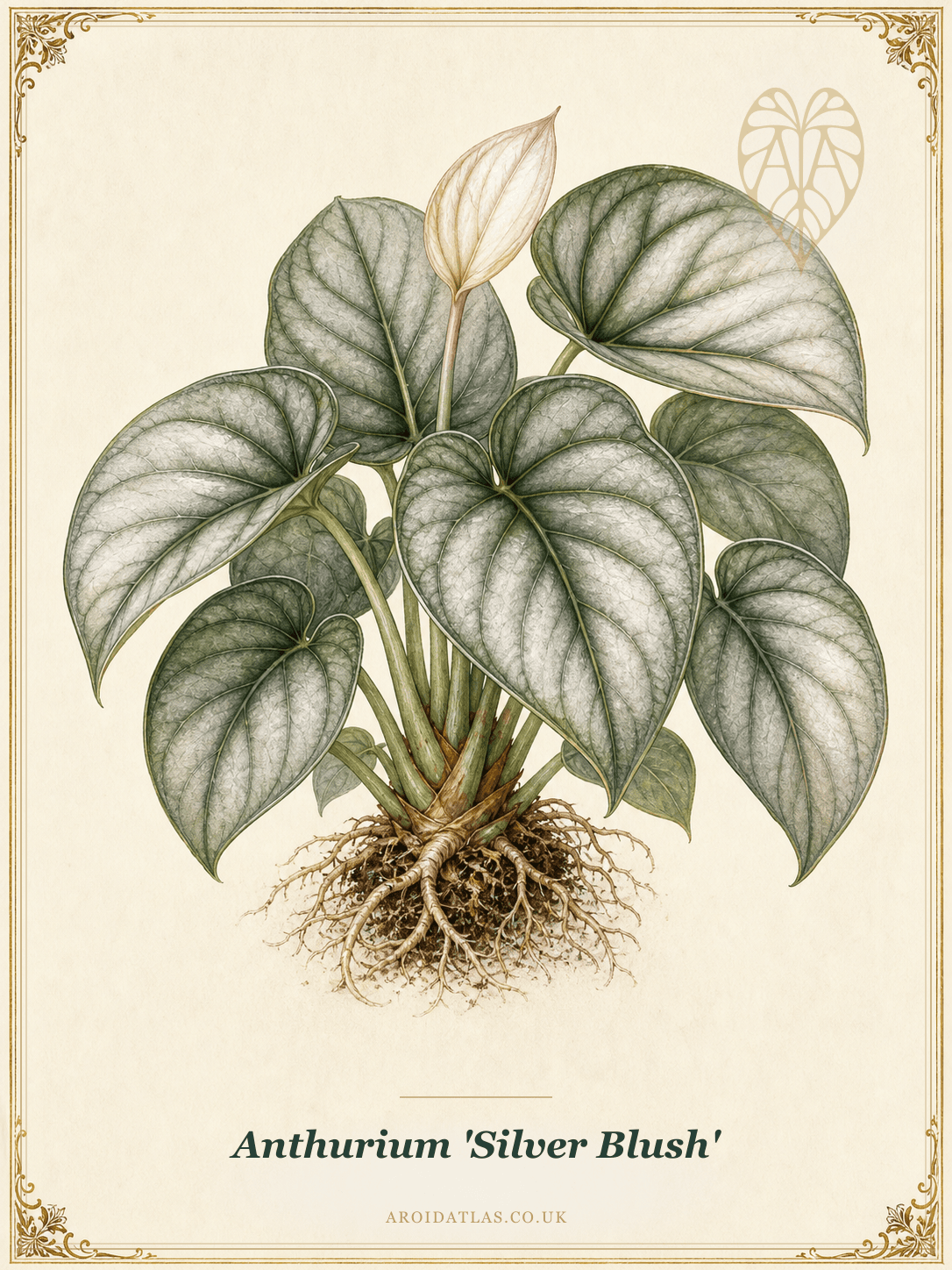
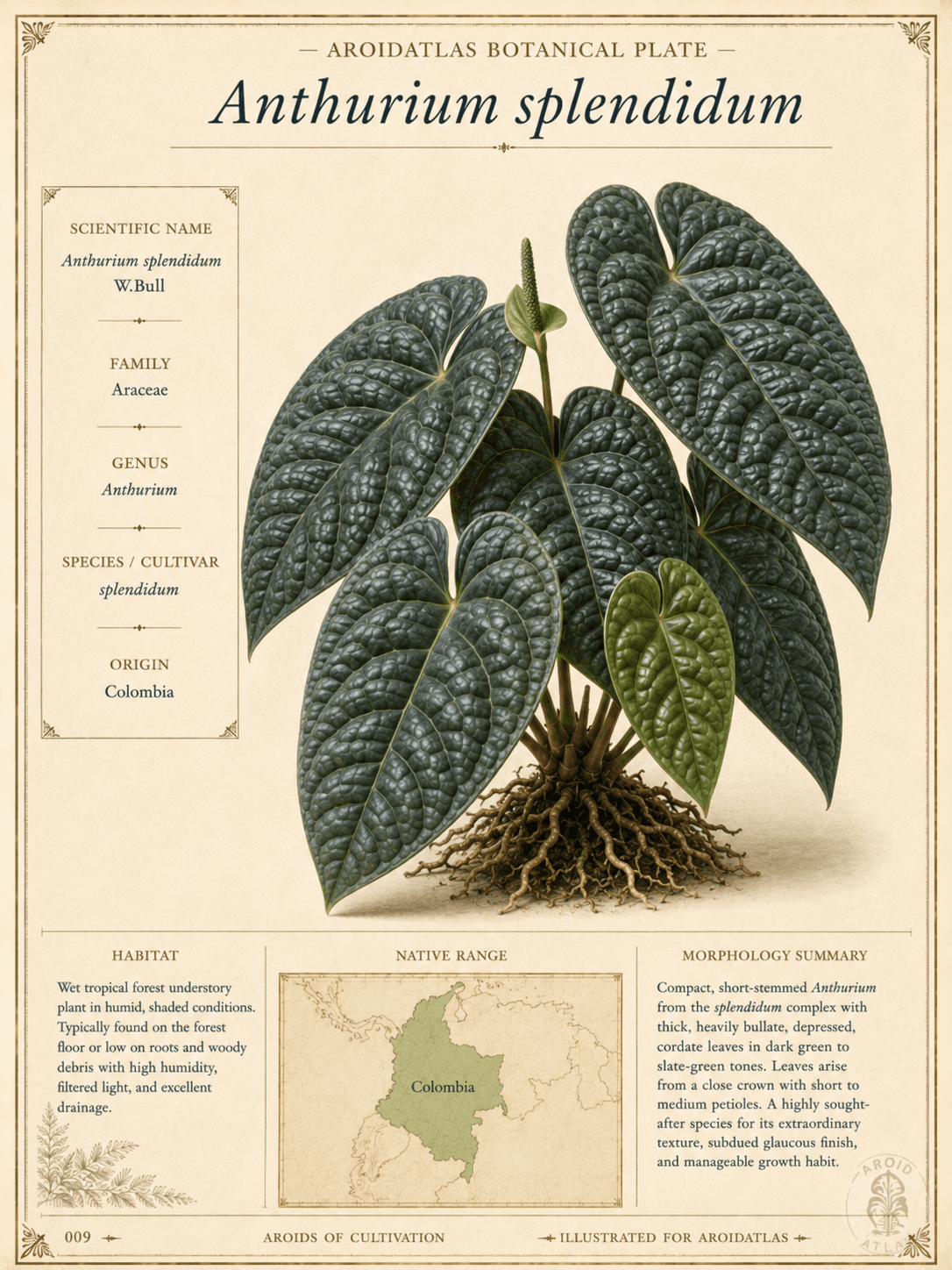
Scroll to explore forms of Anthurium pallidiflorum
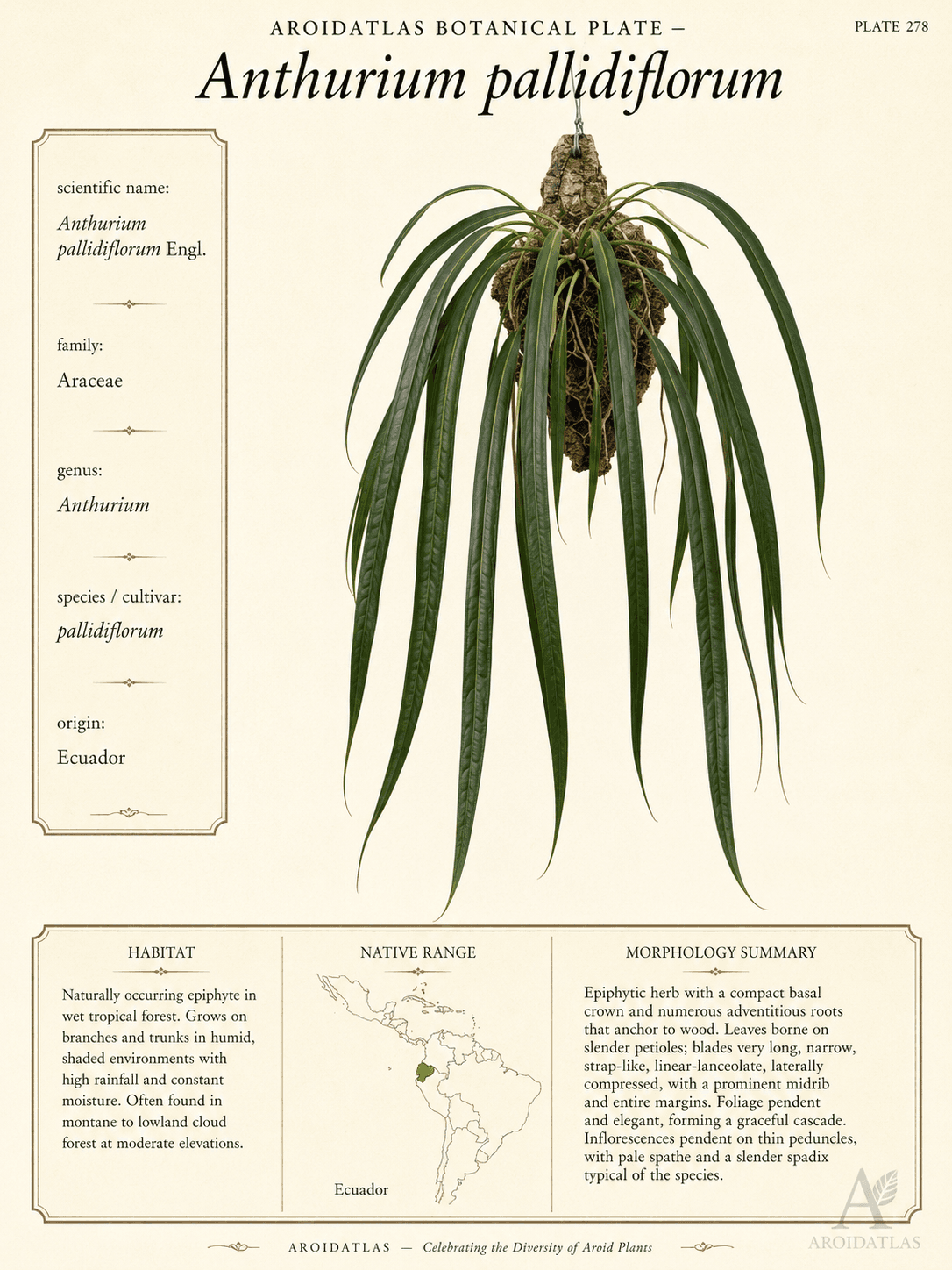
Full Specimen Plate
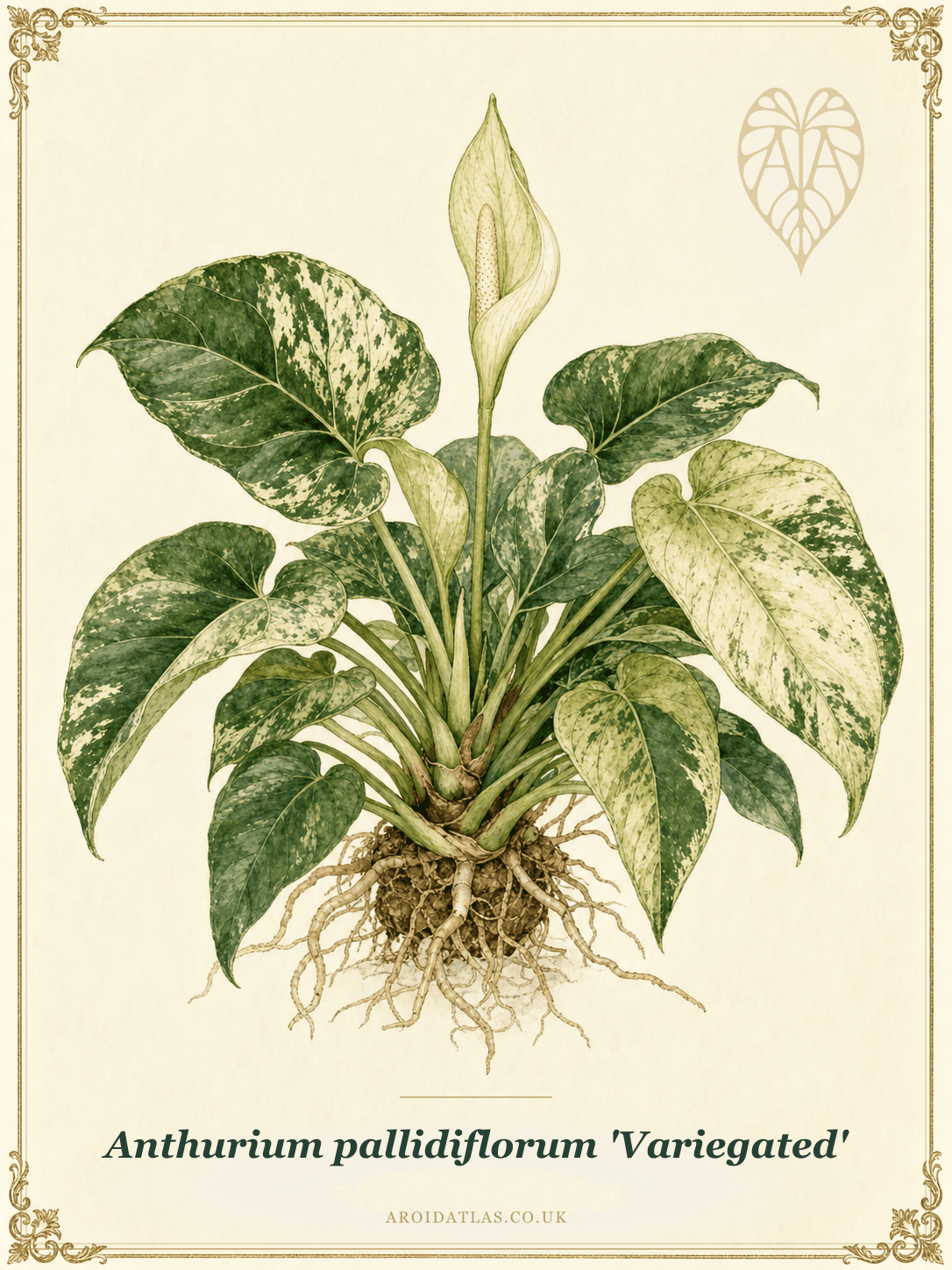
Anthurium pallidiflorum 'Variegated'
Variegated Anthurium Pallidiflorum
Aroid Atlas Price Guide
Select Plant Size
Pricing Data Key
Anthurium pallidiflorum 'Variegated' Morphology
About Anthurium pallidiflorum 'Variegated'
Anthurium pallidiflorum is a slender, hemiepiphytic climber grown for its narrow, elongated leaves that dangle gracefully from a trailing or lightly climbing stem. This variegated form breaks up the glossy green blade with streaks and patches of cream and pale yellow, adding extra interest to an already elegant, understated species. It is easy to grow as a hanging or trailing specimen, its long pendant leaves showing off best when allowed to cascade rather than being staked upright, and the variegation intensifies noticeably under brighter light.
Market Analysis
Anthurium pallidiflorum 'Variegated' Price Guide & Auction Value
Historical eBay auction metrics and live retailer listings updated weekly.
No eBay auction history available yet. Data is collected automatically as sales appear on eBay UK.
Before You Buy
Shared checklist for Anthurium pallidiflorum and its cultivated forms
- Count the healthy leaves; strap-leaf anthuriums grow very slowly, so buying a plant with only one leaf means a long wait before it becomes an attractive specimen
- Check for scale insects along the underside midrib of leaves; they are small, brown, and flat and easy to miss
- Roots should be firm. Check that drainage holes are visible in listing photos; root rot from waterlogged shipping medium is common
- Ask the seller how many roots the plant has; a well-rooted plant establishes far faster than a recently divided offset
Propagation Guide
How to Propagate Anthurium pallidiflorum 'Variegated'
Shared across every form of Anthurium pallidiflorum — see this form's own Morphology for variegation-specific propagation notes.
Strap-leaf anthuriums rarely branch and are slow to produce offshoots. Stem cuttings require high humidity and warmth. Success rates are lower than velvet types.
Care Guide
Anthurium pallidiflorum 'Variegated' Care Guide & Growing Conditions
General care shared across all forms of Anthurium pallidiflorum — cultivated forms may need brighter light or higher humidity than the plain species; check this form's Quick Facts above.
Very coarse epiphytic mix: 50% orchid bark, 30% perlite, 20% sphagnum moss. Can also be grown mounted on cork bark for best airflow.
Allow to approach dryness between waterings; strap-leaf anthuriums are more drought-tolerant than velvet types. Water thoroughly, then allow to drain completely.
65–80%. More tolerant of lower humidity than velvet types but still benefit from consistent moisture in the air.
Half-strength orchid fertiliser monthly during growing season. These are slow growers, and overfeeding can burn roots.
Infrequently, every 2–3 years. These species often bloom better when slightly root-bound. Consider mounting on cork board instead.
Common Problems
Root rot
Dense substrate or overwatering
Switch to a very coarse bark-heavy mix; allow to dry more between waterings
No new growth
Too cold or too dark
Ensure minimum 18°C and bright indirect light
Brown leaf tips
Low humidity or salt buildup from fertiliser
Flush substrate with clean water to remove salt buildup; increase humidity