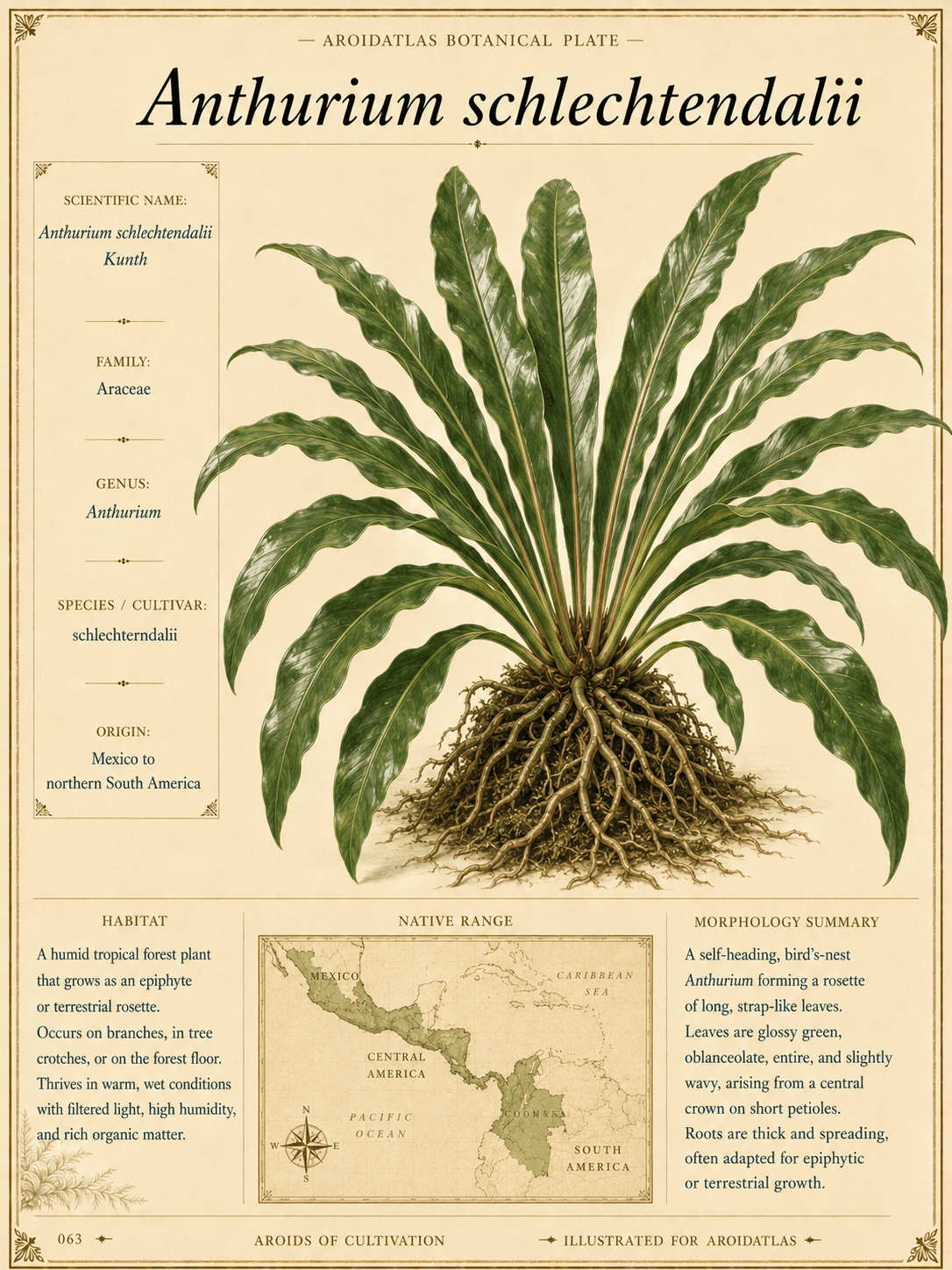
Scroll to explore forms of Anthurium hookeri
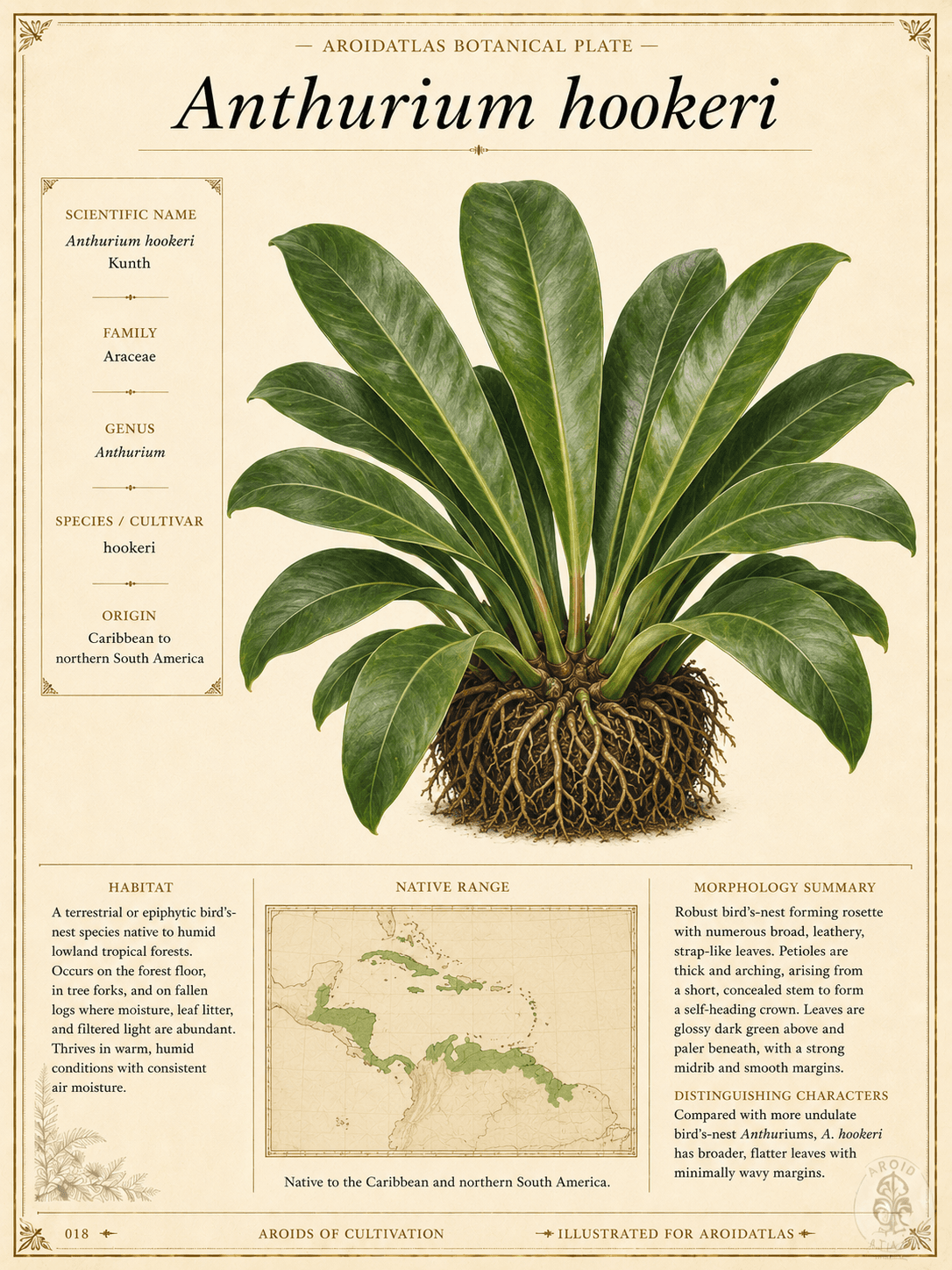
Full Specimen Plate
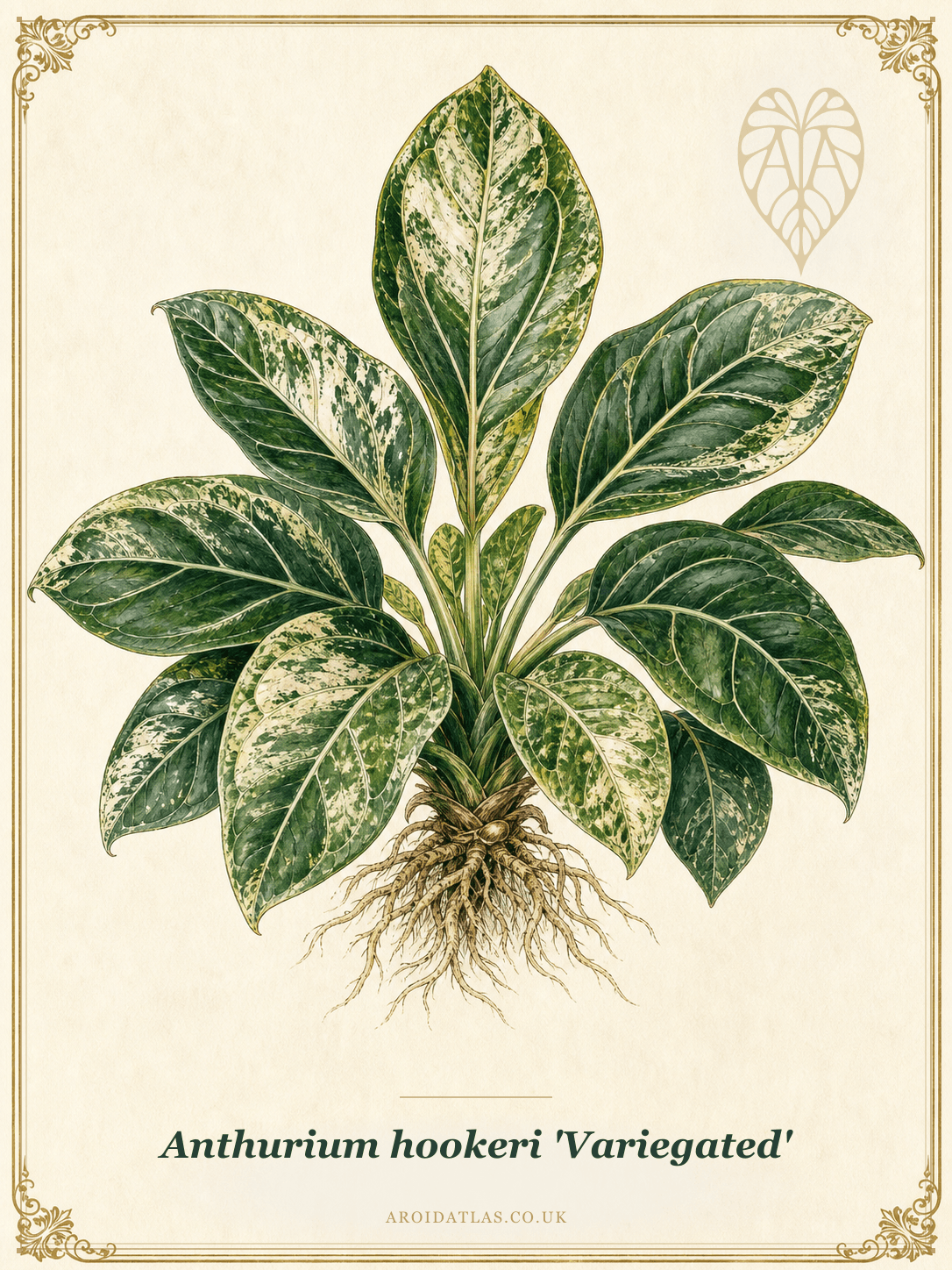
Anthurium hookeri 'Variegated'
Variegated Bird's Nest Anthurium
Aroid Atlas Price Guide
Select Plant Size
Pricing Data Key
Anthurium hookeri 'Variegated' Morphology
About Anthurium hookeri 'Variegated'
Anthurium hookeri is a robust bird's-nest type species grown for its broad, leathery paddle-shaped leaves and the tiny raised glandular dots (pellucid punctuations) scattered across their undersides. This variegated sport layers irregular cream and pale-yellow sectoring over the thick, glossy foliage, giving each new leaf its own unpredictable pattern. Its self-heading, non-climbing habit means it never needs staking, and mature plants form an impressive architectural rosette. Stable variegated hookeri is uncommon in circulation, which keeps demand well ahead of supply among collectors of variegated aroids.
Native Range
Trinidad
Market Analysis
Anthurium hookeri 'Variegated' Price Guide & Auction Value
Historical eBay auction metrics and live retailer listings updated weekly.
No eBay auction history available yet. Data is collected automatically as sales appear on eBay UK.
Before You Buy
Shared checklist for Anthurium hookeri and its cultivated forms
- Check the rosette is tight and symmetrical, not lopsided from uneven light.
- Confirm leaf margins are glossy, not matte; glossy foliage distinguishes this species from the genus's velvet-leaved forms.
Propagation Guide
How to Propagate Anthurium hookeri 'Variegated'
Shared across every form of Anthurium hookeri — see this form's own Morphology for variegation-specific propagation notes.
3-6 months
Cultivar character is preserved through vegetative cuttings
Straightforward to propagate; basal offsets establish reliably.
Care Guide
Anthurium hookeri 'Variegated' Care Guide & Growing Conditions
General care shared across all forms of Anthurium hookeri — cultivated forms may need brighter light or higher humidity than the plain species; check this form's Quick Facts above.
Chunky, well-draining mix: bark, perlite and potting compost. Its stiff, coriaceous leaves tolerate a coarser substrate than velvet-leaved Anthurium.
Water when the top half of the substrate is dry (one of the more drought-tolerant species in the genus).
60-80%; comfortable at typical household humidity without supplemental equipment.
Balanced liquid fertiliser at quarter strength every 4 weeks during active growth.
Every 2-3 years, sizing up as the rosette widens.
Common Problems
Yellowing lower leaves
Overwatering
Reduce watering frequency and confirm the pot has adequate drainage.