Full Specimen Plate
Alocasia sanderiana
Kris Plant
Aroid Atlas Price Guide
Select Plant Size
Pricing Data Key
Other colour-form prices
Alocasia sanderiana Morphology
About Alocasia sanderiana
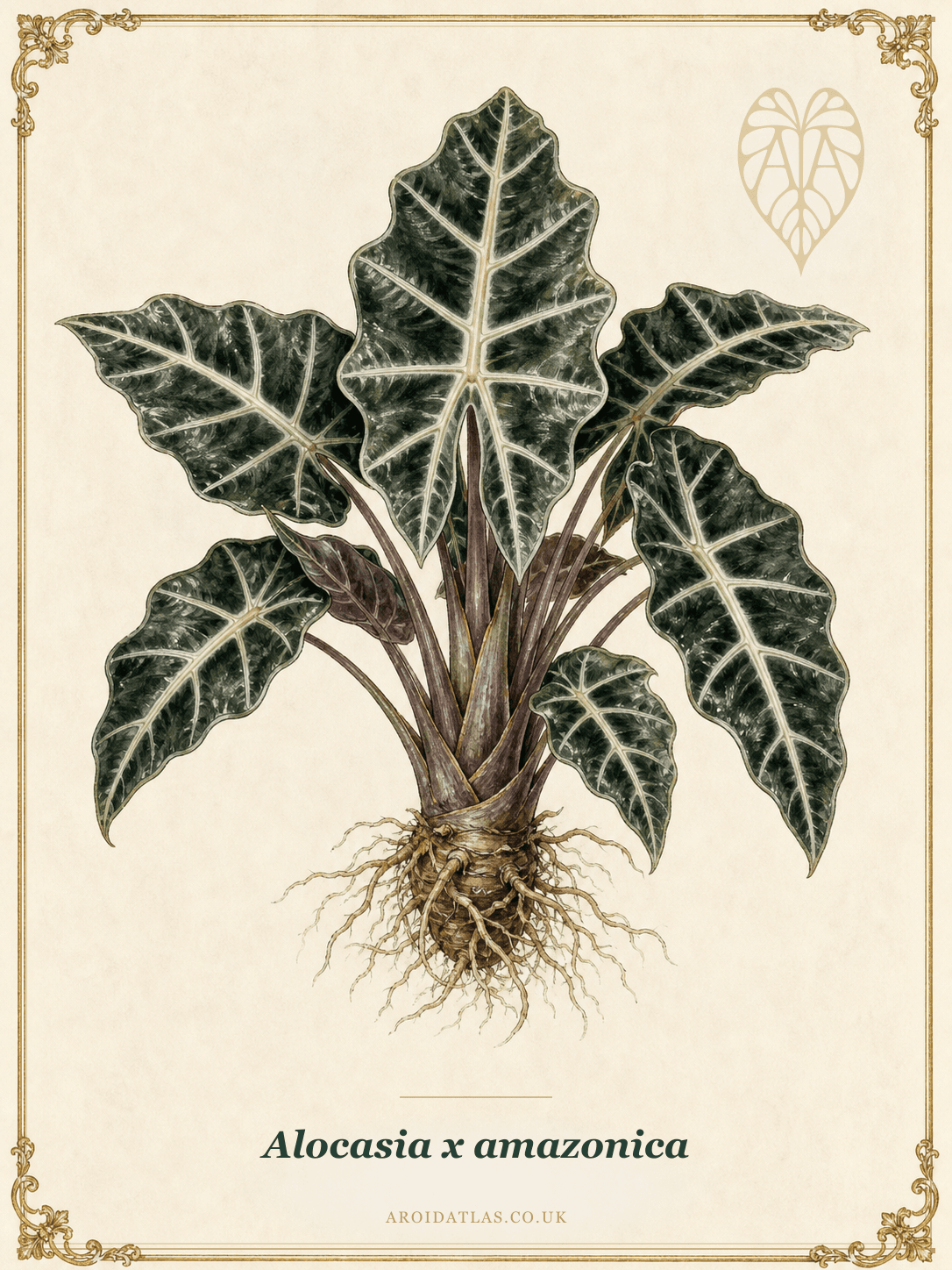
Alocasia sanderiana, the Kris Plant, is a Philippine species named for the wavy-bladed kris sword its scalloped, deeply-cut leaf margins resemble. Deep glossy green-black leaves are edged and veined in bright silvery-white, giving a strong high-contrast pattern rare among Alocasia species. Endemic to a small area of Northern Mindanao, it is classified as critically endangered in the wild by the IUCN, though it has been cultivated and propagated in the houseplant trade for decades and is not endangered in cultivation. It is one of the parent species behind the famous Alocasia × amazonica hybrid complex.
Native Range
Mindanao, Philippines
Market Analysis
Alocasia sanderiana Price Guide & Auction Value
Historical eBay auction metrics and live retailer listings updated weekly.
No eBay auction history available yet. Data is collected automatically as sales appear on eBay UK.
Before You Buy
Species-specific things to check when evaluating a listing
- This species is critically endangered in the wild; only buy from sellers offering clearly nursery-propagated or tissue-cultured stock
- Check the corm/base is firm, not soft or foul-smelling
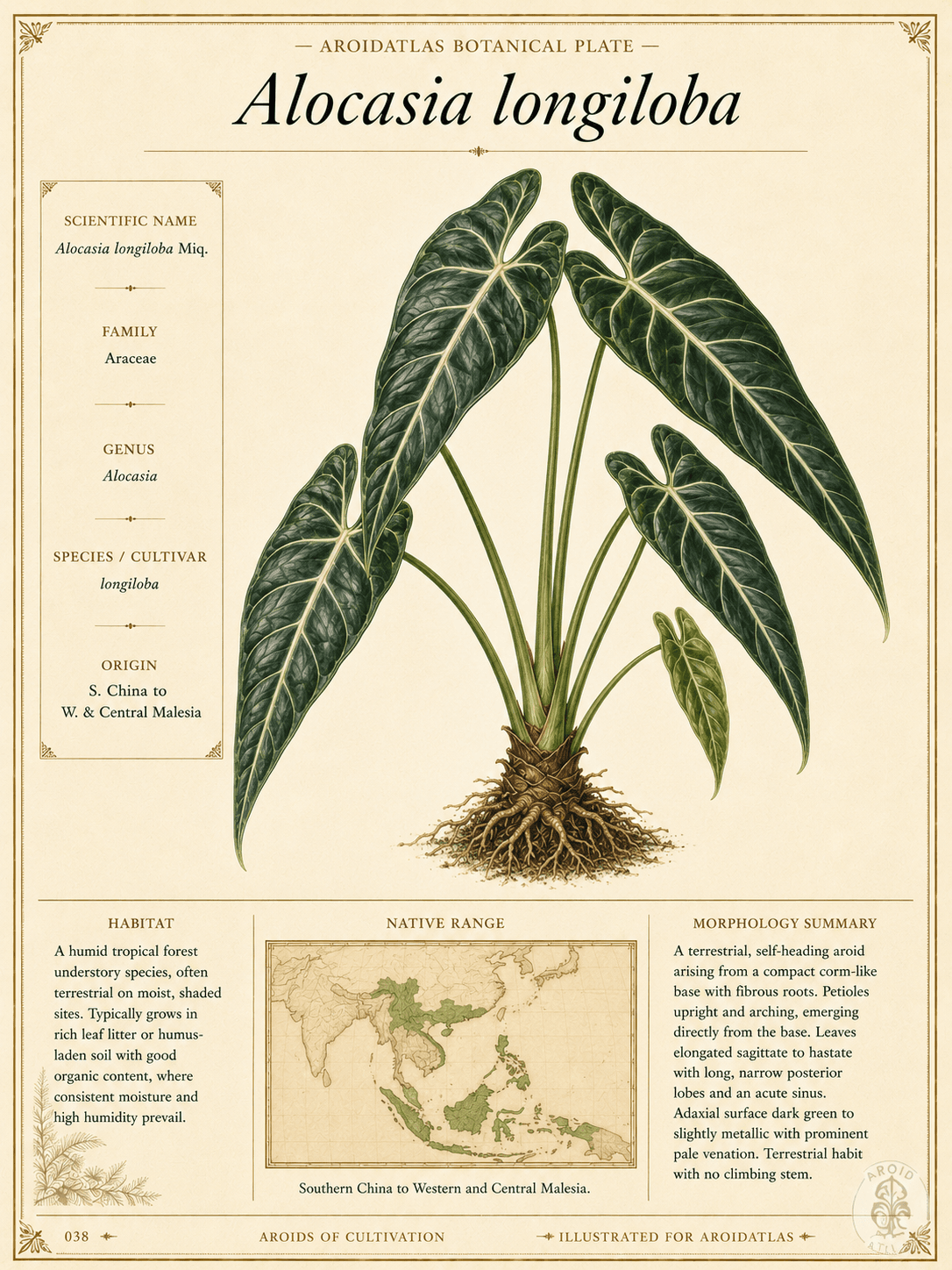
- Confirm the scalloped, wavy leaf margin and silvery venation match reference photos; plain Alocasia longiloba is sometimes mislabelled as sanderiana
Propagation Guide
How to Propagate Alocasia sanderiana
2-4 months
Cultivar character is preserved through vegetative cuttings
Produces basal offsets once mature. Given its endangered wild status, only propagate or acquire nursery-grown/tissue-cultured stock; never wild-collected material.
Care Guide
Alocasia sanderiana Care Guide & Growing Conditions
Chunky, fast-draining aroid mix: 40% orchid bark, 30% perlite, 20% potting compost, 10% charcoal.
Allow the top 2-3cm of substrate to dry between waterings. Reduce in winter.
65-85%.
Balanced liquid fertiliser at quarter to half strength every 3-4 weeks during active growth.
Every 12-18 months, or when offsets crowd the pot.
Common Problems
Sudden leaf loss / dormancy
Natural seasonal response, normal for this species
Reduce watering and wait for new growth in spring
Root/corm rot
Overwatering combined with dense substrate
Repot into fresh dry chunky mix and reduce watering
Endangered Wild, Common in Cultivation
Sanderiana carries an unusual split status: critically endangered on the IUCN Red List in its small native range in Northern Mindanao, but not endangered at all in cultivation, where it's been propagated in the houseplant trade for decades. The Kris Plant name comes from the wavy, scalloped leaf margin resembling the blade of a kris sword, a genuinely distinctive trait among Alocasia, most of which have smoother-edged leaves. It's also one of the two documented parent species behind the widely grown Alocasia × amazonica hybrid, so a fair amount of what people know as 'Alocasia' foliage traces back to this exact species.