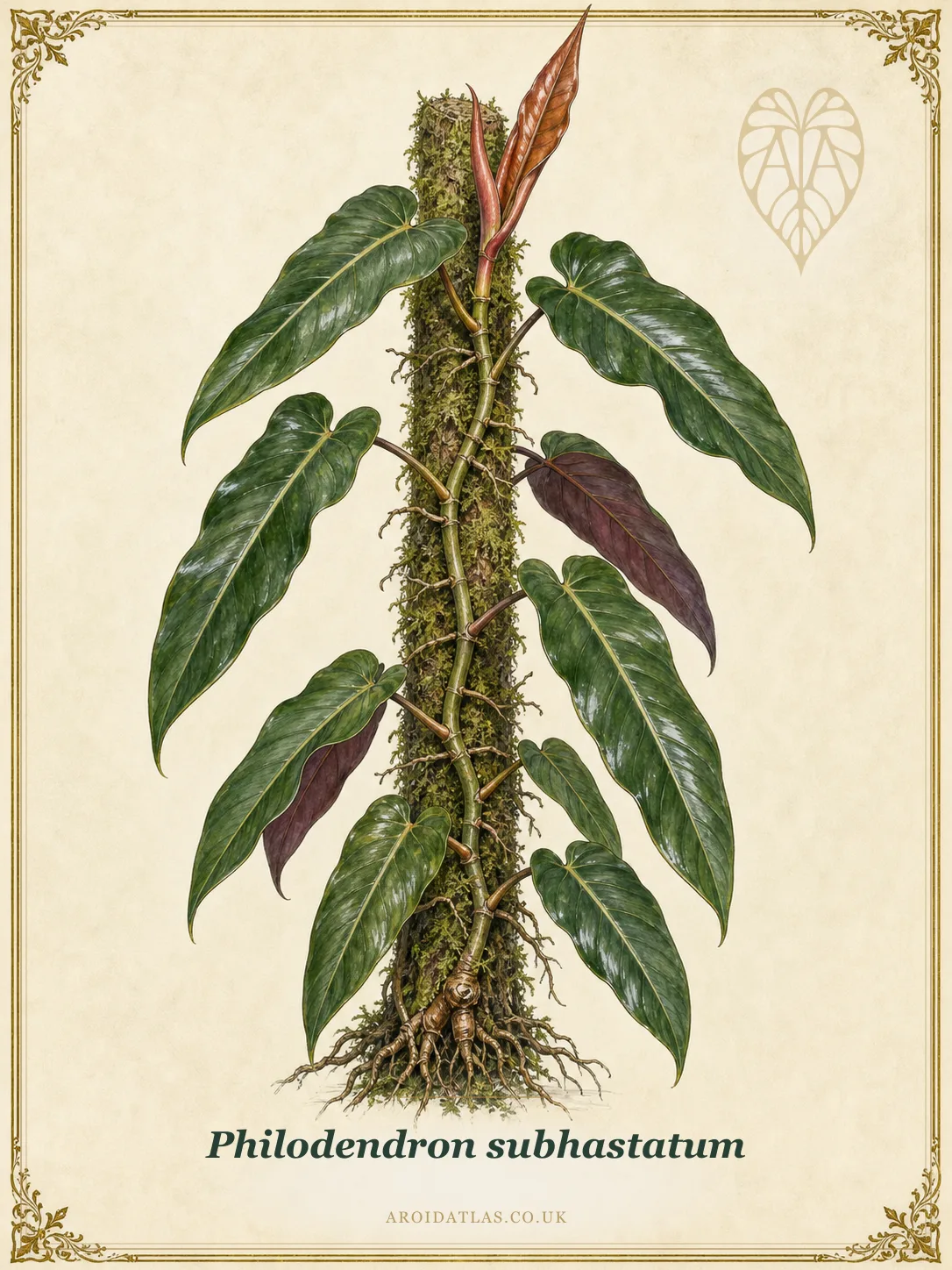
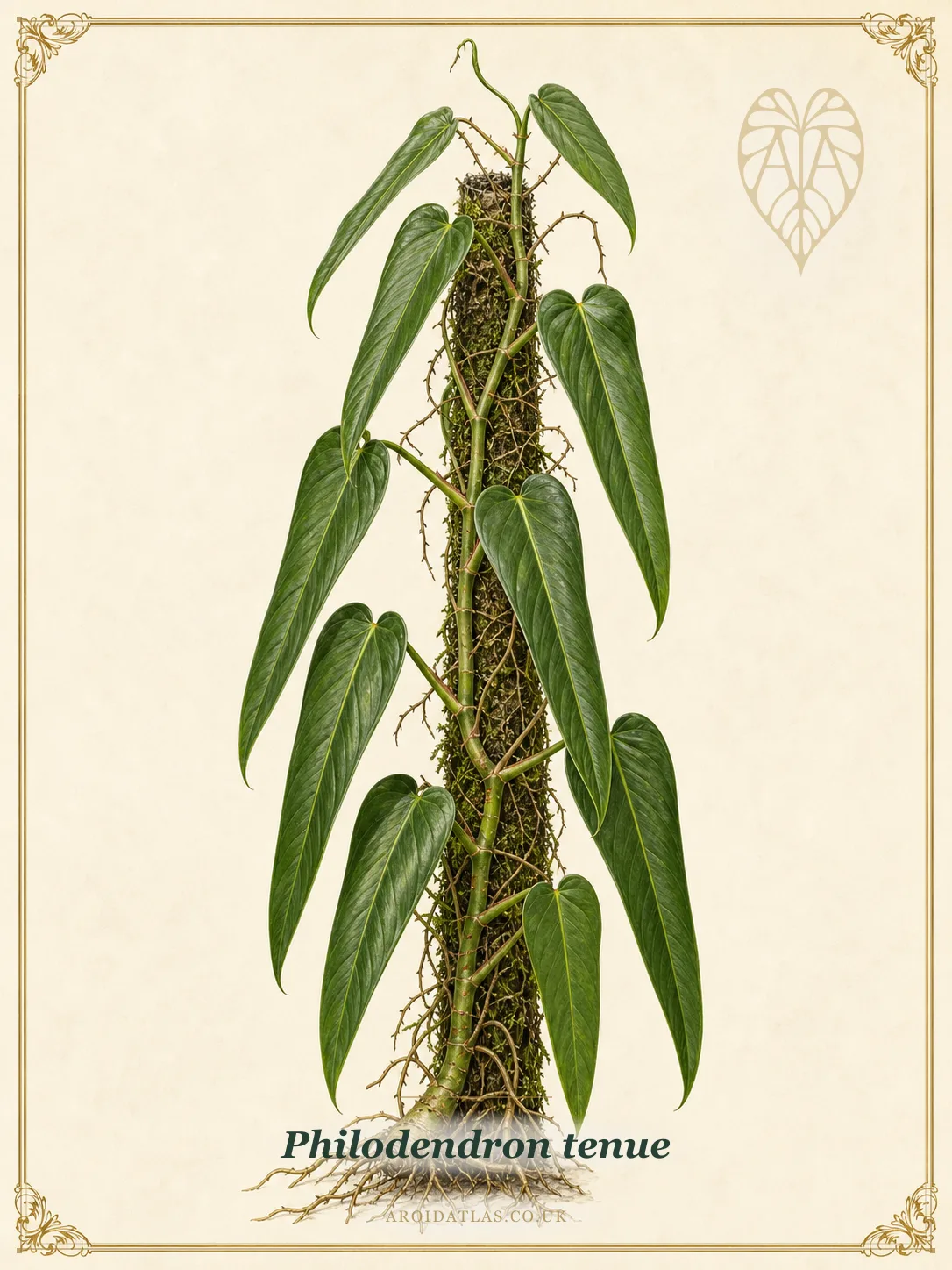
Leaf Detail Portrait
Philodendron tortum 'Albo'
Albo Skeleton Key Philodendron
- Coir Moss Pole, 120cm (4-Pack)Coco coir totem for climbing aroids to root into as they grow upward.
- Natural Rooting Powder, 3 x 75gRooting hormone powder for stem and leaf cuttings.
- Precision Bonsai Pruning Scissors, 200mmFine-bladed snips for clean node cuts when taking a cutting.
- Humidity Dome, Heavy-Duty Germination KitVented propagation dome for holding humidity around fresh cuttings.
Amazon links — we may earn commission on qualifying purchases.
7cm Target Price
£67.00
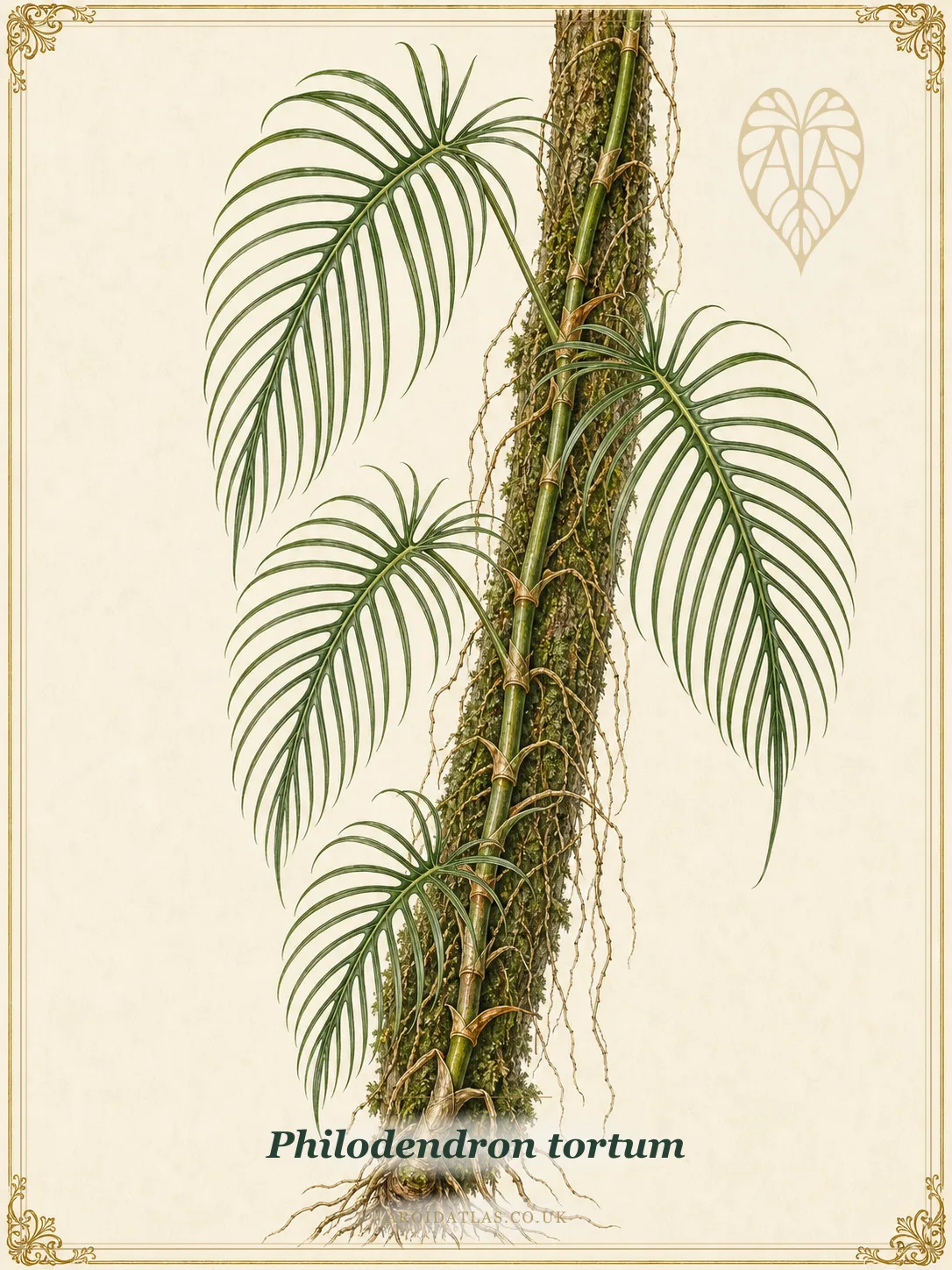
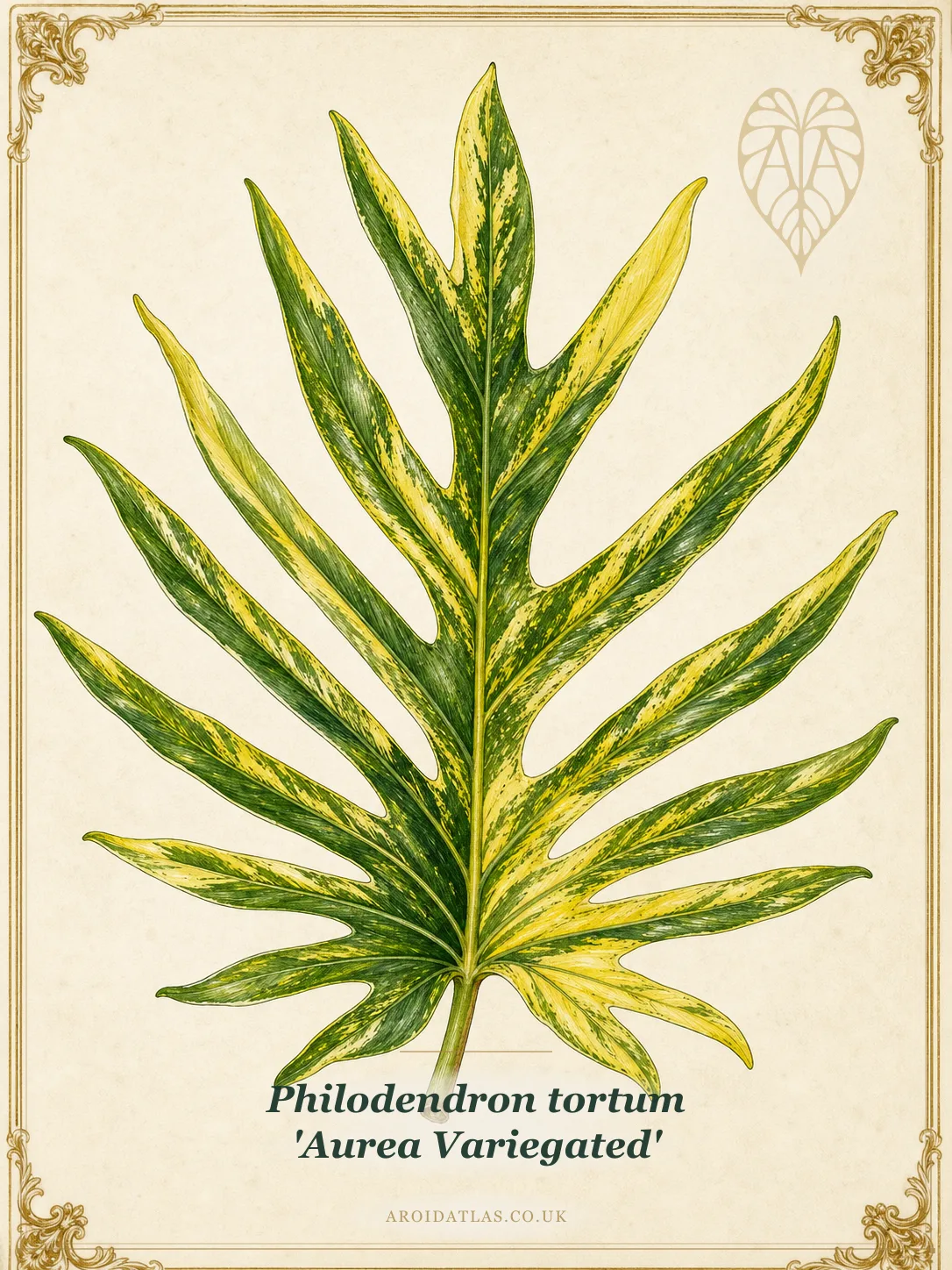
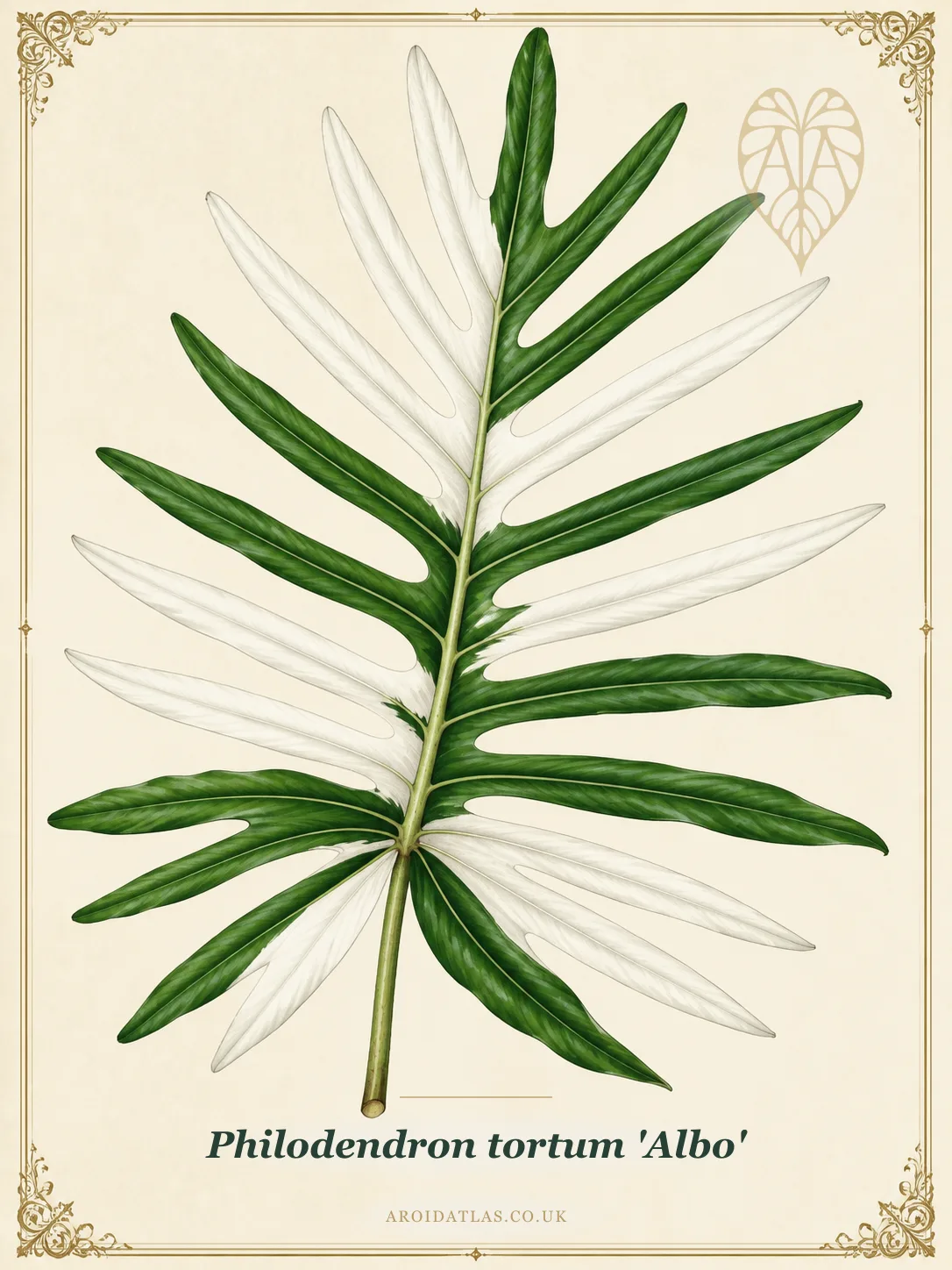
Philodendron tortum 'Albo' Morphology
About Philodendron tortum 'Albo'
Philodendron tortum 'Albo' is the white colour-break of tortum's skeleton-like, deeply dissected leaves, and is one of the more actively sought variegated Philodendron releases among collectors. Because tortum's mature leaf is reduced to a handful of narrow, widely spaced linear lobes, white variegation on this form often removes chlorophyll from entire lobes rather than producing marbled patches, leaving some segments pure white and others solid green on the same leaf. That all-or-nothing sectoring makes stable, well-variegated specimens difficult to produce and maintain, which keeps its price high.
Native Range
Bolivia
Market Hub
Philodendron tortum 'Albo' Sold Prices & Live Market
What the Target Price above is based on: eBay sold prices by plant size, live listings, and retailer stock.
No eBay sales recorded yet. Sold listings are collected as they appear on eBay.
Before You Buy
Shared checklist for Philodendron tortum and its cultivated forms
- Check that roots are firm and white to tan; avoid plants with black, slimy, or absent roots
- Look for narrow, well-separated lobes on the newest leaf rather than a leaf still showing juvenile, less-divided form
- Inspect leaf undersides for thrips (tiny dark specks or silvery streaking) and mealybugs (white cottony deposits at leaf axils)
- Confirm you're buying the base species and not the 'Aurea Variegated' form at base-species pricing
Propagation Guide
How to Propagate Philodendron tortum 'Albo'
Shared across every form of Philodendron tortum — see this form's own Morphology for variegation-specific propagation notes.
Propagation Guide
How to Propagate Philodendron tortum 'Albo'
Shared across every form of Philodendron tortum — see this form's own Morphology for variegation-specific propagation notes.
4-8 months
Single-node cuttings root readily in moist sphagnum or water. Maintain 70%+ humidity and bottom warmth for best results.
Care Guide
Philodendron tortum 'Albo' Care Guide & Growing Conditions
General care shared across all forms of Philodendron tortum — cultivated forms may need brighter light or higher humidity than the plain species; check this form's Quick Facts above.
Care Guide
Philodendron tortum 'Albo' Care Guide & Growing Conditions
General care shared across all forms of Philodendron tortum — cultivated forms may need brighter light or higher humidity than the plain species; check this form's Quick Facts above.
High-porosity mix: 50% perlite, 30% orchid bark, 20% coco coir, on a sturdy moss pole; the deeply dissected leaves are lighter than solid blades but the plant still needs real vertical support to develop mature form.
Water thoroughly when the top 3-4 cm of substrate is dry. Moderate to fast growth means it uses water faster than many collector philodendrons; check more often through the growing season.
High, 70-85%. UK tap water can cause brown tips on the narrow lobes, so use rainwater or filtered water where possible.
Quarter to half strength balanced fertiliser every two weeks in spring and summer, monthly in winter, supporting the faster growth rate.
Every 12-18 months or when roots circle the base of the pot. Move up one pot size only; oversized pots increase rot risk.
Common Problems
New leaves emerging less deeply divided
Insufficient light or a juvenile plant yet to reach mature leaf form
Increase indirect light and be patient; the fully skeletal lobing develops with maturity
Root rot
Substrate that stays wet, often from a mix that's too dense or a pot with poor drainage
Repot into a chunkier mix immediately and trim away any mushy roots
Leggy growth with widely spaced nodes
Insufficient light for this naturally fast-growing climber
Move to a brighter position with more indirect light and provide a taller support
Field Reference
In the Wild
Field Reference