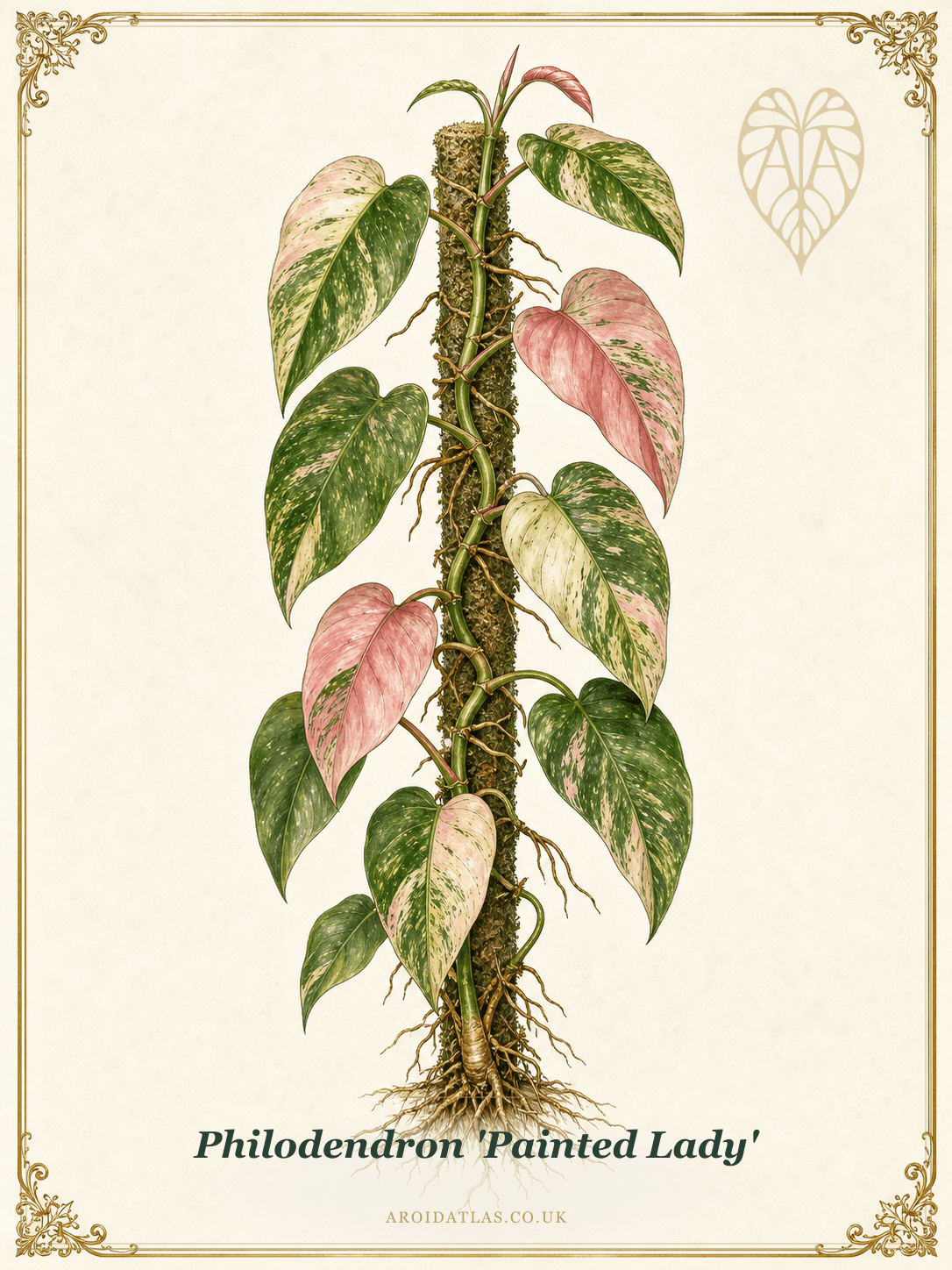
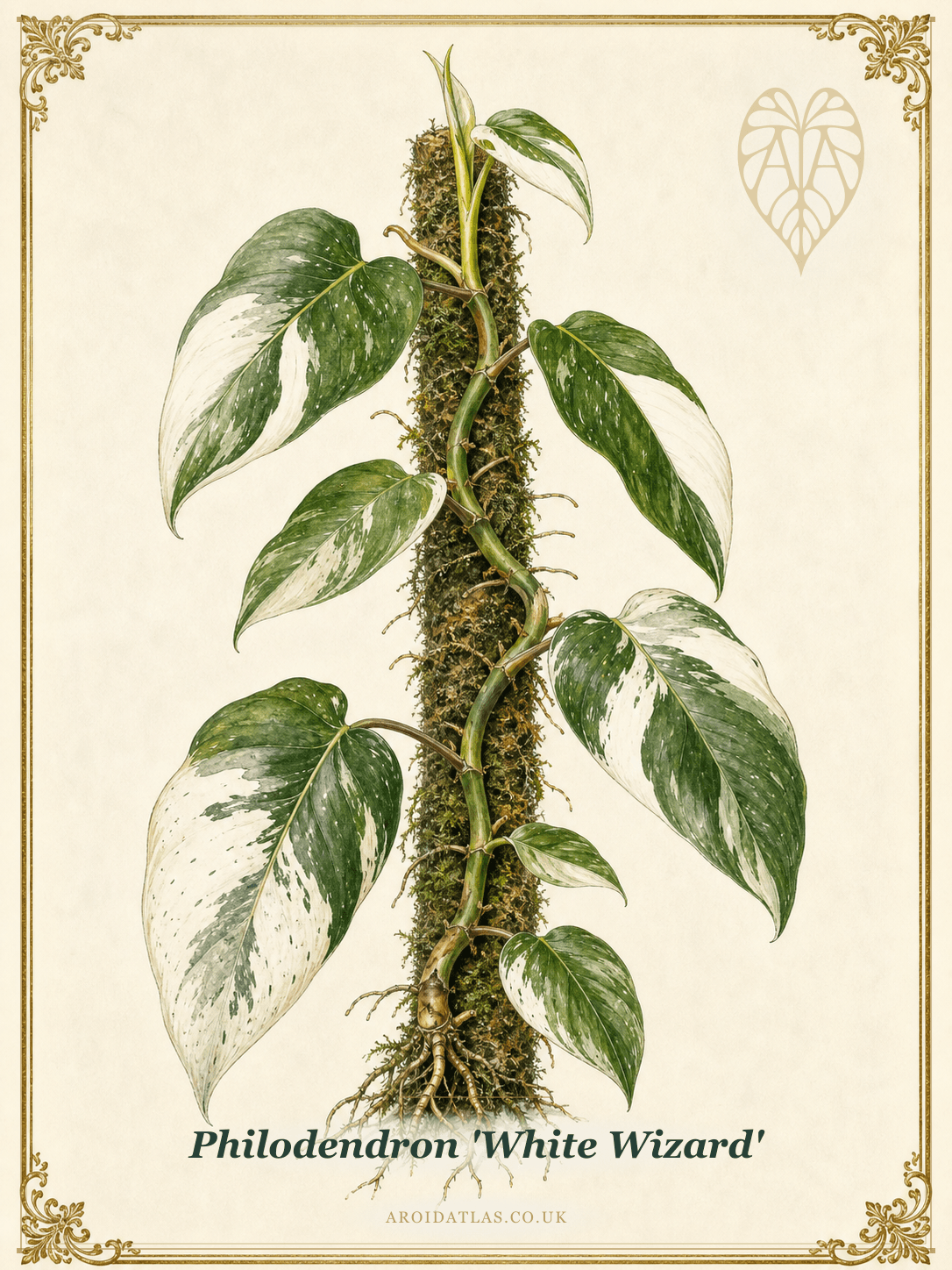
Scroll to explore forms of Philodendron domesticum
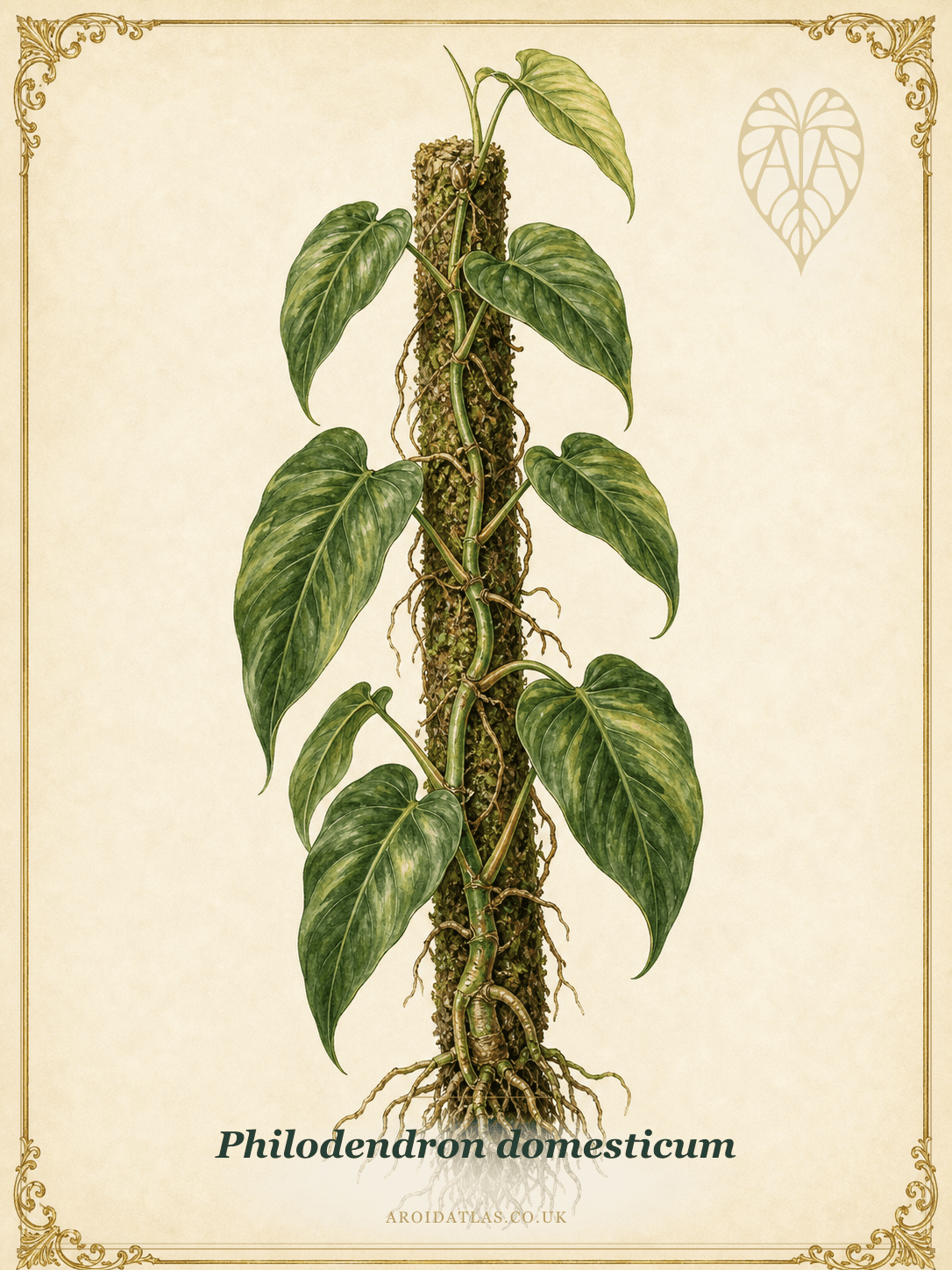
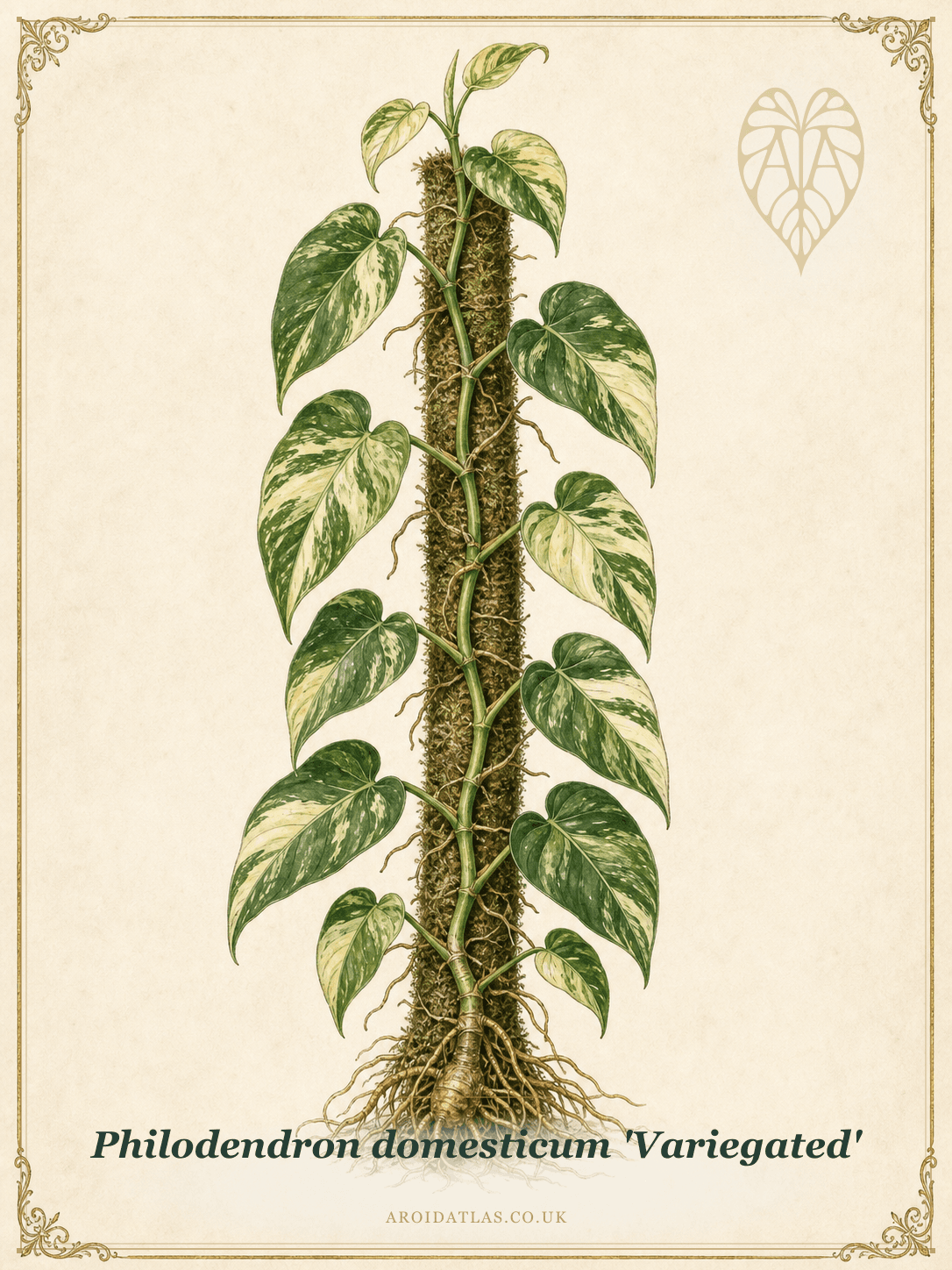
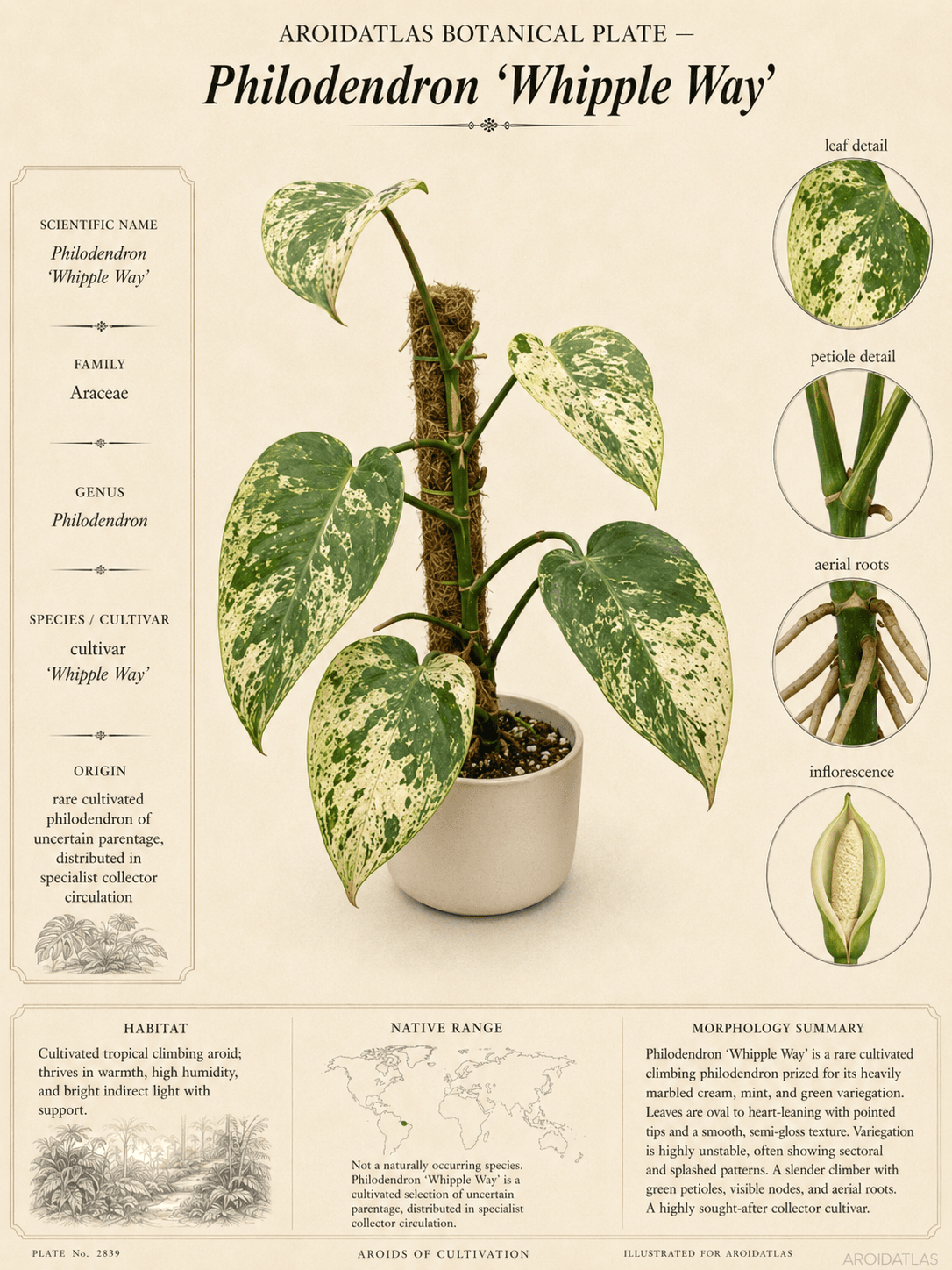
Full Specimen Plate
Philodendron domesticum 'Variegated'
Variegated Spade-Leaf Philodendron
Aroid Atlas Price Guide
Select Plant Size
Pricing Data Key
Other colour-form prices
Philodendron domesticum 'Variegated' Morphology
About Philodendron domesticum 'Variegated'
Philodendron domesticum 'Variegated' brings crisp cream and white sectoring to the smooth, elongated spade-shaped leaves that give this species its common name. The glossy blade tapers to a long point, and variegated sections range from clean half-moon splits to fine marbled streaks running along the leaf length. It climbs steadily with support, producing progressively larger leaves as it matures, and the contrast between the glossy deep green and bright white patches makes it a good climbing specimen for a moss pole or trellis.
Market Analysis
Philodendron domesticum 'Variegated' Price Guide & Auction Value
Historical eBay auction metrics and live retailer listings updated weekly.
No eBay auction history available yet. Data is collected automatically as sales appear on eBay UK.
Before You Buy
Shared checklist for Philodendron domesticum and its cultivated forms
- This species has been sold under several synonyms (P. tuxtlanum); check the seller means the same plant
- For 'Whipple Way', be aware its exact relationship to this species is debated among sources
- All Philodendron are toxic if ingested; keep away from pets and children
Propagation Guide
How to Propagate Philodendron domesticum 'Variegated'
Shared across every form of Philodendron domesticum — see this form's own Morphology for variegation-specific propagation notes.
6-10 weeks
Cultivar character is preserved through vegetative cuttings
Roots readily from stem or node cuttings. Variegated forms need a cutting taken at a visibly variegated node to preserve the pattern.
Care Guide
Philodendron domesticum 'Variegated' Care Guide & Growing Conditions
General care shared across all forms of Philodendron domesticum — cultivated forms may need brighter light or higher humidity than the plain species; check this form's Quick Facts above.
Chunky, well-draining aroid mix: 40% orchid bark, 30% potting compost, 20% perlite, 10% sphagnum moss.
Allow the top few centimetres of substrate to dry between waterings.
50-70%.
Balanced liquid fertiliser at half strength every 3-4 weeks during the growing season.
Annually while young; every 2 years once established.
Common Problems
Leggy growth
No support to climb
Provide a moss pole and bright indirect light
Root rot
Overwatering
Repot into fresh chunky substrate and reduce watering