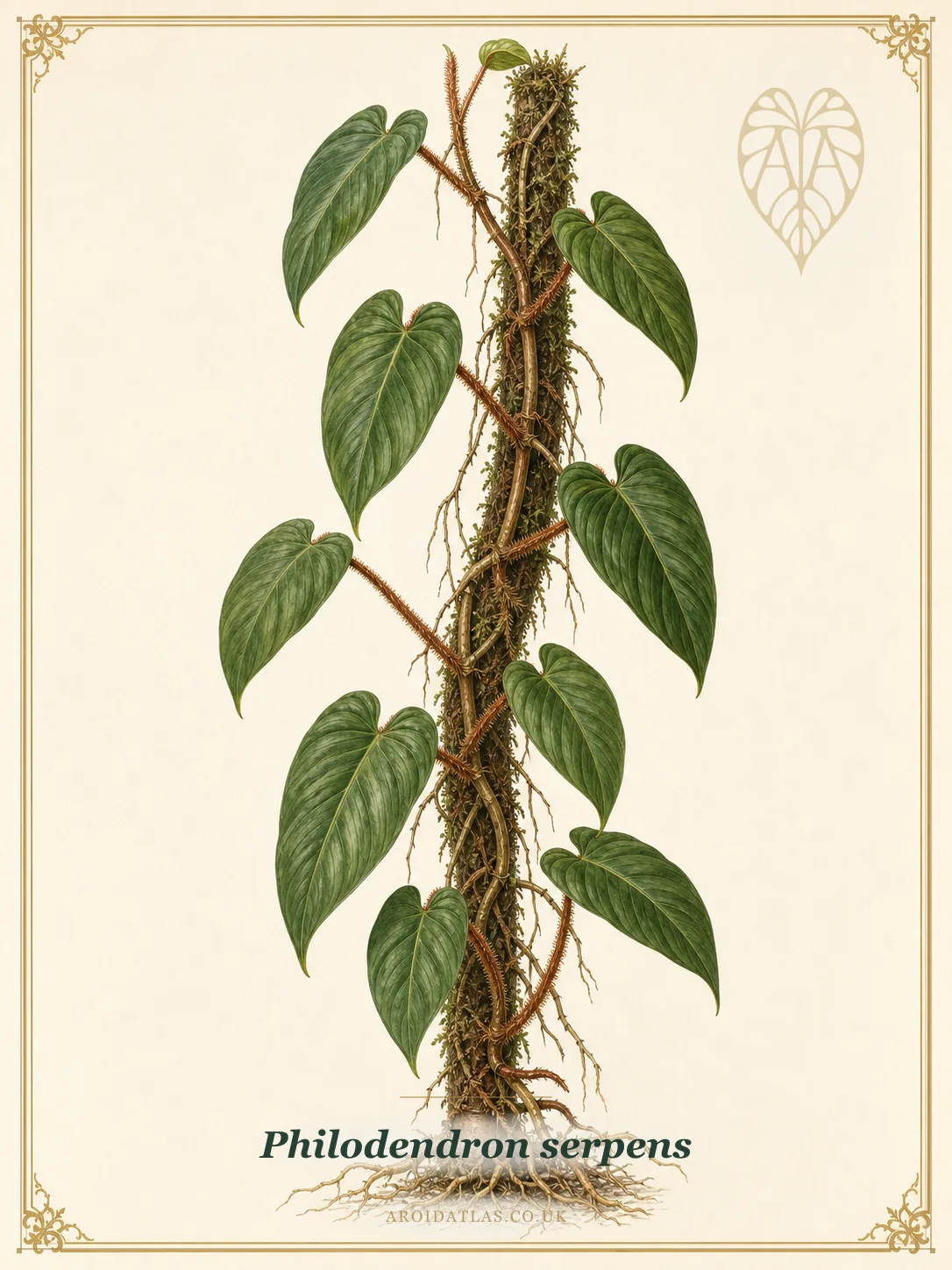
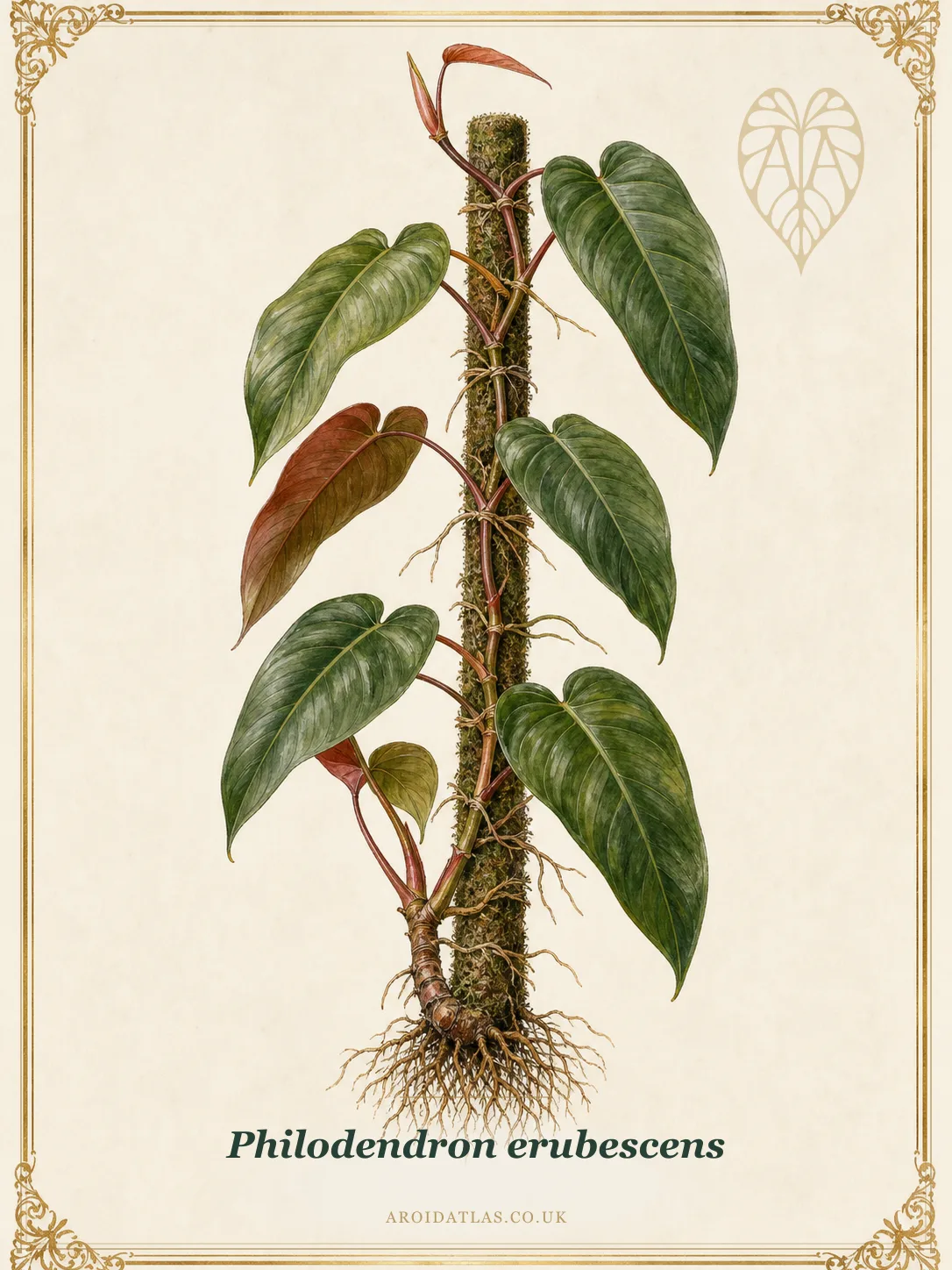
Full Specimen Plate
Philodendron brandtianum
Philodendron Brandtianum
- Coir Moss Pole, 120cm (4-Pack)Coco coir totem for climbing aroids to root into as they grow upward.
- Natural Rooting Powder, 3 x 75gRooting hormone powder for stem and leaf cuttings.
- Precision Bonsai Pruning Scissors, 200mmFine-bladed snips for clean node cuts when taking a cutting.
- Digital Hygrometer & ThermometerLCD humidity and temperature gauge for checking a grow spot against a plant's target range.
Amazon links — we may earn commission on qualifying purchases.
7cm Target Price
£13.00
Market Hub
Philodendron brandtianum K.Krause Sold Prices & Live Market
What the Target Price above is based on: eBay sold prices by plant size, live listings, and retailer stock.
No eBay sales recorded yet. Sold listings are collected as they appear on eBay.
Before You Buy
Species-specific things to check when evaluating a listing
- Check that roots are firm and pale to tan; avoid plants with black, slimy, or absent roots
- Look for strong silver-grey contrast against the green blade rather than faded, washed-out variegation
- Confirm the plant is already established on or ready for a climbing support
- As one of the more affordable and fast-growing philodendrons in this collection, compare price against node count rather than paying collector prices
Philodendron brandtianum K.Krause Morphology
About Philodendron brandtianum K.Krause
Silver-grey camouflage-like variegation between the veins is what makes Philodendron brandtianum instantly recognisable, patterned across heart-shaped leaves on a scandent climber native to humid tropical forest in Brazil, Bolivia and Peru. Given a moss pole or other support, it develops noticeably larger, more mature foliage than it will sprawling unsupported, and grows quickly relative to other South American understory Philodendron species — a genuinely easy entry point into the genus's climbing forms.
Native Range
Peru
Propagation Guide
How to Propagate Philodendron brandtianum K.Krause
Propagation Guide
How to Propagate Philodendron brandtianum K.Krause
3-6 months
Cultivar character is preserved through vegetative cuttings
Stem cuttings with at least one node and aerial root root readily in damp sphagnum or water within 2-4 weeks — one of the faster and more reliable philodendrons in this collection to propagate.
Care Guide
Philodendron brandtianum K.Krause Care Guide & Growing Conditions
Care Guide
Philodendron brandtianum K.Krause Care Guide & Growing Conditions
A high-porosity mix — 50% perlite, 30% orchid bark, 20% coco coir — with a moss pole or similar support set in at planting time. Philodendrons are prone to root rot in denser substrates, and the aerial roots need something to climb as much as the pot needs drainage.
Water thoroughly, then let the top third of the mix dry before watering again. Its faster growth rate means it uses water a little more readily than the genus's slower climbing species.
High, 60-80%. One of the more forgiving philodendrons in this collection on humidity, tolerating average UK household conditions reasonably well.
Feed at quarter to half strength every 2-3 weeks in the growing season with a balanced fertiliser; drop to monthly over winter. Its vigorous growth supports slightly more consistent feeding than slower species.
Repot every 12-18 months, sizing up the climbing support alongside the pot — leaf size increases noticeably once the plant is properly climbing rather than trailing.
Common Problems
Smaller leaves and faded silver variegation
No climbing support, or insufficient light
Add a moss pole and move to brighter indirect light; both leaf size and variegation contrast improve with climbing and good light
Root rot
Substrate that stays wet, often from a mix that's too dense or a pot with poor drainage
Repot into a chunkier mix immediately and trim away any mushy roots
Leggy, sparse growth
Insufficient light for a naturally vigorous climber
Move to brighter indirect light and provide a support to climb
Field Reference
In the Wild
Field Reference
In the Wild
Field Notes
An Easy Silver Entry Point
Philodendron brandtianum is one of the more forgiving climbing philodendrons to actually grow, which makes it a sensible first step into the genus's scandent species before committing to the pricier, slower velvet-adjacent forms. The silvery, camouflage-patterned leaves are attractive in their own right rather than as a consolation for easier care, and the plant rewards a proper moss pole with visibly larger, more mature foliage than it produces left to trail. Native to Brazil, Bolivia and Peru. Fast-growing, widely available, and a good value entry into collector philodendrons.