Full Specimen Plate
Anthurium polyschistum
Anthurium Polyschistum
- Premium New Zealand Sphagnum Moss, 100gLong-fibre sphagnum for air-layering, top-dressing, and epiphyte substrate mixes.
- Natural Rooting Powder, 3 x 75gRooting hormone powder for stem and leaf cuttings.
- Precision Bonsai Pruning Scissors, 200mmFine-bladed snips for clean node cuts when taking a cutting.
- Coir Moss Pole, 120cm (4-Pack)Coco coir totem for climbing aroids to root into as they grow upward.
Amazon links — we may earn commission on qualifying purchases.
7cm Target Price
£14.00
Market Hub
Anthurium polyschistum Sold Prices & Live Market
What the Target Price above is based on: eBay sold prices by plant size, live listings, and retailer stock.
No eBay sales recorded yet. Sold listings are collected as they appear on eBay.
Before You Buy
Species-specific things to check when evaluating a listing
- Check whether the plant is already established on a support — one grown without a pole may take a while to adjust to climbing again
- Look at the aerial roots for healthy attachment points rather than roots hanging loose and shrivelled
- Confirm the lobe count and definition look mature for the species, not the simpler juvenile leaf form
- Check the growing point and stem are firm, not soft, especially near the base
Anthurium polyschistum Morphology
About Anthurium polyschistum
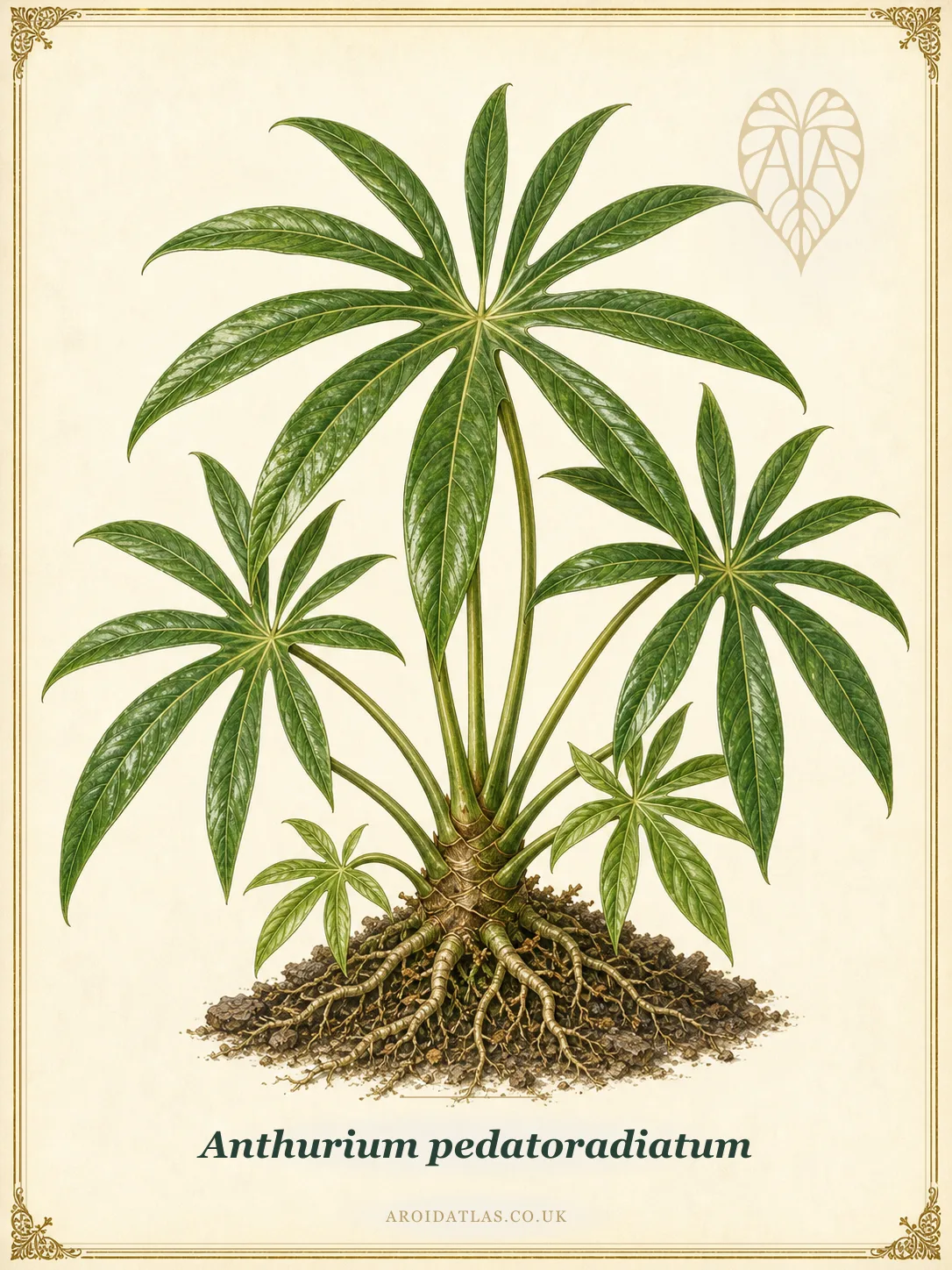
Each leaf on Anthurium polyschistum divides pedately into 7-11 narrow, linear-lanceolate lobes, rigid to mildly undulate with a glossy dark green surface and prominent midrib — a hand-like shape that reads as almost fern-like rather than typically aroid. Native to wet tropical forest across Colombia, Ecuador and northeastern Bolivia, it climbs with aerial roots on tree trunks and large branches, in humid, shaded-to-bright conditions with good air movement. It adapts well across both montane and lowland forest with abundant rainfall, which makes it more tolerant of variation in growing conditions than many collector anthuriums.
Native Range
Colombia
Propagation Guide
How to Propagate Anthurium polyschistum
Propagation Guide
How to Propagate Anthurium polyschistum
8-14 months
Take stem cuttings with at least one node and aerial root, and let them climb from the start — a short length of moss pole or bark in the propagation pot gives the aerial roots something to grip early, which speeds establishment noticeably.
Care Guide
Anthurium polyschistum Care Guide & Growing Conditions
Care Guide
Anthurium polyschistum Care Guide & Growing Conditions
A chunky, open aroid mix — equal parts orchid bark, perlite and coco chunk — with a moss pole, coir pole or piece of bark set in at planting time so the aerial roots can attach and climb as intended.
Water thoroughly, then let the top third of the mix dry before watering again. Mist or wet the climbing support between waterings — the aerial roots draw moisture from it directly, not just from the pot.
High, and fairly forgiving for a collector anthurium given how widely this species ranges across montane and lowland forest — aim for 65-85% rather than a strict target.
Feed at quarter to half strength every 2 weeks in the growing season; a climbing plant putting out new nodes regularly benefits from slightly more consistent feeding than a slow-growing rosette type.
Repot every 12-18 months, sizing up the support alongside the pot as the plant climbs — a support that's too short forces growth back on itself.
Common Problems
Reverting to smaller, simpler leaves
A climbing support that's too short, or aerial roots not attaching to anything
Extend the moss pole or add a taller one, and gently tie the newest growth against it until the aerial roots take hold
Root rot
Substrate that stays wet, often from a mix that's too dense or a pot with poor drainage
Repot into a chunkier mix immediately and trim away any mushy roots
Pest damage on new growth
Dry air and still conditions, especially indoors over winter
Increase humidity and airflow together, and treat visible pest damage with a systemic or contact treatment rather than water alone
Field Reference
In the Wild
Field Reference
In the Wild
Field Notes
Not What You'd Expect
The deeply dissected, almost palmate leaves of Anthurium polyschistum look less like an anthurium than like something from the fern house. From Colombia through Ecuador to northeastern Bolivia in humid forest, producing hand-shaped, lobed leaves that are entirely unlike the typical Anthurium silhouette most people picture. Genuinely interesting precisely for this botanical divergence: it confuses visitors and rewards the collector who likes to explain why it is, in fact, an aroid. Available at a sensible price. Worth having purely for the conversation.