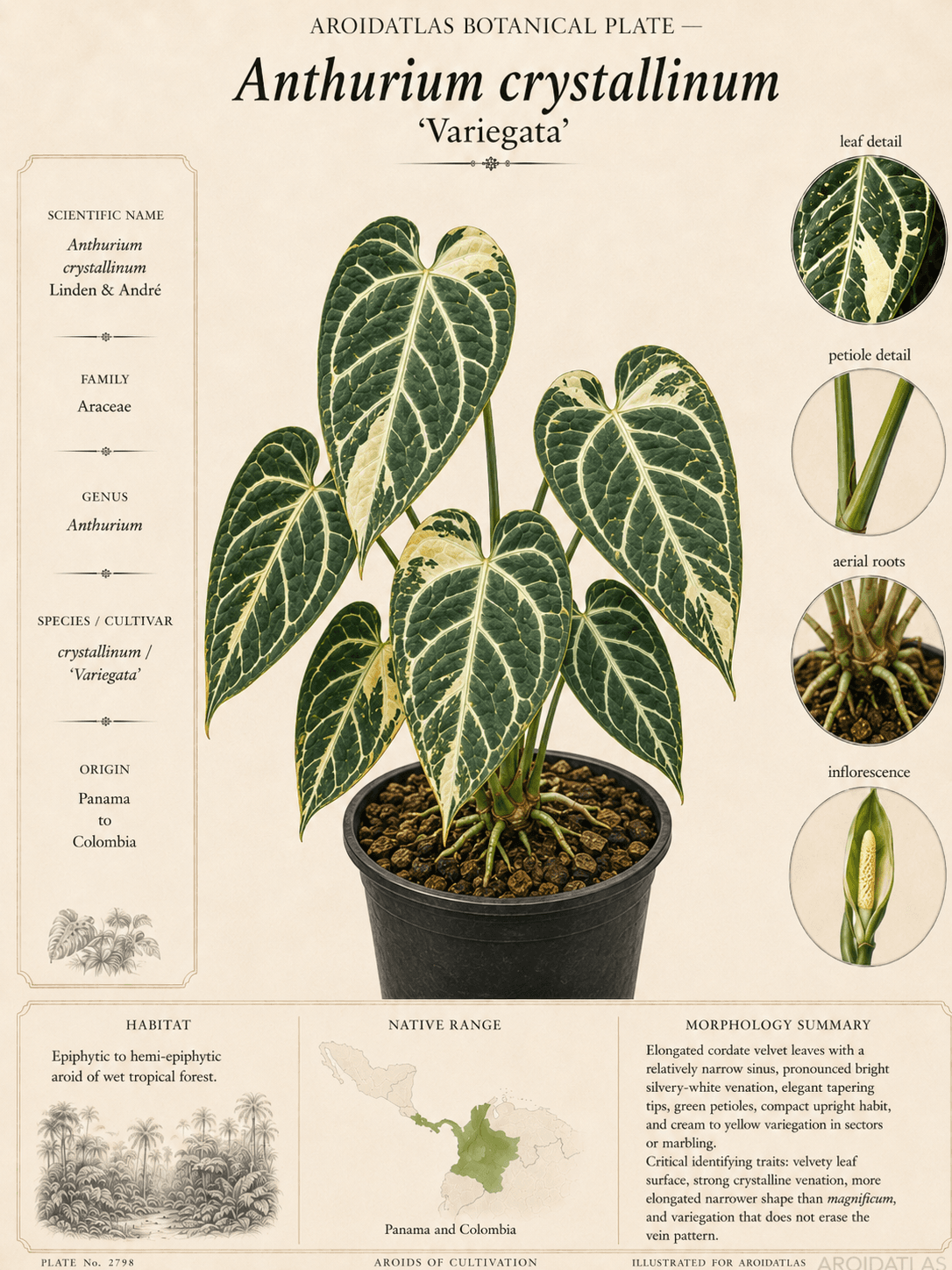
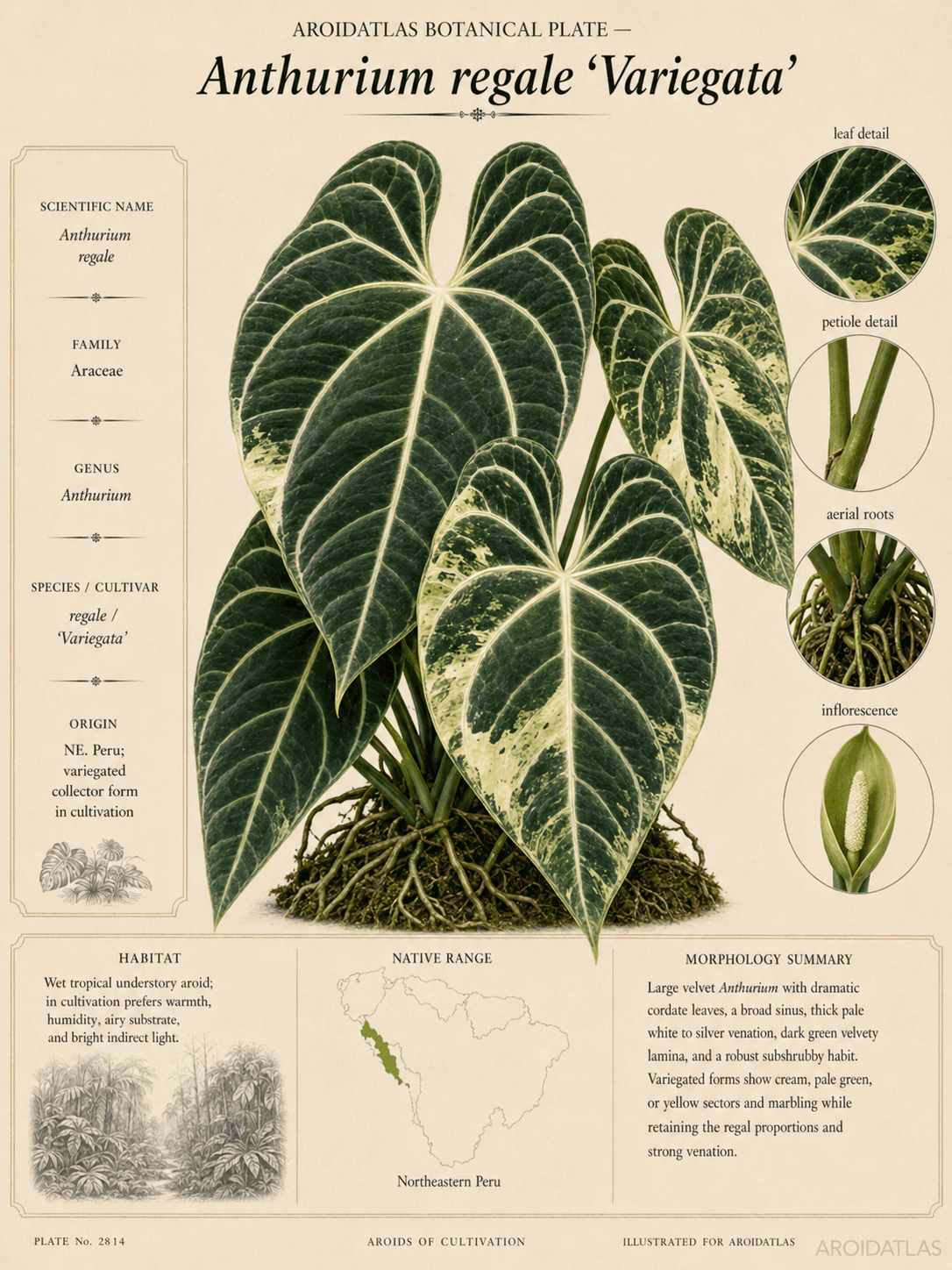
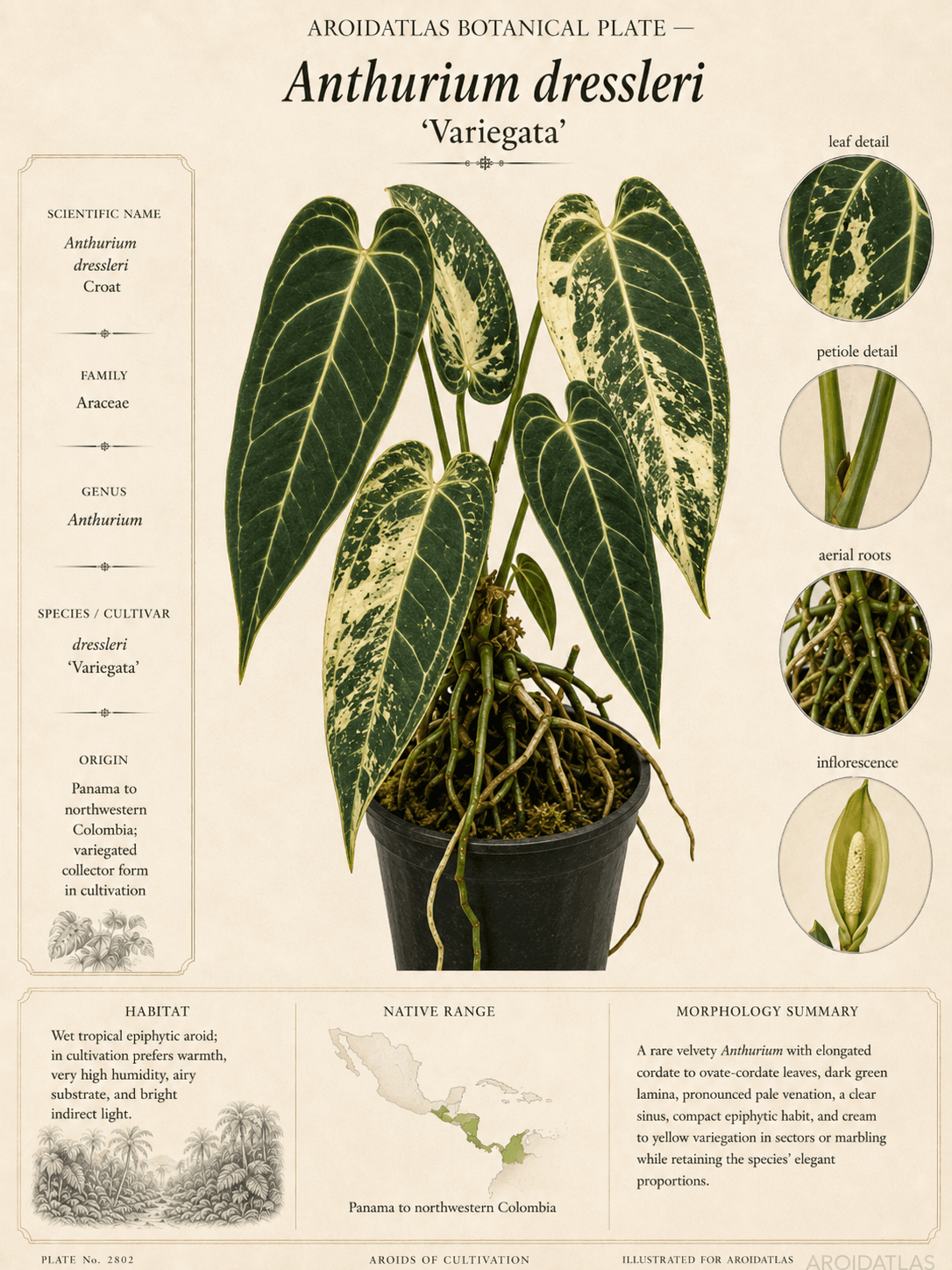
Scroll to explore forms of Anthurium magnificum

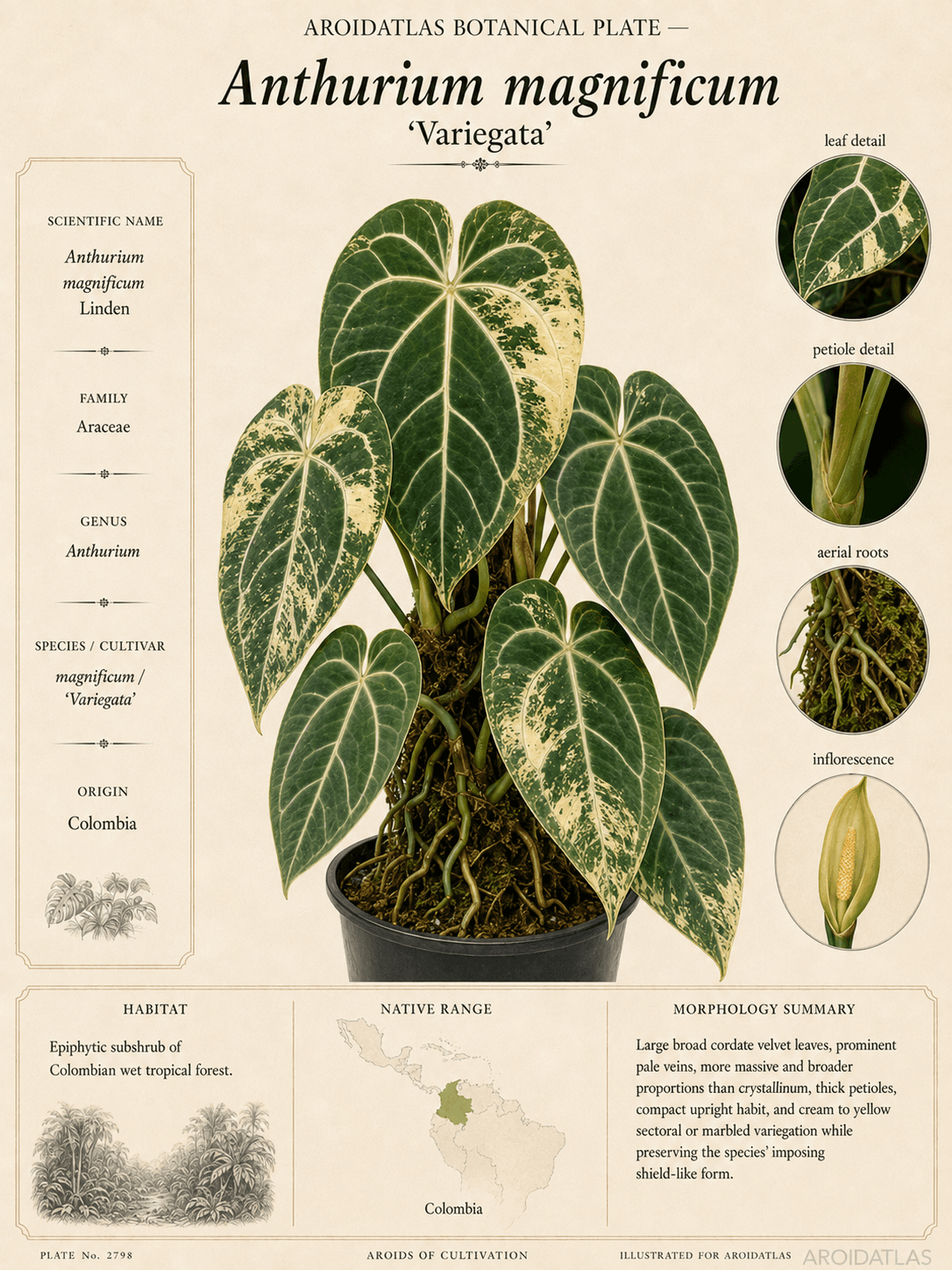
Full Specimen Plate
Anthurium magnificum 'Variegated'
Variegated Magnificum Anthurium
Aroid Atlas Price Guide
Select Plant Size
Pricing Data Key
Community price estimate based on limited sales history
Anthurium magnificum 'Variegated' Morphology
About Anthurium magnificum 'Variegated'
Anthurium magnificum 'Variegated' is a velvet-leafed aroid native to the wet forests of Colombia. The species is known for square petioles and large cordate leaves with bold pale venation and a compact, upright habit. This variegated selection shows cream-to-yellow sectoral and marbled variegation across the leaf surfaces. In cultivation, it does best under warm, humid conditions with filtered light and a chunky substrate.
Native Range
Colombia
Market Analysis
Anthurium magnificum 'Variegated' Price Guide & Auction Value
Historical eBay auction metrics and live retailer listings updated weekly.
No eBay auction history available yet. Data is collected automatically as sales appear on eBay UK.
Before You Buy
Species-specific things to check when evaluating a listing
- Inspect the newest leaf — variegation that is only present on older leaves and absent from new growth suggests the plant is reverting
- Thrips are the primary pest concern: check undersides of all leaves, especially unfurling new growth, for fine silvery streaks or dark specks
- Variegated anthuriums are high-value — insist on photos of roots, newest leaf (both sides), and full plant before any purchase over £100
- Be aware that unstable chimeral variegation means future leaves may express differently — buy based on the plant's current state, not assumed future patterning
Propagation Guide
How to Propagate Anthurium magnificum 'Variegated'
8-14 months
Variegation or cultivar traits may not carry through — select cuttings carefully
Variegation in this form is unstable — cuttings may revert to the standard green form. Select cuttings from the most highly variegated growth, but results are not guaranteed.
Care Guide
Anthurium magnificum 'Variegated' Care Guide & Growing Conditions
Very chunky, well-aerated mix: 40% orchid bark, 30% perlite, 20% sphagnum moss, 10% activated charcoal. Anthuriums suffocate in dense soil — roots need airflow.
Water when the substrate is nearly dry throughout. Less is more — overwatering is the primary killer of velvet anthuriums. Always use room-temperature water.
70–85% is essential. Below 60% causes stunted growth and curling leaves. A dedicated humidifier is strongly recommended for UK growers.
Low-nitrogen fertiliser (e.g. 5-10-10 or orchid fertiliser) at quarter strength every 3–4 weeks. High nitrogen produces lush but weak growth susceptible to pests.
Reluctantly — only when completely root-bound (every 2–3 years). These plants dislike disturbance and may sulk after repotting.
Common Problems
Yellowing leaves
Overwatering or root rot
Remove from pot, trim affected roots, repot into fresh dry substrate and reduce watering
Curling or crispy leaf edges
Low humidity or cold draughts
Increase humidity above 70% and move away from cold windows
Thrips
Common on velvet-leaf anthuriums; hard to detect early
Inspect new growth and leaf undersides regularly; treat with neem oil or systemic insecticide at first sign
Imposing Velvets and Squared Stems
Anthurium magnificum is famous for its massive, square-petioled velvet leaves that have a stark, shield-like presence. The variegated cultivar adds sectoral cream-to-yellow marbling across the leaf. Described by Linden, magnificum is distinguished from other velvet species by its broader leaf proportions and distinct C-shaped or square petioles. In the wet forests of Colombia, these broad leaves capture maximum diffused light. In culture, the variegated areas are delicate, requiring high humidity and careful placement to avoid drafty spots.